
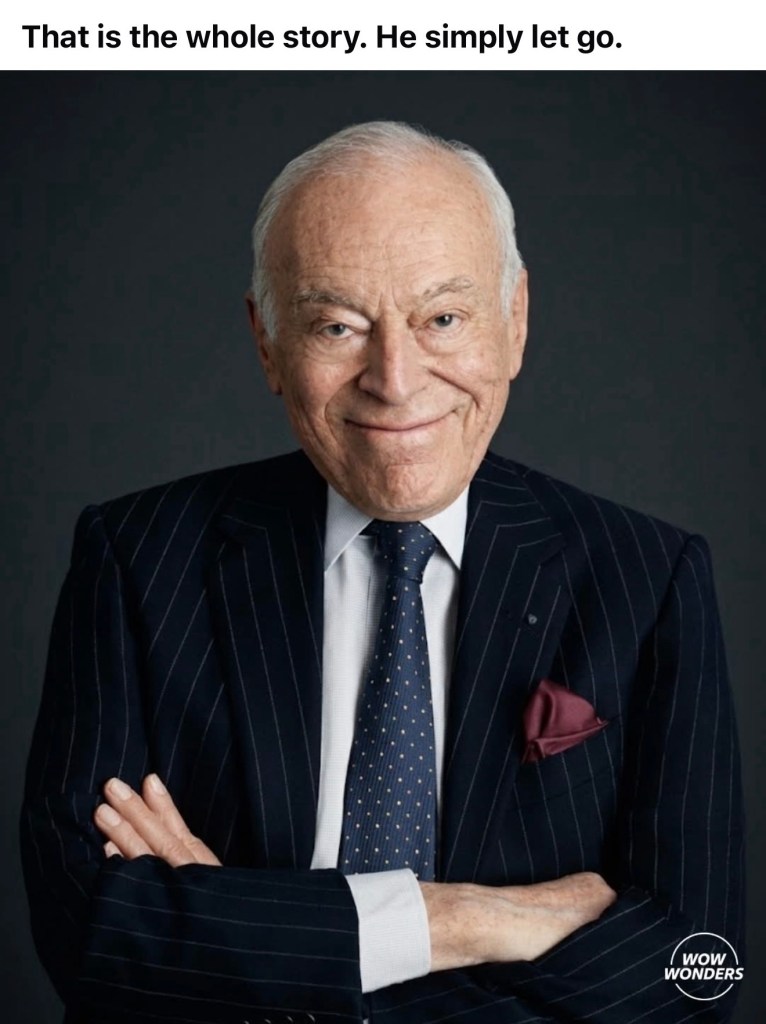
He spent decades quietly buying paintings.
Then one day he gave all of them away, more than a billion dollars worth, and kept nothing back.
No wing named after his art collection. No sale. Just a gift.
Leonard Lauder was heir to the Estée Lauder cosmetics fortune, chairman of the company his mother built, and by any measure a man who could have kept anything he wanted for the rest of his life.
What he wanted, for over four decades, was Cubist art.
Starting in the 1970s, Lauder began buying works by Picasso, Braque, Juan Gris, and Fernand Léger. Not as an investment. As an obsession. He bought carefully, piece by piece, building one of the finest private collections of Cubist art anywhere in the world.
By 2013, that collection held 78 works.
Then he gave every single one of them to the Metropolitan Museum of Art in New York.
Forbes valued the gift at $1.1 billion. One of the largest donations in the Met’s history, and one of the largest art gifts ever made by a single private collector to any museum.
Sit with that number for a second. $1.1 billion in paintings, handed over with no strings attached.
He did not sell a single piece first. He did not keep the best ones for his own walls. The entire collection went to the public, all at once.
Think about what most collectors do instead. They sell at auction. They negotiate naming rights. They keep a few favorites until they die and let their estate sort out the rest.
Lauder skipped all of that.
Alongside the paintings, he funded a new research center for modern art at the Met with a $22 million endowment, the first center of its kind dedicated entirely to modern art inside an encyclopedic museum. Scholars study there today, using his collection as their foundation.
Here is the part that connects to anyone who has ever walked through a museum. Before Lauder’s gift, the Met had almost no significant Cubist holdings. A visitor wanting to see the birth of modern art in one room had to travel to Paris or to the Museum of Modern Art across town.
Now they just walk into the Met.
There was no scandal pushing him toward this. No lawsuit, no tax problem, no public pressure campaign. Lauder was in his 80s, in good health, running a company worth tens of billions. He simply decided the paintings belonged to everyone, not just to him.
“I have never thought about how much things cost,” he told reporters at the time, “only about what they mean.” He had spent a lifetime building something magnificent in private. Then he handed the whole thing to strangers.
Some collectors questioned why he didn’t wait, why he didn’t will the collection to his family or sell pieces to fund other causes. He answered that question by pointing at the museum’s doors, which opened to anyone with the price of admission, or on free days, to anyone at all.
The paintings still hang there now. Tourists walk past Picasso’s early Cubist experiments without knowing the price tag that once applied to what they are looking at for free.
A billion dollars of art, sitting in public rooms, because one man decided ownership meant less to him than access.
That is the whole story. He simply let go.
❤️❤️❤️❤️❤️❤️❤️❤️❤️❤️❤️❤️❤️❤️❤️❤️❤️

❤️❤️❤️❤️❤️❤️❤️❤️❤️❤️❤️❤️❤️❤️❤️❤️❤️

❤️❤️❤️❤️❤️❤️❤️❤️❤️❤️❤️❤️❤️❤️❤️❤️❤️



A real “mensch