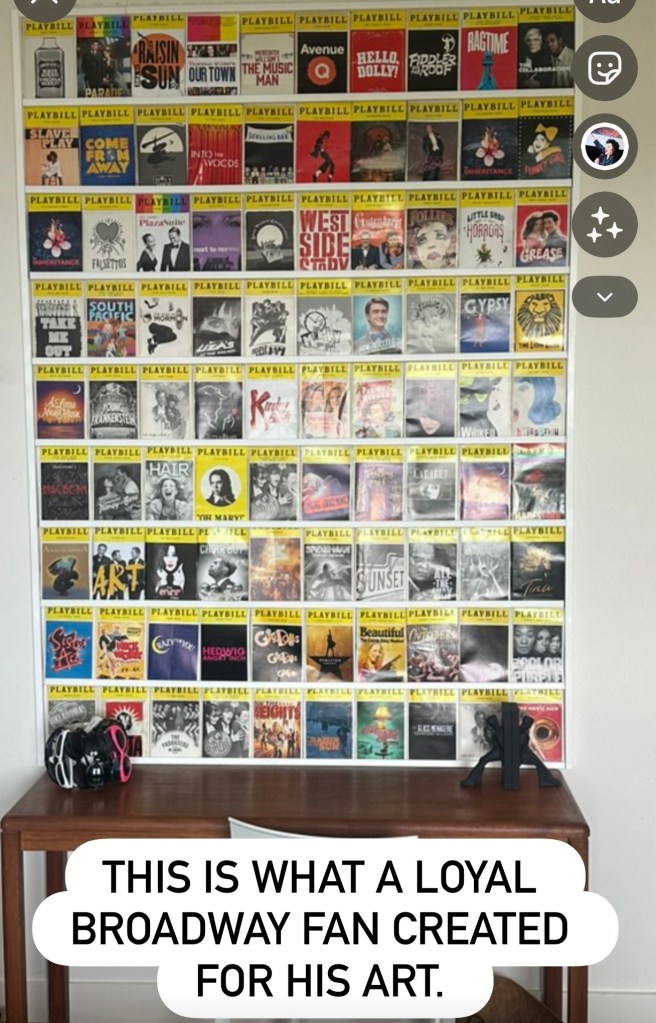
If you live in Manhattan like Eliot and I did for 40 years, chances are you often went to see a Broadway Show. For years our agency, HWH PR, worked for the Queen of Broadway merchandising, Ruth Sussman. We secured every type of consumer electronics needed for every stage. We started with a Panasonic clock radio for the Broadway hit “They’re Playing Our Song” starring Lucie Arnaz and Robert Klein-still one of the best shows ever.
For years, we were given free tickets to every show we wanted to see-there were many. We collected more Playbills than I care to remember. Leave it to my creative friend to build a Wall of Fame for his collection. He admitted there are hundreds of more Playbills in storage.
Gary Vee (Vaynerchuk), the most recognizable name in tech, wants you to be happy. If it takes a common curse word to make that happen, so be it. The video works.
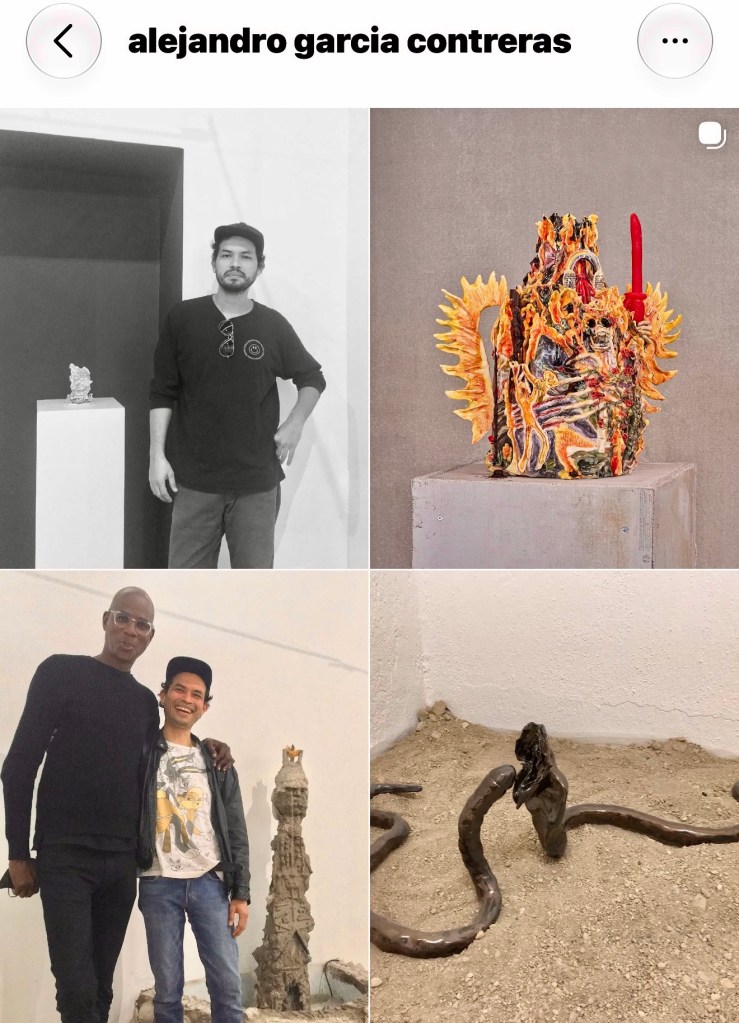
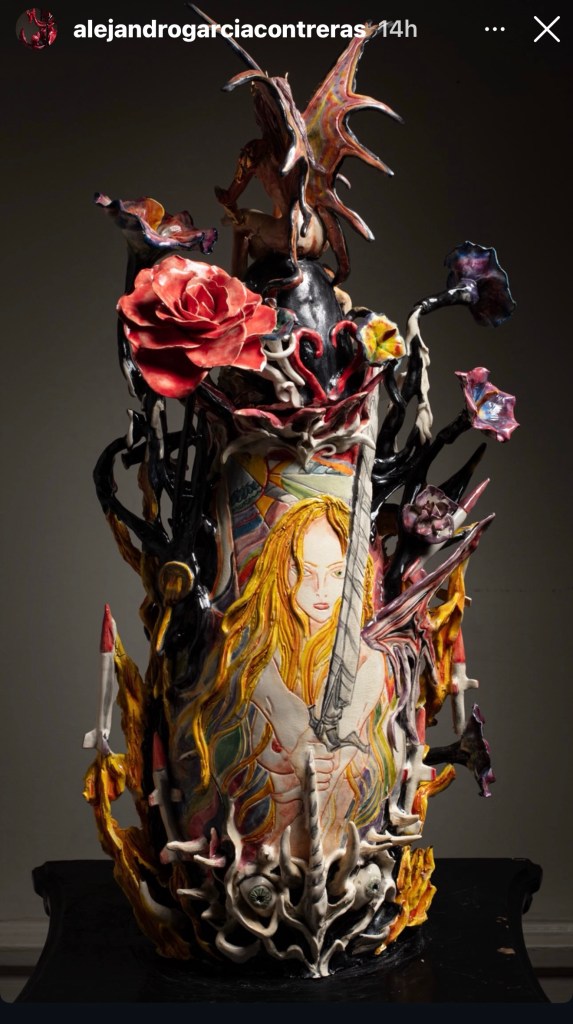
A few years later, Eliot and I bought our first Garcia Contreras sculpture from Graham Wilson of Swivel Gallery in New York. In many ways, that piece tells the story of our own appetite for daring art—art that refuses to behave.
There is so much energy in this sculpture that I sometimes feel as though I can actually hear it speaking to me. And the message is always the same – Live life on your own terms.
There is something wonderfully reassuring about living with art that doesn’t merely decorate your home, but reflects who you are, challenges how you think, and—in our case—honors the choices we have made with our lives.
And that is exactly what Alejandro Garcia Contreras’s art does for us.
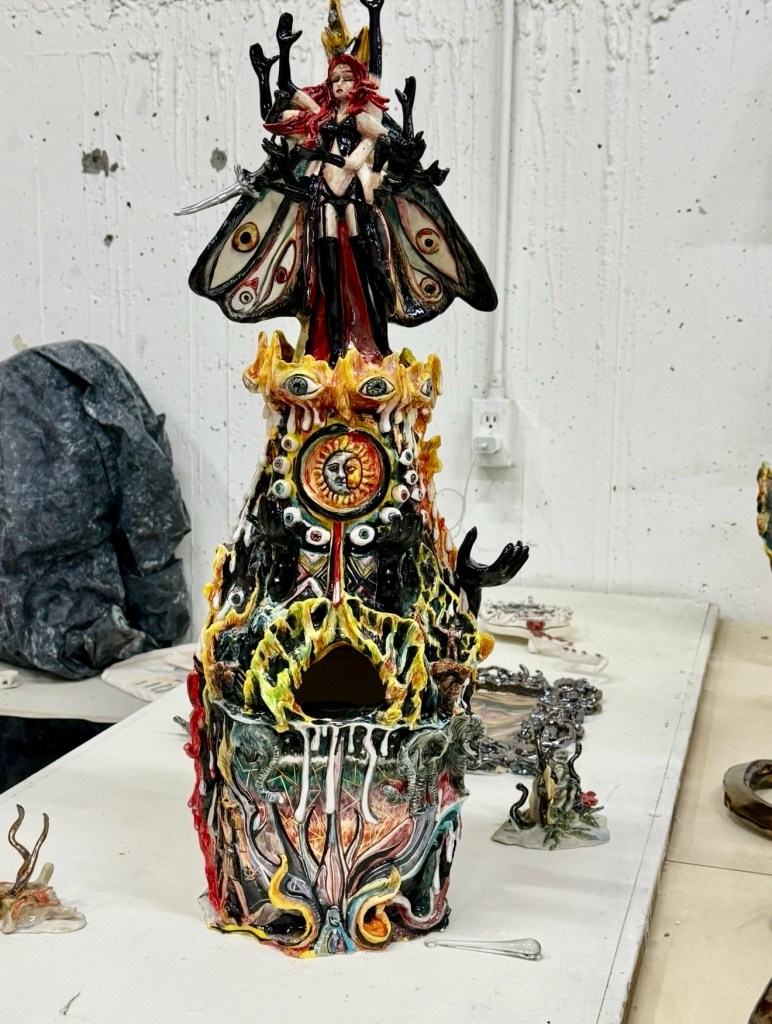
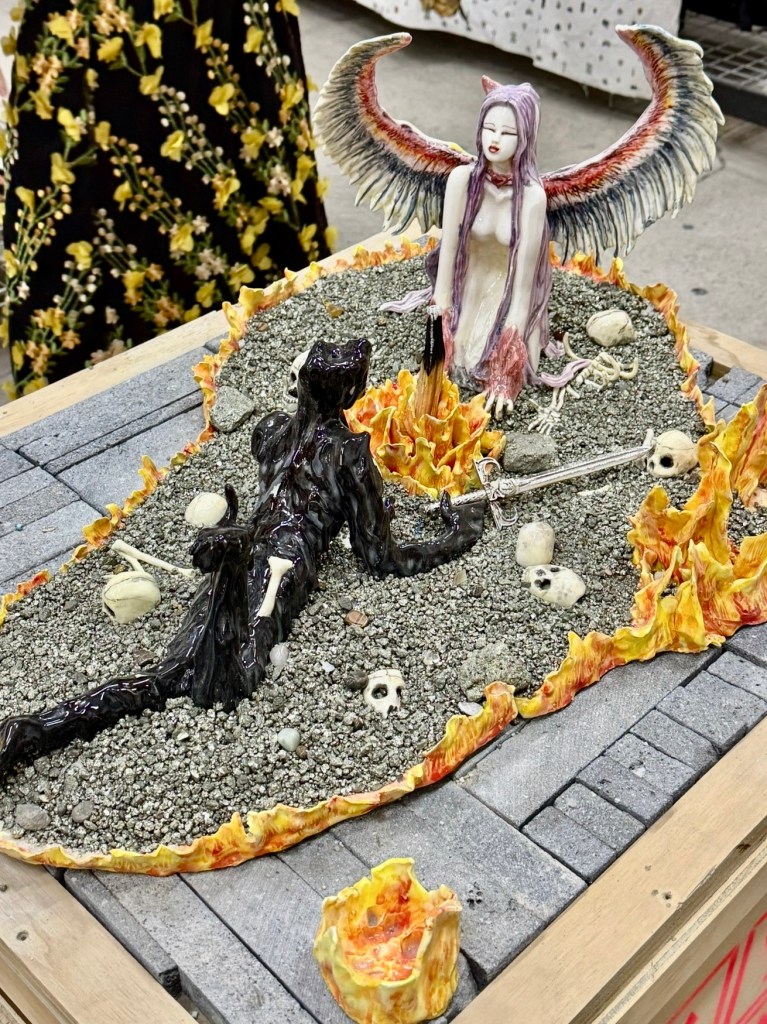
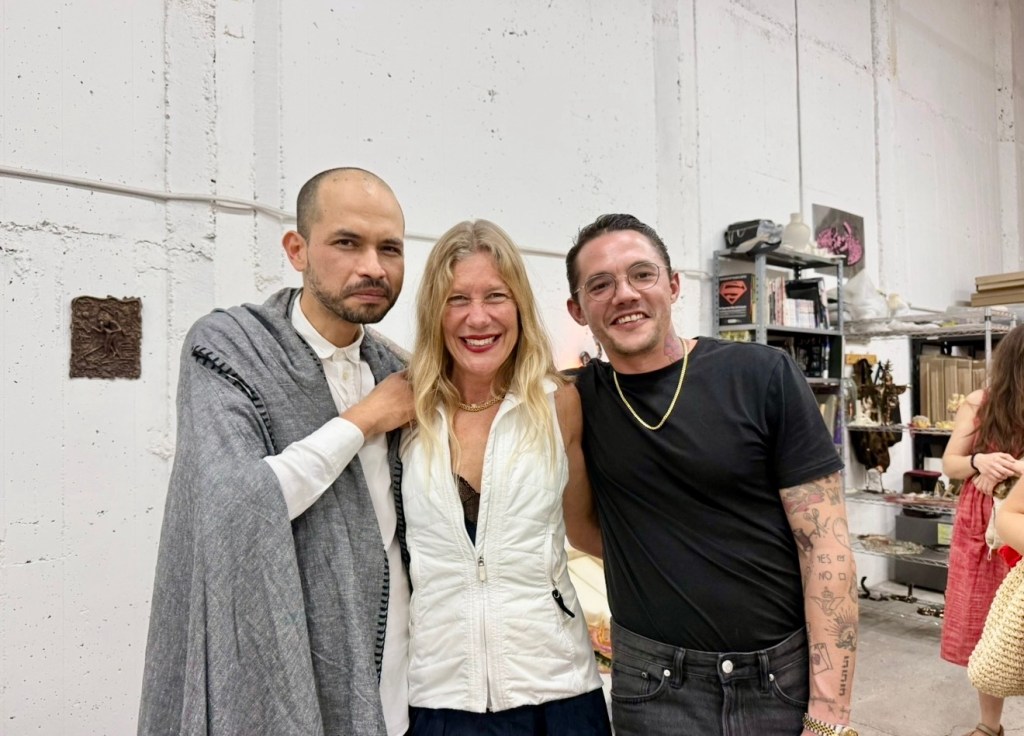
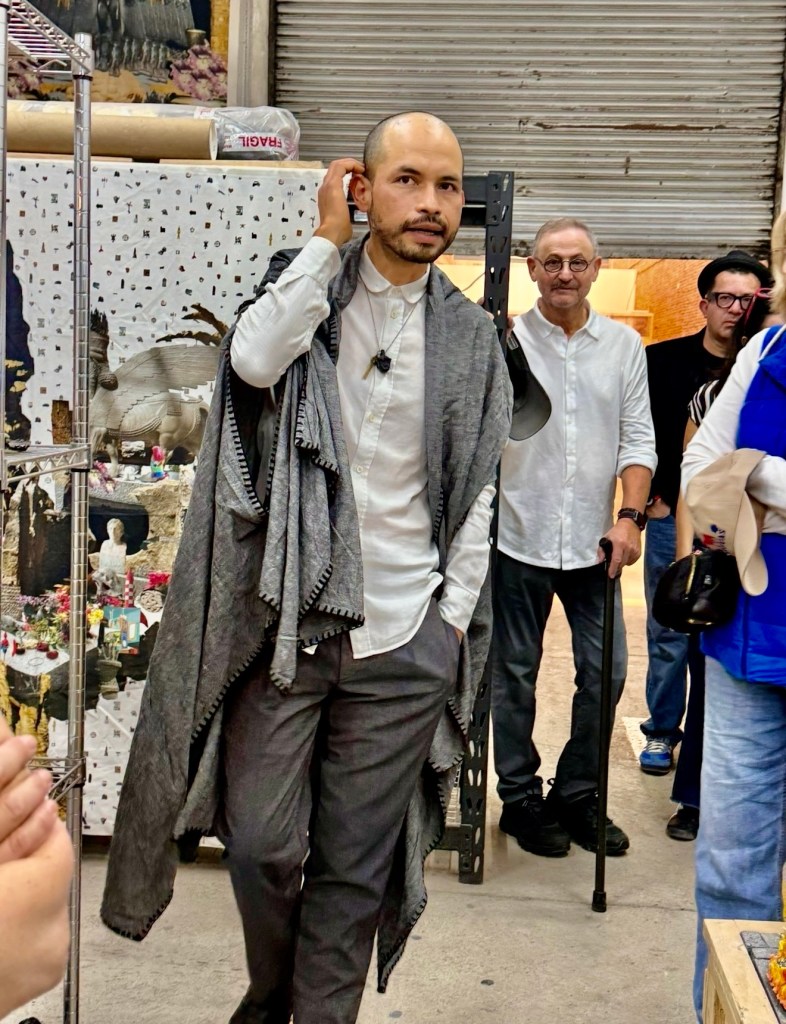
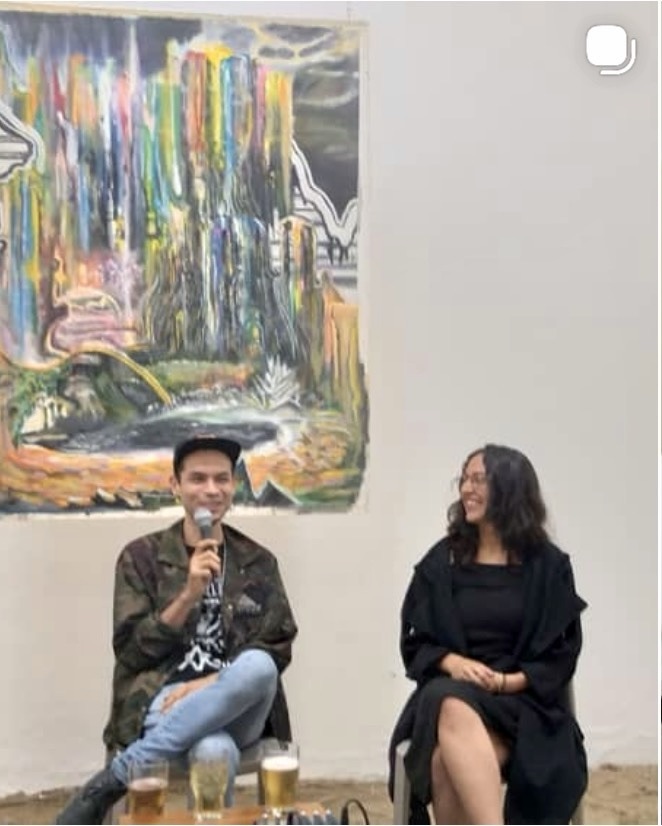
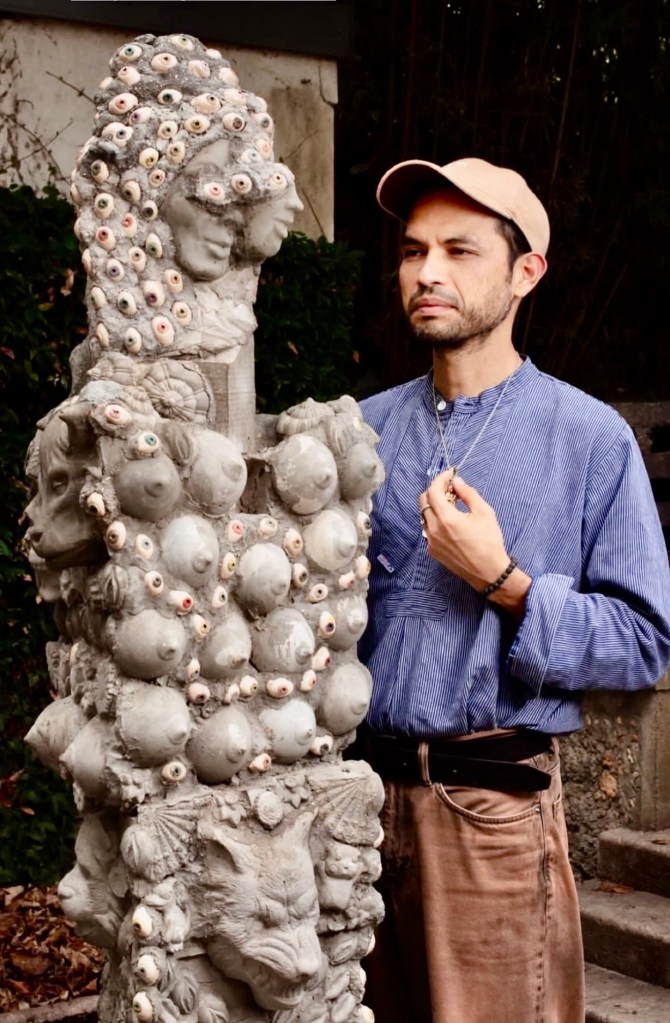
Below are photos I took at Alejandro’s studio in Guadalajara last February.
Alejandro Garcia Contreras (Tapachula, México) This is the press release fromLefebvre & Fils, one of the most respected galleries in Paris.
Garcia Contreras’s creative work is characterized by experimentation and dialogue between different materials and technical processes, making his work a mix between different media such as painting, sculpture, photography, video and graphic arts. This combination of elements results in suggestive forms in which the viewer can explore the divine and the evil, the magical, the erotic and the feminine, as well as various taboo dimensions of their own unconscious, thus discovering a new sense of divinity through contemporary idols.
Through his artistic projects, Garcia Contreras explores topics and themes inspired by contemporary popular culture, folklore, myth, occultism and religion. Having grown up in Chiapas, the Mexican artist was raised closely to nature and esotericism. At a young age, he experimented with magic and the occult. His work explores the unconscious, projecting codes and elements that inhabit it, remembering that art used to be a practice of crafting magical objects representing life and death.
Eroticism and femininity are also significant themes in his work, which usually materialize through sculpture and painting.
Garcia Contreras studied Visual Arts at the National School of Painting, Sculpture and Engraving ENPEG/La Esmeralda. In 2016, he was invited to the Casa Wabi residency program. The same year, he launched the art residency Dedazo in Carrillo Puerto, Chiapas. In the last years, his work has received worldwide recognition and has been exhibited in the U.S., Sweden, Spain, Argentina, Holland, Canada, England, Germany, Switzerland, Denmark, Ireland, Italy, Japan, Colombia, Paraguay and Peru. He exhibited in various U.S based galleries such as Friedman Benda and David Castillo Gallery.
In Mexico, he has presented his work in institutions such as the Museum of Modern Art, the Ex Colegio de San Ildefonso, the Ex Teresa Museum, the National Center for the Arts, the Chopo University Museum and the Museum of Contemporary Art of Monterrey, among others. He also exhibited in galleries such as Protectos Monclova, House of Gaga, Guadalajara 90210, Armada Galería, Travesía Cuatro and NASAL.SOLO
EXHIBITIONS
2025
The World Like a Labyrinth: Moreau, Biegas, García Contreras. Polish Historical and
Literary Society. Paris, France.
2024
¿Quién no ha intentado convertir una piedra en un recuerdo? Pioneer Gallery. NY,
USA.
2023
Frágil/ El misterio de los seres sensibles. Swivel Gallery. NY, USA.
La noche más obscura. Travesia Cuatro. GDL, MX.
Vibrations of an imperfect cosmic web. Saenger Gallery. CDMX, MX.
Espejo de la causa del todo. House of Gaga. GDL, MX.
2022
Sin el Impulso Imperioso de librarse del dolor. Proyecto NASAL. CDMX, MX.
2021
More Unchartered Heights of Disgrace. Gamma Galeria. GDL, MX.
La Clara Luz del Vacío que hay más Allá. Residencia 797. GDL, MX.
2019
Tratados sobre la Orgía del Fuego Cósmico. Guadalajara 90210. Zapopan, MX.
Festival of the Resurrection in collaboration with Ryohta Shimamoto. Eitoeiko Gallery,
Tokyo, Japan.
Invisible Empire. MOHA. Austin, USA.
2016 El Salvador Recurrente. Casa de la Cultura Luis Alaminos. Tuxtla, MX.
2015 Nuevos Dioses in collaboration with Josée Pedneault. Typology Gallery.
Toronto, Canada.
Todo lo que Cae. 1M/1A, Art. 123. CDMX, MX.
2014
La Chinche presenta: Alejandro Garcia Contreras. Galería La Chinche/Museo del
Eco. CDMX, MX.
2013 Watchtower and the herald of Presence. PS, Projectspace. Amsterdam,
Gamma Galería. Oxígeno Art Fair. Asunción, Paraguay.
Eitoeiko Gallery. Art Osaka Art Fair. Osaka, Japan.
Swivel Gallery. NADA Art Fair. NY, USA.
Proyecto N.A.S.A.L. Zona Maco Art Fair. CDMX, MX.
Cerámica Suro. Material Art Fair. GDL, MX.
Eitoeiko. QiPO Art Fair. CDMX, MX.
2022
Obrera Centro. Material Art Fair. CDMX, MX.
2021
Guadalajara 90210 + GAMMA Galería. Untitled Art Fair. Miami, USA.
Salon Cosa GDL. Guadalajara, Jalisco, MX.
Proyecto N.A.S.A.L. Zona Maco Art Fair. CDMX, MX.
2020
Guadalajara 90210. Zona Maco Art Fair. CDMX, MX.2019
Galeria Eitoeiko. Aart Osaka. Osaka, Japan.
Obrera Centro. Material Art Fair. CDMX, MX.
Galeria Eitoeiko. QIPO Vol. 1. CDMX, MX.
2018
Guadalajara 90210. Zona Maco Art Fair. CDMX, MX.
2017
And the Sky is Grey. Art Toronto. Toronto, Canada.
The White Lodge Gallery. FACA Art Fair. Buenos Aires, Argentina.
The White Lodge Gallery. Art Lima Fair. Lima, Peru.
2015
Fundación Alumnos 47. Printed Matter’s L.A. Art Book Fair. Los Angeles, USA.
2014
Neter Proyectos. Material Art Fair. CDMX, MX.
2012
Neter Proyectos. Art Platform – Los Angeles Art Fair. Los Angeles, USA.
2007
Galeria La Refaccionaria + Galería Proyectos Monclova. Zona Maco Art Fair. CDMX,
MX.
ACADEMIC STUDIES
2003 – 2008
BFA Visual Arts. Escuela Nacional de Pintura, Escultura y Grabado INBA / La
Esmeralda. CDMX, México.
RESIDENCIES
2025
Casa Wabi. Tokyo, Japan.2024
Pioneer Works. New York, USA.
Archie Bray Foundation for the Ceramics Arts. Helena, Montana, USA.
Art Explora / Cité Internationale des Arts. Paris, France.
2023
Taller Noborigama. Aregua, Paraguay.
2021
Residencia Estudio 797. Guadalajara. Jalisco, MX.
2020
Cabra Casa Brasil. Guadalajara, Jalisco, MX.
Cerámica Suro. Residencia de producción. Guadalajara, MX.
2019
Laguna Blanca. Residencia de producción. Guadalajara, MX.
Cerámica Suro. Residencia de producción. Guadalajara, MX.
Cabra Casa Brasil. Guadalajara, MX.
Unlisted Projects Residency Program. Austin TX, USA.
2018
USSR. CDMX, MX.
Cuadro 22. Chur, Switzerland.
2016
Programa de Residencias Casa Wabi. Oaxaca, MX.
S.S. Gilroy. Los Angeles, USA.
GRANTS AND PRIZES
2014-2015
Jóvenes Creadores, FONCA Fondo Nacional para la Cultura y las Artes. México.
2013
Grant Mexico-Québec (GTMQ) “Atelier de Création 2013”.
2009-2010
Jóvenes Creadores, FONCA Fondo Nacional para la Cultura y las Artes. México.2006
Art Fest World Trade Center. Acquisition Prize.
OTHER
2015-2020
Founder and coordinator of the residency program DEDAZO in Carrillo Puerto,
Chiapas, MX.
2011-2014
Member of NETER Proyectos. CDMX, MX.
2011
Scenography design for the play Los Padres Terribles, Teatro El Galeón. CDMX, MX.
2010-2011
Founder, co-director and curator of LAC (Laboratorio de Artes de Chiapas),
———————————————————
Art Lover’s Forum
Alejandro Garcia Contreras, the boundary-defying artist from Guadalajara, Mexico, has just opened an exhibition in Paris at Lefebvre & Fils, one of the city’s oldest and most distinguished galleries. The exhibition runs from September 10 through October 10, 2026, at 24 rue du Bac.
The gallery describes Alejandro’s practice as an ongoing experimentation and dialogue between materials and technical processes. His work moves effortlessly among painting, sculpture, photography, video and the graphic arts.
His list of accomplishments is a mile long—far too long for me to recite here. But visit DigiDame.com, where you can explore his remarkable career, along with photographs and videos of his work.
What fascinates me most is the world Alejandro creates. Lefebvre & Fils describes his work as an invitation to explore the divine and the evil, the magical, the erotic and the feminine—even the taboo dimensions of our own unconscious. These are not passive works of art. They challenge you, seduce you and occasionally unsettle you.
Alejandro’s art has received international recognition and has been exhibited throughout the United States, Europe, Latin America, Canada and Japan.
In the U.S., his work has been shown by galleries including Swivel, Anat Ebgi , Friedman Benda and David Castillo, plus múltiple art fairs.
In Mexico, he has exhibited at major institutions including the Museum of Modern Art, the Ex Colegio de San Ildefonso, the Ex Teresa Museum, the National Center for the Arts, the Chopo University Museum and the Museum of Contemporary Art of Monterrey.
The big news is that approximately 30 of Alejandro’s sculptures will be shown at Plataforma, Guadalajara’s premier museum, the last week of January during the city’s art week and one week before the big art exhibitions, Zona Maco and Material in Mexico City.
I first met Alejandro six years ago in Guadalajara while traveling with Fountainhead Arts. I don’t consider myself an art aficionado in the traditional sense, but I do believe I have an instinct for recognizing a serious artist—someone with something urgent, original and deeply personal to express. I felt that immediately with Alejandro.
A few years later, Eliot and I bought our first Garcia Contreras sculpture from Graham Wilson of Swivel Gallery in New York. In many ways, that piece tells the story of our own appetite for daring art—art that refuses to behave.
There is so much energy in this sculpture that I sometimes feel as though I can actually hear it speaking to me. And the message is always the same:
Live life on your own terms.
There is something wonderfully reassuring about living with art that doesn’t merely decorate your home, but reflects who you are, challenges how you think, and—in our case—honors the choices you have made with your life.
And that is exactly what Alejandro Garcia Contreras’s art does for us
Listen to episode 64 of the Art Lovers Forum podcast here
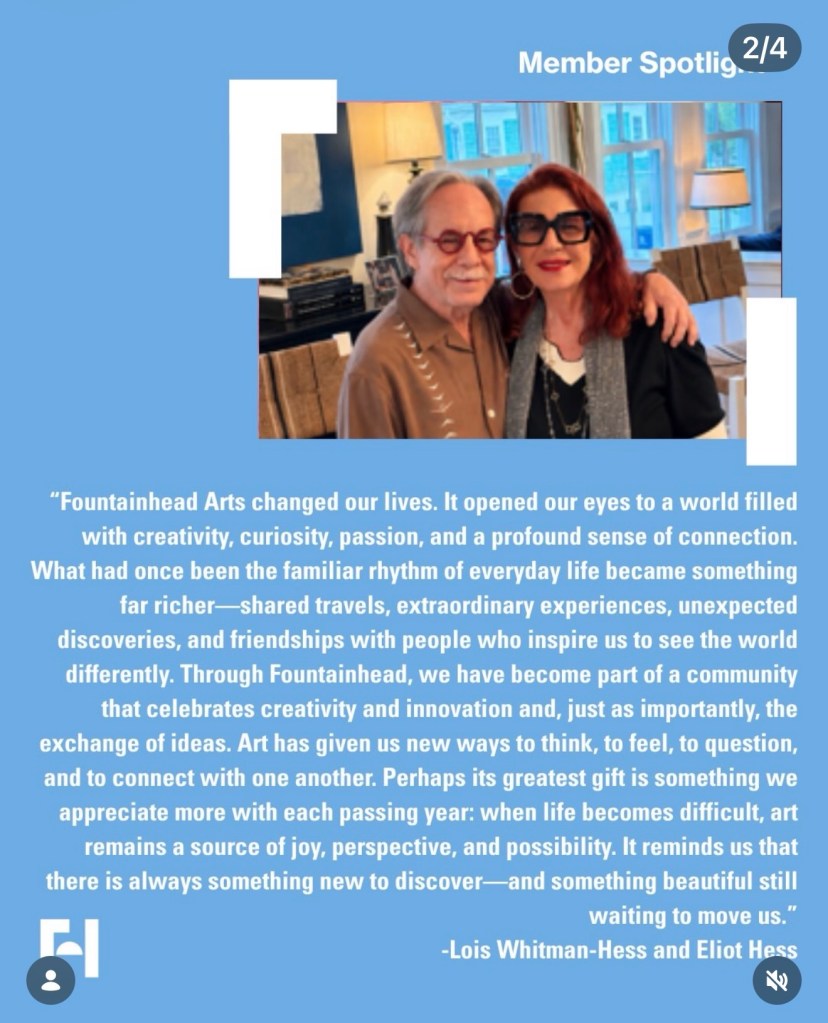
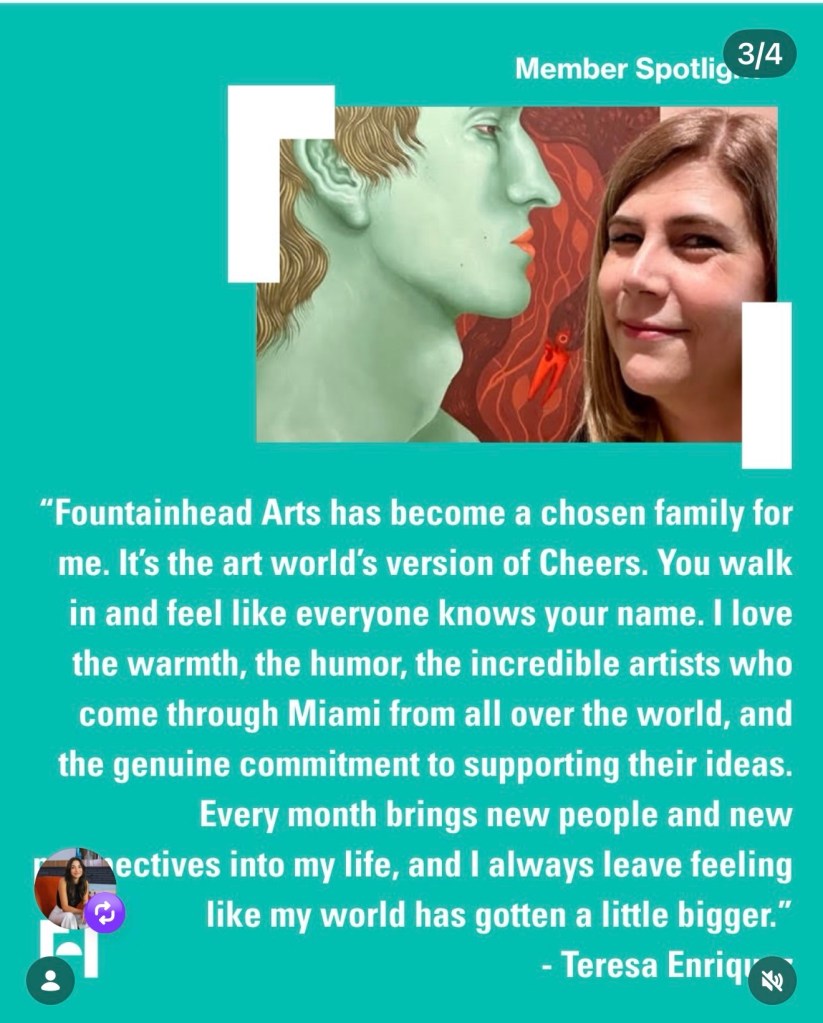
What makes Fountainhead membership special? Hear it from the people who know it best-our members.
Fountainhead is more than a membership. It’s a community of curious, engaged people who believe that art is better when it’s experienced together.
Whether you’ve been collecting for years or are simply curious about contemporary art, there’s a place for you here. Our members come from all different backgrounds and levels of art-world experience, but share a desire to discover new artists, make meaningful connections, and see Miami’s creative community from a different perspective.
Members get closer to the artists and ideas shaping the art world today through behind-the-scenes and immersive artist-led experiences, dedicated hours before public events, VIP art fair access, studio visits, private collections, and travel experiences that connect you to artists, art lovers, and the places where art happens.
And your membership does more than give you access-it helps support Fountainhead’s artists, programs, and operations. Fountainhead Experience memberships are tax-deductible.
As we head into a busy fall art season, there’s no better time to find your place in our community.
Come curious, come interested, come as you are —we’d love to have you be part of the Fountainhead family.
Ask a developer, broker or property owner in Wynwood about the big deal underway in the neighborhood, and you’ll get a different version of the same answer.
“It’s already done” or, “It’s closing later this year,” they’ll say. Or, “Worst kept secret in Miami.”
The deal? It’s developer and investor Moishe Mana’s sale of Mana Wynwood to billionaire hedge fund manager Ken Griffin. The rumored price ranges from $700 million to over $1 billion — a record for South Florida real estate.
Earlier this year, both Griffin and Mana denied the sale was happening, but the rumor mill has been working overdrive. Sources told The Real Deal that the majority of the deal has closed, and it’s expected to be completed by Moishe Mana’s birthday in December.
Mana declined to comment, and a Griffin spokesperson stood by the company’s denial in January.
Mana has been on a spending spree, picking up real estate in Wynwood, downtown Miami and Alapattah. And Griffin has also made some moves — a broker linked to him arranged the $20.2 million buyout of the 35-unit buy at Wynwood Lofts, immediately north of Mana Wynwood. Griffin has not confirmed that he is the buyer of the Wynwood Lofts.
Mana Wynwood, at 318 Northwest 23rd Street, is a 30-acre property that includes the developer’s convention center, where TRDhosts its annual Miami Real Estate Forum. (The upcoming Forum is Nov. 4 and 5.) Mana’s Wynwood portfolio extends from Northwest 20th Street to Northwest 24th Street, and from Northwest Sixth Avenue to Northwest First Place, but it’s unknown if Griffin is acquiring all of it.
Griffin could bring an AI/tech campus to the Wynwood expanse. The name of a well-known university is in the mix, as real estate insiders say a satellite campus could be part of the plans.
Griffin has already spent well over $1 billion on real estate from Miami to Palm Beach, including residential property. In Miami’s Brickell, he’s building a billion-dollar-plus tower fronting Biscayne Bay, which will serve as the headquarters for his Citadel and Citadel Securities firms.
The Wynwood rumors began circulating last year and were amplified in January, when Griffin bought the 545Wyn office building, at 545 Northwest 26th Street in Wynwood, from Chicago-based Sterling Bay for more than $180 million. Goldman Properties and Griffin teamed up on the purchase.
There are other signs that something is brewing. Mana Wynwood is not booking major events more than a year out, according to sources.
Mana’s recent buying spree could be part of a reverse 1031 exchange, which lets investors buy new properties before selling real estate and still take advantage of the tax deferrals.
Restaurant broker Felix Bendersky, who owns F+B Hospitality Brokerage, is one of the influencers who has posted about the rumored deal on Instagram. Bendersky called it “one of the biggest deals in Miami history,” and mentioned the reverse 1031 exchange theory. SIGN UP
“Moishe’s big plan is to redevelop the much-anticipated Flagler Street project, which I really believe will transform Miami into a tech leader,” Bendersky said to his nearly 50,000 followers earlier this month.
Mana has long planned to redevelop his portfolio in downtown Miami, where he spent over a decade assembling properties, including more than 80 buildings, along and near the historic Flagler Street. Late last month, he spent $33 million to acquire the Historic U.S. Post Office Building and site next door, and nearly two dozen commercial condos on the first two floors of the One Flagler building. In March, he paid $110 million for the One Downtown office tower. Mana also still controls a large portfolio in Allapattah, which is just west of Wynwood.
Wynwood frenzy
The magnitude of the acquisition has spurred other investment in Wynwood, developers and brokers told TRD.
Tony Arellano of Dwntwn Realty Advisors said the “widely accepted rumor” has led “very sophisticated and experienced real estate development companies” to invest around the event campus, home to the annual III Points music festival.
Arellano and his partner Devlin Marinoff brokered the off-market sale of the Pastis restaurant building north of Mana Wynwood to Mana in July for $24.5 million.
The Mana Wynwood sale would set a record for a development assemblage sale in South Florida and likely Florida. Oak Row Equities and Vlad Doronin paid $520 million last year for a Brickell assemblage, which holds the record. In 2022, Griffin paid $363 million for the 2.5-acre bayfront Brickell lot where he’s building his firms’ HQs. (Griffin also bought the condo building across the street, in a secretive deal arranged by Mario Borda, the same broker linked to the Wynwood Lofts bulk sale. Borda declined to comment.)
When and if the deal is closed and announced, “we’re anticipating a huge spike in transactions,” Arellano said.
He called the pending sale “transformational” for Wynwood and Miami. But it’s not just the money that makes the deal significant, industry experts say. Griffin is reportedly looking to move quickly on his future project.
“[Griffin’s] investing billions of dollars into a new headquarters designed to attract the world’s top talent in finance, engineering, technology, and most importantly, AI. This isn’t just about building another office tower. It’s about creating an innovation ecosystem — the kind of place where researchers, software engineers, Wall Street guys, founders, venture capitalists all feed off of each other,” Bendersky said in his viral video.
“And if you’re building that kind of campus, you definitely need a neighborhood around it. Walkable streets, restaurants, coffee shops, housing, nightlife, culture. That’s Wynwood.”
What does NBC Richard Engel want Americans to know? The so called peace talks are really potential real estate deals for the buyer and seller? You tell me because I don’t get it. Click on the below link.
A NYC surprise birthday party for Eliot at Patsy’s Italian restaurant, a favorite of Frank Sinatra and Tony Bennett. This is one of the oldest Italian restaurants in Manhattan and Adriano, our head waiter, treated us all like family. Thank you everyone for attending and providing me with a collection of photos. We ended the night with the night owls at the Thompson Hotel, our NYC home away from home, for after dinner drinks.
My good friend Gerald Posner, an American investigative journalist and author of thirteen award winning books, reminds us of the conspiracy theories that swirled around Diana’s death. He talks about it in his popular Substack column, “Just the Facts,”that is gaining more and more eyeballs every day. Gerald gave me permission to reprint it in my blog. Substack is a desktop and app platform designed for creators to produce and distribute newsletters, podcasts, and other forms of content directly to their audience. Check it out. Gerald just announced good news regarding his Substack newsletter. Congratulations Gerald!
Today marks 29 years since Princess Diana died at the age of 36 in Paris, when the car she was in crashed while being chased at high speed by paparazzi.
Two years later, the magazine editor Tina Brown asked me to investigate the persistent conspiracy theories swirling around Diana’s death. The story was for the premier issue of her new magazine, TALK.
Over a couple of months, including reporting from Paris, Washington, and London, I interviewed dozens of people, some for the first time, including the paparazzi who chased the car that night, French police, the pathology team that treated Diana at the hospital, and sources ranging from the U.S. National Security Agency to the British Home Office.
I spent hours with Mohamed al-Fayed, whose son Dodi was also killed in the crash and who was spending a fortune trying to prove it was murder.
At one point I was shown unpublished photos of Diana in the wrecked car, before emergency crews arrived — photos someone was trying to sell for $2 million.
The TALK article, “Al-Fayed’s Rage,” broke several things:
• Diana might have survived the crash if not for mistakes by the arriving medics and ambulance crew.
• First accounts from witnesses who slipped away from the scene because police failed to secure the perimeter.
• Hospital lab work so shoddy that the driver’s blood sample may have been contaminated.
• Evidence that French intelligence agents met with the driver just three hours before the fatal crash.
• Classified French police files shedding light on the mysterious Fiat Uno many believed was involved.
• The first report that someone from the UK Home Secretary’s office interrupted the autopsy to order any reference to a possible pregnancy struck from the record.
• The first disclosure that NSA surveillance of the Brazilian embassy in Washington had accidentally picked up conversations between Princess Diana and the wife of the Brazilian ambassador.
Was it murder? No. But the errors and cover-ups I uncovered by French and British authorities are exactly what fed the “who killed Di?” theories that persist to this day.
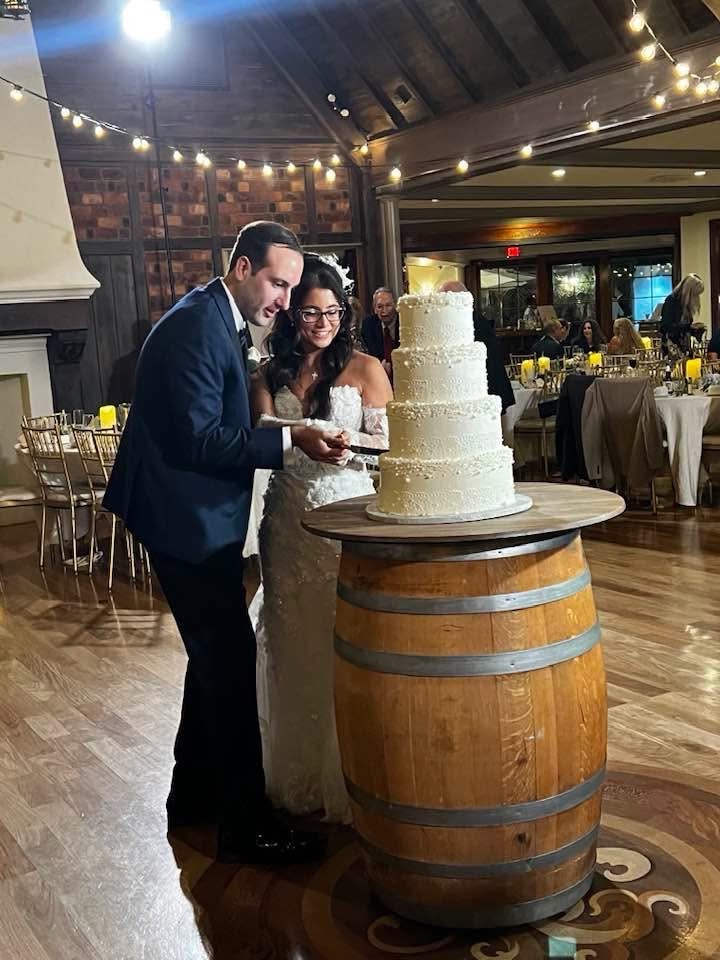
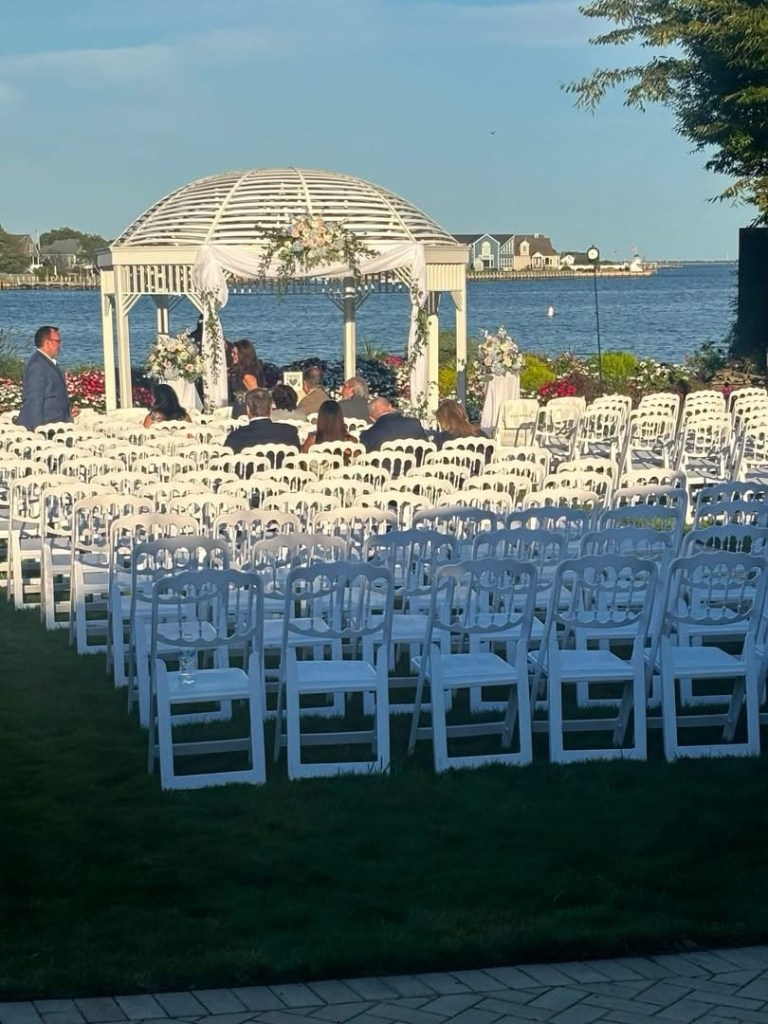
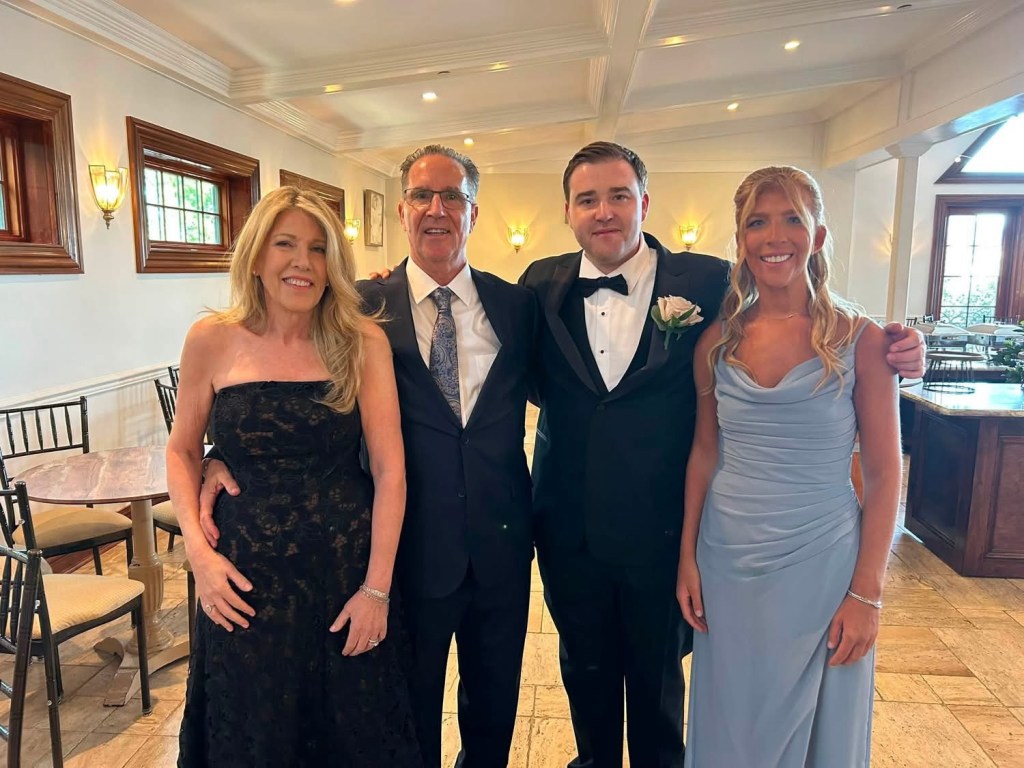
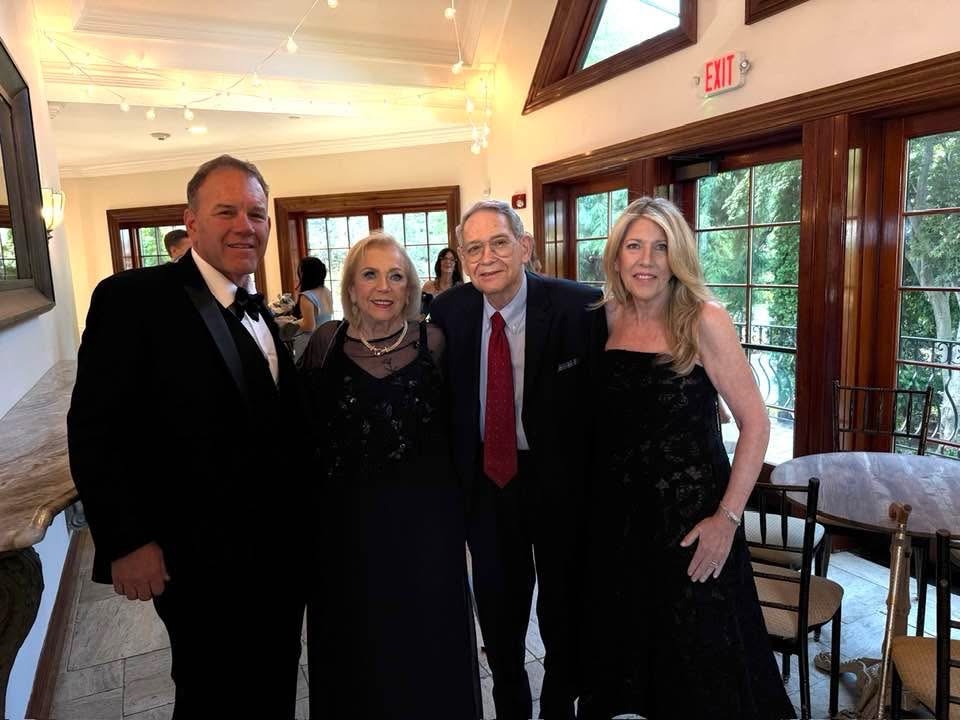
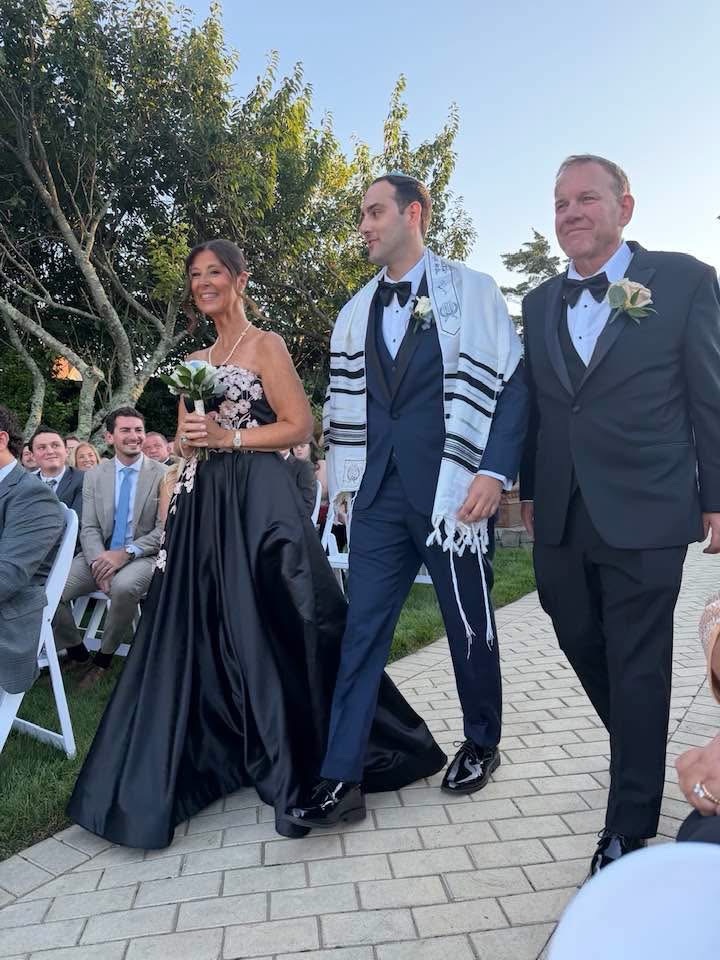
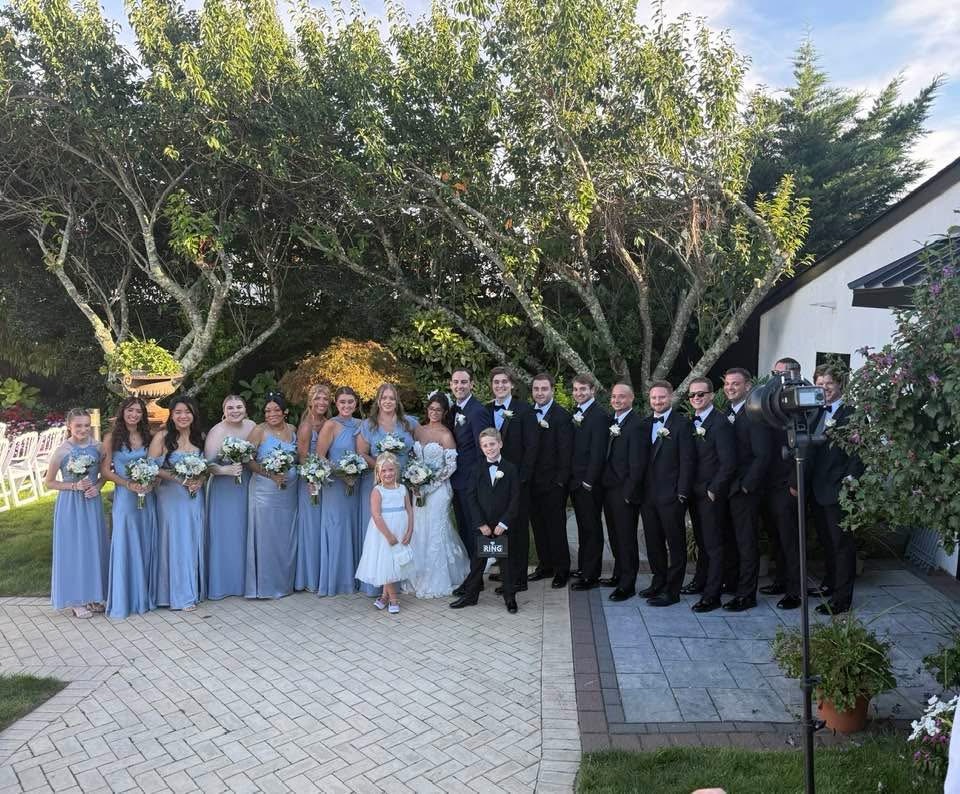
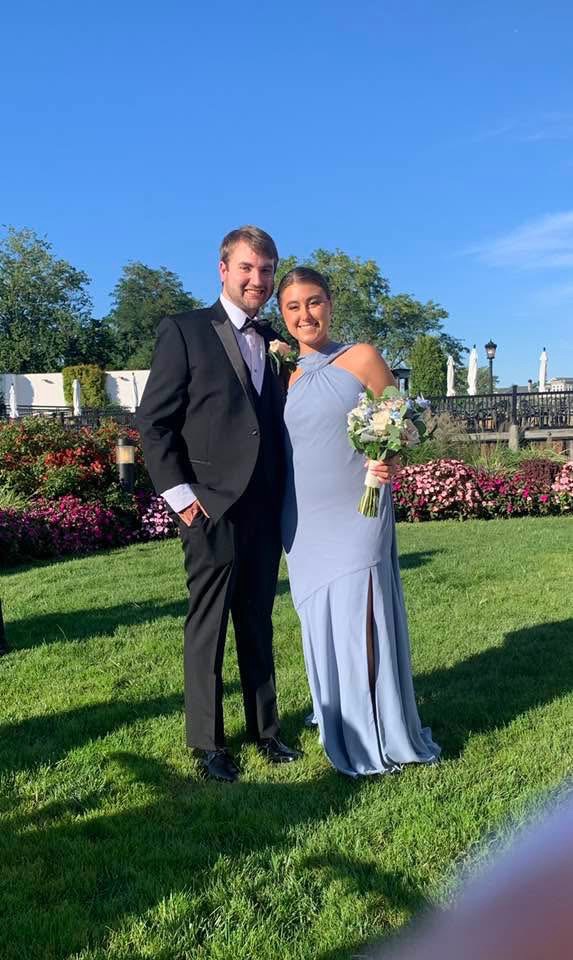
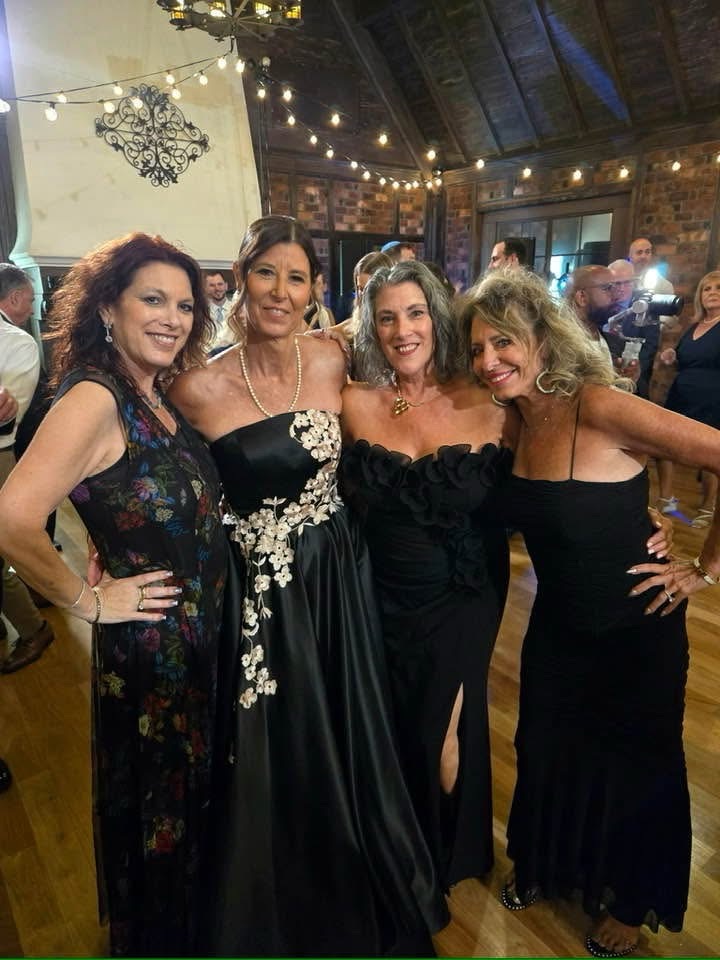
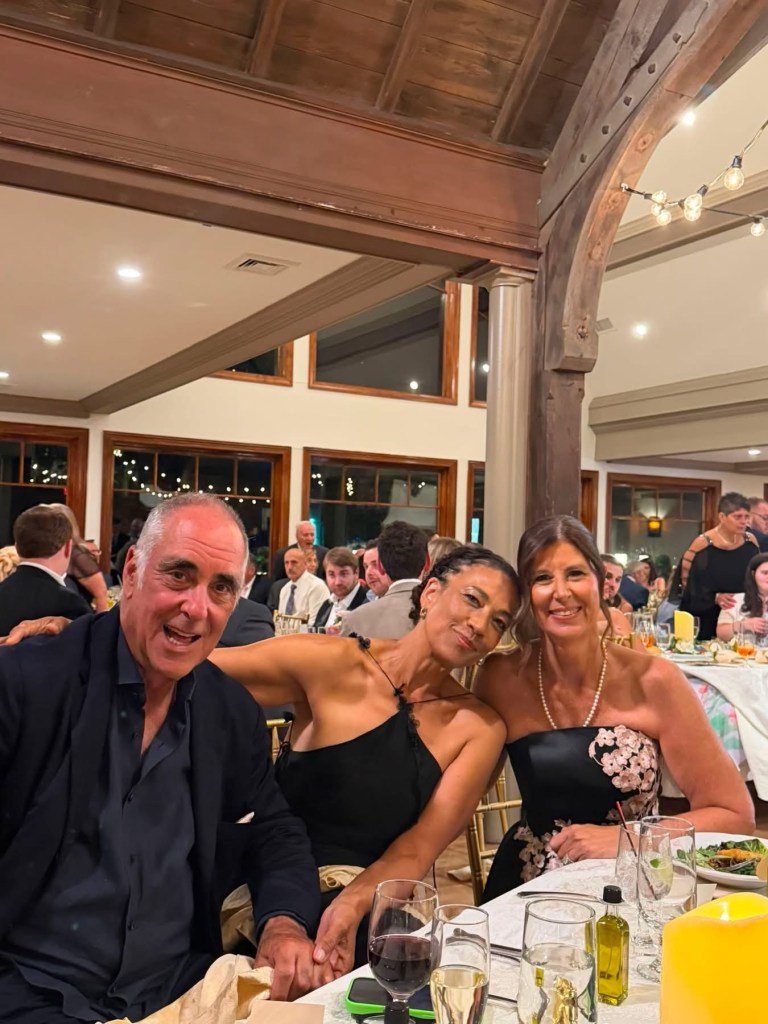
Eliot and I had the pleasure of attending the wedding of our cousins Ashley and Michael Wohlgemuth this past Saturday night at the Riviera Waterfront Mansion in Massapequa, Long Island. The most dancing crowd we have ever witnessed. A sensational event. A true love-in.