Marjorie Taylor Greene Catches Week-Long Twitter Suspension. Is a Permanent Ban Next?
Congress’ chief conspiracy theorist has been spreading Covid-19 misinformation for months
Twitter has suspended Marjorie Taylor Greene’s account for one week after the conspiracy-peddling representative violated its policy regarding misleading claims about Covid-19.
The tweet that triggered the suspension came on Monday, with Greene writing that the Food and Drug Administration should not approve the vaccines against the disease, which are “failing.” The vaccines have been proven effective, and an overwhelming majority of new Covid-19 cases, hospitalizations, and deaths are among the unvaccinated.
Twitter said in a statement provided to Rolling Stone that Greene’s tweet on Monday “was labeled in line with our COVID-19 misleading information policy” and that her account “will be in read-only mode for a week due to repeated violations of the Twitter Rules.” News of Greene’s suspension was first reported by CNN.
Twitter has a five-strikes policy regarding Covid misinformation. One strikes results in no action. A second strike calls for a 12-hour suspension. A third strike calls for another 12 hour suspension. A fourth strike brings a seven-day suspension. A fifth strikes results in a permanent ban. Greene has already been suspended for 12 hours twice, once in January for spreading misinformation about the election and once last month for spreading misinformation about Covid. The week-long suspension handed down Tuesday means she’s now a strike away from being kicked off the platform for good.
When asked for clarification about Greene’s suspension status and whether she is one more infraction away from a permanent ban, a Twitter spokesperson indicated that this is indeed the case, writing that “the information is in the policy.”
Greene has long been one of leading purveyors of Covid misinformation, regularly casting doubt on the efficacy of the vaccine and the severity of the disease, even as it continues to hospitalize and kill Americans. “No one cares about the Delta variant or any other variant,” Greene wrote last month. Covid cases in Georgia have risen 171 percent over the past two weeks, according to The New York Times.
Greene’s anti-vaccination message is resonating. Only 39 percent of Georgians are fully inoculated against Covid. When Greene spoke at a Republican fundraiser in Alabama last week, attendees cheered when she noted that the state is among the least vaccinated in the nation. Greene suggested at the same fundraiser that residents should greet government workers with guns should they knock on their doors to spread vaccine awareness. “What they don’t know is in the South, we all love our Second Amendment rights, and we’re not real big on strangers showing up on our front door, are we?” Greene said. “They might not like the welcome they get.”
When Greene was asked late last month whether she had been vaccinated herself, she refused to say, citing a violation of her “HIPPA rights.” HIPPA rights regard privacy of medical information, but do not pertain to reporters asking her about her vaccination status, nor do they prevent her from revealing whether she has received the vaccine she has repeatedly decried.
As of Tuesday, over 617,000 people have died in the United States from complications stemming from Covid.
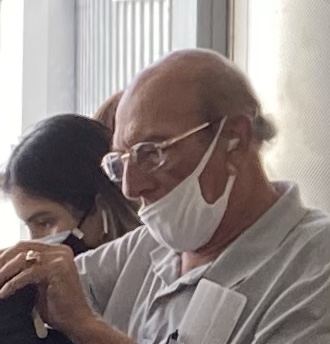
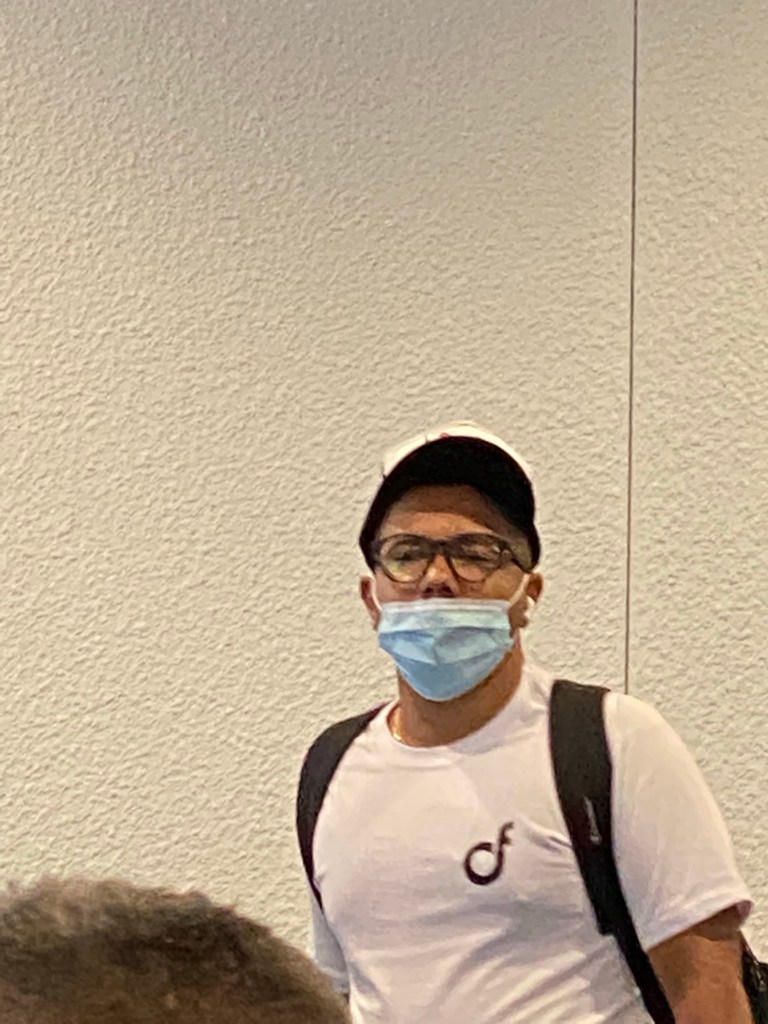
Shots Of People Waiting For Flights To New York At MIA
There are many novelists and filmmakers who follow DigiDame. I am very interested in your opinion about whether someone who writes a fiction piece, based on real life happenings, has a responsibility to the truth. This is a question that has been asked since the beginning of time. What is your opinion in the case of Amanda Knox? Read on……
From Variety Magazine
Amanda Knox on Why She Went After ‘Stillwater,’ and Filmmakers’ Responsibility to Truth — Even in Fiction
“I’m not arguing legal arguments. I’m arguing human arguments,” says Knox, who feels “Stillwater” refuels conspiratorial suspicions about her that were finally rejected by an Italian court.
As co-host of the “Labyrinths” podcast, Amanda Knox specializes in spotlighting real-life figures who, as she puts it, “lack agency” as they’re drawn against their will into becoming central figures in attention-getting stories. It’s something she knows a lot about, of course: Knox may need little introduction to anyone who followed international news, but she feels she has had too little power in shaping her own narrative, even since she was finally acquitted in Italy in the 2007 murder of a fellow exchange student, after years of jail time and repeated trials.
She says the trauma of living under perpetual suspicion has been revived by the release of “Stillwater,” which filmmaker Tom McCarthy has acknowledged uses Knox’s globally recognizable story as an inspirational springboard. An eloquent Twitter thread of Knox’s went viral as the film was being released last weekend, followed by her much-circulated Medium essay. Here, speaking exclusively with Variety, she expounds on where she thinks the film went wrong (including some last-act spoilers), and why she’d still love for McCarthy to get in touch with her.
A recurring theme of Knox’s: real stories should not be off-limits for creative adaptation — but “if you want to fictionalize a story,” she says, “really fictionalize it.” Or be prepared to contend with a subject who found her voice during those years in literal lockdown.
You haven’t seen “Stillwater” yet. You probably don’t plan to, right?
Oh, I would absolutely go see it — especially if they invited me to. [Laughs] That would be nice.
In your Twitter thread and essay, you said it would have been nice if Tom McCarthy had contacted you while he was developing the story of “Stillwater,” or in the run-up to the film’s release. But it’s easy to imagine any number of reasons why someone making a fictional story inspired by yours wouldn’t get in contact. They’d probably imagine your response is going to be “Don’t do this,” at worst, or “Let me be a participant in this, and completely change the screenplay you’re so proud of,” at best. So what would you have said to the filmmakers, if they’d called you?
For me it would have depended on what they would’ve said. But I think the thing that occurs to me here (to say) is: You’re a creative person. I’m a creative person. My husband’s a novelist, and he draws from real life in his novels all the time. I’m acutely aware of how much non-fiction is a part of fiction, and how much fiction is a part of non-fiction. And there are infinite stories out there that you could tell. But why did you decide to tell this one in this way?
I actually did a tweet thread about this long before this (latest) viral tweet thread that went out, before I knew how they had decided to fictionalize my story. It was me acknowledging that, yeah, my dad’s experience of trying to save me, and my entire family’s experience of trying to save me, is a story that is incredibly worth telling, and one that I’ve actually been suggesting into the world. Wrongful convictions don’t just happen to the individual. They happen to a whole network of human beings who love this person and know that they’re innocent and fight for their innocence. Tom McCarthy says he was inspired by my story and inspired by my dad, and you know what? My dad is an inspiring guy. So I said, “I hope that they do a good job of it in ‘Stillwater.’ I would have loved to have been informed of it beforehand, and I think that my dad would have had some really interesting insights into the development of this project, had they reached out, but I hope they do a good job.’”
And then I found out how they decided to interpret the Amanda Knox character in their narrative. … I in no way incentivized or had knowledge of or participated in the actions of the murderer who killed my roommate. (The filmmakers) created a story that didn’t really take the premise of my story as a springboard, (but one that rather) really did entrench itself in the scandalous interpretation of my story that was presented by the prosecution — one in which I was either directly or indirectly involved in the death of my roommate, who supposedly I had a sexual involvement and entanglement with, which I absolutely did not in real life.
It’s not a new imagining of my story. It’s one that’s long been in the ether, and one that directly impacts my life to this day. Because plenty of people write me off as, “Well, you know, technically she’s innocent, but there’s just something about her that feels guilty. She’s probably involved or has some special knowledge of this somehow.” And in this retelling, once again, we see a false narrative of me that is amplified — that I had special knowledge, that I was indirectly involved, that I had a sexual relationship. And I don’t think that the filmmakers can honestly say that they went far enough away from my case so that it wouldn’t be recognizably my case. And I think that that’s clear in all of the coverage where everyone’s like, “Oh, this is recognizably the Amanda Knox case.” And from that audiences can then draw conclusions about me, whether or not those conclusions are accurate or not.
So even though you haven’t seen the film, you’ve been filled in about how the story plays out.
Yes, I did some invest-imigating. [Laughs.]
Obviously, in a story like this, especially one based in real life, the filmmakers are going to want to leave some elements of suspense that aren’t wrapped up till the end, and that involves the character’s guilt or innocence. Making the character outrightly guilty of murder would really subvert expectations, and it doesn’t go there. But there is still a twist, maybe because pure innocence would seem anticlimactic after two-plus hours? [Spoilers ahead.]
It’s not a new twist that wasn’t already in the ether. My understanding is that the twist at the end is that the Amanda Knox character did not intend to kill her roommate, but she asked the killer to get rid of her, which is a kind of incentivizing of the killer and some kind of indirect involvement. That’s not exactly what my prosecutor said, but my prosecutor accused me of orchestrating Meredith’s death… And so, by reframing that same narrative that my own prosecution presented in the courtroom for the sake of the captivating story that it could tell… The question that Tom McCarthy really has to ask himself is, is it responsible to keep recycling that same story when we know what the consequences of that can be?
What are the consequences, for you?
I’m not anticipating getting wrongfully convicted again based upon “Stillwater.” But I do live to this day with this infamy of being associated with a crime and having my name be the defining factor of a crime that I had nothing to do with, and this story just reiterates that same problem for me.
What is more offensive to you? That people see the movie and believe the twist as an accurate reflection of real events — that you somehow bear some indirect culpability, even though you were ultimately acquitted in real life? Or is it more about being treated as if you were an adaptable fictional construct, and talked about even in the press coverage of the movie as if you weren’t in the room — as if you weren’t a real person in the world?
Yeah, I feel a little bit like Dracula, where everyone gets to have their own spin on it. I want to maybe remove the word “offensive” from the conversation, because I’m not sitting here feeling offended. I’m sitting here feeling like I don’t exist, as you said. I feel like I am a character in people’s minds, and people don’t remember that I’m a real person who’s living a real life. I’m a storyteller, too. And what I want to pose to especially creative people — because creative people are my people — is the idea that we aren’t just entitled to other people’s stories.null
I think the “Cat Person” essay [a viral piece published last month on Salon.com] is an interesting example of this. Here’s this real life that became this other person’s art. This other writer wrote a short story [for the New Yorker] about this young woman who she had never met because she was inspired by this idea of a young woman in a questionable relationship, and she made some really compelling art about it. But in the meantime, people are approaching [the inspiration for the fiction], saying, “Hey, I think this story is about you.”
I think I take a similar tack as Cat Person: Look, I’m not being precious. I’m not saying that I have full ownership over my life and my identity. I understand that art is going to be inspired by real life. But we also have an obligation toward each other when we so clearly draw parallels in fiction to real-life human people. Because people are going to draw conclusions from that fictionalized story and apply that to that real person.
If the filmmakers are clear that they only used your story as a springboard and fantasized everything from there, might they be able to say they’ve done their duty in drawing a distinction?
There’s been this ongoing idea that, “Well, as long as we call it fiction, then no one would honestly apply the ideas or feelings or conclusions that I bring with my imagination to the story to the real person.” And that’s simply not true. Especially when you’re looking at people like myself who continue to be brought up with a question mark, you deciding to tell that story in your own way is going to be adding to the ledger of how people understand and define me as a human being. And then Matt Damon and the director can walk away with a great story in their pocket, but meanwhile, I’m still living with the consequences of people thinking that I am somehow involved in this crime that I am not involved in.
I’m very open about how I’ve continually felt exploited by people who are not allowing me to be a voice in my own narrative. And because I have been so vocal about that, I find it to be a kind of gross negligence of these filmmakers to not take note of that in their own development of this project, and in their promotion of this project, constantly bringing me into the equation as this idea of me, as opposed to as the real person.
The film had a weak start at the box office. Do you think your objections going viral in the way they did on opening weekend influenced that?
I highly doubt that. But I am not an expert in these things. I know that my intention was to bring light to something that so often goes unacknowledged, and I wasn’t trying to make any sort of claims about if people should or should not see this film. I’m not out here to destroy Hollywood. Although I did and do still stand by the fact that I think it’s irresponsible to present a story that is identifiably my story, but the facts in a way that are not reality. If you want to fictionalize a story, reallyfictionalize it.
Amanda Knox
Your argument is not necessarily a litigious one?
A lot of people have said to me, “Oh my gosh, what’s your next step? Are you going to sue them?” And it’s like, wow, that was not even the first thing that came to mind. I didn’t mean this whole issue to be a litigious issue. I’m not arguing legal arguments. I’m arguing human arguments.
If anything, I wanted this to be a conversation starter, not a mic drop. I genuinely want to have a conversation with them about how they’ve decided to tell stories in the past and in the future, and whether or not they ever considered what I’ve brought up. And, honestly, I don’t think that they considered that. I don’t blame them for not considering all the things that I’ve brought up. But now that I have brought them up, I want to know what they think about it, and I genuinely think that a really good conversation could come from it, in which everyone all around could have a great learning and connecting experience. I’m not afraid to say it like it is, but I’m not out here to vilify them either. I don’t mean to drop a bomb in the water and have it become celebrity wars.
I really mean it when I say I would love to have a conversation with Matt Damon and Tom McCarthy about what they intended in turning my story into art, and why it never occurred to them to reach out to me to, at the very least, inform me that something that was going to be dredging up an ongoing trauma that I have, along with what kinds of creative choices they decided to make and how that might impact me. If anything, what I want to really show was not that these are bad guys who are doing bad things, but that these are very likely good guys trying to make good work, and it just never occurred to them that their choice to tell my story, in the way that they’ve chosen to fictionalize it, and the way that they’ve chosen to use my name as a promotional tool, is going to impact me directly. And I’m not someone who is off the grid. I’m very approachable.null
Every day we all make the mistake of treating other human beings as cardboard characters for our own reasons. And I don’t want to do that to Matt Damon and Tom McCarthy. So let’s have a conversation and engage, now that we’ve clumsily stumbled into each other.
You’ve been through this before, right, with crime films or shows where your name is used as shorthand for where the plot will go? You mentioned the Fox series “Proven Innocent.”
This is not the first time that this has happened to me. It’s an ongoing conversation that I would love to be a part of, if the creative people out there who have all this power to make all these incredible stories would give me the time of day. There are novels — one called “Cartwheel.” There was a BBC show, I think, called “Guilt.” We’re all over the place here.
A couple of phrases that you often use stand out: “power dynamics” and “without agency.” On your podcast, “Labyrinths,” you’ve had guests who you feel have been drawn into long-lasting, scandalous news stories through no fault of their own, and sometimes, as in your case, become the defining personalities of those stories, even though they were the most passive or least powerful people involved. You had on as a guest Samantha Geimer, to talk about the Roman Polanski story she’s been associated with for decades. And you’ve talked about Monica Lewinsky. Do you feel like filmmakers and writers who are inspired by real life for fiction should draw the line on creating stories that involve people who didn’t bring these things upon themselves?
First of all, I would say that those who are exercising their agency, the way that one imperfectly exercises one’s agency, also make for very interesting drama, storytelling-wise. I mean, it would be fascinating to understand the mind and the reasoning behind my prosecutor’s actions, say, who is someone who had way more agency in this whole story than I did.
But I do think that what has happened with “Labyrinths” is that a lot of people have reached out to me because they feel like a story is happening to them. It is not something that they did or made, but they became the center of something that was happening to them that was bigger than them, and they may not have the agency to control what ends up happening to them. A lot of people reach out to me who find themselves in that situation because they feel like they have no voice. Samantha Geimer reached out to me to say, “Hey, just so you know, I know what it’s like to have my narrative stolen, too. A lot of people want me to be Lolita and the 13-year-old girl who seduced the innocent older guy. And a lot of other people want me to be the vengeful rape victim who wants to throw Roman Polanski into prison for the rest of his life. And I’m neither of those people, and no one has ever given me the opportunity to be the voice of my own story and to define who I am in this morality play that we keep playing out over and over again.”
“Labyrinth” podcast
I do feel like, especially in these cases, a storyteller has more of a responsibility in reaching out and at the very least acknowledging that how they tell that story is not just going to impact the person, but is going to be a continuance of that story that is imposed upon that person. That person didn’t choose to go through the experience that they went through, and didn’t choose for you to continue to use that story as content. So any way that you can give back a sense of choice — or, at the very least, acknowledge that lack of choice — is a very, very human thing to do.
For yourself, do you feel like you’re in a double bind, just being out there as a public personality, trying to reclaim and redirect your story? It’s easy to find people on social media saying you obviously enjoy the attention, but the alternative is letting other people be the authors of your experience for as long as people still care… which looks to be a very long time.
It’s definitely a challenge. And there are times where I question it all and think about disappearing into a hobbit hole. What I have found is that I have a lot of perspective that I’ve gained from my experience, and a lot of compassion for people that I see lacking in society at large. And for that reason, I’m trying to exercise what I’ve learned, and that means drawing upon my experience. I often feel like I don’t really have a good choice; I have to choose what I feel is the best choice out of not-great options and try to make the most of a bad situation. In the process, I’ve connected with a lot of people who I didn’t know needed my help, and that has been an incredibly rewarding experience. Because — I was thinking about this, this week — I’m not the first person this has happened to. I’m just the first person who wrote a (viral) Twitter thread about
People are apparently injecting themselves with other people’s blood to get high now?
Unless you’re getting a blood transfusion in a hospital, injecting yourself with someone else’s blood is a terrible idea.
Last summer, police in Bucks County, Pennsylvania picked up a man carrying an unmarked vial of red liquid. During questioning, the 33-year-old explained that the vial contained human blood and fentanyl, a painkiller 50 to 100 times more potent than morphine. The liquid’s street name: “BLOOD.” (All-caps is apparently the going style for the substance’s street name, but we’ll stick to “Blood” from this point forward because frankly, using BLOOD over and over again makes this article look like it was written by the Count from “Sesame Street”.
Officers sent the vial, which contained about a half a teaspoon of red fluid, to forensic toxicologistLaura Labay.
“It was the strangest thing,” she told PopSci. “If you look at whole blood in a test tube, it’s thick. This looked like blood but it was more watery.” Some sort of fine powder swirled around inside it, and it smelled like cough syrup.null
In her laboratory at NMS Labs in Willow Grove, Pennsylvania, Labay confirmed that the specimen did indeed contain human blood. But it also carried a lot more than fentanyl.
Lab tests detected 13 different substances in the “Blood”, including residues of ethanol, codeine, ephedrine, THC, and 11 milligrams of of methamphetamine—a full dose. The results were recently published in the Journal of Forensic Sciences.This vial is filled with human blood and a cocktail of drugs, including a full dose of methamphetamine. The man who was carrying it intended to inject himself with it.
When drug users shoot up, a bit of blood sometimes backtracks into the syringe. Labay and her colleagues have noticed that sometimes users will let their blood spill into the barrel, then give the needle to another user to sample (or “taste”) the drug. But this is the first time they’ve heard of anything quite like this, where it appears the drug-impregnated blood was distributed for later injection.
Because most of the drugs were present at levels lower than a typical dose, and because the blood contained metabolites that are left over after a body starts to break down these drugs, Labay thinks the “Blood” came from someone who had previously used pseudoephedrine and heroin.
“Somebody must have taken blood out of somebody and purposely added methamphetamine in it,” she says. “You can’t just be walking around with that much methamphetamine in your blood and be ok.”
Labay and her co-author can’t say for sure why someone would want to take drugs this way. It’s possible that the cocktail of other drugs was meant to heighten the effects of the methamphetamine. Or maybe some people just like the exoticness of consuming human blood. The dangers of doing so should be relatively obvious.
For one, unless the man carrying the “Blood” was lying about its contents, he was unaware of most of the drugs it was laced with, or even the primary ingredient. “People don’t know what they’re putting into their system,” says Labay.
Making matters worse, if the man who bought this vial already has a high tolerance for fentanyl, he might decide to inject a larger dose of Blood to ensure he feels its effects. That could potentially make him overdose on methamphetamine if he has no tolerance built up to the stimulant.
Obviously, infections are another big risk here. Because of backtracking, sharing needles spreads HIV, hepatitis, and other blood-borne infections. And that’s with just a little blood residue. Injecting mysterious vials of blood is an even worse idea.null
Plus, you’ve got to worry about blood types. If you inject blood that’s incompatible with your blood type, your immune system might start to rip the foreign blood cells apart, triggering a cascade of reactions which potentially include blood clots clogging up your veins and killing you.
Popular Science tried reaching out to the Bucks County police department to find out how common cases like this are in the area, but we didn’t hear back before this article was published. (If we get more info, we’ll be sure to update this post!)
As for Labay, she says it’s the first time she’s seen something like this, and she couldn’t find any other examples on the dark web, either. “I don’t know if it’s one case in this country, or if this is a common practice. It’s just really odd.”https://6e53a3f1b4ed3f74dda60e5fe90f42c0.safeframe.googlesyndication.com/safeframe/1-0-38/html/container.html
Blood has its own street name, which implies this may not be a one-off case—even though it’s a bad, bad idea and makes no sense. What will the kids think of next?
This question will sound ridiculous, but it isn’t: Is YouTube a success?
Please hold your boos. It’s hard to imagine the internet without YouTube. Buying the video site in its relative infancy was one of the smartest things Google ever did. But after nearly 15 years of being part of Google, the most successful money machine in internet history, it’s still not clear that YouTube has fulfilled its financial potential both for itself and everyone involved in its vast digital economy.
Two data points: The money that YouTube keeps from selling advertisements — its main source of income — was about $11.2 billion in the past year, not much more than the ad revenue of ViacomCBS, a mid-tier American TV company that owns the CBS television network. Twitter, which is not so hot at money, pulls in roughly double the ad sales on average from each of its users compared with YouTube.
No one should feel bad about YouTube. Yeah, it’s fine. But it says something about the vitality of the internet that YouTube is probably the most vibrant economy online and it’s still hard to call it an unqualified financial winner. And if YouTube isn’t winning, its masses of video creators also won’t be.
The internet’s big promise was to give anyone a shot at making a living from doing what they love, but YouTube shows just how elusive that dream turned out to be. If YouTube isn’t quite living up to high hopes, that means the internet isn’t, either.
Let me dig a little deeper into how odd YouTube is in one important respect: It pays some of the people and companies that stock its virtual shelves with products.
At Facebook, Instagram, TikTok, Snapchat and Twitter, we make their products for free — with some exceptions — in the form of our silly memes, photos from engagement parties and beauty tutorials that we post. For video makers that meet YouTube’s standards, the site typically hands over to those people and organizations about 55 percent of the money from ads that appear in or around their videos.
Because of YouTube’s revenue sharing and other ways for content creators to make money from videos, it most likely has delivered more income to people online than any internet site ever. (This is impossible to prove. People do make money in less direct ways from building an audience on places like Instagram and TikTok, but YouTube remains a go-to spot for people to earn an income online.)
Maybe YouTube, particularly after revelations several years ago that companies’ advertisements were appearing in videos that promoted anti-Semitism and other horrific views, has been less aggressive than companies like Facebook and Twitter about shoving commercial messages everywhere. This is a good thing, even if those are missed opportunities for YouTube and video makers to earn more money.
The end result is that YouTube makes a lot of money for itself and video makers, and its revenue is growing very quickly, but the numbers remain kind of meh relative to its size and influence.
The fact that I even mentioned YouTube in the same paragraph as the middling TV company ViacomCBS and Twitter … well, that says something about how YouTube has underwhelmed for some time. YouTube’s cut of ad revenue is also less than half the size of Netflix’s yearly revenue. (Those figures don’t count YouTube’s income from other sources including subscriptions, which the company does not regularly disclose.)
If YouTube has so far fallen short of its financial potential, what does that say about the rest of the digital world? If you read the work of people like my colleague Taylor Lorenz, who chronicles the internet’s labor force, it’s easy to see that there may be a mismatch between the promise of the internet economy and the reality.
Some people do earn a good living from their creations on YouTube or other apps, but many others are constantly hustling for peanuts and burning out.
It’s hard to stand out in the sea of people making dance videos on TikTok, livestreaming video games on Twitch or hosting YouTube talk shows, and it has always been that way for creative professions. Except digital optimists wanted to believe that the internet would make it easier and more democratic for anyone to find their fans and their calling.
That’s why YouTube’s finances matter to the rest of us. If YouTube isn’t quite working out, then the promise of the internet isn’t, either.
———————————————
Your Subconscious Has Seen This Many Times
———————————————
Eliot and I want to rent this home in the Hollywood Hills for a few days for two reasons. One is because Bosch filmed there and two, to scare the heck out of us.
Eliot and I went to take a Covid test today at the Miami Beach Convention Center just in case someone asks us for the results over the next few weeks when we are traveling around. Fingers crossed.
A friend just posted this entire message and I thought it was very meaningful. The world is changing. We better change with it.
“Every time you are tempted to react in the same old way, ask if you want to be a prisoner of the past or a pioneer of the future.” – Deepak Chopra
Many of you have a tendency to overreact when people don’t see the world the way you do. You literally can’t cope with it mentally and then you wonder why you struggle so much in your personal life and business.
Your business, like most businesses, is a relationship business! Even when you break down the word into two parts, RELATION and SHIP you can see the broader meaning: A connection between two objects (People) that are always moving (Ship).
It will always be a challenge to connect things that are always moving, but you have to be willing to see how the other side is moving in order to connect with them. For many of you, this is a problem because you don’t know how to connect with the opposing view.
Talking to a lot of people will eventually get you into a situation where you don’t agree with someone. If you’re not comfortable in conflict you won’t be a great success in this business or as a leader…
Every time you walk into a meeting remember that there’s a potential for conflict. How you handle conflict will determine how successful you are in this life and in your business.
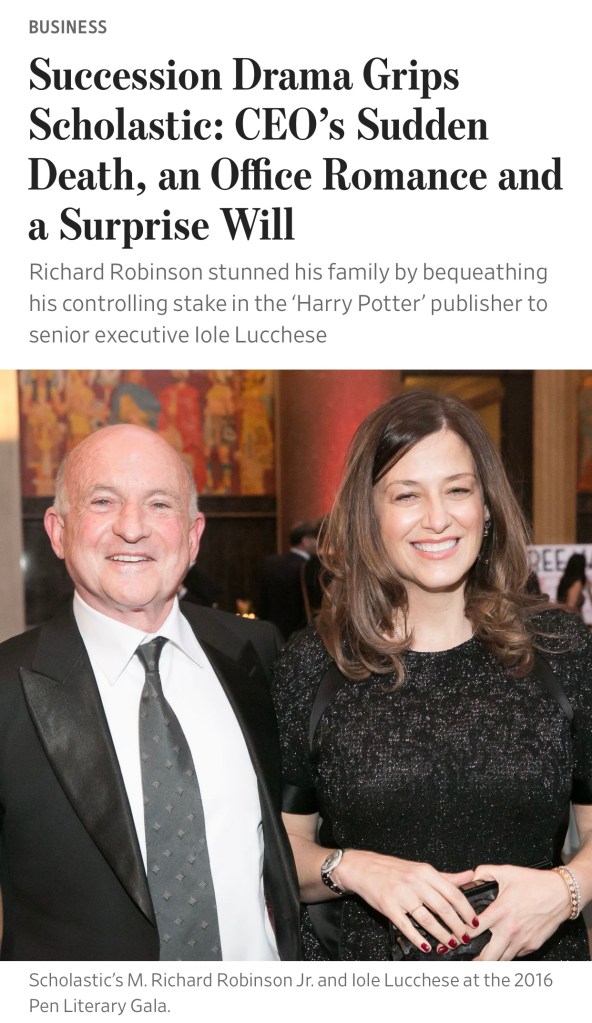
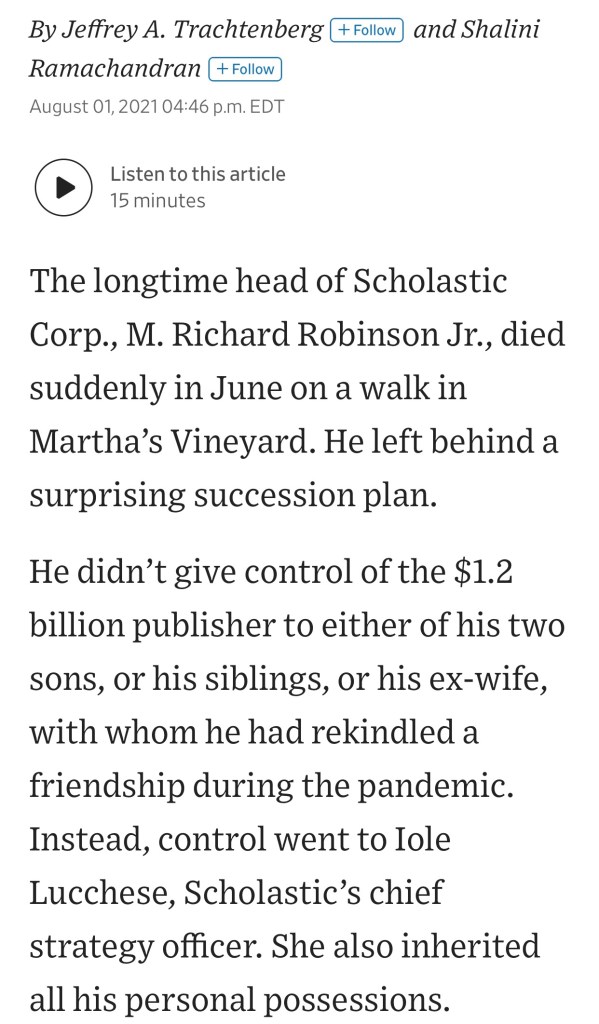
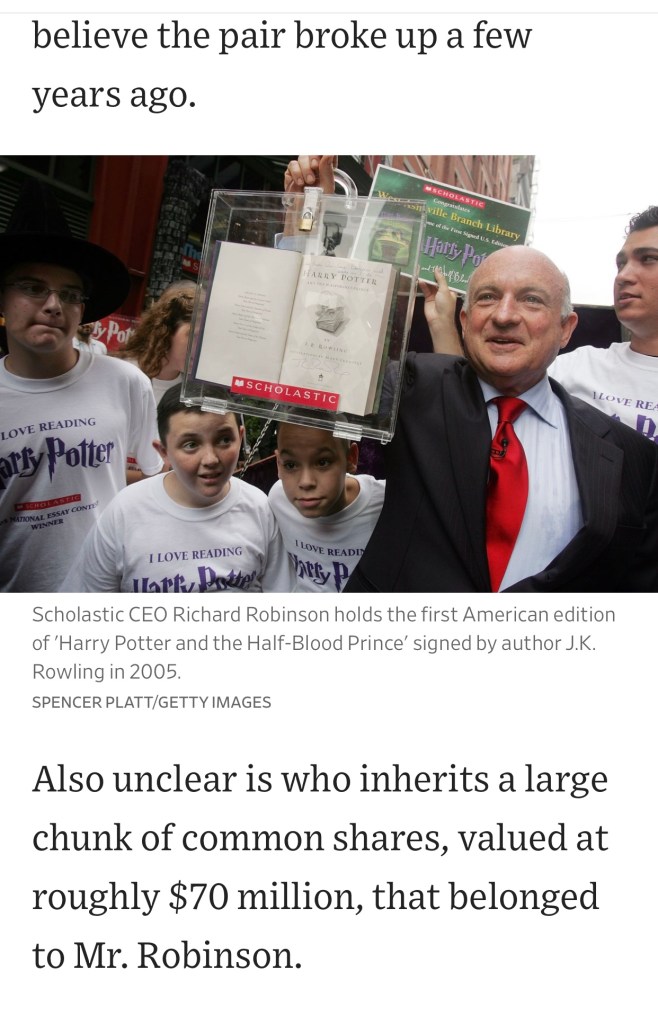
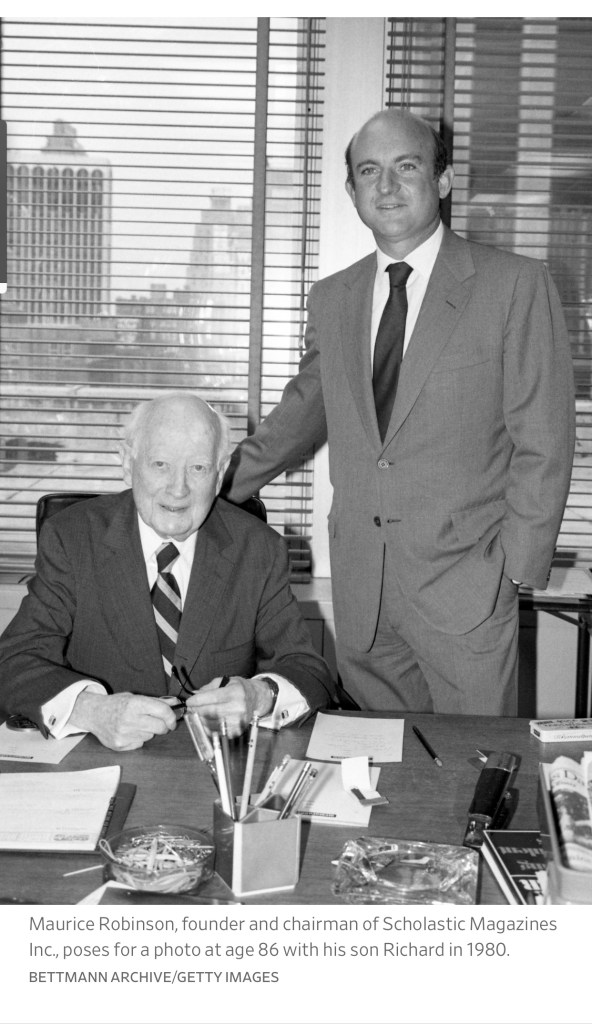
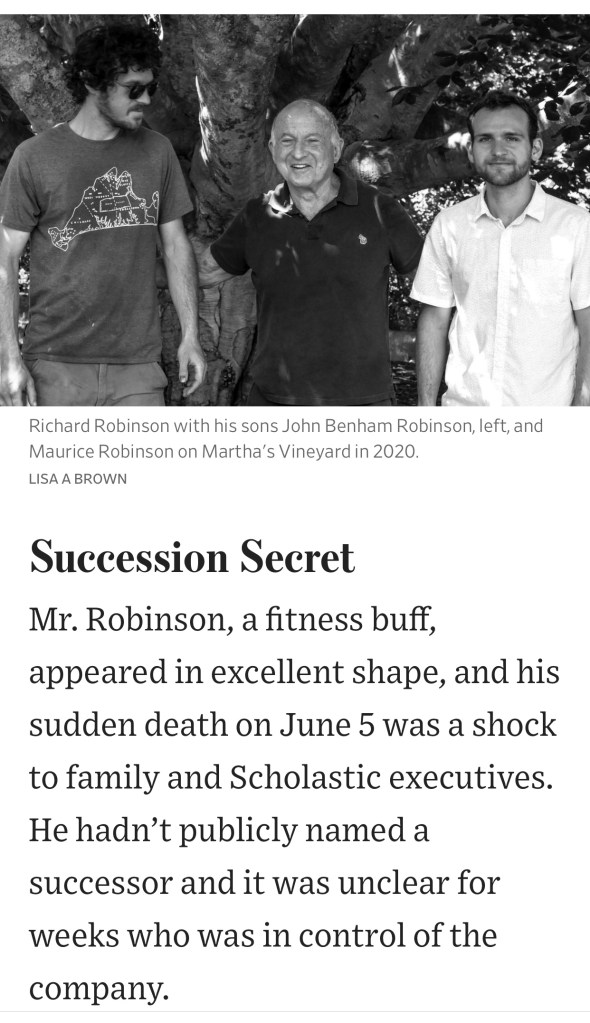
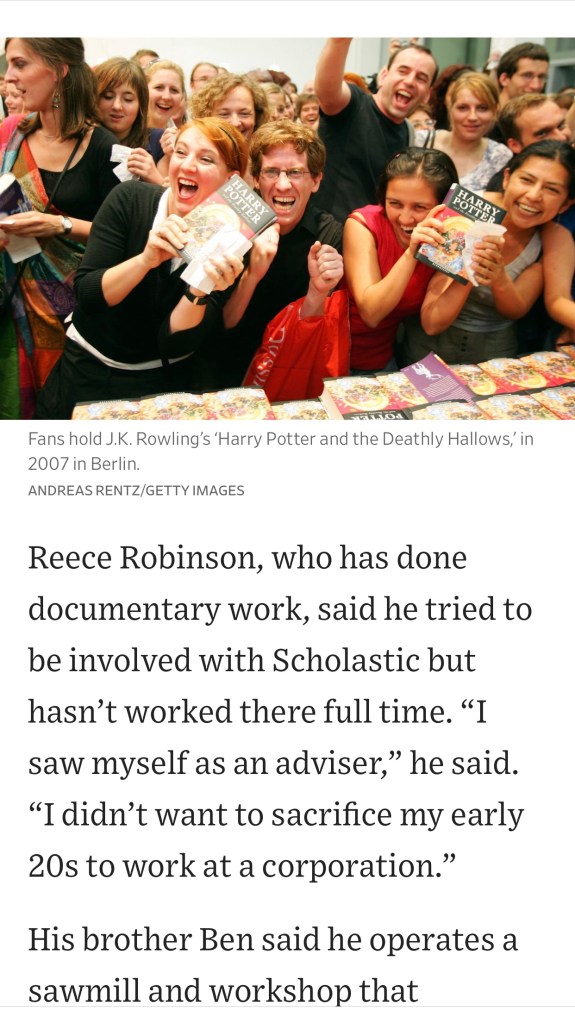
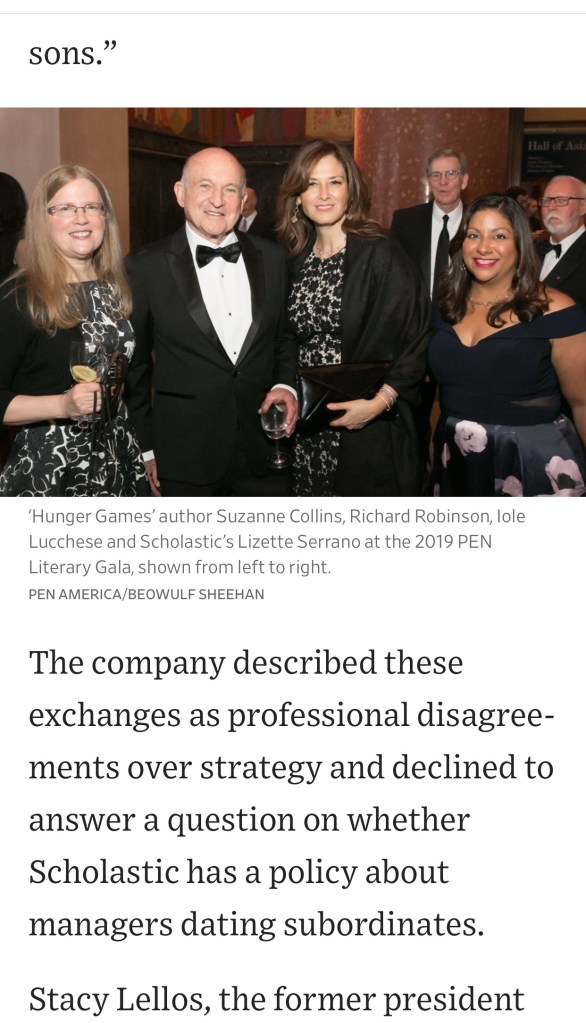
If there is one thing we learned during Covid, it’s that we can’t predict the future. Everything seems to be changing so fast. Everyone who thought Scholastic would be around forever got a big surprise last June when the CEO died. His choice for his successor is really going to change the dynamics of the company. Read all about it in the WSJ.
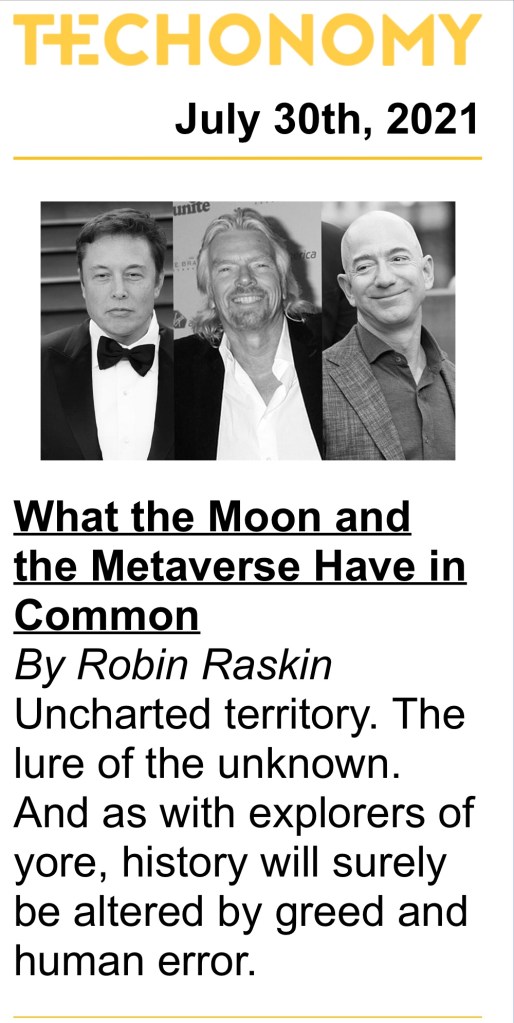
My Friend Robin Raskin outlines what Richard Branson, Jeff Bezos, and Elon Musk are doing in the worlds of outer space and digital space. Pay close attention. You will probably be visiting both.
Lewis and Clark, Ernest Shackelton, Roald Amundsen — they just couldn’t sit still and not dream of uninhabited places. George Mallory, a climber who lost his life on Everest, has earlier been asked why he climbed it. He answered, “because it is there”. (That’s often wrongly attributed to Sir Edmund Hilary.)
Today we can see the distant edges of two new territories ripe for new kinds of exploration–one physical, one virtual. One is in outer space, the other in digital space. Both are fueled by big egos, big dreams, and the same pioneering passion for the unexplored.
Three brash (and that’s the kind word) entrepreneurs: Richard Branson, Jeff Bezos, and Elon Musk have set their sights set on space travel, each with a different variation on the theme. According to CNN, the trio has a combined net worth of $400 billion, roughly the size of the GDP of the nation of Ireland. And they’re spending much of it on space travel.
Musk is operating a commercial service under contract for NASA to ferry people to and from space. Musk is also interested in sending people to Mars. With his contracts, and despite the fact that he personally has thus far remained grounded, Musk may be farthest along.
Bezos is currently dreaming of space colonization. He imagines living and working in space, in the likely event that Earth reaches a point where it’s a less desirable habitat. He is so eager to make progress that he seems to be trying to bribe NASA to let him help build the next lunar lander after his Blue Origin space company lost out to Musk’s SpaceX on the recently-awarded initial contract.
Branson’s focus is also on space tourism, giving new heights to the name Virgin Galactic. Their stories of conquering new lands will be read by children of the next generation

Back on Earth, the pioneers are heading to the metaverse–also to colonize, set up communities and invite tourists to visit. Whether it’s the gamer community, the NFT/crypto folks, or AR and VR developers, it’s a virtual land grab for engagement. The big idea is to create completely immersive worlds that exist only digitally. Like in space, you might work there, play there, be entertained or set up shop. Like space, the metaverse has been talked about as a place where new rules can be written, and new values and norms explored.
Just this month Mark Zuckerberg’s company, Facebook, announced it would be heading to the metaverse in a big way. According to Zuckerberg, the future of Facebook’s community is in the metaverse. For the moment, the only glimpse we have into that vision is through Oculus Rift VR glasses, owned by Facebook, and the variety of experiences offered through them.
While Zuckerberg hopes to be Master of the Metaverse, he is far from alone and far from the most experienced. Companies like Virbela are digital-first from their roots, whether it’s to learn, play or meet. Even their own employees trudge to work each day in a digital twin of the physical world. MootUp, a 3D immersive environment, just partnered with Verizon’s Blue Jeans (software kind of like Zoom) to offer enterprises the opportunity to mingle in the metaverse. Niantic, the maker of Pokemon Go, has embarked on the boldest vision of the metaverse to date. It is building an AR replica of the entire planet, offering visitors a chance to experience the real world, but augmented with digital information.
An important part of the metaverse is that its shingle reads “open for business.” Whether it’s a concert, fashion show, disco evening, learning symposium, or something else, metaverse companies are encouraging brands and creators to offer unique experiences in their digital worlds. Companies with services like Fortnite, Minecraft, and Animal Crossing, though their roots are in gaming, have already attracted big investment dollars and big sponsorship dollars from brands.
One of the premiere metaverse destinations began life as a children’s game. Early on, Roblox adopted a few tenets that turn out to be somewhat foundational to a metaverse. It makes its users part of its revenue-sharing model. As users create new games on the platform, they open the platform to other brands that want to build worlds in Roblox. There’s also a MIM-currency to spend (for Magic Internet Money) and Roblox also has given its audience agency to dress, groom and raise their own avatars, which proved wildly popular. Companies including Nike, Disney, Warner Bros., and Gucci are actively setting up experiences there.
The cost of exploring the metaverse is magnitudes lower than space exploration, of course, but what they have in common is the lure of uncharted areas. The unknowns are vast. Of course, just like with the explorers of yore, the course of history will inevitably be altered by greed, motive, and human error. But make no mistake, the Moon and the Metaverse are open for business.
——————————————-
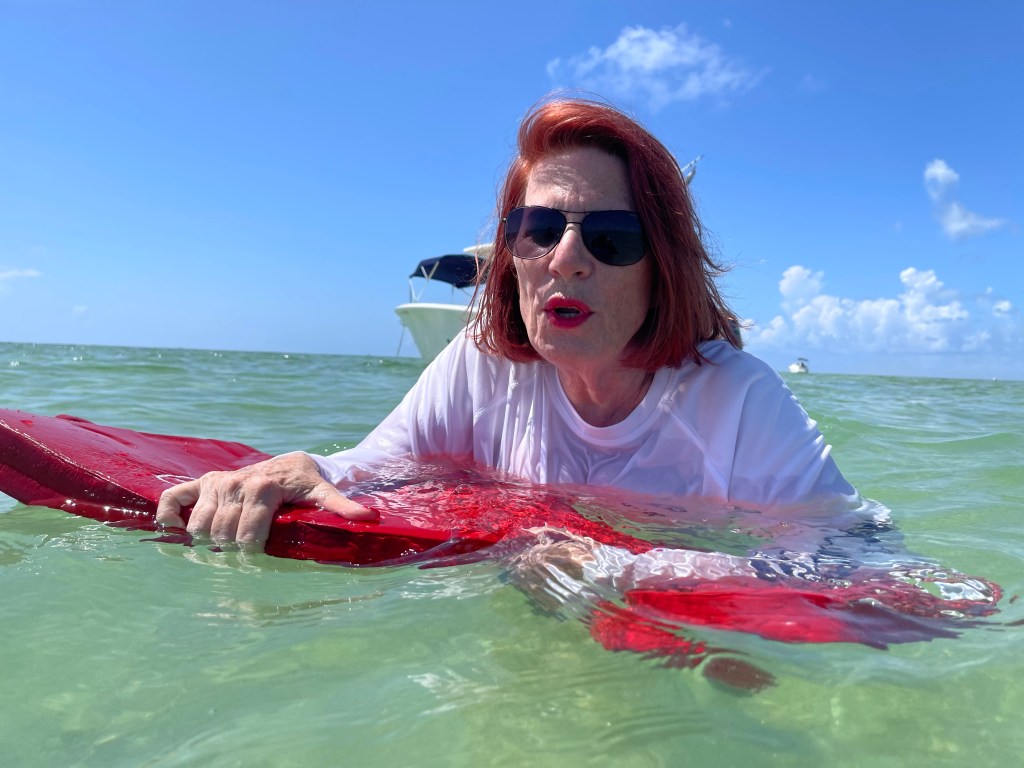
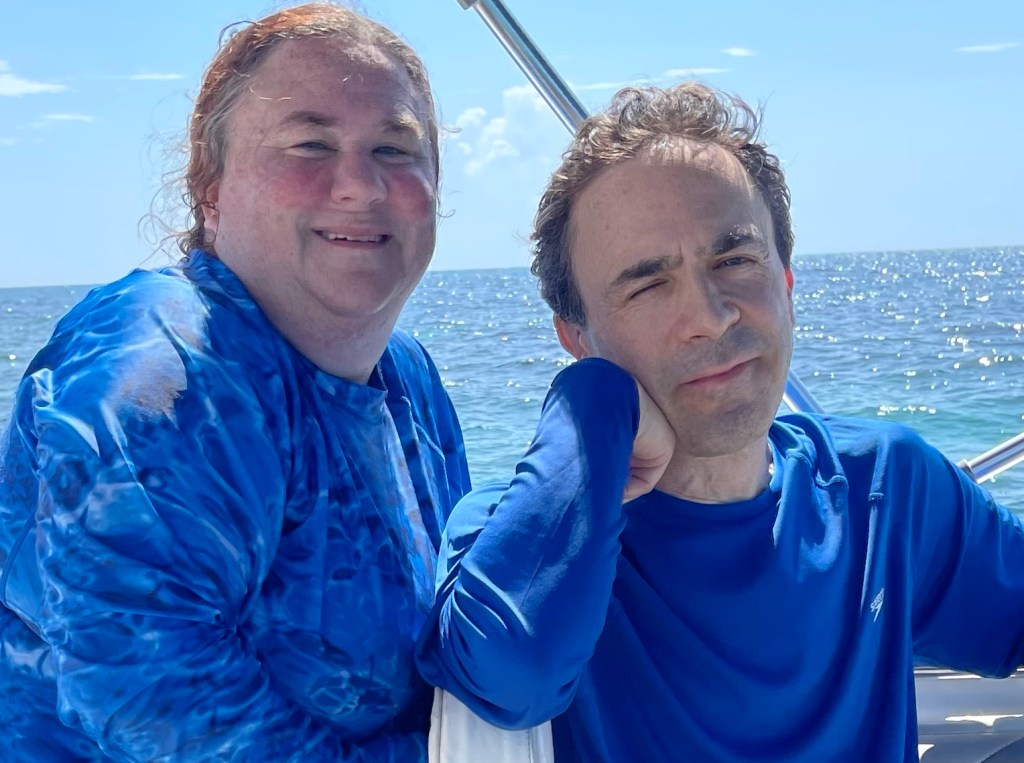
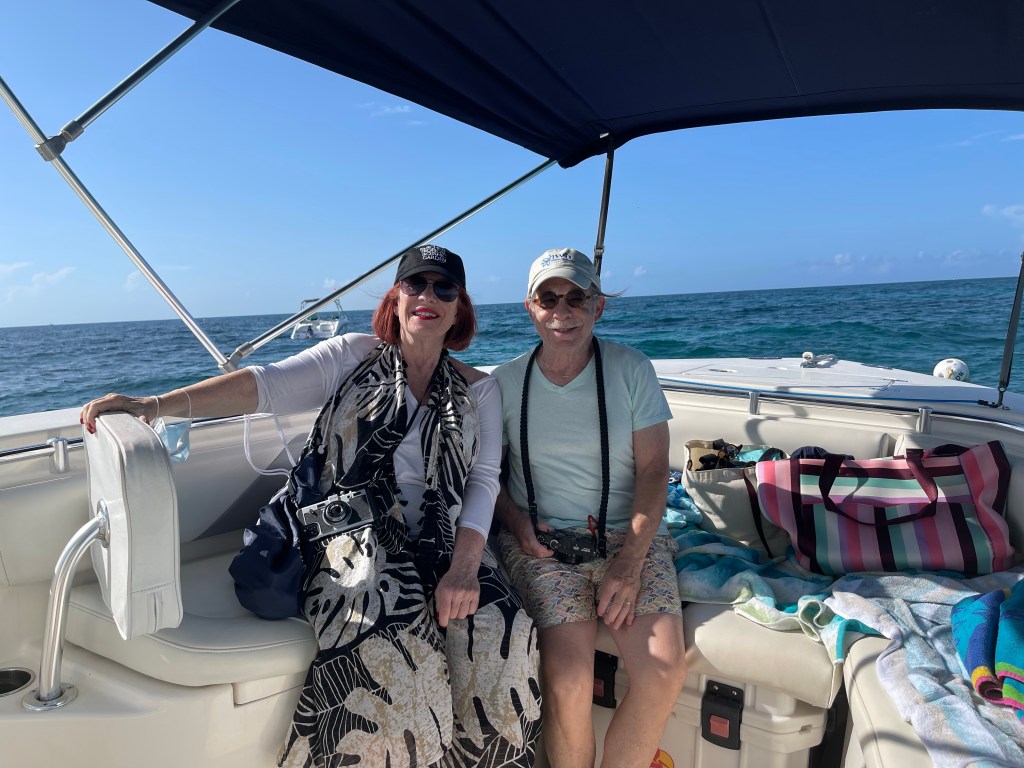
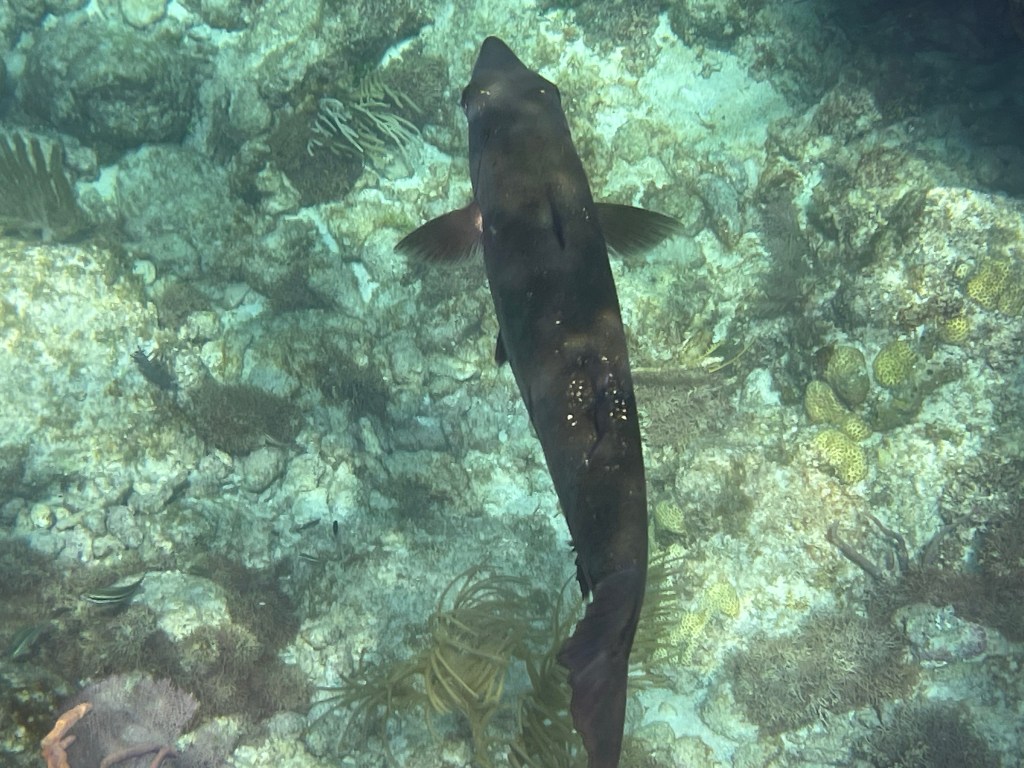
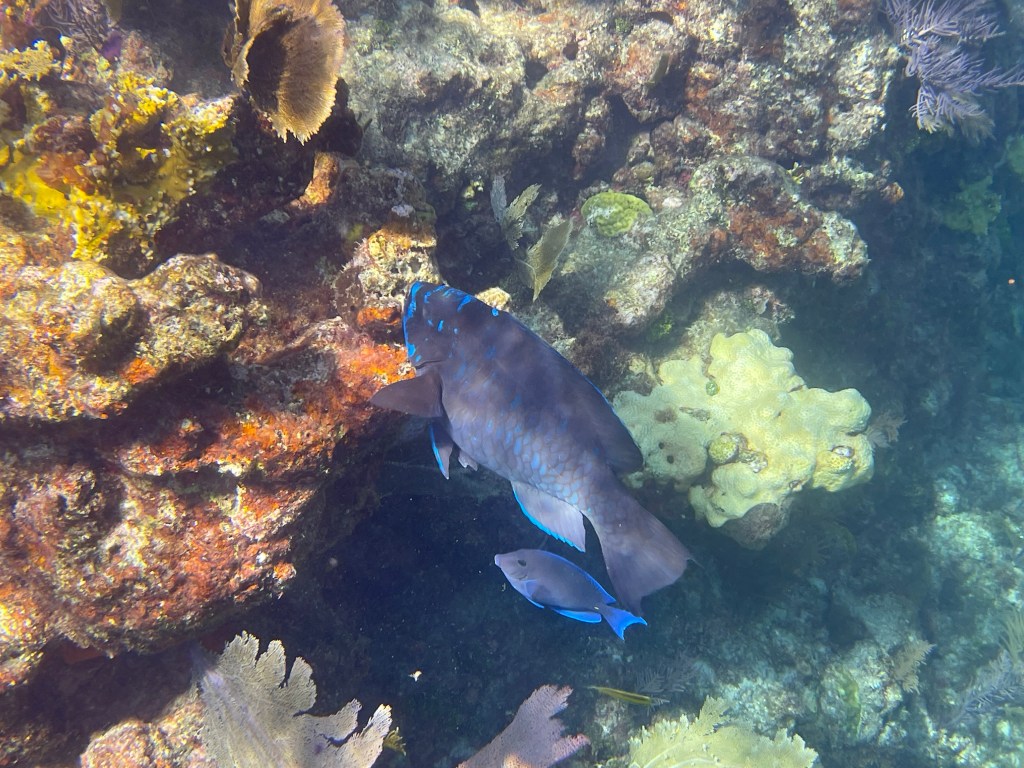
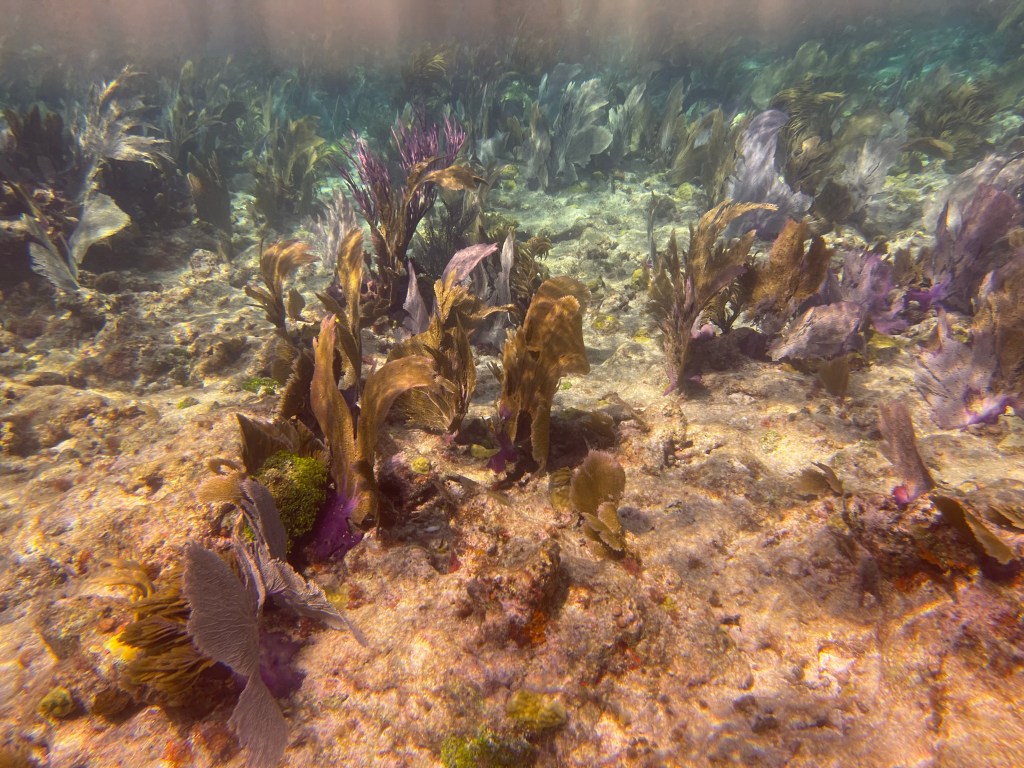
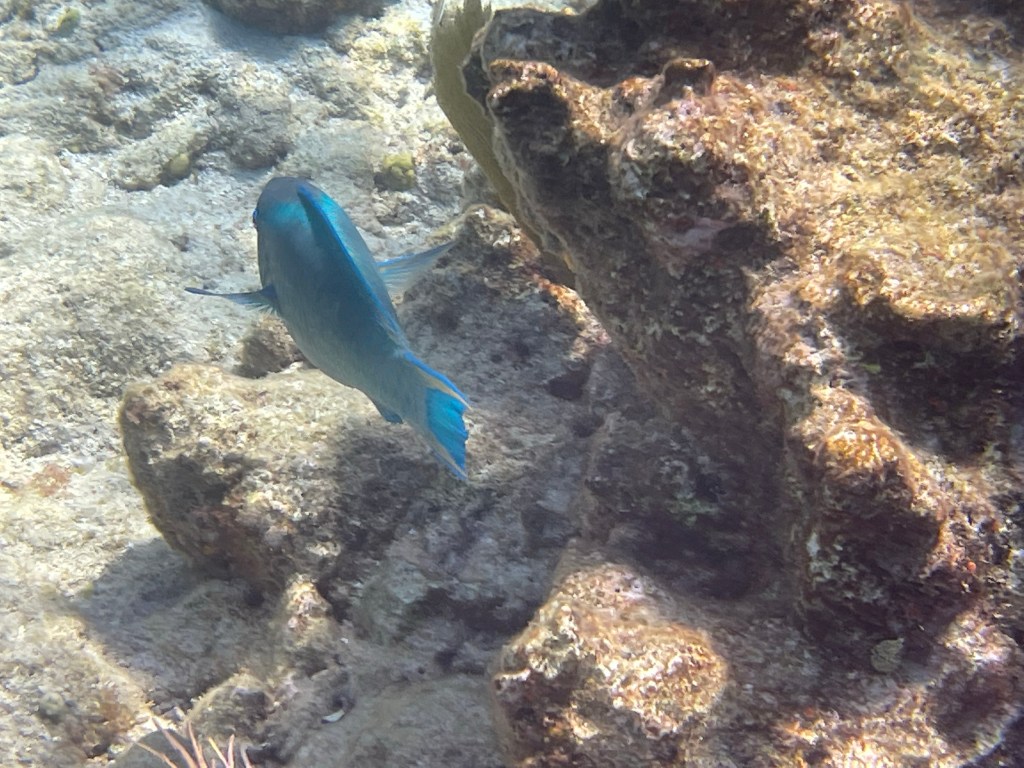
The Hess family (Dorothy, Adam, Valerie, and Alfredo) arranged for a wonderful day of boating, swimming, and snorkeling in Key Largo. We can’t wait to do it again. Photos by Valerie Hess.



























 DigiDame