As The World Turns

Bill Maher goes on Joe Rogan to urge people to ‘not trust medical professionals’

Bill Maher is just as polarizing as ever on his Joe Rogan rant.

Bill Maher
Bill Maher

Bill Maher has always been quite the polarizing figure when it comes to political humor, he has probably the hottest and most controversial takes out there. His television shows tend to go straight to cable because they simply are too irreverent to air on public television. Heavily political and leaning to the left, Maher has made a name for himself as one of the most important left-wing political comedians in American culture. With that said, it’s rough watching him completely ignore what the medical professionals have been recommending for the last three years of the global pandemic. For some reason, Maher fell into that category of powerful elites who think they have the absolute truth about medicine amid a global pandemic.

During his time at Joe Rogan’s podcast, he decided to simply slam all the medical recommendations that come along with how people need to handle the pandemic. His excuse was to directly attack the giant pharma industry but he never stopped for a second to think about the actual medical professionals who are on the day-to-day fighting against the pandemic. If he stopped for a second to talk to many of them, perhaps he would find different answers to all his questions. Joe Rogan is definitely the perfect place for him to speak in this manner against doctors and professionals who have been dealing with the virus in a more intimate manner.

What did Bill Maher say? 

Even though we get his intention, Bill Maher knew Joe Rogan was one of the few places where he could lash out against the people who know how to deal with health problems the better: “I don’t trust them to tell me the truth about what they put in there,” said Maher. “Most people are giving us too much credit for where we are medically,” he continued. “My point of view is we are still at the infancy of understanding how the human body works. So don’t tell me things like, ‘Just do what we say, don’t question it. When have we ever been wrong?’ A lot.

The Wrap

Bill Maher Reveals the One Thing That Might ‘Tip Me Over to the Republican Side’

Maher insists his politics haven’t changed, the American left has just left him behindJosh Dickey| April 13, 2022 @ 8:24 AM

bill maher

Bill Maher continues to insist that his politics haven’t changed — but the landscape is shifting beneath his feet so fast that the prolific GOP-bashing host of HBO’s “Real Time” suggested on Joe Rogan’s podcast this week that even he may have a tipping point to cross over to the Republican Party.

Maher, the staunch liberal who ushered politics into late night with “Politically Incorrect” and now “Real Time” on HBO, has had taken many sojourns into centrist and center-right thinking of late. He and Rogan likened their mutual centrism to a rare form of “common sense” on the “Joe Rogan Experience” podcast that debuted Tuesday.

Maher suggested that runaway government spending — and the grift that comes along with it — just might be the thing that changes his stripes. Rogan and Maher began by riffing on the enormous spending packages the federal government has floated of late, including the Democrats’ doomed “Build Back Better” package and the Trump-era COVID-19 stimulus packages, and how much of that money winds up in the hands of fraudsters and grifters.

“People would say to me, ‘Oh, you’re complaining [like a Republican] about the government spending money,” Maher said. “OK, but is there any number at which I am not tipped over to the Republican side? That I can’t complain about money that’s just being stolen?”

Like everyone, Maher apparently has a price. (Watch the video clip below).

Maher went on to make the connection to California’s now-defunct Pacific Coast railroad line, which absorbed hundreds of millions of federal and state dollars only to break down and fade to oblivion.

“As a good liberal, I totally accept the notion that ‘You cannot transfer money without a leaky bucket,’” Maher continued. “I get it. It can’t be perfect. But is there no number for which I cannot remonstrate against this?”

“California tried to build a railroad,” Maher said. “Makes sense, cars, good for the environment, blah blah blah. When they finally pulled the plug, it was $200 million a mile. Now France, not unknown to have unions and workers’ rights, did it for like, one-seventh [of the cost].”

Bill Maher on the "Build Back Better" Spending

Maher also acknowledged that had Build Back Better passed, it, too, would have been ripe for the picking.

“When I hear about ‘Build Back Better,’ certainly the country needs to be rebuilt,” Maher said. “The infrastructure is a mess. But I’m always thinking like, when you give me a number [in this case, $1.5 trillion], it seems like you pulled it out of your ass. And it came in right at that round number, huh? … what if we only spend $1.2 trillion? What would we be saving? Because so much money is going to consultants — all the pigs at the trough.”

Maher said that kind of thinking is not a Republican idea, it’s more like …

“Common sense?” Rogan replied.

“Common sense!” exclaimed Maher. “Yes!”

Slim Pickings In The Hamptons And Esty Sellers Going On Strike

Don’t Miss These Stories

The Hamptons is running out of homes for interested buyers

State

Hamptons Market Data founder Adrianna Nava (Compass, iStock)

Hamptons Market Data revealed the number of for-sale listings was down to 450 as of April 1, Behind the Hedges reported. Available homes dropped 8.1 percent from the previous month and almost 55 percent year-over-year, the largest inventory decline Hamptons Market Data has ever recorded.

The shortage has already begun to limit the number of sales.

Similar to the story across the country, demand is outpacing supply in the Hamptons. Contracts signed outpaced new listings in each individual Hamptons market except for Amagansett and Water Mill. Contract signings increased 17 percent from February to March, but decreased 32 percent year-over-year, the latest sign of a tightening market in the Hamptons.

Finding affordable homes in the Hamptons remains a challenge. The number of new listings priced at $1.5 million or below has fallen by half, while contract signings dropped by 85 percent year-over-year and closings by 57 percent.

The median sale price in the area in March was slightly more than $2.3 million, according to Behind the Hedges. That was unchanged from February but up 16 percent year-over-year.

The Hamptons luxury market is as hot as ever, which appears to be drawing out some sellers. According to Behind the Hedges, the number of contracts for homes priced at $10 million or more increased 33 percent from March 2021, while the number of closings jumped 46 percent.

The median number of days from listing to contract signing in the Hamptons last month was 56 days, the fastest in three years. The median time fell 90 percent year-over-year. The national median was 38 days; days on the market is usually higher in the Hamptons because more expensive properties generally take longer to go into contract.

Hamptons Market Data was founded by Adrianna Nava, the director of market intelligence for Covert at Compass

————————————————————————-

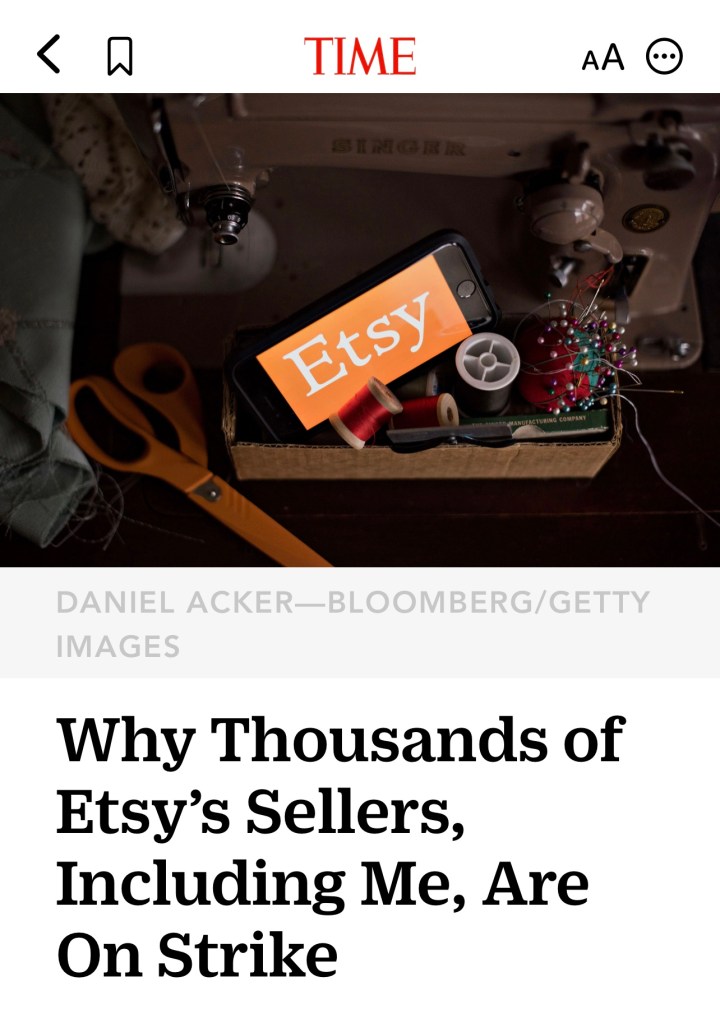
Why Thousands of Etsy’s Sellers, Including Me, Are On Strike

MEGAN KIRBY

KIRBY IS A CHICAGO-BASED WRITER, ARTIST, AND ZINEMAKER WHO SELLS HER WORK ON ETSY.

On April 11, I logged onto Etsy, put my virtual shop on pause, and joined more than 20,000 others in organizing a strike against the site. Etsy is an enormous global platform where millions of craftspeople and artists sell their wares, and when I first heard about the strike, I wondered what difference my action would make. I joined last January to sell custom illustrations. My Etsy sales aren’t just my secondary income, they’re my third—and a meager one at that.

But I wasn’t going to break the picket line. News of Amazon and Starbucks’ successful unionizations made me feel optimistic. And as I learned about the reasons behind the Etsy strike, I felt even more galvanized to join the cause.

Over the last two years, Etsy made record profits with a platform that wouldn’t exist without the labor of independent creators. In 2021, the company generated $2.3 billion in sales and acquired Elo7, the “Etsy of Brazil,” as well as Depop, a British secondhand clothing site. Even with these earnings, Etsy announced a 30 percent seller fee increase–from 5 percent to 6.5 percent.

Fees charged to Etsy’s artists and craftspeople have more than doubled over the last four years, but these percentages are just part of the reason that sellers are striking. A petition written by Etsy dressmaker Kristi Cassidy became the centerpiece of the strike, calling for changes in other fees related to advertising, perks for top sellers, and more. So far, the petition has more than 74,000 signatures.

A statement from Etsy says the new fees will go toward “marketing, customer support, and removing listings that don’t meet our policies.” However the platform hasn’t been transparent with any specific plans. To those whose careers and livelihoods depend on Etsy, that’s not good enough—and this latest fee increase is less of an inciting incident and more of a last straw, after years of decisions that don’t make sense for the people whose work is sold on the site.

So, here’s what you need to know about why thousands of Etsy sellers—including me—have paused our virtual shops.

Etsy feels like it’s turning Into Amazon

Etsy launched in 2005 to specifically highlight handmade art, as well as certain kinds of resold items with a creative edge, like vintage home goods and craft supplies. Today, the site is crowded with resellers who peddle mass-produced objects that they haven’t designed themselves. Nowadays, the site is loaded with cheap keychains, bulk jewelry and the same items you can find on other e-commerce platforms. It creates an Amazon-like experience for buyers, and it squeezes the sellers who originally made the platform popular.

Milwaukee-based artist Rachal Duggan sells hand-drawn portraits. She recently abandoned Etsy for Shopify after more than a decade of building her full-time business on the platform. She says: “[Etsy] acts like it cares so much about artists, but this is just an e-commerce site. This could be eBay or Craigslist or any other website where people can sell whatever they want.”

Etsy’s AI is micromanaging sellers

Etsy was originally designed as a haven for creative people who wanted to manage their own time and schedules by making and selling their own work. That central tenet has slowly been eroded over the years. Etsy created a perks program, driven by an algorithm, to reward certain sellers for doing things like responding to messages quickly and shipping promptly. But sellers say this program, which designates “Star Sellers,” feels like a punishment instead, and is a way for Etsy to micromanage their work without a human on the other side.

For Sky Cubacub, who runs gender-nonconforming clothing and accessories line Rebirth Garments, the Star Seller metrics feel impossible to meet. “They basically want you to be answering messages 24/7,” Cubacub says.

Top sellers also get their own digital ads—again, something that should be a perk. But Etsy charges sellers a fee for those ads, and there’s no way for sellers to opt out.

In general, getting in touch with someone at Etsy to resolve problems or explain extenuating circumstances feels harder than ever. Cubacub’s listings are sometimes flagged because their last name includes the word “Cuba”—despite the shop not being tied to Cuba, and even though sales of Cuban goods are allowed on the platform. When Etsy automatically removes listings, sellers are directed to FAQs and community forums instead of someone who can provide real, timely help. “I would love for Etsy to have any sort of support from real humans,” Cubacub says. “If [the company] is making billions of dollars, I feel like it should be able to hire people who are answering actual questions.”

This issue is coming to a head at a moment when dissatisfaction with the creator economy—where incentives are often decided by opaque algorithms and fee structures—is growing across many platforms.

In response to the strike, Etsy says the new fee structure will enable sellers to be more successful. The company said in a statement: “Our sellers’ success is a top priority for Etsy. We are always receptive to seller feedback.”

So what happens next?

The seller strike ends on April 18. If Etsy does not address the issues outlined in the petition, many sellers are considering leaving the platform completely. Cubacub is currently working with a friend to build their own personal shop, but it’s hard to walk away. Etsy’s platform makes it easier to sell to a broader audience than their work would otherwise reach. Duggan left Etsy for Shopify in January, abandoning more than 500 five-star reviews on her shop. Still, she says, the move felt worth it. Shopify’s fees are clear and not tied to a cut of her sales.

For now, I’m bummed about putting my shop on hiatus. The illustrations I sell bring people joy—that’s the kind of good that Etsy has the potential to do. That’s what Etsy meant to me when I first joined, anyway.

While Etsy has yet to directly address any of the strike’s requests, Cassidy’s petition ends with optimism that the platform can once again be a creative haven for independent artists: “Etsy can be the force for good it initially set out to be.”

TIME Ideas hosts the world’s leading voices, providing commentary on events in news, society, and culture. We welcome outside contributions. Opinions expressed do not necessarily reflect the views of TIME editors.

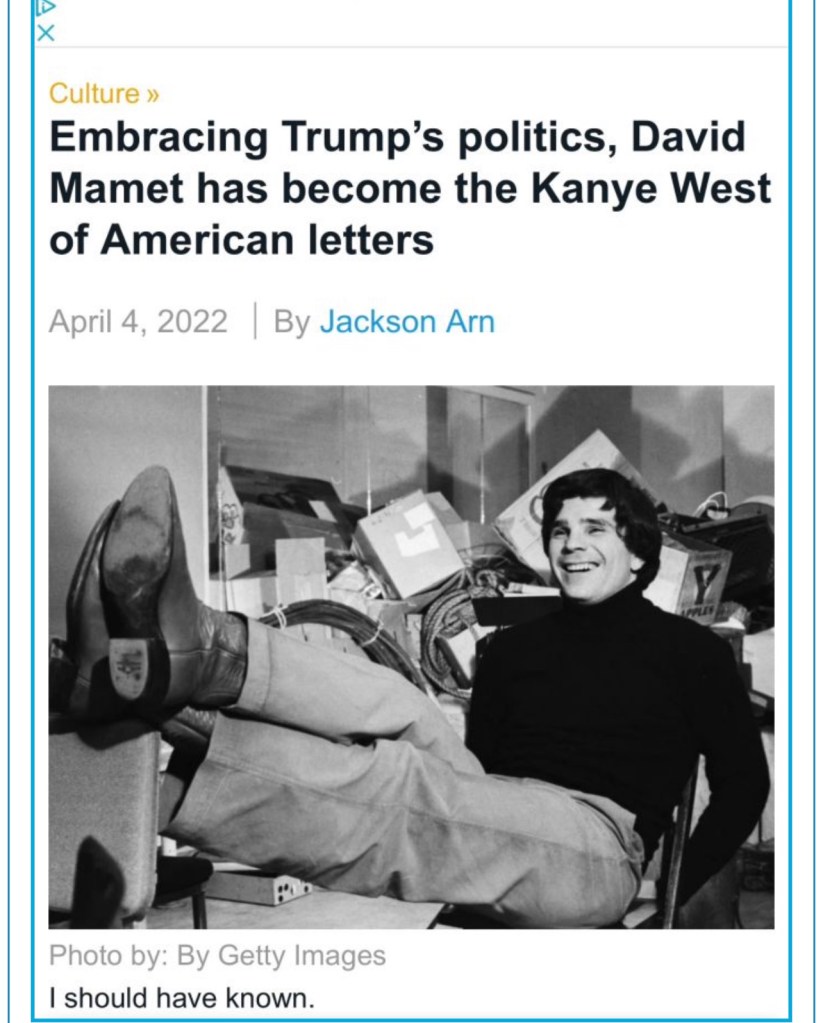
What Happened To Mamet?

A Political Transformation

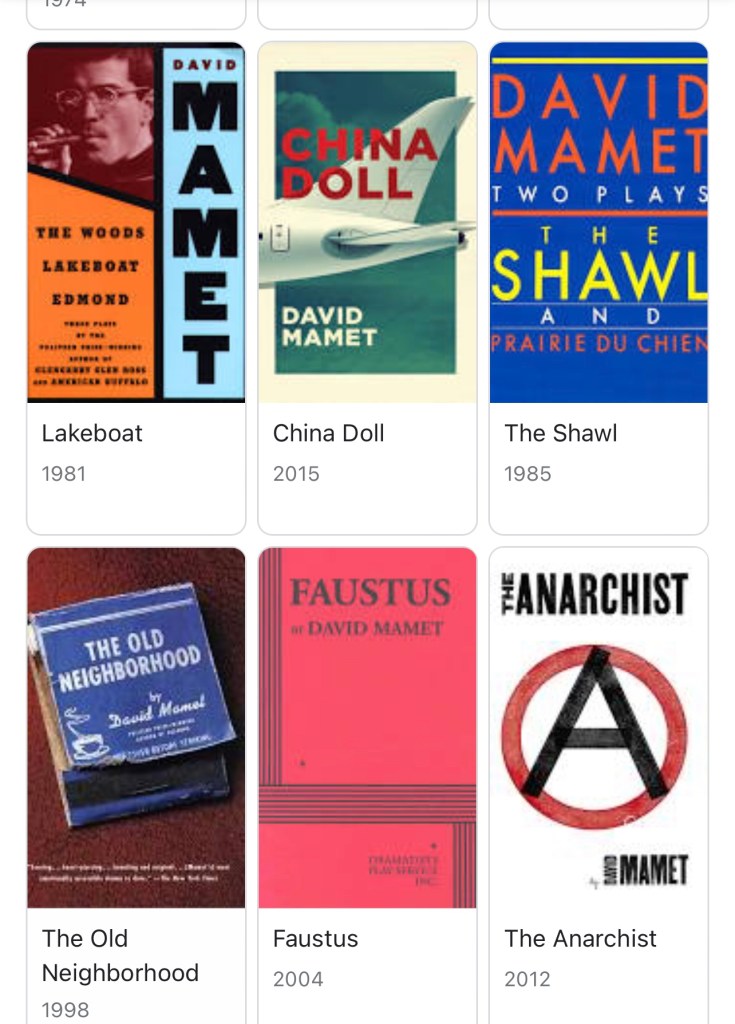
I took five weeks and two follow-up emails for the usually reliable Harper Collins publicity department to mail me a copy of David Mamet’s new essay collection, “Recessional: The Death of Free Speech and the Cost of a Free Lunch.”

At first, I thought this was an honest mistake, but now that I’ve read the book, I wonder if someone had been instructed to deal with critics in slow motion. If so, it was a smart move. Each day of delay means one extra day free from scathing reviews, one extra day for Mamet fans to order their copies, unaware that the author of “Glengarry Glen Ross” has gone full free-market, anti-mask MAGAhead — and, even more appallingly, thinks that “Our F’ing Town” is the greatest American play.

Of course, it’s possible that this was all just an honest mistake. But David Mamet doesn’t believe in honest mistakes, just conspiracies — so why shouldn’t I indulge in some harmless conspiracy-theorizing myself?

Mamet’s conspiracy theories (seen most recently in an already-infamous Fox interview where he claimed that teachers are ‘inclined to’ pedophilia) aren’t exactly harmful —the only two kinds of people who’ll finish this book are those who already agree with it and those who’ve been paid to review it — but they’re often breathtakingly stupid. David Mamet believes mask mandates were designed to train Americans to obey government tyranny. David Mamet believes college graduates know they’ll never have to pay off their student loans, because the Democrats will cancel them first. David Mamet believes he has been “blacklisted” for his conservative political views and explains his blacklisting in the book he’s just published with Harper Collins. He claims he’s “sworn off the news,” which might be a roundabout way of admitting that “Fox News” is a misnomer.

People, even icons of Broadway and Hollywood, tend to drift rightward with age — if you’re a conservative at 25, the saw goes, you have no heart, and if you’re not a conservative at 40, you have no brain. The political transformation of David Mamet, age 74, culminating in “Recessional,” a book lacking both heart and brains, is something else.

Mamet was never a full-on leftie, but he thrived in a world where left-wing politics were the air everybody breathed, and “American Buffalo,” his Broadway breakthrough, is a scabrous portrait of small-time capitalism that even Trotsky might have clapped for. Thirty years later, in the aftermath of the Great Recession, he defended CEO bonuses on the grounds that “it’s none of our goddamned business.” Nowadays he thinks eating gluten-free is a sign of “nascent totalitarianism” and thus very much his goddamned business.

Mamet didn’t drift to the Right, he sprinted. My theory is that the economist Milton Friedman is at least partly to blame. No, really, hear me out. The University of Chicago economics department’s accomplishments include 31 Nobel Prizes, the decline of the postwar welfare state, and the deregulatory policies that led to the Great Recession. Friedman, the most influential UChicago economist and a 1976 Nobel laureate, is probably most famous for making the argument that businesses’ only moral responsibility is to maximize profits — ergo, everything else they do — from CEO bonuses to wrecking the U.S. economy to filthying the environment — is none of our goddamned business.

Whatever the technical merits of his ideas, they caught on with a neocon political establishment happy to rationalize its own greed. Mamet, a Chicago boy himself, cites Friedman quite a few times in “Recessional,” always to show that the free market is an unalloyed good, self-interest is the highest virtue, and progressive taxes are the lowest evil.

“I see life from a different perspective,” he said of his conservative turn, which makes sense if by “different perspective” he means “different tax bracket” — it’s a whole lot harder to paint scabrous portraits of capitalism when you’re a millionaire.

“What am I going to do,” he asked, “go on denouncing capitalism all my life?”

In “Recessional,” Mamet has moved on to denouncing the kinds of liberals who pay $300 to enjoy his plays. Liberals are destroying America, they have a sickly kink for victimhood, they don’t believe in science. He has nothing but contempt for the herd instincts of the American media elite, but there isn’t a single opinion in this book that crosses the Fox/Breitbart party line.

Even a broken clock is right twice a day, though, and every dozen pages or so he’ll say something blunt and insightful and pretty much true — e.g., the recent push to censure professors for saying words that sound vaguely like the N-word is a manifestation of white guilt. But then he’ll blow it all on something like, “An insistence on pansexuality has replaced previous injunctions to chastity with an equal vehemence,” which could be the silliest thing written about hookup culture since Tom Wolfe described Charlotte Simmons losing her virginity.

“Recessional” has its share of pleasures, mostly unintentional but pleasures all the same. For someone who thinks liberals are indifferent to facts, Mamet has an adorably flighty relationship with the concept of evidence. He provides multiple footnoted sources, including Thorstein Veblen and Mary McCarthy, for the claim that the university system is bad, but zero for the claim that urban properties “will be found to have been purchased not only by canny observers but by those who engineered the decline [of American society],” which is both a massive tease and a very creative use of the future-perfect tense.

When crafting a hypothetical, Mamet defaults to the traditional “he” rather than the PC “she,” but somebody at Harper Collins (maybe the same somebody who told the publicity department to sandbag me) made him capitalize “Black” — imagining how that Zoom meeting went is almost enough to justify the entire book’s existence. One more: Mamet is shocked by the hypocrisy of Colin Kaepernick, who “loathes the country whose citizens have made him rich and famous.” As my uncle likes to say, the thing that most bothers you about other people is usually the thing that’s most wrong about you.

Mamet’s favorite trick is to psychoanalyze people he dislikes (lefties don’t want to grow up, fans of “12 Years A Slave” secretly want to celebrate Black inferiority, etc.), so allow me to do him the same favor. It’s painfully easy.

Mamet got famous by breaking taboos, stuffing his plays with curse words as a sausage casing is stuffed with ground meat. That was decades ago. What was once taboo is now tame as a golden retriever. Like his fellow Chicagoan Kanye West, he needed new rules to break and, finding few, turned to Trump. In doing so, he made plain what his fans knew all along: there was always something aspirational about his macho egomaniac characters; “always be closing” was as much a manifesto as it was a satire.

I should add that “Recessional” shouldn’t be canceled or banned or dropped — that would only encourage him to write a sequel, which somebody will definitely publish, and I for one hope that Mamet has a few more good plays left in him. Unlikely, judging from this book, but stranger things have happened. And what’s he going to do otherwise — go on denouncing the Dems for the rest of his life?

Jackson Arn is the Forward’s contributing art critic.

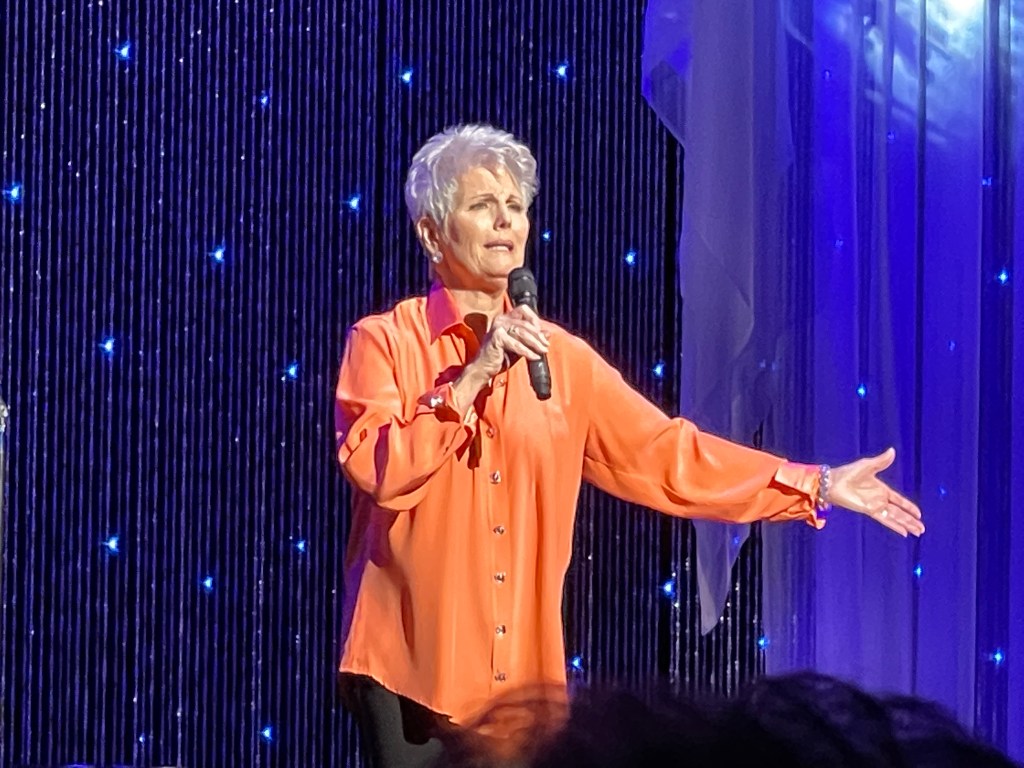
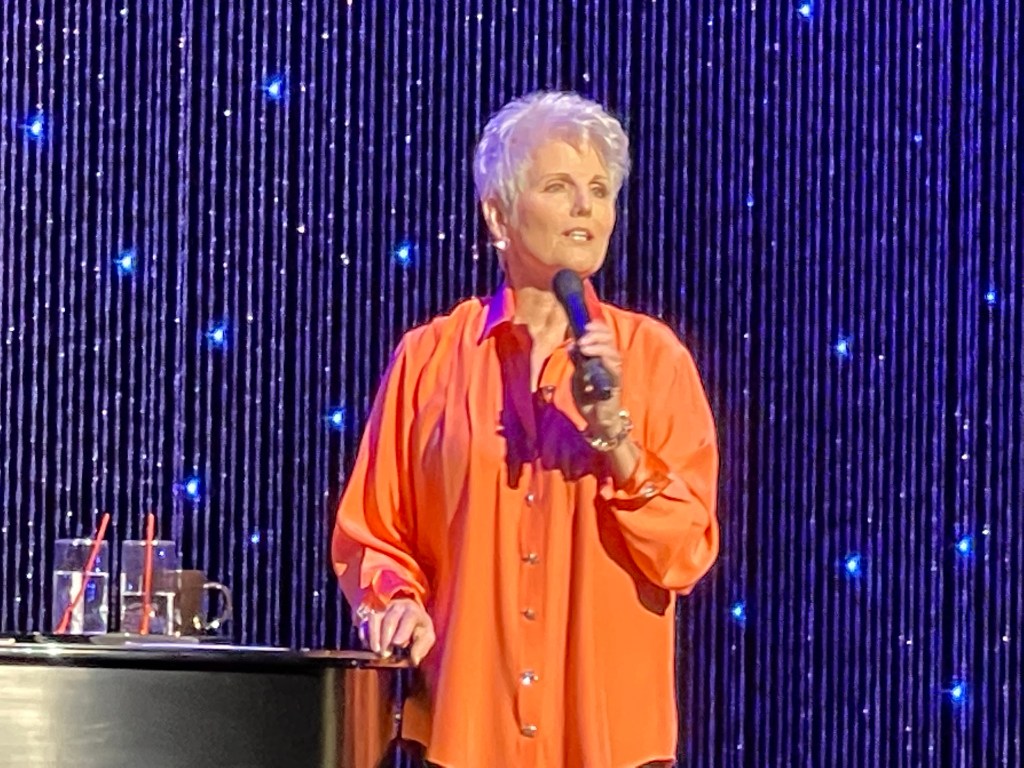
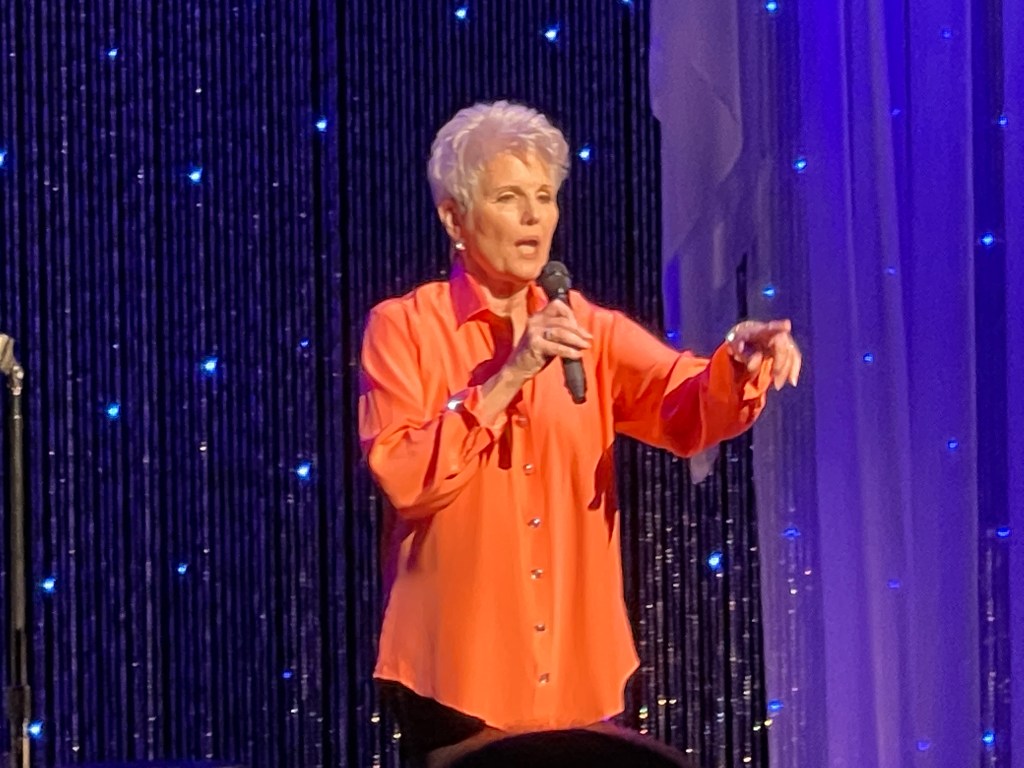
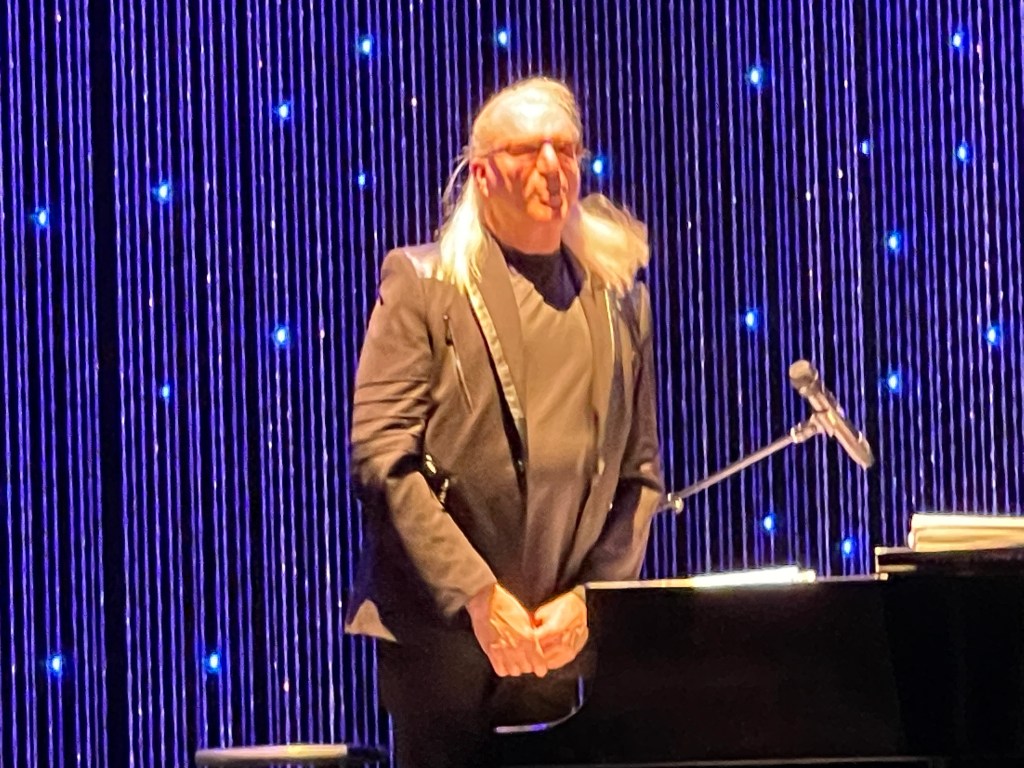
We Love Lucie and Ron

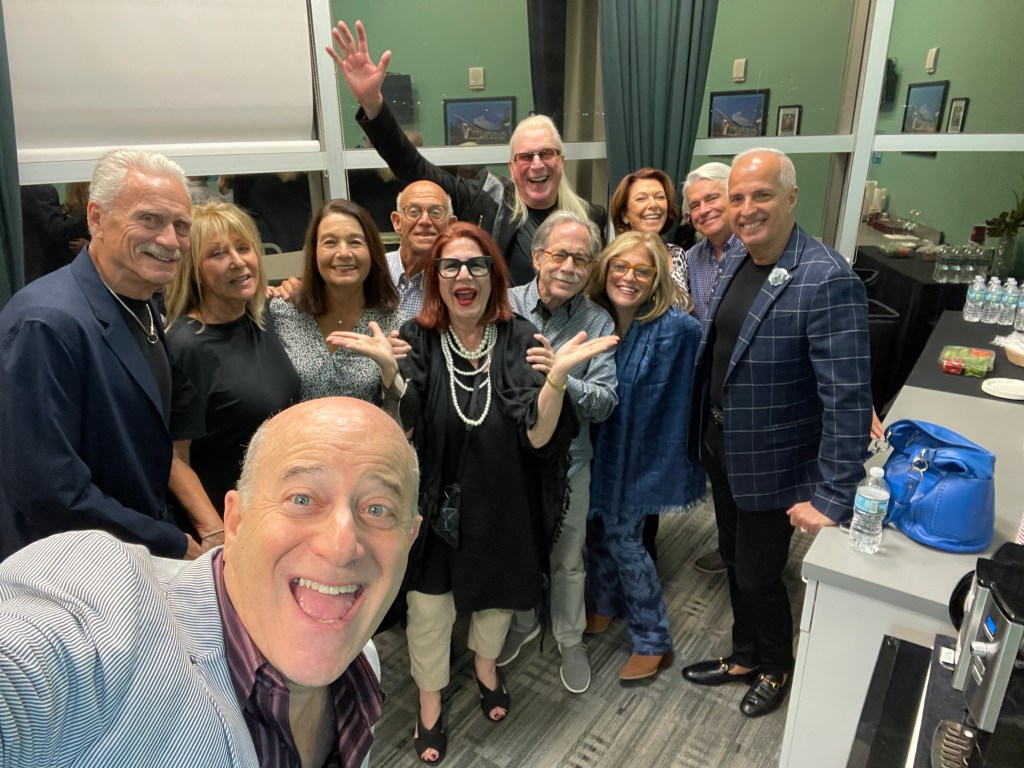
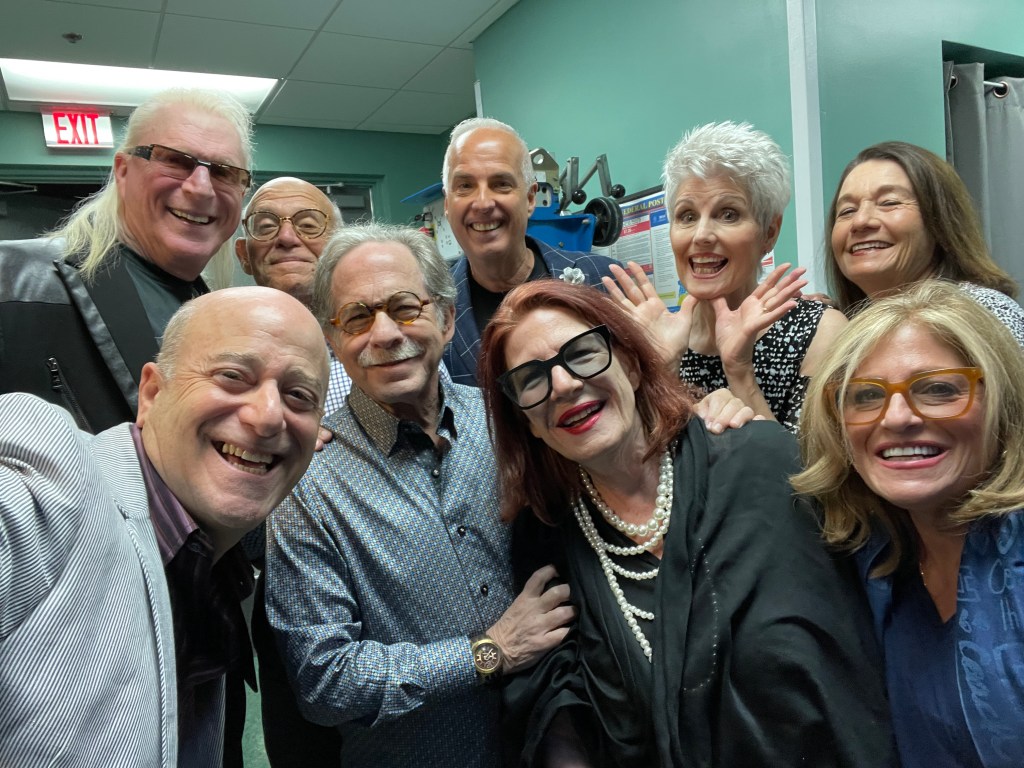
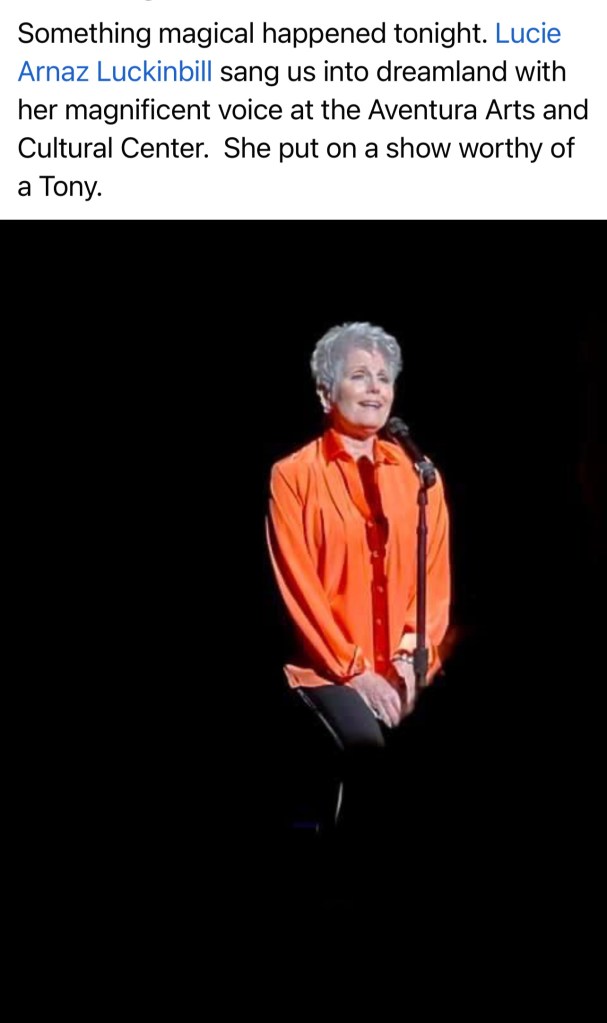
We are the Lucie Arnaz Luckinbill and Ron Abel fan club. We all went to see them at the Aventura Arts & Cultural Center. They received a standing ovation from adoring fans. Lucie was absolutely amazing. 90 minutes of sheer joy. Alison Kaplan Eliot Hess, Ruth Steinik Greenberg Howard Greenberg Marcia Grand Richard Grand Robert Armada Steve Greenberg

Photos by Steve Greenberg and Eliot Hess

10th Week Lois Whitman-Hess Miami Life Editor The Three Tomatoes

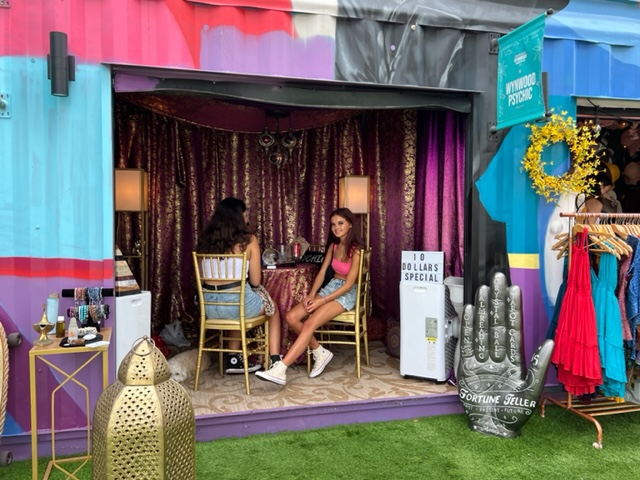
I must have passed the Wynwood Marketplace a dozen times, but never really knew what it was all about. Now that I walked through the archway entrance, I want to go back all the time. Some of the vendors have gems you will never find anywhere else. The Wynwood Marketplace is a weekly event every Thursday through Sunday. Every retail stall has a variety of arts and crafts, food, drinks, music, games, clothing, fashion accessories, smoke shops, trinkets, and so much more. There is also space for special events.

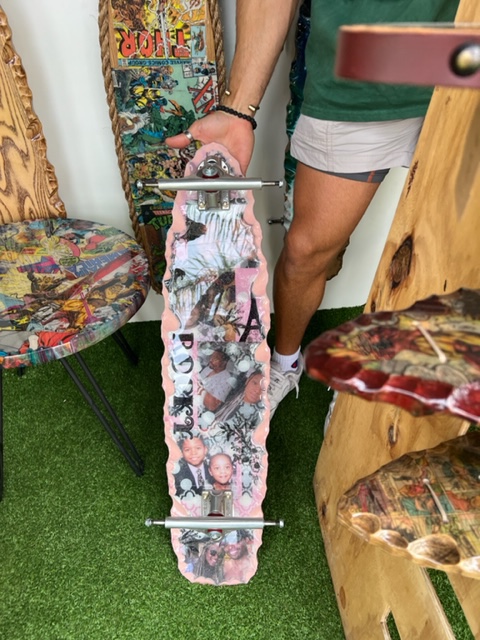
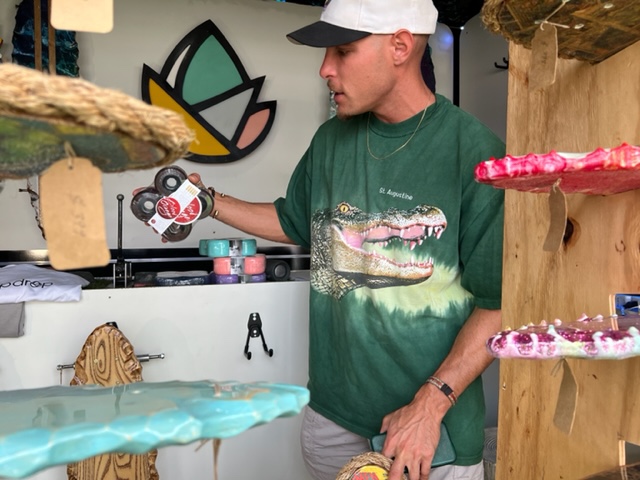
The vendor that blew my mind the most was Drip Drop Boards, a skateboard company which offers one-of-a-kind boards that are handcrafted by local artist Daniel Rodriguez. Daniel wants skaters to express themselves by being able to own the most unique cruiser boards on the market. The art on the boards is so expressive that I am seriously thinking about buying one or two just to be able to look at them all the time. Each board is approximately $350 to $400. That’s without wheels which I don’t have any use for. Haha.

The Wynwood Market is located in the most art covered neighborhood in a Miami which is known for its colorful murals on converted warehouses. If you haven’t been to Wynwood you must go. The warehouses now house funky restaurants, art galleries, clothing boutiques, and late night bars. It’s entertainment all the way.

Is Trump Getting Ready For His Return To Twitter?

In my opinion, Elon Musk bought the controlling share of Twitter to control the future voice of America. If he gets Trump back on, that’s a sure sign we are in for very bumpy times. If you think the past few years were tough, the future can even get darker.

Elon Musk Is on Twitter’s Board. What Could Go Wrong?

Musk’s appointment could herald a controversial push for “free speech” and invite more scrutiny from the SEC.

ELON MUSK IS one of the tech sector’s most inscrutable individuals—as evidenced by his recent decision to become Twitter’s largest shareholder. On Tuesday, four weeks after he bought a 9.2 percent stake in the social networking platform through the purchase of nearly 73.5 million shares at a total cost of around $2.4 billion, Musk joined Twitter’s board, where he will remain through at least 2024.

Musk’s shift from passive shareholder to member of the board is huge—and he now owns more than four times as much Twitter stock as the company’s founder, Jack Dorsey. (Musk’s stake was only announced on Monday, which is outside the time frame required by regulators, something experts say is a “slam dunk” violation of financial law.) His move has also left many wondering what’s next for Twitter.

Musk joined back in June 2009 and has amassed 80.7 million followers to date. But despite such popularity on the platform, he has a longstanding love-hate relationship with it. In July 2016, he professed his love for Twitter. Then in February 2017 he described it as a “hater Hellscape.” By December 2017, he was back to loving it. In February 2019, Musk replied to Twitter founder Jack Dorsey to say that “Twitter rocks.” But in July 2020, he tweeted that Twitter “sucks,” just months after saying that Dorsey had a good heart.

Musk’s hot and cold relationship with Twitter sheds little light on why he has bought into the company and joined its board, though theories abound. Musk did not respond to a request for comment.

One hint could be found in his recent Twitter posts. The entrepreneur has long been an open book on the social network, saying in 2018 that “my tweets are literally what I’m thinking at the moment, not carefully crafted corporate bs, which is really just banal propaganda.”

And recent tweets have been directed at the platform’s future direction. Since buying his stake in the company, Musk has polled his followers about whether Twitter should open source its algorithm for scrutiny and whether the platform adheres to the principle of free speech. He also said in tweets to other users that he worries about the impact Twitter’s algorithm will have on public discourse.

That rhetoric has raised the hopes of right-wing politicians who have been banned from the platform or seen their colleagues censoredand sounded alarm bells for people concerned that the strides Twitter has made in shutting down hate speech could now be reversed.

“It’s pretty obvious that Elon is trying to make a play on free speech,” says crypto investor Maya Zehavi, who has held Twitter stock since 2019. “I think he would probably try to leverage his power on the board to make sure that Twitter doesn’t try to apply more restrictive censoring rules than they have to.” That reasoning holds up for Adam C. Pritchard, who is a professor of law at the University of Michigan and specializes in corporate and securities law. “I don’t think there’s any huge mystery about why he’s made the investment,” he says. “His tweets would suggest he thinks he has ideas that might improve Twitter.”

Activist shareholders, which we can assume Musk is in this case, generally take their stakes for one of three reasons, says Anil Dash, CEO of software development startup Glitch. They either wade in to split up the company in a move that Dash says wouldn’t make sense for Twitter, to appoint a captive CEO (which Dash thinks is possible), or to get a dividend for themselves. The latter wouldn’t work, as Twitter doesn’t yet make money. “Musk isn’t working toward any of those things, so he’s just ensuring he gets privileged on the platform, and then will try to bring back fascists like Trump,” Dash says. 

Twitter spokesperson Adrian Zamora says Twitter is committed to impartiality in the development and enforcement of its policies and rules. “Our policy decisions are not determined by the board or shareholders, and we have no plans to reverse any policy decisions,” Zamora says. “As always, our board plays an important advisory and feedback role across the entirety of our service.” Zamora says day-to-day operations and decisions are made by Twitter management and employees.

The percentage of shares Musk has bought—just under 10 percent—may also hold a key. Anyone who owns more than 10 percent of any class of equity security is considered “an insider” by the  Securities and Exchange Commission (SEC) and is subject to much more scrutiny. It’s a policy enforced by Section 16 of the Securities Exchange Act of 1934 and one the SEC is likely eager to investigate after previously slapping Musk on the wrist, accusing him of defrauding investors by tweeting he had secured funding to take Tesla private in 2018 and settling a suitit brought against him. The settlement also included a requirement that Musk get approval for some tweets relating to his financial activity before posting.

Yet other elements of Musk’s new arrangements with Twitter—including his taking a seat on its board—open him up to short-swing profits liability. The agreement would prevent Musk from exiting any investment within six months without giving up the potential profits (when Musk announced he’d bought Twitter stock, the price rose from $39.30 a share to highs of $53.84). Yet Twitter’s filing with the SEC, which confirmed Musk will sit on the company’s board, also shows he has a two-year term as director, which would prevent him from pumping and dumping Twitter stock.

There is an interesting wrinkle in that filing: Musk cannot own more than 14.9 percent of Twitter stock while he is a director of the board, and for 90 days after—which Pritchard calls “a standstill.” He calls it a quid pro quo move that helps keep the company safe from a takeover. “The incumbent management feels they’re doing a great job, and they would rather not be fired. They’ve bought some protection against that at the price of giving him a board seat,” Pritchard says. In most cases, that wouldn’t be so costly, but Musk isn’t like most people. “Elon Musk comes with his own headaches,” says Pritchard. “I imagine they thought long and hard about it.”

Another theory deserves equal weight: Musk is doing it for the lulz. “I think folks ascribe too much of a plan to him,” says Dash. Instead, Dash believes Musk is making an attention play that could have longer-term ramifications. “At the highest level, being a board member is a job,” he says. “The responsibility of the job is corporate governance. Musk is demonstrably bad at this, as evidenced by his boards being wildly dysfunctional and irresponsible.” Past travails with Tesla’s board have been detailed since 2018, while Musk has recently been sued by a Tesla shareholder for allegedly taking excess profits.

The purchase of Twitter stock, like many of Musk’s actions, could be an eye-wateringly expensive way for him to keep his name in the limelight, says Cary Cooper, a business professor at Manchester Business School. “He loves the media,” Cooper says. “He’s an entrepreneur, he’s unusual, he’s a character. And Twitter is a vehicle for communication.”

Others believe the deal makes perfect sense—and is one that could ultimately prove beneficial, rather than harmful, for the platform. “It’s super exciting to have a Twitter super user on the board,” says Zehavi. “Musk is a master of Twitter. He knows how to work Twitter in a way that even Jack [Dorsey] didn’t.” Zehavi does believe that the shift from being a supposedly passive investor, as per filings with the SEC, to actively sitting on the board of Twitter, is an opportunity for Musk to thumb his nose at the regulator. “Like every opportunity to mock the SEC, Elon will take it,” she claims. And this, she argues, raises broader concerns about Musk’s actions. “The fact that someone can leverage so much power without any actual consequence is bizarre.”

What’s next for Twitter largely depends on the whims of a man who has long held a reputation for being highly idiosyncratic. But one thing is pretty certain: The whole process has run roughshod over SEC norms. “Most people work hard to get along and avoid trouble,” says Pritchard. Musk, he argues, not so much. “I’d say he’s the opposite. His attitude toward the SEC can be described as contemptuous.”

MACKENZIE SCOTT PROVIDES A GENEROUS DONATION TO FIRST RESPONDERS CHILDREN’S FOUNDATION

“I am thrilled to be officially working for this super important foundation. This was the news on my first day. It doesn’t get bigger than this.”LWH

MacKenzie Scott


(New York, NY) – First Responders Children’s Foundation has announced that philanthropist MacKenzie Scott has made a generous donation to the national nonprofit that was founded in the aftermath of 9/11 when over 800 children lost a first responder parent. The gift will help further develop the Foundations existing programs that support first responder families nation- wide and help fund the launch of a new mental health program.


The donation recognizes First Responders Children’s Foundation’s impact on first responders and the first responder agencies that the Foundation serves. By making this gift, Ms. Scott is acknowledging the heroes that show up for communities across the country when they dial 911. The donation will directly support the first responder constituency in the following ways:


• Providing scholarships to the children of first responders who are pursuing studies at an accredited institution including trade schools and graduate studies.


• Expanding existing programs that have an immediate and powerful impact on first responder families and the communities they serve.


• Expediting the launch of a new program that addresses mental health concerns of the children from first responder families.


Jillian Crane, President and CEO of First Responders Children’s Foundation said, “On behalf of the 6 and 1⁄2 million first responders and their children, we thank Mackenzie Scott for this truly transformational donation. We will use this gift to maintain existing programs and expand into new areas crucial to support the children of first responders and first responder families.

“We will also continue the work to help first responder agencies around the country forge positive relationships with the children in the communities they serve. The past two years have been extraordinarily challenging for first responders and their families. And more than ever these everyday heroes and their families need support. Ms. Scott’s donation reinforces our ability to help those who sacrifice for us every day.”

First Responders Children’s Foundation was founded in the aftermath of 9/11 to honor the families of fallen first responders at a Thanksgiving breakfast in New York with a private viewing of the Thanksgiving Day Parade.

Since then, the Foundation has provided scholarships to children of first responders and financial aid to first responder families in need. During the COVID-19 pandemic, with the help of generous donors, the organization supported thousands of first responders and their families with emergency grants, PPE, hotel rooms, and bereavement assistance.

As the country continues to navigate the impact that the COVID-19 pandemic has had on first responder families, the Foundation will continue address the immediate and long-term needs of the first responder community.

ABOUT FIRST RESPONDERS CHILDREN’S FOUNDATION:


For 21 years, First Responders Children’s Foundation has been providing college scholarships to the children of first responder parents who have been injured or lost in the line of duty.

The Foundation also awards grants to families enduring significant financial hardship and supports educational activities and programs created by first responder organizations to benefit children or the communities in which they live.

The First Responders Children’s Foundation COVID-19 Emergency Response Fund was established in March 2020 to provide financial hardship grants, PPE, hotel accommodations to first responders on the front lines of the pandemic. The Foundation also provides bereavement assistance to the families of first responders who have made the ultimate sacrifice.

More information about First Responders Children’s Foundation is available at http://www.1stRCF.org.


Follow First Responders Children’s Foundation on Facebook, Twitter, and Instagram @1stRCF.


PRESS CONTACT:
First Responders Children’s Foundation: Joanna Black
+1 (646) 912-2681
Joanna@1stRCF.org

Meet the Retirees Who Live on Cruise Ships

Many moons ago, I met a retired couple who spent at least half the year cruising on Crystal Cruises. We were someplace in Europe. What was even more surprising was that they were the parents of Norman Olson of AudioSource. Norman’s father, Sidney, was also a well known figure in the consumer electronics business. He started Olson Electronics, a very popular retail chain in Ohio.

So there they were, Mr. and Mrs. Olson, living their everyday lives cruising around the world. They always booked two rooms, one for them and one for their luggage. I thought that was so cool. It was the craziest thing I ever heard. Decades later, I realized that they figured out a great way to spend their retirement years without the usual day-to-day hassles. They had everything they needed on board: doctors, salons, laundry services, housekeeping, entertainment, meals, new friends, much more. They were definitely ahead of their time.

Make sure you listen to the podcast interview we did with Maurice Zarmati on “Lying on the Beach.” He was an executive with Carnival Cruises for decades. https://youtu.be/IZyYymFKjdw. He really gives you the best reasons for going on a vacation.

Think about the following story in Condé Nast Traveler. It certainly offers an alternative lifestyle.

Santorini, water, cruise, boat, blue sky


Meet the Retirees Who Live on Cruise Ships

LAURA KINIRY

PEOPLE ASK, ‘DON’T YOU GET BORED AT SEA?’” SAYS JANICE YETKE, 77. “I SAY, ARE YOU KIDDING ME?”

Boat, cruise, Nature, Outdoors, Mountain, Ice, Water, Banister, Handrail, and Landscape

When Jeff Farschman, 72, first retired from his role as vice president at Lockheed Martin Services in 2004, he planned on spending his winters as a snowbird enjoying the warm temperatures of the Caribbean. But that all changed when Hurricane Ivan wreaked havoc on Grand Cayman, his island of choice, in September of that same year—so he made what would become a life-changing pivot. Since he’d already booked himself on a week-long cruise to Bermuda, Farschman decided to extend his travels to include six back-to-back cruises (four to Bermuda and two to the Caribbean) culminating as a 47-day trip. This extensive journey became the impetus for how he now spends his retirement: living seven-to-eight months annually aboard Holland America Line cruise ship.

It turns out Farschman is just one of dozens of retired (and retirement-age) people spending a bulk of their time living at sea. There are plenty of ways to make it happen, from combining stand-alone itineraries to purchasing a unit on a residential cruise ship. “People ask, ‘don’t you get bored at sea?’” says Janice Yetke, 77, a (semi) retired travel agent who lives four months a year aboard a ship. “I say, are you kidding me? Let me show you a daily program. There’s so much to do if you want to do it.”

Yetke and her husband, Richard, 80, have found Holland America Line’s Grand World Voyage—an annual cruise that circumnavigates the globe for up to 128 days—to be the perfect way to escape Chicago’s harsh winters while seeing the world. “You have a room on the ship, and that’s your home,” says Yetke. “The staff feeds you, provides entertainment, and cleans your room twice a day. It all meets our needs at this stage in life, and of course we make friends—because the same people come back year after year.” The Yetke’s have already taken Holland America Line’s Grand World Voyage 12 times, and they’re tentatively booked on the 2023 voyage aboard Holland America’s 1,917 passenger MS Zuiderdam.

A big selling point for Yetke on the company’s world cruises: They typically sail round-trip from Fort Lauderdale, Florida. “I don’t want to fly halfway around the world to get on a cruise ship,” she says. “Florida is easy.”

Around the world cruises are a popular way to spend months at sea.

While Sydney-based wellness CEO Tony de Leede, 69, could retire, he’s not yet ready. Instead, de Leede has found a way to run his various businesses while still living a portion of his life at sea. For eight years, de Leede owned apartments aboard The World, a private 165-residence cruise ship that launched in 2002. During that time, he spent three-to-five months aboard annually. “The concept of combining a nice environment to work from and then going to sleep in Venice and waking up in Croatia,” says de Leede, “It’s great.”

In fact, one of de Leede’s fondest memories comes from his time aboard The World, when he was in the midst of balancing his work/sea life. “I was on the phone with one of my companies back in Australia,” says de Leede, “and the captain came over the intercom and invited everyone to come and have a swim in the Arctic circle.” De Leede ended his call, and minutes later he was jumping into the sea’s frigid waters. “Now I can say that I’ve swum in the Arctic Circle,” he says. “There aren’t too many people who can say that!

De Leede recently purchased a two-bedroom space aboard Storylines’ MV Narrative, a larger residential ship set to launch in 2024 with 547 fully-furnished, one-to-four-bedroom apartments (most with balconies) and 20 dining options, including a Greek tavern and an oyster bar. The ship is also equipped with 24-hour fitness and wellness facilities, a lap pool, a dedicated co-working space, and an onboard bowling alley. But there’s one real game changer, according to de Leede: “They’re the first residential ship to allow pets on board.”

Living aboard a cruise ship doesn’t come cheap. For example, fully furnished residences aboard the MV Narrative cost between $1 million and $8 million, and there are a limited number of 12- and 24-year leases available, which start at $400K. In addition, there are the monthly homeowner’s association-style fees, which vary according to the size of a residence and cover everything from ship fuel to housekeeping, as well as all standard food and drink. In essence, it’s a fee similar to the kind of packages that you often pre-pay for on a typical cruise ship.

In Farschman’s case, his costs depend on the types of cruises that he’s taking that year (for example, whether it’s one Grand Voyage or back-to-back Caribbean cruises), if he decides to book independent tours at specific ports, and if he’s paying for a windowless inside cabin or splurging on a waterside balcony room. “There are so many variables,” he says, “but I probably average $200 to $300 a day including taxes for Grand Voyages and say, $150 to $200 a day for more traditional cruises.” Like most other cruisers who spent a good chunk of their year at sea, he keeps a stationary home to be close to friends and family.

By booking longer trips rather than purchasing residences outright, world cruises still allow passengers like the Yetke’s to settle in, make friends, and travel the globe on a line they feel comfortable with. “Longer cruises also provide more time for travelers to slow down and immerse themselves in a destination,” says Carol Cabezas, president of the luxury cruise company, Azamara. In fact, Azamara will launch its first-ever five-month world voyage in 2024: a 155-day circumnavigation of the globe that will include iconic destinations such as India’s Taj Mahal and the Great Wall of China.

Many world cruises are also broken up into smaller segments, so that friends or family members can join for a dedicated portion, say cruising the Panama Canal or a tour of the South Pacific. But for cruise-enthusiasts like de Leede and Farshman, the itinerary of a ship is often secondary—they simply love life on the water. 

To date, Farschman has sailed on 165 cruises resulting in over 3500 days at sea, the bulk of which has been on Holland America Line. It’s the company’s large ship size, wonderful food, and excellent service that keeps him coming back, not to mention the camaraderie. He even travels consistently with two sisters he met aboard a Grand World Voyage in 2014. “My family is generally supportive of my onboard lifestyle,” he says. “It makes the time that we spend together even more special. As for my friends, the majority of them are aboard these ships.”

Image may contain: Vehicle, Transportation, Boat, Outdoors, Nature, Land, Water, Shoreline, Ocean, Sea, Vegetation, and Plant

© Condé Nast 2022

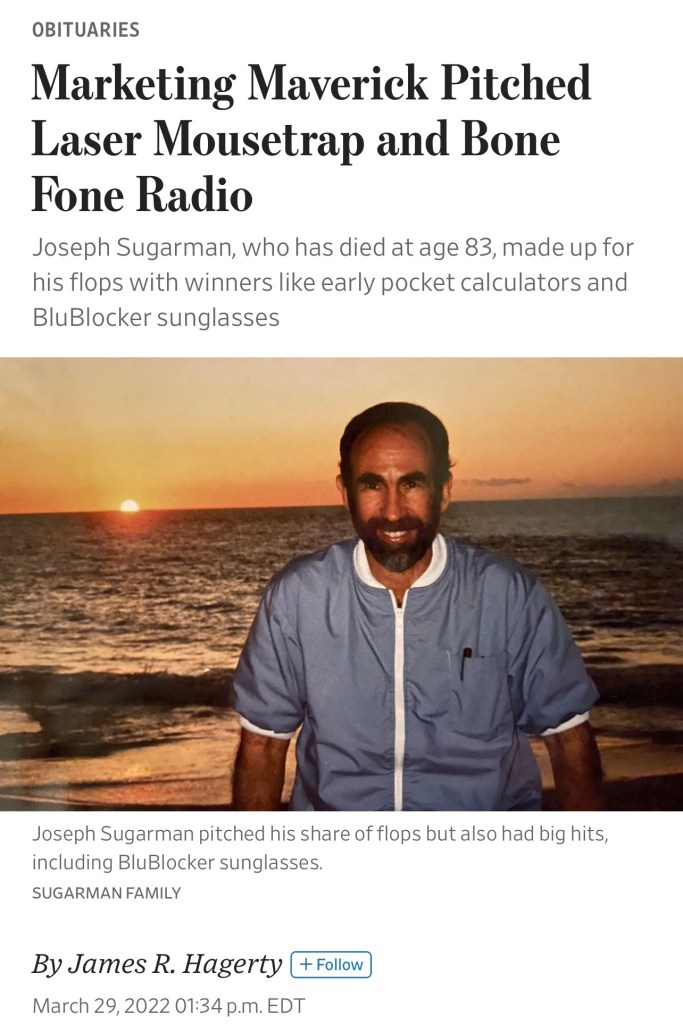
One Of The First Big Tech Mavericks

I interviewed him many times early in my career. Always a delight. I can’t believe this is the end.

A Taste Of Reality Any Way You Slice It

UkraineWar

Shaken at First, Many Russians Now Rally Behind Putin’s Invasion

Polls and interviews show many Russians now accept the Kremlin’s assertion that their country is under siege from the West. Opponents are leaving the country or keeping quiet.

By Anton TroianovskiIvan Nechepurenko and Valeriya Safronova

April 1, 2022

Sign up for the Russia-Ukraine War Briefing. Every evening, we’ll send you a summary of the day’s biggest news. Get it sent to your inbox.

The stream of antiwar letters to a St. Petersburg lawmaker has dried up. Some Russians who had criticized the Kremlin have turned into cheerleaders for the war. Those who publicly oppose it have found the word “traitor” scrawled on their apartment door.

Five weeks into President Vladimir V. Putin’s invasion of Ukraine, there are signs that the Russian public’s initial shock has given way to a mix of support for their troops and anger at the West. On television, entertainment shows have been replaced by extra helpings of propaganda, resulting in an around-the-clock barrage of falsehoods about the “Nazis” who run Ukraine and American-funded Ukrainian bioweapons laboratories.

Polls and interviews show that many Russians now accept Mr. Putin’s contention that their country is under siege from the West and had no choice but to attack. The war’s opponents are leaving the country or keeping quiet.

“We are in a time machine, hurtling into the glorious past,” an opposition politician in the western Russian region of Kaliningrad, Solomon I. Ginzburg, said in a telephone interview. He portrayed it as a political and economic regression into Soviet times. “I would call it a devolution, or an involution.”

The public’s endorsement of the war lacks the patriotic groundswell that greeted the annexation of Crimea in 2014. But polls released this week by Russia’s most respected independent pollster, Levada, showed Mr. Putin’s approval rating hitting 83 percent, up from 69 percent in January. Eighty-one percent said they supported the war, describing the need to protect Russian speakers as its primary justification.

Moscow police officers detained an anti-war protester in February. Protests have largely dried up in recent weeks.

Analysts cautioned that as the economic pain wrought by sanctions deepens in the coming months, the public mood could shift yet again. Some also argued that polls in wartime have limited significance, with many Russians fearful of voicing dissent, or even their true opinion, to a stranger at a time when new censorship laws are punishing any deviation from the Kremlin narrative with as much as 15 years in prison.

But even accounting for that effect, Denis Volkov, Levada’s director, said his group’s surveys showed that many Russians had adopted the belief that a besieged Russia had to rally around its leader.

Particularly effective in that regard, he said, was the steady drumbeat of Western sanctions, with airspace closures, visa restrictions and the departure of popular companies like McDonald’s and Ikea feeding the Kremlin line that the West is waging an economic war on the Russian people.

“The confrontation with the West has consolidated people,” Mr. Volkov said.

As a result, those who still oppose the war have retreated into a parallel reality of YouTube streams and Facebook posts increasingly removed from the broader Russian public. Facebook and Instagram are now inaccessible inside Russia without special software, and Russia’s most prominent independent outlets have all been forced to shut down.

In the southern city of Rostov-on-Don, near the border with Ukraine, a local activist, Sergei Shalygin, said that two friends who had previously joined him in pro-democracy campaigns had drifted into the pro-war camp. They have taken to forwarding him Russian propaganda posts on the messaging app Telegram that claim to show atrocities committed by Ukrainian “fascists.”

Commuters reading news on their mobile devices in the Moscow subway on Saturday. Independent news has virtually disappeared.

“There’s a dividing line being drawn, as in the civil war,” he said, referring to the aftermath of the Russian Revolution a century ago. “It was a war of brother against brother, and now something similar is happening — a war without blood this time, but a moral one, a very serious one.”

Mr. Shalygin and other observers elsewhere in Russia pointed out in interviews that most supporters of the war did not appear to be especially enthusiastic. Back in 2014, when Russia annexed Crimea in a quick and bloodless campaign, he recalled, every other car seemed to sport the orange-and-black St. George’s ribbon, a symbol of support for Mr. Putin’s aggressive foreign policy. 

Now, while the government has tried to popularize the letter “Z” as an endorsement of the war, Mr. Shalygin said it’s rare to see a car sporting it; the symbol is mainly popping up on public transit and government-sponsored billboards. The “Z” first appeared painted on Russian military vehicles taking part in the Ukraine invasion.

Live Updates: Russia-Ukraine War

Updated April 2, 2022, 6:18 a.m. ET31 minutes ago31 minutes ago

“Enthusiasm — I don’t see it,” said Sergei Belanovsky, a prominent Russian sociologist. “What I rather see is apathy.”

Indeed, while the Levada poll found 81 percent of Russians supporting the war, it also found that 35 percent of Russians said they paid “practically no attention” to it — indicating that a significant number reflexively backed the war without having much interest in it. The Kremlin appears keen to keep it that way, continuing to insist that the conflict must be called a “special military operation” rather than a “war” or an “invasion.”

A concert in March marked the anniversary of Russia’s annexation of Crimea, a move that was very popular among the public. 

But for those who watch television, the propaganda has been inescapable, with additional newscasts and high-octane talk shows replacing entertainment programming on state-controlled channels.

On Friday, the program schedule for the Kremlin-controlled Channel 1 listed 15 hours of news-related content, compared with five hours on the Friday before the invasion. Last month, the channel launched a new program called “Antifake” dedicated to debunking Western “disinformation,” featuring a host best known for a show about funny animal videos.

In a phone interview from the Siberian city of Ulan-Ude, Stanislav Brykov, a 34-year-old small business owner, said that while war was a bad thing, this one had been forced on Russia by the United States. As a result, he said, Russians had no choice but to unite around their armed forces.

“It would be a shame for those servicemen protecting our interests to lose their lives for nothing,” Mr. Brykov said.

He put a friend named Mikhail, 35, on the phone. Mikhail had criticized the government in the past, but now, he said, it was time to put disagreements aside.

“While people are frowning at us everywhere outside our borders, at least for this period of time, we have to stick together,” Mikhail said.

The war’s opponents are becoming targets of pervasive propaganda that depicts them as the enemy within. Mr. Putin set the tone in a speech on March 16, referring to pro-Western Russians as “scum and traitors” to be cleansed from society.

Russians who fled the country in Istanbul in March.

In the last two weeks, a dozenactivists, journalists and opposition figures in Russia have arrived home to find the letter “Z” or the words “traitor” or “collaborator” on their doors.

Aleksei Venediktov, the former editor in chief of Echo of Moscow, the liberal radio station forced to shut down in early March, said he found a severed pig’s head outside his door last week and a sticker that said “Jewish pig.” On Wednesday, Lucy Stein, a member of the protest group Pussy Riot who sits on a municipal council in Moscow, found a photo of herself taped to her apartment door with a message printed on it: “Don’t sell your homeland.”

She said she suspected a secretive police unit was behind the attack, though Dmitri S. Peskov, the Kremlin’s spokesman, on Thursday said such incidents were “hooliganism.”

Antiwar protests, which led to more than 15,000 arrests across the country in the first weeks of the war, have largely petered out. By some estimates, several hundred thousand Russians have fled amid outrage over the war and fear of conscription and closed borders; a trade organization said that at least 50,000 tech workers alone had left the country.

In St. Petersburg, which had been the site of some of the biggest protests, Boris Vishnevsky, a local opposition lawmaker, said he had received about 100 letters asking him “to do everything” to stop the war in its first two weeks, and only one supporting it. But after Mr. Putin signed legislation effectively criminalizing dissent over the war, that stream of letters dried up.

President Vladimir V. Putin’s face and the letter Z at a shop in Belgrade, Serbia, last month.

“These laws have been effective because they threaten people with prison terms,” he said. “If not for this, then the change in public opinion would be rather clear, and it wouldn’t be to the benefit of the government.”

In a phone interview, a political analyst in Moscow, 45, described visiting police stations across the city in the last month after her teenage child’s repeated arrests at protests. Now, the teenager is receiving threats on social media, leading her to conclude that the authorities had passed along her child’s name to people who bully activists online.

But she also found that the police officers she dealt with did not seem particularly aggressive, or enthusiastic about the war. Overall, she believed that most Russians were too scared to voice opposition, and were convinced that there was nothing they could do about it. She asked that her name not be published for fear of endangering her and her child.

“This is the state of someone who feels like a particle in the ocean,” she said. “Someone else has decided everything for them. This learned passivity is our tragedy