What Does This Mean For Other Condos?

Pool deck still likely origin of Surfside condo collapse, federal investigators say

The land that once housed Champlain Towers South at 8777 Collins Avenue is pictured June 3, 2022. The condo tower partially collapsed on June 24, 2021, killing 98 people.

Pool deck still likely origin of Surfside condo collapse, federal investigators say, by AARON LEIBOWITZ

ALEIBOWITZ@MIAMIHERALD.COM

A federal probe into the June 2021 collapse of a Surfside condo tower that left 98 people dead continues to point to the building’s pool deck as the most likely initiation point of the collapse, investigators said Thursday at a meeting in Maryland.

In their first public update since last fall on a years-long effort to determine what caused the tragedy, investigators for the National Institute of Standards and Technology presented a detailed look at how they are analyzing video footage and eyewitness interviews to inch closer to a conclusion.

Investigators said there is “strong evidence” that the collapse began in the pool deck of the 12-story, L-shaped Champlain Towers South building, though they have not yet ruled out an initial failure point “in some part of the tower” that could have led to the collapse of the pool deck.

“We have very, we think, conclusive evidence now that the pool deck collapsed before the tower,” said Glenn Bell, team associate leader for the investigation. “What we are still analyzing is what the initiating events were.”

Nearly $30 million has been spent on the probe since it began in 2021, investigators said Thursday. In addition to testing materials from the collapse site and building complex computer models, investigators have been interviewing survivors and other eyewitnesses with help from a team at Florida International University. 

They have also been analyzing several videos to better understand the collapse sequence, including a video taken by a tourist the night of the collapse that showed water gushing into the garage and chunks of concrete covering the floor on the north side of the building. 

Investigators said they worked with the FBI to enhance the video, which helps prove that the pool deck collapsed into the parking garage before the east portion of the tower collapsed.

A draft report of the investigation is still more than a year away, anticipated in May 2025. A final report is expected in September 2025 and will have implications for millions of high-rise dwellers around the world, with recommendations on changes to building codes and construction practices that could prevent a similar catastrophe from happening elsewhere.

We want our investigation of this failure to have lasting impact,” said Judith Mitrani-Reiser, the lead investigator on the NIST investigation and a Miami native. “We want it to save lives, and we want it to ensure this never happens again.”

The findings so far echo a Miami Herald investigation, which found that the pool deck collapsed several minutes before half of the tower fell. In consultation with structural engineers, the Herald identified major weaknesses in the structure and other problems that compounded in the weeks before the collapse. Those included areas where the pool deck appeared to be sagging dangerously, cracking a nearby planter.

Investigators said that among the “most probable” initiation points were failures in slab-column connections in the pool deck that caused the slab around the columns to drop. “Knocking noises” heard by some residents before the collapse bolster the notion that steel reinforcements had fractured at those connection points.

In a presentation last June, investigators said the 40-year-old building’s pool deck had “critically low margins against failure” because of pervasive weaknesses in the structural design that were exacerbated by misplacement and corrosion of the reinforcing steel within the deck, as well as the addition of planters and heavy pavers that were not accounted for in the original designs.

While the team of dozens of engineers and other experts is considering about two dozen failure hypotheses, it is seeking to rule out possibilities that appear less likely.

That includes underground factors like a sinkhole in the limestone underneath the tower or uneven settlement of the building’s foundation. Investigators said Thursday there is “very low probability” that those factors contributed to the collapse.

The probe has found no evidence of an explosion or other extraordinary event that could have triggered the incident.

READ MORE: Pool deck at doomed Surfside tower had ‘critically low margins against failure,’ probe finds

Investigators have yet to elaborate on how the pool deck collapse would have caused the tower to fall minutes later. But computer simulations performed by researchers at the University of Washington in collaboration with the Herald showed that when the deck fell and disconnected from a perimeter wall at the south end of the pool, damage would have spread into the tower along the ground floor near the gym at the center of the L-shaped structure. 

Experts who consulted on the Herald’s forensic investigation said the preliminary deck collapse would have strained the columns along half of the tower’s perimeter, causing them to fracture and ultimately collapse inward along with the majority of the tower

Ken Sander and Alice Cooper

This is what my friend looks like today. He has been a tech writer for decades. I never heard this story before. I’m glad he told it now.

Hitchhiking With Alice Cooper

MARCH 4, 2024 ISSUE

204 COPPER CLASSICS: TRUE-LIFE ROCK TALES← 

Hitchhiking With Alice Cooper
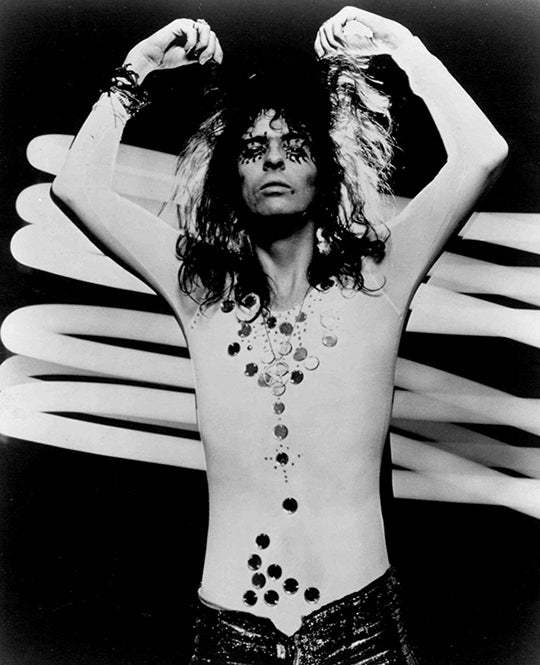
Header image: Alice Cooper 1972 promotional photo. Courtesy of Wikimedia Commons/public domain.

Written by Ken Sander

Ken Sander in the 60’s. Looking pretty mod back in the day

Header image: Alice Cooper 1972 promotional photo. Courtesy of Wikimedia Commons/public domain.
Alice Cooper, Ken Sander and Alice’s mom, CES 1994.

It was late 1968 when my friend, the late Barry Byrens, said to me, “Linc,” (he loved calling me that, because I looked like Linc in the TV show The Mod Squad), “you need to get rid of that motorcycle and get a car, a convertible.” At the time I was subletting a cabin in Laurel Canyon and in fact had not thought about a car. I liked my motorcycle, but it was winter in LA and riding the bike at night was chilly.

Two days later I was at his house in West Hollywood up in the hills at 8929 St. Ives, just above Gil Turner’s liquor store at Doheny and Sunset Blvd. Barry had the newspaper open and said, “I found you a car at this car lot on Sunset Blvd. in Hollywood.” He drove me down there in his Lincoln, a hardtop convertible.

We got there and it was a 1964 copper-colored Chevy Corvair convertible. Barry, me, and the salesman took it for a test drive. On a side street south of Sunset I tried to turn the car around and stalled it. It had a stick shift, so I pushed in the clutch and brake. I turned the key to restart it and the Corvair rolled backwards a foot or so and hit a fire hydrant. I don’t think I pressed the brake hard enough. Getting out, we saw a small ding put in the trunk just above the license plate. I was horrified at what I had done, but the salesman said “no sweat” and we continued the test drive, then left.

Two days later Barry found another Corvair convertible but this one was a light blue 1966. We went down and after the test drive, I was sold. It was $999. I plunked down $250 down and the payments would be $48 a month. I drove it back to Barry’s house. Later that day the salesman from the first car lot called and said, “your car is ready to be picked up.” I looked at Barry (I did not know what to say) and he took the phone from me. Barry said, “he doesn’t want the car!” “Why not?” the salesman asked. “He just doesn’t want it,” and then the salesman started getting pushy. Finally, after a back-and-forth Barry says, “he doesn’t want it because it has a dent in the trunk!” The salesman was speechless, and Barry told him to fu*k off and hung up.

My best new toy ever, it is my first car, and driving with the top down is a beautiful thing. Barry was right. One night I am driving up Doheny Drive going to Barry’s house to hang out and I see a hitchhiker. He has long hair and looks like one of us, so I pull over and pick him up. He introduces himself as “Alice Cooper.” Interesting, I think to myself; there must be a story here. “Unusual name,” I say to Alice, and he explains that it is his stage persona and the name of his band. “This is not a sexual identity thing either,” he quickly adds. He goes on to explain that he had recently formed the band and they were in rehearsal here in Hollywood.

I tell him I am from New York City and he says he is from Phoenix. I say that is not far from Los Angeles, and Alice answers that in fact it is very far from LA We both have a laugh at that one. They are getting ready for their debut. I had met more than a few musicians in Los Angeles who had told me that they were forming a band and rehearsing – and never heard of them again. But I got the feeling that this Alice Cooper guy was more realistic and solid, so I thought it might happen with for him. We got to Alice’s destination and he asked me to stop and drop him off.

Alice Cooper. Courtesy of Wikimedia Commons/Hunter Desportes.

I loved this Hollywood life; so friendly with everyone just hanging out. Whenever I had no plans for the evening, I would go to Ben Frank’s on Sunset to hang out. the parking lot was always packed with girls and long-haired guys, a couple of hundred young folks just milling around and getting to know each other. In New York we had something similar to that at the Bethesda fountain in Central Park, where the hippies, freaks and musicians would hang out, but the scene would only be happening on Sunday afternoons.

One night I am at Ben Frank’s with Jon Lane, my (late) friend from New York City who was visiting me, and these two girls I had seen around came up to us and asked if we wanted to go party with them. Tempting, but we were hungry and were planning to go inside to Ben Frank’s and have dinner, so we passed. A couple of nights later we were back in the parking lot and this kid I kind of knew came over to us and said, “you know Audrey and her friend, right?” The guy tells me they had died. What? Yeah, he says, they overdosed on heroin; the police found them. Jonny turned to me and said, “that could have been us.” Even though we didn’t do smack, they might have convinced us to try it.

That, I was beginning to find out, was the other side of Hollywood life. As open and friendly as things were, there was another side that was dangerous, with quick turns and sudden deaths. All kinds of different people come to Southern California. New York City is the melting pot of the world, and Los Angeles is the melting pot for young Americans.

Maybe a couple of weeks or so later I see Alice Cooper hitching again. He jumps in my car and I told him I was going to a friend’s house to hang out and if he wanted, he could come too. It wouldn’t quite be a party but there would be people there listening to music and most would be smoking. Alice says, “I don’t smoke pot.” I replied, “really?” He answered, “I don’t have a problem with it but I personally do not like it.” “Oh, so what do you do? “I love beer, Budweiser in fact.” I am not sure if they will have beer and Alice says, “let’s stop somewhere so I can pick up some Bud.”

I think we stopped at Gil Turner’s and he ran in and bought a six pack of Bud. Then we drove to my friend’s house and joined the scene. That was the thing about LA – you could just drop in on anyone you knew, and it was okay. You would show up they would invite you in and ask if you wanted to smoke.

After about a half an hour I look over and see Alice on the floor sitting with his back leaning against the wall and drinking a can of beer. He had two empties on the floor and was working on his third. No one was drinking with him; it was a pot crowd, but he looked comfortable, fit in and seemed like he was enjoying himself. The evening went on and after a couple of hours I left with a girl and we went to my cabin in Laurel Canyon.

One afternoon the rock group Love showed up to the cabin and we all hung out and partied. Love, led by the brilliant but eccentric Arthur Lee, were one of the leading bands on the LA scene during the mid to late 1960s. However, Arthur Lee wasn’t with them when they showed up. I asked about it and the band said that they had parted ways. The often-unruly Lee was quick to fire musicians.

I have been told that Roger Daltrey said that Arthur Lee was on the spectrum. In their earlier days, the members of Love lived in a decrepit Hollywood mansion once owned by Bela Lugosi. Arthur Lee and Love evolved from the group formerly known as Grass Roots (not the Grass Roots that had many hit singles) and were known in LA for their spirited and entertaining live performances. Arthur was immensely proud of his racially-mixed band, one of the first in rock and roll. In late 1966 the three hottest bands in Los Angeles were The Byrds, The Doors and Love.

Love’s Forever Changes was released in 1967 and was and still is considered a masterpiece. The name of the album comes from a story Arthur had heard. This guy had broken up with his girlfriend. She exclaimed, “You said you would love me forever!” and the guy replied, “Well, forever changes.” The album was brilliant but did not sell as well as expected. Arthur, being very volatile, changed band personnel frequently. (In 1995 he was wrongfully convicted of a gun charge and, being his third strike, his career was interrupted by a prison sentence until 2001. After prison, Arthur formed a new band and toured and made some records. However, even though he was much more disciplined, he never again achieved his earlier promise. Sadly, he passed away from leukemia in 2006 at the age of 61.)

Some weeks later I am driving my Corvair with the top down and see Alice Cooper walking up on Sunset. I yelled to him asking if he needed a ride. With a friendly wave he said no and kept on walking east towards the Old World restaurant. The next time I saw Alice was when I was in Chicago on tour with Nektar in 1974. By this time he had become a huge star with songs like “I’m Eighteen” and “School’s Out.” We said a quick hello to each other in the lobby of the upscale Chicago Holiday Inn on Lake Shore Drive.

In 1994 I was an on-air technology correspondent and host for The Cable Doctor Show, and was covering the Consumer Electronics Show (CES) in Las Vegas. I saw that Alice Cooper was making a celebrity appearance. “Meet Alice Cooper and his Mother.” An unusual scenario, but there he was in an exhibitor’s booth, posing for Polaroid pictures with his mother. I went over and he introduced me to his mom and said, “you look different with short hair! And what is with the jacket and tie?” In response I told him I was a technology journalist on television, but that he looked exactly the same, and as you can see, that made him smile. That smile reminded me of when I first met him. He certainly has come a long way for a kid named Vince from Phoenix. I think this is pretty much the way he planned it.

Art Scoop

I found out during my interview with Lucia Giudice of Puccio Fine Art, for my Art Lovers Forum podcast, that many New York galleries are leaving their ground floor spaces for less expensive showrooms on upper floors in office buildings and by appointment only. Many of the galleries are doing most of their sales online and through art fairs. Lucia revealed lots of other surprises.

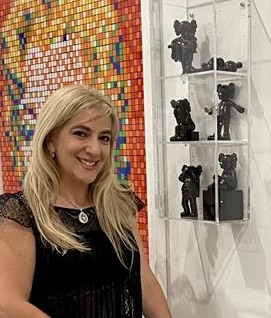
Lucia Giudice

Art Lovers Forum Episode 7

Lucia Giudice is the founder of New York City based Puccio Fine Art. She is also a dear friend of mine. We lived in the same upper East side coop for many years and she was the first gallerist I became close to. I used to visit her gallery on East 63rd all the time. Now she sells exclusively online.

She has an educational background in Political Science and Art History, and several decade’s worth of experience in the art world. Most importantly as the daughter of Italian Immigrants and niece of sculptor Paul Puccio; she has always been involved with art, artists, galleries, art shows, foundries, studios and workshops. Puccio Fine Art was established in 2003 out of a love for art collecting and need for space to showcase works. Her focus is in the secondary market, by masters such as Warhol, Picasso, Dali, Lichtenstein, Stella, Rosenquist and Matisse. She has been a member of the International Fine Art Appraisers, the Association of Women Art Dealers and previously served on the Board of the Italian Welfare League.

Listen to episode 7 of the Art Lovers Forum podcast here – https://www.artloversforum.com/e/episode-7-lucia-giudice-puccio-fine-art/

The Art Lovers Forum Podcast is also available on popular podcast sites:

Apple Podcasts – https://podcasts.apple.com/us/podcast/art-lovers-forum-podcast/id1725034621

Spotify – https://open.spotify.com/show/5FkkeWv83Hs4ADm13ctTZi

Amazon Music – https://music.amazon.com/podcasts/77484212-60c5-4026-a96f-bd2d4ae955c6

Audible – https://www.audible.com/pd/Art-Lovers-Forum-Podcast-Podcast/B0CRR1XYLZ

iHeartRadio – https://www.iheart.com/podcast/1323-art-lovers-forum-podcast-141592278/

We Pretended To Be Big Shots

The sole survivor of Manhattan’s big three media-power-lunch spots.

NOSTALGIA ON THE MENU

Power-Lunch Like It’s 1989!

Michael’s is a restaurant frozen in time. A better time, for its aging, loyal (and forgiving) regulars

Dana Brown

BY  DANA BROWN

Progress requires sacrifice. As a result, the forward march of technological innovation has left many casualties: landlines, video stores, paper maps, civil discourse, facts. Words and phrases have become acronyms, and emojis have replaced emotions. Doing something “in real life” has become such a novelty, a remarkable event, that we had to create an acronym for it. WTF?

Then along came the coronavirus. Suddenly, it became almost impossible to do anything IRL. The pandemic is now over (I think). But in just a few years it killed almost three million people worldwide. It also killed a number of social constructs and customs. One of those things is the power lunch.

The art at Michael’s includes pieces by Jasper Johns, David Hockney, and Frank Stella. 

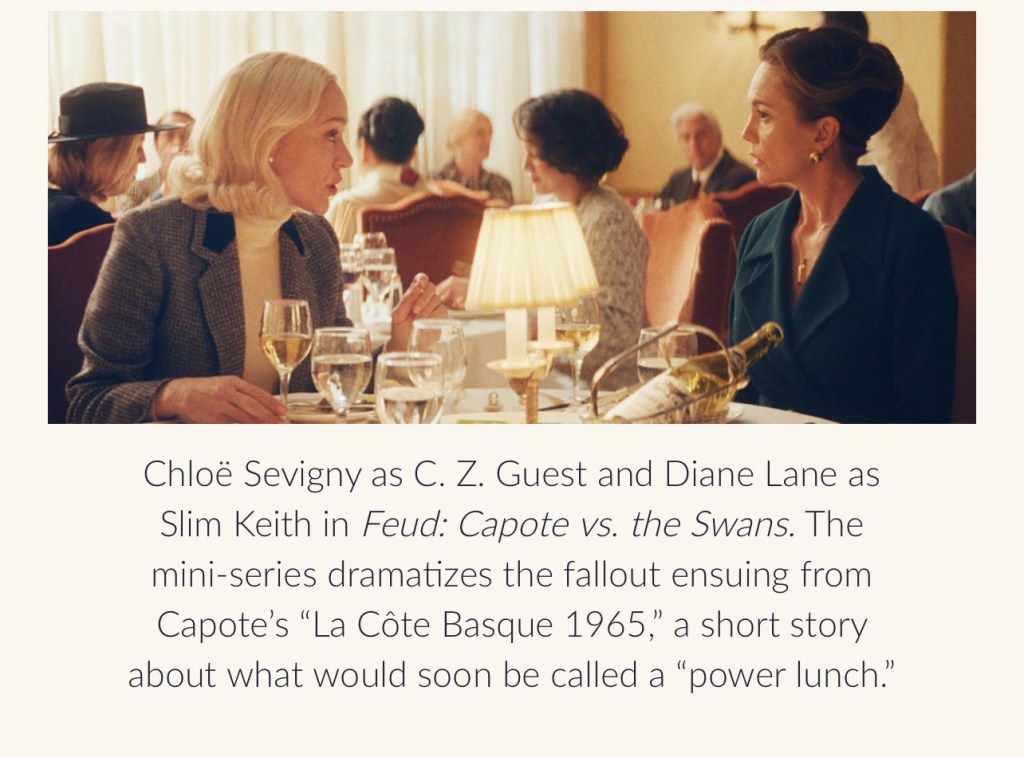
“Power lunch” was first coined by an editor at Esquire in 1979, when magazines had the ability to create Zeitgeist-defining phrases. It was used to describe the lunchtime scene at the Four Seasons in the Seagram Building, in Midtown Manhattan. Four years earlier Esquire had run Truman Capote’s “La Côte Basque 1965,” a short story about what would soon be called a power lunch that would later figure prominently in Ryan Murphy’s Feud: Capote vs. the Swans.

And while the term may have been coined in New York, about a New York restaurant, there is, or perhaps was, a power lunch in almost every city or town around the world for as long as there have been powerful people with a midday appetite.

The power lunch was never about eating, though; it was about being seen, staying relevant, holding on to or building on whatever kind of power or influence you have, or think you have, whether that’s financial, political, social, or cultural. It was about business, optics, gossip, social standing. It was about having a literal and metaphorical “seat at the table.”

But the media power lunch always towered over the rest. The crowd had better clothes, bigger personalities, a higher tolerance for alcohol, more creative and interesting work, and a higher proportion of women, balancing out the gender makeup of the dining room. Every big media center had a media power lunch, but nobody did it quite like New York, the media center of the universe.

In the middle of the day, especially in the late 1980s and 1990s, when business was booming, the media elite ditched their desks en masse, with the precision and predictability of the Flintstones’ opening sequence, got into their idling Lincoln Town Cars, and were driven three or four blocks to a few specific restaurants to power-lunch, which might as well have been a verb during this era.

The power lunch was never about eating. It was about having a literal and metaphorical “seat at the table.”

There were really only three options, all located in Midtown: the Four Seasons, Philip Johnson’s midcentury masterpiece; the Royalton hotel’s flashier 44, whimsically designed by Philippe Starck and run by the well-connected English restaurateur Brian McNally; and Michael’s, the least flamboyant of the three, tucked under a nondescript apartment building on West 55th Street.

The media power lunch was fading well before the pandemic, as takeout and delivery options improved and the working lunch took hold, while the media business became more dispersed. The Internet and the Great Recession led to a contraction in legacy-media-advertising spending. Expense accounts began to wither and die, and the business has been on a downward trajectory ever since. In 2023, more than 20,000 American media jobs disappeared. This year may be even worse.

A Few Hokas, but Zero Yeezys

Michael’s, the sole survivor of the big three media-power-lunch spots, is a restaurant frozen in time. That can be a selling point, as was the case with the magnificent Four Seasons, but not if that time happens to be 1989, when Michael’s was opened by the California restaurateur Michael McCarty. (The original Michael’s is in Santa Monica.) And there is still more than a fragrant whiff of the 80s here: the wall-to-wall carpeting, the dusty track lighting, the mirrored column in the center of the dining room, the worn Breuer chairs.

What’s not frozen in time, which is unfortunate for a restaurant that relies on media expense accounts, is the media industry. So I was surprised that Michael’s began filling up at around 12:30 P.M. on a cold Thursday in February. One after another, parties of two and four were led to their tables, mostly older gentlemen in suits with open-collared shirts, like it’s 1998 and “business casual” still means simply losing the tie. Although most of them had replaced their wing tips or loafers with sneakers. I saw a few pairs of Skechers, a few Hokas. By one P.M., the place was packed. It was like the dinner rush for the early-bird special in an assisted-living community.

For years, the New York Post’s media columnist Keith Kelly would often detail the boldfaced power lunchers at Michael’s in his “Media Ink” column, sometimes even including a seating chart. Kelly retired in 2021, so the restaurant now tweets a daily list of their boldfaced lunch guests (#INTHEHOUSE) to their 2,800 followers.

Scrolling back, there were repeat visits by familiar faces, such as P.R. veteran Peggy Siegal, adman turned Joe Scarborough sidekick Donny Deutsch, gadfly Michael Wolff, former Time Inc. head Norm Pearlstine, and literary agent Lynn Nesbit. Tina Brown, Jeff Zucker, Michael Kors, David Axelrod, New Jersey governor Phil Murphy, Malcolm Gladwell, Anthony Scaramucci, and Rex Reed have all made recent appearances at Michael’s, too. The only semi-notable person I recognized when I went—and it took me a minute to place her—was former Vogue staffer and Melania Trump memoirist Stephanie Winston Wolkoff.

Time hasn’t been kind to the quality of Michael’s food. It ranges from just O.K. to not very good to whoa. In fact, the less said about the food, the better. I know, the power lunch isn’t about the food, but at these prices, it needs to be improved. A piece of salmon is $44; an eight-ounce filet mignon, $58. The burger ($38), the Cobb salad ($35), and the Niçoise ($36), while all pricey, are probably the safest bets on the menu.

My $40 branzino consisted of two limp fillets that were so thin the fish must have been on Ozempic. A $16 side dish of gray, gloppy mushrooms tasted like it was straight from a can. A number of plates had that unmistakable look of food that had been sitting under a heat lamp for 20 minutes—its garnishes wilted and depressed, looking sadder than photographs of 1970s England—and yet the dishes arrived so quickly it’s impossible they had been. I’m afraid that when it comes to the food, Michael’s has simply stopped trying. Which is a shame, because I remember it being better than this.

And yet there’s something nostalgically charming about the place. The room is comfortable and bright, lined with some really wonderful art, including pieces by Jasper Johns, David Hockney, and Frank Stella. The tables are spaced a reasonable distance apart. There was a communal understanding that we should use our inside voices. There were no tables of young people living their truth, or their best life, or some combination of those two empty promises, which seems to include being exceedingly loud in restaurants.

At Michael’s, you can have a conversation without having to lean in to hear what your dining partner is saying, and there are fewer and fewer restaurants I can say that about. Even the Kenny G–style smooth jazz playing quietly was refreshing. In an increasingly chaotic and fraught world, for almost $200 with the tip and a little more than an hour of my day,

Michael’s brought me back to a better time, a simpler time. It gave me some comfort about my own mortality, and made me feel, however fleetingly, that maybe, just maybe, everything was going to be O.K. You can’t really put a price on that.

Sure, its lunchtime crowd resembles a casting call for a reboot of Cocoon. But no one was wearing Yeezys or Lululemon. There were no influencers or reality-television “stars.” No one was staring at their phone. No one was taking pictures of their food. People were simply talking to each other—the ultimate throwback. 

At Michael’s, it’s the diners who are offered a sense of agency and purpose in a world that has left them behind. For an hour or two, they can make believe it’s still the waning days of the 20th century, the media business is thriving, and the future looks bright. It’s a wonderfully empathetic and humanistic concept, playing out every day over lunch at Michael’s, IRL.

Dana Brown is a Columnist at AIR MAIL. A former deputy editor at Vanity Fair, he is the author of the memoir Dilettante: True Tales of Excess, Triumph, and Disaster