Meet artists Randi Renate and Beatriz Chachamovits
Eliot and I met them a few years ago through Fountainhead Arts and have been friendly ever since. They are environmental artists who are helping to clean up our ocean and save coral reefs.
They both scuba dive all over the world on a frequent basis to keep up-to-date on all environmental conditions. They are highly educated and avid readers.
Beatriz and Randi are quite remarkable. They are constantly on the go visiting artist residencies worldwide in order to network and create paintings and sculpture in many different environments. They also teach art and environmental studies at museums, galleries, cultural centers, and makeshift locations.
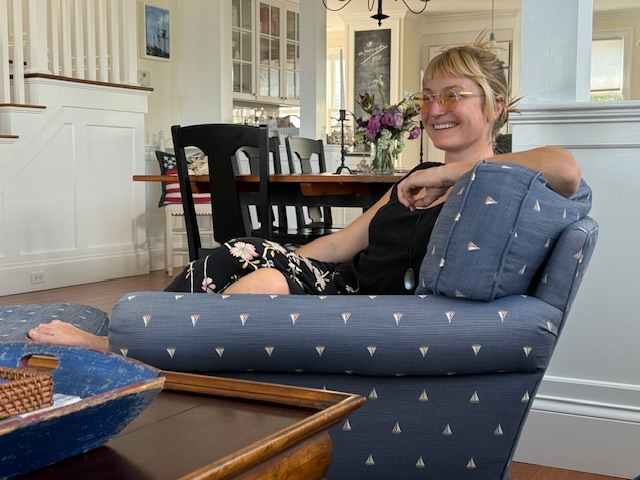
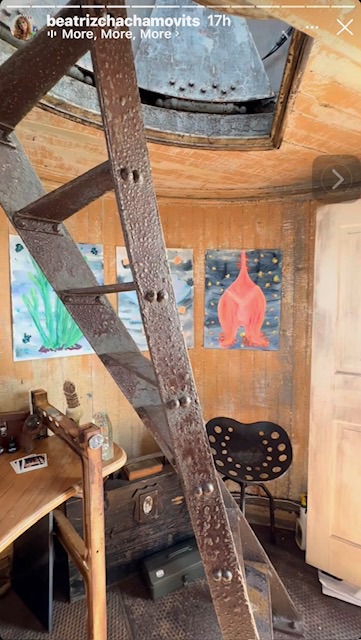
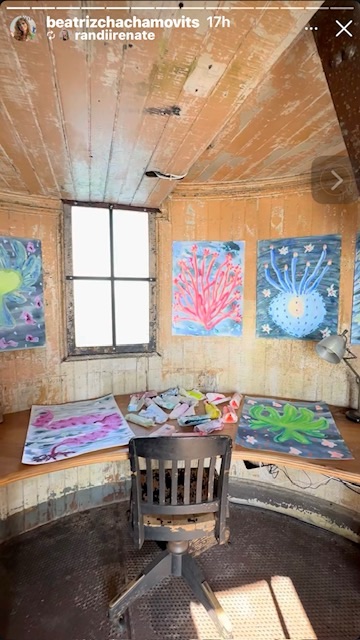
I’m always amazed at what they do because I just don’t meet many women like them. They just completed a residency at the Orient Point Lighthouse on Long Island. They stayed with Eliot and I in PTown before this one-of-a kind adventure.
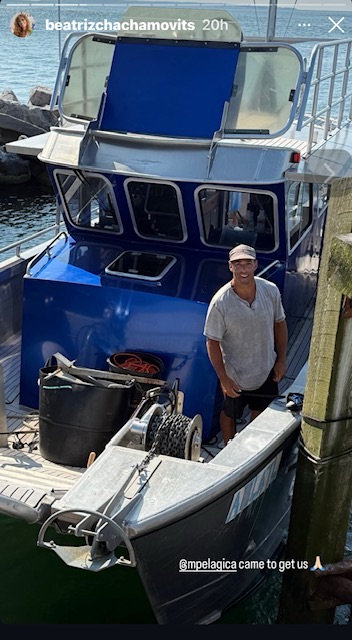
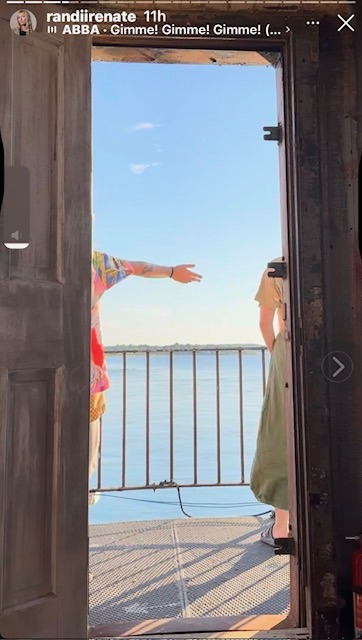
For one week, they were living alone on a small island, a mile in circumference, in a lighthouse. A fishing boat took them from the mainland of Long Island to the island. If they needed help they had to call the coast guard—that’s if the cells and internet were working. It was spotty at best.
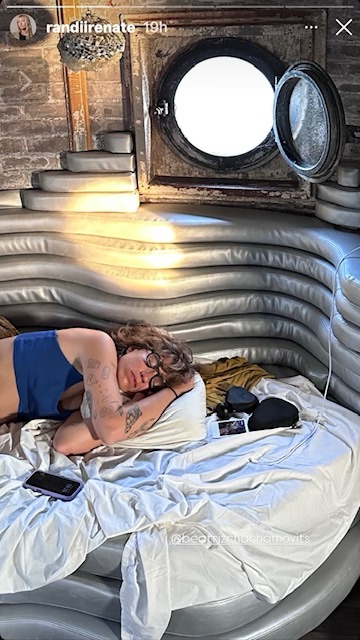
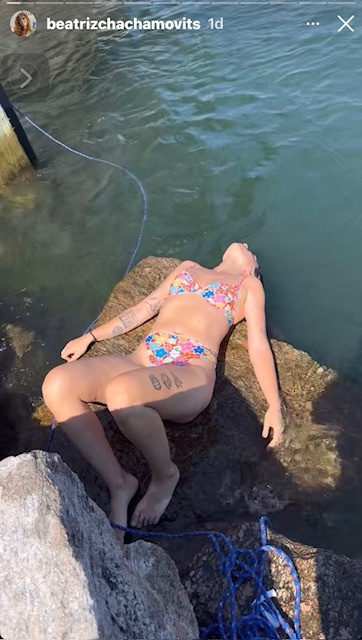
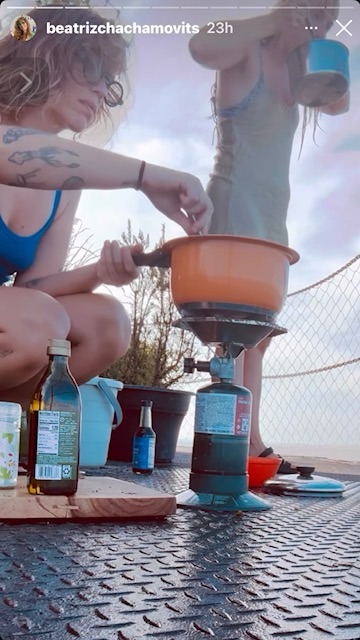
They cooked on a camp stove and bathed in the water. I won’t describe the toilet conditions but just let’s say they were challenging. I could never do it.
Randi and Beatriz are not me. They thrive on conditions like this so they can be close to nature and create art that reflects their findings. Eliot and I admire them.. They partner on a lot of projects but they also have many other artists that they collaborate with.
Beatriz and Randi live a life of adventure trying to save our planet. They are totally dedicated to their work and dare to live in a non-traditional world. It’s very exciting to be around them.
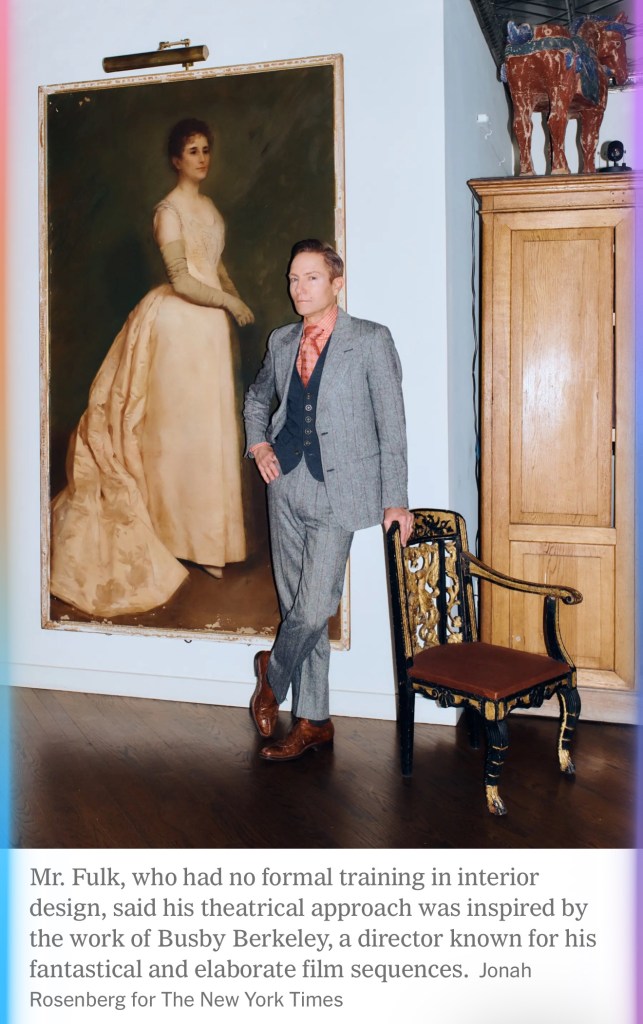
“I’m going to trip!” Ken Fulk yelled as he barreled down the stairs of the Flemish Revival building in Lower Manhattan where his design company has a New York office. Mr. Fulk, who was rushing to catch a helicopter, had a Louis Vuitton monogram duffle bag in one hand and an Away suitcase in the other. He stuffed them into a car idling outside before climbing in and being whisked away to a helipad on the Hudson River.
From there, Mr. Fulk, 60, flew to the Hamptons to meet with the owner of a home he is decorating there. Later that Wednesday in early April, he had another flight to catch — this one to Verbier, in the Swiss Alps, where he had a meeting about another project.
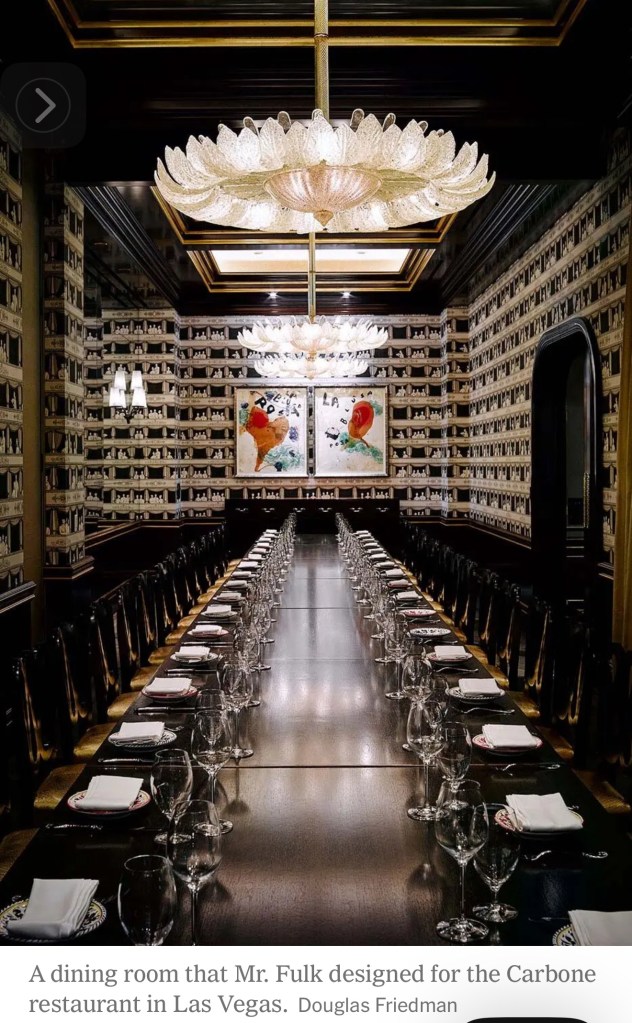
Mr. Fulk, who lives primarily in San Francisco, started his interior design business there in the 1990s. In recent years, he has been exporting his taste to places across the country and the world. Along with decorating the homes of fashion designers, technology executives and diplomats, he has given his touch to private clubs like the ‘Quin House in Boston and restaurants like Carbone. After designing its locations in Las Vegas and Miami, he is now working on its outpost in London, which is expected to open this summer.
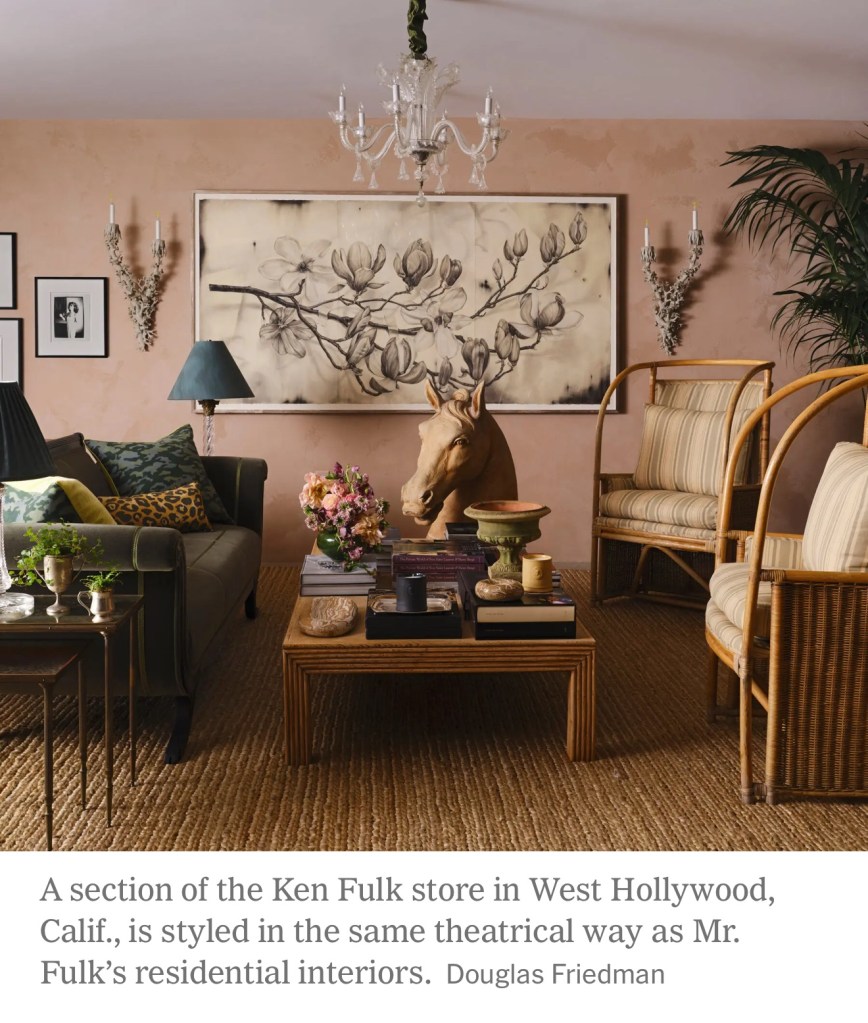
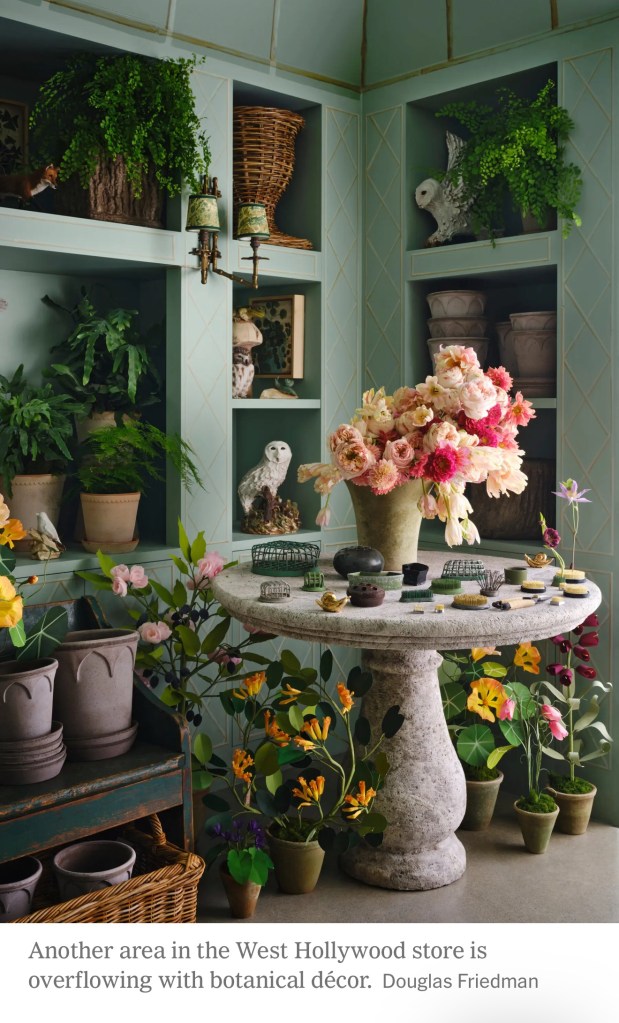
The globe-trotting and creativity his career has demanded is “what I was built to do,” said Mr. Fulk, who recently opened namesake stores selling Ken Fulk-branded home goods in San Francisco and in West Hollywood, Calif. He is planning to open a third in New York later this year.
The West Hollywood store is not far from the site of another project, the Beverly Hills Hotel. Inside, Mr. Fulk is designing a spate of new spaces, including what he described as a “palm-lined, Copacabana supper club” and a lobby bar.
“We are not touching the Polo Lounge,” Mr. Fulk said of the hotel’s marquee establishment, a famously clubby hangout for Hollywood titans. “There would be rioting out front.”
He was joking. But Mr. Fulk’s aesthetic, which can evoke descriptors like “maximalist” or “more-is-more,” is somewhat the opposite of quiet luxury. Wendy Goodman, the design editor of New York Magazine, characterized it as “unabashedly unapologetic luxury.”
“It isn’t for everybody,” Ms. Goodman said. “But on the other hand, in design, you see a lot of things that are very safe because people don’t know how to express themselves. Ken knows what he wants. He’s all about the comfort of luxury, which is very seductive. He has a sense of how people want to sit and talk together.”
His client list includes various San Francisco elites. Mr. Fulk has worked with former Vice President Kamala Harris, a former district attorney there, and with Trevor and Alexis Traina, a wealthy and well-connected couple who live in the city. They had him redecorate the U.S. Ambassador to Austria’s residence in Vienna after Mr. Traina was appointed to the position during the first Trump administration. In one room of the home, Mr. Fulk mixed disparate pieces from the Trainas’ art collection, including an abstract Rudolf Bauer painting and a large Tina Barney photograph, with Josef Hoffmann furniture upholstered in powdery pink velvet.
Earlier in his career, Mr. Fulk was the go-to decorator for Silicon Valley figures like Kevin Systrom, a founder of Instagram, and Sean Parker, the creator of Napster and the first president of Facebook. Mr. Fulk also orchestrated Mr. Parker’s 2013 wedding, a medieval fantasia set among the redwoods of the Big Sur region in California, at which custom outfits by a “Lord of The Rings” costume designer were provided to each guest.
“Ken is an imagineer,” said the fashion designer Zac Posen, another client. Mr. Fulk decorated his rental home in San Francisco after Mr. Posen moved to the city last year to take the creative reins at Gap Inc. The residence was built in the 1850s by a ship captain, a history Mr. Fulk nodded to with furnishings like old boat lights and anchor chains.
“It has the feeling of being in a ship, very aquatic,” said Mr. Posen, who has known Mr. Fulk since the early 2000s, and who tapped him to collaborate on a recent campaign for Banana Republic, a brand under Mr. Posen’s umbrella. “Ken understands the theater and fantasy of life.”
Mr. Fulk said that, in a word, his aesthetic could be called optimistic. “There is a theatrical nature to it, but nothing is there just by happenstance,” he added, explaining that he has fashioned himself less after the decorators Dorothy Draperand Tony Duquette, whose exuberant interiors are detectable in Mr. Fulk’s work, and more after Busby Berkeley, the director known for his fantastical and elaborate film sequences. (“Ken Fulk: The Movie in My Mind” was the title of a hefty coffee table book about Mr. Fulk released by Assouline in 2022.)
At his company, Ken Fulk Inc., which now has about 100 employees, design projects often begin in the same way that films do. “We write a script,” Mr. Fulk said. For the Carbone restaurant he designed in Miami, he described the narrative as “Maria Callas waking up next to Frank Sinatra in the Gritti Palace.”
“I think it’s because I was never trained,” Mr. Fulk added about his approach. “I can’t draw a circle.”
He studied history and English at Mary Washington College, now the University of Mary Washington, in Fredericksburg, Va., and moved to San Francisco after briefly living in Washington, D.C., and Boston. After working in restaurants and starting some unsuccessful businesses — a company that sold shower curtains and pajamas, another that sold and licensed children’s books — Mr. Fulk got his first decorating gig when a friend in San Francisco asked him to put together his apartment. After that, he worked as a house stager and landed more interior design jobs by word of mouth.
“I was always the friend with taste,” said Mr. Fulk, a fastidious dresser whose exuberance is reflected by his preferences for bow ties, boyish Thom Browne suits and wearing his hair in a tidy “Leave It To Beaver” coif. “I’ve done all my own shopping since I was 6,” he added.
Mr. Fulk and his older sister grew up in Harrisonburg, Va., a small town in the Shenandoah Valley. Their parents owned bars and restaurants in the area. He described his life back then as comfortable, if not as grand as his aspirations. “When I was 4 years old, I said I wanted to live in a penthouse in Manhattan, even though I had never left my hometown,” he said.
He has yet to get that penthouse — lately, when in New York, he has been staying at a hotel near his office. In San Francisco, he and his husband, Kurt Wootton, 59, have a home in the Clarendon Heights neighborhood. The couple, who met in Boston in 1991, have three golden retrievers (Duncan, Ciro and Sal), a wire‐haired dachshund (Wiggy), and also own a ranch in Napa Valley, along with a waterfront house in Provincetown, Mass.
Mr. Wootton, who formerly worked in retail at companies like Neiman Marcus and Williams Sonoma, said that Mr. Fulk “is very much the conductor of this thing called life.” He added that, when his husband isn’t working, they are often cooking together (they like Indian and Italian cuisine) or relaxing with their dogs.
Mr. Fulk also owns the Mary Heaton Vorse house in Provincetown, an 18th-century home across the street from his residence, which he runs as an arts center that hosts events, offers temporary residencies to working artists and occasionally serves as a guesthouse for friends like the actress Jennifer Coolidge, who crashed there last summer when Mr. Fulk’s home was full. (He established a similar operation in San Francisco, called Saint Joseph Arts Society.) Mr. Fulk bought the Vorse house in 2018 for $1.17 million — a price with as many digits as his fee for decorating homes, which he said now starts “in the low seven figures.”
He travels between his residences as he and his staff work on dozens of projects at once. “My superpower is saying yes to stuff,” Mr. Fulk said, explaining that his voracious appetite for new opportunities partly resulted from living through the AIDS epidemic in the 1980s and 1990s. He came away from that time with a mentality of “do everything right now,” he said.
Jobs Mr. Fulk is currently devoted to include a new boutique hotel in Barcelona and his namesake retail business, where people can buy Ken Fulk candles ($125) and caviar sets ($365) along with décor and jewelry and from other makers. He opened the stores with the help of Dave DeMattei, a former chief financial officer at Gap Inc., whom Mr. Fulk hired in the same capacity at Ken Fulk Inc. in 2023.
The thinking behind the retail expansion, Mr. DeMattei said, was that “not everyone can afford the houses Ken does, but they can go in now and buy a little piece of it.” Mr. Fulk, he added, “is 24-hours-a-day, workaholic, never says no.”
Another thing that Mr. DeMattei has encouraged Mr. Fulk to do: television. Last year, he signed with Creative Artists Agency. But Mr. Fulk isn’t sure if the small screen is for him.
“TV is great, and I know it’s popular, but it isn’t me,” he said. Instead, he hopes his work could be the subject of, yes, a film (specifically a documentary).
“I would like to preserve some pieces of it that way,” he said. “It’s all so terribly cinematic.”
Welcome to Art Lovers Forum. Today we spotlight the bold, electrifying work of Cuban-American artist Alex Núñez, whose newest installation at the Faena Art Project Room in Miami Beach is a must-see this summer.
Titled “There’s a Gator in the Pool,” this site-specific immersive experience isn’t just art—it’s a full-body encounter. Núñez transforms the gallery into a surreal aquatic landscape, using glitter, gold leaf, neon paint, and mutant coral forms to reflect the fragile beauty and quiet chaos of our environment.
Known for her layered, high-energy works that pull from pop culture, memory, and ecological tension, Núñez invites viewers to step into a shimmering, disorienting world where danger and delight coexist. This is art you don’t just view—you feel it under your feet, around your body, and in your gut.
Whether you’re an art collector, a curious local, or a visitor looking for something unforgettable, this is one of the most talked-about installations of the season. Stick around—we’re diving deep with Alex on the inspirations behind her work, how Miami, Cuba, and New Orleans shaped her visual language, and why she believes beauty can be both seductive and unsettling.
NEW YORK MAGAZINE Kyoto Has Zero Zen A great exchange rate, ChatGPT, and kimono-wearing bros have turned Kyoto into the loveliest tourist trap on earth.
The art world is in the midst of change. I know of three galleries that closed in the last month. Is it reeling from the lack of creativity at the galleries? Have the galleries expanded too fast and raised prices too high? Is it a new generation buying art differently? Have the endless events like Basel and Frieze changed the consumer? Is it the ability for the artist to connect directly to a collector through social media? More than likely it is a combination of all these questions.
I have met artists who have been hurt by gallerists pushing their prices into places they shouldn’t be. Many of those artists didn’t sell for years or watched their prices peak before tumbling back down to reality, although it had nothing to do with the work, just the price.
There are the gatekeepers just like all industries where we have seen more monopolies. The newest wave in the art world is a group of people helping the uber-wealthy collect pieces that are of museum value as another asset class for their families. There are also new agencies and individuals who help the artists get into museums, or specific collections or help with their PR, where this has been something that gallery has done in the past. Is the gallery becoming only a vessel for selling artists work?
I do believe that there will be some major shifts happening in the art space in the years to come. Art reflects the times, and perhaps what is happening now is an indication of the cultural shifts that are happening, including younger generations that are looking at art very differently than the generations before them.
Since its founding in 1857, The Atlantic has excelled in covering matters of war, peace, and national defense. Nathaniel Hawthorne served as the magazine’s Civil War correspondent (Abraham Lincoln himself said that a favorable article in The Atlantic could save him “half a dozen battles”). The strategist Alfred Thayer Mahan advanced the idea of America as a global naval power in the pages of The Atlantic. We published the letters of General George S. Patton; the Cold War analysis of William “Wild Bill” Donovan, the founder of the CIA; and Frances FitzGerald’s historic reporting on Vietnam.
Today, as the post–World War II international order constructed and maintained by the United States is under unprecedented pressure (from within and without), issues of national defense and America’s role in the world are among the most urgent we face. Which is why The Atlantic is committed to rapidly and dramatically expanding the scope and scale of our coverage. Imagine an intersection at which American national security, defense spending, the rise of China, technological innovation, regional conflict, and the future of liberal democracy all meet; this is where you will find The Atlantic and our stellar team of reporters.
The expansion of our national-security coverage is built on superb talent: Journalists joining our team include such brilliant reporters as Vivian Salama and Nancy Youssef, who, until recently, covered the Pentagon and national security forThe Wall Street Journal; and Shane Harris, Missy Ryan, and Isaac Stanley-Becker, who covered defense and intelligence for The Washington Post. They will be working alongside Mark Bowden, the author of Black Hawk Down, and Tom Nichols, who taught at the Naval War College until joining us as a staff writer in 2022, among other great reporters. Our team is growing each month, and you should expect to find in The Atlantic the very best coverage of national security anywhere in journalism.
In our forthcoming print issue, devoted to the 80th anniversary of the Trinity test and the atomic bombing of Hiroshima and Nagasaki, you will find Tom’s examination of why the power to launch nuclear weapons came to rest with a single American—and the dangerous consequences for national security; Ross Andersen on how nuclear ambitions in east Asia are accelerating as American power recedes; retired Special Forces officer Mike Nelson on the myth that soldiers need to choose between lethality and professionalism; Andrew Aoyama’s essay about the Japanese American activist Joseph Kurihara, who was interned during WWII, after fighting for the U.S. during WWI; and Noah Hawley on Kurt Vonnegut and the bomb.
To read all of these stories—and everything else in The Atlantic—you’ll need a subscription. In my opinion, it’s worth it. A subscription not only gives you unlimited access to our journalism; it also supports our journalists in dangerous times.


























/media/img/authors/2021/06/Jeffrey_Goldberg_Headshot_bw_1/original.png)
 DigiDame