We are with Ronnie and Andrea Hein of Montecito. We have been good friends for years. They have visited us in Miami Beach and we have visited them. We all traveled together before from Panama to Costa Rica and we hope there will be many more opportunities. For now: Rome, Positano, Capri, Ischia and Naples.
My friend Robin Raskin is an American writer, author, publisher, TV personality and conference and events creator best known for her ability to simplify technology for non-technologists. She makes it easy for you to understand what all the fuss is about.
Listen to Scott Galloway. He says the United States is producing the most dangerous group in society.
Scott Galloway is a clinical professor of marketing at the New York University Stern School of Business, and a public speaker, author, podcast host, and entrepreneur.
On Oct. 29, Don and Mera Rubell plan to open the Rubell Museum DC, transforming a long-vacant school in Southwest Washington
When I was growing up, most of the fathers in the neighborhood had blue collar, or lower middle management jobs. Never in my life did I think I would know the owners of museums. Living in Miami you meet many. Meta and Don Rubell are exceptional. Read about their latest venture.—LWH
Mera Rubell doesn’t want to sit in the new glass entry of the under-construction Rubell Museum DC, so she folds one of the metal chairs that was set up for an interview in the sunny atrium and heads into the historic building. Followed by husband Don Rubell and a small entourage of staff, she passes through the former Randall Schoolauditorium and into one of the original classrooms, a brick and white-walled space that will soon hold pieces from the couple’s famed collection.
“Yesterday we spent all day sitting in each room … figuring out the spirit of each room and thinking about the art,” said Mera, 78, trying to explain how she and Don are choosing the pieces that will be on view when the Rubell Museum DC opens Oct. 29.
“It was five hours,” Don, 81, corrected.
“We spent all this time sitting in these different rooms to figure out what’s going to hang in them,” Mera said, without acknowledging the interruption. “An artwork in this room is going to feel different than in another room.”
“We made permanent decisions yesterday which will be changed somewhere between Friday and Monday,” Don added with a grin.
Don and Mera Rubell will become Washington’s newest museum owners when their second museum — they have run a museum in Miami since 1993 — opens at 65 I St. SW with 24 galleries showcasing some of the 7,400 pieces of contemporary art the Miami-based couple have collected since 1965.
The $20 million renovation of a building that opened in 1906 as Cardozo Elementary School and became Randall Junior High School in 1927 features 32,000 square feet of galleries, a bookstore and cafe. It will join the Phillips Collection, the Hirshhorn, the National Gallery of Art and the Smithsonian American Art Museum in Washington’s crowded field of art museums.
A museum in the nation’s capital — not far from Arena Stage and Nationals Park — has been a dream for more than a dozen years, explain the couple, who have been married for 58 years. As owners of the Capitol Skyline Hotel one block east on I Street, the Rubells promoted their love of art with art fairs and other events.
“Contemporary art is a catalyst for serious conversation,” Don said, noting that artists grapple with the most pressing issues of the day, including race, immigration, violence and identity. Where better to have these conversations than in the shadow of the Capitol, he added.
“There are ideas that are percolating in Washington that may not have gotten to the rest of the country. We’re going to try to bring art related to those ideas,” he continued. “It’s not worth doing unless we really affect people.”
“Contemporary art is profoundly relevant to people’s lives,” Mera added. “It’s not like we’re going to teach people about art, okay? We are blown away by the art. We’ve been committed to buying it, we’re committed to caring for it. But I would say the greatest learning we get is from the public that comes to see it.”
On a recent, steamy summer morning, the Rubells spoke — often over each other, in the way long-married couples do — about their passion for contemporary art, their belief in its power to change hearts and minds, and their instinctive, if unusual, approach to collecting and curating.
“It’s not so much theory and scholarship as an emotional connection with the work that we’ve collected,” Mera said, elaborating on their curatorial process. “Because we have the privilege of having the work in our own [Miami] warehouse, we’ll put three pieces in here … and say ‘Ahh, it doesn’t look good. I think we need to put it over there, or you know what, I don’t think we’re going to put it in at all.’
“It’s the physicality of the work. but it’s also the relationships. We create relationships based on some experimentation. We’ll bring work here and see how it feels.”
They are not sweating the decision because it can always — and will always — change. “The pleasure comes in constantly changing it,” Don said.
Consulting with their son, Jason, Rubell Museum Director Juan Valadez and Caitlin Berry, newly appointed as Rubell Museum DC’s director, the Rubells are selecting pieces from their collection that explore social and political issues, and many will be on public view for the first time. Kehinde Wiley’s monumental painting “Sleep” will be included in the opening exhibition. The 11-by-25-foot work, based on an 18th-century painting by Jean-Bernard Restout, is one of Wiley’s series that explores Black identity by situating contemporary subjects in old settings. Wiley painted Barack Obama’s presidential portrait for the National Portrait Gallery.
On view will be “Untitled (Against All Odds),” a series of dystopian paintings by Keith Haring, a family friend they supported at a critical moment in his career. The series is in memory of Steve Rubell, Don’s brother and co-owner of the famous New York City disco Studio 54, who was 45 when he died of AIDS in 1989. Paintings from the “Shell” series, by D.C.-based artist Sylvia Snowden, who studied at Howard University under David Driskell, were acquiredfor the new museum. The series focuses on Snowden’s daughter and is the companion to “Malik, Farewell ’til We Meet Again,” pieces inspired by the 1993 shooting death of her son that were exhibited at the Corcoran Gallery of Art in 2000.
The galleries will also feature Mickalene Thomas’s “Mama Bush II, Keep the Home Fires Burnin’” and worksby Hank Willis Thomas, Cecily Brown, February James and Vaughn Spann.
The Rubells’ curating, like their collection, is grounded in instinct, feelings and curiosity. “You have got to stay curious, open and curious,” Mera says of their approach. Adds Don: “Our curiosity is really about the new.”
The search for “the new” has driven their choices since the beginning. The couple have always focused onearly-career artists and on buying multiple works. They often used payment plans of $5 or $10 a week when they were starting out as collectors, the couple said. Artists such as Jean-Michel Basquiat, Cindy Sherman, Haring and Thomas benefited from their early support. Don retired as a doctor years ago, and the couple now fund their purchases from their investments.
“We’re not oil barons, we’re not railroad barons, we’re a working family. We have been very fortunate, but we’re still working people,” Mera said.
The new venture isn’t going to play second fiddle to the Miami museum, which they opened in Wynwood in 1993 and moved in 2019 to Allapattah, a neighborhood that is closer to downtown and public transportation. On view in the 100,000-square-foot space are works by Yayoi Kusama, Cajsa von Zeipel and Reginald O’Neal. Another exhibition, “30 Americans,” has been on tour for more than a decade; it continues at the New Britain Museum of American Art through October.
The Rubells bought the Capitol Skyline Hotel in 2002 and worked to make it into an arts hub. A few years later, the now-defunct Corcoran Gallery of Art purchased the former school with the idea of expanding its educational footprint, a plan the Rubells heartily endorsed. When the 2008 economic crash ended that plan, the Rubells partnered with local developer Telesis in 2010 to bid on a development deal that included renovating the school for their art collection and building apartments on the surrounding land. They added a partner, the national developer Lowe Enterprises, to complete the project, which includes Gallery 64, an adjacent 492-unit apartment building, where one-fifth of the units are affordable housing.
The Randall School’s classrooms and auditorium have been transformed into galleries featuring pristine white walls, exposed brick, arched doorways and honey-colored wood floors and ceilings.
“The shapes are extraordinary,” Mera says, gesturing to the arches, windows and massive beams in the exposed ceiling. “We wanted to expose these. They come from 200-year-old trees,” she said.
The school setting is a significant theme, Mera noted. She was a Head Start teacher in New York City and Don was in medical school when they started collecting art. She says a professor at Duke, where son Jason earned his degree in art history, played a role in their decision to share their collection with the public. Now 53, Jason had amassed his own art collection — starting at age 12 with money from his teenage job stringing tennis rackets — which he merged with his parents’ larger holdings to create the Rubell Family Collection.Daughter Jennifer, 51, is an artist based in New York who shares her eye and expertise, too.
Berry, the former director of the Cody Gallery at Marymount University in Arlington, Va., will apply her deep knowledge of D.C.’s arts scene to tailor the museum to local audiences. She will collaborate with Valadez, the Miami museum director who has worked for the couple for 22 years, to shape the museum’s public programming.
“I bring a deeper knowledge of D.C. All of the curatorial work will be done with D.C. audiences in mind,” Berry said. “My role is to make this museum a part of the community and to help that community feel welcome.”
The Rubells have not determined whether they will replicateMiami’s artist-in-residence program, which began in 2019 and provided critical visibility to artists including Lucy Dodd, Sterling Ruby and Oscar Murillo. They are still discussing the number and type of public and educational programs, they said.
“Contemporary art can really change lives, especially teenagers’, because art has this extraordinary way of giving you a vision of possibilities,” Mera said. “Art changed our lives. If we’re successful, art might change other people’s lives.”
By Peggy McGlonePeggy McGlone is a reporter for The Washington Post, covering arts in the Washington region. Before coming to The Post, she worked for the Star-Ledger in New Jersey as a features writer and beat reporter covering arts and education.
When my Miami friend Neil Plakcy, author of over 50 gay novels, told me that the majority of his sales were to mature straight women, I was floored. I consider myself savvy about women my age, but it never occurred to me that they would be interested in gay love making.
Neil, who lives in Hollywood, Florida, about 20 miles north of Miami, said that mature women love to read about men having sex with men because they can fantasize about their bodies moving together. “If one man is sexy, two are even sexier. Just like straight men watch lesbian porn for titillation, straight women like to read about gay sex.”
Neil has been writing gay novels for over a decade. His thoughts and observations have been formed through thousands of interviews, conversations, and research. Neil also said women are prime targets for gay romance books because they are tired of the same old romance stories, which can be very predictable. “After decades of reading love stories, women want more, they want heavy emotion, tons of lust, and lots of titillation. They’re also seeking new twists on the traditional romance story, and gay protagonists provide different story lines, like coming out, workplace relationships, and family acceptance.”
The prolific author said gay romance stories can be sexy, but also emotionally satisfying. Women love to read happy endings, and many who have gay friends and family members like to see gay characters end up happily.
“Gay novels have all the excitement women are looking for. Gay men tend to be more aggressive in bed. They want to take control of the other person. Many women get excited by the rough, tough play. They want to be enraptured by their husbands. The more they are dominated, the more their bodies respond.”
Novels like Neil writes open a whole new adventure for women over 50. They are learning about alternative lifestyles and brand-new scenarios.
She’s left the Firm behind. Harry’s found a polo team in Santa Barbara. The kids are doing great. Now she’s ready for her next act.
The conditions are right for confession. It is a beautiful August day in Montecito, in a beautiful sitting room, in a beautiful home. Archie Harrison Mountbatten-Windsor, a lively 3-year-old with a shock of ginger curls identical to his father’s, toddles into the room demanding “Momma” listen to his heartbeat with a wooden toy stethoscope. He stands, tummy protruding, while his mother, Meghan, convincingly performs her glee at hearing the thump-thump, thump-thump in his chest. Archie giggles and, satisfied, toddles right back out again.
Meghan, relaxing in a cozy chair, gazes over all that is climate-controlled and high-ceilinged and sun-dappled and perfectly marshmallowy, and hers. An invisible hand has lit a Soho House–branded rose-water candle (the founder, Nick Jones, is a friend from “long before I met Harry,” she says), and that scent fills the air, mingling with the gentle tones of a flamenco-inflected guitar floating from a speaker. Then, in the lull in conversation, Meghan turns to me and leans forward to ask in a conspiratorial hush, “Do you want to know a secret?”
Meghan, silenced no more, looks around, making sure nobody (who would be?) is listening in. Then the top-secret drop: “I’m getting back … on Instagram,” she says, her eyes alight and devilish.
This could have been a troll: Delivering a nothing with such gravitas feels as if Meghan, who has been so trolled by the media, is serving it back, just a little. But, as I quickly realize, it is actually news. Before this chapter in her life, before everything difficult that spun off from marrying the Duke of Sussex and, along with him, the British monarchy, she was just Meghan Markle, a woman with a plum role on a USA procedural and a moderately popular lifestyle blog, The Tig. As herself, she’d amassed 3 million Instagram followers by sharing snippets of a basic life: yoga, food she liked, hikes with friends, her beagle, Guy. Fans watched as she attended events with her Suits castmates and charity galas, nights out at Soho House in London and Toronto. She ran that account for years before she met Harry, but on the heels of their engagement, control over her Instagram was just one of the things (along with The Tig, her passport, and the freedom to open her own mail) she gave up. She’d loved sharing her life with people, she says, but she loved Harry more. “It was a big adjustment — a huge adjustment to go from that kind of autonomy to a different life,” says Meghan.
Meghan was permitted to join Harry, Kate, and Will on a preexisting account, @KensingtonRoyal, that she had no control over. “There’s literally a structure by which if you want to release photos of your child, as a member of the family, you first have to give them to the Royal Rota,” the U.K. media pool, she explains. Usually, the photos would be on media outlets before she could post them herself. That didn’t sit right with Meghan, given her strained relationship with the British tabloids (“Harry’s girl is [almost] straight outta Compton” is how the Daily Mail introduced her to the British public), and especially since she would soon have a child of her own to protect. “Why would I give the very people that are calling my children the N-word a photo of my child before I can share it with the people that love my child?” she asks, still ruffled. “You tell me how that makes sense and then I’ll play that game.”
In April 2019, one month before Archie was born, Meghan and Harry launched their own Instagram handle, @sussexroyal, which reached 1 million followers within six hours. On their own account, they refused to play the “exchange game”: They broke their own news, posting photos that sometimes never even made it to the Royal Rota. Shortly after they officially stepped back from their royal duties, they shut down @sussexroyal. (They could no longer use royal in their branding.) Later, in an interview with Fortune, Meghan declared that she wasn’t planning on getting back on social media — the constant bullying had been too much. So this divulgence, in addition to being newsworthy, is a symbol of progress: proof that she and Harry have made it to the other side of all the drama that defined their past three years.
“Especially now, with Archetypes coming out,” she says, steering the conversation toward the reason she agreed to sit for an interview in the first place. Archetypes, the podcast Meghan hosts, is the first, much-anticipated offering to come from the pair of high-profile deals the couple signed in 2020 with Netflix and Spotify. Each episode features her, in conversation with her famous friends, discussing the ways women are unfairly labeled — an experience, Meghan notes, she has been through herself and is finally ready to talk about. Progress, however, is a series of steps forward and leaps backward. Later, Meghan would relay she was no longer sure she would actually return to Instagram.
Though she has been media trained and then royal-media trained and sometimes converses like she has a tiny Bachelor producer in her brain directing what she says (at one point in our conversation, instead of answering a question, she will suggest how I might transcribe the noises she’s making: “She’s making these guttural sounds, and I can’t quite articulate what it is she’s feeling in that moment because she has no word for it; she’s just moaning”), at this stage, post-royal, there’s no need for her to hold back. She’s flinging open the proverbial doors to her life; as any millennial woman whose feminism was forged in the girlboss era would understand, she has taken a hardship and turned it into content.
Meghan’s journey from Deal or No Deal suitcase girl to princess had the makings of a fairy tale or, at the very least, a stellar romantic comedy, but it took almost no time to turn into an extraction plot from a mid-’90s political thriller. The seemingly storybook wedding in 2018 was followed by a year of clandestine conversations with the 1,200-year-old institution dubbed the Firm, during which the couple asked for help in relieving Meghan’s declining mental health. When those talks went nowhere, there were even more clandestine conversations with a network of rich and powerful friends that led to an escape to Vancouver Island for a six-week holiday that turned into something far more permanent. It was from there the Duke and Duchess of Sussex, Harry and Meghan, made a surprise announcement that they would be stepping back from their roles as senior members of the royal family in an Instagram post so full of hidden context and meaning that MI6 could use it for message-decoding training.
Their accepted exit terms (or “Megxit,” to use the term the papers favored, even though Harry declared it misogynistic) stipulated that the couple would no longer make appearances on behalf of the queen, would no longer be permitted to use the HRH designation, and would make their own money (though Prince Charles provided some financial assistance for the first year). They were left sans public funding to bankroll both their lives and the security that protected those lives, and the press had just leaked the location of the coastal home they were staying in. By March 2020, the pandemic was under way, and there was talk of the Canadian-U.S. border closing. They could see men on boats watching them from the water.
Though Meghan had never met Tyler Perry in person, he had reached out when she and Harry got married to tell her that he was praying for her “and that he understood what this meant,” Meghan recalls, referring to the symbolic weight of their wedding, “and that he could only imagine what it was like.” He also told Meghan to call if she ever needed support or advice. It took her a long time to do so, she admits. But once she did, she found herself telling him every detail of their situation in Canada. “Sometimes, you can tell your life story to a stranger on a plane as opposed to some of the people that are closest to you,” she says.
And in a plot twist I may never get over, Perry offered her one of his homes — a literal safe house in Beverly Hills, complete with security detail — and became, in many ways, the reason that Meghan and Harry started their new life in Southern California.
But she already covered all of this in the interview for Oprah, she reminds me with a firm smile and a wave of her hand that signals it is time to move on. In March 2021, a year after they’d fled to America, Meghan and Harry put rumors about Megxit to rest. They took part in an interview special with their neighbor and collaborator Oprah Winfrey that attracted 17 million viewers. Over the course of the 85-minute special, she dropped bombshells, baby: about Charles not taking Harry’s phone calls, about palace conversations where a (still unnamed) someone kvetched over how dark Archie’s skin would be. She clarified that it was Kate Middleton who made her cry over flower-girl dresses, not vice versa, as the tabloids had previously reported. Bombshells and the Firm, leaks and relocations, racism against babies. This was definitely not a fairy tale, but revealing all of it was their way of setting fire to a narrative they didn’t control and letting a new one emerge.
My first glimpse of Meghan in this new chapter is her crouched in the entryway, arms wrapped around her black Lab, Pula (Setswana for rain and good fortune and a tribute to an early date during the couple’s whirlwind romance in 2016). The front doors are thrown wide open, as are the doors leading out to the backyard. She stands and smiles with the perfect level of warmth, the gleam of her teeth rivaled only by the shininess of her blowout. Backlit by the late-morning light in a scene that looks like a Nancy Meyers cinematic interior, Town & Country, Goop, and Architectural Digest had an orgy and created the perfect moment in California living, she throws her arms wide open, too, and gives me a hug. “Come on through,” she says, beckoning me to join her on one of many terraces.
The Montecito house is the kind of big that startles you into remembering that unimaginable wealth is actually someone’s daily reality. It evokes a classic Tuscan villa, a Napa vineyard, and a manicured Beverly Hills country club decorated with careful, considered coastal tones for a casual air — the home equivalent of billionaires dressing down in denim.
Finding a house to start their new life wasn’t easy, Meghan tells me. “We were looking in this area” — she’s referring to Montecito, the tony beachside hamlet north of Los Angeles — “and this house kept popping up online in searches.” At first, they’d resisted going to visit. “We didn’t have jobs, so we just were not going to come and see this house. It wasn’t possible. It’s like when I was younger and you’re window shopping — it’s like, I don’t want to go and look at all the things that I can’t afford. That doesn’t feel good.” How utterly humbled we all are when confronted with a depressingly aspirational Zillow hunt.
They did eventually tour it and fell almost immediately in love. (And since they have income now, in the form of a reported $25 million Spotify deal and a reported $100 million Netflix deal, it’s within their means.) Meghan stops to point out two massive Dr. Seussian palm trees, dead center on a lawn so verdant it’s better not to consider the water bill.
“One of the first things my husband saw when we walked around the house was those two palm trees,” she coos. “See how they’re connected at the bottom? He goes, ‘My love, it’s us.’ And now every day when Archie goes by us, he says, ‘Hi, Momma. Hi, Papa.’ ” They had toured only the grounds when they told the real-estate agent, “We have to get this house,” Meghan says. It didn’t matter that they hadn’t seen the inside. Meghan gestures to the sweep of the property, from chicken coop to pool house to main house. Eventually, they purchased it for $14.65 million. “We did everything we could to get this house.” She leans her head back and lets the sun beam down into her pores. “Because you walk in and go …” She takes a deep inhale through her nose and breathes out her mouth. “Joy. And exhale. And calm. It’s healing. You feel free.”
Even if she and Harry have stepped back from their royal duties, Meghan is still very aware that people see her as a princess. “It’s important to be thoughtful about it because — even with the Oprah interview, I was conscious of the fact that there are little girls that I meet and they’re just like, ‘Oh my God, it’s a real-life princess.’ ” But her ambitions for herself (and the little girls who look up to her) are more than to marry into a position. “I just look at all of them and think, You have the power within you to create a life greater than any fairy tale you’ve ever read. I don’t mean that in terms of ‘You could marry a prince one day.’ I mean you can find love. You can find happiness. You can be up against what could feel like the greatest obstacle and then you can find happiness again.”
Meghan’s Harry, or “H,” as she calls him in anecdotes, or “my love,” as she refers to him when he’s standing in front of her, as he is now in navy-blue athletic shorts, a T-shirt, and no shoes, has appeared from somewhere in the house to say hello. I stand up, instantly understanding the confusion Meghan must have felt when she first met the royal family. Am I supposed to shake his hand, or bow, or curtsy, or salute? Do I call him Prince Harry, the Royal Formerly Known As Prince, Ex-Prince Harry, the Duke, Sir, Mr. — wait, does he have a last name? As if to preempt any attempts I might make at curtsying, Harry extends his hand to shake mine and welcomes me to their home.
It’s very beautiful, I assure him, not calling him anything at all.
“We’re fixing all these things, the pipes, but that’s a whole story in itself,” Harry explains, exasperated.
The day before, while Meghan was on the photo shoot for this issue, Harry had been left to his own devices, he tells me. “You were gone for, like, ten hours yesterday,” he marvels to his wife. “Tell her the first thing you said when you got back last night,” he says, turning to me. “She said, ‘I’m not a model.’ “I was like, ‘No, you are, of course you can be a model.’ And she’s like, ‘I’m a mom!’ And it’s like, ‘You can be both,’ ” Harry says, earning himself so many points.
In October 2020, the couple launched Archewell, a catchall company for their post-royal pursuits. Thus far, it has three divisions: the nonprofit (“that puts compassion into action,” according to the website); Archewell Productions, which oversees the Netflix deal; and Archewell Audio, which oversees the Spotify deal.
The two run Archewell from their shared home office, specifically from two plush club chairs placed side by side behind a single desk, facing into the room like thrones. “Most people that I know and many of my family, they aren’t able to work and live together,” Harry says in passing as I take a peek at their command center. He enunciates family with a vocal eye roll. “It’s actually really weird because it’d seem like a lot of pressure. But it just feels natural and normal.”
The week I visit, things at Archewell are particularly busy. In addition to a trip to Africa for Harry, on behalf of the charity African Parks, Meghan is launching Archetypes, which aired its first episode on Spotify on August 23. There’s another trip in the works, on which they’ll both speak at a handful of charity events in the U.K. and Germany, including one for the lead-up to the Invictus Games, an athletic tournament for wounded veterans Harry founded in 2014. After all the drama, it looks like they’ve designed the exact job they wanted to have as royals but were denied.
“I think we always knew the first few years of creating this new life from scratch were going to be the busiest — ” says Harry.
“Well, it’s a start-up,” Meghan interjects. “We were building a business. During lockdown — ”
And then Harry interjects, “With everyone weighing in. If you do something, they criticize you. If you don’t do anything, they criticize you anyway. It’s a lot, but …”
“Oh, and then having a baby in the middle of it all, casually,” Meghan jokes. (Their daughter, Lilibet, was born in June 2021.)
So far, there’s been little consumable content out of Archewell. The first announced project was a behind-the-scenes docuseries about the Invictus Games, which has yet to see daylight. Meghan had been working on Pearl, an animated series about a 12-year-old girl who “steps into her own power” by traveling through time to meet important women across history, when Netflix axed it. “There’s not much you can do when a company and a division changes their slate,” she says. “And there’s also not much you can do when, even if they think the project is great, the media will report it as though it was only my project.” Meanwhile, Archewell has had a leadership change as the company moves forward.
According to reports in the Los Angeles Times, there’s an air of impatience around that Netflix documentary, specifically, and around what the couple is going to produce in general. Attempts to learn what those other projects might be, or what their plans are, are met with an institutional paranoia by a team that responds to press inquiries as if it’s protecting nuclear codes. Contact with nonapproved employees invites fear and suspicion, confrontation. Questions about rumored projects — for example, an At Home With Meghan and Harry–type docuseries that reportedly has an attached director, Liz Garbus, and footage shot by teams of cameramen, who have been spotted following the couple around — are met with half-answers shrouded in winks, codes, and redirection. Meghan herself gives off an effortless, arms-wide-open, relatable affectation; she dangles the glimpse behind the curtain while the machine in place around her slams the door.
The couple has directly smashed rumors of a reality show, both in statements made to publications and in conversation with me. But, Meghan explains, there’s a difference between a historical documentary and a reality docuseries. “The piece of my life I haven’t been able to share, that people haven’t been able to see, is our love story,” she says, then quotes what she says was the end of a speech she gave at her wedding, in which she took comfort in the “resounding knowing that, above all, love wins.” She adds, “I hope that is the sentiment that people feel when they see any of the content or the projects that we are working on.”
I ask again if what they are currently filming is a documentary about their love story. “What’s so funny is I’m not trying to be cagey,” she says. “I don’t read any press. So I don’t know what’s confirmed. I will tell you Liz Garbus is incredible. Liz Garbus also worked on Pearl.” Meghan says she’s going to leave it to her publicist and Netflix to decide what can be shared. (Not much.) As for the rest of her projects, she explains, “When the media has shaped the story around you, it’s really nice to be able to tell your own story.”
Your eye contact is good,” she says suddenly. “You’re, like, looking into my soul.”
I stammer out an apology.
“I feel it. It’s good. I’m, like, so excited to talk.”
Meghan was born and bred in L.A., and her mother, social worker Doria Ragland, lives close enough that she can visit regularly for active, involved grandma duty. I ask if Harry feels isolated without any family nearby. “Well, look, we’re both building community,” she responds. “I didn’t have friends up here.” In addition to being new people in a new place, they moved in during COVID, when everyone was isolated. They are creating a new thing together.
Meghan launches into a little story. Right now, they are trying to teach Archie his manners. (“We always tell him: ‘Manners make the man. Manners, manners, manners, manners, manners.’ ”) In one of those lessons, Meghan remembered something she’d learned at a young age from a friend’s mom: Salt and pepper are always passed together. “She said, ‘You never move one without the other.’ That’s me and Harry. We’re like salt and pepper. We always move together.”
These days, they are getting back out there together. Recently, Meghan says, they took Archie to a birthday party for a classmate; everyone was surprised they showed up. “I was in a bouncy castle, and I saw this 1-year-old inside. I was like, ‘Where’s your mom?’ And this mom on the outside goes, ‘Oh, hi! I’m here. I wasn’t sure if I should come in.’ ” She laughs. “I was like, ‘Do you need your child? Of course you can come in.’ ”
Harry plays polo with the Los Padres in Santa Barbara. They spend time with a close-knit group of friends who have lunch and dinner at one another’s homes, including former makeup artist and entrepreneur Victoria Jackson, who has become a close friend and “safe harbor.” They met through another close friend, Gloria Steinem. Jackson invented “no-makeup makeup,” made a fortune selling her products on QVC in the ’80s, and has a sprawling ranch near Santa Barbara that she lent to Meghan for the photo shoot. Meghan had celebrated her 41st birthday there in August. The kids have been over to pet Jackson’s mini-pigs, Harry once fixed one of her sprinklers, and, of course, Jackson is telling her story on an upcoming episode of Archetypes. “I just want to genuinely show up for them,” Jackson says of why she opened her home to Meghan so freely. “To be able to get them out of their house because it’s complicated for them to go anywhere. You know what I mean? I want Harry to be able to come up here for their birthday or share a time and people to know that I’m not telling anyone when they’re here. So I want to keep it that way. So don’t give out my address.” She laughs and then sighs. “I hope that people take their foot off the gas a little bit on all the negative spin because they’re really good people.”
There’s nothing that affirms a “right place” contentedness more than a trip back to the place you felt you had to leave. In June, the couple attended some of the events for the Queen’s Platinum Jubilee in London. It was their first time appearing at a public event alongside the rest of the royal family since they’d left. While there, Meghan had quietly seen to more personal matters, slipping back into their former residence, Frogmore Cottage, to pack up their belongings.
The cottage is still theirs and has remained mostly untouched since they left. “You go back and you open drawers and you’re like, Oh my gosh. This is what I was writing in my journal there? And here’s all my socks from this time?” The blue-and-white linen pants she’s wearing today were something from the cottage, actually: “They’re like $30 pants from Boden, and I brought them back.” It was “surreal” to walk right back into the life she’d been building in that cottage. There were all the things she’d had shipped from her old apartment in Toronto and barely gotten to unpack: her sofa, posters of art she’d collected traveling with her girlfriends and thrown into “good old Ikea frames,” a past message from a single self she hadn’t fully wanted to leave behind.
The home renovations had been a sore point both for the couple and for the British tabloids. They had been criticized for using an exorbitant amount of taxpayer funds, £2.4 million ($3.2 million), for the upgrades on a home they’d been given. (Public funding of the royal family is a conflict as old as the Queen Mary bandeau tiara Meghan wore on her wedding day.) Headline after headline suggested that the renovations were more extravagant than they actually were. There was never, for instance, a yoga studio with a floating floor, never a gold bathtub or a copper bathtub; there wasn’t a special wing for her mother. (They’ve since repaid the renovation costs.)
“It was bittersweet, you know? Knowing none of it had to be this way,” Meghan says.
How did it get so hard? She had tried to play royal. “I was an actress,” she says. “My entire job was ‘Tell me where to stand. Tell me what to say. Tell me how to say it. Tell me what to wear, and I’ll do it.’ And I’ll show up early, and I’ll probably bake something for the crew.” Every movie about an American woman who ends up becoming a princess has a pivotal scene in which she thinks she’s doing the job correctly, just by being herself, but then some older royal gives her a speech about duty and decorum. I cite, specifically, The Prince & Me. She hasn’t seen it. “Yeah. That would’ve been really helpful. That would’ve been a very key tutorial to have had in advance of all this,” she says, not quite sarcastically, but the delivery is a sentence with a steel rod in it. By her own analysis, her problems stemmed from her being an American, not necessarily a Black American, she explains. Her desire to ask lots of questions and to never be involved with something she couldn’t totally have her hands on seemed to violate an unspoken social norm.
The reporting of their renovations was just part of the abusive press coverage — the sorts of headlines and “allegedly” true news items that led to the decline in her mental health. The couple figured if the tabloids felt free to attack them “under the guise of public interest” because their lives were taxpayer funded, then they should just remove taxpayer funding from the equation, she explains. They suggested to the Firm that they be allowed to work, still on behalf of the monarchy, and make their own money. “Then maybe all the noise would stop,” Meghan says of their reasoning.
They also thought it best to leave the U.K. (and the U.K. press) to do it. They were willing to go to basically any commonwealth, Canada, New Zealand, South Africa, anywhere. “Anything to just … because just by existing, we were upsetting the dynamic of the hierarchy. So we go, ‘Okay, fine, let’s get out of here. Happy to,’ ” she says, putting her hands up in mock defeat. Meghan asserts that what they were asking for wasn’t “reinventing the wheel” and lists a handful of princes and princesses and dukes who have the very arrangement they wanted. “That, for whatever reason, is not something that we were allowed to do, even though several other members of the family do that exact thing.”
Why do you think that is? I ask.
“Why do you think that is?” she says right back with a side-eye that suggests I should understand without having to be told.
All right, Meghan, I’ll bite. It could be that the very reasons she was considered a breath of fresh air at first and then a supernova (biracial, divorcée, self-made millionaire, clotheshorse) only highlighted the ways in which the monarchy was becoming irrelevant to a younger generation — and worse, the ways that it was deeply flawed (and racist). To that, it could be just because she’s Black. Or perhaps it’s owed to the fact that Meghan, who jokes that “even my blood type is A-positive,” wouldn’t relinquish control over her own image and that image had the potential to be too big of a brand. Maybe, as Harry battled on her behalf with the tabloids one stern statement after another, it was all becoming too eerily reminiscent of Princess Diana. Or maybe it’s because by the time she met and married Harry, she was already a fully formed American woman: self-made, self-refined. She had desires and goals and a fan base. And while she was a fine actress, the job she is best at is envisioning a life for herself and getting it. That specific type of very American ambition just isn’t really compatible with being a princess. Though it is compatible with her current life, which seems to be the best of all worlds: a palace in a better climate, still culturally considered royalty while having freedom from the royal family, a level of celebrity that exceeds what she could have gotten through Suits or the Tig, a neighbor with mini-pigs.
Well, I can’t put words in your mouth, I say instead.
And then a pause as she looks down and inspects her hands; The Bachelor producer in her head deliberates how much should be said. “I don’t know,” she says, casting a knowing gaze out into the middle distance.
Though it wasn’t the planned first project, Meghan is happy for the podcast to be her reintroduction. “It’s so real,” she says. “I feel different. I feel clearer. It’s like I’m finding — not finding my voice. I’ve had my voice for a long time, but being able to use it.”
At its heart, Archetypes (slogan: “Don’t believe the type”) is Meghan’s way of grappling with questions that have plagued her, personally: why certain women get saddled with labels, why they stick long after they’ve been proved untrue. The first episode, which debuted at No. 1 on Spotify, is a chat with her friend Serena Williams about ambition. They talk about Williams’s recent retirement announcement and how Meghan never thought being ambitious was a bad thing until she started dating Harry. It’s a conversation that hovers between “candid or planned it.”
The rest of the episodes, she’ll dig into labels like Old Maid, Dragon Lady, Bimbo, Crazy, Angry Black Woman, Bitch (well, “B-word,” she clarifies and then squeals, “Oooooh! I don’t want to say that word. It makes me so uncomfortable!”), and Slut (Will Meghan say slut? “Oh my gosh. That makes me so uncomfortable.”) She has lined up a murderers’ row of guests: Constance Wu, Issa Rae, Lisa Ling, Margaret Cho, and Ziwe. (I’ll let you guess who aligns with which archetype.)
In her own life, Meghan’s response to being typecast seems to be to lean into all the positive things her story symbolizes. She understands what her ascent meant to Black Britons, for whom she’s a sign of progress, and to women, for whom she’s a working mom and a signal boost to the issues that affect them (paid parental leave, equal pay). Even though she avoids reading her own press, Meghan knows people see her this way. She recalls a moment from the 2019 London premiere of the live-action version of The Lion King. “I just had Archie. It was such a cruel chapter. I was scared to go out.” A cast member from South Africa pulled her aside. “He looked at me, and he’s just like light. He said, ‘I just need you to know: When you married into this family, we rejoiced in the streets the same we did when Mandela was freed from prison.’ ” Of course, she knows she’s no Mandela, but perhaps even telling me this story is a mode of defense, because if you are a symbol for all that is good and charitable, how can anybody find you objectionable, how can anybody hate you?
The result of trying always to do and say the right thing is the impression that she’s constantly policing herself, and in a meta-twist, I find myself worrying that the words I write about her will be misinterpreted and dissected — rudely, maliciously — too. In October 2021, the company Bot Sentinel released a study that found not only that the press around Meghan was disproportionately negative but that 70 percent of hateful posts about her came from just 83 accounts that reached up to 17 million Twitter users. I wonder if she was relieved by any of this: After being gaslit, she at last had proof that she had been harassed but also that it was just a small group of people. It didn’t really matter what she did; she would still have elicited this hatred. There has to be some freedom in that.
Somehow Archie knows his mother is at the gate of his preschool before the teacher even throws it open to set him free. He’s so excited to see her, repeating “Momma, Momma, Momma” in his little voice, as he runs toward her that he leaves his lunchbox behind on the ground. She scoops him up in a big hug so full of genuine emotion that both close their eyes.
Meghan grew up very close to her father, Thomas, a retired lighting director who gave Meghan her Hollywood bug, but she has been estranged from him basically since the wedding. (He was not in attendance.) And every miserable fissure in their former bond has been publicized, often by him. After the wedding, The Mail on Sunday leaked a heartfelt letter Meghan wrote to her father begging him to stop speaking to reporters. Meghan sued for invasion of privacy and won, though the defense mounted against her painted her as calculating and manipulative. When I ask about it, Meghan doesn’t stay in her sadness for long; instead, she uses it to discuss how toxic tabloid culture has torn two families apart. “Harry said to me, ‘I lost my dad in this process.’ It doesn’t have to be the same for them as it was for me, but that’s his decision.”
The car ride back to their house is very busy, dictated by the whims and conversational patterns of a toddler. Archie, munching on a quesadilla, wants to roll the window down himself, but not until we get to a specific huge hedge he mysteriously favors. We assess if he had a good day at school via an update letter from his teacher (he did and is ready for full days) and try to find out if he ate his sandwich at lunch (he did not). We solve the question of the mid-morning shirt change (they played in the water table). “Why are you afraid of heights like an airplane?” Archie asks, and that leads to a conversation about the importance of being brave. If he forgets to say please or thank you, Meghan reminds him of the manners that make the man. At a stoplight, she reaches into the trunk and produces a brand-new black backpack and hands it to her security detail to give to an unhoused man on the corner. They are teaching Archie that some people live in big houses, some in small, and that some are in between homes. They made kits to pass out with water and peanut-butter crackers and granola bars. “I ate one!” Archie contributes.
Earlier in our conversation about her goals for the life she’s creating here, she’d remarked upon how, if Archie were in school in the U.K., she’d never be able to do school pickup and drop-off without it being a royal photo call with a press pen of 40 people snapping pictures. “Sorry, I have a problem with that. That doesn’t make me obsessed with privacy. That makes me a strong and good parent protecting my child,” Meghan says. For now, even though two Montecito moms waiting in front of the school stopped mid-chat to do a double take, Archie is just the cheerful kid who brings a week’s worth of freshly picked fruit for his fellow classmates and enjoys playing a “roaring” game at recess.
We pull up to the house, and Archie leaps out. Harry is ending a phone call as Archie throws himself around his legs. Lilibet, unsmiling with watchful bright-blue eyes, is brought out by her nanny. She is small and also ginger, and when there is a small person in the room not smiling, it is a reflex to do anything to entertain them. Harry starts dancing to his own beatboxing, and Meghan bends down and joins in and then I find myself doing it too, until she gives a lopsided smile and we all realize it’s a bit strange to be bonding in this way.
We ended the visit in her sitting room, where there’s a massive grand piano Tyler Perry gifted her as a housewarming present. “Write the soundtrack for your life,” he told them.
“It’s interesting, I’ve never had to sign anything that restricts me from talking,” she reveals, as she ushers me toward the door. “I can talk about my whole experience and make a choice not to.” Why doesn’t she talk? “Still healing,” she responds.
I wonder if, given all she’s put behind her now, she thinks there is room for forgiveness between her and her royal in-laws and her own family.
“I think forgiveness is really important. It takes a lot more energy to not forgive,” she says wisely. “But it takes a lot of effort to forgive. I’ve really made an active effort, especially knowing that I can say anything,” she says, her voice full of meaning. And then she is silent. She breathes in and smiles and breathes out and says, “I have a lot to say until I don’t. Do you like that? Sometimes, as they say, the silent part is still part of the song.”
And then, quickly and decisively, as if it were my idea, the conversation ends. Meghan sets a harvest basket in my arms: a cornucopia of fruit and vegetables from their garden and a jar of jam from the Lili Bunny Garden + Larder (she had the labels made on Etsy). She smiles and waves as I make my way out the door, wondering if somehow I’d missed everything she was trying to say.
Production Credits
Photographs by Campbell Addy Styling by Jessica Willis Hair by Hos Hounkpatin Hair color by Kadi Lee Makeup by Edwin Sandoval Set design by Din Morris Produced by Dana Brockman at viewfinders Tailoring by Susie Kourinian
On Meghan: Cover: Tory Burch Colorblock Tulle Dress, available at toryburch.com. Lanvin Brass & Green Strass Melodie Earrings, available at select Lanvin Boutiques. From top: (1) Tory Burch Colorblock Tulle Dress, available at toryburch.com. Lanvin Brass & Green Strass Melodie Earrings, available at select Lanvin Boutiques. (2) Bottega Veneta dress, available at bottegaveneta.com. Mikimoto 8” Akoya cultured pearl strand featuring 9×8.5mm A+ Akoya cultured pearls with a Mikimoto signature clasp in 18K white gold, available at mikimotoamerica.com. Mateo 14k yellow gold Bypass Hoops with diamonds, available at mateonewyork.com. (3) Chanel Fantasy Tweed Dress, available at select Chanel boutiques nationwide. Manolo Blahnik BB-Black Suede Pump, available at manoloblahnik.com. Sophie Buhai Everyday Pearl Earrings, available at SophieBuhai.com. (4) Proenza Schouler Off-White Bi-Stretch Crepe Cinched Jacket and Crepe Pant, similar styles available at proenzaschouler.com. Manolo Blahnik BB-White Nappa Leather Pump, available at manoloblahnik.com. Mateo 14k Yellow Gold Large Half Moon Earrings with Diamonds, available at mateonewyork.com.
What is a ‘museum’? A revised definition looks forward, not back.
The International Council of Museums now describes museums as institutions that are — or should be — “accessible and inclusive” and foster “diversity and sustainability”
For the first time in 15 years, the International Council of Museums (ICOM), a nonprofit that makes recommendations and establishes standards around the world, has updated its definition of the word “museum.” Following a years-long debate over how ideological the definition should be, the final text includes new language about museums being ethical, diverse, accessible, inclusive and sustainable.
Approved by 92 percent of participants at ICOM’s general conference in Prague on Wednesday, the new definition describes a museum as “a not-for-profit, permanent institution in the service of society that researches, collects, conserves, interprets and exhibits tangible and intangible heritage.” The noteworthy changes come in the final two sentences, which read: “Open to the public, accessible and inclusive, museums foster diversity and sustainability. They operate and communicate ethically, professionally and with the participation of communities, offering varied experiences for education, enjoyment, reflection and knowledge sharing.”
In a statement, ICOM President Alberto Garlandini acknowledged that the definition was “not perfect,” but still called it “a great step forward.” The previous definition, which had been in place since 2007, was just one sentence long. Before 2007, the previous definition had not changed in 30 years.
The word “museum,” it’s worth noting, comes from the Greek for “seat of the Muses,” and refers to mythological figures associated with creative inspiration.
More aspirational than prescriptive, the updated language comes at a fraught time for museums, which are going through a sweeping cultural reckoning that has touched nearly every level of their operations, including decisions about funding and what is shown in their galleries. The new definition reflects this reckoning, but some critics say it doesn’t go far enough to acknowledge museums’ complicated histories of centering White, male and Western perspectives.
In recent years, the museum world has been plagued by accusations of “toxic philanthropy” for receiving money from such controversial patrons as the Sackler and Koch families. The Black Lives Matter protests of 2020 prompted renewed scrutiny of museums for their lack of diversity, both in museum staffs and in the objects in their collections. More recently, controversies about stolen artifacts have led some museums to return pillaged artifacts — such as the Smithsonian’s decision to return Benin Kingdom Court-style artworks to their homeland in Nigeria. Still, other works with complicated histories remain in some museum collections.
With these debates continuing to play out, the definition raises questions about how institutions will be held accountable. Similar to the United Nations, but for museums,ICOM can make recommendations, yet it lacks the authority to enforce compliance. And in the United States, where many museums are privately owned, its guidelines do not carry much weight.
In countries with mostly state-run museums, however, the definition can potentially have significant sway with governments that decide which museums and projects are worthy of funding. “That was part of the push to make sure that they got it right,” said Laura Lott, president and CEO of the American Alliance of Museums. “It would have real implications on many museums if it inadvertently said the wrong thing about what museums are or pointed to a past of what museums were.”
Lott, who attended the conference in Prague, praised the ICOM’s wording. “It is a timely reflection of the reality that the roles of museums are varied and many are changing,” she said. “I also find just a lot of hope in the fact that dozens of nations representing thousands of museums came together and found a common definition.”
Lott points to the Oakland Museum of California for its “introspective work on itself and the community,” and the Phillips Collectionin D.C., which hired one of the first diversity officers in the museum industry, as examples of museums that embody the principles outlined in the definition.
Others have noted that the definition — which makes strides in opening up a tradition-bound field to self-appraisal — can shapeculture.
Kaywin Feldman, director of the National Gallery of Art, began her tenure in 2019 with a vision of reform and reinvention, and she applauded ICOM for its efforts.
“I appreciate the challenge they had in developing the new statement — a reflection of the breadth of institutions represented by ICOM,” Feldman said in a statement shared with The Washington Post. “It is a complicated time for museums, as audiences and communities expect greater relevance, accessibility and transparency from them. The definition is also aspirational, which gives me great hope for the field.”
The revised wording has been a long time coming. In 2019, ICOM proposed an even lengthier definition that referred to museums as “democratizing, inclusive and polyphonic spaces for critical dialogue about the pasts and the futures,” tasking museums to “safeguard diverse memories” and “contribute to human dignity and social justice, global equality and planetary wellbeing.” It was dismissed as a bloated manifesto that used trendy rhetoric and did not do enough to differentiate museums from other cultural institutions.
Some aren’t so happy with where ICOM has landed now, either. As Laura Raicovich, author of “Culture Strike: Art and Museums in an Age of Protest,” told ARTnews: “It would have been a far more important shift for ICOM to acknowledge that museums are not neutral, and never have been.”
ICOM, a membership-based organization headquartered in Paris, has about 40,000 members from 141 countries. Formed in the 1940s, ICOM describes itself as the only global organization in the museum field. It publishes research, hosts training sessions, issues codes of ethics and maintains a “Red Lists” database that flags cultural objects at risk of theft and trafficking, so police and customs officials can identify them.
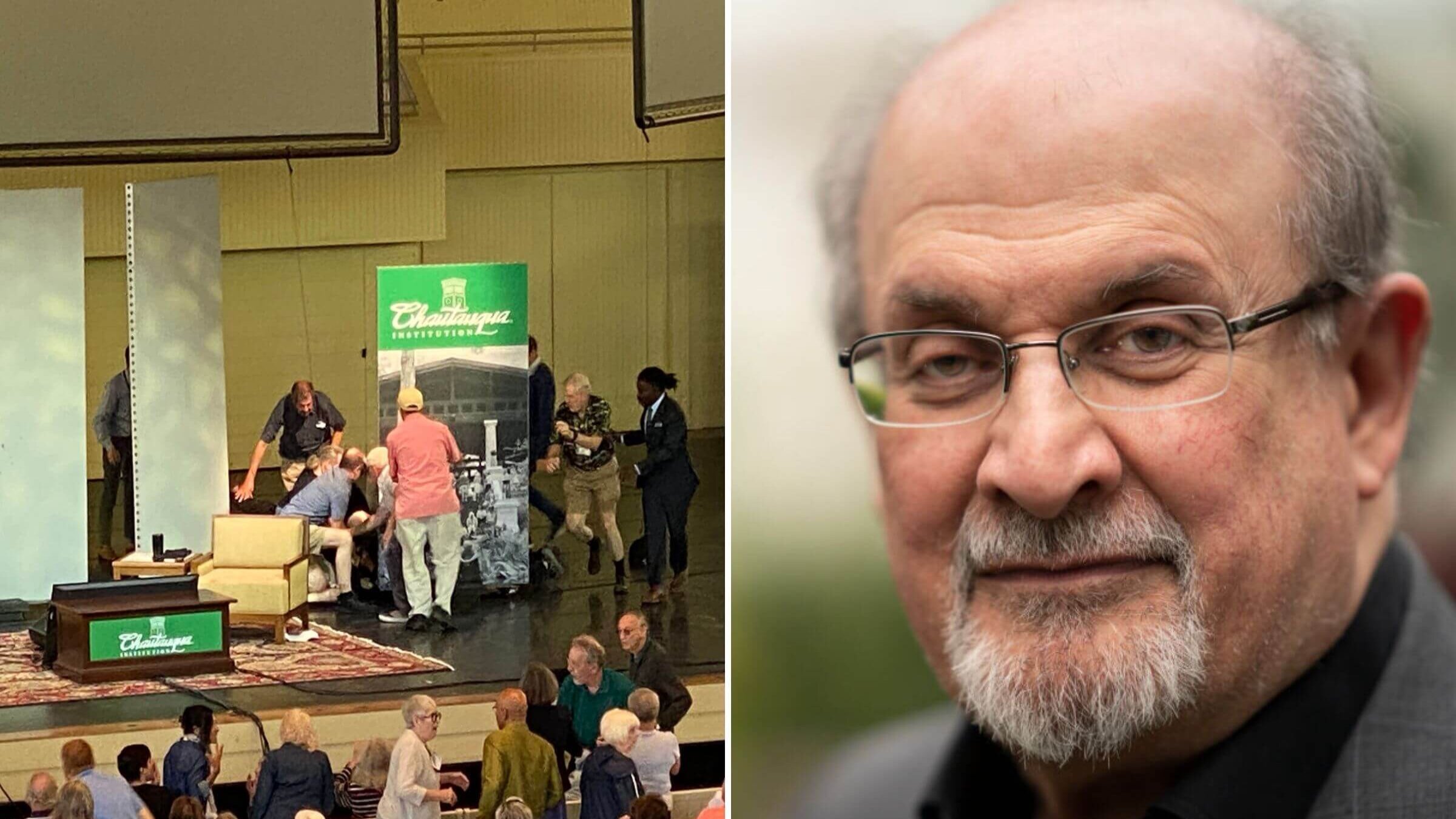
I’m a rabbi who witnessed the attack on Salman Rushdie in Chautauqua. Here is how we can combat this type of hate
The brutal assault on the famed author in Chautauqua is a potent reminder of the power of civics education
On Aug. 12, celebrated author Salman Rushdie was stabbed at an event at the Chautauqua Institution. Photo by Charles Savenor & David Levenson/Getty Images Leven
When my wife and I first planned our trip upstate, a conversation between Salman Rushdie and Henry Reese at the Chautauqua Institution stood out to us as a programmatic highlight we did not want to miss. The two men would be discussing how America can support and protect political writers and creative expression. Considering Rushdie’s harrowing experience of being singled out as a target of a fatwa by Iran after the publication of “The Satanic Verses” over 30 years ago, we were eager to hear his thoughts about how best to ensure free speech today.
Our experience tragically morphed into something unexpected and surreal shortly after Rushdie and the moderator took their seats to great applause. A man jumped on the stage and began pummeling Rushdie. From where I sat 75 feet away, I could not see that the assailant was wielding a knife, only his arm going up and down repeatedly, thereby silencing the main speaker and all those in attendance.
“This never happens at the Institution,” people said aloud as much to themselves as those around them, as we collectively tried to make sense of what transpired.
Later that day we walked over to the amphitheater, where a pile of flowers, placards of hope and a candle adorned the entrance that had been closed since the attack. Watching the maintenance team scrub blood off the stage, I gasped at the realization that this violent attack had transformed this platform for inspiration and wisdom into a crime scene.
I attended this event not just for my own edification but also because it connects to my work at Civic Spirit, an organization that promotes and provides training in civic education to faith-based schools — Jewish, Catholic, Christian, and Islamic — with 4.5 million students nationwide. In our three-pronged approach, we cultivate civic belonging, democratic fluency and civic skills at a time when our country needs bridge building, understanding and trust more than ever.
While scrubbing away the blood and forming a prayer circle allowed Chautauqua Institution to reopen its cherished communal space, the most effective way to reclaim civility, community and shared responsibility in America is through education. More than planting seeds that will blossom in the future, civic education prepares young adults to become knowledgeable participants and stakeholders in this great democratic republic.
With rising distrust in government and a growing sense of helplessness in young people, civic education constitutes a constructive path forward. Unlike their public counterparts, day schools are not required to include civic education. At this polarized moment, it is vital that we not only ensure that our day schools focus on civics but also that teachers and administrators are supported in this endeavor at their parent’s kitchen table and spiritual leaders’ pulpits.
On Aug. 12, over 2,000 people at Chautauqua expected to learn how our society can encourage and support open dialogue and foster understanding across divides. Sadly what we witnessed was a brutal violation of the fundamental values of the Institution and America itself.
On a trip to Chautauqua over a hundred years ago, President Teddy Roosevelt asserted that Chautauqua Institution and its educational approach to dialogue and exploration represent “America at its best.” The attack on Salman Rushdie at Chautauqua reminds us of the great and worthy efforts incumbent on each generation to actualize this aspiration again and again.
RETAIL GANGSTER: The Insane, Real-Life Story of Crazy Eddie By Gary Weiss 336 pp. Hachette Books. $29.
The most famous TV ad in the Orwellian year of 1984, carefully themed to the novel named for this year, was for the Apple Macintosh desktop computer. The most infamous were those for Crazy Eddie, a chain of discount electronics stores in the New York metropolitan area.
Gesticulating wildly in a variety of costumes or just a gray turtleneck and a dark blazer, the actor Jerry Carroll, often mistaken for the mysterious Eddie, would rattle off a sales pitch ending with the vibrating, bug-eyed assurance: “His prices are INSANE!”
People hated those commercials, the journalist Gary Weiss reminds us in “Retail Gangster,” a compact and appealing account of Crazy Eddie’s artificially inflated rise and slow-mo collapse. But they worked — the company went public, with the inauspicious stock symbol CRZY — and also worked their way into punch lines of popular culture.
Daryl Hannah’s mermaid character watched a Crazy Eddie ad while learning English in “Splash.” Dan Aykroyd did a Crazy Ernie spoof on “Saturday Night Live.” And the spots themselves spoofed everything from “Saturday Night Fever” to “Casablanca” and Santa Claus, barraging the city that never sleeps in the cheap wee hours of overnight programming, becoming as much a component of its identity then as graffiti and Gray’s Papaya.
Subcutaneously, “Retail Gangster” is a tender requiem for a time, pre-streaming, when people tended to be tuned into the same things: movies in theaters, programs on television, Casey Kasem’s “American Top 40.” Also for a grittier, perhaps more colorful New York, which had hoisted itself out of the financial and existential abyss of the mid-1970s with pinstripes (Yankee, stockbroker), the punchy “I heart” iconography designed by Milton Glaser and — apparently — rock ’n’ roll-mad baby boomers buying stereo equipment.
But the meat of this limber book is its investigation into the deep family drama and funny money behind Crazy Eddie, which aggressively undercut competitors like Circuit City and The Wiz with some astonishingly shady business practices. Taking on this complicated if at first small potatoes-seeming story, Weiss is like that valorous spouse who decides to finally paw through the big box of tangled cords and wires in the basement and painstakingly straighten them out.
The real Eddie, last name Antar, was born in 1947 to Sam M. Antar, a window trimmer whose finances revolved around suitcases of cash known as “nehkdi,” and his second wife, Rosie Tawil, the daughter of a dry-goods salesman. They were part of a Syrian Jewish community in Brooklyn, nicknamed S-Y, that generally looked down on their Eastern European Jewish peers, whom they referred to as J-Dubs. Eddie was short but muscled and good-looking, nicknamed Kelso, after the racehorse. He dropped out of high school (where he met his first wife, Debbie Rosen, a J-Dub) and apprenticed for a young uncle at clip joints near 42nd Street in Manhattan before joining his father and cousin Ronnie in a TV and appliance enterprise on Kings Highway. And the rest is huckstory.
From the beginning of his career, Weiss shows with elegant incredulity, Antar skimmed, scammed, stole and pulled switcheroos: instructing employees to clean off display models or returned goods, for example, and rebox them as brand-new. Sales tax was routinely left unpaid. Warranty claims were fabricated. Improbable international schemes played out in Panama and St. Lucia. Even the Crazy Eddie logo for then-copious print advertisements, of a spike-haired guy in a bow tie, was lifted from the cartoonist Robert Crumb (though his long nose also suggests Pinocchio). When auditors materialized, female underlings were instructed to cozy up to them. “They did not want to believe we were crooks,” says another Antar cousin, Sammy, who would come to testify extensively against the company and who is Weiss’s No. 1 source.
Through copious interviews and court documents, Antar emerges not just as a crook and office bully but as a serial cheater and wife beater who attempted to give Debbie, mother of his five daughters (one of whom died of cancer at 18) “a big hot slice of bupkis” when they divorced; he remarried a woman also named Debbie, who bore him a son. As the court marshals closed in, his most valuable inventory became not air-conditioners and VCRs but security listening devices and paper shredders. After fleeing to Israel by exploiting that country’s Law of Return and falsifying his family’s passports, he did time there in the same jail where Adolf Eichmann was executed. Once he was extradited, Antar served almost seven years in U.S. federal prison and went on to attempt various comebacks, including — how anticlimactic this sounds!— a website, before dying at 68 in 2016.
An author of previous books on Wall Street, the Mafia and Ayn Rand, Weiss is sure-footed here, stepping around fading file boxes of legal material, with only occasional flights into infelicitous zoological metaphor. On one page we’re reading that “even after a feeding, the fraud rattlesnake did not feel sated. It only grew hungrier”; on another, that certain employees were “as innocent as baby lambs”; and on still another that “Crazy Eddie was like a wounded blue jay, squawking loudly in the grass while the red-tailed hawks circled overhead.” Someone alert the National Park Service!
The big cloud hanging over “Retail Gangster” is, of course, the internet. Apple’s commercial of marching automatons turned out to be the prescient and prevailing one. Carroll, the face and tireless voice of Crazy Eddie’s TV ads, died in 2020, unheralded. The stuff Crazy Eddie was selling had gone obsolete years before that, and so too — with all the bugs — its warm, funny, hustling touch.
Alexandra Jacobs is a book critic and the author of “Still Here: The Madcap, Nervy, Singular Life of Elaine Stritch.” @AlexandraJacobs
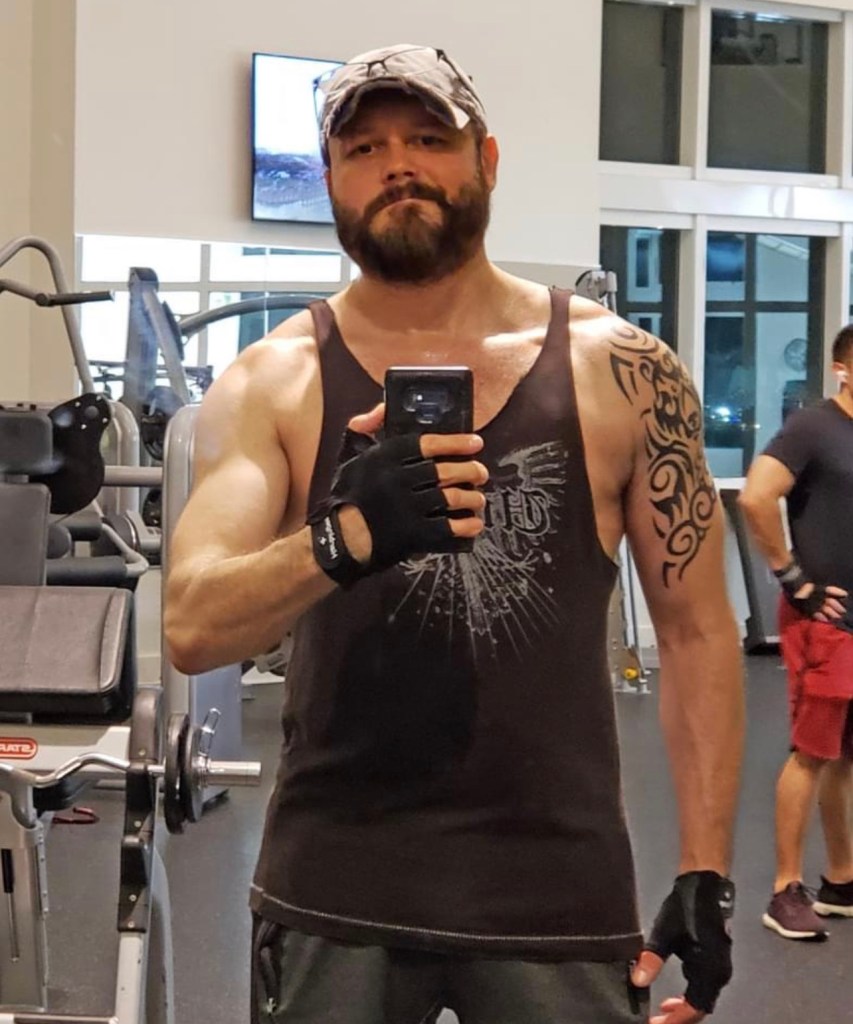
I don’t know why most of us often forget just how powerful a massage can be. Instead of grabbing for the bottle when we find ourselves under terrible stress, we should get the appropriate massage that can provide the best type of relaxation for our body and mind. I recently spoke to Marcelo Holzinger, the owner of FitLife Bodywork & Massage in Miami because I wanted to explore this topic more.
Why do people workout all day and then default to drugs and alcohol when they are facing challenging times?
Marcelo said, “It’s a quick fix but most folks don’t realize the harm they are doing to their bodies. Massage therapy is far more rewarding because it’s an important part of overall health and wellness. It can help you feel more in touch with yourself and more connected with the present.”
I was fascinated by his answer. I’m not sure why I don’t have a massage on a regular basis rather than resorting to eating candy and ice cream when I’m frustrated or bored. I’ve had massages before and loved them. They made me feel like I had a new positive outlook on life. I may not have indulged myself in a series of massages because I thought they were too expensive. It suddenly occurred to me, after talking to Marcelo, that if I ever added up all of the money I spent on junk food, and on new clothes every time I gained weight, getting massages would have been much cheaper.
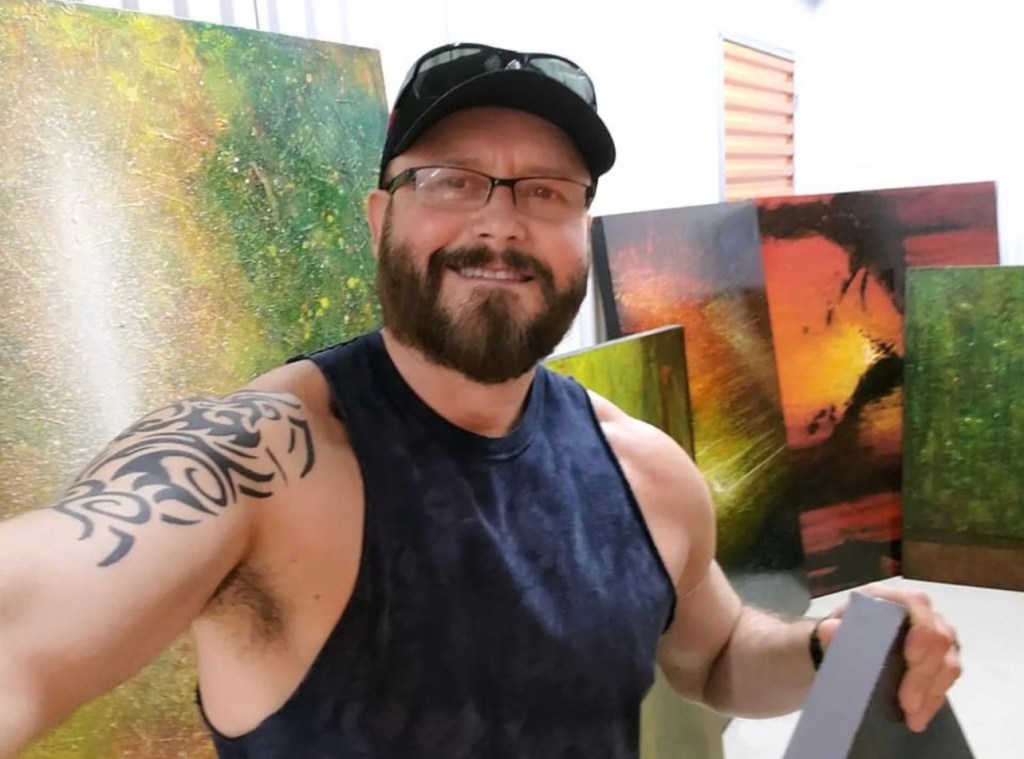
Marcelo has one of the most successful massage practices in Miami because he understands the art of the touch. He has been a well-known and respected contemporary visual artist for years. His art is exhibited and collected around the world.
Marcelo believes there is a definite connection between both his passions. He has a fascination for physiology, anatomy, and how amazing – and almost miraculously perfect – the human body is.
When you hear words like this from an artist, you absolutely want to feel Marcelo’s touch. Marcelo has a degree from Miami-Dade College, Medical Campus and is a Florida State Licensed Massage Therapist.
“One of the most rewarding aspects of massage therapy is the fact that it can be used as an alternative approach to pain relief. It has a beneficial part of integrative treatments for medical conditions. Massage therapy can help patients recover from surgeries and joint replacements. It can help relieve anxiety and depression and boosting overall mental health. The health benefits of massage therapy are heightened even more for athletes of all skill levels – it helps condition the muscles, enhance performance, aid recovery and prevent injury.”
Marcelo approaches Massage Therapy as both a science and an art. Massage therapy involves the manipulation of muscles and there is a creative, intuitive, and artistic component to this process. In this dimension he is creating a healing environment in which he provides the most caring, effective, and therapeutic treatment to each client.
The therapist’s touch causes an immediate reaction in your brain. As soon as your skin’s nerve cells feel pressure, they signal the brain to release feel-good chemicals which boost your mood, give you a natural high and sense of well-being. Massage increases the secretion of endorphins, dopamine, serotonin and oxytocin, and reduces the levels of stress hormones, such as cortisol, epinephrine, and norepinephrine, which can reduce anxiety, fatigue, stress, and physical and mental strain.
25 BENEFITS OF MASSAGE (according to the American Massage Therapy Association).
Relieve stress • Relieve postoperative pain • Reduce anxiety • Manage low-back pain • Help fibromyalgia pain • Reduce muscle tension • Enhance exercise performance • Relieve tension headaches • Sleep better • Ease symptoms of depression • Improve cardiovascular health • Reduce pain of osteoarthritis • Decrease stress in cancer patients • Improve balance in older adults • Decrease rheumatoid arthritis pain • Temper effects of dementia • Promote relaxation • Lower blood pressure • Decrease symptoms of Carpal Tunnel Syndrome • Help chronic neck pain • Lower joint replacement pain • Increase range of motion • Decrease migraine frequency • Improve quality of life in hospice care • Reduce chemotherapy-related nausea.
About Marcelo’s Art
In the mid 1990’s Marcelo left his beloved Argentina and moved to New York. He worked as a Graphic Designer and continued to pursue his passion for art and design. After several great years in New York, Marcelo moved to Miami Beach, where he worked as a Designer and Creative consultant. Next, his professional journey led him to Houston, where he launched his career as a professional artist.
Attracted by Miami’s burgeoning art scene, in 2010, Marcelo returned to Miami. Since then, he’s been exhibiting his art in renowned art fairs, shows and events – including exhibits during Art Basel/Miami Art Week – among many other exhibits in prominent galleries and selected venues in Miami, New York, Houston, and Los Angeles.
Marcelo has also exhibited his art around the world: Monaco, China, Belgium, Dubai, London, Venice, and France at the Carrousel du Louvre, Paris (Louvre Museum. Marcelo’s work has been acquired by private and corporate collections, including the Art Collection of the City of Miami.
Marcelo has been honored with a Proclamation from the Mayor of Miami as Distinguished Citizen of the City of Miami “in recognition of his exceptional artistic accomplishments, his valuable contribution to the cultural life of our community and his acts of humanitarianism and philanthropic spirit toward humankind.” Marcelo was also appointed by the Mayor to serve as a Board Member of the City of Miami Arts & Entertainment Council.
With art exhibitions throughout the USA, Europe and Asia, Marcelo has been receiving national and international attention – with articles, interviews and profiles in numerous media, including The Miami Herald, CNN Español, Univision, Upscale Living Magazine, NBC Miami, Fine Art Magazine, and many others.



 By
By 


 By
By 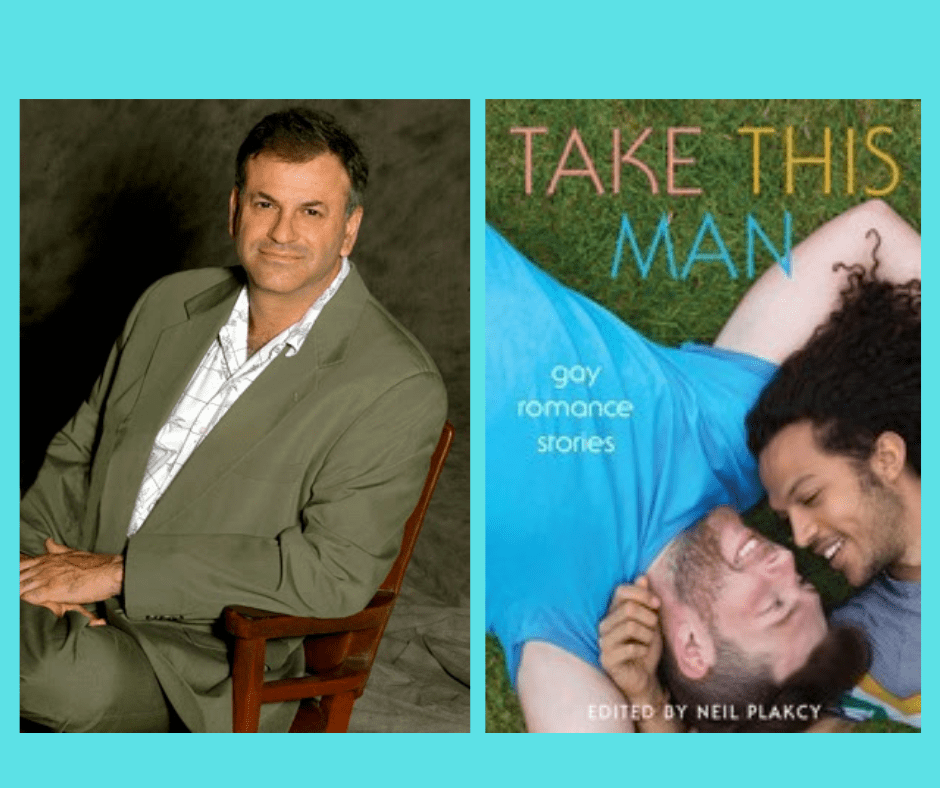


 By
By