Oy Gevalt

Israeli Military Must Draft Ultra-Orthodox Jews, Supreme Court Rules

The court ruled there was no legal justification for the ultra-Orthodox exemption from service, a decision that threatened to split Prime Minister Benjamin Netanyahu’s wartime government.

“The army asks for thousands of soldiers now, and we must bring the religion Orthodox — they are not going to the yeshiva to learn. They must go to the army, and do what all the other kids in their ages are doing. If my kids can go to the army, so everybody can go to the army. There is no other options.” “This ruling actually doesn’t have any implications, any practical implications. It’s more of a declaration more than anything else. It doesn’t add anything to the defense issue at this time. So it’s very hard to give any credit to this ruling. It doesn’t mean much. In fact, the high court shouldn’t have interfered at all in this issue.”

Aaron Boxerman

By 

Reporting from Jerusalem

Israel’s Supreme Court on Tuesday ruled that the military must begin drafting ultra-Orthodox Jewish men, a decision that threatened to split Prime Minister Benjamin Netanyahu’s coalition government amid the war in Gaza.

In a unanimous decision, a panel of nine judges held that there was no legal basis for the longstanding military exemption given to ultra-Orthodox religious students. Without a law distinguishing between seminarians and other men of draft age, the court ruled, the country’s mandatory draft laws must similarly apply to the ultra-Orthodox minority.

In a country where military service is compulsory for most Jewish Israelis, both men and women, the exemption for the ultra-Orthodox has long prompted resentment. But anger over the group’s special treatment has grown as the war in Gaza has stretched into its ninth month, requiring tens of thousands of reservists to serve multiple tours and costing the lives of hundreds of soldiers.

“These days, in the midst of a difficult war, the burden of that inequality is more acute than ever — and requires the advancement of a sustainable solution to this issue,” the Supreme Court said in its ruling.

The decision threatened to widen one of the most painful divisions in Israeli society, pitting secular Jews against the ultra-Orthodox, who say their religious study is as essential and protective as the military. It also exposed the fault lines in Mr. Netanyahu’s coalition, which depends on the support of two ultra-Orthodox parties that oppose their constituents’ conscription, even as other Israelis are killed and wounded in Gaza.

Israeli courts have ruled against the exemption before, including Supreme Court decisions in 1998, 2012 and 2017. The top court has repeatedly warned the government that to continue the policy, it must be written into law — though that law would be subject to constitutional challenges, as previous ones were — while also giving the government time to hammer out legislation.

But for seven years, since the last law was struck down, successive Israeli governments have dragged their feet in drafting new legislation. In 2023, the law finally reached its expiration date, leading the Israeli government to order the military simply not to draft the ultra-Orthodox while lawmakers worked on an exemption.

On Tuesday, the court indicated that its patience had finally run out, striking down that order as illegal. It did not set a timeline for when the military must start conscripting tens of thousands of draft-age religious students. Such a move would likely prove a massive logistical and political challenge, as well as be met with mass resistance by the ultra-Orthodox community.

Gali Baharav-Miara, Israel’s attorney general, in a letter to government officials on Tuesday, said the military had committed to draft at least 3,000 ultra-Orthodox religious students — out of more than 60,000 of draft age — during the coming year. The letter noted that the number would come nowhere near to bridging the gap in military service between the ultra-Orthodox community and other Israeli Jews.

Instead, the ruling included a means of pressuring the ultra-Orthodox to accept the court’s judgment: the suspension of millions of dollars in government subsidies given to religious schools, or yeshivas, that previously supported the exempted students, striking a blow to revered institutions at the heart of the ultra-Orthodox community.

The court’s ruling threatens Mr. Netanyahu’s fragile wartime coalition, which includes secular members who oppose the exemption and ultra-Orthodox parties that support it. Either group breaking ranks could cause the government to collapse and call new elections, at a time when popular support for the government is at a low. The opposition in the Israeli Parliament largely wants to end the exemption.

The Hamas-led attacks on Oct. 7 — which ignited the eight-month war in Gaza — somewhat loosened the ultra-Orthodox stance on the draft, with some leaders saying that those who could not study scripture should go to the military.

“Still, the maximum that the ultra-Orthodox community is willing to give is far less than what the general Israeli public is willing to accept,” said Israel Cohen, a commentator for Kol Barama, an ultra-Orthodox radio station.

But the ultra-Orthodox parties, with few palatable options, might not be eager to bring down Mr. Netanyahu’s coalition, he said. “They don’t see an alternative, so they’ll try to make it work for as long as they can,” said Mr. Cohen. “They will compromise more than they might have been willing to a year ago in an attempt to preserve the government.”

For now, the military must devise a plan to potentially welcome to its ranks thousands of soldiers who are opposed to serving and whose insularity and traditions are at odds with a modern fighting force.

The court’s decision creates a “gaping political wound in the heart of the coalition” that Mr. Netanyahu now must urgently address, said Yohanan Plesner, chairman of the Israel Democracy Institute, a Jerusalem-based think tank.

In a statement, Mr. Netanyahu’s Likud party criticized the Supreme Court for issuing a ruling when the government was planning to pass legislation that would render the case obsolete. The government’s proposed law, the party said, would increase the number of ultra-Orthodox conscripts while recognizing the importance of religious study.

It was unclear whether Mr. Netanyahu’s proposal would ultimately hold up to judicial scrutiny. But if passed by Parliament, a new law could face years of court challenges, buying the government additional time, said Mr. Plesner.

The Supreme Court’s decision on Tuesday immediately sparked outrage among ultra-Orthodox politicians. Many ultra-Orthodox view military service as a gateway to assimilation into a secular Israeli society that would lead young people to deviate from a lifestyle guided by the Torah, the Jewish scriptures.

“The State of Israel was established in order to be a home for the Jewish people, for whom Torah is the bedrock of their existence. The Holy Torah will prevail,” Yitzhak Goldknopf, an ultra-Orthodox government minister, said in a statement on Monday.

After the Oct. 7 Hamas-led attack on southern Israel, Israelis united in determination to strike back. But as thousands of reserve soldiers were asked to serve second and third tours in Gaza, the fault lines in Israeli society quickly resurfaced.

Some Israeli analysts warn that war could spread to additional fronts in the West Bank and the northern border with Lebanon, leading the government to call for more conscripts and further straining relations between secular and ultra-Orthodox Jews.

Already many Israelis — secular, religious and ultra-Orthodox alike — see the draft issue as just one skirmish in a broader cultural battle over the country’s increasingly uncertain future.

Ultra-Orthodox Jews have been exempt from military service since the founding of Israel in 1948, when the country’s leadership promised them autonomy in exchange for their support in creating a largely secular state. At the time, there were only a few hundred yeshiva students.

The ultra-Orthodox have grown to more than a million people, roughly 13 percent of Israel’s population. They wield considerable political clout and their elected leaders became kingmakers, featuring in most Israeli coalition governments. 

But as ultra-Orthodox power grew, so did anger over their failure to join the military and their relatively small contribution to the economy. In 2019, Avigdor Lieberman, a former ally of Mr. Netanyahu, rebuffed his offer to join a coalition that would legislate the draft exemption for the ultra-Orthodox. The decision helped send Israel to repeated elections — five in four years.

Last year, after Mr. Netanyahu returned to power at the helm of his current coalition, he sought to legislate a plan to weaken the country’s judiciary, setting off mass protests. For the ultra-Orthodox, who backed the judicial overhaul, a major motivation was ensuring that the Supreme Court could no longer impede their ability to avoid the draft.

Ron Scherf, a lieutenant colonel in the Israeli reserves, said many soldiers were frustrated to be serving multiple tours of duty during the war, even as ultra-Orthodox Israelis are “never called up in the first place.”

An activist with Brothers in Arms, a collection of reserve soldiers who oppose Mr. Netanyahu, Mr. Scherf asked, “How can Israel just allow an entire community to be exempt from its civic duties?”

Gabby Sobelman, Johnatan Reiss and Myra Noveckcontributed reporting.

Spread The Word

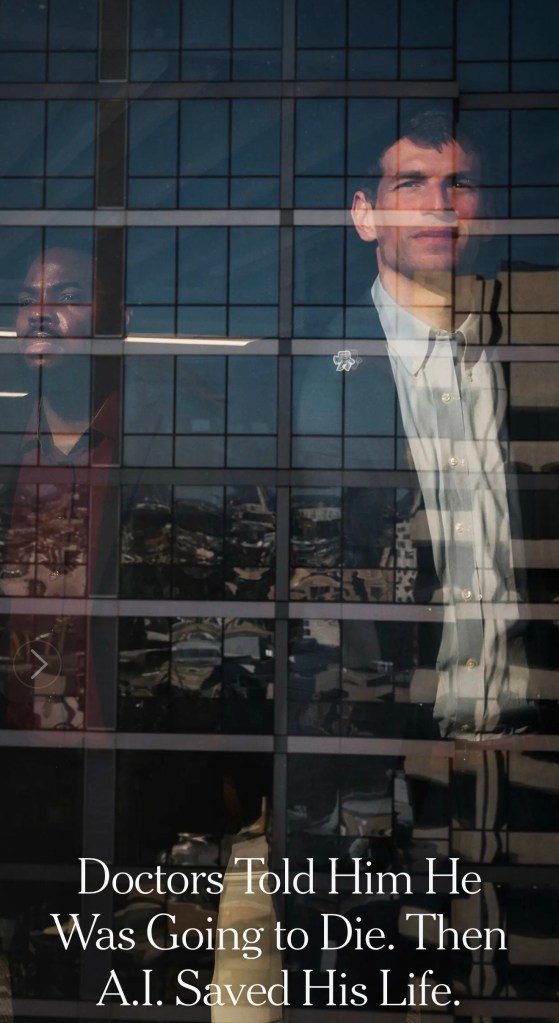
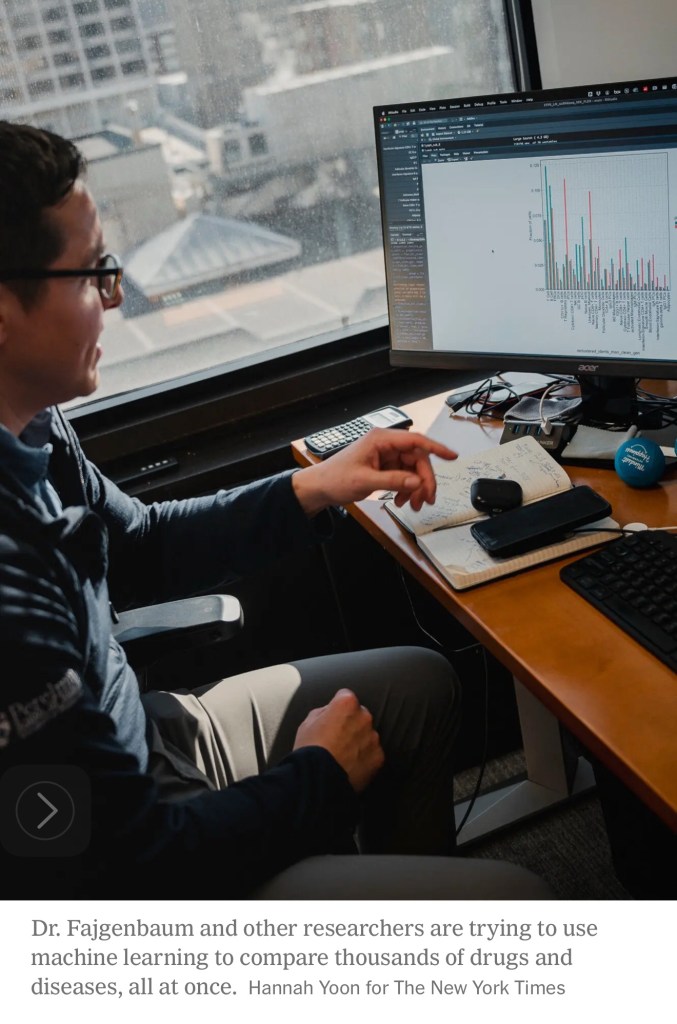
Doctors Told Him He Was Going to Die. Then A.I. Saved His Life.Joseph Coates, left, owes his life to an A.I. model developed by Dr. David Fajgenbaum and the rest of his team.Credit…Hannah Yoon for The New York Times

Scientists are using machine learning to find new treatments among thousands of old medicines.

A little over a year ago, Joseph Coates was told there was only one thing left to decide. Did he want to die at home, or in the hospital?

Coates, then 37 and living in Renton, Wash., was barely conscious. For months, he had been battling a rare blood disorder called POEMS syndrome, which had left him with numb hands and feet, an enlarged heart and failing kidneys. Every few days, doctors needed to drain liters of fluid from his abdomen. He became too sick to receive a stem cell transplant — one of the only treatments that could have put him into remission.

“I gave up,” he said. “I just thought the end was inevitable.”

But Coates’s girlfriend, Tara Theobald, wasn’t ready to quit. So she sent an email begging for help to a doctor in Philadelphia named David Fajgenbaum, whom the couple met a year earlier at a rare disease summit.

By the next morning, Dr. Fajgenbaum had replied, suggesting an unconventional combination of chemotherapy, immunotherapy and steroids previously untested as a treatment for Coates’s disorder.

Within a week, Coates was responding to treatment. In four months, he was healthy enough for a stem cell transplant. Today, he’s in remission.

The lifesaving drug regimen wasn’t thought up by the doctor, or any person. It had been spit out by an artificial intelligence model.

In labs around the world, scientists are using A.I. to search among existing medicines for treatments that work for rare diseases. Drug repurposing, as it’s called, is not new, but the use of machine learning is speeding up the process — and could expand the treatment possibilities for people with rare diseases and few options.

Thanks to versions of the technology developed by Dr. Fajgenbaum’s team at the University of Pennsylvania and elsewhere, drugs are being quickly repurposed for conditions including rare and aggressive cancers, fatal inflammatory disorders and complex neurological conditions. And often, they’re working.

The handful of success stories so far have led researchers to ask the question: How many other cures are hiding in plain sight?

There is a “treasure trove of medicine that could be used for so many other diseases. We just didn’t have a systematic way of looking at it,” said Donald C. Lo, the former head of therapeutic development at the National Center for Advancing Translational Sciences and a scientific lead at Remedi4All, a group focused on drug repurposing. “It’s essentially almost silly not to try this, because these drugs are already approved. You can already buy them at the pharmacy.”

The National Institutes of Health defines rare diseases as those which affect fewer than 200,000 people in the United States. But there are thousands of rare diseases, which altogether affect tens of millions of Americans and hundreds of millions of people around the world.

And yet, more than 90 percent of rare diseases have no approved treatments, and pharmaceutical giants don’t commit many resources to try to find them. There isn’t typically much money to be made developing a new drug for a small number of patients, said Christine Colvis, who heads drug development partnership programs at NCATS.

That’s what makes drug repurposing such “an enticing alternative” route to finding treatments for rare diseases, said Dr. Marinka Zitnik, an associate professor at Harvard Medical School who studies computer science applications in medical research. Dr. Zitnik’s Harvard lab has built another A.I. model for drug repurposing.

“Other laboratory discovery techniques have already put drug repurposing on the map,” Dr. Lo said. “A.I. just puts rocket boosters on that.”

Repurposing is fairly common in pharmaceuticals: Minoxidil, developed as a blood pressure medication, has been repurposed to treat hair loss. Viagra, originally marketed to treat a cardiac condition, is now used as an erectile dysfunction drug. Semaglutide, a diabetes drug, has become best known for its ability to help people lose weight.

The first time Dr. Fajgenbaum repurposed a drug, it was in an attempt to save his own life. At 25, while in medical school, he was diagnosed with a rare subtype of a disorder called Castleman disease, which led to an immune system reaction that landed him in the intensive care unit.

There is no one way to treat Castleman disease, and some people don’t respond to any of the available treatments. Dr. Fajgenbaum was among them. Between hospitalizations and rounds of chemo that temporarily helped, Dr. Fajgenbaum spent weeks running tests on his own blood, poring over medical literature and trying unconventional treatments.

“I had this really clear realization that I didn’t have a billion dollars and 10 years to create some new drug from scratch,” he said.

The drug that saved Dr. Fajgenbaum’s life was a generic medication called sirolimus, typically given to kidney donation recipients to prevent rejection. The medication has kept his Castleman disease in remission for more than a decade.

Dr. Fajgenbaum went on to become a professor at the University of Pennsylvania, and began seeking out other drugs with unknown uses. Existing research, he realized, was full of overlooked clues about potential links between drugs and the diseases they could treat, he said. “If they’re just in the published literature, shouldn’t someone be looking for these all day, every day?”

His lab had some early successes, including finding that a novel cancer drug helped another Castleman patient. But the process was laborious, requiring his team to examine “one drug and one disease at a time,” he said. Dr. Fajgenbaum decided he needed to speed up the project. In 2022, he established a nonprofit called Every Cure, aimed at using machine learning to compare thousands of drugs and diseases all at once.

Work similar to Every Cure’s is taking place in other labs around the world, including at Penn State and Stanford University, as well as in Japan and China.

In Birmingham, Ala., an A.I. model suggested a 19-year-old patient debilitated by chronic vomiting try isopropyl alcohol, inhaled through the nose. “Essentially we ran a query that said, ‘Show us every proposed treatment there has ever been in the history of medicine for nausea,’” said Matt Might, a professor at University of Alabama at Birmingham who leads the institute that developed the model.

The alcohol “popped to the top of our list,” Dr. Might said, and “it worked instantly.”

The model developed by Dr. Might’s institute has successfully predicted other treatments, too: Amphetamines typically used to treat A.D.H.D. relieved periodic paralysis in children with a rare genetic disorder. A Parkinson’s drug helped patients with a neurological condition move and speak. A common blood pressure medicine called guanfacine drastically improved the mobility of a pediatric patient with a different neurological condition.

Many drugs do more than one thing, Dr. Might said. Their additional features sometimes get characterized as side effects. “If you comb through enough drugs, you eventually find the side effect you’re looking for,” he said, “and then that becomes the main effect.”

At the University of Pennsylvania, Dr. Fajgenbaum’s platform compares roughly 4,000 drugs against 18,500 diseases. For each disease, pharmaceuticals get a score based on the likelihood of efficacy. Once the predictions are made, a team of researchers combs through them to find promising ideas, then performs lab tests or connects with doctors willing to try the drugs on patients.

Elsewhere, pharmaceutical companies are using A.I. to discover entirely new drugs, a pursuit that has the potential to streamline an enterprise already worth billions. But drug repurposing is not likely to prove lucrative for any one party. Many drug patents expire after a few decades, which means there is little incentive for drug companies to seek out additional uses for them, said Aiden Hollis, a professor of economics at the University of Calgary with a focus on medical commerce.

Once a drug becomes one of the thousands of generics approved by the Food and Drug Administration, it typically faces stiff competition, driving down the price.

“If you use A.I. to come up with a new drug, you can make lots and lots of money off that new drug. If you use A.I. to find a new use for an old, inexpensive drug, no one makes any money off of it,” Dr. Fajgenbaum said.

To fund the venture, Every Cure received more than $100 million in commitments last year from TED’s Audacious Project and the Advanced Research Projects Agency for Health, an agency within the federal health department dedicated to supporting potential research breakthroughs. Dr. Fajgenbaum said that Every Cure will use the money, in part, to fund clinical trials of repurposed drugs.

“This is one example of A.I. that we don’t have to fear, that we can be really excited about,” said Dr. Grant Mitchell, another Every Cure co-founder and a medical school classmate of Dr. Fajgenbaum. “This one’s going to help a lot of people.”

Dr. Luke Chen was skeptical when Dr. Fajgenbaum’s model suggested he treat a patient with Castleman disease using adalimumab, a medication typically used to treat arthritis, Crohn’s disease and ulcerative colitis.

“I didn’t think it was going to work, because it’s kind of a wimpy drug,” said Dr. Chen, a hematologist and professor at Dalhousie University and the University of British Columbia.

But the patient had already undergone chemotherapy and a bone-marrow transplant and had tried drugs including the one that saved Dr. Fajgenbaum’s life. Nothing worked, and he was entering hospice.

“We had basically given up, but I put in a last call to David,” Dr. Chen said.

With no other options, Dr. Chen gave the patient the adalimumab. In a matter of weeks, the patient was in remission. The case was recently the subject of a paper in The New England Journal of Medicine.

No model is infallible, Dr. Zitnik said. A.I. can sometimes make predictions “based on evidence that isn’t sufficiently strong.”

Dr. Colvis said ranking potential treatments by likelihood of success can also prove difficult. Such issues make physician oversight crucial. Sometimes, a doctor will determine that a treatment suggestion is too risky to try, she said. “But then there are instances where they will see something and say, ‘OK, this looks like it’s reasonable,’” Dr. Colvis added.

When Dr. Fajgenbaum first suggested that Dr. Wayne Gao, a hematologist and oncologist in Washington State, try a novel treatment on one of his patients, Dr. Gao had doubts.

The patient was Coates, the Washington man headed for hospice, and the aggressive drug combination suggested by Dr. Fajgenbaum’s model seemed “a little bit crazy,” Dr. Gao said. In fact, he worried that the treatment might kill Coates faster.

But Coates was a young man, and there were no other treatments to consider. And so, Dr. Gao said, “someone had to be the first to try.”

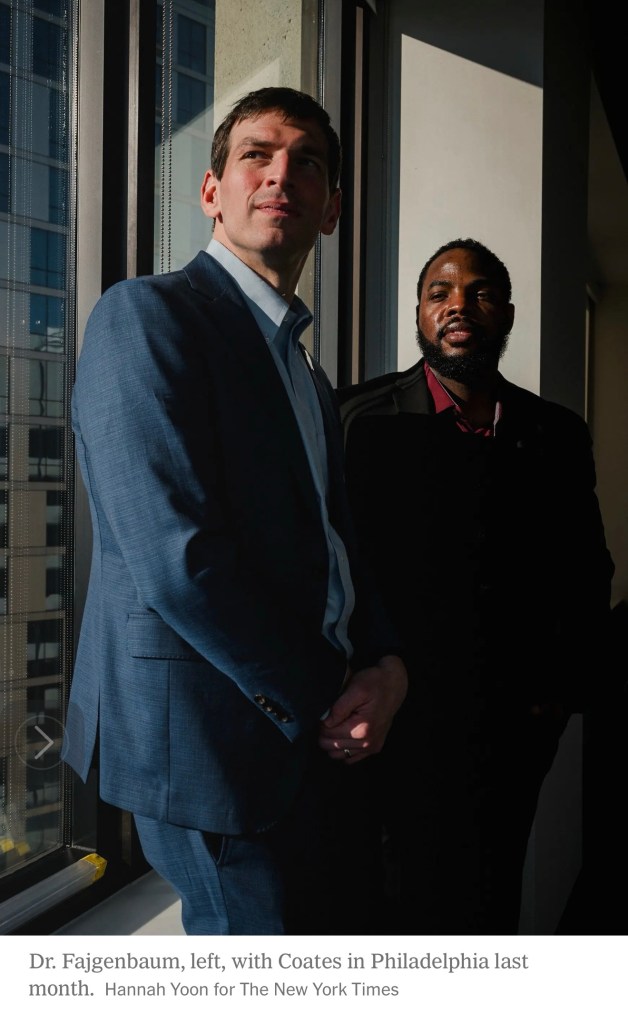
ImageDr. Fajgenbaum, left, with Coates in Philadelphia last month.Credit…Hannah Yoon for The New York Times

Last month, just over a year after his brush with death, Coates and his girlfriend visited Dr. Fajgenbaum in Philadelphia to thank him for his help. A smiling Coates was the picture of health; he had put on muscle since the last time he met the doctor.

Coates had tweaked his ankle that morning while working out. But otherwise, he said, he felt “just fine.”

Maxwell Strachan contributed reporting.

Kate Morgan is a journalist in central Pennsylvania and a media fellow at The Nova Institute for Health. 

Most Powerful Producer In Theater—Inspiring Story

Sonia Friedman

She May Be the Most Powerful Producer Working in Theater

Sonia Friedman has “created her own theater studio system,” balancing big properties like “Harry Potter” and “Stranger Things” with more prestige work by Stoppard and Sondheim.

Michael Paulson

By 

Reporting from London and New York

Sonia Friedman may just be the most prolific and powerful theater producer working today.

Over the past 30 years, she has become a peerless figure in the West End, where last year she had a record-setting seven shows running simultaneously, and on Broadway, where she has produced five of the past six Tony Award winners for best play. She has been entrusted both with prestige work by celebrated writers like Tom Stoppard and Stephen Sondheim and with stage adaptations of hugely valuable intellectual property like “Harry Potter,” “Stranger Things” and “Paddington.”

But she’s endlessly restless. Taking for granted neither the sustainability of the business nor the security of her own place in it, she has become ever more worried about the industry’s future.

A lifelong Londoner, Friedman spends about one-third of each year in New York, but she hasn’t bought an apartment, and only in January started renting, after decades of hotel stays.

“I live, literally, with a suitcase in the hall,” she said during one of several interviews. “It could all end tomorrow here. It could all end tomorrow there. And it might. It really might. That’s always how I work. The drive is: It could all end tomorrow. It’s not necessarily a nice way to live, is it?”

For years she has expressed concern about the high costs of producing on Broadway, particularly when compared to the West End, but her concern has intensified since the pandemic, as rising costs for labor, materials and services have driven show budgets — and ticket prices for hot shows — ever higher. She said, for example, that “The Hills of California,” a family drama by Jez Butterworth that she produced last year in both cities, faced production costs that were 350 percent higher in New York than in London.

Increasingly, Friedman has been using her stature to try to make change. In Britain, she has been outspoken about the importance of continued government support for the arts, with a special concern about arts in schools programs. On Broadway, she is a persistent voice calling out the industry, warning about the impact of high costs on both audiences and investors.

“The fact that plays are now hard to produce for less than $6 million or $7 million is of course of great concern, let alone musicals,” she said, “and don’t even ask me how much ‘Stranger Things’ is going to cost.”

Just this week, she announced a new venture, seeking both to rediscover the creative joy she felt as a scrappy young theater maker and to attempt a radical experiment in ticket affordability. She has partnered with Hugh Jackman to form a company, Together, that plans to stage small-scale, bare-bones play productions in small venues in the United States and Britain, and they are pledging that tickets will be “genuinely affordable.”

“I’m putting my money where my mouth is, which is about accessibility, and finding different models, particularly in New York, for doing work,” she said. “It isn’t that we found the solution to Broadway. No way. That work is so hard, and getting harder, but I don’t want to stop doing it.”

THE WORD PRODUCER is pretty nebulous these days: It can mean an old-school impresario who puts together, oversees and markets a show; a person with money who helps bankroll a show; or a person with fame who helps champion a show. Friedman is distinguished by her involvement in the storytelling.

“I try to be the audience, and question some of the decisions,” she said. “I’m not the writer. I’m never going to say, ‘This is what it should be.’ I’m going to say, ‘What do you think it should be, because I’m not necessarily seeing it all on the page, or feeling it all.’”

Trying to provoke, rather than prescribe, is her approach. “I don’t want the writer to write what I want — I want the writer to write something that I didn’t know I needed. And that’s been the rule for me throughout my working life, to do with the thing that’s almost impossible to articulate, which is about a feeling, about a chill, about a goosebump, holding your breath and realizing that time has stopped and I’m lost in another world, and if that happens, I’m all in.”

Jonathan Groff recalled the first time he met Friedman. She wanted him to star in last season’s “Merrily We Roll Along” revival, but its schedule appeared incompatible with his filming obligations, so he asked to talk.

“What started as one drink turned into a four-hour conversation about life and art, and we cried together, and we connected, and it wasn’t necessarily that the problems were all solved, but I felt seen and heard by her,” Groff said. (It did, in fact, work out, and he even won a Tonyfor his performance.) “She’s got a poeticism and a soulfulness. She is about the bottom line, as you have to be as a producer, but she somehow manages to hold the paradox of commerce and, right next to it, artistry.”

Friedman admits to seeking a personal connection to the material she produces, much of which she experiences as being about a search for home, for family, for roots. She saw her own story in “The Hills of California,” about artistic children in a messed-up family. Of “The Years,” a talk-of-the-town play about womanhood now running in London, she said, “that play is me.” But mostly she sees herself in Chekhov, as Sonia in “Uncle Vanya” and Irina in “Three Sisters” — two women who find their place in the world through work.

She is the rare producer who has occasionally accomplished the nearly impossible feat of reversing the fortunes of flagging shows.

Seizing the window offered by the pandemic shutdown, she helped oversee a consolidation of the New York production of the Tony-winning “Harry Potter and the Cursed Child” — a sequel to the novels — from two lengthy parts to one. This allowed the show, at the time the costliest nonmusical production mounted on Broadway, to finally earn a profit. Then last fall, starting with a production in Chicago, she oversaw a well-received trim to get the play’s running time below three hours, reducing its labor costs because shows that run longer than three hours incur overtime expenses.

When her recent “Funny Girl” revival was met with flagging ticket sales, she replaced the original star, Beanie Feldstein, who had received mixed reviews, with a fan favorite, Lea Michele, transforming a flop-in-the-making into a must-see hit.

Celebrating Tony Award wins for, clockwise from top left: “Boeing-Boeing” (2008); “La Cage aux Folles” (2010); “The Ferryman” (2019); “Merrily We Roll Along” (2024), with her sister Maria Friedman; “Leopoldstadt” (2023), with her friend Tom Stoppard; and “Harry Potter and the Cursed Child” (2018). Credit…Sara Krulwich/The New York Times

Other producers have juggled multiple shows in a single season: Scott Rudin, for one, until renewed attention to his bullying behaviorprompted him to step away from producing, and Seaview, an ambitious new player on the scene. Friedman has worked with both of them — she often collaborates with New York producers, as well as the city’s leading nonprofits, to get challenging work to the stage.

But the volume of Friedman’s work dwarfs that of most others. In all, she has produced more than 300 shows, and her shows have collected 63 Oliviers in the West End, and 48 Tonys in New York. Just this season on Broadway she brought “The Hills of California” and “Stranger Things: The First Shadow” from London; she is a lead producer of “Dead Outlaw,” an Off Broadway hit for Audible that is moving uptown; she is among the co-producers of “All In,” “Good Night, and Good Luck,” “Redwood” and “Sunset Boulevard”; and she licensed “Eureka Day” for a nonprofit Broadway production.

She has an astonishing track record of wins, but also her share of wipeouts — the musical “New York, New York” was a recent big-budget disappointment. She has also had her share of high-priced tickets: “Merrily We Roll Along,” directed by Friedman’s sister Maria, was a huge hit, transforming that onetime flop’s place in the history books, but also costly to attend, especially late in the run, which, she acknowledged, opens her to accusations of hypocrisy.

But she said she’s always made sure her shows had a decent supply of lower-priced tickets, and now she’s more worried about accessibility for new and young audiences, on whom the future of the business (and the art form) depend.

“In one sense, Broadway is having a golden age because of all the work and all the starsand all the plays coming in,” she said. “But there’s no question we have a giant challenge. And what I’m asking for is everyone to come together — the theater owners, the unions, the agents, the advertising companies, the suppliers — to figure out what we want Broadway to be.”

Her pipeline is packed: She has about 40 shows in various stages of development, including the Paddington musical, which is to be staged in London this year, and “Millions,” adapted from the 2004 Danny Boyle film, which is to be staged in Atlanta this spring. She has two shows already announced for next season on Broadway, “Oedipus” and “The Queen of Versailles.”

“It’s almost like she’s created her own theater studio system,” said Judy Craymer, the lead producer of “Mamma Mia!” “She’s incredible, with great taste that has been proven 100 times.”

Image“My life was, from the earliest memory, telling stories,” Sonia Friedman said, reflecting on her unusual upbringing with her siblings. “That’s how we survived.”Credit…Alice Zoo for The New York Times

LATE LAST SUMMER she let me tag along with her, so I could get a sense of her nonstop work life. We met on a Wednesday morning at an arts center in an old town hall in North London; she arrived bleary-eyed, coffee-craving, already behind schedule. But by the time she reached the top of the stairs, clutching her soy latte, she had reached into some bottomless bag of restless energy and unbottled the pep.

She worked a rehearsal room like a politician, circling folding tables piled high with scripts and snacks, greeting a group of young American actors meeting their British counterparts for the first time. Together, they were rethinking the final act of “The Hills of California” for its transfer to Broadway, a familiar but nonetheless nerve-racking process for Friedman.

From there, she was scheduled to swing by “Stranger Things” auditions, but, frustrated that the car ordered for her wasn’t coming fast enough, instead invited that show’s director, Stephen Daldry, to her aerie-like West End office, hidden behind a secret door painted to look like a children’s bookcase, where they shared a smoke and juggled her three bichons frisés as he gave her an update.

“Sonia is very, very loyal, and loyalty is a rare gift,” Daldry said. “She is deeply, deeply respectful of the journey of the artist — even if she can see something isn’t going to work, she will back off and wait for me to find it. She doesn’t look for conflict to prove status or power.”

Back in North London, she popped into a designer’s studio to review the set for the West End production of “Oedipus,” which was looking good enough that she could duck out into an alley, smoking, swearing and pacing as she fielded a phone call. Then, after changing outfits at her office, it was off to the opening of “Shifters,” a rare West End drama written by and about Britons of African descent. It’s not only an example of the plays by emerging writers that she champions, but also a work that she felt a personal connection to (she said it had echoes of her recent breakup with a longtime boyfriend). Preshow, she whispered encouragement to the two-person cast, greeted Idris Elba (a co-producer), and Venmoed money to a panhandler. Postshow, she stopped by an after-party before catching a flight to New York to start all over again.

“I think I spend my whole life feeling slightly jet-lagged,” she said, “so I’m just used to it.”

Image“Stranger Things: The First Shadow,” a prequel to the hit Netflix series, comes to Broadway on March 28.Credit…Manuel Harlan

Friedman, who declined to specify her age, attributes many of her passions and habits to an unusual upbringing. She has described her childhood as feral, and said it has informed many of her artistic and career choices. She was one of four children born to a violinist father who left the family around the time she was born and a pianist mother whom she has described as neglectful. The siblings, often left to fend for themselves, created their own theater troupe, which they called the Sonia Friedman Show. (She was the youngest.)

“My life was, from the earliest memory, telling stories,” she said. “That’s how we survived.”

School was a struggle, and at one point Friedman was expelled for truancy. By 13, she had left home for a free, and freewheeling, boarding school, and by 16 she was working full-time; with the help of her sister Maria, who was then a burgeoning actress, she found gigs at fringe shows and pub stages while taking night classes. She worked in a variety of crew capacities — most memorably, she was a follow-spot operator on a production of Stoppard’s “Jumpers,” but was fired for missing a cue.

At drama school, where she studied stage management, a fellow student was a daughter of Laurence Olivier, which led her, at 19, to a job interview with Olivier and his wife Joan Plowright; they hired her for a production at the Edinburgh fringe festival, and she was on her way. A big break came when the National Theater hired her to work with artists including Harold Pinter, who took her under his wing.

In time, she wanted more. “I got bored,” she said. “I became far more fascinated by the whole workings of the room.”

By then, it was the late 1980s, and the AIDS crisis was rampaging through the theater community. She threw herself into fund-raising, visiting hospitals, helping to run Shop Assistance, which enlisted celebrities to work in shops to generate money for AIDS charities. And then, after getting her first producing experiences making small-scale touring work for the National, she took another leap, cofounding a theater company called Out of Joint. One thing led to another, and the Ambassador Theater Group, a large British theater company, asked her to run one of its venues.

“I was a bit of a theater snob, but I was ambitious, and hungry to see if I could make it work,” she said. “I crave being challenged. I crave trying to figure out how to crack a nut.”

THE TRANSITION TO commercial producing, which began in 1999, was rough. Although she doesn’t dwell on it, she describes facing “huge sexism” early in her career. And she initially found pitching to investors “awful.” Her appetite for adventurous, often experimental, work led her to prioritize shows she thought were “important.”

“I couldn’t say I was in commercial theater for years and years,” she said, explaining that she didn’t like “what it stands for” and that instead she called herself “an independent producer.”

One near-constant in her career thus far: Ambassador Theater Group, which has been an important backer of her work. She has two production companies, one of which is an ATG subsidiary and one of which is independent; ATG has the option to invest in her shows, and she stages her work in the company’s theaters when possible.

The venture with Jackman, which she said should start presenting shows “soon,” is a way for her to start testing new ideas about producing more simply. She and Jackman have long admired each other — they previously collaborated on Butterworth’s 2014 play, “The River,” directed by Ian Rickson, who will serve as artistic director of the new company.

“Some of my best experiences have been when it’s just you and the actors and the text and a chair, so let’s see if we can do that,” she said. “We’re seeing if we can go back to where we started.”

Despite all the hurdles — the costs, the complexity, the ever-changing landscape, Friedman said she is intent on persevering, on stages big and small, British and American, ever compelled by the challenges.

“Why commercial theater?,” she asked at one point. “Why have I stuck at it when I used to leave everything once I cracked it? It’s because I haven’t cracked it. I haven’t solved it and I never will, and no one ever will. Which is great.”

Michael Paulson is the theater reporter for The Times.More about Michael Paulson

Help Stop The Spread Of Measles

Encourage Vaccinations

The Morning

Ad

Good morning. Today you’ll hear from our colleague Teddy Rosenbluth, who traveled to the center of a Texas measles outbreak. We’re also covering deportations, the war in Ukraine and a penguin retirement home

An outbreak

Author Headshot

By Teddy Rosenbluth

I write about health.

The United States declared victory over measles 25 years ago. And yet one of the worst outbreaks since then is ravaging Texas and New Mexico.

For now, it isn’t a threat to most Americans. But there’s a reason this is happening — and why the next measles epidemic could be even worse.

Beating measles

Derailing this virus was a decades-long project. The United States began administering a vaccine in 1963, soon after its invention. At the time, the disease infected nearly all children before they turned 15.

Why did containment take so long? Because measles is one of the most contagious viruses on the planet.

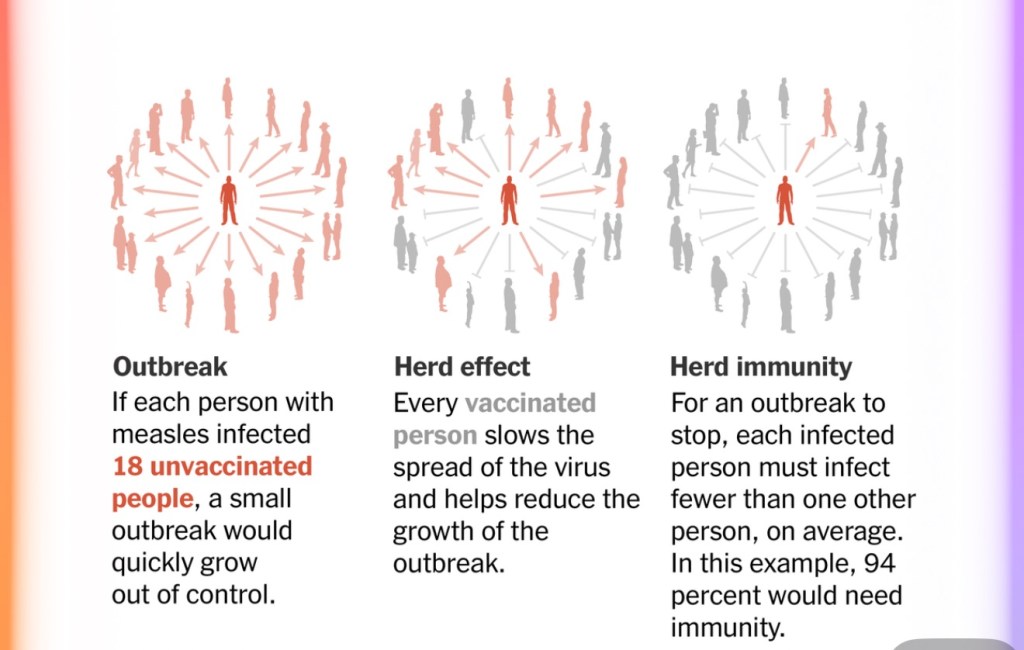
In a hypothetical community where nobody has immunity, each person with measles can infect up to 18 others. But this graphic by my colleague Jonathan Corum shows what happens when enough people are vaccinated.

Experts generally want a community to have a vaccination rate of around 95 percent. That means, statistically, that the virus will spread to fewer than one person in the group, causing it to fizzle out.

That’s exactly what the United States accomplished in the early 2000s. A campaign to encourage inoculation, alongside strict vaccine requirements at public schools, dropped infections from nearly 28,000 in 1990 to just 85 a decade later. The cases that popped up here and there were mainly from international travel.

A reversal

Experts worry we may now revive the disease.

That’s because vaccination rates for the measles, mumps and rubella shot, which had been hovering around 95 percent, began to fall during the pandemic. Data from the last school year shows that only 93 percent of kindergartners were inoculated — the danger zone. In some regions of the country, such as West Texas, it’s closer to 80 percent.

The country almost lost its elimination status from the World Health Organization thanks to an outbreak in New York six years ago. The fear now is that, as pockets of unvaccinated Americans continue to grow and multiply, measles will be more likely to hop from group to group, traveling farther and infecting more people. The current outbreak, which started in West Texas, has already spread to New Mexico and Oklahoma.

Why has the rate of vaccination fallen so much? Part of the answer lies in the Covid pandemic. Conspiracy theories about Covid-19 vaccines made many question the safety of other routine shots. The vaccine-skepticism movement is growing quickly, driven by declining trust in science and rampant misinformation on social media.

Unpopular pandemic mandates also fueled a revolt against vaccination requirements at public schools. In recent years, many states have weakened those mandates, which are perhaps the best way to keep childhood vaccination rates high. In 43 states, officials will grant an exemption based on religion. In 13 of those states, all you need is a personal objection to opt out of a school vaccine requirement.

Two futures

Some experts believe there is still time to rein in the virus. Perhaps if enough Americans witness the toll of measles, which killed an unvaccinated child in Texas in February, they will recall why vaccines are important.

Others say that is naïve. They fear that distrust in science is so deeply rooted and that misinformation is so ubiquitous that many will choose to stay unvaccinated. And they worry that if vaccination rates don’t rise, other preventable diseases like polio will follow.

Vaccine skeptics now walk the corridors of power in Washington. President Trump has questioned the safety of vaccines. So has Robert F. Kennedy Jr., the nation’s top health official, who wrote a book about measles in 2021 saying that outbreaks had been fabricated so the government could “inflict unnecessary and risky vaccines on millions.” There is no cure for the virus, but Kennedy has also promoted unproven treatments: He said this month that doctors had told him about patients who had an “almost miraculous and instantaneous recovery” after they took cod liver oil, steroids and antibiotics. Health officials in Texas tell me such promises may have caused measles patients to delay medical care.

The outbreak in Texas supports the pessimistic thesis. There, even communities plagued by serious illness and death have still largely rejected the M.M.R. vaccine.

Related: The Times is keeping track of where measles is spreading. Stay tuned.

The Chill Pill

DigiDame Discoveries

I always wanted to press a button and have my stress go away. Like everyone else, I have wasted too much time in my life on negative responses and negative energy. The Chill Pill is a solution for many. I am testing it now because we all may be facing more challenges than ever before. Eliminate panic attacks and sleepless nights.

The Chill Pill features a “revolutionary signal pattern which sends a gentle stimulation from your hand to your brain that tells your nervous system to relax. The best part is that it can be customized to fit your personal needs. Simply adjust the frequency settings to calm yourself in any situation.”  Do not stop taking medication prescribed by your doctor. Seek medical advice. Amazon. 

Tupelo Honey and Tea Takes Your Woes Away

DigiDame Discoveries


Tupelo Honey and Tea Takes Your Woes Away
Most folks rely on alcohol to make them feel better but my drug of choice is a cup of black tea with Tupelo Honey. It works for a cold, upset stomach, crankiness, worries, and desire for a dessert. I usually drink two cups of coffee a day but treating myself to a black tea with honey makes me feel refreshed, relaxed and ready to conquer whatever. Make sure you can taste the honey.

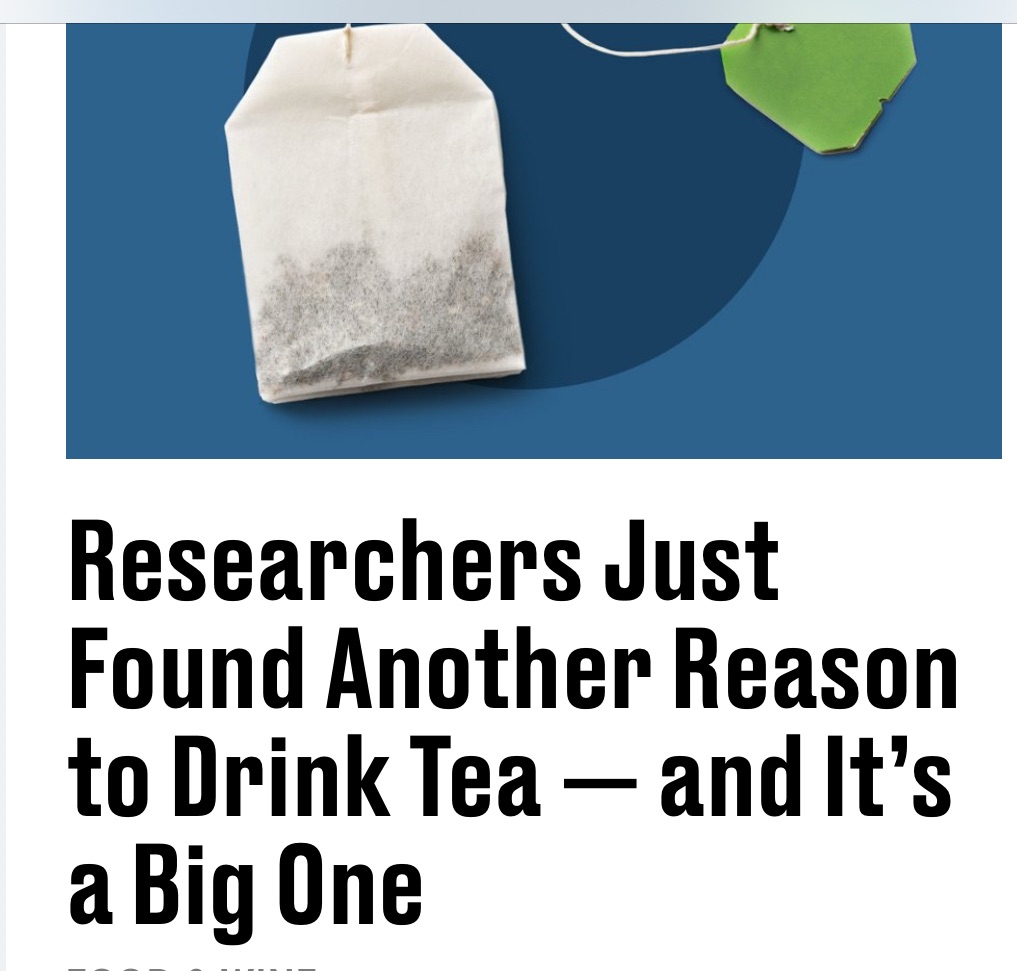
Food and Wine magazine claims that scientists found that tea may also reduce harmful contaminants, such as lead and cadmium, in your water. Read about it in the link I provided below. A new study from researchers at Northwestern University shows that brewing tea may also naturally absorb heavy metals, helping filter them out of your water.

The article also says just how great having a daily cup of tea can be for you, including everything from preventing cardiovascular diseases to being antidiabetic and even anti-aging.

Read on

Read in FOOD & WINE: https://apple.news/AHqFXU94gSOOaaOq5K7QBGg

DigiDame Discoveries

One of my nightly pills got stuck in my throat the other night. I couldn’t get it to go down. I have been taking these supplements for years. This is the first time this has happened to me.I drank water and swallowed bread. It took several rounds of water and bread to move that pill out of its obstructive position. While I could breathe, I felt the pill choking me. I immediately thought of a friend of mine who needed the Heimlich maneuver in a restaurant because he was choking to death. He was lucky that a complete stranger came to his rescue.

There are devices that can help you save others and save yourself. I’m buying a travel version of LifeVac because as I get older, I want something I can depend on all the time.

One kit protects the entire family. LifeVac can be used on someone disabled, pregnant or large in stature. One child dies every five days from choking. Now they don’t have to. LifeVac has saved hundreds of children and is the best baby gift you can ever give.

Apple Vows to Build A.I. Servers in Houston and Spend $500 Billion in U.S

The company pledged the multibillion-dollar investment over the next four years and said it would create 20,000 jobs. The Texas facility is set to open in 2026.

By Meaghan TobinTripp Mickle and 

Days after Apple’s chief executive met with President Trump, the company said on Monday that it planned to spend $500 billion and hire 20,000 people in the United States over the next four years and open a factory in Texas to make the machines that power the company’s push into artificial intelligence.

“We are bullish on the future of American innovation, and we’re proud to build on our longstanding U.S. investments,” Tim Cook, Apple’s chief executive, said in a statement. The company made similar, smaller pledges during the Biden administration and Mr. Trump’s first term, though it has not yet followed through on some of those promises.

Mr. Cook met with Mr. Trump last week. After that meeting, Mr. Trump said Apple would shift production to the United States: “They’re going to build here instead because they don’t want to pay the tariffs,” he said in a speech to a gathering of governors.

With its investment, Apple said it would begin manufacturing artificial intelligence servers at a new 250,000-square-foot facility in Houston next year. Those servers, which will be made by the Taiwanese electronics giant Foxconn, will help the company expand its data center capacity in North Carolina, Oregon, Arizona and Nevada.

Apple will continue to make the bulk of what it sells — iPhones, iPads and Macs — in Asia. Its overseas manufacturing footprint has been a point of contention with Mr. Trump since before he was first elected president in 2016. For years, he has called on Apple to “start building their damn computers and things in this country, instead of in other countries.”

As the first Trump administration ratcheted up tariffs on China in 2019, Apple began shifting some of its manufacturing to Vietnam, India and other Asian countries. But it didn’t bring any of that production back to the United States.

Now, Apple is facing tariffs for the first time on iPhones and the threat of tariffs on other products made overseas. The majority of iPhones are made in China, and U.S. tariffs of 10 percent on all Chinese products took effect this month. Mr. Trump has also threatened reciprocal tariffs on India, as well as levies on imports from Canada, Mexico and other major trading partners.

Mr. Cook has worked with Mr. Trump in the past to help Apple avoid tariffs. The Trump administration avoided putting levies on smartphones and removed, at Apple’s request, a tariff on the Apple Watch in 2020.

Gene Munster, managing partner at Deepwater Asset Management, said he expected that Apple would again be spared from tariffs because of its promise to invest $500 billion in the United States.

The investment represents $39 billion in annual spending above what Apple promised to spend on employees and suppliers in the United States in 2021, he said. It is in line with Apple’s average annual increase in U.S. investment to support its growth since 2017. And the 20,000 jobs that Apple said it would add is in line with the number of people it would hire over a four-year span in the United States, as well.

“This is a calculated trade-off for tariffs,” Mr. Munster said. “Trump made it clear: You have to show me some love. The question is: How much is that worth to Apple? And the answer is they would rather spend this money themselves on infrastructure than give it to Uncle Sam.”

A Message From Artist Ben Sack. We Own His Work. It’s The Big Imaginary Map In Our Living Room

Ben creates his art by living on cruise lines around the world.

THE ART OF BENJAMIN SACK NEWSLETTER

Ahoy! It’s that time again, Neptune harkens. On March 1st I’ll be joining the mighty MS Zuiderdam on its round there world voyage.


As per tradition, If you’d like a postcard from a far-flung errant artist in a land far far away, DM me your mailing address.

Just before flying off, I finished a commission work of a city very dear to me, Richmond, Virginia — where I went to school. Always a joy to revisit that gem of a town in drawing….and hopefully in person again sometime soon….

Salutations all,

At long last, a new dispatch from your humble, errant artist. Much to catch you up on but I’ll keep things brief to appease dear brevity and let the photos do most of the talking. 

Firstly, greetings from Singapore! I hope and trust all is well on your end. Indeed, it’s that time again. King Neptune has harkened me back to his wondrous seas — I’m returning to my position as the artist in residence aboard Holland America Line’s MS ZUIDERDAM on its voyage around the world. I’m looking forward to seeing old friends and creating new works of the world.

I’ll be joining the ship at the halfway point in its journey, in Singapore on March 1st.Before then, armed with sketchbook, I’m venturing to Ankor Wat in Cambodia to draw, study and be waylaid by awe by the ancient marvel. Following that, a quick jaunt to Hanoi and Halong bay to continue feeding the sketchbook new places. 

As always, I love bringing you guys along for the trip: if you’d like a postcard from a far flung artist in a land far far away, feel free to send me your mailing address and I’ll pen a dispatch to you on a wayward postcard. 

To continue telling a long story short, after the last newsletter in August, escapades were had in Durango, Colorado followed by the fulfillment of a longtime dream:  I moved my art practice up to New York City, calling the charming neighborhood of Greenpoint (in Brooklyn) home for a glorious spell of time. Woven into my tenure there, in September  I hopped up to Alaska to serve as the Artist-in-residence aboard yet another American Cruise Lines Ship, sailing North to Skagway then Southwards through the sublime waters of the inside passage to Seattle


Through these many months, I was able to create quite a number of smaller, intimate works, a few of which have been exhibited with the Robert Fontaine Gallery (and are available there to be collected here: https://www.robertfontainegallery.com/artists/93-ben-sack/works/766-ben-sack-binary-drift-companions-at-sea-2024/ ).


Concurrently, the Gallery is showing in the Palm Beach Show in Florida, in booth 310. Do drop by if you’re in the neighborhood! 

Both of the above works are available through the Robert Fontaine Gallery: 
https://www.robertfontainegallery.com/artists/93-ben-sack/works/768-ben-sack-placeless-place-2024/
 

The figure om the left is comprised of an immense and highly detailed cityscape. 

Throughout this time as well, I was able to execute a few drawings of some of America’s most charming metropolises, both as commission works and as personal projects. I’m now left with a hunger to capture all of the country’s cities, much like Auduban did with his encyclopedic compendium of the bird’s of America. So, if you’d like to commission a city to be drawn from my particular angle, I would be happy to execute such [artist winks convincingly].

There it is, the long story short. Hopefully upon these forthcoming adventures our paths cross. As always, thank you for following and supporting my work. It’s been a pleasure creating wonders and worlds with and for you. Now back to drawing….

Most thoughtfully,

Ben

DigiDame Discovery

New York Times

DigiDame Discovery Explanation

I may not be the first to tell you about new discoveries in tech, medicine, fashion, sex, decor, art, travel, books, etc but keep reading. There is so much more to come in 2025

In an era plagued by sex negativity, only one generation seems immune: mine.

By Mireille Silcoff

In 2019, I divorced, at age 46, and went on to have more and better sex than I ever would have thought possible.

I had not imagined that the end of a 20-year relationship would mean a new era of high eroticism; I’d have needed to be delusional to think that. I was middle-aged, with two young children, a bunch of chronic illness and a bank account that was essentially handed over to divorce lawyers. My career was on life support, and after years away in bigger cities, I was back in my hometown, Montreal, enduring the kind of isolation that comes from exiting a relationship that has defined nearly half your life. Then the pandemic hit.

And yet.

In the beginning I thought it was just my own cool and unusual story. Returning to plentiful sex in my late 40s felt weirdly intuitive, like hearing an old favorite song and finding that of course I still knew all the words. There were new frills — I’d cook decadent meals, buy absurd lingerie, pretend that I always had Japanese whiskey hanging around — but I also found that I was better at sex, and that this was because I was older. I had fewer inhibitions, fewer hangups and more self-love than I did as a taut 24-year-old. And the culture of sex in the 2020s felt more exploratory, more forgiving. The date rapes and creepy professors that filled my 1990s were gone; the workplace harassment and idiotic full Brazilians that peppered my early 2000s were over. The fear of pregnancy was finished, as was the pressure to land a partner to make babies with. Everything that remained felt like a privilege: There was desire, and there was the ability to fulfill it.

It turns out this was not just my story. Five years since that divorce, it seems clear that what I have been doing privately is part of something bigger — a story that somehow belongs to my generation, and particularly the women of my generation.

The media’s confirming this has been kind of unrelenting. A few months ago, Netflix served me a scrolling bar of options labeled “Grown-Ass Women Living Their Best Lives,” full of movies about middle-aged women unrepentantly getting it on, not because they were weak but because they had arrived. Last year brought not one but two movies in which an accomplished, tastefully dressed Nicole Kidman (57) has a sexual affair with a much younger man, and one in which an accomplished, tastefully dressed Laura Dern (57) does the same. In literature, the 56-year-old actor Gillian Anderson put out “Want,” a collection of female sexual fantasies; Glynnis MacNicol, 50, wrote “I’m Mostly Here to Enjoy Myself,” a popular memoir about going to Paris to get laid; Molly Roden Winter wrote the salacious “More,” about her open marriage. And of course there was Miranda July’s blockbuster novel, “All Fours,” a barmy midlife sextravaganza, which The New York Times named “the First Great Perimenopausal Novel” and which contained so many uncannily truth-telling moments that it nearly exploded all my messaging apps with shared photos of its pages.

A whole new cultural typeseems to have landed. It feels worlds away from the traditional view of older women’s sexuality — which, if you look at the lion’s share of studies, you would conclude is incredibly depressing. Until the late 20th century, academic studies of aging women were dominated by what sociologists call the “misery perspective,” which emphasizes how people’s lives get worse as they age, burdened by factors like chronic illness and financial distress. Spend time reading papers with titles like “We’re Just Tired: Influences on Sexual Activity Among Male-Partnered Women in Midlife,” and you will emerge with a dour picture of what it means to be sexual and female at 50, a deflating biomedical index of problems, from diminished libido to painful sex to vaginal atrophy to breasts with no sensitivity. You will read about the possibility of new partners’ being ransacked by caregiving responsibilities — how, if you have a 10-year-old at home or an 80-year-old in a home (or both), chances are you are not out shopping for slinky skivvies to wear for liquid dinners à deux in bed. Add to this a ratio issue, rooted partly in the habit of men’s linking up with younger women, and the picture becomes even more grim.

But this year I looked around at the women I know and saw a completely different plane of existence. “The women I know” is, by definition, not a representative sample, but still: Two of my friends ended marriages because of their own sexual dissatisfaction. Another divorced and became a card-carrying polyamorist. Two of my friends in their 50s are seriously dating people in their 30s, and a few others are, like me, divorced and engaging in sex practices they’d never tried before. I am sure that every one of us recognizes aspects of the “misery perspective” in all those papers, but it does not describe our lives right now. I can tell, because when one of us needs an endometrial ablation for unrelenting perimenopausal bleeding, or a hysterectomy for fibroids growing larger than citrus fruits, or agrees to take an aging parent or a partner’s kids into her home, a big question inevitably seems to be: What will this do to my sex life?

I’ve come to think of this cadre of women as something like hardy garden perennials. Year after year, with the right conditions, perennials continue to flower. Likewise, the sexual Perennial finds herself still well rooted in an erotic life at an age when she may have expected it to fade or wither.

This is all the more remarkable because, for the culture as a whole, physical sex really is withering and fading. Among the most defining ongoing stories about sex in America today has been the drop-off in activity among Gen Z and Millennials. Blame for that decline has generally been placed on the way we live in the 21st century: the atomization of our social lives; the antidepressants that can kill the libido; the phones and social media that provide endless fascination, even on boring evenings when other things could be happening; the always-available porn that offers both problematic expectations of how in-person sex happens and a far less demanding alternative to it. For young parents, the intensity of modern child-rearing shrivels sex lives. For teenagers, a growing obsession with personal and psychological safety, a desire to be immune from discomfort, can flatten eroticism in some of the places it might flourish.

Last year I even saw one survey that, at a glance, seemed to me to suggest that people in their late 40s and early 50s might be having sex more frequently than those between 18 and 24. When I got in touch with the generational researcher Jean Twenge, whose best-selling books (most recently, “Generations”) have done much to explain the differences among birth cohorts, she was skeptical of those findings. But the subtler data she did pull up — mainly using General Social Surveydata from 1989 to 2022 — still made a clear case for a kind of maverick sexiness among those currently in middle age.

When you track sexual frequency among age groups, something notable happens around 2007: a downward curve in activity among people 18 to 40 that turns into a sheer nosedive in the decade that follows. Today’s young adults are having sex 30 percent less often than young adults in the early 2000s. Such declines have occurred across the generational spectrum. But one generation, in its middle age, is experiencing a much less pronounced drop from the sexual frequency of its predecessors. Using the same measures, Twenge says, “the drop among Generation X is pretty small.” It’s only 9 percent.

The sexual Perennials of this generation do not fit neatly into any of the well-trodden archetypes of older women, like the cougar or the MILF — these degrading male-gaze notions of women precariously perched on the brink of undesirability. Pop culture is only now beginning to create new symbols of them, while those of the past feel silly or peculiar. (In the 1980s, Blanche Devereaux of “The Golden Girls” was often portrayed as a swooning, silk-draped clown for merely having a libido; at the start of that series she was supposed to be around 53, which is two years younger than Jennifer Lopez is now.) The Perennial’s vibe is not about finding a pocket of succor after the sun of youth has set. It is, rather, a power stance — a matter of caring less and less about such expectations the older you get.

I would love to imagine that this development is a permanent one — that the culture is finding a lasting perch for the sexuality of allolder women. But I cannot shake a strong hunch that what we are seeing among middle-aged women is a function of the specific generation currently occupying those years. This is a cohort of women with formative experiences that do not resemble those of the generations surrounding them: a generation that began having sex earlier than any other on record, that stayed on the singles market for years longer than their parents, that is continuing to have sex even amid a broader sexual decline. I do not think it is a coincidence that the women I’ve written about thus far are part of Generation X, born between 1965 and 1980.

Gen X, a small generation compared with relatively larger cohorts like Millennials or Gen Z, “kind of dodged a bullet,” Twenge told me — by which she meant that while our lonely, iPhone-defined century came for everyone’s libido, some were defined by it, while others were merely affected. By the time the 21st century really landed, much of Generation X was already largely formed in terms of sexual habit. And this may be why, in middle age, it is shaping up to be possibly the sexiest generation on record. “You can even make the statement,” Twenge said, “that Gen X is the last sexy generation.”

I was born in about the middle of the Gen X span, in 1973. Like many Gen Xers, I lost my virginity early — in my case, at 15. By 2007, when the iPhone was introduced and the spiral of American sexual decline becomes highly visible, I was 34 and had been sexually active for nearly two decades. My sex ed was thoroughly analog, which is to say, human and exploratory, because there was no alternative. The internet was barely public, home computing was confined to blinking greenish screens and porn did not live on the surface of culture; if you wanted it, it was something you had to seek out in public places that were either embarrassing (newsstands) or creepy (bead-curtained back rooms, squalid theaters).

So the way that I figured out sex was all over the city: in guys’ houses or the field near my high school; in the back office of the boutique where I worked; in nightclubs entered with fake ID. Today, as a mother to two children whose whereabouts I am in 100 percent, constant awareness of, I think of my own pubescence with not a little bewilderment: I had parents and stepparents, and yet my childhood feels decidedly “Peanuts”-like in its absence of grown-ups. (The public-service refrain Americans were treated to at the time — “It’s 10 p.m. Do you know where your children are?” — sounds absolutely surreal today, when modern parenting has so thoroughly glued our children to the sides of our bodies.) I remember spending my youth in all kinds of places — libraries, swimming pools, parks, cafes, the subway — with sometimes random bunches of other people: kids I knew, kids I didn’t, kids who were good and kids who were problems. We were expected to figure out these interpersonal dynamics, the general weirdness that is other people, on our own.

Some have called Gen X a “forgotten” generation; others have labeled it “neglected” by parents whose 1960s and 1970s self-centering rendered children something of a nuisance. But the free-range vibe of the era’s parenting feels like a circumstantial issue as much as a choice. My divorced mother worked, but unlike the typical family in previous eras, there was no easy intergenerational arrangement to take care of me while she was not home, and unlike now, there was no question of my father’s helping out after school ended at 3:45, nor school day care programs for households like mine. Like so many others of my generation, I rode home on the city bus, let myself in, watched “Three’s Company” with a box of Ritz crackers and eventually grew up to make jokes about having been raised by wolves. Much of this generation learned to fend for itself young. Gen X was, on some level, the last generation to be raised this way, before new standards of safety and ideas about parental responsibility made children far more predominant in their guardians’ schedules.

For women, that toughness would come in handy in the 1990s, the decade during which most of today’s middle-aged people came of age. When I first had sex, I remember rushing home to call a girlfriend and tell her the news. There was a real sense of relief, of growing closer to hallowed adulthood — something we all wanted badly, not realizing this was partly because we were launched out of childhood too early. (You need not take my word for this: The teenage birthrate was no small crisis in the 1990s and dropped by 78 percent from 1991 to 2022.) At the time, it mattered less to me that, while fooling around, the guy in question had forced himself into me. That part was unpleasant, but it felt, as an occurrence, normal enough.

Looking back now, I find it insane that I did not recognize that I was raped. Even when I heard discussions about “date rape” a few years later, I remember feeling somewhat mewling or impostor-like counting myself as a victim. At the time, I just moved on — largely into a queer nightclub scene where I found what became a kind of home and a family. I did not yet much even like sex, but I had a lot of partners, and if something went wrong with a condom, or if another surprise entry occurred, I would go to a clinic and get a morning-after pill or an S.T.D. test, as if I were picking up a particularly terrifying coffee. In 1991, when I was 18 and starting college, I was in a vogueing house that won Montreal’s first vogue ball. By 1992, two out of the five members of the house were dead from AIDS, and one was H.I.V. positive. When I think of sex in those years, “fun” is not the first word that comes to mind.

In his book “The Naughty Nineties,” David Friend quotes Kathleen Hanna, the frontwoman of the riot grrrl band Bikini Kill, describing her ’90s feminism in a Times interview by saying that she didn’t just hit the glass ceiling; she pressed her naked breasts up against it. In its chicky, disobedient boastfulness, Hannah’s line feels so of the era, and yet today it invites a double take: Wouldn’t it be better for her to not be naked? But as Friend demonstrates, sex coated what felt like every corner of the 1990s culture, even to the highest echelons of power: Bill Clinton’s Oval Office semen stains, the Clarence Thomas hearings’ talk of “Long Dong Silver,” Prince Charles’s telling his mistress Camilla Parker-Bowles that he might be reincarnated as her Tampax. The ambience of female sexual emancipation and “girl power” was increasingly in the mainstream, but the surrounding culture was still entrenched in the kind of ogling, cigar-chomping sexism you might associate with earlier eras. Women were often tightly whaleboned into the most predictable sex roles, either fending off rapacious men or, as the decade deepened, appearing in movies and magazines as sex-crazed nymphettes who could never get enough.

By the time I finished college, I had integrated my own rather saw-toothed sexual history into a tough-as-nails, big-as-the-boys form of Camille Paglia-esque feminism. This wisecracking persona was nearly necessary at the Montreal newspaper where I worked, and where I endured more than one editorial meeting sitting on the lap of my editor. One Halloween, a fellow journalist showed up at a party in only tight white underwear and a cape, claiming to be dressed as “Rape Man.” This was not an environment I often questioned. I remember dreaming up ways to cultivate and exude a kind of tomboy-fatale stance of high ennui — an irony-steeped, seen-it-all, “whatever” type of womanhood, synonymous at the time with hipness and credibility. Cool women didn’t whine; we rolled our eyes at everything. I might even have imagined that being able to work under a heavy brume of machismo and high sexual charge, while submitting copy that was clean, was itself a kind of girl power. Of course, this protective cover ensured that such a workplace could run unobstructed.

I do not want to suggest that today’s Perennial is simply a callused product of so much formative chaos. The point is that today’s less toxic, less male-dominated sexual landscape might feel like a particularly nice and even forgiving landing place for women who lived through that era. Sexual frequency may have waned among the young, but the young have also helped to create a kinder and more open-minded world of sex, full of body positivity and gender questioning, consent culture and the acceptance of all kinds of desire. (Also, a recognition that the “adult” supervision of an H.R. department can be a positive thing.) In encountering all this, the Gen X woman — my postdivorce self very included — might feel as if she has reached some kind of welcoming flip side. She was primed for hard-core jungle combat in a pencil skirt and now, so many years later, finds herself in a womblike bouncy castle where women are invited not just to have orgasms but also to have important conversations about their orgasms.

Just as in all those movies on Netflix, the rise of the Perennial does feel like something of an intergenerational dance — what happens when the mores of one age cohort intermingle with those of others. In so many memoirs and films and TV shows, the older women are found in relation to younger men. It doesn’t track as cougar-ism; it feels more like serendipity. Even beyond the fact that you can now buy clitoral stimulators at the pharmacy and even insensitive dudes have heard that they shouldn’t shove themselves inside you without your OK, the very possibility of the Perennial has emerged from a random scrum of factors. You have women who found themselves free of marriage in middle age. (In 1980, the median age for women getting their first divorce was about 30; in 2020, it was around 40.) You have women who are more educated and earn more than ever. You have women who are interpersonally rugged and who can be light and easy with sex because they worked their way through so much difficult sex when they were young. And you have women who are, in certain ways, immune to the neutering forces of the 21st century — because, both sexually and socially, they were formed before it.

Nearly every woman I spoke to for this article — from Gillian Anderson to old girlfriends from my first newspaper jobs — mentioned that she felt as if she was living in a lovely interstice. “It’s like, right now the lights are on,” Anderson said. “We are open for business. And it’s not just that we are not giving up — we want to do more, and maybe there is this thirst to do it now.” I myself have seen, as menopause has come into the picture, how my libido has subtly changed: how the rampant desire and thoughtless lubrication that were available to me even four years ago, when I first divorced, take a little more work now. Sometimes, on days when my whole body hurts for no reason I can fathom, and the lines between my nose and the corners of my mouth make me feel as if I resemble a sad walrus, and my parents are angry at me for God knows what boomerish reason, and my kids are mounting campaigns for still more screen time, and the work and overwhelm are peaking to the point when a shower seems like a faraway dream, I, too, feel much more at home in the misery perspective.

The fleetingness is built in, and it might make the experience of being sexually existent in middle age feel even more special. What need not be fleeting is the effect this new opening could have on younger generations. When I first divorced, I sometimes tried to imagine aspects of my life as seen through the eyes of my two daughters, wondering if they found my romantic revitalization — something I did not think could be entirely hidden from them — to be weird. I was different from the flattened, married mother they knew until then. And I knew, from my own experience as a child of divorce, that what happens to your parents after a split can sink in deep, reframing a child’s whole sense of what adulthood is like. I thought about it a lot: For my own children, what messages, about life and age and womanhood, were being instilled? This may be the lasting question for today’s Perennials: What are we setting up our daughters for, and will it be good?

Some aspects of the type being created today are clearly worrisome. It feels, for instance, tied to — or is at the very least happening concurrently with — the fact that today’s 50-year-old women, not least the famous ones, can look the way women of 50 have never looked: sculpted, dewy, pert, with long manes and line-free brows and flat abs and blindingly white teeth. These standards are exhausting for anyone, but for the middle-aged, I would venture, more exhausting. No matter how self-loving, I do not think there is a 50-year-old woman on Earth who does not stand in the mirror at some point and feel as if some part of her body is melting like a candle over itself. Yet the general understanding — even in more enlightened offerings like Miranda July’s “All Fours” — is that physical aging is something that can be dealt with, a hurdle to be jumped over in order to be primed for sex. For July’s protagonist, the realization that her butt no longer looks round and contained but long, “like a pair of fat arms,” inspires a regime of workouts to make her backside so lifted “it would choke me.”

The message is that the Perennial works when the Perennial works out. All she needs is money, and insane amounts of time and effort, and, soon enough, knowledge of where to get Botox and fillers and lasers and bioidentical hormones and keratin hair treatments and vaginal rejuvenation and God knows what else. This aesthetic youthification — which brings the tyranny of a 20-something-defined hotness ever higher up the age range, to places where it is harder and harder to attain — feels apparent in movies such as “The Substance” (featuring 62-year-old Demi Moore) and “Babygirl” (with Kidman as the cryogenically nubile Romy). Both purport to comment on sexism and ageism while the youth-focused bodies and faces of their leads, these Everest-like achievements in Pilates or cosmetic alteration, play what feels like a co-starring role.

This is one road we could thoughtlessly amble down: one defined by youth, as if youth remained the only place where sex really belonged. We could embrace an aesthetic of privilege, bifurcating the women who can and the women who can’t. I worry, even, that by writing about any of this, I could be aiding the creation of a pressurized container, a standard that makes women feel bad or deficient for “aging poorly” if they are not having sex or not interested in it. All we will have accomplished, in this case, is to confine women within the same old rules of youth for an extra decade or two, before they are exiled, just as they were before. And maybe people like my daughters will look at 50-something women with that extra shirt button undone and think only that old people are embarrassing horndogs, still clinging to 20th-century licentiousness, and that relative asexuality is the better option.

But what the Perennial has for herself right now is something far better than all that, something that can stand up against the old rules of youth. There is research on this, too: Contra the misery perspective of aging, a new school called “critical gerontology” has focused on the positive effects of aging, including improved sex lives for women. According to Lisa Miller, author of the 2019 study “The Perils and Pleasures of Aging,” many women in middle age and beyond are now finding their “sexual voice,” experimenting and claiming the right to be satisfied. This is what I see around me. These women enjoy the most beautiful spoils of aging — things like caring less about social standards that they no longer have use for, or being more comfortable in their bodies precisely because they have lived in them for so long. It would be a shame if these benefits turned out to be nothing more than a temporary sweet spot that only one small generation lucked its way into. It is not simply about stretching the mores of youth. It can hold a much deeper meaning: an acceptance that the chapters of life have, over the past few decades, been reshuffled, and that there are more chapters than there used to be.

I am not telling you that 50 is the new 30. I am saying that when life’s milestones are moved around, new opportunities are created. My younger daughter often marvels — or maybe just scratches her head — over the fact that I am twice the age of some of the other mothers in the schoolyard, and yet nothing like a grandmother. Even though many of the women around me also had children in their late 30s or early 40s, this is information my kid is clearly unsure what to do with: her mother living in this unnamed category where age is very much upon me, but so much, from sex life to work life, is alive with change. This could mean that retirement is something I never get to do. But as Gillian Anderson says, another outcome is that I am open for business in so many ways, ways that now restore more than they exhaust.

The Perennial, I think, has a rare opportunity to shape this stage, to help redefine how it will one day be approached by women much younger. Maybe there will be two kinds of sex — sex for young people and sex for old people — and the second of those things will give our girls something to look forward to.

Mireille Silcoff is a writer and cultural critic based in Montreal. She has previously written about celebrities’ publicly revealing their illnesses, the fading of teen subcultures and “The Golden Bachelor.” Naila Ruechel is a photographer who is originally from Jamaica. She is known for her lush, elegant imagery with a heightened sense of intimacy.