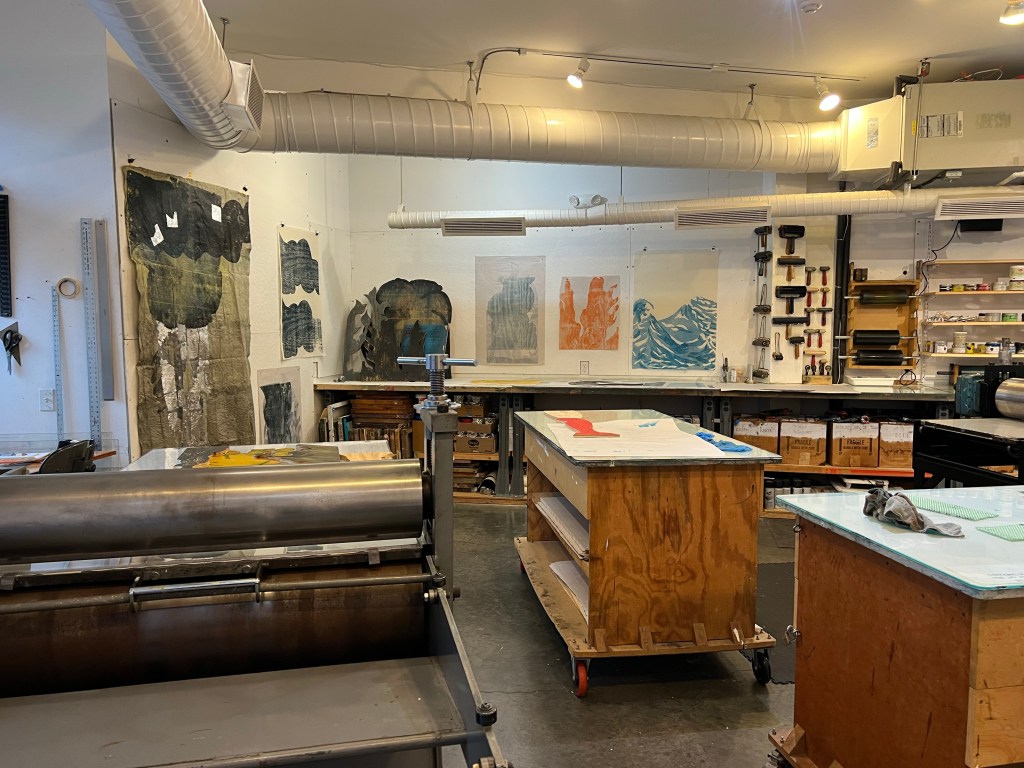
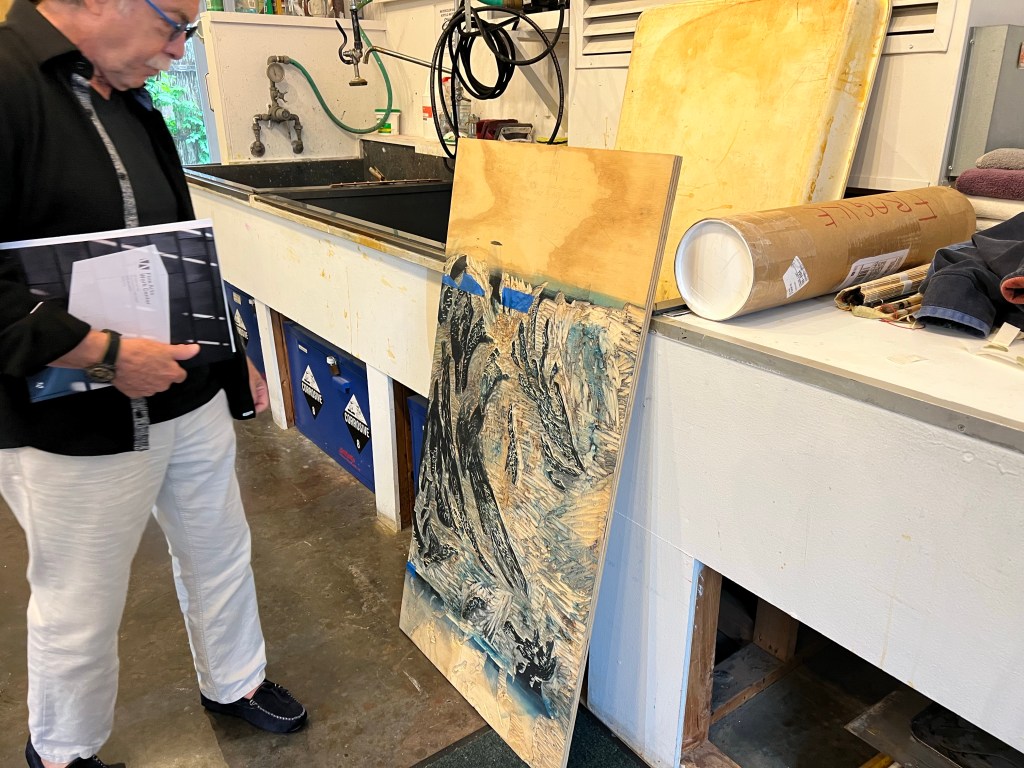
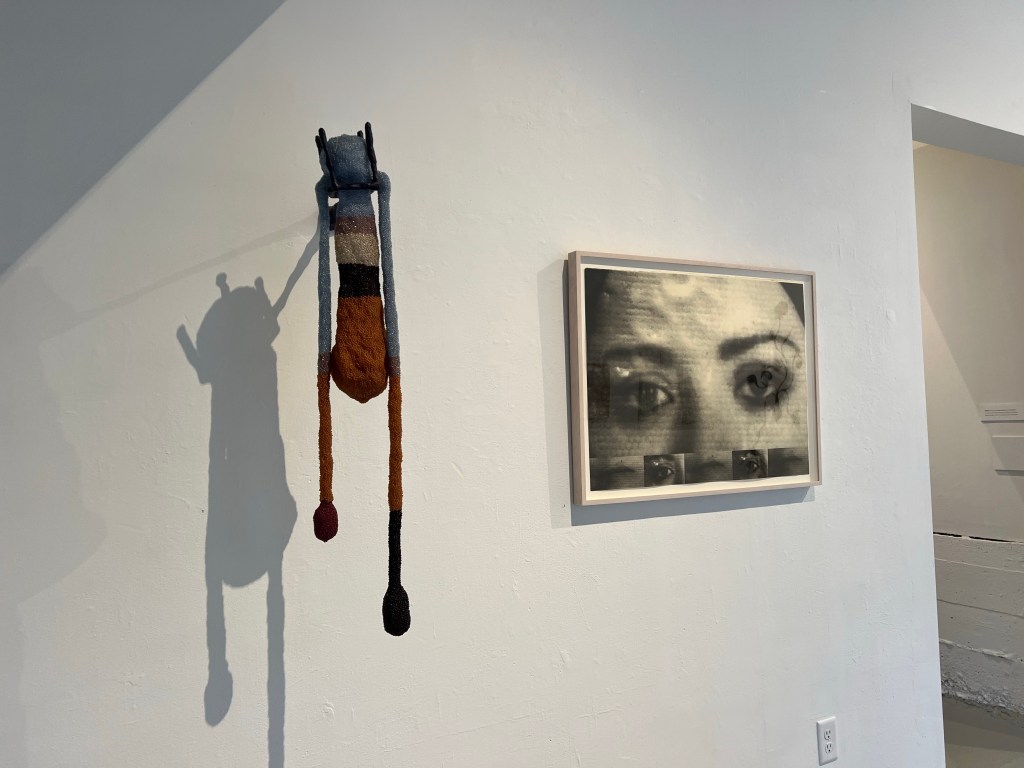
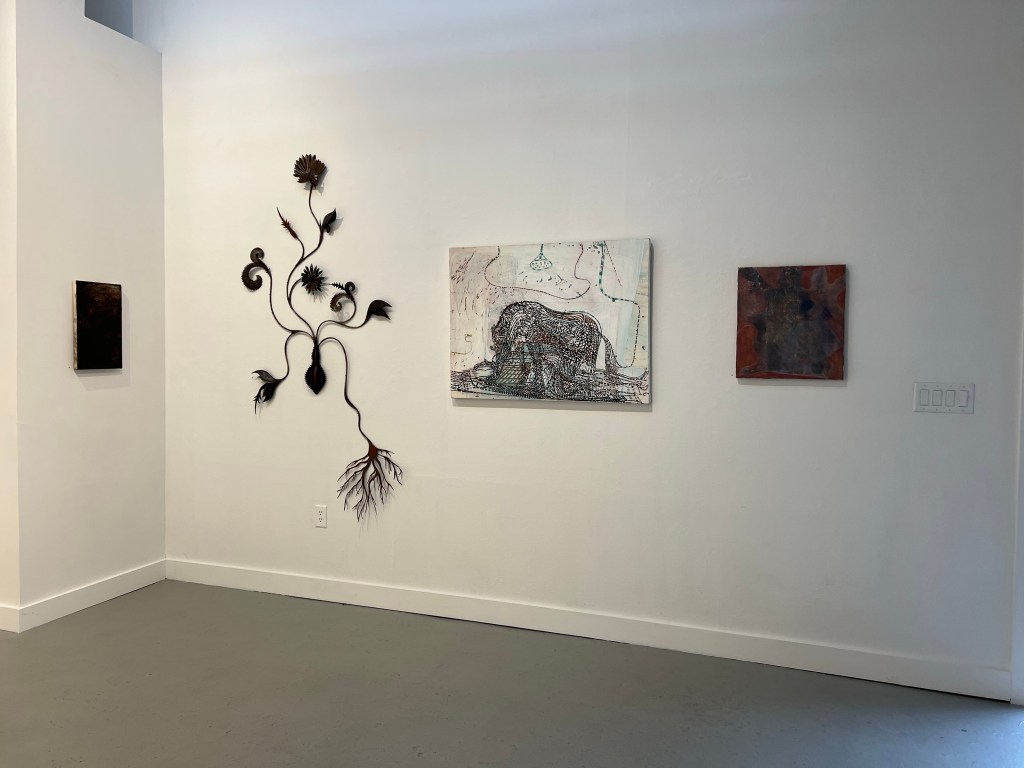
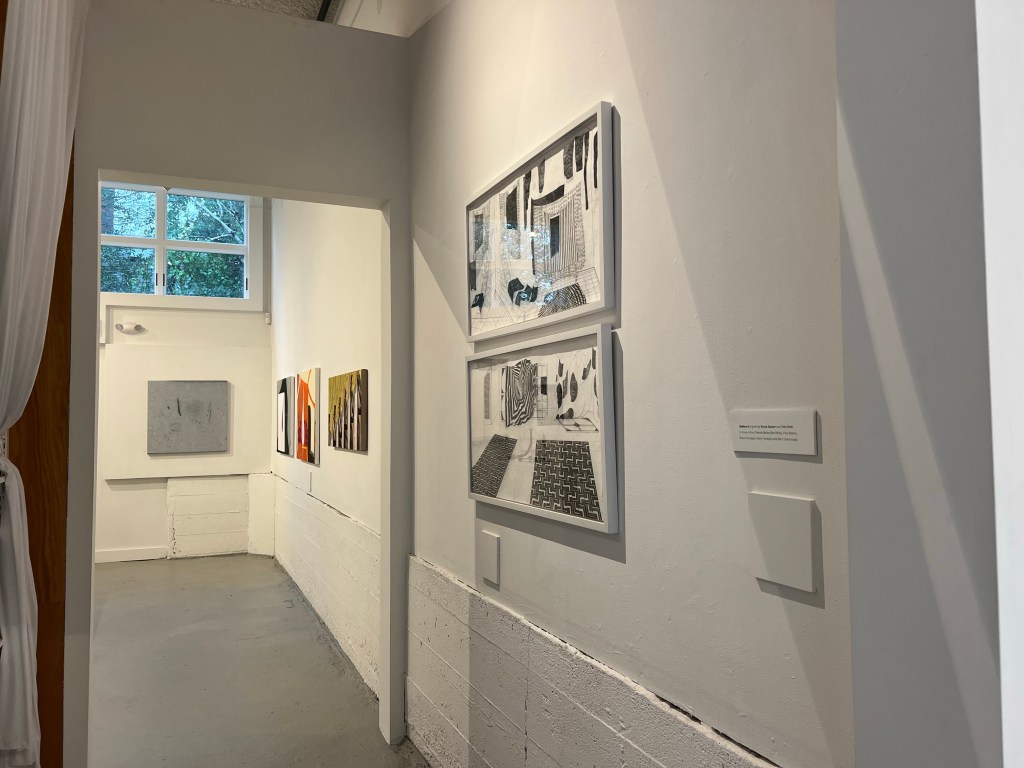
The Fine Arts Work Center is just a few blocks from the White Porch Inn Art Hotel, the bed and breakfast that we make our home every trip to P-Town. We attended an artist panel discussion yesterday that was a real eye opener into the lives of people who paint, sculpture, and write. The FAWC features artist studios; live-work residences; the Michael Mazur Print Shop; a reading library and bookstore; the Stanley Kunitz Common Room and Hudson D. Walker Galleries, where they host year round readings, artist talks, exhibitions, and live performance.
The FAWC selects 20 Fellows to live and work in Provincetown from October 1 – April 30. The Fellowship is designed for emerging artists and writers to focus solely on their creative practice. Fellows share their work as part of the winter public program, which also includes lectures and readings from visiting artists and writers.
During late spring and early fall, past Fellows
and friends of the Work Center return to Provincetown for short term stays during our Returning Residency program, which offers artists and writers dedicated time to advance creative projects and ideas.
Every summer, they welcome students and faculty for a full season of open enrollment, multidisciplinary course offerings in literature, visual art, playwriting, and more. This program includes over 50 public events that are free and open to the community.
All year, they offer online learning opportunities of varying lengths and skill levels through online writing program 24PearlStreet, where writers can work with esteemed poets, prose writers, and graphic novelists in small group, virtual settings.
Eliot and I plan to attend as many events at the FAWC as possible next summer. Thank you P-Town friends for introducing us to FAWC.
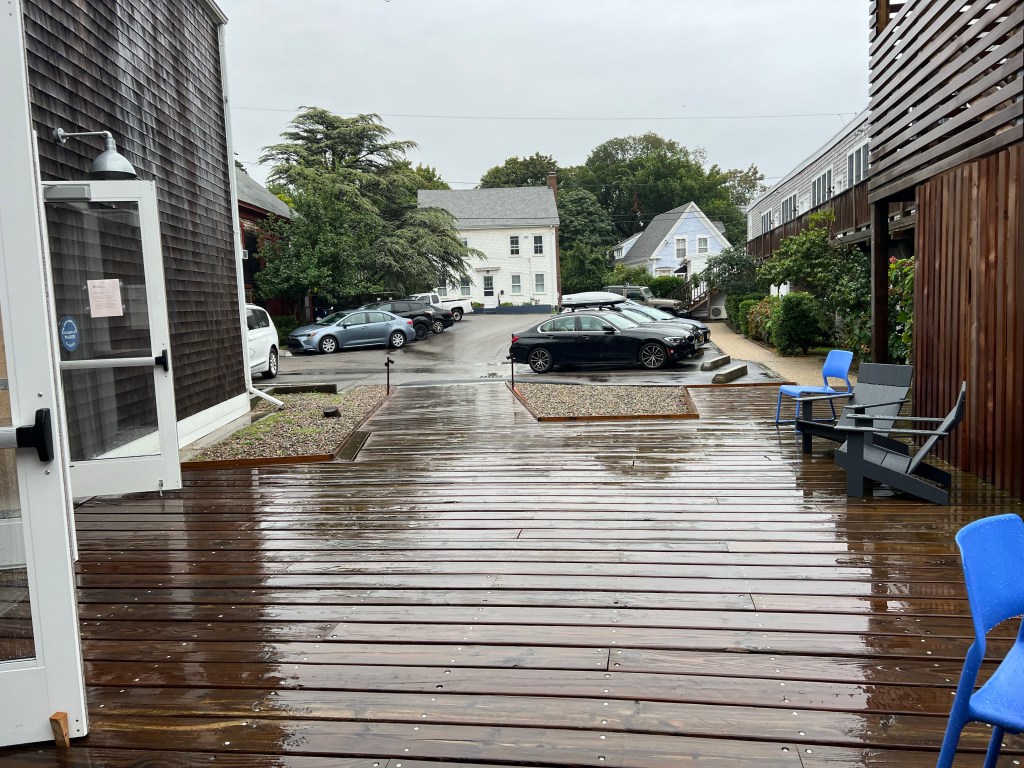
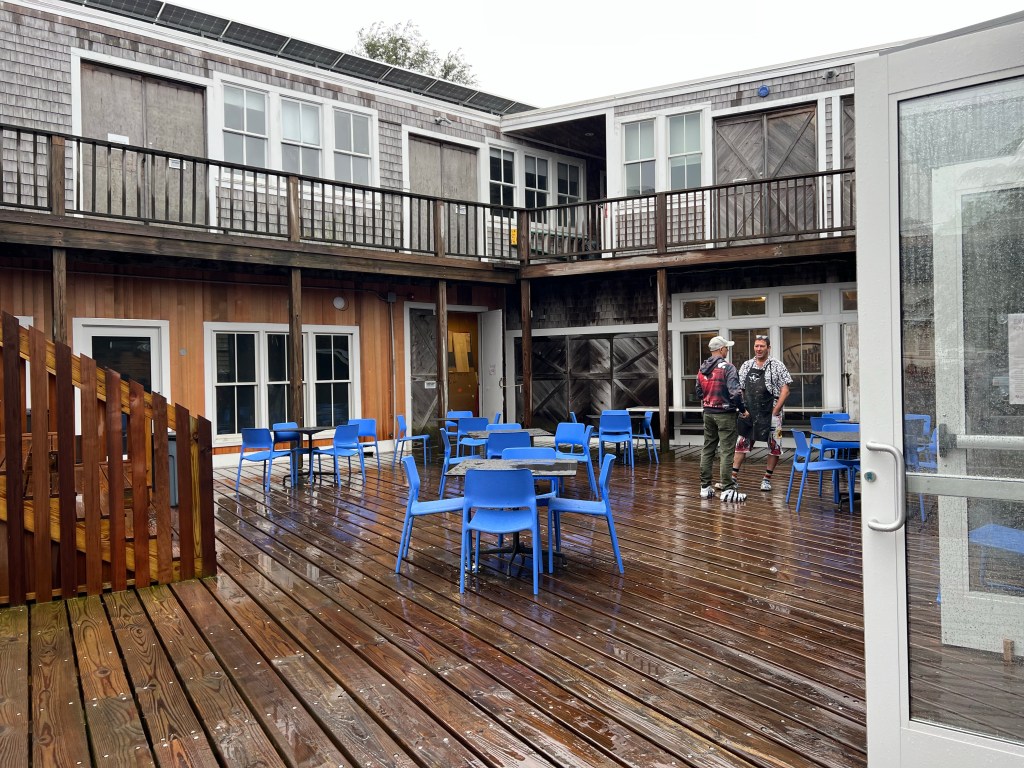
The campus
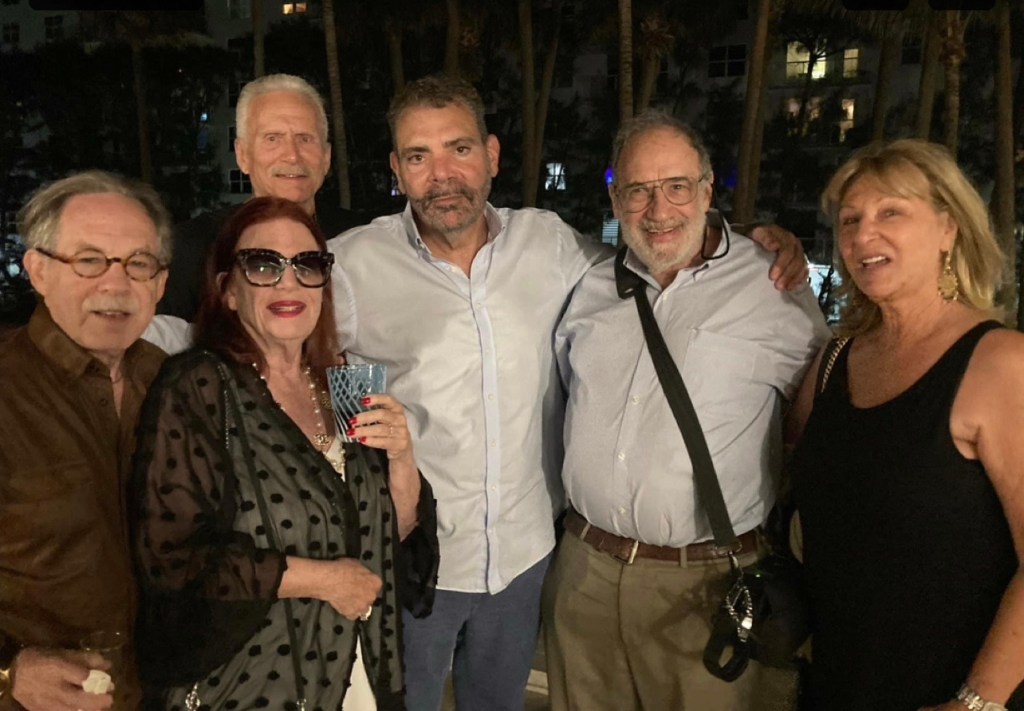
The dorms Sharon Polli Executive DirectorEliot Debbie, our friend who made sure we met Sharon.
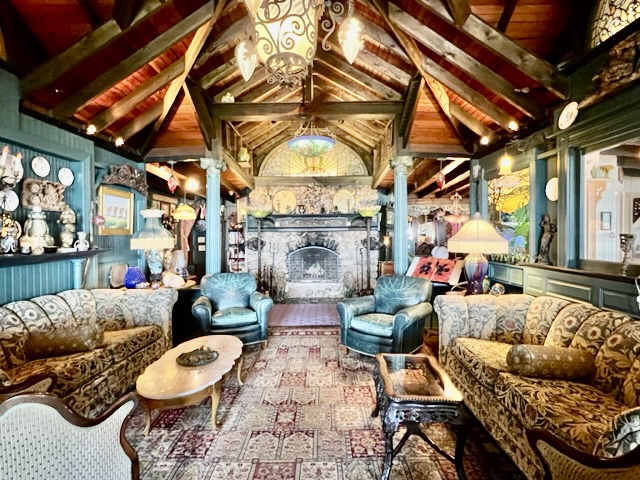
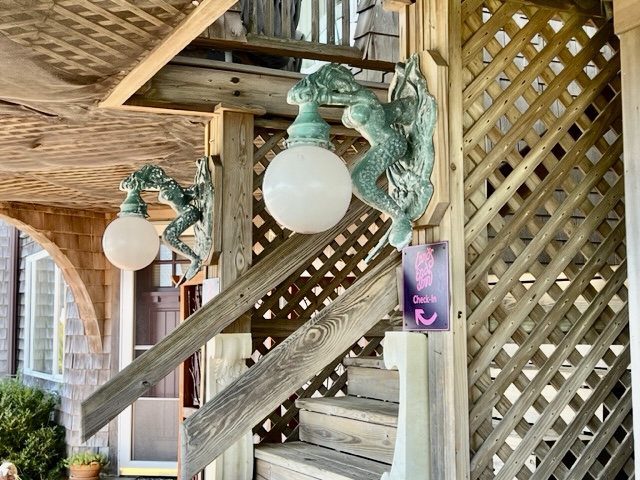
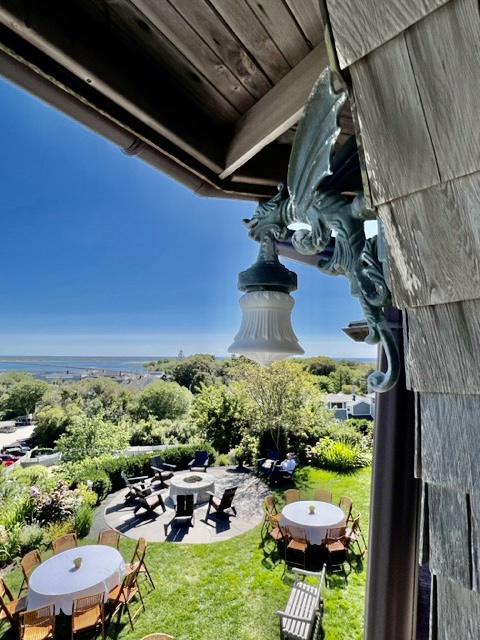
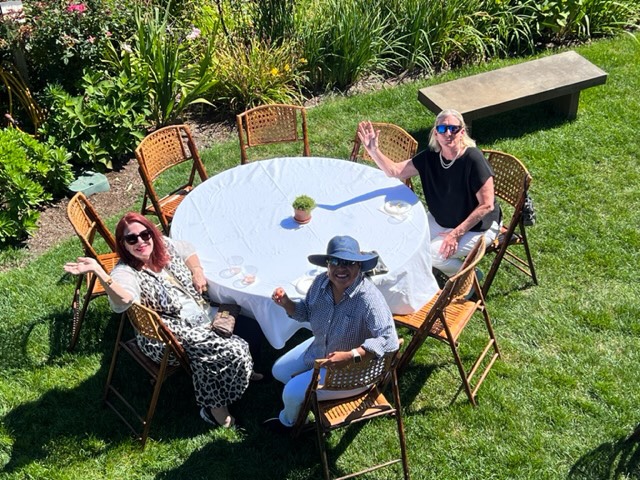
Gail Williams and Dawn McCall took us to the exclusive PAAM Circle garden party at the historic Land’s End Inn (22 Commercial Street) Provincetown. It was one of the most gorgeous places we have ever seen. We are going to spend a lot of time there next summer. We met owners Trevor Mikula and Ed Macri. Trevor is a local artist who shows his work at galleries around the country, including the William Scott Gallery in Provincetown. Ed DJs locally as Lazerella and previously had a career in technology, including 14 years as an executive at Wayfair. On Instagram, you can follow Trevor’s art @trevormikula and Ed’s DJ gigs @lazerellaptown. They have put a long-term ownership structure around the Inn that ensures it is enjoyed by the public and supports the local arts and LGBTQIA communities for generations to come. Hallelujah!
Barely eight months ago, Tom Ford paid private equity guru Rob Heyvaert an eye-popping $51 million for a sleekly designed contemporary mansion in Palm Beach. But just weeks ago — as part of an off-market deal that’s expected to top $100 million, per The Real Deal — the fashion mogul traded that place to Brian Kosoy, CEO of the real estate private equity firm the Sterling Organization, in exchange for his even larger South Florida spread.
Now Ford has turned his attention toward New York, having forked over an equally impressive sum of cash for a historic East Hamptons estate that once served as a summer getaway for Jacqueline Kennedy Onassis, as first reported by The Wall Street Journal.
Records show Ford paid media producer David Zander $52 million for the home, which was originally listed for $55 million. The residence was previously owned by fashion designer and retail executive Reed Krakoff and his wife Delphine, who sold it to Zander for $24 million in 2018. And way before that, the property known as Lasata—a Native American word meaning “Place of Peace”—was owned in the 1920s by the former First Lady’s paternal grandfather John Vernou Bouvier Jr.
Nestled amid a 7-acre parcel of land, just blocks from the Atlantic Ocean, Ford’s newly acquired compound was designed by architect Arthur C. Jackson and completed in 1917. Recently restored by its current owner, the multi-building property is highlighted by an eight-bedroom main home sporting 8,500 square feet of Pierre Yovanovich-designed living space boasting tall casement windows and beamed ceilings throughout.
Ford, a Texas native who recently sold his eponymous fashion label to Estée Lauder Cos. in a deal valued at around $2.8 billion, also maintains a Holmby Hills estate he paid late socialite Betsy Bloomingdale nearly $40 million for in 2016, as well as homes in New York City, London and Santa Fe.
There’s also a two-bedroom guesthouse, caretaker’s cottage, pool house and three-car garage with a workshop, plus Louis Benech-crafted grounds laced with lush lawns, mature specimen trees and a flower meadow.
The Lasata listing was held by Eileen O’Neill of Corcoran Group and Ed Petrie of Compass; Frank E. Newbold of Sotheby’s International Realty repped Ford.
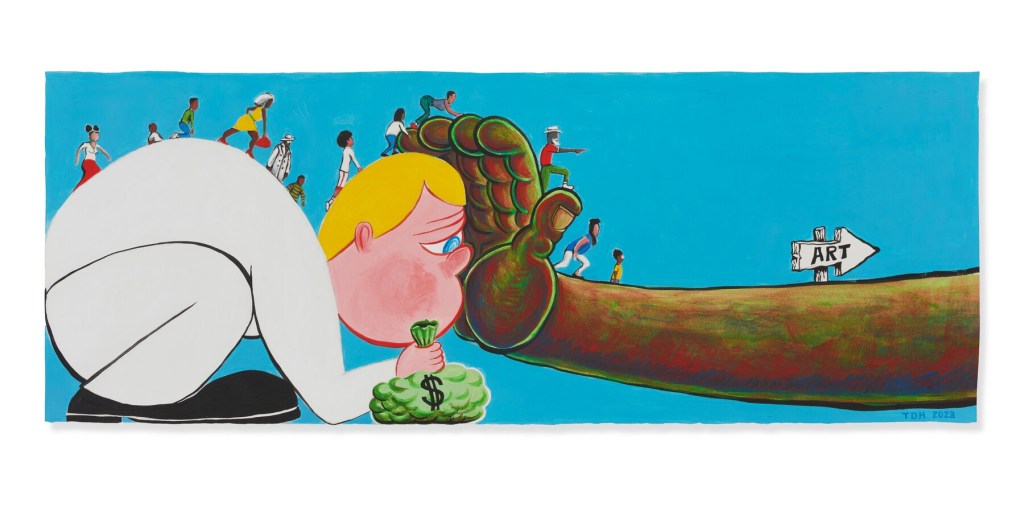
T commissioned the artist Trenton Doyle Hancock to make an original painting — “No, Only Black People Can Buy My Art” (2023) — about artists being more selective in the sale of their work.
Courtesy of the artist and James Cohan, New York. Photo: Izzy Leung
IN JANUARY 2020, less than two months before galleries around the world closed to the public because of Covid-19, Lauren Halsey had a solo show at David Kordansky Gallery in Los Angeles. She was exhibiting works about the historically Black community in South Central — where she was born, raised and still works — which is physically quite close to the gallery in Mid-Wilshire but is spiritually farther away. A big crowd came to the opening to see Halsey’s large-scale sculptural installations, which resembled storefront signage, some featuring protest slogans. “Reparations Now! In Memory of Our Black Ancestors,” one of them read. “Black Workers Rising! For Jobs Justice & Dignity,” said another.
But the show soon caught the art world’s attention for a different reason after a white collector posted on Twitter what he claimed to be a note attached to a sales list from the gallery, which indicated that a number of Halsey’s works were not for sale. Or at least not for sale to him.
According to the gallery, in a statement released to Artnet at the time, “Per the artist’s wishes, we reserved certain (not all) sculptures from this body of work for people of color and public collections.”
Halsey, 36, wanted her art to be acquired — to be lived with — by a diverse group of owners who’d have a special appreciation for the artist’s overall project, which is dedicated, as she’s put it, to “the empowerment and transcendence of Black and brown folks sociopolitically, economically, intellectually and artistically.”
With the exception of a co-op apartment, buying a work of art is unlike buying anything else in America. Just because you have the funds to purchase a painting doesn’t mean you can. Since the art world has few formal regulations, it’s guided instead by longstanding rules of decorum: Galleries, which are responsible for discovering artists and fostering their careers, generally take a 50 percent cut, exponentially higher than that of manager equivalents in other creative fields. And visual artists, unlike any other cultural producer, receive no official percentage in residuals, thanks in large part to the outdated first-sale doctrine in U.S. copyright law. This has helped make flipping art at auction a common revenue-generating practice among a certain collector class.
One way that artists and galleries have protected themselves from speculative buyers is by making potential owners audition for the privilege of purchasing art. A first-time buyer can expect to be questioned by a gallery, with no apparent irony, about what other works they have in their collection. Another collector might need to promise to buy two works by the same artist: one they vow not to sell at auction, the other they pledge to give to a museum. Some artists have had success with other strategies.
Major works by the painter Julie Mehretu have only rarely been resold at auction, which has made her work among the most expensive by a living artist — there’s never enough supply to meet the demand. The conceptual artist David Hammons spent much of his career not showing in white-owned galleries and making difficult-to-sell works, preferring to exhibit in public areas like vacant lots.
A work by Lauren Halsey, “Reparations Now + Welcome Family,” which was included in the artist’s 2020 exhibition at David Kordansky Gallery in Los Angeles.
Courtesy of David Kordansky Gallery. Photo: Jeff McLane
Historically, the artists who’ve made collectors prove their good intentions have been those, like Hammons and Mehretu, with enough power and influence to make the business bend to their will. Most artists have no autonomy, which means that once their work leaves the studio and goes to the gallery, their involvement with it is through. Lately, though, the practice of auditioning collectors has changed, especially as galleries and museums attempt to elevate work by artists who’ve long been neglected or ignored by mainstream institutions. A younger, more diverse generation of artists are asking for more control over how their work gets sold and to whom. Their motivation is as much cultural — and personal — as it is financial.
ONE OF THOSE artists is Janiva Ellis, whose paintings she once described as “inherently Black because I am.” She said it was witnessing the art world’s “gross and stressful” embrace of Black painters, especially figurative painters who focus on Black lives, during the protests against racial injustice in 2020 that “encouraged me to be more intentional” in deciding who gets to collect her work. At 35, she has a resale agreement that grants her residuals so long as she’s living, and she’s tried to prioritize what she calls “safe stewardship.”
Black artists are not the only ones pushing against precedent. Queer artists — another historically marginalized group — are also fighting for the same rights. These efforts have unsettled standard practices in an industry that remains overwhelmingly white, and attempts by artists of color and others seeking a more equitable share have proven controversial enough that few art-world figures are willing to talk about the subject. Ellis was an exception: She agreed to speak on the record but only over email in a conversation mediated by her gallery, 47 Canal in New York, where a representative told me, “She is open to talking, but I hope you understand that we’d like to be cautious as we approach this.” Both Halsey and Kordansky declined to comment on the details of the sales contract for her show in 2020.
Among collectors, the response has varied. Gardy St. Fleur, an art adviser originally from Haiti who has helped galleries place works by artists of color with “people who look like them,” said it was important to find collectors who will truly value a work rather than cash in on what’s popular. “For some people,” he said, “it’s cool they collect Black art, but they’re not hanging that stuff in their home. I’ve dealt with collectors who will want to collect Black artists, but then they’ll just put them directly into storage.” But Komal Shah, a philanthropist and former tech executive who grew up in India and now lives in California among some 300 pieces of art made by women and artists of color, told me that the idea of sorting collectors by race left her feeling “a little dismayed — because works by Black artists going to Black collectors does not really make for a broader acceptance.” It was the same logic, she said, as arguing that art by women can only be enjoyed by women: “To me, that sounds almost like death upon arrival.”
One of the people who bought Halsey’s work at the 2020 show at Kordansky was the visual artist Rashid Johnson, who’s spent his career making works that subtly and often ambiguously center Black identity. “If Lauren feels that she’s empowered and feels rewarded by having her work located in the homes of Black families, then that is absolutely her right as an artist,” he told me. “I’m not even sure it has to be viewed as an activist position. I think to view it as an activist position is to condition the experience of Blackness as one that is inherently radical. Whiteness is nothing if not great at centering itself. This act by a young Black woman saying this is what she wants for her work can be taken by a white audience as somehow being about them — when she has explicitly said that this is about the Black folks [whom she wants] to acquire the work, not about a rejection of whiteness.”
Johnson is also one of the few artists who’s made work that explicitly addresses the idea of white ownership of Black art. In 2019, he directed a film adaptation of “Native Son,” based on Richard Wright’s 1940 novel about the tragedy that results after a 20-year-old Black man, Bigger Thomas, is hired as a driver by the Daltons, a wealthy white family in Chicago. In the book, the Dalton patriarch is also Bigger Thomas’s landlord, the owner of the rat-infested building where Bigger lives with his mother, sister and brother. In the film, which updates the story, Bigger is a lover of punk music, and Mr. Dalton is a philanthropist and an art collector. The walls of his mansion are covered in works by Sam Gilliam, Deana Lawson, Glenn Ligon, Henry Taylor and Johnson himself — all Black artists the art market has recently anointed as valuable. Mr. Dalton’s taste in Black art is intentionally difficult to interpret. “There’s a read of this where we recognize that Dalton sees the opportunity to invest in a group of voices with incredibly thoughtful and critical ways of amplifying their thinking,” Johnson said. “There’s a more sinister read that could imagine Dalton as opportunistic. There’s also the hybrid read, which is the place where I think we mostly live.” In that case, Johnson said, Dalton “is all of the above.” As a prominent man of wealth, he’s certainly able to buy this work. But left unanswered is the question of whether he truly has the right to it.
Kordansky, who is also Johnson’s dealer in Los Angeles, makes a cameo in “Native Son” as the owner of a record store that Bigger frequents. Really, he’s playing a stand-in for the contemporary art world, or for the way the business has operated until recently. Bigger’s experience in the store parallels the alienation many people feel when they walk into a gallery. He inquires about an LP on display behind the store’s counter, a rare 1976 promo by the short-lived but influential Detroit punk band Death, which was one of the few bands that looked like Bigger within a largely white milieu. Kordansky’s character regards Bigger’s interest as unworthy. “This, man?” he says. “There’s one in the Smithsonian.” It’s a real collector’s item, and he won’t even say the price.
Forty years after Jackie Collins wrote Hollywood Wives, the hugely popular novel that skewered the Beverly Hills elite, her daughter reflects on the power of Collins’s books—and her insistence on fun at all costs
In 1983, my mother, the author Jackie Collins, published her ninth novel, Hollywood Wives, two years after moving our family from London to Los Angeles. The book went viral, long before content was contagious. Hollywood Wives sold more than 15 million copies.
All over the world, copies of the book could be found dog-eared and devoured at poolsides, on beaches and airplanes, and in bedrooms. Her demographic reached wide, and the book was unstoppable, unapologetic, unwavering in its scrutiny of Hollywood socialites, and utterly compulsive.
I think my mother’s books might have coined the term “guilty pleasure.” But my mother was wasting no time on guilt—her only concern was with pleasure.
Meanwhile, in 1983, I was around 13 years old, and while other teenagers were sneaking my mum’s books from their parents’ bedside tables, I was reading Judy Blume and writing moody poetry, entirely unaware of the archetypal influence my mother was wielding in her study down the hall. I didn’t start to read my mother’s books until many years later, but truly it is only now that I can look back and see the courage and canniness it took for her to write so boldly and hone her craft in the male-dominated world of publishing, which all too often tried to dismiss her talent as “trash.” Collins with her daughters Rory (center) and Tiffany, in 1969.
My mother loved telling me and my sisters that “girls can do anything!” And while my own observations of the world around me didn’t always corroborate that, my observations of my mother did.
On one hand she embraced a certain domesticity, doing the laundry and packing our school lunches, even at the height of her fame. On the other hand, she was a rebel, refusing to be defined by societal expectations, including the disapproving glare of her own father. When I was a teen, it was an oft-cited family legend that when she was not much older than I was, she was stuffing pillows under her covers after her mother kissed her good night and climbing out of her bedroom window in search of adventure.
One night in the 80s, she was held up at gunpoint in the driver’s seat of her car while dropping her friend home from a dinner party. She could have frozen. She could have surrendered and handed over the car. But instead, like a crazy kick-ass character from one of her books, she threw the car into reverse and sped away from the danger. The gunman was so shocked, he didn’t shoot.
That was one of her superpowers—shocking people. She was good at it, too, and loved turning the tables, on men, especially, and making them feel as uncomfortable as they had likely made her, and innumerable other women, feel.Collins at the Beverly Hills home she designed herself, in 1995.
My mother’s feminism was rooted in a fiery outrage at the inequality between men and women. This theme singes each page of her more than 30 books and set the world on fire when she wrote Hollywood Wives. She had infiltrated the elite inner circles of Hollywood’s rich and famous, blending in seamlessly, all the while taking notes. Her work was far from trash—it was the treasure that helped pave the path for movements like #Time’sUp and #MeToo.
My mother, who died in 2015, gave me the gift of a voice. I learned a great deal from her—not just from her writer’s voice, which was uniquely her own, but also from her fearlessness in speaking up and out.
She once sued a magazine distributed by Larry Flynt (of Hustler) because they published a nude picture of a woman and claimed it was her. After she died, we found a letter from Mr. Flynt which charmingly opened with the line “Get off your high horse you fuckin’ bitch.” That was the level of vitriol she had to contend with from men who felt threatened by her power. She never lowered herself to their depths. She held on to a sustained belief in herself that I can still feel resonating in me today.Promoting Hollywood Wives in London.
Hollywood Wives is 40 years old, and my mother has been gone for almost eight of those years. We still hear from writers and readers all the time citing her as an inspiration, sometimes a lifeline, always a pleasure.
I recently re-read Hollywood Wives, and it was a riot all over again—irreverent, revealing, hilarious. If you miss her, I’d recommend picking it up one more time. I guarantee you will remember exactly where you were when you first opened those tantalizing pages—who can forget the pool guy pissing a perfect arc into Elaine Conti’s pool?
And if you’ve never read it before, you’re in for a treat. Indulge yourself and walk away satiated and guilt-free. Exactly what Jackie always intended …
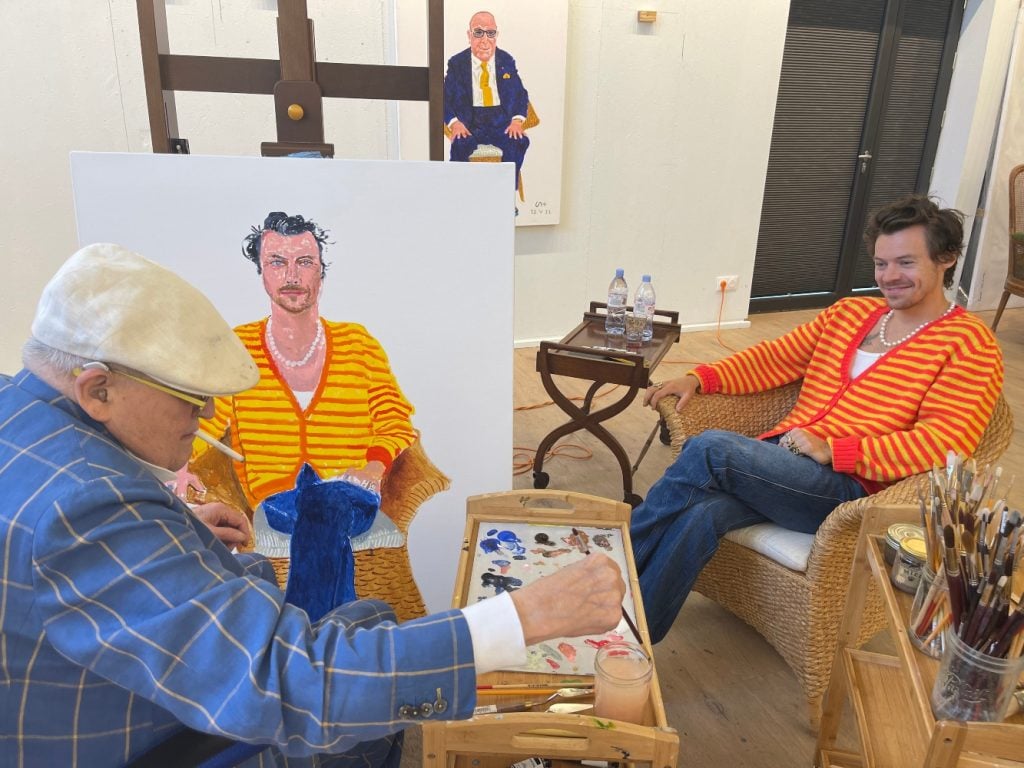
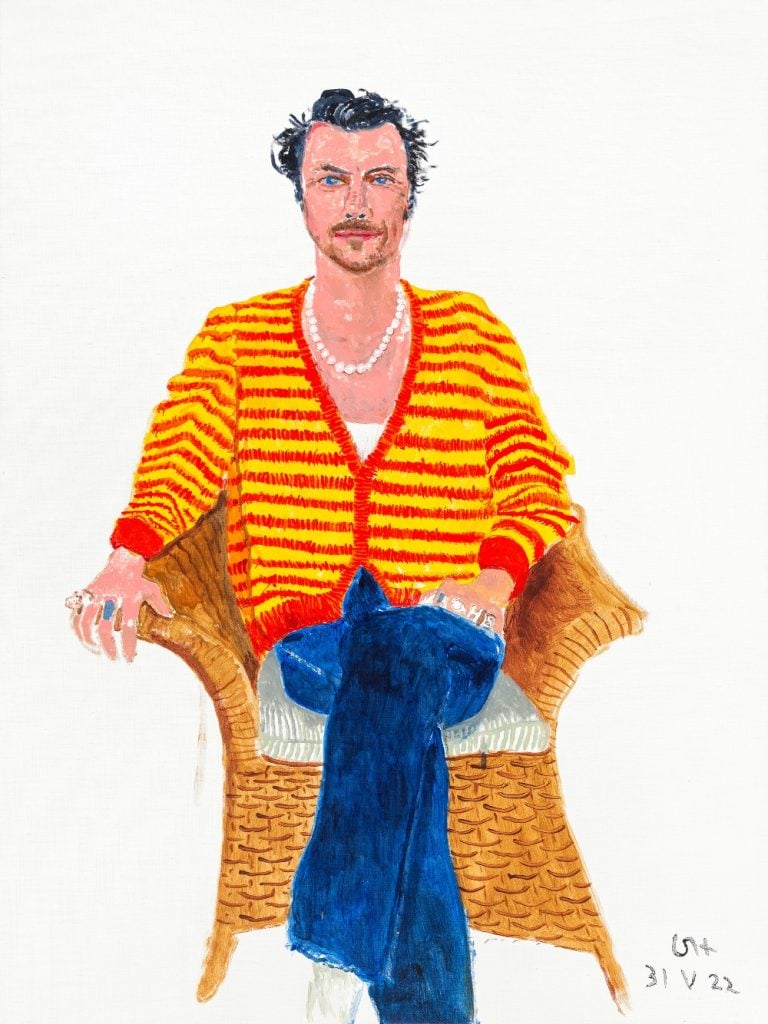
David Hockney Has Painted a Striking Portrait of Harry Styles, Set to Be Unveiled at the U.K.’s National Portrait Gallery
The painter has captured the pop star wearing a striped cardigan and a string of pearls.
A portrait of Harry Styles by the artist David Hockney has been unveiled ahead of a major exhibition of new paintings by the British artist opening at the National Portrait Gallery in London this fall.
The pop star is recognizably himself in the work, with his hair swept back, donning a red-and-yellow striped cardigan and a string of pearls around his neck. The portrait was started in May 2022, when Styles visited David Hockney at his studio in Normandy, France.
“David Hockney has been reinventing the way we look at the world for decades,” Styles told Vogue. “It was a complete privilege to be painted by him.”
Styles’s likeness of is one of more than 33 new works that were completed between 2021 and 2022, and will appear in the upcoming Hockney exhibition, which opens on November 2. Titled “David Hockney: Drawing from Life,” the show is an updated version of an earlier presentation of portraits by Hockney that opened at the National Portrait Gallery just weeks before lockdown in 2020. This show included drawings in a range of media, from pencil and ink to watercolor and the iPad, which Hockney famously pioneered asa new toolfor makingart.
Since then, the National Portrait Gallery has undergone a major refurbishment and rehang, and the moment has finally arrived to give David Hockney his due. Unlike the 20-day run of the ill-fated original show, the restaged, expanded show will remain open until January 21, 2024. Tickets went on sale today.
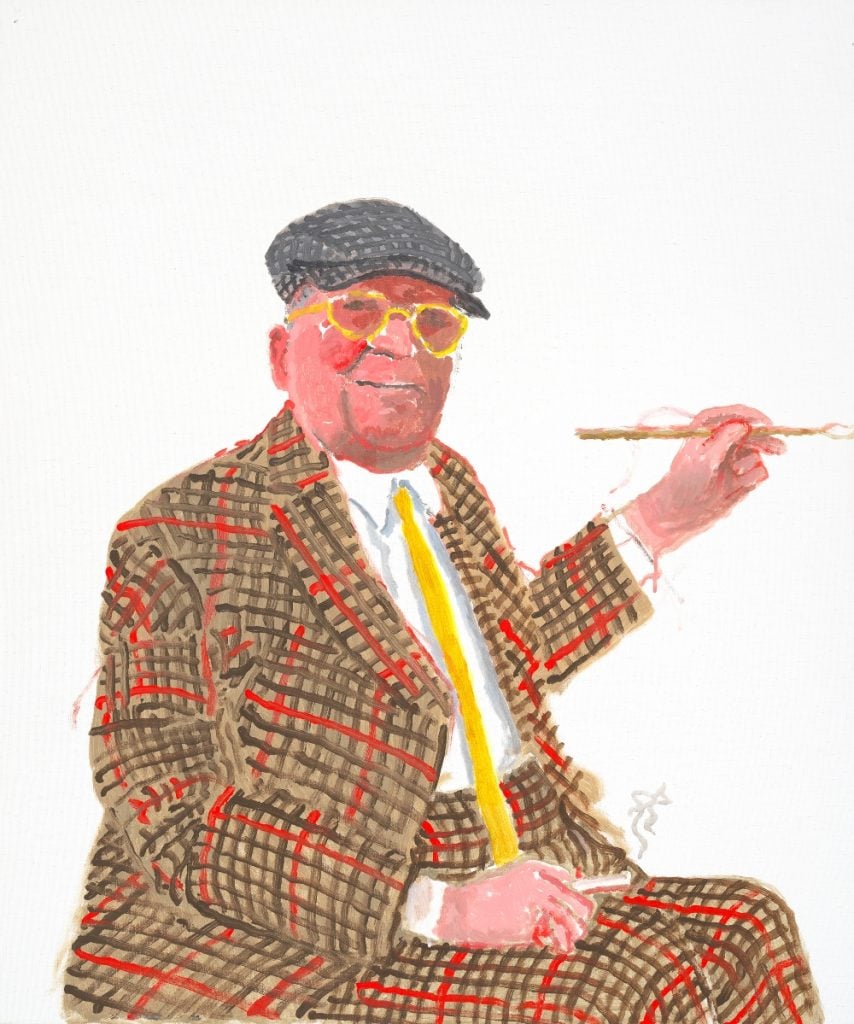
With the latest additions from 2021 and 2022, the bumper exhibition now boasts around 160 works, both new and old. Visitors attracted by the star appeal of Styles will also be moved by Hockney’s intimate portrayals of friends, like the textile designer Celia Birtwell, family members, including the artist’s mother and his partner Jean-Pierre Gonçalves de Lima, and a new self-portrait of Hockney himself in a flat cap and tweed suit.
Other highlights include pencil drawings made in Paris in the early 1970s, a selection of self-portraits from the 1980s, and My Parents and Myself, a 1975 group portrait that Hockney abandoned, greatly upsetting his parents. He later produced another version, My Parents (1977), which belongs to the Tate, but the lesser known, rejected work remained in hiding until it was debuted to the public for the first time during the exhibition’s original 2020 run.
Once upon a time there was a CES. Those were the days my friend, we thought they would never end. We would sing and dance, forever and a day. We laughed away the hours, thinking of all the great things we would do. In a glass this morning I saw a reflection. Was that old broad really me.
Adam Lambert – Performing “Believe” by Cher – 41st Annual Kennedy Center…
Adam Lambert, an American Idol alum and current Queen frontman, performed Cher’s iconic 1998 hit “Believe” at the 41st Annual Kennedy Center Honors in 2019, leaving the legendary pop diva in tears. The annual awards ceremony that took place on December 26, 2018, was broadcast from the Kennedy Center Opera House in Washington, D.C. USA. The ceremony honours individuals for their lifetime artistic achievement. Adam Lambert was performing at the ceremony in tribute to Cher, who was one of the honourees.
Lambert’s version of “Believe” was heartfelt and ballad-like, a stark contrast to the upbeat and electric original. The camera panned to a visibly moved Cher wiping away tears as Lambert sang. Three weeks later, Cher was still moved by the performance, writing on Twitter that it was “BEYOND COMPREHENSION.”
🌺🌺🌺🌺🌺🌺🌺🌺🌺🌺🌺🌺🌺🌺🌺🌺🌺🌺
You don’t get to see Danielle Steele very often. Watch Danielle Steel on Good Morning America! She just sold a billion books.
A Letter from Danielle Steel View in browser Did you see Danielle Steel on Good Morning America celebrating a billion copies sold?
Richard Ekstract At 92 Is In Hospice In Palm Beach
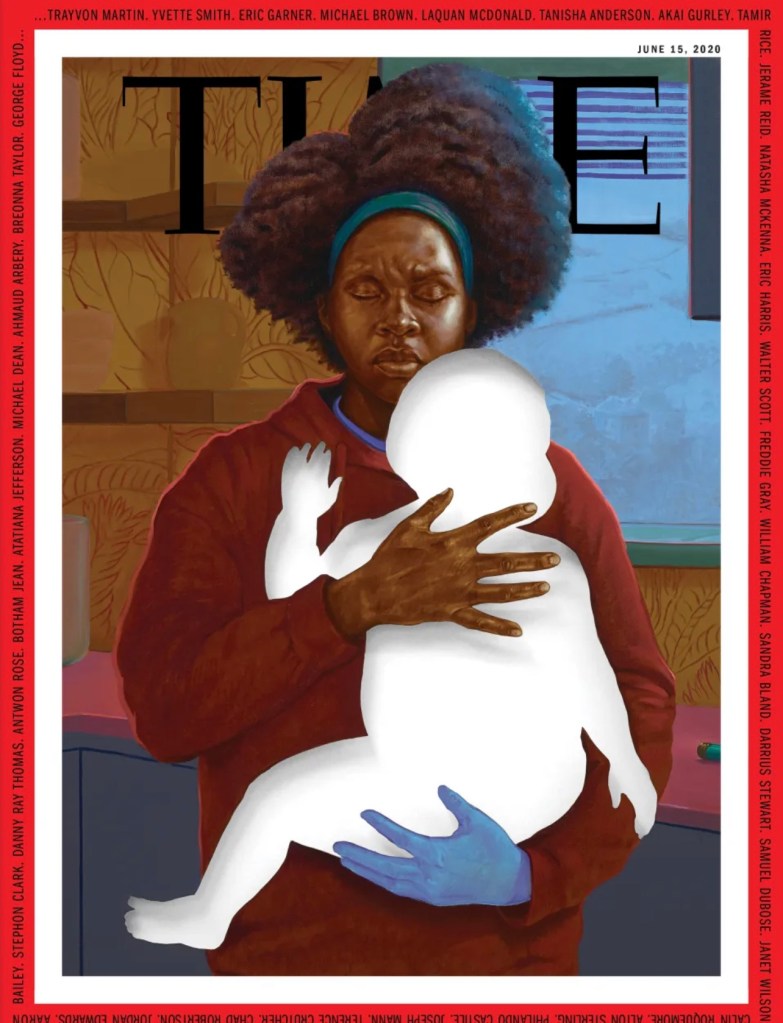
It is estimated that Richard and Eileen Ekstract must have collected 500 (possibly more) paintings/sculptures over the years. If you worked in one of Richard’s offices you were surrounded by art. I recently asked him who were his favorite artists. While I am sure there were others he said, Titus Kaphar, Allison Zuckerman, Will Ryman, and Patrica Tobacco Forrester.
I Cannot Sell You This Painting.’ Artist Titus Kaphar on his George Floyd TIME Cover.
🌺🌺🌺🌺🌺🌺🌺🌺🌺🌺🌺🌺🌺🌺🌺🌺🌺🌺
The Telethon ’76: The Dean Martin & Jerry Lewis Reunion—-Get Your Hanky
Some content on this page was disabled on March 7, 2024 as a result of a DMCA takedown notice from Dow Jones & Company, Inc. You can learn more about the DMCA here:






















































 DigiDame