Heads Up! Get Used To It, Metaverse Here We Come.

I predict this will be for family get togethers as well as business. You can fight it all you want. It’s going to happen with or without you.

You will be going to office meetings in the metaverse within three years. Or at least that’s what Bill Gates thinks.

Now more than ever, business agility is key to success

FROM WORKDAY

The billionaire Microsoft founder made a major metaverse prediction in his famous “Year in Review,” an annual collection of reflections and guesses about what will happen in the year to come. 

“Within the next two or three years, I predict most virtual meetings will move from 2D camera image grids—which I call the Hollywood Squares model, although I know that probably dates me—to the metaverse, a 3D space with digital avatars,” Gates wrote. 

Gates believes that instead of physically meeting in an office space, we will soon be using avatars to interact in a similar way, ideally using motion capture and spatial audio technology to make the metaverse feel like real life. It should be noted that Microsoft announced last month that it was launching Mesh, a platform for virtual teams to collaborate in a 3D space using customized avatars.null

The metaverse is part of the internet and made up of multiple platforms dedicated to virtual world-building, which major companies have already begun to invest in. Meta (formerly known as Facebook) opened its metaverse platform Horizon Worlds to the public on Thursday, CNBC reported. 

Gates wrote in his predictions that there have been some astounding recent developments when it comes to our digital activity, all spurred on by the pandemic, and there will be more to come. 

“People shouldn’t assume that the quality of the software that lets you have virtual experiences will stay the same. The acceleration of innovation is just starting,” he wrote.

One of the most exciting technological innovations already in development, according to Gates, is enhanced audio to supplement 3D virtual communication.

“One of the biggest improvements over what we use now is the use of spatial audio, where speech sounds like it’s actually coming from the direction of the person talking. You don’t realize how unusual it is to have meeting audio only coming from your computer’s speaker until you try something else,” he wrote.

Goggles and motion capture gloves are still necessary for advanced 3D interaction. 

Gates’ predictions come in the wake of both Google and Meta pushing back their 2022 return-to-work dates because of the unpredictable Omicron variant. Spotifyannounced a permanent “work from anywhere” program last February, allowing employees flexibility to choose where and how they work. And companies like Upwork and Pinterest are now completely “remote first,” permanently closing down one office each.  

“Although most companies will likely opt for the hybrid approach, there’s a good deal of flexibility around what exactly that approach might look like,” Gates wrote.

Gates added that we’re at the very beginning of what is possible in a virtual working world, because the pandemic challenged how we define what is “essential” to a working space.

“The pandemic has revolutionized how companies think about productivity and presence in the workplace,” he noted.

Did You Hear The News?

In addition to everything else I’m involved in, now I am the Miami editor of The Three Tomatoes, a newsletter for women who are not kids anymore. Start reading January 28th. Please sign up here. http://thethreetomatoes.com/signup

Historical Photos Shared By Franklin Karp!

1. The ‘Iter Avto’, the 1930’s version of a GPS. Developed by Touring Club Italiano, this device was more like a “map guidance tool” and came with a set of paper maps. It was tethered to the car’s speedometer that kept the scrolling of the map in proportion to the speed of the car.


2. A ‘Tasmanian tiger’ in captivity circa 1930. Also known as the thylacine, this carnivorous marsupial was native to the Australian mainland and went extinct in 1936.


3. Airline reservations before computers, 1945


4. The 1950s ‘3-in-1 Kitchen Combination.’ It came with a stove, a sink, and a fridge – all in one!


5. American photographer James Ricalton posing with two extra tall men, fondly remembered as the ‘Giants of Kashmir,’ in 1903. 

The photograph was taken in Delhi during ‘The Durbar,’ a celebration of the British monarch Edward VII’s (the great-grandfather of the current British monarch, Queen Elizabeth II) succession as the Emperor of India.


6. Television shopping in 1974


7. A gas station on Brovarsky Prospect in Kyiv, Ukraine, 1979


8. A woman standing in the doorway of an RV Camper at an exhibition in London, 1927. It was also called the “Road Yacht.”


9. Draft beer being served during a Lufthansa flight in the 1960s


10. The Esso Hibernia tanker under construction, Wallsend, UK, 1970


11. Niagara Falls without water, 1969


12. An Empire State builder hanging on a crane above New York City, 1930


13. An elementary piano class in progress in 1947 (photo by Yale Joel)


14. Military bomber planes fly past Mount Vesuvius in Italy as lava and ash spurts from the top of the volcano. 

The devastating eruption ravaged the village of San Sebastiano and San Giorg in March 1944 and killed 57 people. Meanwhile, the Allied forces were battling for supremacy in the skies.


15. The original Moulin Rouge, Paris, 1914


16. A Phillips fridge from 1956 with a built-in radio!


17. A horse being rescued from a canal that it fell in – Amsterdam, 1929


18. Control Room of the German UB-11 Submarine (First World War)


19. Swedish Warship ‘Vasa’ being recovered from the seafloor in Stockholm, Sweden, on the 24th of April, 1961. It stayed underwater for 333 years and was still astonishingly well-preserved.


20. A young woman of the Ouled Nail tribe, Algeria, circa 1905 (photo by Lehnert & Landrock)


21. Philadelphia Electric Co. street light maintenance vehicle, 1910


22. A tree house of the Koiari people, east of Port Moresby, Papua New Guinea, 1886


23. A woman using a vacuum cleaner in 1906


24. The 1958 ‘Sir Vival.’ Designed by Walter C. Jerome of Worcester, this unique two-section vehicle was made to protect its driver and three passengers from death or injury on the highway. 

The designer believed that, in case of a collision, the engine compartment would take most of the brunt and leave the passengers safe. Its standout features included a two-piece engine and cab, along with a driver turret. Unfortunately, only one Sir Vival was ever made, and it remains in the care of Bellingham Auto Sales in Bellingham, Massachusetts, even today!


25. A Native American chief at the Canadian Rockies, 1938


Shabbat Shalom

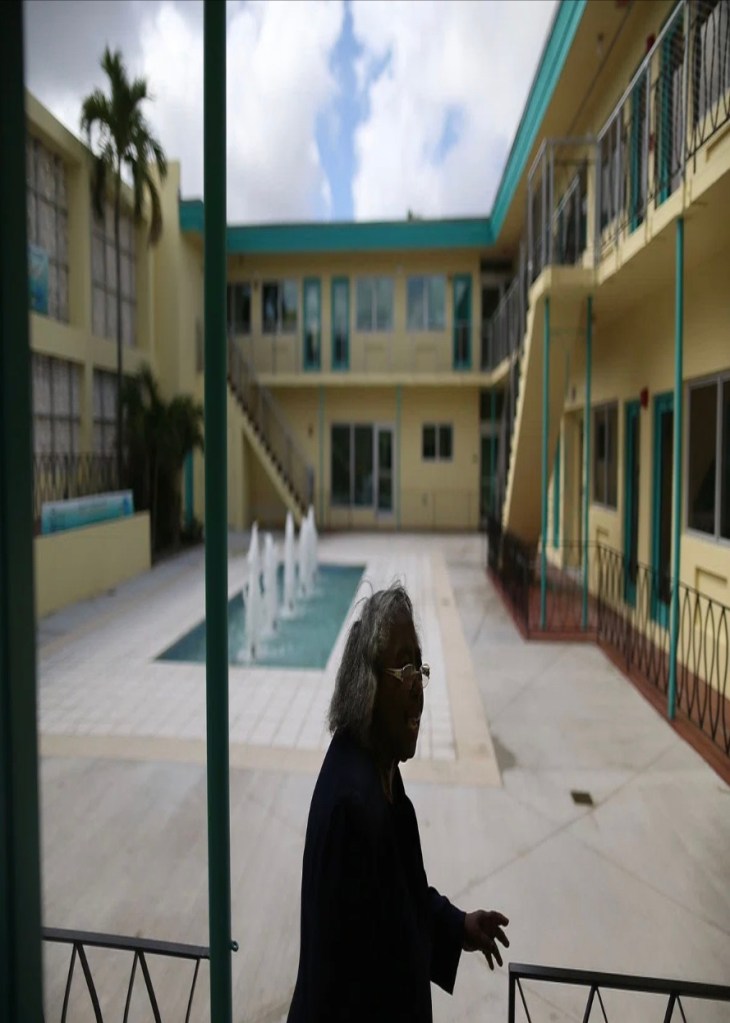
I am thrilled to be helping Rabbi Marc Philippe and his wife Valerie Beaudoin de Roca build a new cultural and spiritual center in Miami Beach. I am one of the folks who will helping them raise funds in this endeavor. I am taking over for what my good, married friends, Kent Karosen and Brian Hauserman, started a few years ago before they tragically died so young.


Both asked me to get involved because they felt Rabbi Marc Philippe represented the future of Judaism. He is a progressive thinker who feels people from all walks of life should have newer, more forward-thinking options to learn, play, grow, transform and experiment, while discovering and exploring the wisdom and spirituality of Judaism.


The name of the center is called the “Kodesh House.” That means “Holy.”


Rabbi Marc Philippe likes to describe “Kodesh House” as “Cage Free Judaism.”  You will no longer be a spectator in an auditorium during your religious, spiritual and culture pursuit. You will be free to roam in creative classes, prayer sessions and musical meditations. You will enjoy live music, meet people, artists, writers, thinkers, and kabbalists. Events and services will happen in a variety of locations. 


This is so exciting. Please join me in being a charter member. To launch this project, Kodesh House is looking for 36 people to commit to an annual donation of $3,600 and 5 people to commit to an annual donation of $20,000. 


By helping fund this organization, you help increase Light in this world.  As a founding partner, your name will be promoted, along with the others, as a great supporter of this new opportunity. Thank you for being a partner of Kodesh House.


Rabbi Marc Philippe and his wife Valerie have over 20 years of experience hosting, organizing, and creating programs for synagogues.  It is their life mission to serve the community for the greater good. 


Email me with any questions you may have atloisw@hwhpr.com.


Or contribute any amount via the website –kodeshhouse.org.


I hope you will join me in making this happen. You don’t have to live in Miami to participate. “Kodesh House” will also be online.


Thank you. I will be looking forward to seeing your name to support us. Any donation will be greatly appreciated.


Lois Whitman-Hess

loisw@hwhpr.com


Not To Be Missed

Florida Keys’ Old Seven Mile Bridge Reopens To Walkers, Runners, Bicyclists

We are putting this on our agenda as soon as possible. This is what you call an entirely new experience.

By CBSMiami.com Team January 12, 2022

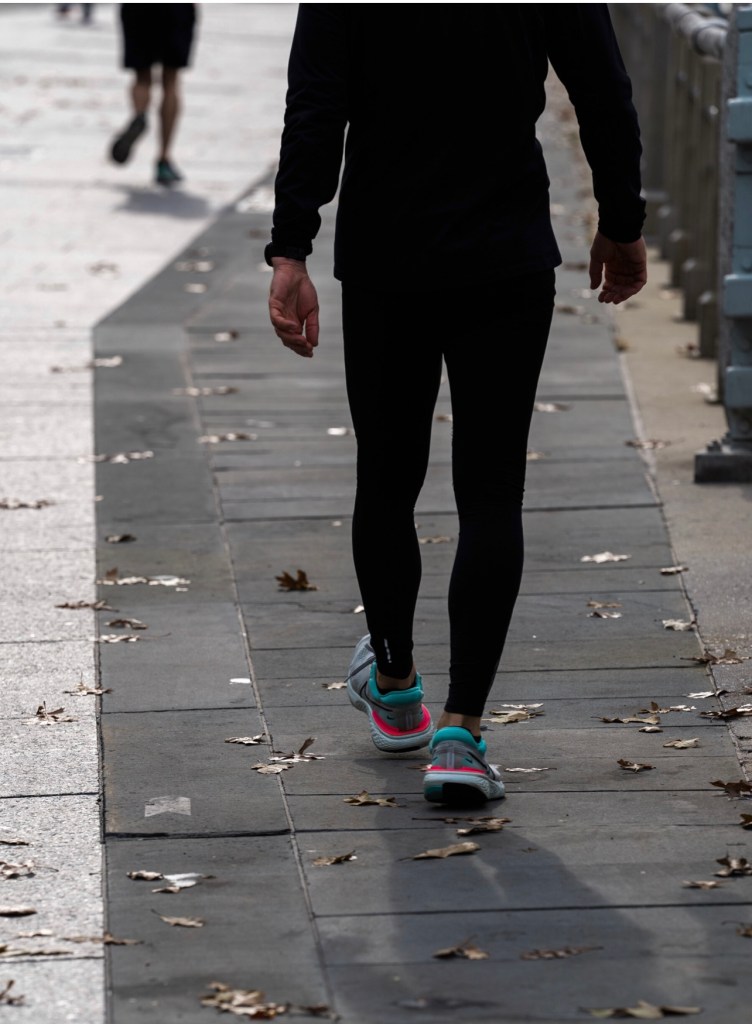
MARATHON (CBSMiami/FKNB) – A section of the historic Old Seven Mile Bridge, paralleling the Florida Keys Overseas Highway, reopened Wednesday in the Middle Keys so residents and visitors can once again use it for cycling, walking, running, rollerblading, watching sunrises and sunsets and to access Pigeon Key.

Visitors and residents bicycle and walk on the Florida Keys’ Old Seven Mile Bridge Wednesday, Jan. 12, 2022, in Marathon, Fla. (Andy Newman/Florida Keys News Bureau)

The project was part of a 30-year agreement with a budget of $77 million ratified between the Keys’ Monroe County, Marathon municipal officials and the Florida Department of Transportation to fund restoration along with a maintenance program to ensure the landmark’s preservation.null

The Old Seven Mile Bridge reopened Wednesday, Jan. 12, 2022, to pedestrians, bicyclists, anglers and visitors to Pigeon Key. The old bridge originally was part of Henry Flagler’s Florida Keys Over-Sea Railroad that was completed in 1912. (Andy Newman/Florida Keys News Bureau)

Nicknamed “Old Seven,” the bridge was built as part of railroad magnate Henry Flagler’s Florida Keys Over-Sea Railroad that was completed in January 1912, connecting the Keys with each other and mainland Florida for the first time. The 2.2-mile span is the gateway to historic Pigeon Key, a tiny island nestled beneath the old bridge that was once home to about 400 workers constructing the railroad.

“The Old Seven Mile Bridge is very important to the Keys, the history of the Keys, and a viaduct to get to Pigeon Key, which in itself is beautiful, but the bridge itself is over 100 years old,” said Roman Gastesi, the Monroe County administrator. “It’s something that we’ve been able to get together and collaborate with the city of Marathon, with the state of Florida, and get it rehabbed like it is, and it’s been a great project.”

Restoration work included structural steel and spalling and bridge joint system repairs; new decking, pedestrian and bicycle handrails; and other physical enhancements to make the 2.2-mile span safer for recreational use.

“What made the project challenging was that it is a historic bridge, and that we had to restore the bridge to the same aesthetic fabric as the original,” said project manager Tony Sabbag, a Florida Department of Transportation contractor.

In 1938, the original railroad bridge was converted to carry automobiles. In 1982, the new Seven Mile Bridge (actually 6.79 miles long and one of the world’s longest segmental bridges) debuted alongside the historic one and the old bridge’s steel swing span, which had facilitated marine traffic, was removed.

The retired “Old Seven” evolved primarily into a recreation area that proved extremely popular.

“Nearly five years ago now, when they did close down the bridge, that year prior nearly a quarter of a million people came out to use this bridge,” said Kelly McKinnon, executive director of the Pigeon Key Foundation. “It really is more of a linear park, where people can come out and recreate and go biking, walking, cycling, running, take a look at all the marine resources whether it be spotting turtles, sharks, rays, tarpon … it’s just an unbelievable experience for individuals and families to come out and take advantage of.”

Today Pigeon Key serves as a historic and educational center, with a railroad museum and original structures that date back to the early 1900s Flagler era, when the bridge leading out to it was being built.

“As you come onto Pigeon Key, you really do step back in time,” McKinnon said. “It’s fantastic to walk around, see these original structures, be on the same ground that these men 100-plus years ago were on.”

He added that a new 60-passenger tram to take visitors back and forth to Pigeon Key is expected to be operational this spring.

Although vehicular traffic on the restored bridge is prohibited, an adjacent parking lot has been modified to accommodate up to 35 parked vehicles.

Statistics and Memory

Thank you cousin Harvey Oshinsky for putting the world in a proper prospective.

The population of Earth is around 7.8 billion. For most people, that is a large figure. However, if you condensed 7.8 billion into 100 persons, the resulting analysis is much easier to comprehend.
Out of 100:11 are in Europe
5 are in North America
9 are in South America
15 are in Africa
60 are in Asia

49 live in the countryside
51 live in cities

75 have mobile phones
25 do not.

30 have internet access
70 do not have the availability to go online

7 received university education
93 did not attend college.

83 can read
17 are illiterate.

33 are Christians
22 are Muslims
14 are Hindus
7 are Buddhists
12 are other religions
12 have no religious beliefs.

26 live less than 14 years
66 died between 15 – 64 years of age
8 are over 65 years old.

So, if you have your own home,
Eat full meals and drink clean water,
Have a mobile phone,
Can surf the internet, and
have gone to college,
You are in the minuscule, privileged lot of less than 7%.

Amongst 100 persons in the world, only 8 live or exceed the age of 65.

If you are over 65 years old, be content and grateful. Cherish life, grasp the moment.

If you did not leave this world before the age of 64 like the 92 persons who have gone before you, you are already the blessed amongst mankind.

Take good care of your own health. Cherish every remaining moment.

If you think you are suffering memory loss (Anosognosia), don’t worry.

In the following analysis the French Professor Bruno Dubois, Director of the Institute of Memory and Alzheimer’s Disease (IMMA) at La Pitié-Salpêtrière – Paris Hospitals, addresses the subject in a rather reassuring way:

“If anyone is aware of their memory problems, they do not have Alzheimer’s.” It often happens that people 60 years and older complain that they lack memory. They …1. forget the names of families.2. do not remember where they put some things.”The information is always in the brain, it is the “processor” that is lacking.”

This is “Anosognosia” or temporary forgetfulness.

Half of the people 60 and older have some symptoms that are due to age rather than disease. The most common causes are:
– forgetting the name of a person,
– going to a room in the house, and not remembering why they were going there,
– a blank memory for a movie title, or actor, an actress,
– a waste of time searching where we left our glasses or keys.After 60 years most people have such difficulty which indicates that it is not a disease, but rather a characteristic due to the passage of years.

Many people are concerned about these oversights, hence the importance of the following statements:1.”Those who are conscious of being forgetful have no serious problem of memory.”
2. “Those who suffer from a memory illness such as Alzheimer’s are not aware of what is happening.”

Professor Bruno Dubois, Director of IMMA, reassures the majority of people concerned about their oversights:

“The more we complain about memory loss, the less likely we are to suffer from memory sickness.”

Now for a little neurological test. Only use your eyes!

1- Find the C in the table below!

OOOOOOOOOOOOOOOOOOOOOOOOOOOOOOO
OOOOOOOOOOOOOOOOOOOCOOOOOOOOOOO
OOOOOOOOOOOOOOOOOOOOOOOOOOOOOOO

2- If you found the C, then find the 6 in the table below.

99999999999999999999999999999999999999999999999
99999999999999999999999999999999999999999999999
99999999999999999999999999999999999999999999999
69999999999999999999999999999999999999999999999
99999999999999999999999999999999999999999999999
99999999999999999999999999999999999999999999999


3- Now find the N in the table below. Attention, it’s a little more difficult!

MMMMMMMMMMMMMMMMMMMMMMMMMMMMNMM
MMMMMMMMMMMMMMMMMMMMMMMMMMMMMMM

If you pass these three tests without problem:
– you can cancel your annual visit to the neurologist.
– your brain is in perfect shape!
– you are far from having any hint of Alzheimer’s.

———————————————————————-

We all loved it. The acting was top notch. There has been a lot of controversy regarding the Italian accents. We didn’t care. Jared Leto is so good you don’t even know it’s him. Al Pacino hit a home run as Aldo Gucci. Lady Gaga is just a superstar in everything she does. Adam Driver and Jeremy Irons were the perfect Gucci’s. Go, no regrets. We were sitting in a 25 seat movie theater in Brickell City Center. Total luxury, no one near us.

Mr. à la mode

I recently asked my client, Mr. Moda, what his greatest challenge was being an artist today. His answer startled me. “People look at me and all they can see is an African American man who looks like trouble.” The reason I was so surprised by his answer was because that thought crossed my mind the first time I met him.


Eliot and I were meeting our friends, Ruth and Howard, for dinner at this fantastic Italian restaurant in downtown Miami, Soya e Pomodoro, when Eliot and I pulled up behind a truck with its back opened for moving goods. The street was dead quiet because most businesses were closed for the day.


Inside the truck was a very odd looking Black young guy who was talking very loudly on his cell while waving his hands in the air. There were two other guys, one White, standing outside the truck with items that were tightly wrapped for transporting. I didn’t know what was going on but it looked like a heist to me
.


I turned around to Eliot from the passenger seat to tell him not to get out of the car. By the time the words were ready to come out of my mouth, Eliot was out of the car checking to see if he parked close enough to the curb. I thought to myself, “Good luck to us. Who the hell knows what’s really going on here.” I exited the car only to hear the young man in the truck tell Eliot that the car was positioned well. I went to the front of our Jeep to get a closer look at what was being carried out of the adjacent building. It turned out to be art work. Mr. Moda was bringing a painting to Music Artist “Lil Baby” when he headlined the iTHINK Amphitheater in West Palm Beach. I still thought it was strange that they were doing this in the dark.

We all introduced ourselves to each other, and when Mr. Moda heard I was a publicist he wanted to show us his work. Eliot and I loved all of his pieces because they were so complex, so graphic and so daring. I immediately told him I would help him get some publicity for his art, some of which he said sells for six figures. I was amazed. Not many artists achieve that kind of success. He explained that many people who are making big money like to own his art because they think it makes them look cool. However, that doesn’t make himself feel better about himself. “I don’t want people to see Black when they see me. I want them to see inside my head. I have a lot to say.”


I promised I would become his self appointed Jewish mother that would help him cross racial barriers. Meanwhile, Eliot pointed out later that I was one of those people who jump to conclusions without knowing the facts. “That is what Mr. Moda complains about.” To my defense, I would have been nervous about getting out of our Jeep if they were all White young men. The older I get, the more vulnerable I feel in all kinds of situations.

Mr. Moda loved the idea of working together. I was thrilled too because I would get the chance to promote his talents, his thoughts, and his endless energy that could possibly be applauded by very wide audiences.


Mr. Moda, who grew up in Jamaica, Queens, not far from where I lived as a child, wants to devote his life to expressing his feelings on canvas, clothing, sculptures, jewelry and footwear. It’s not uncommon to find weed, pills, blood, blades, masks, and even a gun incorporated into his work. He is all about making the world see and understand what Black men have to deal with all the time.


Mr. Moda’s recent sales prove that an increasing number of people really appreciate his work. Several well known real estate developers spent over six figures for his paintings in the last year or two. They particularly zeroed in on his work because they felt he would help them attract a young crowd in the offices and residential complexes they were building.

One of his collectors said “No one walks by anything that Mr. Moda creates. You are forced to stop and stare at the art because every piece has a serious story that we all have to confront today. The more we all face the realities of a young person’s life in these times, the more we will appreciate each other.”

Happy Monday

https://www.youtube.com/watch?v=oqvqKTgYrXg

Seniors Are Buying Tiny Homes to Live Their Golden Years Off the Grid

tiny house living for senior citizens

Photo: Sausage Nonnas

Forget assisted living or RVs, more and more seniors are looking at tiny homes to spend their retirement. In fact, a survey found that 30% of tiny home residents were between 51 and 70 years old, making senior citizens a huge part of the tiny home movement. As result, more companies are specializing in small residences equipped with comforts specially designed for this unique demographic.

For instance, at age 72, Bette Presley decided to downsize her dwelling, forgoing an RV for a tiny home when she decided she wanted to be mobile, but with all the comforts of home. Her 166-square-foot cabin also allows her to live off the grid, thanks to solar panels, and was built on wheels so she can live life on the open road.

In the case of Shirley Louiselle, it was less about mobility and more about downsizing. Feeling as though she didn’t need more space, the 240-square-tiny home built by her grandson was the inspiration for his business Next Door Housing. The company incorporates senior-friendly touches, like low countertops and cupboards, and wheelchair accessible bathrooms. Other companies like MEDCottage market their homes as alternatives to assisted living. Their solutions, affectionately known as “granny pods,” even have smart systems that remind seniors to take their medication and can be purchased as RV friendly homes or simply installed on a plot of land.

Some seniors aren’t thinking of these homes as a retirement plan, but rather a smart business move. The Sausage Nonnas are three Italian grandmothers who travel in their small houses in order to cook up a storm for an event called Sausage Sundays.

tiny house living for senior citizens

Photo: Tumbleweed Houses

tiny house living for senior citizens

One Of Our Secret Weapons

Thank you Marcia Grand for emailing this WSJ article to me. As many of you know, I never studied art appreciation. Eliot knows much more than I do, yet we both found happiness in art many years ago. We just love seeing a piece of art, then finding out who created it, why it was created, and how the world views it. I am just getting used to looking at a piece of art without any explanation at all. That’s what most folks do. They look deep into the work and make their own determinations. Either way, the world of art gives me the ability to fantasize and build new beginnings

The weirdest and most interesting tech at CES 2022

From the Washington Post. Thank you SZS.

The consumer electronics trade show salutes 2022 with some of the strangest technologies we’ve seen in a while. Here are the highlights.

By Chris Velazco and Tatum Hunter

The world’s biggest consumer electronics trade show known as CES feels weird this year, with far fewer attendees gracing the Las Vegas conference halls where consumer tech companies show off their latest and greatest (almost) every January.

One thing stayed the same, though: Companies are delighting, confusing and angering us with their ideas for what the tech of the future might look like. Autonomous John Deere tractors? Check. A smart home for cats? Absolutely. Dozens of pitches about the metaverse, a place we would like to visit if we could figure out what and where it is? You bet.

As always, some of the industry’s plans are raising eyebrows. People still don’t have legal protections for the personal data they generate in normal old smartphone apps, yet consumer tech is marching forward into virtual reality.

Other ideas — like what we’d argue are the first-ever non-ridiculous augmented reality glasses — are worth feeling excited about. Artificial intelligence, faster processing and more connected objects are thrusting us into an entirely new era of technology. Join us, if you dare, for a frequently updated selection of the most interesting — and sometimes strangest — tech you can expect in the future.

Garments made for gaming — and the metaverse

The age of the metaverse is nearly upon us, according to some of the biggest names in tech. But what good is palling around with people in a sprawling, interconnected virtual space if you can’t feel the “world” around you?

That’s where the smart — and sometimes painful — garments from Owo enter the picture.

Each of the Spanish company’s skintight vests comes fitted with electrodes in 10 locations across your torso and arms, all controlled by an app running on your phone. Why electrodes? Obviously, to stimulate your muscles to simulate the sensation of falling through the air, bugs buzzing on your back and, uh, being stabbed.

CEO Jose Fuertes hopes to make his smart clothing compatible with the virtual spaces we’ll all soon be running in, but for now, support is limited to certain games. And while haptic feedback isn’t exactly a new phenomenon for gamers, Owo’s muscle stimulation approach hits differently than standard vibration motors. Take our word for it: After being shot a few times by drones in a demo VR game, we’ll never let our guard down again.

Augmented reality glasses that don’t look (that) ridiculous

If you come to CES in search of wearable displays, you’ll never leave unsatisfied. But if your goal has been to find one that doesn’t make you look at least a little silly, well — that’s a different story. A prototype developed by TCL just might fit the bill.

Unlike its earlier wearable screens, TCL’s latest face computer uses what it calls holographic waveguide technology to display an image in front of your eyes without letting anyone else see it. And because the lenses built into these glasses are almost completely transparent, we’re left with a pair of augmented reality specs you can wear all the time. Even better, they actually look like something you might want to wear.

But what’s a wearable like this actually meant to do? The software on the prototype we saw was far from finished, but it mentioned the ability to control phone calls, view photos and even display text on a virtual teleprompter.

Down the road, though, TCL hopes this headset — or some descendant of it since this one runs on a chip meant for smartwatches — will become sophisticated enough to offer turn-by-turn directions and display multiple virtual screens without shutting you off from the rest of the world. It’ll probably be years before the company cracks the code, but hey — at least it’s getting the look down.

Spacious space abodes

Some CES presenters are thinking forward to when people live in entirely connected homes. Sierra Space is thinking about when people live in giant inflatable houses on the moon.

Along with a space plane called Dream Chaser, the company is showcasing a scaled-down version of a large inflatable space home named the LIFE Habitat. LIFE arrives in space folded up inside a launch vehicle then expands to a full three stories — enough living space for four astronauts, scientists, filmmakers or even tourists, the company says.

From the sound of it, LIFE’s inhabitants will be very productive, with room to exercise on equipment, fabricate robots, grow their own produce and compact their trash into bricks to use for radiation protection. I’m getting tired just thinking about it.

A fitness tracker for your cat

At least according to companies selling biometric devices for pets, including Korean brand PurrSong, which introduced a fitness tracker for customers of the feline variety called LavvieTAG at CES this year. It’s part of a suite of connected products from the company, which bills itself as IoT (Internet of Things)-enabled “lifestyle design” for cats.

You might be tempted to scoff at owners who turn to artificial intelligence to monitor how often cats fall asleep or use the bathroom (PurrSong sells a product for that too). But not so fast: Biometric analysis can be a valuable preventive measure to help the pets we love live longer, healthier lives, says Amélie Caudron, CEO of French company Invoxia, which unveiled an AI-powered dog collar at this year’s CES.

“The pet’s place in the family is changing,” says Caudron. “It’s no longer a dog-master relationship. We think of ourselves as parents and our dogs as a member of the family.”

Furthermore, heart conditions are about as common for dogs as they are for humans, she noted. By analyzing data on heart and breath rate from a bunch of different pets, Invoxia could help owners detect and treat problems sooner, Caudron says. And all that data will be useful for veterinarians and researchers, too. (Dogs tend to not show up on time for normal clinical trials.)

A projector that works in unexpected places

Even now, in the middle of the strangest CES on record, companies have devoted big chunks of the show floor to showing off their flashiest, best TVs. But for Samsung, one of its biggest new products might actually be one of its smallest.

Weighing in at less than 2 pounds, you could tote Samsung’s new Freestyle projector from room to room without much fuss. And despite its compact size, the Freestyle can project a 1080p image as large as 100 inches on a screen, a wall, or the side of your house.

Now, small home theater projectors aren’t exactly new — what makes the Freestyle interesting is what it might be able to do down the road with the help of a few accessories. Samsung plans to release a battery add-on that should power the Freestyle away from outlets for up to two hours at a time. (You can also run the Freestyle off a more common power bank, but you may not get that kind of longevity.)

And with the help of another forthcoming adapter, you screw a Freestyle directly into a lightbulb socket. Why? We’re not exactly sure, but one of Samsung’s demos featured a Freestyle projecting the image of a sumptuous meal down onto some empty plates. That’s one way to host a dinner party, we suppose.

A robot that nibbles your fingers and warms your heart

True comfort is priceless, and for some people, that kind of peace only comes when animals or babies cutely gnaw on them. If that’s you, a tiny product from Japan just might be the best impulse buy of your life.

Amagami Ham Ham might look like a small plush cat or dog, but its robotic innards mean it can give you a light chomp when you need a little reassurance — all you need to do is put your finger in its mouth. And since there’s nothing worse than uninspiring chewing, Amagami Ham Ham relies on a set of HAMgorithms (no, seriously) to make sure its nibble patterns don’t get too repetitive.

At this point, you might be wondering why Amagami Ham Ham even exists. For creator and Yukai Engineering CEO Shunsuke Aoki, the answer is simple: It’s all about giving people moments of happiness whenever they need it. That same desire inspired the company’s last hit product, a robotic cat butt named Qoobo, and that’s exactly the kind of mission we can get behind.

Aoki hopes to usher Amagami Ham Ham through a crowdfunding campaign in a few months, and — assuming that’s successful — he aims to sell the robot in Japan and abroad for the equivalent of about $30.

The biggest tech trends to watch for in 2022

A robot that probably upsets you

Humanoid robots are getting more lifelike, but only compared to their predecessors.

Just take the Ameca robot from Engineered Arts, a true-to-scale, metal-and-plastic robot person who blinks, shrugs and grimaces just like you and me — if you and me were stilted human facsimiles.

Companies that buy an Ameca model can station it at events and tradeshows to greet attendees and “strike an instant rapport with anybody,” its creator’s website claims. Video from Engineered Arts shows Ameca performing hand and facial gestures that are indeed natural looking, though markedly slow. The company takes care to describe her as “nonthreatening,” though robot threat level is in the eye of the beholder.

And Engineered Arts isn’t the only company peddling human look-alikes at CES. DeepBrain AI is showcasing its new software called AI Studios: Just type in a video script and the program will instantly generate a deepfake human to perform that script. YouTubers, corporate trainers and news anchors beware (maybe).

A foldable screen that doubles as a laptop

Gadgets with foldable screens are inching toward the mainstream, but there’s one thing the tech industry hasn’t figured out yet: how to make a good laptop out of a screen that folds in half. Now, Taiwanese PC maker ASUS has taken up the challenge.

Its new Zenbook 17 Fold is a whopper of a tablet — it’s slightly heavier than Apple’s new 14-inch MacBook Pro — and it packs a 17-inch touch screen just like its name suggests. And while you could certainly prop up the Zenbook and binge YouTube videos, you may sometimes be better off folding the whole thing in half and plopping a combination Bluetooth keyboard/trackpad on the bottom. Voilà: your tablet just became a full-blown laptop, albeit one with a 12.5-inch screen.

But do we need a foldable screen on our computers? ASUS rival Lenovo tried a similar approach with the ThinkPad X1 Fold PC it released more than a year ago, and reviewers almost universally panned the thing. Hopefully, ASUS’s attempt at a laptop with a foldable screen is at least a little more polished.

An air purifier/ear bud mash-up

Wearable tech is almost inescapable at CES, and that’s especially true when you wander into the start-up wonderland that is Eureka Hall. And that’s where we found Ible, a Taiwanese company that created a very specific kind of wearable.

The Airvida E1 is, at its core, a negative ion air purifier that goes around your neck. (This isn’t all that new; the company has released a handful of similar devices over the years.) But because this is 2022, and we always need a quick way to avoid interacting with other people, this new model has a set of noise canceling Bluetooth ear buds built-in. 

Like similar air purifiers, the Airvida is meant to help you breathe more easily when pollen or smoke start hanging in the air. The company claims that tests by labs in Taiwan and Japan show that Airvida could be effective in removing covid particles from the air.

As with many claims that come out of CES, it’s probably a good idea to take that one with a grain of salt, and we’d argue you’re better off following CDC recommendations for vaccination and mask use. If nothing else, though, this thing is proof that people are preparing to settle into pandemic life for the long haul.

Ending Our Two Week Omicron Isolation

Eliot and I are going to resume normal activities today. We have isolated ourselves in our condo for two weeks after contracting the virus on Christmas Eve. We both had mild cases but it knocked us out a bit. This blog post is dedicated to Miley Cyrus and Pete Davidson who entertained us on New Year’s Eve. There was something so natural, yet so talented, about their performance on NBC, that it made us feel much better when the clock struck 12.

Thank you kids. You made us feel young again. The following is their appearance on Jimmy Fallon before their New Year’s Eve event just blocks away from us in Miami.

———————————————————————-

——————————————————————

Eliot Hess captures the big wave outside our windows
We plan to see our friend, singer Nicole Henry, this Saturday at the Colony Theater, Lincoln Road. Ron Abel, Mr. Showbiz, will be flying in from New York, to join us.