An Update On Self-Driving Cars

The other night when he appeared on stage at the 92nd St.Y, along with Walt Mossberg and Kara Swisher of the Wall Street Journal’s AllThingsDigital, Eric Schmidt, Executive Chairman of Google, hinted that his company’s self-driving cars will be on the road earlier than originally thought. It appears that a number of government officials in California, Nevada, Florida, Hawaii, New Jersey, Oklahoma, and the District of Columbia, all want to lead the way to make these cars legal. Some states already have legal rights to test them. Schmidt said Google “is very interested in leading the way most people will get around.”

This is a real mindblower.

Google began testing the self-driving cars in 2009 along side engineer Sebastian Thrun, who had previously worked on the technology with the Stanford University faculty. Google co-founders Larry Page and Sergey Brin are cheerleading Thrun to perfect the technology. Yes, the cars drive themselves with the aid of lasers, cameras, and other gear. Schmidt revealed that Google’s autonomous cars have already racked up more than 100,000 miles on the road.

It is very possible that five years from now, when many of us will need them most, we will be able to take advantage of this wondrous invention. Just imagine the implications. We will be more independent than ever before, going where we want to go, when we want to go there. Schmidt said that autonomous vehicles are safer than human drivers. “This technology could prevent accidents, help disabled people get around, and reduce traffic congestion and gas consumption.”

General Motors and Toyota are working closely with Google to hasten the development of the technology.

Swisher added that she took a test run and it was a totally weird sensation. “I found myself breaking to stop and wanting to put my hands on the steering wheel. It is going to take some to get used to this.” Schmidt summed up this advancement in technology saying that “humans driving cars was a big mistake. This is the way it was meant to be.”

Swisher must feel Google is getting closer to introducing the self-driving cars to the marketplace because soon after the 92nd St.Y discussion, the Wall Street Journal released an update on it. My comment is, “This may be a good time to get older.”

I Made Up My Mind

Still In Rumor Stage

I am definitely going to buy the new iPad Mini, if and when it’s ever introduced. No one knows for sure if there is such a thing, but tech insiders say the unit will be introduced in the next week or two.  I didn’t rush out to buy the iPhone 5 because I’ve been very satisfied with my iPhone 4S. Now that I’m learning more about it, I will probably buy one when my current contract expires.

I don’t feel the same way about the opportunity to buy an iPad Mini. Even though I am clueless as to the weight and dimensions of the unit, it has to be smaller than the current iPad, which I find a tad too heavy for me. While the advantages outweigh the Kindle and the Nook, I like their size better for reading. I find my iPad just too big.

I am not alone when I tell you that I often read newspapers, magazines and even books on my iPhone. Yes, my eyes are now in trouble for reading such small print, but there is nothing like being absorbed in a topic with a lightweight device that you don’t even notice.  I find that I can spend hours reading all kinds of content on my iPhone, because it is just so convenient.  This is also the sentiment of others who have to do a lot of reading for work.  The weight of the unit becomes the most compelling factor.

I have many friends who have offered me suggestions about how to position myself when reading with the iPad.  I usually like to sit on my couch or lay back in bed. They have showed me just the right position to make it work. I have tried their suggestions and guess what?  I can’t stay in one position for that long. I need the flexibility to move around, and I want a unit that is bigger than an iPhone and smaller than the current iPad.

Here’s the catch. I want a smaller iPad but I want all of the intelligence of the current one too. Otherwise, I would have bought a Kindle or Nook. I am looking for the ultimate in the iPad Mini.  I don’t want to compromise, so it’s going to be very interesting to see what is being offered.

As I write this post, I find it absolutely amazing that I can actually find fault with a unit that has been the ultimate in innovation. If you would have told me years ago that a  tablet with so many capabilities would ever exist, I would have been in disbelief. Now I want to reinvent it. Call me jaded!


Eric Schmidt Of Google Meets Kara Swisher & Walt Mossberg of WSJ (AllThingsD) At 92nd St Y

Walt Mossberg, Kara Swisher and Eric Schmidt.

I was waiting for this night for a long time. Three of the most famous names in the digital world were on stage at the 92nd St Y in NYC, one of the most respected institutions for lectures, talks, and entertainment in the United States.

Eric Schmidt is Executive Chairman of Google.
Walt Mossberg is the author and creator of the weekly Personal Technology column in The Wall Street Journal.
Kara Swisher started covering digital issues for The Wall Street Journal’s San Francisco bureau in 1997.

Most of the presentation focused on what Schmidt calls “The Gang Of Four,” Google, Amazon, Apple and Facebook. He said the future really will be about what Facebook does the best, gather personal information from users and their contacts. This will be a valuable growth area and each company will integrate this into their own formats.

Schmidt also pointed out that big name, national newspapers will survive but local ones will not. As strange as this sounds he predicts that celebrities Iike Jay-Z will be the big brands in publishing. “It is very obvious that Americans are celebrity crazed and follow their every word. A newspaper named after a major star will draw more attention than what local newspapers call themselves today.”

Another Schmidt prediction is that mobility will be the most important factor in technology growth. “Software will be designed for mobile devices and then for the web. Today it is the other way around. We have discovered that most users can get along with just using their smartphones. They don’t need anything else.”

Schmidt said six billion people use a phone. One billion use a smartphone. He wants Google to always be the “Center Of Information.”

Jerry Seinfeld’s Take On Twitter And Facebook

The following appeared in People Magazine’s app for smartphones. I had to cut and paste the copy for you to read.

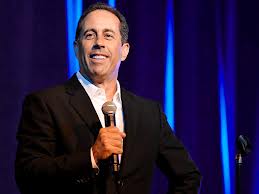
Jerry Seinfeld’s long-awaited return to stand-up saw him tackle Twitter and Facebook at the same time Mark Zuckerberg’s site was boasting it has 1 billion users. The former NBC star told the Beacon Theater crowd in New York City recently: “Facebook is one of the great trash receptacles of human time. Of course when you are young and dumb you think people are great . . . When you are 50, your first thought is the fewer people you have anything to do with, the better.

“Then there’s lawyers and Mace and cease-and-desist letters.” On the topic of Twitter, the comic espoused, “Why say a lot of things to everybody when I can say absolutely nothing to anybody? . . . Twitter of course was based on a bird, the logo is a bird and the bird was first to tweet. Why should they be the only ones dropping a series of small daily turds on the world — we can do it, too! A turd in 140 characters or less.”

Asked during an audience Q&A about his favorite “Seinfeld” episodes, he admitted, “Like you, I can’t really at this point remember which stories go with which episodes. But . . . I remember when George [Jason Alexander] accidentally poisoned his fiancée, when he hit the golf ball into the blow hole of the whale and the time I got to steal the rye bread from the old lady.”

We’re told Jerry didn’t have an after-party following the show, but instead went home six blocks away to be with his family.

Life Is Not Fair

From the NY Times–Carter starts his work day with yogurt, fruit and cereal.

All men are not created equal when it comes to getting a story in the New York Times. A perfect example is the Internet story that appeared in the Monday, October 8th, edition about Art.sy, an online start up that just went live this week. Art.sy is a free repository of fine art images and an art appreciation guide. The reason why this company was profiled, is because of its pedigree. The investors read like a Who’s Who in the world of art, Internet, and finance.

The father of the 25-year old founder, Carter Cleveland, is an art writer and his mother is a financier. Both were cleverly not identified. Investors are gallerist Larry Gagosian, art-world figure Dasha Zhukova, Rupert Murdoch’s wife Wendi, Eric Schmidt of Google, and Jack Dorsey of Twitter. John Elderfield, the former chief curator of painting and sculpture at the Museum of Modern Art, is an adviser.

Now you can accuse me of being cynical and jealous, but I’ve been around long enough to know that a three-day old company does not get profiled in the NY Times, much less a sizeable story. This was a clear case of connections, connections, connections. I have been repeatedly told by the Times that they only write about tech companies that attract record breaking crowds or have proven to be financially successful.

Which category does this fit into?

What is so glaring is the caption below Carter Cleveland’s picture. “Carter starts his work day with yogurt, fruit and cereal.” Who wrote this story, his fairy godmother? In all honesty, I love art and I think a company like this is something I would frequent. However, I must say there have been other companies like it and similar ones still exist. Anyone who has been in the business as long as I have knows that the chances for a company like Art.sy to make it, is going to take a lot of money, more than any of these deep pockets will be willing to part with.

The worse thing that mom and dad could have done for little Carter was helping him get this story planted. He is now going to believe his own PR and will not be able to tough it out against the street kids of the Internet who are prepared to sweat.

Still, I wish Art.sy the best of luck. I truly do.

.

I Can’t, I Won’t, I Refuse

Every time I try to convert someone our age to a smartphone from their ordinary cell, I get a litany of reasons why they can’t type on a keyboard that doesn’t have three dimensional keys. I get startled by their remarks, because quite frankly, I can’t believe there are sophisticated people out there who still use traditional cells. Sort of like meeting a very sophisticated CEO who calls his mother, “Mommy”. Whoa! What the heck is going on here?

The same thing happens with a tablet or even an e-book. People will make all kinds of excuses why they can’t operate these units. I don’t know if they are afraid or just want to annoy me. I find it frustrating that I am willing to help them, or get someone else to help them, and they still put up a wall.

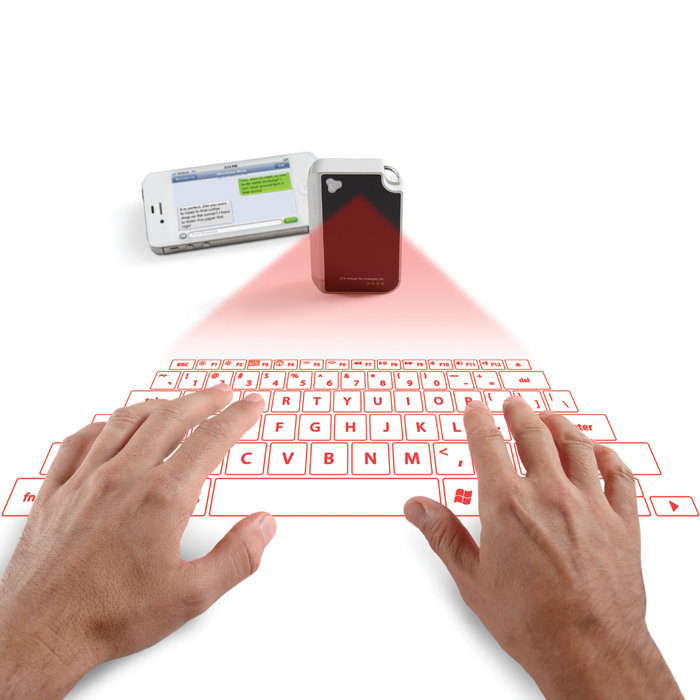
I want to convert them because I know they will love the smartphone or tablet once they get over the hurdle. Most of the time, they start teaching me things after a few months of using these units themselves. I think I have a solution. I am buying a virtual keyboard that will get them one step closer to getting comfortabe. The laser projection keyboard, housed in a compact, keychain design, lets you type on flat surfaces. It really is awesome and a lot of fun.

When I first heard about this technology I thought it was magic. Simply put, the advanced optics track your fingers so when you type on the virtual keyboard, it is registering through a Bluetooth wireless transmitter. The keyboard works with a smartphone, tablet and even a laptop.

I can’t wait to start. Send a few neophytes my way.

Become An Investor For The Fun Of It

I get calls every week from tech start-ups asking me to either help them with a public relations program or to secure funding. I try to do my best, but lately they are coming to me fast and furious. Call it a sign of the times, but an increasing number of college graduates or working folks are leaving their careers to become entrepreneurs. I spend countless non-billable hours helping where I can. I write pro-bono press releases, distribute them to targeted press, and make calls to see if we can secure editorial placement. I also spend endless hours working on strategy and business plans.

Eliot often asks me if HWH is really a non-profit. I tell him it is a form of new business. One of these guys/gals are going to make us rich. It hasn’t happened yet, but there is always tomorrow. There are so many great ideas out there that need the support of seasoned professionals like you. I don’t care if you are a fireman, housewife, doctor, teacher, writer, salesperson or CEO, you have something the under 50 crowd needs—a lifetime of experience. Intuitively, you may have a better sense of judgment than the idea person.

Start small. Take a look at www.kickstarter.com. I talked about the company before in generalities but now I want to get specific.

“Kickstarter is a funding platform for creative projects which include films, games, music, art, design, and technology. Some projects only require a dollar to show you support them. Anyone can join in. Most of the supporters are much younger than us, but that is because they knew about Kickstarter before us. The site launched on April 28, 2009 and to date has raised over $350 million by more than 2.5 million people, funding more than 30,000 creative projects. People who fund Kickstarter projects do not get equity. The Project creators keep 100 per cent ownership of their work. The only gratification you get is identifying a good idea and giving a little bit of yourself towards it.”

Take a look at this Kickstarter project. I bet my ocean loving friends can dig this.

Autonomous sailing robots to study the oceans. Each boat can sail itself anywhere and send data back to shore. Funding ends next Friday. Each robotboat is fully autonomous, needs no fuel, and will bring to bear myriad sensors at remote points on the surface of oceans, lakes, and rivers. Think of it as a satellite for the seas. It studies the health of the world’s water.

Click on the arrow in the video. If you are getting this post via email, you may have to go to http://www.digidame.com to see the video. It is worth it. I couldn’t get the video on Kickstarter to embed here so I used Mashable’s coverage. If you want to know more about the project, go to Kickstarter.

18-To-55

One of the most embarrassing things about getting older is that the number of your age doesn’t count anymore.

The first time I got “the sting” was 10 years ago. I was sitting in a meeting with my client, his sales force, my account executives and the company’s ad agency, when they started to talk about the target audience for the new TV set they were introducing. My client stood up and announced that the new product was aimed at the 18-to-55 age bracket.

I wanted to crawl under the table. I felt like the odd-man-out. I was just 55 at the time and within a split second, a dinosaur. My body stiffened up and there was a tingly sensation running through my skin. I felt like everyone was staring at me. I was no longer a respectable member of society. Why should my staff listen to me if I was just put out to pasture? They were still in the targeted age bracket and considered citizens of substance.

I sat there for the next hour of the meeting, but didn’t hear a thing. I thought to myself; I had more money than anyone else in the room, my credit card was always available to buy, and this was the time in my life that I had the disposable income to be selfish. Yet, I was no longer part of the club. Someone else determined that old fogies were not worth their time.

The next day I called my client and told him how I felt. He didn’t know what to say other than this is what focus groups told him and of course, the marketing plan was geared towards me because I was so young at heart. Ouch, ouch, ouch! I decided that it wasn’t worth fighting with this guy, because he was just a suit hired to fill the title on his business card.

I do, however, mention this to every entrepreneur I meet in the tech business, to make them aware that this is no longer acceptable. I warn them that if they continue to treat my age group with disrespect, I was going to put a voodoo spell on them. Whether they agree or not, most of them comply.

I forgot about this issue until I went to buy a gadget that was supposedly going to teach me to play the piano. I was so excited! I always wanted to play the piano, but never had the patience nor the time to learn. iTutor Piano was going to change all that. It touts itself as the ultimate piano teaching tool for iPad, iPod and iPhone. All I had to do was connect one of them to the gadget, download the free iTutor Piano app and start playing immediately.

Wow wee, I could pretend I was Alicia Keyes or Norah Jones. If I was Norah Jones, maybe Steve Jobs would love me. Oh yeah, he is dead. That is not going to happen. Anyway, both gals are pretty spectacular so I could have a lot of fun anyway. I can carry the 25-note keyboard with me anywhere, turn on the app and play away. There is even a Piano Guy who appears on the screen demonstrating how to play while the actual keys on iTutor Piano light up, showing me where to place my hands.

I was taking out my credit card to buy iTutor from an online shopping site that once again gave me that warning that this was not a product for me, 18-55, so I stopped. Who is this scatter-brain that came up with this nonsense?

A Facebook Experience

Larry Hymes and Ben Stiller–Larry’s Facebook photo

I wrote a blog post months ago about a guy who I always see around New York City but never say hello to because he claims he doesn’t know me. His name is Larry Hymes and he lives in Los Angeles but travels to Manhattan frequently. He used to live near Queens College and I lived in Hilltop Village in Hollis, Queens, maybe five miles apart. I knew him for almost two years, 16 to 18 years old. He was at my Sweet 16 Party the night John F. Kennedy was killed. We were friends (no sweetheart crush) and saw each other once a week and spoke on the telephone to each other practically every night.

Larry was very good looking, the perfect example of tall, dark and handsome. He wasn’t a scholar and neither was I. We were a perfect friend match. Larry dated a few of my girlfriends, but no long term relationships. I don’t remember what happened but we lost touch.

About seven years ago, just after my mother died, I couldn’t sleep and I started searching the Internet for lost friends. This was way before Facebook and LinkedIn. Larry was one of many I was searching out. Somehow, someway, I found him on the Internet because he had a career in men’s clothing and there were a lot of pictures of him.

I researched his email and sent him a message. “Larry, surprise. This is Lois. Wow, I can’t believe I found you. Long time. How are you?” That was all I said. A few days later, I get an email back. “You sound familiar. Tell me something about you.”

I was shocked. “Tell you something about me? Are you crazy?” are the words I told myself. I know a lot of years have passed but how can you be friendly with someone for two years, go to the gal’s Sweet 16, and not remember her? He spent more time talking to me than most other people in his life.

Since we reconnected, every once in a while we send Facebook messages to each other but nothing serious. A” Happy Birthday” and a “Like” for a comment. Larry is a Facebook friend now but he still doesn’t remember me from way back when. The really weird thing is how I keep seeing him all over the city. The first time I spotted him was on 58th and Sixth. He was walking west. I was in a taxi and I was flabbergasted. I passed him right by. This happens two or three times a year for the last seven years. One time Eliot was driving our car right near our office and he quickly turned the corner (something Eliot is infamous for) and almost knocked a guy over. When I looked out the passenger window to see if the guy was all right, it was Larry. I just slid down in the seat.

About three years ago, Larry started showing up in the same restaurants I frequented. At first I would duck and then I realized he said he didn’t know me so I stopped doing that. A few months ago, I had his name on Four Square, a location-based app that tells you where people are located at a particular time. When I “checked in” with Four Square I saw he was at the same restaurant as me. I looked around the room and spotted Larry. I went over to the table on purpose to ask him and his friend if they knew the time. They answered politely. I stood there long enough to see if Larry recognized me. Nothing.

When I told Eliot and my girlfriend Ruth about the encounter, I got accused of exaggerating. I am not stalking Larry, but it’s very funny that I bump in to him more than most people I know.

Last night, Eliot and I went to a Broadway Show, Chaplin. We were waiting for the show to start and I once again saw Larry. I said to Eliot, “There’s Larry.” Eliot said that was not him. Eliot said it didn’t look at all like the pictures I showed him. “Eliot, that is him,” I insisted. Eliot quipped, “Sorry, different nose.” I kept insisting that it was him but then the show started.

At intermission, Eliot and I stayed in our seats but Larry walked by. I didn’t yell out his name but after the show Eliot and I looked for him. He must have rushed out. Once again, Eliot said it wasn’t him. So late last night I sent Larry a Facebook message:

Lois: Are you in NY right now ? Thought I saw you
Like • • 15 hours ago •

Larry Hymes: Yes, where did you see me? Why didn’t you say hello? I am going back to L.A. Today.
8 hours ago via mobile • Like
o
Lois: At Chaplin, the broadway show. Were you there?
7 hours ago via mobile • Like
o
Larry Hymes Yes I was.
3 hours ago via mobile • Like

The saga continues.

Presidential Debate Generated 10 Million Tweets

The difference between the senior generation and those in their 20s, 30s and even 40s, is that by the time the Presidential debate was over, the under 50-crowd knew exactly how well each candidate did. I didn’t, because I wasn’t on Twitter. I had to wait for the analysts and news reporters to tell me how the entire debate played out. I had my own ideas but i was clueless what others thought.

Not the Twitter crowd. They were tweeting away within their own Twitter circles making remarks about everything from the color of the candidate’s ties, to their haircuts, body posture, eyeball action, and of course, remarks. President Barack Obama and former Governor Mitt Romney generated 10 million tweets, which made it the most tweeted political event ever.  CNET, a tech blog, reported that the issues and the fact-checking as each candidate made his statement, got the most tweets.  The two biggies were Obamacare and Medicare. Many gave their disapproval of Jim Lehrer. Some tweets where cheering Jim on to close down the debates until the candidates stuck to the rules.

The wonderful thing about Twitter is that it got the younger crowd very involved in the Presidential race, something that was never a draw before. Twitter allowed them to micro blog, so they could actually report the news. They also gave their opinions as the comments were being made. A lot of educators believe that interaction on Twitter  engages and teaches more than sitting idly by in a classroom.

It comes as no surprise that the biggest Twitter star was Big Bird from “Sesame Street.” CNET reports that  there were more than a quarter of a million Tweets calling out the Bird after Governor Romney said that he would cut Federal Funding for PBS.

Mashable, another major online tech newsletter, reported that even teens got in on the act through their mobile devices. Some tweeted, but a lot were texting. Yesteryear, most young folks didn’t even know who was running for office. Now half of young adults, 18 to 24, said they have been involved in Presidential discussions. That is good news considering 16.8 million teens become eligible to vote in this election.