The Impact of Technology on a Multitasker

20131110-004012.jpg

Professor Clifford Nass

In the last few hours, I knitted about 20 lines of a new scarf, started this blog post, answered emails, caught up on some broadcasts of Shark Tank, and got dressed for a dinner date. I enjoy multitasking because It makes me feel like I am moving several projects forward at the same time.

I always thought I was good at multitasking. Then I recently read the obit of Stanford University Professor Clifford Nass in The New York Times. Nass was known for writing books about human nature. One of his favorite topics was analyzing multitaskers. He claimed that most multitaskers do not concentrate, analyze, or feel empathy. Nass was a pioneer in researching how humans interact with technology.

I’m sorry I didn’t know Professor Nass because I would have debated some of his findings, even though he spent more than 25 years studying people during the computer age.

One of his most publicized pieces of research was a 2009 study on multitasking. He and his colleagues discovered that people who frequently juggle computer, phone, or television screens didn’t necessarily display special skills at efficiency nor an orderly memory.

His group claimed that most multitaskers were terrible at every aspect of multitasking. The exact words they used were, “Multitaskers are terrible at keeping information in their head nicely and neatly organized; and they’re terrible at switching from one task to another.”

Dr. Nass found that people who didn’t usually multitask were actually better at it than those who did it frequently. He argued that heavy multitasking shortened attention spans and the ability to concentrate.

Dr. Nass was the co-author of “Wired for Speech: How Voice Activates and Advances the Human-Computer Relationship” and “The Man Who Lied to His Laptop: What Machines Teach Us About Human Relationships.”

The ironic part of Professor Nass’s obit was that he was only 55 when he died. He suffered a heart attack after he returned home from a hike. It makes me wonder if he was trying to do too much.

Eyeballing My Phone Calls

20131109-001657.jpg

20131109-001621.jpg

There are many woman like who, like me, want to put their cell phones away while dining with friends but are concerned about missing very important calls. It could be a call from a babysitter, a new business project, or even a doctor with test results.

Two very clever businesswomen from Atlanta, Leslie Simmons and Margaux Guerard, are trying to raise money on Kickstarter for their solution to this particular cell phone dilemma.

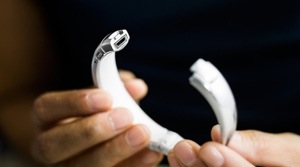
Say hello to MEMI, a very stylish bluetooth bracelet that will notify you of the following:

1) All incoming calls or incoming calls from select people.

2) All text messages or text messages from select people.

3) Reminders for calendar events.

The partners want to sell the bracelets at $150.00 each. They are almost at their fundraising goal. To check them out on Kickstarter, click on “MEMI,” above.

20131109-001641.jpg

Become a Senior Selfie

20131107-225843.jpg

20131107-224358.jpg<br Our Selfie Picture (Lois, Eliot and Whitney) at Joe Allen’s restaurant last night before going to see Broadway Show, Before Midnight. Don’t miss it.

The Oxford Dictionary’s definition of a “selfie”:
Syllabification: (sel·fie)
Pronunciation: /ˈselfē/
(also selfy)
noun (plural selfies) informal
a photograph that one has taken of oneself, typically one taken with a smartphone or webcam and uploaded to a social media website: occasional selfies are acceptable, but posting a new picture of yourself everyday isn’t necessary.

Social media is all about taking pictures of yourself with your smartphone and posting it on Facebook, Twitter, Instagram, and Pinterest. The photo is called a selfie. Selfies are becoming increasingly popular because they provide all of us with “fifteen minutes of fame.”

We all like to be stroked, even if we have to promote ourselves to get it. Apparently, it is perfectly acceptable because millions of people are doing it everyday.

I found the perfect gadget for people who love selfies. Audiovox just released ShutterBall, a remote control that allows you to back away up to sixty feet to take a shot of yourself, a group of people, or record videos.

Priced at just $25, the ShutterBall remote is simple to use. Twist the ShutterBall to activate the battery and download the ShutterBall app to an Apple or Android phone or tablet. A mini folding stand comes with the ShutterBall for staging purposes.

I just ordered one from Amazon. I was never good at taking a selfie. This should do the trick. If not, then I’m stuck with the kindness of strangers.

Successful Characteristics

Universities_DD_Lois
I thought you would enjoy interesting tidbits about two of the most successful entrepreneurs in Silicon Valley: Larry Page, co-founder of Google and Elon Musk, co-founder of Tesla Motors. I always like to examine the characteristics of people who are successful in business because it helps me discern changes in the digital community. I like checking out personalities, quirks, and dreams. I usually find a common denominator in all of them. Most of the time it’s a passion and a certain, positive attitude.

Click on these two links to read some real wild stuff.

Google CEO Larry Page Is Becoming One Of The Most Powerful People In Human History

16 Genius Quotes From Eccentric Billionaire Elon Musk

I have also included a chart from Business Insider that shows how well top colleges in the country have done cultivating billionaires. It’s interesting to note that many of the successful business people in the digital community dropped out of colleges.

What is the lesson to be learned here? You need to believe in your dreams in order for them to come true!

I’m No Expert, But . . .

20131105-182545.jpg

I can see my brother cringing now — I am giving financial advice. I can’t help myself. I just read that Twitter raised its IPO price range to $23-25. That means the the social network stock is in high demand. I can’t just look away. I had to discuss this opportunity with you. The books on the initial offering may have closed today, and the shares start trading this Thursday. But you can still buy at a relatively low price when it starts trading, and it should rise fast.

No one knows how well this stock will do, but investors are betting that a company that lost $133.9 million in the first nine months of 2013 is worth $13.6 billion. Most folks in the digital community feel Twitter has a young, large, and influential user base that has positively impacted the world so far and will continue to do so in ways that haven’t even been explored as yet. The potential is huge. Twitter is considered the social media darling.

In my non-expert opinion, the stock could possibly be another Apple. People made fortunes on Apple. However, those that couldn’t stand the stock’s volatility pulled out their money before it reached its peak. If you are not a risk taker and freak easily, don’t buy. This is a long term investment.

To be listed on The New York Stock Exchange, the ticker symbol will be TWTR. Good luck!!!!

No More Four-Eyes at the Computer

20131104-213305.jpg

20131104-213349.jpg

20131104-213359.jpg

20131104-213418.jpg

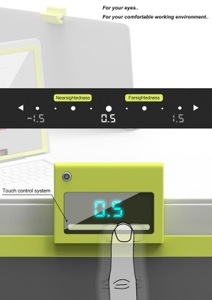
A young but prolific product designer in London has just developed an invention that is going to eliminate on all computers eye strain, headaches, and the inability to see the screen. Student and product designer Ryan Jongwoo Choi, currently studying at Central Saint Martins College of Arts and Design of the University of Arts London, came up with a way that you don’t have to wear eyeglasses to see the computer screen better. Instead, the object on the screen adjusts to your eyesight.

The i-Free auto-corrects both computer words and images. It meets the prescription needs of every viewer. Goodbye glasses. An additional screen clips on top of your desktop computer, laptop, or tablet. A prescription indicator on the top allows you to adjust the clarity. The words become clearer at certain numbers, since the screen is adapting to the prescription input.

This is such an amazing invention when you think about it, yet such a natural. It makes me wonder why every eye doctor didn’t think of it before. I emailed Ryan earlier this evening at the university to find out if there are any updates. He said he is a graduate student now and is hopeful the i-Free will be available at retail outlets in the first half of next year.

Fear Versus Precaution

20131103-220520.jpg

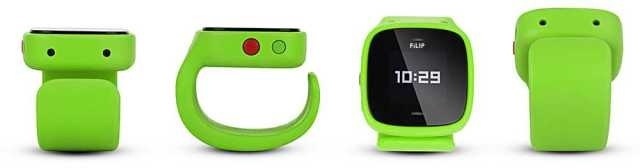
I don’t even have a grandchild, yet I find myself involved in the controversy of whether parents should arm their young children with miniature sensing devices in order to keep track of them just in case they wander off in supermarkets, department stores, or even playgrounds. A story appeared in today’s New York Times by Anne Eisenberg about the introduction of a watch from Filip Technologies that tracks the location of a young child and lets him or her easily communicate with just the push of a bottom.

Surprisingly, many of the therapists Eisenberg interviewed for the story gave somewhat negative reviews of the Filip product and others like it because they felt children need to learn problem-solving skills and learn to manage stress. That means if they get lost they should experience fear and independence.

That’s all fine and good, but what about the distraught parents? Twenty-seven years ago, I lost Whitney in a Caldor’s in Riverhead. She was four at the time. I thought she was at my side, but she had wandered around the bend and proceeded to sit down on the floor. I immediately started to call her name and stood on my tippy toes to find her. No answer. In three seconds I imagined I had lost her forever, and my whole body started to shake. Of course, once I started running up and down the aisles, I spotted her on the floor. Had I bent down, rather than stood on my toes, I may have seen her through the racks of clothes. To this day I have no idea why she didn’t answer me.

I met up with a very well-known international physiatrist this morning at a friend’s brunch. I told him about the story in The Times as well as about my experience with Whitney. He had a different opinion than the ones you will read in the story. I didn’t ask permission to quote him so I am leaving out his name. “I don’t see anything wrong with using a gadget to locate a child, but let’s really evaluate the facts. The chances of losing a child is not very likely, so the GPS monitoring solution is a little extreme. What’s more, a gadget shouldn’t really replace good parenting skills. No harm, either way.”

If I had to do it all over again, I would have had ten alarms on Whitney. I am really curious about your opinion. To be clear, here’s the question: Is it better to teach young children independence by letting them experience fear, or to buy one of the various GPS monitoring devices as a safety precaution?

Our Biking Days Are Just Beginning

Here are all my excuses for not taking a bike ride.

I feel I will exert myself too much, possibly causing a heart attack.

I will not be able to get to a bathroom fast enough.

I may get completely exhausted and can’t peddle home.

I can’t keep up with my biking companions.

My back and neck ache after a few miles.

I have had several cardiologists tell me that biking is a great exercise for seniors. First and foremost, it gets you off the couch and in the fresh air. When you are peddling along you are prone to enter a fantasy zone that takes you away from your usual everyday thoughts. You can feel ageless. That’s a good thing.

Also, the misconception about biking is that it is only good for young people. That’s not true at all. In fact, a physical trainer told a male friend of mine that bike riding is not a true workout. It may be a great exercise for riders who do 40 miles a day but for the average person it just gets the heart pumping more than usual.

For those senior folks who would love to ride a bike but really need assistance along the way, let me remind you that there is such a thing called electric bikes. You can peddle manually or turn the switch for the motor to take over. You feel like you are on a quasi scooter. It is that simple. Electric bikes come in all shapes, sizes, and price ranges.

I have included a recent New York Times article that covers electric bikes. Here is a link to a site that will show you a wide range of electric bikes and various prices. Be sure to watch the video above to see a collapsible electric bike.

Happy peddling!

Capturing Halloween

20131101-224637.jpg

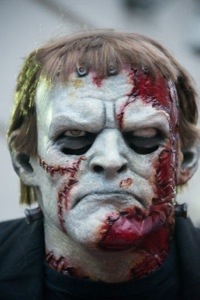
I just had to devote one blog post to the stunning pictures Eliot took Thursday night at the Greenwich Village Halloween Parade. Stretching more than a mile, this event draws two million spectators and 50,000 costumed participants.

The characters were so colorful that Eliot’s photos look like art pieces. It is wonderful to be able to share them this way. The digital world has made us all really appreciate moments like this.

20131101-224700.jpg

20131101-224739.jpg

20131101-224759.jpg

20131101-224826.jpg

20131101-224840.jpg

20131101-224857.jpg

20131101-224912.jpg

20131101-224944.jpg

20131101-224958.jpg

20131101-225019.jpg

20131101-225051.jpg

20131101-225106.jpg