I Wonder Who Is Going To Buy This And Why?

If art collectors buy paintings for millions of dollars, why wouldn’t someone see the value of owning a piece of art history? The following story appeared in Artnet News. —-LWH


Art History

Marc Chagall’s Catskills Studio, Where He Painted More Than 100 Works, Just Went Up for Sale for $240,000

Vittoria Benzine,

The two-bedroom, 840-square-foot property has been lovingly preserved.
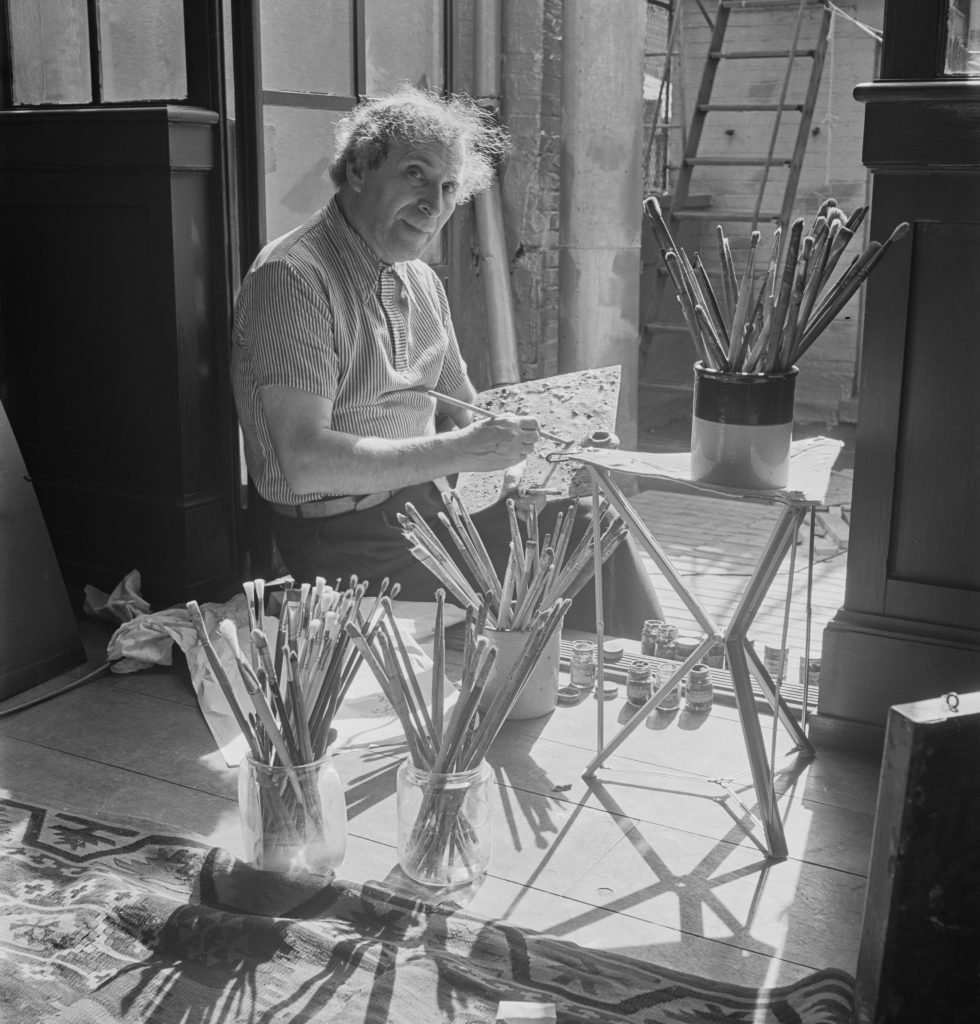
Artist Marc Chagall in his studio, circa 1942. (Photo by Pix/Michael Ochs Archives/Getty Images)

The cottage in New York’s Catskills Mountains that served as Marc Chagall’s studio from April 1946 to August 1948 has just hit the market. Located at 420 Mohonk Road in High Falls, the real estate firm Berkshire Hathaway is asking $240,000 for the two-bedroom, 840-square-foot property, which features a tiled mudroom, original wood floors, and a spacious skylight in the main bedroom.

Chagall was born in 1887 to a Jewish family living near the city of Vitebsk—then part of the Russian Empire, now modern-day Belarus. He moved to Paris in 1910, but returned home just before the start of World War I to marry his sweetheart, Bella Rosenfield, who gave birth to their daughter Ida in 1915. In September 1923, the family fled the increasingly strict Soviet Union for Paris.

By May 1940, antisemitism was rife throughout Vichy France and so the Chagalls, with help from Emergency Rescue Committee, fled to the U.S. in 1941, eventually settling in New York City.

Bella died from an infection in 1944 and Chagall soon fell into a malaise that could only be cured by his new housekeeper, Virginia Haggard McNeil. Twenty-eight years his junior, McNeil left her husband and began to model for Chagall.

Exterior of Chagall's studio at 420 Mohonk Road. All photos courtesy of Berkshire Hathaway.

Exterior of Chagall’s studio at 420 Mohonk Road. All photos courtesy of Berkshire Hathaway.

McNeil headed upstate alone after she became pregnant with Chagall’s child. “Marc was terribly upset by this inescapable evidence of our new love,” McNeil wrote later. When the artist suggested she look for a home for them in the area, McNeil came across an expansive plot with two buildings, including the cottage that reminded Chagall of the isbas or traditional dwellings found in Vitebsk.

Works produced during this prolific period in Chagall’s career show a preference for a more simplified style than seen in his earlier artwork. The property’s surrounding gardens inspired The Redhead, Green Dream, Arum Lilies, and Bouquet with Flying Lovers—all painted here, alongside Self Portrait with Wall Clock and Flayed Ox.

Inside Chagall’s former studio. Courtesy of Berkshire Hathaway.

In total, Chagall created 100 paintings, lithographs, and sketches at High Falls.

His time in High Falls, however, wasn’t all idyll. Real estate agent Ellie Perez told the New York Post that the F.B.I. regularly dropped in to search the premises. In 1948, the U.S. government denied Chagall’s visa due to his leftist politics. The family moved back to France, and had sold the property by 1952. McNeil left Chagall for a Belgian photographer that same year.

“The new owner divided the house and art studio parcels, and sold them separately,” Rik Rydant told the Poughkeepsie Journal. In 2011, he co-curated a local show exploring Chagall’s time in the town.

Rear view of 420 Mohonk Road. Courtesy of Berkshire Hathaway.

The current occupant, Larry Lynch, has lived in the studio parcel since 1970—and has kept everything original.

“The listing has attracted all sorts of folks,” Perez told Artnet News. “We’ve had [interest from] artists and people from the historical society.”
Follow Artnet News on Facebook

Mighty Mel

By Lois Whitman Hess,
Miami Life Editor
Mel Schlesser

Believe it or not, Miami Beach has a Lincoln Center. It’s not as massive as the Lincoln Center in New York, but it certainly is an important building to the creative community in Miami Beach thanks to owner Mel Schlesser, who is also president of Jameck Development Inc. Lincoln Center is located at Lincoln Road and Euclid Avenue.

The real estate developer decided to bring back the artist community to Lincoln Road during the pandemic by providing them with affordable studio space to create their masterpieces at the Lincoln Center. It turned out to be one of the most popular creative spaces for artists because of its location and surrounding amenities. Art collectors often stop by to see new works and to converse with the artists. The art complex is called Peekaboo Studios.

Mel said he is very interested in making sure Lincoln Road makes every effort to keep its status as one of the most important areas for arts and entertainment. “There are other areas of Miami (Wynwood, Allapattah, Miami Design District) that have the same goals, but the beach is the beach. You can’t compete with that. Everyone wants to be in close proximity to the water. That’s why Lincoln Road has more potential than any where else.

“It’s true that Lincoln Road is going through a transformation now because of the pandemic, but so is every other area. I know the Lincoln Road Business Improvement committee has many exciting plans for the near future so I am very optimistic.”

Mel was one of the founding members of the committee years ago because he truly believed Lincoln Road is a city treasure. “I have been developing real estate properties in this town for four decades so I know a gem when I see it.  The combination of a long string of restaurants in an outdoor mall along with one retail establishment after another, is the right formula to draw traffic. People love to eat and shop all the time.”

Jayda Knight, artist and Peekaboo Studios Manager, Mel Schlesser and yours truly

It was at this moment in the interview that Mel revealed that he is going to turn the Lincoln Center building into an unique arts and entertainment hotel. “It’s truly going to be amazing. We are adding two more floors to the building and expanding out into the parking lot. We have been working on this for quite a while. All of the permits and legal documents have been taken care of.”

The new hotel is going to feature art galleries, art studios and public space. It’s going to be a major destination for everyone who loves culture and entertainment.  Mel is very excited about this expansion because he wants to give back to the community that he dearly loves.

In addition to that,  a 90 ft by 30 ft Keith Haring banner will be on display on the south side of the 1111 Lincoln Road from November 15 to the end of January. This is just in time for Art Basel. Called “Miss Liberty,” the banner was originally commissioned for the “City Kids” charity in New York.  It has been on display in Philadelphia, Europe, and New York City. Mel has been working on the details of this project for a while and knows this is going to be the talk of the town during Art Basel.

Another major attraction coming to Lincoln Road is a holiday market.  Urbanspace, the company that operates the biggest holiday markets in New York City, has picked Lincoln Road, Miami as their next location. As previously reported in The Three Tomatoes, the new holiday pop up shops will be open from November 15th to February 15th.

Urbanspace is hoping to have 100 local and out-of-state vendors participate in this first venture. That means all kinds of goodies will be sold including home goods, children’s toys and apparel, stationery, books and prints, men’s and women’s apparel and accessories, jewelry, kitchen and garden items and food and drinks.

Mel was one of the early real estate developers in Miami along with Tony Goldman, Craig Robbins,  and Saul Gross. These are the men who saw the potential of Miami Beach when Grandma and Grandpa were sitting on their rocking chairs in front of their rent control apartments.

As Mel puts it, “I was tired of the cold weather in New York. I could only use my sail boat a few months a year. My grandmother was living in Miami so I knew my way around. One day I was sitting on Ocean Drive looking at the ocean, the sand, and the sun  thinking “this is paradise. This is how I want to live. I have to get in on the action.”

The other real estate developers felt the same way. The one difference was that Mel had a major criminal law practice in Manhattan. Most of the time he was representing murderers, thieves, and con artists. He loved his work but he was intrigued by a new way of life under constant sun.

He took the leap and has never had a minute of regret.  He has built some of the grandest buildings in Miami Beach. Nothing can be more satisfying than walking past one of his projects knowing his vision built that place.

He’s not done yet. He hopes the new hotel will be his biggest and his best. “You can’t go wrong when you combine arts and entertainment. It’s a natural draw.

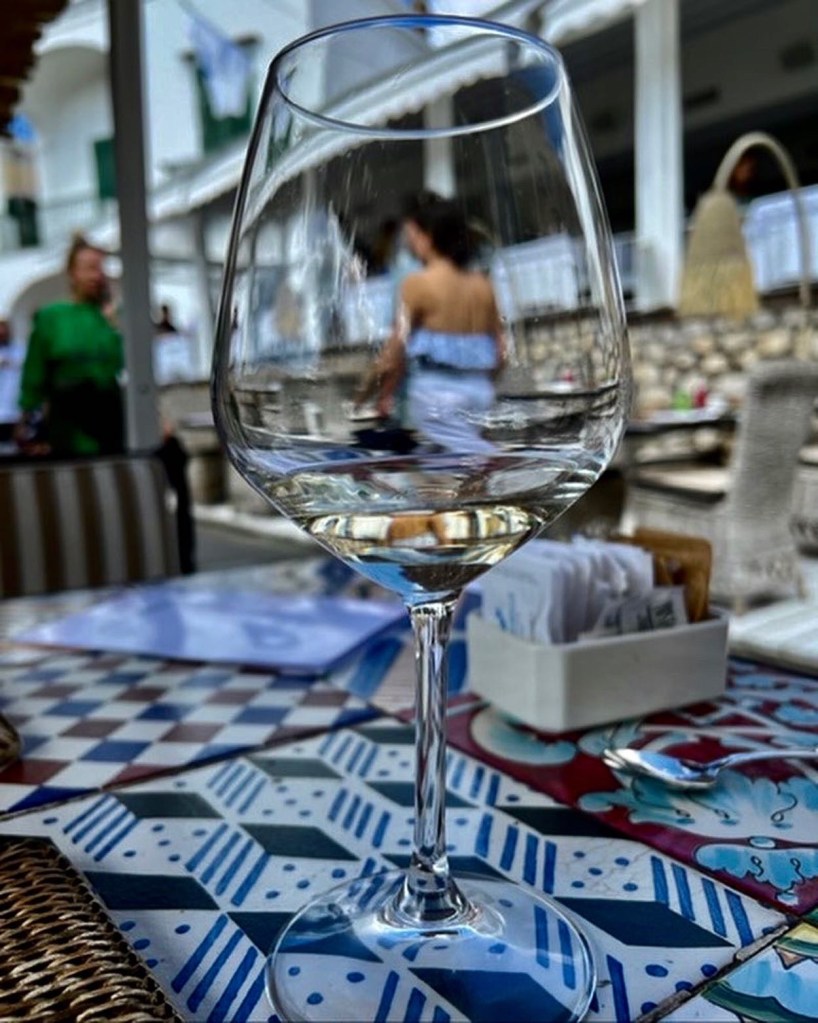
Looking At The World Through A Wine Glass

Photos by Eliot Hess In Capri, Italy

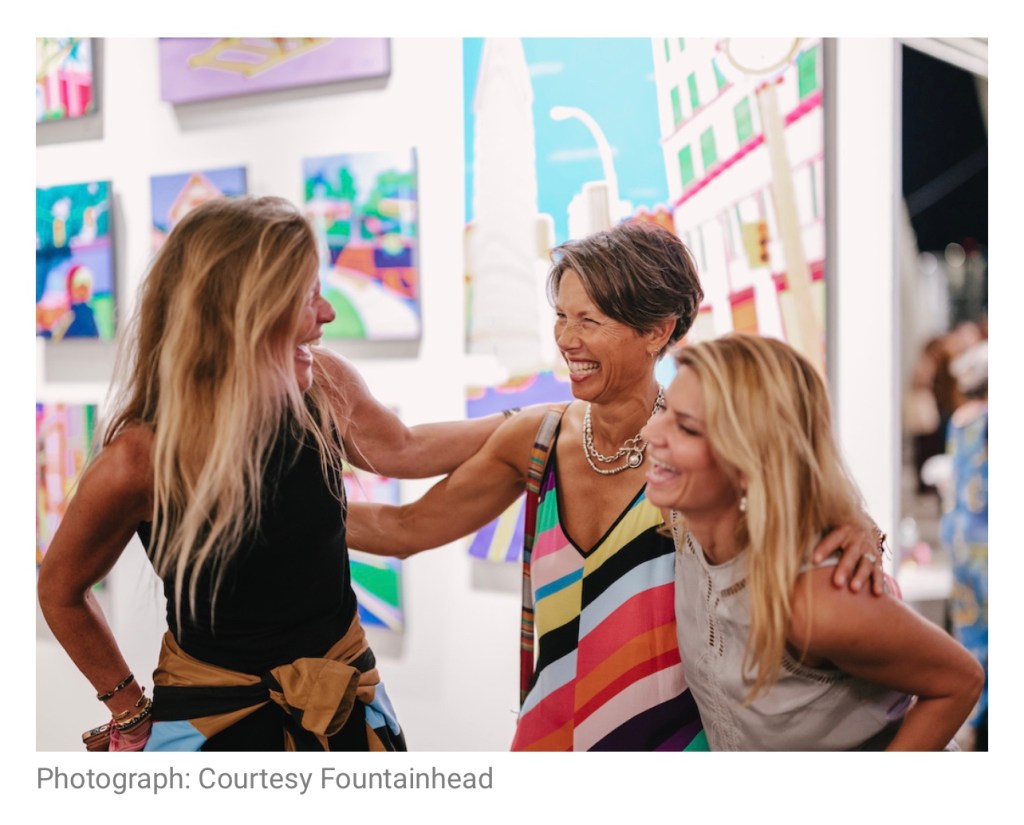
A Major Score For Fountainhead Arts

Fountainhead Arts is helping connect curious collectors with local artists

Fountainhead Art Membership

Photograph: Fountainhead

Interested in Miami’s growing art community? This might be the access you’ve been looking for.

Written by Virginia Gil

Friday, September 30 2022

For artists, the road to success is paved by benefactors. Nearly every single artist we know today has benefited from the support of a collector(s). And while the tradition of patronage still exists, the relationship has changed. Platforms like Instagram have made creatives more accessible to collectors while crowdfunding websites such as Kickstarter have altered the business landscape altogether. One major difference is the way in which institutions have rallied around artists, forging symbiotic relationships between artists and their respective communities.

Miami arts organization Fountainhead has been developing intimate relationships with artists and art appreciators for the last four years now. Through its membership program established in 2018, the nonprofit has given folks behind-the-scenes access to studios and art fairs, created immersive experiences for “people who want to see the world differently” and helped artists engage with the public in new, meaningful ways. Memberships are split into two tiers,

Benefactor ($500/year for individuals or $850/year for couples) and Visionary ($1250/year for individuals or $2250/year for couples). The biggest difference between the two is that Visionaries get to preview and buy artworks made by artists in residence; receive access to travel tours (past trips have included Mexico City, Paris and Havana); score passes to fairs during Miami Art Week, and are recognized on Fountainhead’s website. In both cases, opting into the membership connects artists and their communities in ways few programs can.

Fountainhead Art MembershipPhotograph: Courtesy Fountainhead
The 2022/23 membership program kicked off this month with a museum tour and lunch with Bonnie Clearwater, director and chief curator of Nova Southeastern University’s Museum of Art Fort Lauderdale.

Upcoming events include the Open Studios Farewell Party (Nov 12) and Miami Art Week VIP experience. Members also get early access to Fountainhead’s monthly open house events (Oct 21 and Nov 25).

If your idea of collecting art is shopping the aisles at Marshalls, perhaps dropping $500 on a cultural annuity seems superfluous. But for the artistically inclined or those curious about Miami’s growing art scene, this might be the gateway to a newfound appreciation. Not to mention that after years of isolation and our general tendency to hide behind social media, IRL connection feels invaluable or, at the very least, a worthwhile investment in ourselves and our communities.

To find out more about Fountainhead’s membership program, visit fountainheadarts.org.

Mark Your Calendars !!!!

Inside the Met’s Plans for a Major Karl Lagerfeld Show

The Chanel, Fendi and Chloé designer will be the subject of the next Costume Institute blockbuster, even though he famously hated museum retrospectives.

Vanessa Friedman

By Vanessa Friedman

Sept. 30, 2022

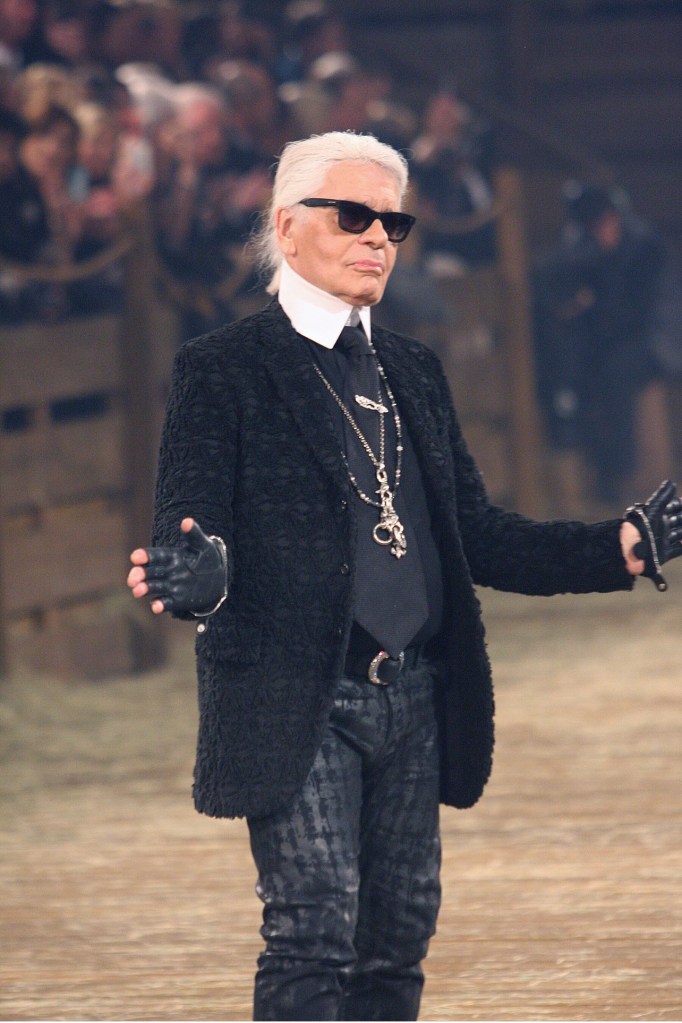
Karl Lagerfeld, the culturally omnivorous, furiously prolific designer of Chanel, Fendi and his own line, who died in 2019, was, throughout his career, resolutely focused on the future. Obsessed, even. He believed, he once told The New York Times, in the “old German dictum: ‘no credit on the past.’”

He had no truck with hagiographic exhibitions of designer careers. Indeed, during a press preview for the opening of the Chanel show at Costume Institute of the Metropolitan Museum of Art in 2005 (he refused to attend the show itself), he announced, straight up: “I dislike retrospectives.”

A few years later he declared to The Times, “I don’t want to see all those old dresses.”

But the powers that be of fashion apparently believe that, when it comes to Mr. Lagerfeld’s legacy, everyone else does.

In May, four years after his death, Mr. Lagerfeld is getting the biggest show of all: the next Metropolitan Museum of Art Costume Institute blockbuster. Just don’t call it a retrospective.

“I am calling it an essay,” said Andrew Bolton, the curator in charge of the Costume Institute, adding that Mr. Lagerfeld’s contributions to fashion were “unparalleled.” Not just because of his 65-year career, and the breadth and diversity of his work, but because the model he created for transforming a heritage house when he took over Chanel has become a template for the fashion industry.

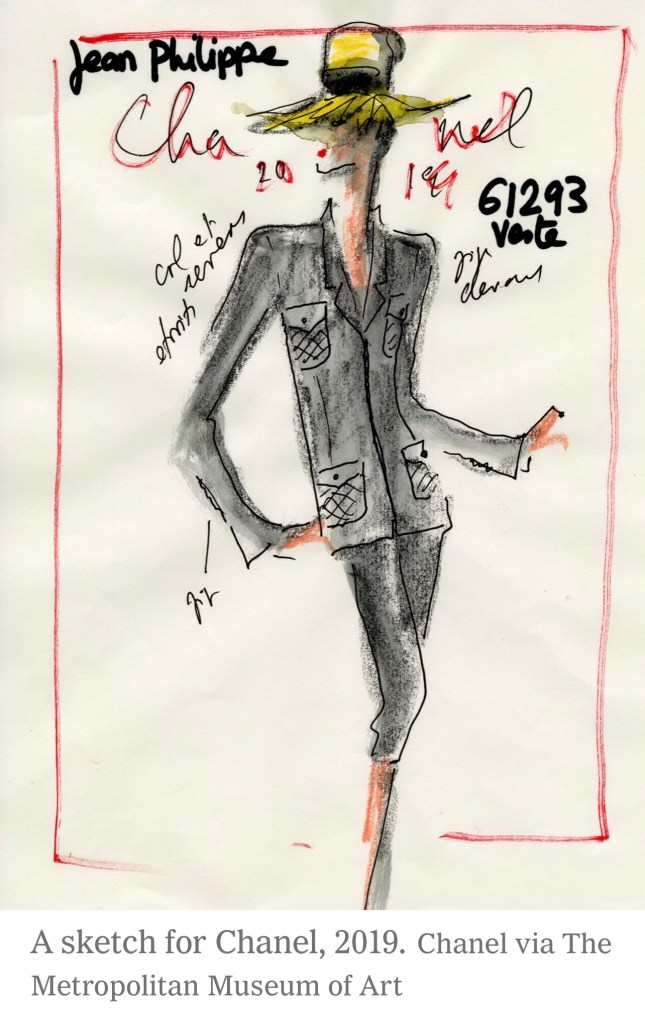
Entitled “Karl Lagerfeld: A Line of Beauty,” after Hogarth’s theory of aesthetics described in his 1753 book “The Analysis of Beauty,” the exhibition will focus on the relationship between Mr. Lagerfeld’s sketches and his finished products over the length of his career; the way his ideas morphed from two dimensions to three.

Mr. Bolton said the idea for the show came to him almost immediately after Mr. Lagerfeld’s death, and the museum quickly approved. Originally scheduled for 2022, it was postponed a year because of the pandemic.

“Every one of his designs began as a sketch,” Mr. Bolton said of Mr. Lagerfeld’s working method. “He said, ‘I draw just as I breathe.’ They can seem very charming and expressionistic to the untrained eye, but to his premieres they were almost mathematical in their precision, almost like a secret language between Karl and the ateliers.” The show is an attempt to decode it for posterity.

It will feature approximately 150 pieces from the five heritage houses Mr. Lagerfeld shaped — Balmain (which he joined after winning the Woolmark prize in 1954), Patou, Chloé, Fendi and Chanel — and his own brand. Selections will be winnowed from what Mr. Bolton said was “between 5,000 and 10,000” garments sourced from each brand’s archives, with a few from private collectors and the Met.

Each piece will be paired with the available sketches, and there will be video interviews with the heads of each atelier created by Loïc Prigent, the French filmmaker whose 2005 series “Signé Chanel” documented the making of a Chanel couture collection.

The exhibition will be organized along two guiding principles: the S, or serpentine, line, which Mr. Bolton sees as representing Mr. Lagerfeld’s historicist and romantic designs, and the straight line — Mr. Lagerfeld’s more modernist, classical work.

And it will culminate with a small grouping of what Mr. Bolton calls “the satirical line”: references, sprinkled by Mr. Lagerfeld like Easter eggs among all of his collections, to his own uniform of stiff-collared white shirt, black jeans, black cutaway, powdered white ponytail and fingerless gloves. Or given Mr. Lagerfeld’s taste, Fabergé eggs.

“He was a bit like Alfred Hitchcock that way,” Mr. Bolton said.

(The curator has included his own Easter eggs in the show, with each main section being divided into 10 subsections in honor of Mr. Lagerfeld’s birthday on Sept. 10, and each of those subsections containing seven pieces, because seven was Mr. Lagerfeld’s lucky number.)

Though Hogarth prized the serpentine line above the straight one, Mr. Bolton said that Mr. Lagerfeld “had no such aesthetic prejudices.”

Also, he said: “In Roman mythology the straight line entwined by an S line is the symbol of Mercury, the god of commerce and communication. And arguably the modern god of commerce and communication was Karl.”

The exhibition, designed by Tadao Ando, the Japanese architect who designed a home for Mr. Lagerfeld that was never built, will be staged in the Tisch Gallery. Amanda Harlech, who worked closely with Mr. Lagerfeld at Chanel for more than a quarter of a century, was a creative consultant. There may be a drone involved.

“I always thought if Karl came back in another form, he would come back as a drone,” Mr. Bolton said. “He was always observing the culture from above, and I would love to have a drone surveying the visitor’s reactions.”

Nevertheless, Mr. Bolton continued, if Mr. Lagerfeld did come back and got wind of the show, “I am sure he would hate it. He’d probably still refuse to come.”

This is only the third solo designer show curated by Mr. Bolton for the Met after Alexander McQueen in 2011 (another posthumous exhibition) and Rei Kawakubo in 2017. In a rare moment of unity among fashion rivals, it will be sponsored by Chanel, Fendi and the Lagerfeld brand, along with Condé Nast.

The celebrity hosts of the gala that opens the exhibition, and that has become the New York fashion event of the year, have not been announced. Given Mr. Lagerfeld’s multifarious career and his numerous muses, it’s not hard to imagine boldface names lining up for the honor, including Kirsten Stewart, Julianne Moore and Nicole Kidman, all of whom were faces of his Chanel.

As for the dress code, that seems a foregone conclusion. At least Anna Wintour, the honorary co-chair and gala maestro, can shop her closet: She has worn Chanel for almost every gala since 2005.

https://www.nytimes.com/2022/09/30/style/karl-lagerfeld-metropolitan-museum-of-art-costume-institute.html?smid=nytcore-ios-share&referringSource=articleShare

I Made A Good Living On Flops

I just finished reading Mark Cuban’s analysis of his investments on Shark Tank. He is thinking about leaving the show because many of the deals he financed were a waste of time. I feel the same way about many of the companies I represented over the years. I got caught up in the enthusiasm from the innovators. They were great at inventing new products, services and shows, but they were clueless on how to execute a successful business.

I was so jealous when the breathalyzer came out on Shark Tank. I wanted to be the PR agency representing them. They were like rock stars at CES a few months later. They managed to fizz out before I had the chance to pitch them. Or what about the billions of dollars Magic Leap managed to screw out of Google and others? You wonder who is okaying these investments and who is responsible for checking them out. I knew something was phony in Plantation, FL.

Hasn’t Elizabeth Holmes taught us anything? Now there is a new scammer out there. Business Week says. “Trevor Milton looked like the next Elon Musk—and may end up the next Elizabeth Holmes. As the first of his several trials gets under way, the people who exposed him reveal how it all went down.Read in Bloomberg Businessweek: https://apple.news/A8sjmWmR_R2yqKaNWL3H3NQ

I apologize if I am inferring that many of the entrepreneurs I worked with were scammers. Scammers is a strong word for many of them but I can honestly say most of them had no conscience. They didn’t lose sleep over losing millions of dollars, or perhaps spending money on nonsense when they needed that dough to survive.

I always had the feeling that many of these start ups were designed to pick the pockets of the rich. Eliot and I are not rich rich but we have invested in a few projects that went south. Like Mark, we did it for the fun and it didn’t hurt us financially. However, we don’t get the same “rush” from being one of the investors anymore. Having said that, there are several projects that we were considering before this new attitude came about so I’m not sure which way we will go. Hahaha.

Mark Cuban says 25% of his ‘Shark Tank’ deals are flops: ‘What the hell was I thinking?’

Published Mon, Sep 26 20221:29 PM EDT

thumbnail

Tom Huddleston Jr.

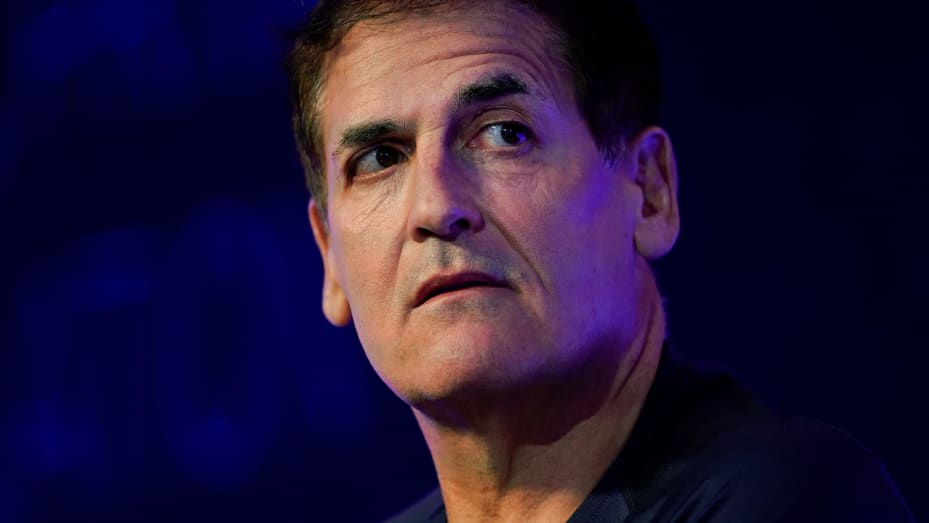
Mark Cuban, entrepreneur and owner of the Dallas Mavericks, speaks at the WSJTECH live conference in Laguna Beach, California, October 21, 2019.

Mark Cuban, entrepreneur and owner of the Dallas.

After 13 seasons on ABC’s “Shark Tank,” Mark Cuban estimates that he’s had about as many hits as misses.

Some of his on-screen deals have worked out great, he says. Others, not so much. Such is the risk of investing. But even when it comes to the ones that eventually left him scratching his own head, Cuban tells CNBC Make It that he has “no regrets.”By Cuban’s own estimation, roughly one in four of his “Shark Tank” deals “have done really well or crushed it,” he told a local Denver ABC affiliate on Friday.

“Fifty percent … have been good and continue to go on, and 25% where I just think to myself: ‘What the hell was I thinking?’”One notable example: Cuban has highlighted the Breathometer, billed as “the world’s first smartphone breathalyzer,” as his worst “Shark Tank” investment to date. Cuban said he lost roughly $500,000 on the deal, after investing in the business in 2013.“That was my biggest beating.”

In total, the billionaire investor has struck more than 200 on-screen deals worth more than $61 million in his time on the show, according to a recent online estimate. On Monday, Cuban told Forbes that the real-life figure is closer to $29 million: Not all of the deals depicted on the show make it all the way to closing.Cuban says his “Shark Tank” deals aren’t always solely about bringing in big financial returns. “I’m good with that with my ‘Shark Tank’ companies,”

Cuban wrote on Twitter in July. “I don’t do the show to get the best investments. And I don’t always invest because I think I’ll make money. Sometimes my deals are purely to help someone or send a message. That’s why he doesn’t seem to mind not yet being in the black when it comes to his total investments on the show. In July, Cuban told the “Full Send” podcast that he’s taken a net loss on all of his “Shark Tank” investments so far. He later clarified that he meant “on a cash basis,” only accounting for the investments he’s already exited.

“I haven’t gotten out more than I have put in. But that doesn’t account for all the ongoing, operating businesses and their valuations,” Cuban told CNBC Make It at the time. Deals that flop are an inevitability of investing, according to fellow “Shark Tank” star Kevin O’Leary. “You make 10 investments, you get two to three huge hits. And it pays for the other seven [failed investments],” O’Leary told CNBC Make It last month.

Still, Cuban says he’s beginning to think about when he should step away from “Shark Tank” to focus on his own ventures, including the new online pharmacy Cost Plus Drugs.“Part of me wants to quit,” Cuban told Forbeson Monday.The investor didn’t offer any timeline for when he might depart the popular program, but said the show could likely weather his exit: “They’ll survive fine without me.”Disclosure: CNBC owns the exclusive off-network cable rights to “Shark Tank.”