Category Archives: digital
Why a Bad Mood May be Good for You


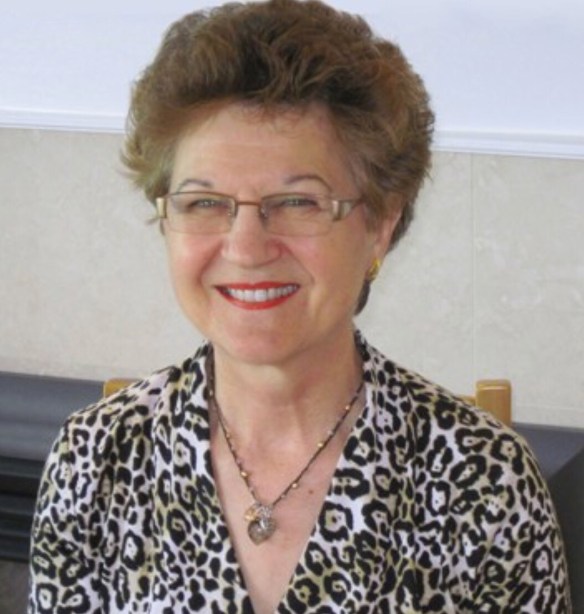
Diane Dahli
( Diane Dahli has been a faithful and loyal reader of DigiDame for many years. Thank you Diane. Diane is also a blogger. She wrote a post about mood swings that I wanted to share with you. It’s fascinating. I feel it’s very relevant for people our age.)
On some days, even perfect ones like today, when everything is fine in my world, I’ve been known to suddenly experience what I can only describe as a bad mood. I don’t obsess about it, or even question it. A wave of sadness appears out of nowhere, and usually, if I practice gratitude for a few minutes, it melts away. Even anger, (which momentarily appears as irritation with small things that can go wrong in life), doesn’t linger for long, and can be dispersed with a few philosophical thoughts.
Dealing with my emotions has become part of my everyday existence, and I accept this as proof that I am vitally alive and responsive to life’s situations.
We all have the capacity to experience a bad mood, or to be more specific, the full range of emotions—happiness, sadness, joy, anger, envy, resentment—it’s what makes us human. Most people go through life on an emotional even keel, feeling basically happy most days, and reserving the deeper emotions for specific situations. But some people are more expressive, and feel things more keenly. It doesn’t mean they are unbalanced, or disturbed or deficient in any way. It’s just that their feelings seem to be more accessible, and closer to the surface.
Who knew that a bad mood can be good for us?
In fact, psychologists claim that all emotions, even negative ones, such as fear, anger, shame or disgust, are useful to us. They stem from ancient, primordial instincts, which help us recognize, and avoid dangerous situations.
Mild, temporary bad moods help us cope with everyday challenges and alert us to issues in our lives that need to be addressed.
Having always felt that bad moods are undesirable, I was surprised to learn that, according to some studies, the following benefits, among others, can occur as a result of experiencing a bad mood:
better memory: A bad mood has been known to focus the memory, so that details are sharper, particularly in the case of eyewitness accounts. By being less distracted during an event, evidently, people who are in a bad mood can weed out irrelevant information and recall these details more accurately.
more motivation: It’s no surprise to me that people who are ‘driven’, and possibly angry, try harder and persevere more when performing a task. This drive may come from a need to prove something—a desire a more happy, complacent person may not have.
better communication has been indicated by subjects who are in a bad mood.
more accurate judgments were made by subjects in a bad mood, who relied less on stereotypes and rumors.
Seeing someone in a bad mood makes people uncomfortable
So if feeling bad is not bad for us, and may even be beneficial, why is our society so consumed with the need to be happy at all times? Why does seeing someone in a bad mood—expressing sadness, anger or distress—become a cause for concern?
In our culture, unhappiness is looked upon as an illness. People who are ’emotional’ are considered sick in some way, and in need of therapy. Teenagers, particularly, in their period of emotional development, are understandably unstable, and not necessarily in need of ‘help’. Older people, experiencing natural feelings of loss or sadness are sometimes too hastily considered risks for dementia or worse.
I agree with the current studies that we have emotions for a reason, that they may be ultimately beneficial and necessary to our existence. I would add that it is important to acknowledge them, and to allow ourselves to experience them. Denying our feelings has become an outcome of the current “cult of happiness” in our culture. It is not natural, and it is not healthy.
I think that the issue here is not if and how we experience our emotions, but how we manage them.
Wellness coach and author Elizabeth Scott, discusses this in her February 12, 2018 article “How Negative Emotions Affect Us and How to Embrace Them”:
“The idea of “managing” negative emotions is a complex one. It doesn’t mean avoiding feeling them—avoidance coping is actually a form of coping that attempts to do this, and it can often backfire. It also doesn’t mean letting these negative emotions wreak havoc on your life, your relationships, and your stress levels. Unmanaged anger, for example, can compel us to destroy relationships if we allow it to.
…Managing negative emotions also means not allowing them to overrun us; we can keep them under control without denying that we are feeling them.”
There are many different ways to manage our emotions. As we grow up and grow older, we discover them, usually without professional help.
Off The Screen Games
Steve Greenberg, the Innovation Insider, is currently appearing on TV shows around the country demonstrating educational toys for children. What is so great about these toys is that they make your children use their imagination and don’t require time on smartphones. These toys teach “STEAM.” Science, Technology, Engineering, Art and Math.
I’m ready to buy some of these toys for children I know. I would love them to play with products that allow them to go into a zone filled with fantasy and happy thoughts.
I hope you watch these TV segments to see that, in the world of digital appliances, there are plenty of creative alternatives to offer children.
Minneapolis FOX – The Jason Show
https://www.facebook.com/JasonShowTV/videos/984574121709964
Chicago WCIU – The Jam
http://www.wciu.com/videos/thejam/back-to-school-gadgets-with-steve-greenberg
Houston CBS
Wake Up Twitter

Thank you Kara Swisher for your opinion piece in the New York Times yesterday. Swisher is one of the most respected tech business journalists in the world. Today she questioned Twitter’s motive to keep publishing the tweets of Alex Jones, an American radio show host and conspiracy theorist.
In her own words, “Apple, Facebook, YouTube, Pinterest, Spotify and most other major internet distributors banished Alex Jones, either permanently or for some unspecified star-chamber-determined amount of time, for hate speech and other violations.
“But not Twitter. Instead, Jack Dorsey, the chief executive, founder and tweet inventor himself, took to his own platform to explain in the high-minded tone that one takes with small children that Mr. Jones wasn’t suspended from Twitter because he “hasn’t violated our rules.”
Swisher finds this inexcusable. She took time out of her busy schedule to challenge Dorsey on his decision. She just can’t sit back and let Twitter give any sort of credibility to a guy who claims the shooting at Sandy Hook Elementary School was a hoax, and accuses the U.S. government of being involved in the Oklahoma City bombing and the September 11th Twin Tower attacks.
Read what she has to say.
Click here.
An Old Favorite Is Back

If you enjoyed playing with the Rubik’s Cube, you are going to love the GoCube. It’s a high tech version of the classic with all the features you would expect in a digital unit.
GoCube recently raised a million dollars on Kickstarter. That’s no surprise considering that 350 million of the original units sold worldwide. It was invented in 1974 by Erno Rubik, a sculptor and professor in Budapest.
The new electronic unit was created by Particula, an Israel based company. GoCube looks like the original but is so much more. It features a companion app which offers the opportunity for one-on-one or multiple competitions. The app will show you how to solve certain configurations and give you different challenge levels. The Rubik Cube experts get to check their timing in order to beat past records.
All this for $69 online and $119 at retail. Fast Company did a nice job writing about the GoCube. See the project on Kickstarter.
DigiDame Frequency
If you didn’t receive DigiDame by email yesterday, here it is. I have no idea why it wasn’t distributed by WordPress, my blog website. I don’t know if this post will be emailed either. My fingers are crossed. I want to take this opportunity to let you know that I may not write a DigiDame post everyday from now on. It’s going to be difficult for me to stop, but I think it’s time for me to write other materials. Time will tell.
https://digidame.wordpress.com/2018/08/07/content-to-commerce/
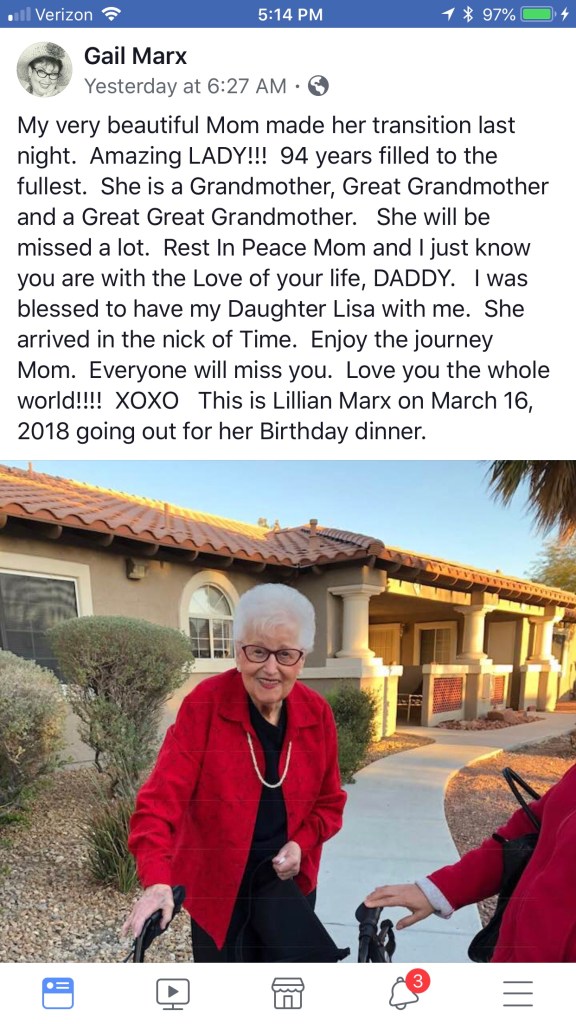
My dear friend Lillian died two days ago. This is what her daughter Arlene (Gail) posted on Facebook yesterday. Lillian and I spoke for one hour three weeks ago. She lived in Vegas. I had no clue that she would leave us soon after. We will miss you Lillian. You and Harold were mentors and we were your fan club.

Sky Inspirations On Facebook


Wynwood Miami mural, featuring Marjory Stoneman Douglas victim Joaquin Oliver, calls for action on gun violence.


Content To Commerce

I have spent the whole day talking to tech clients, and potential clients, about new ways to bring innovative products to market. I have seen the future, and I believe the old traditional ways of retailing do not work.
I have watched too many companies work their buns off convincing Best Buy or Amazon, to carry their new products, only to see them not sell. If start-up companies don’t have millions of advertising dollars to drive traffic into stores, or to e-commerce sites, then many products fail. Major brands suffer too. They cannot afford big budget promotions for every product they introduce.
Most retailers today do very little to support the products they sell. It’s not that they don’t want to. They just don’t have the promotional budgets. In fact, retailers charge manufacturers so much money to sell their products that most companies can’t afford them anymore. Department stores and big chains charge for the real estate space on retail floors, displays, and promotions. The costs are staggering.
The digital world now presents new opportunities to market products directly to the consumer. A growing number of online editorial sites now allow companies to market and/or sell to targeted audiences. They call them affiliate sales programs or integrated marketing. They are done subtlety and in good taste. In-house publication writers create the copy and “buy now” clicks are featured adjacent to stories.
Before you start screaming that you don’t want ads disguised as stories, publications clearly mark them as “sponsored content.” They also limit the number they run in each issue. By the way, native advertising (subliminal or blended) content has been around for years. It’s just becoming more popular.
The big appeal is that publication sites have millions of readers who are exactly the target audience manufacturers are looking for. No more, “we will build it and they will come.” That’s not true and unrealistic. Why reinvent the wheel? If online publications already have tremendous built-in audiences, then companies who have something to sell should take advantage of these enterprises.
I’m not a fan of “sponsored content” even though I bought wrinkle cream (which works) from a daily newspaper and shoes from a fashion magazine. In both cases, the products were properly positioned to catch my eye. It’s true that I don’t want to read a publication filled with “sponsored content,” but a story or two, doesn’t bother me.
I am also encouraging clients to run special videos, sponsor social influencers posts, create online campaigns and get involved in all kinds of digital sales opportunities. The key is to get the potential customer to buy almost immediately.
Until retailers can start reinventing themselves to provide sales environments that support manufacturers, the digital editorial will be the chosen alternative.
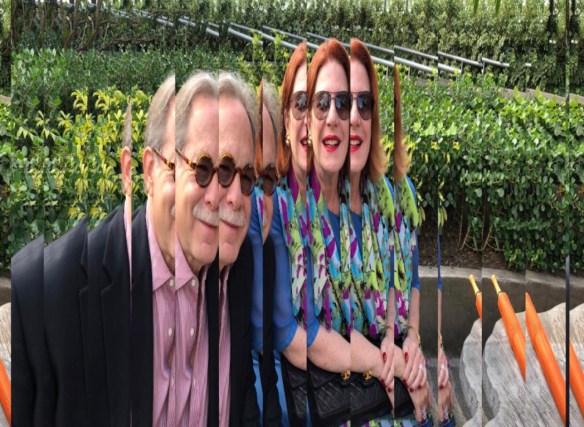
I Did All This With PicsArt
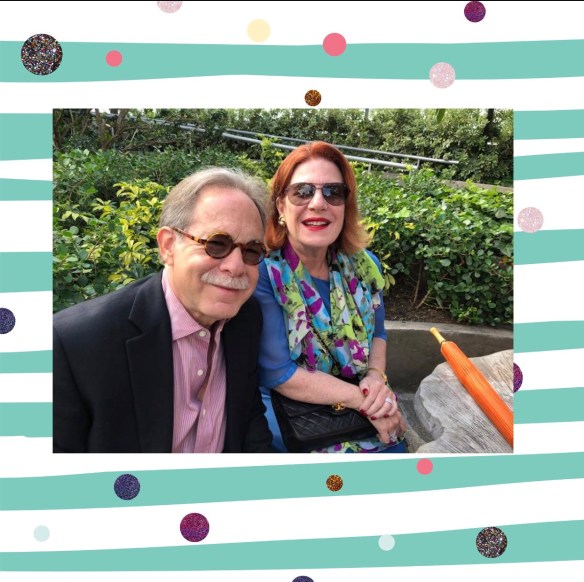
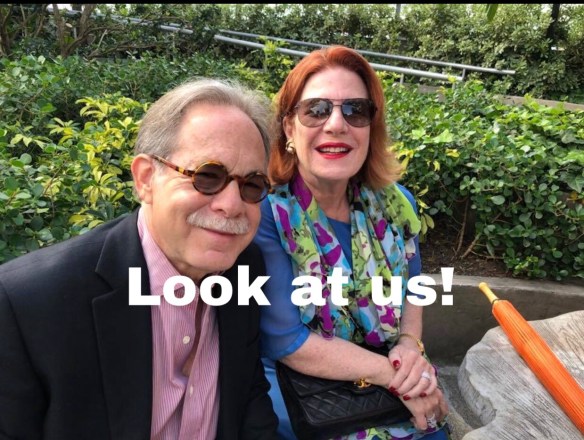
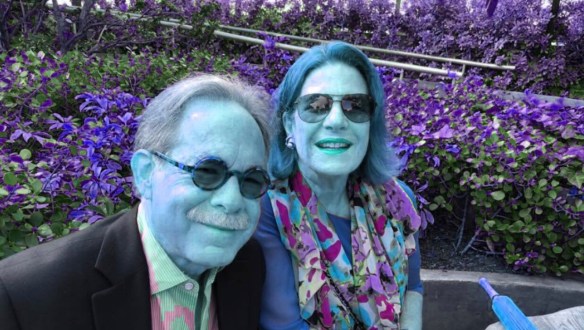
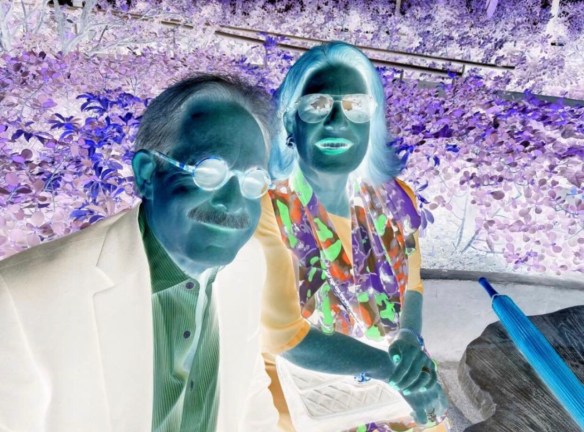
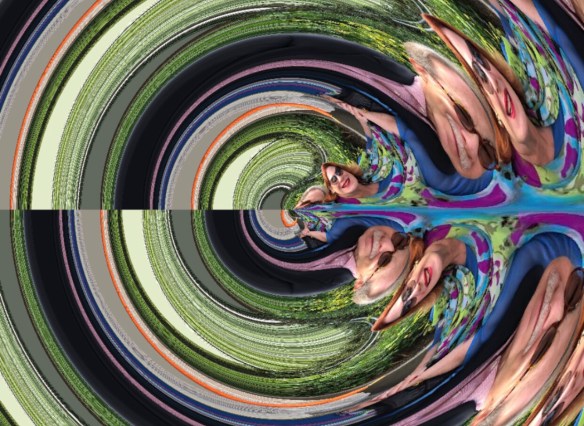
PicsArt is the #1 photo editor and pic collage maker on your smartphone. It’s so easy to use. I always wanted to be able to mix and match photos. Now I can have hours of fun. Send me your PicsArt photos. Thanks.


Indigestion


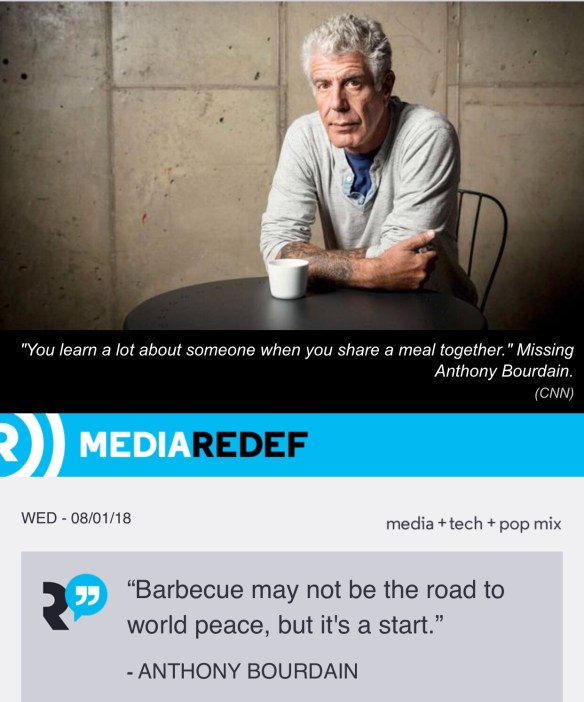
MEDIA REDEF is a company that curates stories that make you think. The chief curator is Jason Hirschhorn, founder and former executive of MySpace. Jason recently wrote his own piece about Anthony Bourdain. I wanted to share it with you because it expresses how many of us feel.
“On Friday, June 8th, I was visiting my friends John and Anna Mason at their summer home in Easton, Maryland. That’s Wedding Crashers country. I was there to relax, play with my goddaughter, eat seafood and yes, see the house and hotel in the movie. I went to bed early that night. I can’t remember exactly how I found out. I think my friend Kevin Krim texted me. It was early Saturday morning. Anthony Bourdain was gone. He took his own life.
Unfathomable to me. I was stunned. Searching news sites to confirm it was true. I started to choke up. Tears. I don’t think I’ve ever reacted that way about someone I didn’t know. Sadness, yes. But tears, no. I walked downstairs to the kitchen in a daze. But then goddaughter Isabelle was up and I didn’t want her to see that. The rest of the day was a blur. I don’t think I’ve written about anyone else more in this space than Bourdain. He had a massive impact on me.
Years ago, when I was at MTV NETWORKS my friend Tom Freston, upon my promotion to a global role, said to me: “Take advantage of this job. The audience is beyond your own shores.” What did Tom mean? We were in more than 100 countries. My role was global. I was going to travel and see the world’s people and cultures. And I did. Around the same time, I discovered Bourdain. I love food. But I am a creature of habit and rarely challenged myself with new cuisine and restaurants. Hey, there is pizza, Caesar salad, and club sandwiches in every country in the world.
His first show NO RESERVATIONS opened my mind. He traveled the world. Seeing new places. Meeting new people. Trying every food imaginable. And I loved every minute of it. As my curiosity grew, I developed an affinity for being uncomfortable. I like new things. New places. New people. I do curious for a living. And what he brought to the world was very simple, subversive, and needed. The common love of food. The common love of gab. The common habit of the table as a staging area to learn. All of this combined showed us the differences, but more important, the commonalities of us through sharing a meal.
Gradually, and into his next show Parts Unknown, the food took a backseat to discussing societal, cultural, historical, and personal issues. But the food was always there. My friend Patti Kim and I went to Beirut. because he did. We ate at Tawlet. One of the best farm to table meals I’ve ever had in my life. My dream is still to have Pot-Au-Feu at Paul Bocuse’s restaurant. Just like he did with Daniel Boulud. Maybe the best food episode was his Pintxos Crawl, through the streets of San Sebastián. That’s on my bucket list.
After his death, there were stories of his long-term battle with addiction (he had no alcohol or drugs in his body at the time of his death) and his sadnesses. He was a passionate man. And sometimes those with that kind of passion, hurt and feel more.
Sadly, we saw the outside of his life. The travel. The food. The fame. And we ask, “He had a great life. Why would he do this?” That’s no way to judge. Sadness can crawl deep inside and be masked. But it doesn’t go away without treatment, work, and support. And when you’re “the man” sometimes you don’t ask for help. And it just takes a momentary lapse of faith, reason, and one bad thought to be gone.
In many ways, I think the current state of the world tormented Bourdain. In a very tender moment with President Obama in Hanoi, he asked, “Is everything going to be okay?” Asking as a man, a father, and a human being. He had such a positive effect on me. His shows satiated and grew my curiosity. Every Sunday night was like a treat I had earned from a hard week. I couldn’t wait to watch. Where was I going to go next?
I haven’t been able to watch the remaining episodes yet. Just makes me sad. But I will. And the curiosity that drove him is what drives me and I will continue to explore these topics at REDEF. I never got to meet him. I wish I had. Soon it will be time to rewatch his stuff on services like Netflix. I hope CNN continues to air his catalog in perpetuity. I wonder if he knew, in those last moments, how much he meant to so many? I miss him every day. But miss him most on Sunday nights. He had a POV that we need now more than ever.”
– Jason Hirschhorn, curator
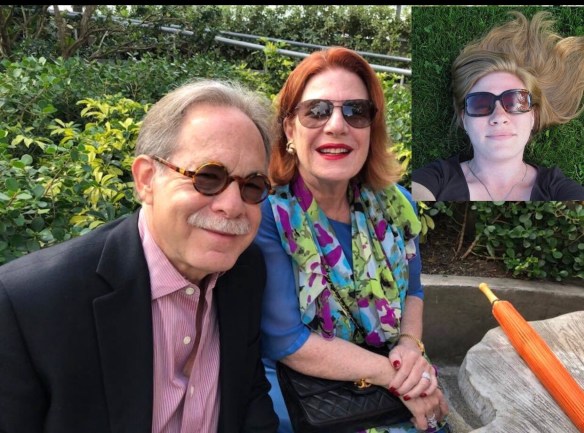
Proud Parents