I can barely remember owning a pool table during the 15 years we had a house in Quogue. Many of my guests used it all the time. I didn’t go near the table because it was as foreign to me as speaking Latin.
When we sold the house, the new owners bought the fancy pool table. I haven’t thought much about that table in 20 years until I heard about PoolLiveAid, a project by Luis Sousa, Ricardo Alves, and J.M.F Rodrigues of University of the Algarve, Portugal.
PoolLiveAid turns everyone into a pool shark. Making use of a ceiling mounted camera, PoolLiveAid reads the borders of the table, location of the cue ball, and the angle of the pool cue. Then it makes a professional-type calculation and projects a path right on the table.
That doesn’t necessarily turn you into a pro, but it certainly gives you a major advantage. The invention is still in beta form but let’s hope it becomes a reality very soon. Price? To be determined.
Talk show host Jon Stewart reminds us that Caitlyn Jenner is now part of a society where women in their 60s are not as prominent and respected as their male counterparts.
“As a woman, Jenner can now look forward to her physical appearance, not her talents or mind, being the object of daily scrutiny.”
Watch the video and give me your reaction. We live in a young people’s world. The digital revolution defined this even more.
I have always been fascinated by how the hashtag became so popular on social media, especially Twitter. For most of my life the hashtag was nothing more then a number sign.
Then someone had the brilliant idea a few years ago of using the # as a metadata tag, a symbol which helps users find content of similar nature on social media sites. If a user places a # in front of a word or phrase, the word(s) becomes searchable.
As far as I know, the tech industry has been under the impression that the hashtag was the greatest marketing invention ever. Most major brands have been using hashtags for the last year or two to attract new customers.
Now, a story in Re/Code, a leading tech site, claims that the hashtag has not been performing as well as everyone thought. Twitter actually released a report that said certain types of ads featuring hashtags didn’t pull the audience originally expected.
The simple explanation: too many hashtags are becoming a distraction. A Twitter spokesperson said, “If you’re trying to join a conversation, you should absolutely use a hashtag. But if you want to attract customers, the less noise the better.”
When a young friend of mine told me she had to get ready for a date, I thought she meant get dressed, comb her hair, and apply makeup. Boy, was I wrong. Today, dating is much different from what I remember. My friend picked up something that looked like a Q-tip, scraped the inside of her mouth, and then placed the Q-tip inside a folder.
The folder was then mailed to SingldOut. That was the first time I heard of this online dating site that uses genetic testing to form social relationships. The service also uses LinkedIn as well as DNA testing company Instant Chemistry in order to match two people up. Jana Bayad and Elle France launched the site in July of 2014.
I guess Digidame readers would be welcomed on SingldOut. The trouble is that it would be slim pickings. Not that many people our age are on sites like this. The company credits genetic testing with the ability to “identify up to 40 percent of the chemistry of attraction between two people.”
Gizmodo, the tech site, wrote a major feature on SingldOut. Click here.
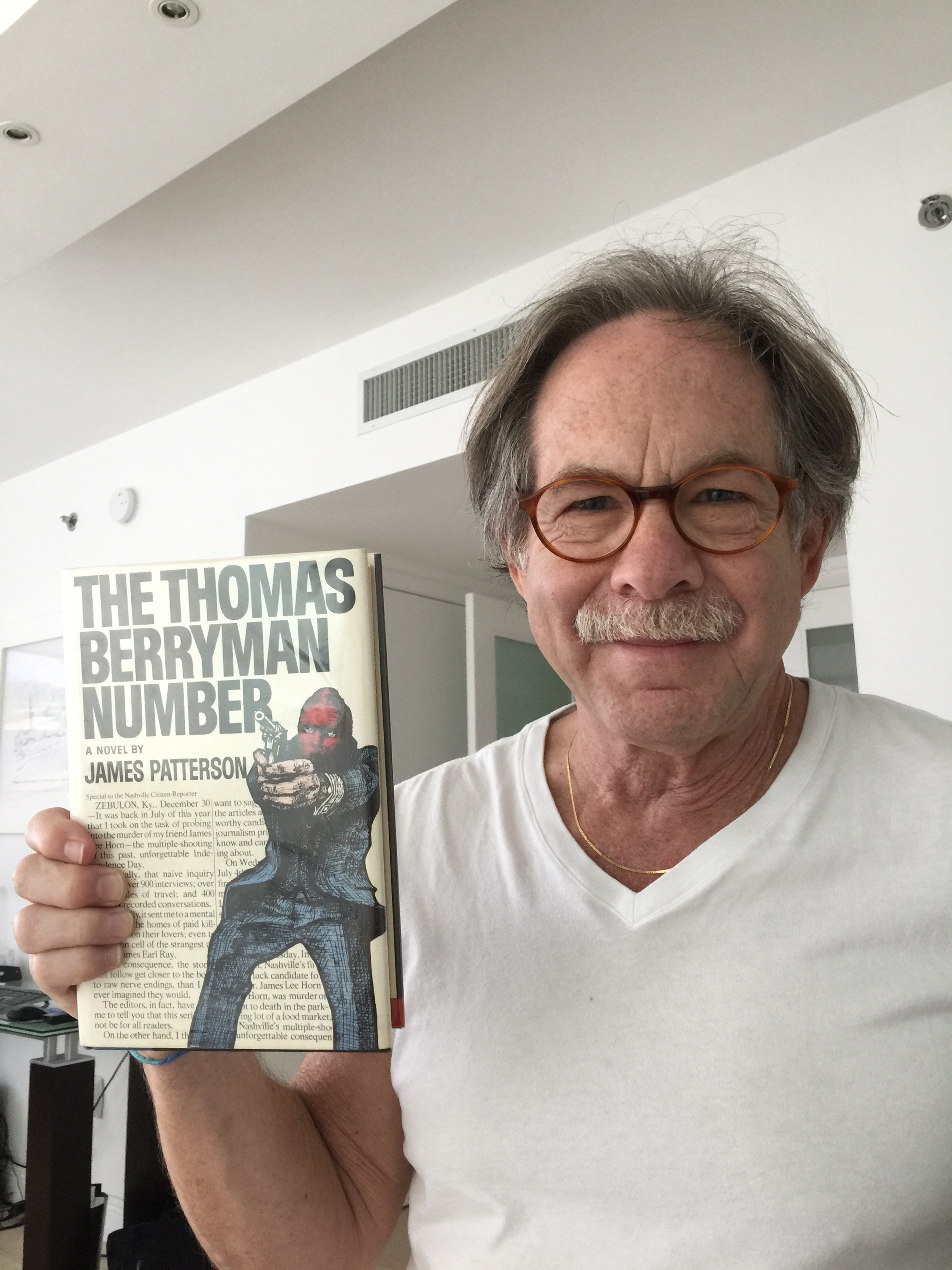
Eliot showed me his signed copy of James Patterson’s first novel. I’m not allowed to touch it because any scratch would devalue its worth.
I consider myself so lucky. A few months ago I decided to write a non-fiction book. I’m not going to reveal the topic until the book is done. It’s a sensitive topic and it requires many confidential conversations.
I also don’t want to talk about it because I’m not sure how I’m going to tell the story. All I am doing now is gathering the information. I’m so grateful to the people who are helping me. I’m also checking out how some of my favorite authors structured their stories. I might follow their path.
Today, I found out about Master Class, an online video-based tutorial site where I can learn more about writing a book. They also have a few other topics. The teachers are the best in their field: Dustin Hoffman for acting, Serena Williams for tennis, Annie Leibovitz for photography, and James Patterson for writing. I am sure other categories will be added soon. I consider myself so lucky because James Patterson, one of the most successful authors in the world, is going to give me encouragement and tips on how to write my book.
The best part of this is that the classes are all online and I can go at my own speed. Each Master Class costs $90. I get up to three hours of video-based lessons as well as a series of interactive exercises. I will also receive teaching materials that include some of James Patterson’s early drafts to see how his novels developed.
I just took my first two lessons today. I can’t believe that so many of my questions have already been answered. Watch the videos below to get a flavor of what this is all about. I am so excited that I am a participant.
Here are some of my lessons.
INTRODUCTION
Your instructor, James Patterson—currently the best-selling author in the world—lets you know what he has planned for your class and what you’ll need to learn to start writing your own best-sellers.
PASSION + HABIT
Getting into the proper mindset is an essential first step to writing a best-seller. This lesson explores James’s secrets for staying focused, productive, and motivated.
RAW IDEAS
How do you recognize a great idea? How do you figure out if it’s worthy of your effort? James spells out the techniques he uses to generate his ideas and then separate the good ones from the less compelling ones.
PLOT
With the right plot, your reader won’t be able to stop turning the pages. In this lesson, James measures out his unique approach to developing plot lines that keep readers wanting more.
RESEARCH
For James, conducting in-depth research not only makes his writing better, it also boosts his credibility with his readers. Find out when and how James conducts his research and how he incorporates it into his writing in a thoughtful way. OUTLINES PART 1
James’s secret weapon is a comprehensive outline. Learn how he sets himself up for a fast and successful first draft. No matter what, don’t skip this lesson!
OUTLINES PART 2
James has never shown the outline for his best-seller Honeymoon to anyone (not even his publisher) until now. Follow along with the outline provided in your Class Workbook as James further explains his process.
WRITER’S BLOCK
Even when you’ve written as many books as James has (76 best sellers and counting), there’s still nothing scarier than staring at the blank page. Here’s how to conquer those fears.
CREATING CHARACTERS
From Alex Cross to Michael Bennett, James has mastered the art of creating complex and memorable characters. Hero to villain, learn how to make your character stay with your reader well beyond the last page.
FIRST LINES
Grab your readers attention quickly, and make them hold on for dear life. James shares his tips for getting your reader hooked from the very first line.
WRITING DIALOGUE
Dialogue should always push the story forward. Listen to James explain a few common dialogue pitfalls and easy ways to avoid them.
BUILDING A CHAPTER
James is well known for his numerous short and snappy chapters. Learn how he propels the reader through the book with an outline as his roadmap.
WRITING SUSPENSE
The secret to suspense is…
ENDING THE BOOK
We’ve all read great books with terrible endings. Of the infinite possible endings, learn how James chooses the right one.
EDITING
James is liberal with a red pen; his editing is key to keeping the reader engaged. Learn how to trim the fat with our interactive editing assignment.
WORKING WITH A CO-AUTHOR
When does James decide to use a co-author and is it a true collaboration? In this lesson, we meet two of his most trusted co-authors who share their process for making a collaboration truly successful.
GETTING PUBLISHED
Author of 76 best-sellers and holder of the Guinness World Record for the first person to sell over 1 million eBooks, James knows a thing or two about getting published. In this lesson he shares what he’s learned.
BOOK TITLES AND COVERS
Readers do judge books by their covers. What should they think about yours?
MARKETING THE PATTERSON WAY
Before publishing his first book, James was an executive at a top ad agency in New York. Find out what James learned from his time in advertising, and how he used it to change the book marketing game.
HOLLYWOOD
What happens when Hollywood takes an interest in your story? Sit back and listen as James shares the best and worst moments from his time on the set.
PERSONAL STORY
Every master begins as a student. James shares his long, winding path to becoming the world’s best-selling author.
CLOSING
You’ve been given the tools to help write your next book. Now what?
I heard about a keyboard that will allow you to type and swipe. It would be totally awesome to do both on the same surface.
It’s not totally developed yet, but a group of tech guys are trying to raise money on Indiegogo to get this product to market. They already raised their target money of $30,000. They are now up to $55,000 and still have more than a month to go.
Their product is Moky, a rechargeable Bluetooth keyboard with a built in gesture- touchpad that’s located right on top of the keys. The developing team says, “The design enables scrolling and pinch to zoom in the same place where you type. The keyboard has embedded Infrared laser sensors at the corners to create a virtual touchpad field which, once triggered, can tell where your fingers are moving, and translate those touchless swipes into navigation.”
I don’t think a retail price has been established yet, even though they plan to have the product ready by October. It’s going to be very interesting to see how many Americans make this a must-have product.
J.P. Morgan, Coca-Cola, and Bloomberg are just three of the growing number of big name companies that are cutting out voice mails for their employees. I couldn’t believe my ears when I first heard about this. It seems that the younger workforce has no use for voice mail and companies can save an average of $10 a month, per person, if it is cut.
I can remember when getting a bunch of voice mails at the office was a sign of being important. Today, the majority of people under 50 do not check their voice mail in the office, or on their cells. It’s just passé.
I tested the use of voice mail on several clients recently. No one listened to my message. Younger folks see your phone number on their incoming directories and either call back, or ignore altogether. It depends what mood they are in.
The simple truth is that texting has replaced voice mail. Most people don’t want to waste time listening to long-winded voice mails. Text messages are to the point and are more focused on what needs to be discussed.
Read more about this topic in Forbes and the Wall Street Journal.
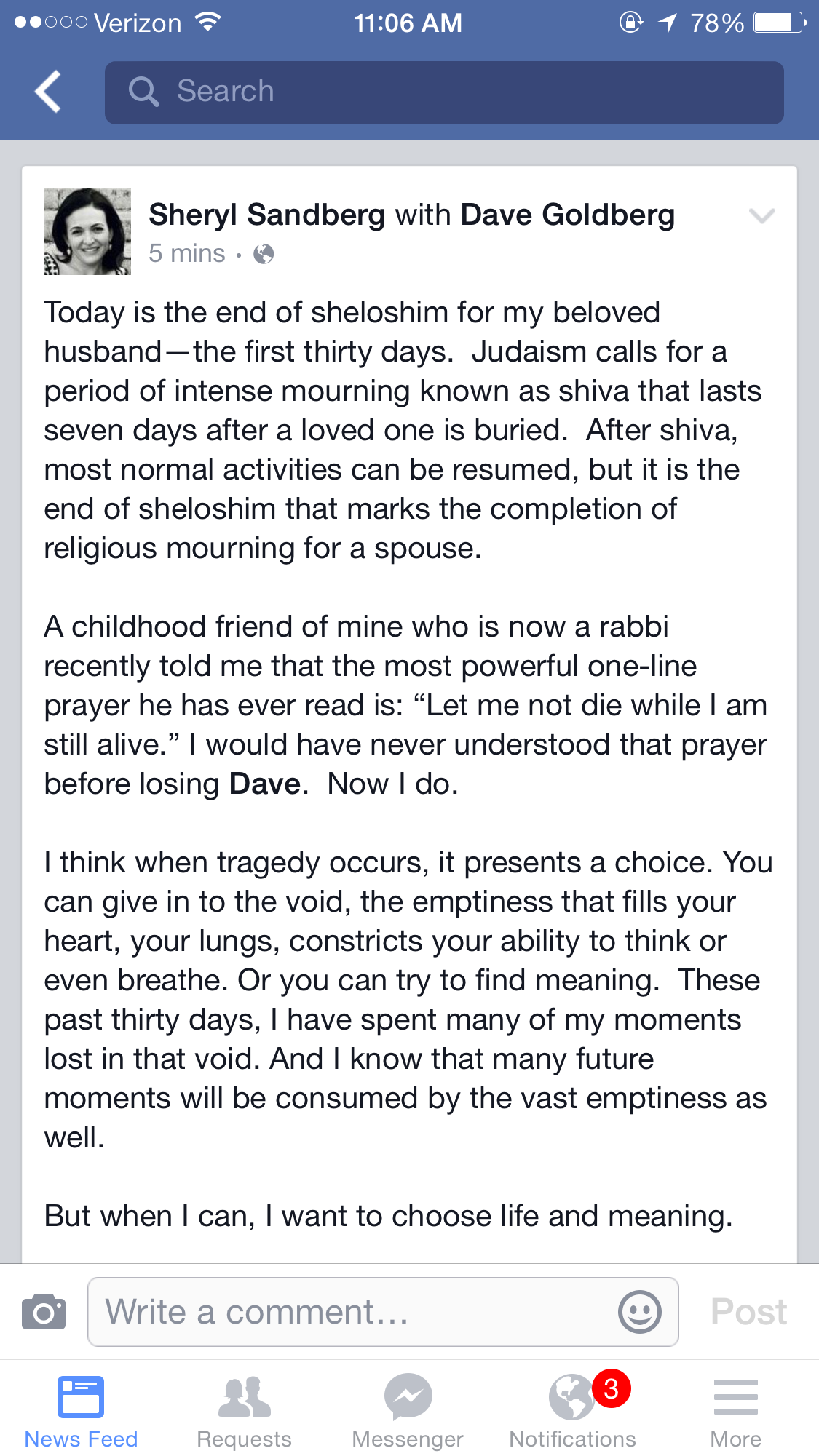
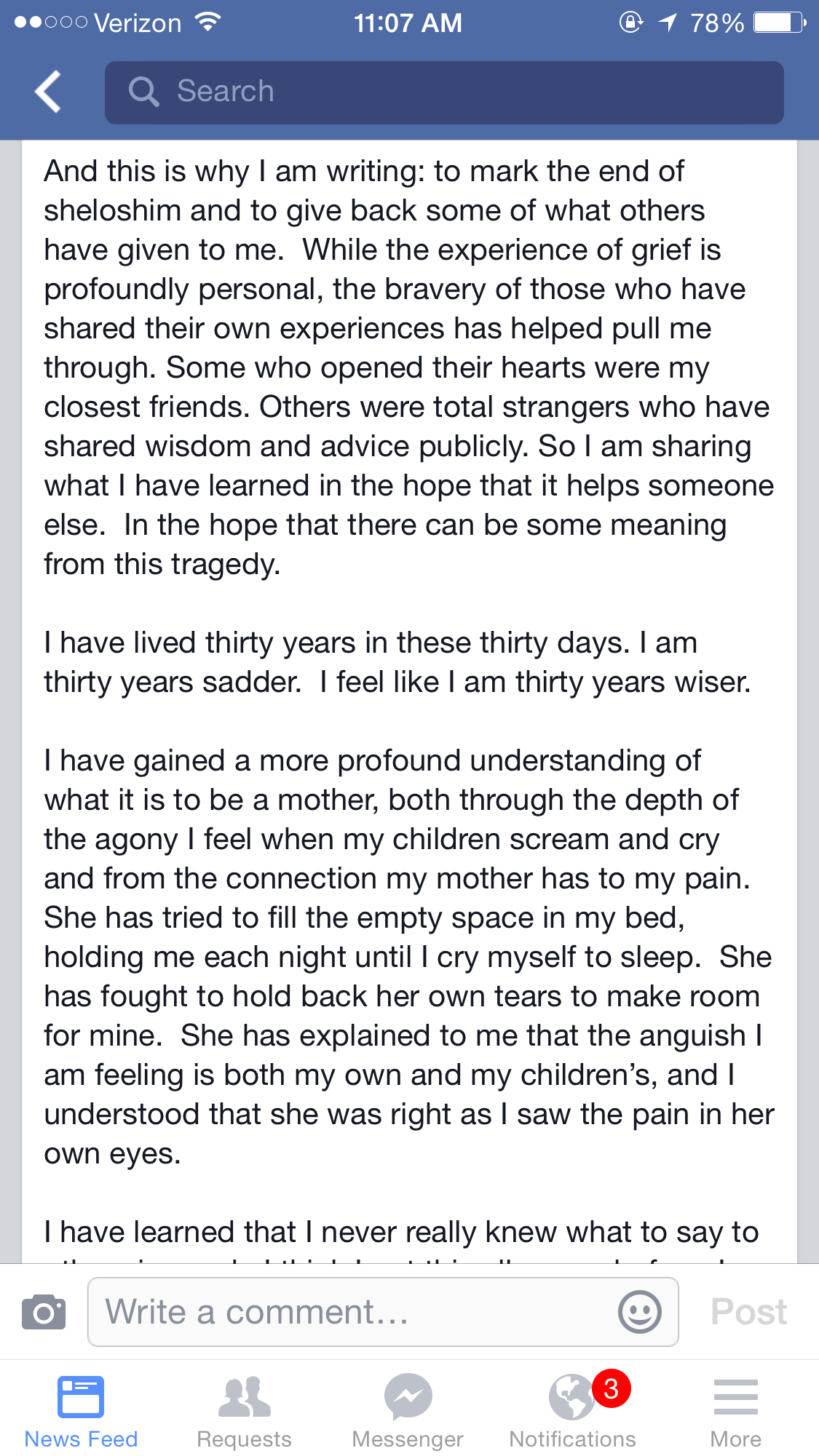
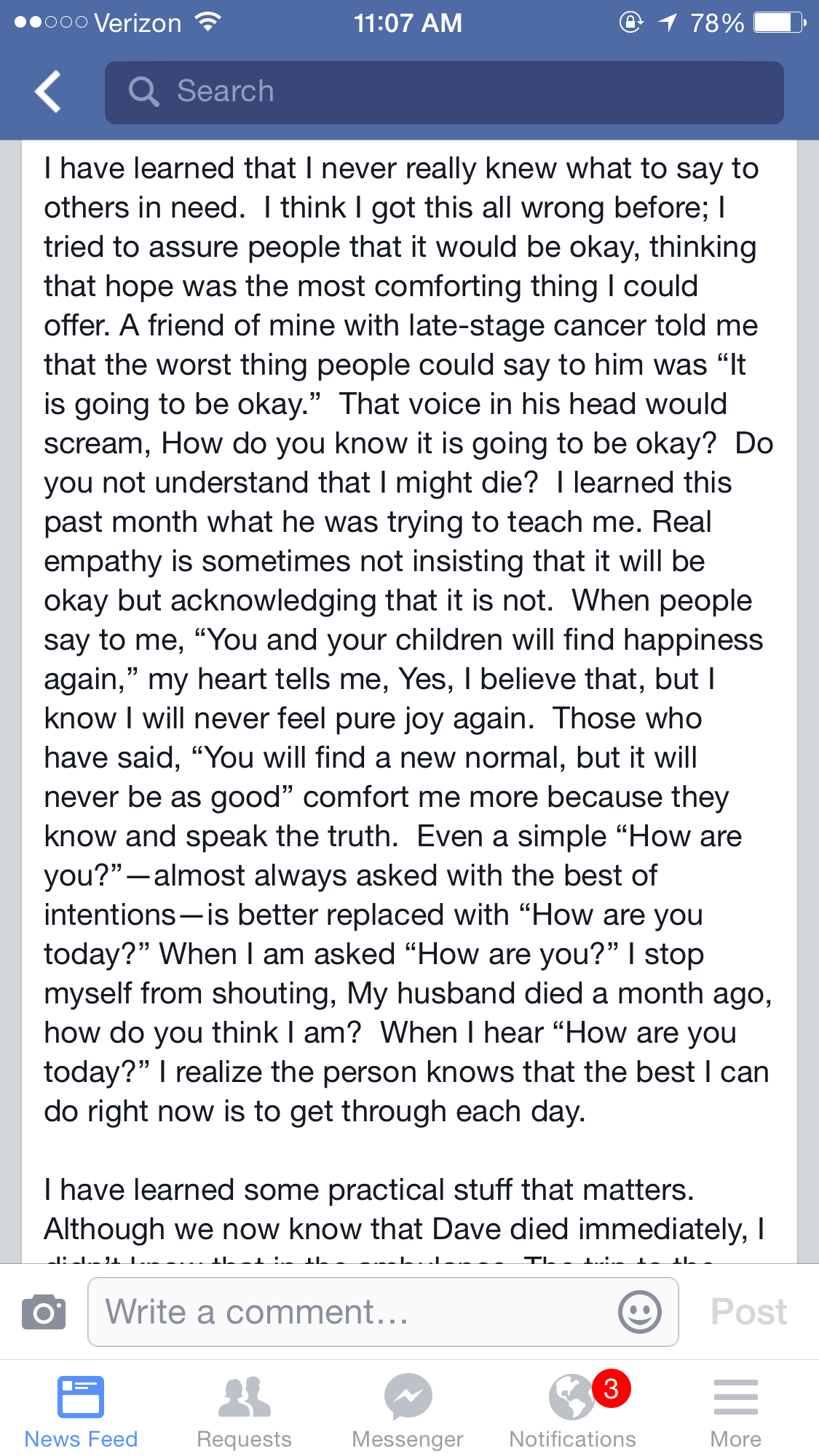
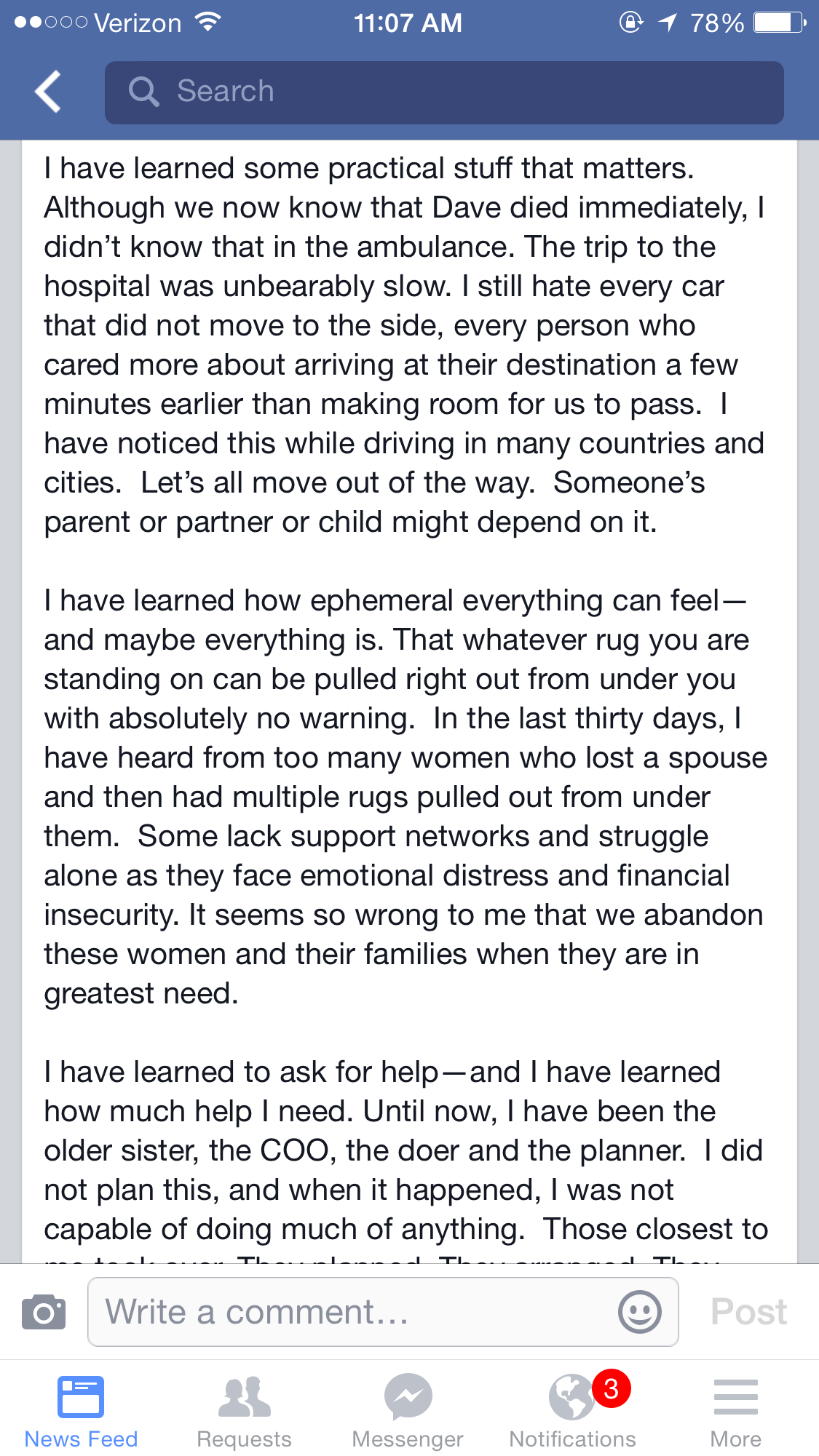
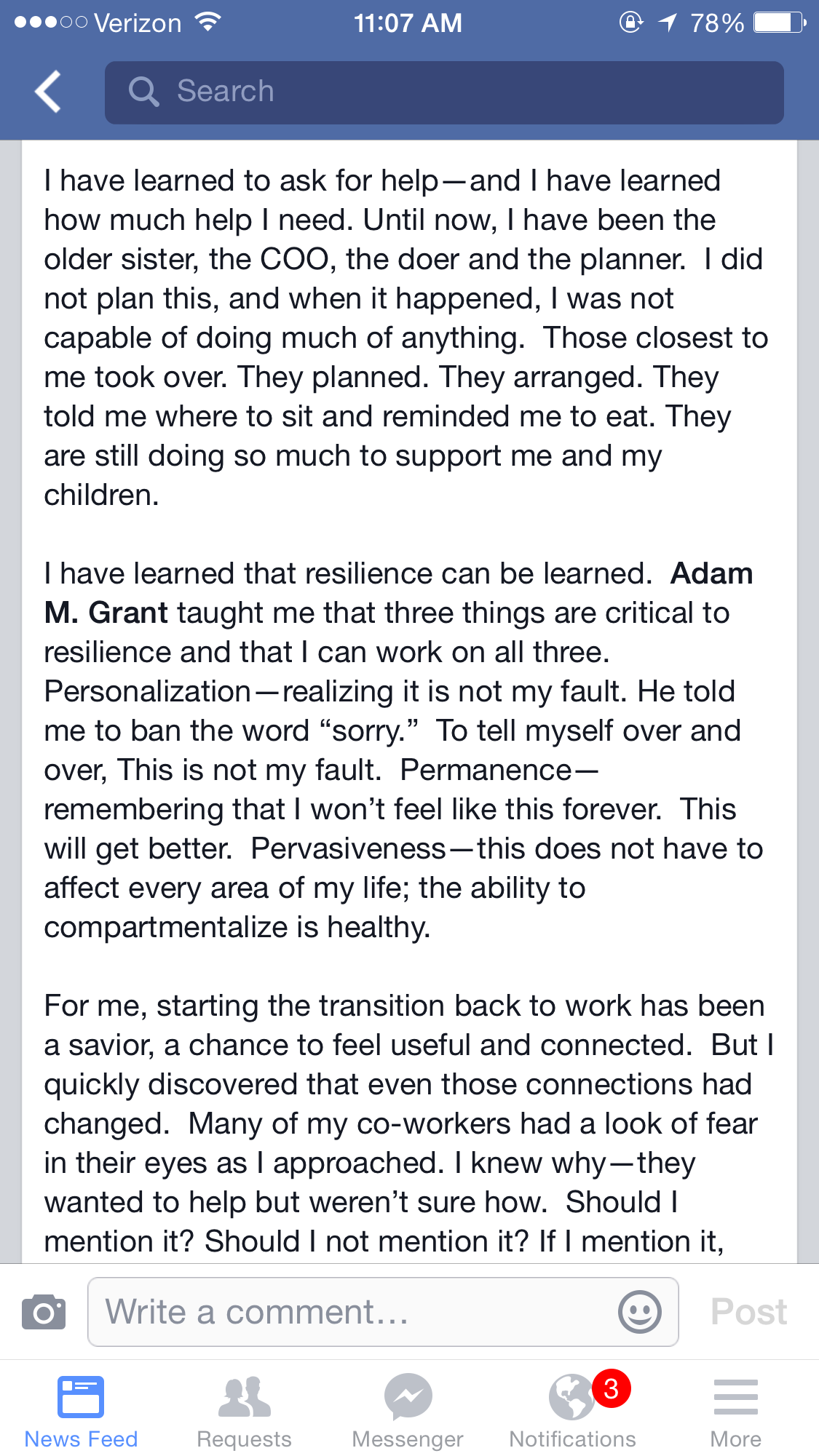
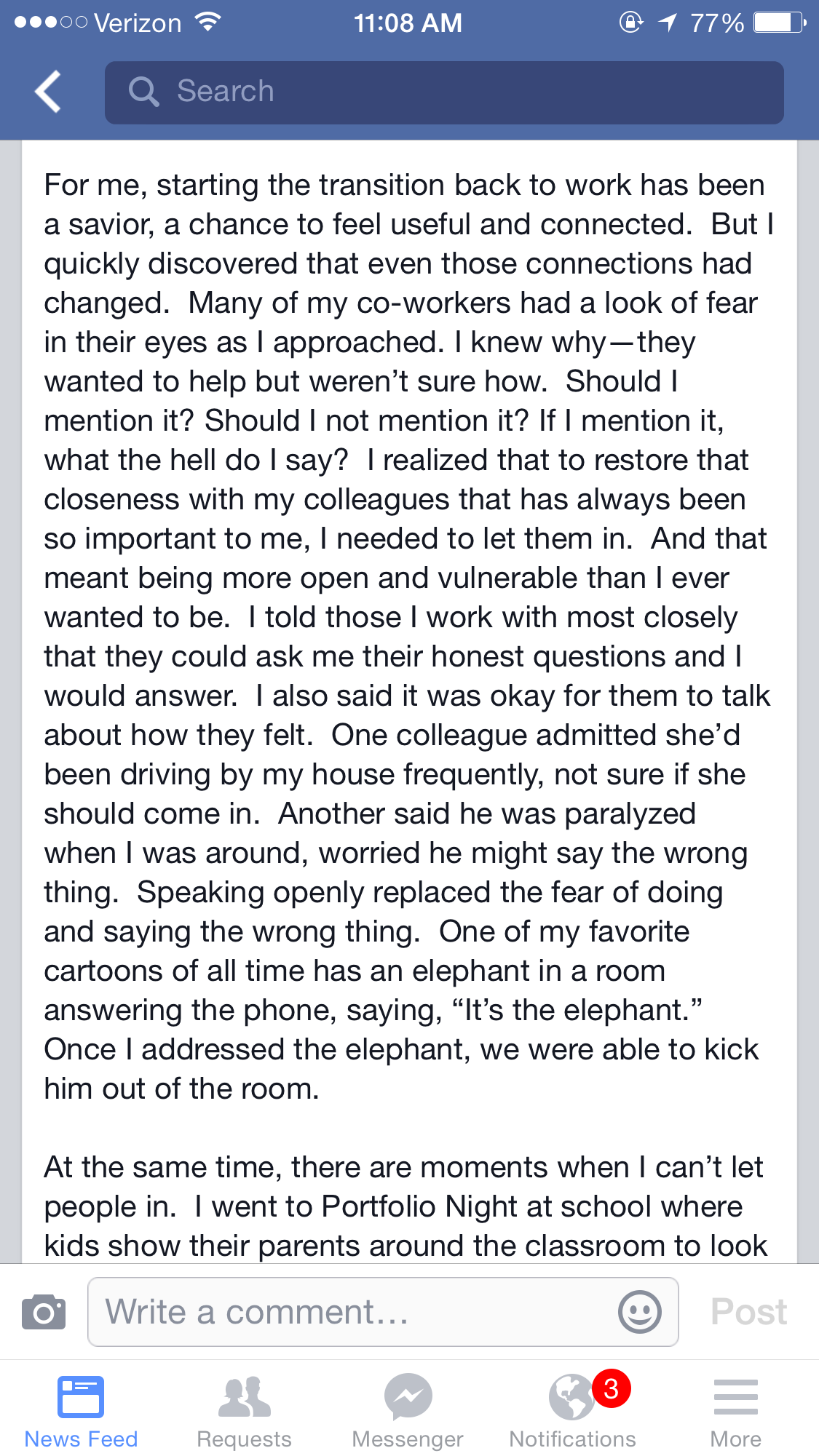
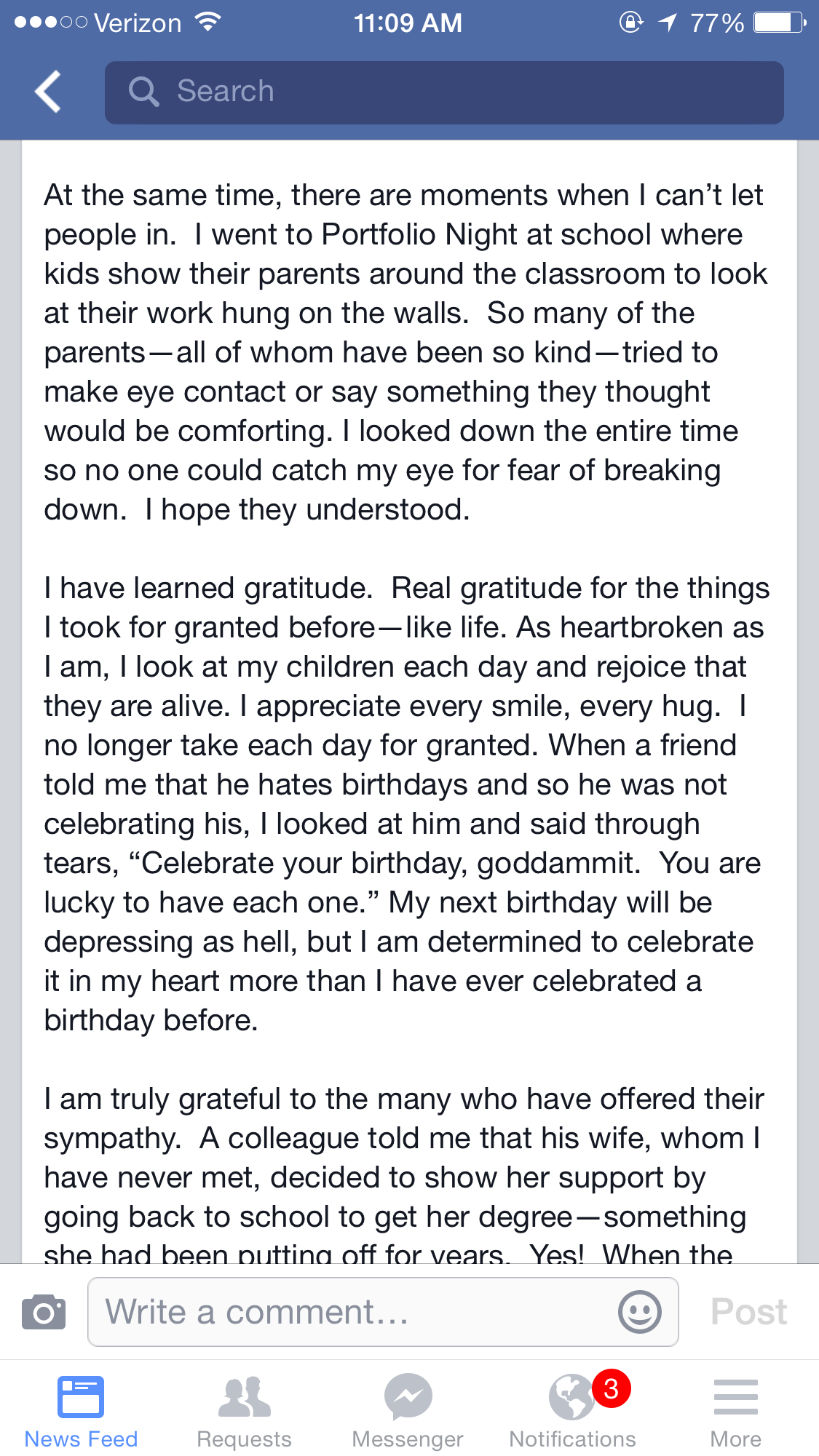
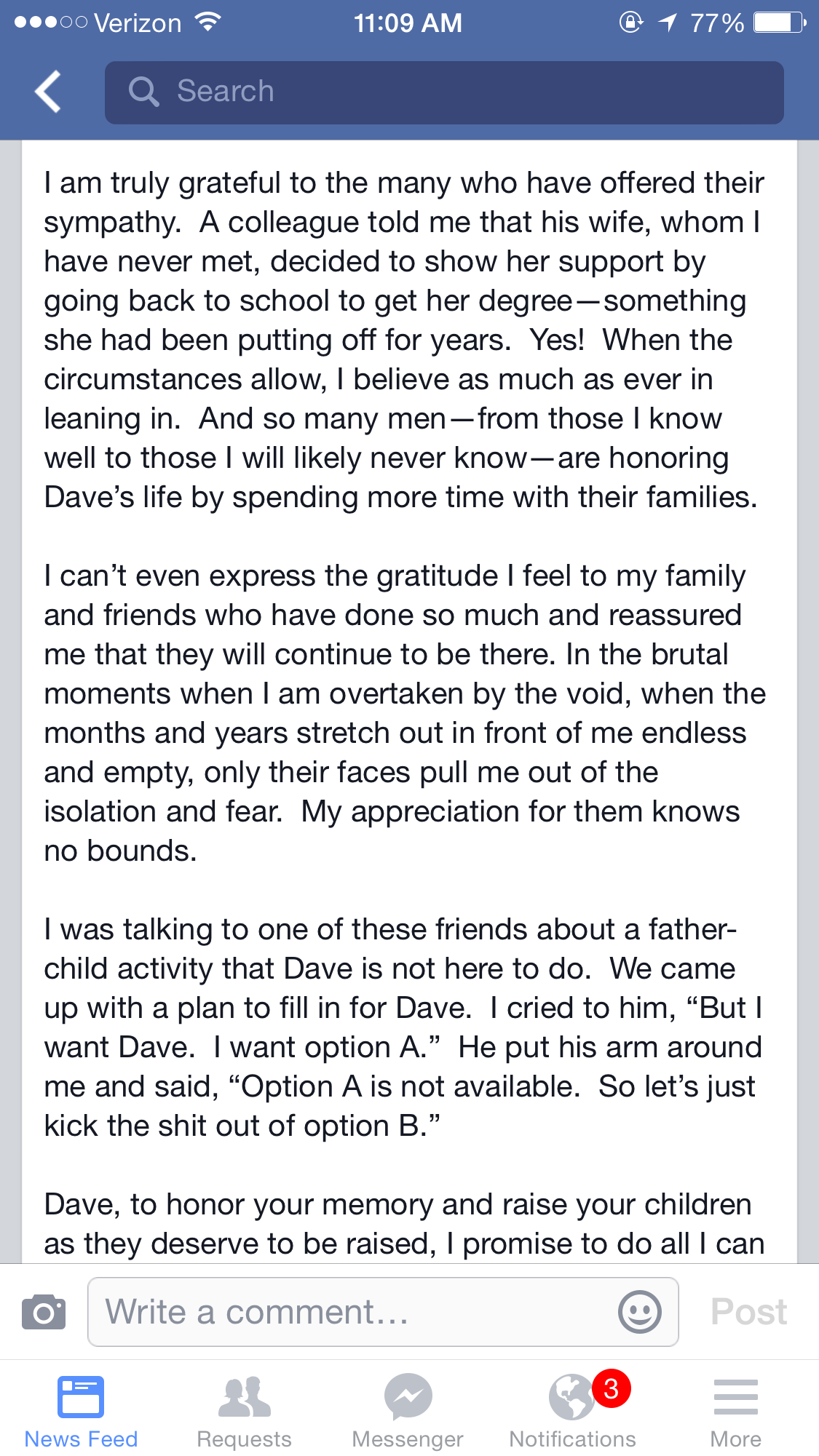
I am fully aware that Sheryl Sandberg, COO of Facebook, is not the only one who lost a spouse at a relatively young age. However, watching a major personality deal with a dramatic change in life is a big lesson for many of us. We look to people like Sheryl for guidance. This is what she posted on Facebook yesterday.








 DigiDame