Me too. I received an email last week from a renowned perfume company with that headline. The body of the email went on to say, “We understand that this can be a difficult time for some people. If you would like to opt out of Mother’s Day emails, please let us know.” Alright, I am letting you know. And also, opt me out of Father’s Day and Valentine’s Day and a variety of other holidays that are antiquated and emotionally inefficient in today’s culture.
As a family that has faced profound loss, it is obvious why Mother’s Day is difficult. Of course, the death of a child, in my case my magnificent 32 year- old son to suicide, is the epitome of holiday rejection. The pain of his absence in my life is magnified on that day and triggers the questioning of my feelings of inadequate love to him and my failure to keep him safe and healthy. I always refer to David in the present, and yes, wonder what I could have done differently as his mother.
Intellectually, I have come to terms with the idea that I couldn’t change him. I tried, and I failed. My daughter Elizabeth helps me, as we intellectualize his pain and his demons. We have concluded and accepted that life was just too difficult for him.
But then Mother’s Day arrives every year. I feel like a fraud and a failure that I couldn’t fix or save my son. When Father’s Day arrives, my heart aches for my daughter. Her loss is enhanced by the presence of social media and the profound commercialization of these holidays. On Elizabeth’s first Father’s Day without her dad, I rushed and planned a trip to Paris with her, to remove her from the media in the United States. It worked, and what a pleasure it was to bike ride in the Jardin des Tuileris that Sunday, with no thought or mention of the antiquated holiday.
But, under no condition should I corner the market on disliking Mother’s Day and feeling unhappy or inadequate that day. There are so many complications to the holiday that foster uncomfortable feelings and pain. Let’s explore the various subsets that exist that make these “Hallmark Holidays” horrible. While businesses in the United States are marketing the need to buy cards, flowers, gifts and make dinner reservations, so many people are conflicted and dis-associated with the celebration.
I was discussing Mother’s Day weekend with a friend the other day, and she commented, “I hate Mother’s Day. I miss my Mom so much.” I was taken by surprise. Here she was a woman in her 60’s, with a healthy, happy family that appeared to respect and care for her in her important role of mother. Her pain on this holiday was derived from her own relationship with her mother. She did not associate that day with her role, but was mourning the loss of her own relationship.
And then there are the complications of the day. The families whereby adult children have difficult relationships with their parents, parents that have complicated relationships with their children, the adult child that doesn’t enjoy time spent in this celebration, the introduction of a spouse’s family and their demands on the holiday and balancing your own motherhood with the needs of in-laws and parents. The expectations of the day and the commercialized celebration can be daunting and often disappointing.
More obvious are the changes in the American family. With the societal occurrence and acceptance of single parent families, the prevalence of divorce in our culture, two-Moms or two Dads as a family unit, foster care, adoption and surrogacy- there are so many options to choose from. This evolution in the family unit should force our culture to re-evaluate holidays that alienate and cause uneasiness in our youth and adult population alike. Imagine that child in school that is motherless or fatherless while making an art project or card for a phantom person.
Husbands mourn deceased wives and wives mourn deceased husbands. The break-up of the family from death or divorce certainly doesn’t need reminders of imperfection. As we evolve as a culture, it is probably time to take a good hard look at the holidays that emerged at the turn of the 20th century that no longer reflect our norms and values. Anna Jarvis is considered the founder of Mother’s Day in 1908. After gaining financial backing from the Philadelphia department store owner John Wanamaker, she organized the first official Mother’s Day celebration at a Methodist church.
That same day thousands of people attended a Mother’s Day event at one of Wanamaker’s retail stores in Philadelphia. The onset of commercialization. Anna Jarvis was unmarried and motherless her entire life. Her motivation to establish Mother’s Day as a national holiday was to promote female-centric holidays in a male dominated world. In 1914, President Wilson signed a bill making Mother’s Day a national holiday. By 1920, Jarvis had become disgusted with how the holiday had been commercialized. She outwardly denounced the transformation and urged people to stop buying Mother’s Day flowers, cards and candy. Jarvis also launched countless lawsuits against groups that had used the name “Mother’s Day,” eventually spending most of her personal wealth in legal fees. At her death in 1948, Jarvis had disavowed the holiday altogether, and even actively lobbied the government to see it removed from the American calendar. Alas, to no avail.
Have we not evolved in our culture to re-evaluate and correct holidays that are outdated and obsolete? In our new woke society, it seems impossible that these celebrations have slipped through. I briefly mentioned social media in regard to the holiday, but this single force is probably the most problematic of all. Watching people profess their magnified feelings and love for specific people, enhancing the lives of those that they have lost, or simply presenting their celebrations and “moments” to the world, can and does cause impending inadequacy, fear of missing out (FOMO), depression and unhappiness, in light of others pronouncements.
Social media has become a pervasive tool to demonstrate to the world an often fabricated form of one’s life. Allowing people to post on social media is not my cause, but the examination of its destructive force is. The answer is to turn it off, go off social media that day or days beyond. But, as we know, that is easier said than done. This national addiction affects us all, we know it, but we cannot resist. The proverbial train wreck. And on these holidays, the ultimate train wreck.
Mother’s Day, Father’s Day, Valentine’s Day and other commercialized holidays will come and go on the calendar. Maybe it is time to take a good- hard responsible look at how we present them in our lives, in our businesses, in our classrooms and in our culture. So, the next time you receive a text or email that reads, “We understand Mother’s Day can be a difficult time for some. Text PEACE to unsubscribe,” go ahead-don’t feel guilty or inadequate, feel empowered.
Author
Susan S. Warner
I am an educator, wife and mother. My journey is a perfect example of life’s contradictions. A storybook marriage of 38 years and two magnificent children, I existed in the comfort of an extraordinary cocoon of family and friends. Enter the devasting suicide of my 34-year-old son and then the subsequent death of my husband 6 months later of a virulent cancer in an eight-week diagnosis to death, my story is of acceptance, pushing on and not being defined by social emotional norms. I am living my best life, making choices that define my “right turn” after my catastrophic loss, and characterizing a journey to self-actualization and a commitment to help others who have experienced loss. Rediscovering who I am, what lies ahead and the adventure at hand.
The fall and rise of Marc Roberts, Miami nightclub and condo impresario
Marc Roberts (Photo by Sonya Revell)
From the second floor VIP lounge of E11even nightclub in downtown Miami, Marc Roberts gazed down at a parking lot he bought in the city’s Park West neighborhood. It was late in the afternoon on a recent Thursday, hours before hordes of YOLO partygoers were set to pack Roberts’ lucrative nightlife venue for an early start to the weekend.
“I don’t do any other real estate business except here in this neighborhood,” Roberts said. “There is enough money [to be made] here for me and my family. Thank God, this club does great.”
For more than two decades, Roberts, 62, has bobbed and weaved through South Florida’s real estate world like the big-name boxers he used to represent. In the late 1980s and 1990s, he made his bones as a sports agent and manager whose client roster included then-heavyweight champs Ray Mercer and Shannon Briggs.
In the early 2000s, he left the sports arena and stepped into the real estate ring by doing condo conversions in three states and teaming up with Miami Worldcenter master developer Arthur Falcone to assemble more than 25 acres for the massive $4 billion mixed-use project that today features condos, apartments, office and retail.
However, the 2008 real estate and stock market crash nearly knocked Roberts out of contention. The next three years were marred by a nasty breakup with a longtime mentor and friend whose credit he used to finance close to $100 million in loans used for real estate investment projects, including land purchases tied to Miami Worldcenter, according to court records.
In 2009, Harvey Silverman, a Wall Street trader, filed lawsuits in Palm Beach Circuit Court and New York federal courts that accused Roberts of embezzlement and other chicanery. Roberts countersued Silverman in Miami federal court for leaving him holding the bag on the $100 million in debt they owed several banks.
“2008, 2009 and 2010 were very stressful,” Roberts said. “I lost $50 million in equity and owed the banks $100 million. I went through a lot of sleepless nights.”
Today, Roberts with his business partner, Miami Beach real estate investor Michael Simkins, co-owns 3.5 acres in Park West, including the E11even site. He also owns other downtown Miami properties primed for redevelopment with Los Angeles real estate investor Romie Chaudhari and Titan Capital’s Ira Saferstein.
Since opening in 2014, E11even has become a global brand in the world of late-night entertainment. The baseball hats featuring the nightclub’s distinctive logo have become ubiquitous throughout South Florida and other party spots around the country.
“We have probably sold $10 million worth of hats,” Roberts said. “The cash flow is great and amazing but if you can build a big brand, you can build a billion-dollar business.
That’s why Roberts and his partners are betting that deep-pocketed condo buyers want to live and breathe the E11even brand. These days, Roberts is posing for photos with celebrities buying units at E11even Hotel & Residences and E11even Residences Beyond, a pair of 65-story towers that will rise across the street from the nightclub. The projects are a joint venture between Roberts, Simkins and Kevin Maloney’s Property Markets Group.
The condo-hotel is already fully sold out, while the second condominium is roughly 75 percent sold out, Roberts and PMG principal Ryan Shear said.
“This neighborhood is where all the big boys play,” Roberts said. “To go up 60, 70 stories, you have to have a lot of money. This is going to be a 24-hour district like Times Square. That’s why I stay in this area where I know and believe in.”
Drunk on Kool-Aid
Silverman met Roberts in the late 1980s when Roberts was a boxing promoter and manager, according to four lawsuits The Real Deal reviewed for this story. At the time, Silverman, a trader with Spear, Leeds & Kellogg, invested $60,000 in Roberts’ sports agency, Triple Threat Enterprises. Silverman also helped Roberts get a $250,000 unsecured line of credit that he partially used to cover personal expenses. When Triple Threat went public, Roberts paid off the credit line and Silverman made a profit from his investment, court records state.
By 1995, the pair’s friendship blossomed into a “father-son relationship” and Silverman provided Roberts with a credit line of $600,000 when he started another sports agency, Worldwide Entertainment and Sports. When the company went public, Silverman received stock as consideration for the $600,000.
In 2000, Roberts left the sports representation business and got into real estate investing. He again partnered with Silverman, who used his creditworthiness to obtain bank loans that were going to be used to purchase land Roberts identified and for which he cut deals. Both men were 50/50 partners even though Roberts did not put in any money and Silverman’s credit financed the debt, court records show. null
Between 2000 and 2007, the partnership flourished as Roberts teamed up with Falcone to assemble the land for Miami Worldcenter. At the same time, Roberts also had a company called Sunvest that was converting apartment buildings to condominiums and flipping units to individual buyers. Sunvest bought properties in Florida, Arizona and Nevada, according to court records.
“We converted more than 10,000 units,” Roberts said. “My partners and I made $40 million. I didn’t know 2008 was going to interrupt the party.”
In hindsight, he should have seen the crash coming, Roberts admitted.
“I was getting guys with no income verification buying two, three condos from me,” he said. “I had Countrywide and Wells Fargo in my office. There would be lines of buyers out the door. They would get loans in 30 days. Looking back, I am an idiot for drinking the Kool-Aid.”
The crash also spelled the end of Roberts’ relationship with Silverman. According to a 2009 federal lawsuit in Miami that Roberts filed, Silverman allegedly confided that he would not be able to live up to his promises because his net worth went from more than $300 million to “probably insolvent” due to losses from the stock market collapse. Roberts alleged that Silverman told him that he suffered significant losses and that he would have to pull out of their partnership. As a result, Roberts faced lawsuits by every bank, including Deutsche Bank and Citigroup, that had provided them with credit lines totaling $100 million.
Also in 2009, Falcone left Roberts and his ownership entities with only 1 percent share of the Miami Worldcenter land assemblage, according to sources familiar with their dealings.
“Art and I did a lot of restructuring,” Roberts said. “The moral of the story is not to be saddled with debt. You learn your lessons and pick yourself up.”
Falcone declined to comment for this story.
But Roberts still had to contend with Silverman, who slugged him with three lawsuits the same year in Palm Beach Circuit Court and New York federal courts. Silverman accused Roberts of committing “persistent and flagrant acts of self-dealing, gross and willful mismanagement, including the steady embezzlement of millions of dollars in funds and financing intended for the development projects.”
The fallout from the Silverman lawsuits and foreclosure actions against Roberts led to a string of negative press. A 2009 Forbes story with the headline, “Down and Out in Miami,” summed up the former partners’ troubles as “another indication of the kind of reckless commercial real estate lending that might be lurking on the balance sheets of big banks.”
In his lawsuits, Silverman alleged Roberts raised credit lines at the banks without his knowledge and forged signatures, allegedly diverting some of the cash to “support his lavish and excessive lifestyle.” Silverman claimed Roberts allegedly used partnership funds to buy homes, a Hawaii honeymoon and a Bentley.
In his lawsuit, Roberts countered that Silverman was fully aware that he was withdrawing money from the joint venture for personal expenses. He also denied embezzling any funds and forging signatures, the lawsuit states.
Roberts filed for Chapter 7 bankruptcy in 2010, but two years later he withdrew his petition and the case was dismissed. At the time, he listed liabilities of $266 million and assets of $3.3 million.
Three of the lawsuits were dismissed administratively due to lack of action by either party, court records show. A lawsuit Silverman filed against Roberts and one of the financial institutions, First Bank, was dismissed in 2011 after all parties agreed to drop the litigation.
When reached by phone, Silverman, now 81, said he didn’t want to rehash his dealings with Roberts.
“It was about two people who were supposedly fruitful, good and honest with each other,” he said. “It didn’t work out that way. Our association has been over for many years and it is something I would like to forget. I don’t really care what he does.”
Off the mat
By 2011, Roberts found a compatriot who shares his vision for future redevelopment in downtown Miami’s Park West, a neighborhood populated by gritty industrial warehouses that is the city’s only designated 24-hour nightlife district.
Roberts partnered with Simkins, president of Miami Beach–based real estate firm Innovate Development Group, to buy up 3.5 acres in Park West, including the land where E11even was built, for a combined $19.5 million during a three-year span. Records show Roberts also bought a 6,250-square-foot nightclub space at 60 Northeast 11th Street for $800,000 during the same time period.
The pair met in 2012 when he and his brother, Ronald Simkins, were eyeing new investment opportunities in downtown Miami, Simkins said. By then, Miami Worldcenter was back on track and Wynwood, the trendy arts neighborhood currently going through a development boom, was starting to gentrify, he recalled. Sandwiched between both, Simkins saw development potential in Park West.
He was aware of Roberts’ financial troubles and the legal tussles with Silverman. “I heard anecdotally about what happened with Harvey and I know Marc was dealing with it,” Simkins said. “But it never impacted me. After spending time with Marc, I quickly understood what a great person he is, what a great network he has and what a hard worker he is.”
He and Simkins bought the E11even property from the family of Jack Galardi, a smut kingpin who owned more than 50 adult cabarets across the country and who died shortly before the deal closed in December of 2012, Roberts said. At the time, the property was home to a one-story building that housed the Galardi-owned Gold Rush strip club. The transaction included Gold Rush’s operations, which came with a 24-hour liquor license, Roberts explained.
“Within a week of buying the place, I met with all the big-strip club owners,” Roberts said. “I met the owner of Scores, the owner of Hustler, the owner of Rick’s Cabaret. The first thing they all asked me, ‘How did you get it under contract? Jack promised he was going to sell it to me.’”
The strip club owners also offered similar terms to let them run Gold Rush involving $5 million in renovations, about $100,000 in monthly rent and a 50 percent share of the profits, Roberts claimed. “They came fast and furious,” he said. “One after the other, telling us the same thing. Finally me and Simkins looked at each other and said, ‘Let’s do this ourselves. There’s more cash flow than we thought.’’
After less than a year of operating Gold Rush, the duo decided to tear the building down and replace it with E11even, a three-story party palace at 29 Northeast 11th Street. They brought in a third partner, Dennis DeGori, to run the venue as a hybrid nightclub and adult cabaret. The rooftop terrace is currently being remodeled into a new restaurant. There’s even a little Cirque du Soleil flair featuring performances by aerialists, acrobats and contortionists. And for big-money spenders looking for a little more privacy, E11even offers VIP “whale rooms” with reservations costing several thousand dollars.
“People thought we were nuts,” Roberts said. “And knock on wood, E11even is the most profitable nightclub per square foot in the world, for sure.”
No sleep, no problem
Roberts’ progression from a land-assembling nightclub mogul to condo developer kicked off over drinks at E11even with PMG’s Ryan Shear. “One night when I was here, someone came up to me and said that Ryan wants to say hello,” Roberts said. “He came over to my table and we started talking.”
Shear said the E11even encounter evolved into serious discussions over several meetings with Roberts and Simkins to build a branded tower. Across South Florida, luxury brands such as Fendi, Armani, Bentley, Bulgari and Porsche have partnered with local developers for brand-name condominiums that have been built or under construction in the last decade.
“Marc is a fun guy and he doesn’t sleep,” Shear said. “Like all good relationships, it has evolved. We started talking about doing a deal together and it went from there.
In January, PMG, Roberts and Simkins unveiled plans for E11even Hotel & Residences, a 375-unit tower at 29 Northeast 11th Street. That’s the parking lot that Roberts and Simkins paid $6 million for in 2013, records show. Designed by Sieger Suarez, the proposed project’s units will range from studios to two-bedrooms, plus a penthouse collection, all fully furnished.
A virtual metaverse tour by ArX Solutions takes prospective buyers through the multi-level E11even Day Club and pool. It’s a Las Vega–style amenity spanning 20,000 square feet and featuring cabanas, temperature controlled plunge pools and a 2,200-square-foot party pool. A DJ spins music from a two-story head sculpture. The building will also have a private members’ club, a wellness center and sports lounge.
In November, after selling out the first tower, the partnership announced plans for E11even Residences Beyond, a 461-unit condominium on the same block. The buildings will connect via a sky bridge and a path on the ground level behind the properties, according to plans. Units in both buildings start in the $300,000s. Social media influencers Jake and Logan Paul are each buying penthouses in the second tower, while WNBA player Candace Parker, ESPN co-host Sage Steele and MMA fighter Luke Rockhold are purchasing units in the first building.
“We decided to risk a couple of million bucks doing marketing and sales,” Roberts said. “Right from the start, we sold units like hotcakes. I’ve probably sold 300 directly and indirectly. Almost every athlete is mine. I could tell you some other big names who have bought, but they have not allowed me to use their names.”
Shear said that he expected it would take a year to sell out E11even Hotel & Residences, but only 10 units in the second tower remain. “Both towers are essentially sold out and it took half the time frame,” he said.
Roberts isn’t done reimagining Park West. In 2018, he teamed up with L.A.-based investor Chaudhari to buy a warehouse at 90 Northeast 11th Street where they want to open the first medical-marijuana dispensary in Miami. Roberts and Chaudhari have a pending lawsuit against the city because Miami officials refuse to issue them a permit by claiming cannabis retail stores are prohibited by federal law even though medical marijuana is legal in Florida.
In another deal, Roberts partnered with Titan Capital’s Saferstein to buy a one-acre site within the Miami Worldcenter footprint for $26.7 million in 2020. The purchase brought Roberts full circle to where he began his real estate hustle.
Now 14 years removed from the crash, Roberts said he’s not afraid of bottoming out again. He’s a big believer in cryptocurrencies, which are a volatile investment vehicle. E11even the nightclub and the E11even real estate projects accept payment in digital coins that are immediately converted to fiat money, Roberts noted.
“For one, there are no mortgages [encumbering the land,]” Roberts said. “And we have a nice cash flow [at E11even]. The club could make one-fifth of what it is making now and I will still be able to carry the land. If I gotta go through a cycle, I can do it.”
Like a grizzled prizefighter entering the 12th round, Roberts carries the scars of the financial crisis, but isn’t done being a contender.
“It’s been a rough 20 years,” he said. “We’ve had a lot of good luck.”
Full Martin & Burns: Lindsey Graham Threatened Use Of The 25th Amendment…
I’m very anxious to hear your opinion. Do you think Trump will be blamed?
From Amazon ……
The shocking, definitive account of the 2020 election and the first year of the Biden presidency by two New York Times reporters, exposing the deep fissures within both parties as the country approaches a political breaking point.
This is the authoritative account of an 18-month crisis in American democracy that will be seared into the country’s political memory for decades to come. With stunning, in-the-room detail, New York Timesreporters Jonathan Martin and Alexander Burns show how both our political parties confronted a series of national traumas, including the coronavirus pandemic, the January 6 attack on the Capitol, and the political brinksmanship of President Biden’s first year in the White House.
From Donald Trump’s assault on the 2020 election and his ongoing campaign of vengeance against his fellow Republicans, to the behind-the-scenes story of Biden’s selection of Kamala Harris as his running mate and his bitter struggles to unite the Democratic Party, this book exposes the degree to which the two-party system has been strained to the point of disintegration. More than at any time in recent history, the long-established traditions and institutions of American politics are under siege as a set of aging political leaders struggle to hold together a changing country.
Martin and Burns break news at most every moment, drawing on hundreds of interviews and never-before-seen documents and recordings from the highest levels of government. The book asks the vitally important (and disturbing) question: Can American democracy, as we know it, ever work again?
What a wonderful night in the theater. I pitched myself to GableStage (Coral Gables) producing artistic director Bari Newport for some project work. Let’s see if she calls. In addition to seeing the play “Boca,” Bari gave a talk about theater that explains details you always wondered about. I encourage you to listen to her. Click below. The play convinced me more than ever that Miami is the place for me.
🌹🌹🌹🌹🌹🌹🌹🌹🌹🌹🌹🌹🌹🌹🌹🌹🌹🌹
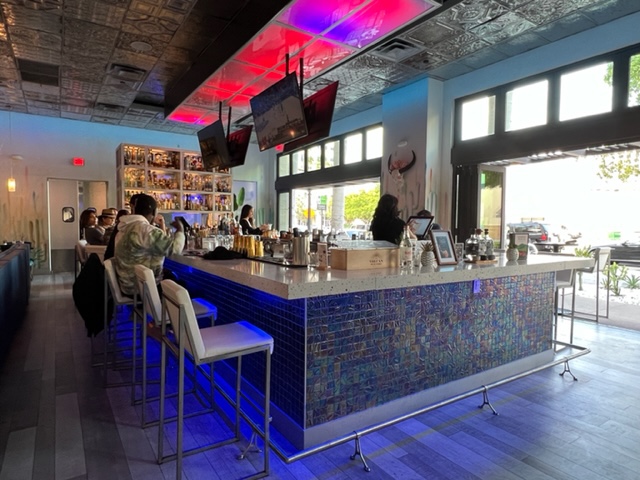
We finally found a good Mexican restaurant in Miami and it happens to be in Merrick Park, Coral Gables. Very different offerings. Everything is delicious if you are open to new presentations. Vegetarian and vegan dishes are featured. Great atmosphere.
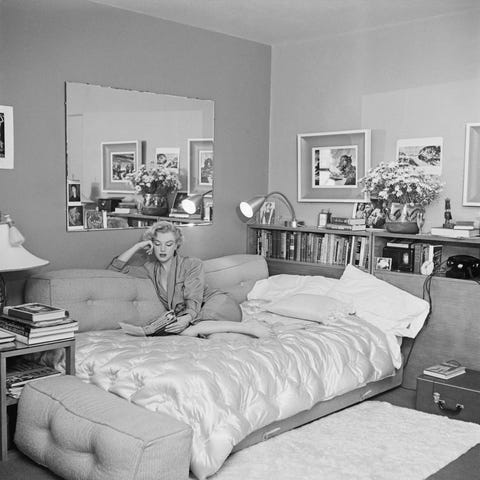
Marilyn Monroe has captivated the public imagination for decades with her instantly recognizable blonde bob and iconic hourglass figure. The woman seemed to have it all: fame, beauty, money, power. So, when the actress, a mega-sensation and sex symbol of the 1950s, died suddenly at the age of 36, everyone was left wondering what in the world happened to Marilyn.
For such a public figure, she led a relatively private life. Now, Marilyn’s the subject of a new Netflix documentary, The Mystery of Marilyn Monroe: The Unheard Tapes, which came out on Wednesday and delves into the details of her death.
Through never-before-heard interviews with friends and acquaintances, the documentary challenges the story of Marilyn’s death, bringing to light new information and calling the official, 60-year-old record into question.
So, how did Marilyn Monroe die, exactly? Well, here’s what to know.
Warning: The following contains references to suicide. If you or someone you know is considering suicide, please contact the National Suicide Prevention Lifeline.
What was initially reported about her death?
In the early morning hours of August 5, 1962, Marilyn was found dead of an apparent sleeping pill overdose in her modest Los Angeles home, the Los Angeles Timesreported.
Reporters from The New York Times wrote that Marilyn had gone to her bedroom around 8 p.m. the night before, and was eventually found “nude, lying face down on her bed and clutching a telephone receiver in her hand when a psychiatrist broke into her room at 3:30 a.m.” The initial news story said she had been estimated to have died six to eight hours prior to being found.
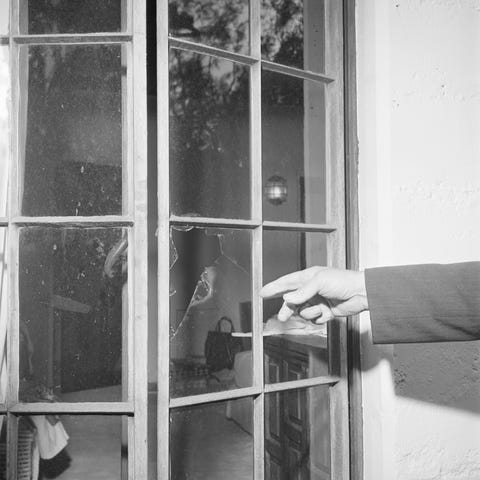
Eunice Murray, Marilyn’s housekeeper, told the Times that she became worried when Marilyn didn’t respond to knocks on her bedroom door. Murray had seen a light go on in Marilyn’s room around 3:25 a.m., but found the door locked. She reportedly called Marilyn’s psychiatrist Ralph Greenson, who came to the house and broke a window to access Marilyn’s room.
Inside, Greenson found her lifeless, with one hand clutching a phone. Another doctor was called. Marilyn was pronounced dead, but police weren’t called until 4:20 a.m., about an hour after Murray had initially called Greenson. (Doctors said they needed permission from Marilyn’s movie studio before alerting the authorities.)
Marilyn didn’t leave any notes behind, the Times reported.
What new evidence is revealed in the documentary?
The documentary raises doubts about when and where Marilyn actually died…and who she might have been with that day.
The film suggests she might have actually died in the ambulance on the way to the hospital, instead of in bed. “No, she wasn’t [dead at home],” ambulance company owner Walter Schaefer says in the documentary. According to Schaefer, Marilyn was comatose but alive when the ambulance arrived and took her to the ER.
Writer John Sherlock also says in the doc that Greenson told him Marilyn was alive at home and died on the way to the hospital. “She died in the ambulance,” Sherlock says. “Then they took her back to the house. [Greenson] told me he was in the ambulance.”
But there are photos of her body being wheeled out of her home, making the whole thing incredibly confusing.
So, why is this such a big deal?
“What I learned was information that changed completely what we thought we knew about her mysterious death,” author Anthony Summers says in the documentary. The changing story, he says, “suggests that the circumstances of her dying were covered up.”
Where, exactly, was Robert F. Kennedy the night she died?
Marilyn was reportedly romantically involved with both Robert F. Kennedy (then the U.S. Attorney General) and his brother, President John F. Kennedy.
The doc argues that RFK might have been in touch with Marilyn around the time of her death (a.k.a. he was in California, and possibly even at Marilyn’s house at one point that day), and that the delays and timeline changes allowed him time to get out of town,The Hollywood Reporterexplained.
In the tapes, Murray says that RFK was actually at Marilyn’s home on the day of her death, putting him in Los Angeles the night she died.
“Bobby Kennedy called her the night of her death from [his sister’s] house. She said, ‘Don’t bother me, leave me alone, stay out of my life.’ A very violent argument. ‘I feel passed around, I feel used, I feel like a piece of meat,'” says private detective Fred Otash in the documentary.
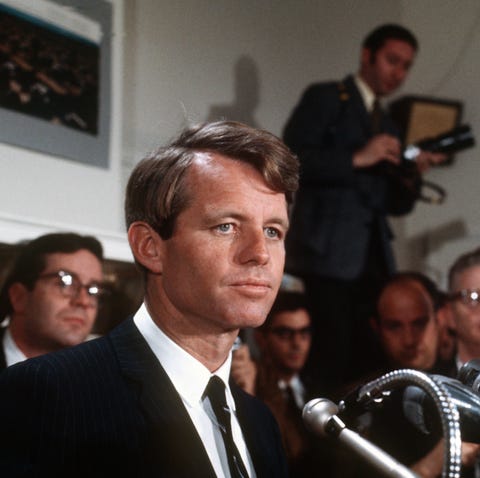
Robert Kennedy at a press conference
So why does it matter that RFK was apparently in LA? Well, over the years, a theory has circulated suggesting that the Kennedys may have been involved in covering up Marilyn’s death to keep RFK’s name out of the whole situation.
Another, more far-fetched conspiracy theory suggests that the family may have feared that Marilyn had learned (and would share) government secrets through her relationships with the brothers. Summers says in the documentary that it’s possible that “the Kennedys said, ‘Sh*t, she can make public that we’ve been discussing nuclear matters’….[and] thought, ‘We’ve got to stop all this. We can’t deal with Marilyn Monroe anymore.’”
Either way, it seems like no one wanted people to know where RFK was on August 5.
Did Marilyn really die of an overdose?
The official word is that Marilyn died of an overdose. And an autopsy report found that Marilyn died from acute combined drug toxicity, chloral hydrate (a calming medication usually used on patients before surgeries), and Nembutal (a sedative and anticonvulsant), according to People, and pill bottles were found by her bed.
However, no water glass was found in her room, which she would have likely needed to swallow all those pills, and there was no pill residue in her stomach. Cyril Wecht, a prominent forensic pathologist, told People that this suggests that “she might have been injected” with the drugs.
The coroner also allegedly took samples from Marilyn’s stomach and small intestines and asked the toxicologist to do tests on them, but they were never done.
Some details remain a mystery.
There’s actually a lot of, well, mystery that still surrounds Marilyn’s death.
According to People, Summers did a 1983 interview with Murray where he says there was a “moment where she put her head in her hands and said words to the effect of, ‘Oh, why do I have to keep covering this up?’ I said, ‘Covering what up, Mrs. Murray?’ She said, ‘Well of course Bobby Kennedy was there [on Aug. 4], and of course there was an affair with Bobby Kennedy.'”
The doc raises almost as many new questions as it answers. But I, for one, know what I’ll be watching tonight.
KORIN MILLERKorin Miller is a freelance writer specializing in general wellness, sexual health and relationships, and lifestyle trends, with work appearing in Men’s Health, Women’s Health, Self, Glamour, and more
Hailey Bieber is impressive. She is able to explain her condition well enough so we all can completely understand what she went though. The details are important to all of us. This is a learning lesson to make note of. Bieber is an American model, media personality, and socialite. She has been featured in major ads for Guess, Ralph Lauren, and Tommy Hilfiger. Bieber is the wife of Justin, a daughter of Stephen Baldwin, niece of Alec, Daniel, and William Baldwin, and her maternal grandfather is the Brazilian artist Eumir Deodato.
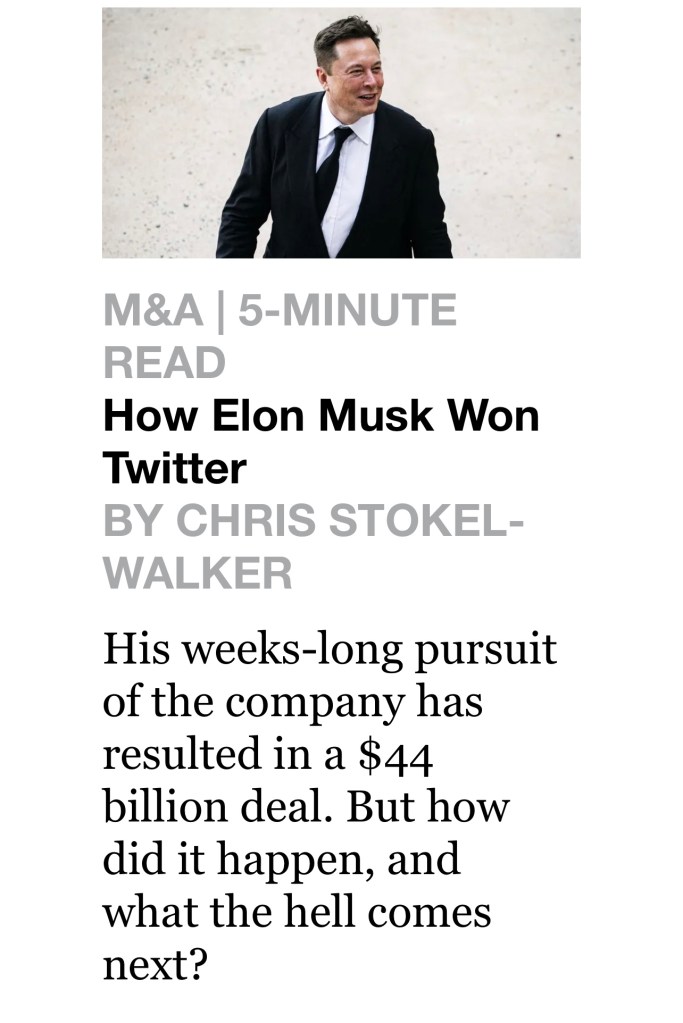
ELON MUSK BECAME the new owner of Twitter on Monday, after completing a stunning $44 billion takeover of the social media platform, ending a process that has vacillated between a done deal and dead in the water in the last three weeks.
“Free speech is the bedrock of a functioning democracy, and Twitter is the digital town square where matters vital to the future of humanity are debated,” Musk said in a press release announcing the news. Twitter independent board chair Bret Taylor described the deal as “the best path forward” for the company’s shareholders.
The result ends prolonged speculation over Musk’s financial interest in Twitter. On April 4, the entrepreneur’s 9.2 percent stake in the company—or 73.5 million shares at a cost of around $2.4 billion—was disclosed to the public. At the time, the purchase of stock in Twitter came with an offer to sit on the board—though on April 10 Musk declined to take his seat.
He soon made it obvious that he wanted the whole thing. On April 14, Musk offered to buy the remaining percentage of the company for $54.20 per share—a 38 percent premium on the price he paid for his initial investment. Musk’s accompanying letter to the chair of Twitter’s board was strident in its criticism of the platform. “I believe in [Twitter’s] potential to be the platform for free speech around the globe, and I believe free speech is a societal imperative for a functioning democracy,” he wrote. However, he added, “I now realize the company will neither thrive nor serve this societal imperative in its current form.”
Instead, he wanted to take the company private, offering $44 billion for it in a “best and final” offer. At the time, analysts were split about the likelihood of Musk’s bid succeeding, and whether it was good value; while it sat in the middle of the usual 30 to 40 percent premium above the trading price, the stock price had reached well above that just last year. Twitter’s board, for its part, said it would evaluate the offer.
“He’s setting a bit of a precedent for activists that will go after a company,” says Timothy Galpin, senior lecturer in strategy and innovation at the Said Business School at the University of Oxford. “It’s been done a bit before by Carl Icahn and a few others, but it’s not as prevalent to go after the whole company.”
On the same day that he lodged his bid to take over the entirety of Twitter and take it private, Musk appeared at a TED talk in Vancouver, where he laid out his vision. “This is not a way to sort of make money,” he claimed. “My strong intuitive sense is that having a public platform that is maximally trusted and broadly inclusive is extremely important.” That gave some within Twitter, and those who held large shares in the platform, pause.
Contemporary reports indicated Twitter would fight to repel Musk, while the Tesla and Space X CEO got into a Twitter spat about press freedom with Saudi Arabia’s Kingdom Holding Company, a major shareholder that said it would reject Musk’s offer.
Such social media battles may be unusual when considering a takeover of a massive business, but Musk is himself unusual, says Cary Cooper, a business professor at Manchester Business School. “He’s not a traditional businessman,” he says. “He’s a man that is pretty creative and pretty innovative. He’s a unique guy and does things in a way that a normal businessperson wouldn’t do. He doesn’t play the normal games that an entrepreneur would play.”
On April 15, Twitter’s board triggered a break-glass-in-emergency financial tool: the poison pill. Also known as a limited duration shareholder rights plan, the poison pill invited shareholders to increase their investments in Twitter in order to reduce Musk’s ability to build his stake up into a controlling one. Any attempts to take his share over 15 percent would require Musk to negotiate with Twitter’s board.
Triggering the poison pill headed off the speedy hostile takeover, but Musk’s offer never left the table. On April 21, Musk outlinedhow he’d come up with the $44 billion in cash required to fulfill his bid. Morgan Stanley and other firms offered to back Musk’s bid, while he’d pay around $21 billion from his own estimated $263 billion fortune. The filing put meat on the bones of what had previously been a speculative offer—and indicated how seriously Musk wanted to take Twitter private.
The confirmed funding reportedly causedsome of Twitter’s shareholders who were more agnostic about Musk to petition the company to hear him out. Meetings reportedly took place over the weekend, and Twitter’s board met on April 25 to recommend the deal to shareholders. It was a swift and surprising reversal. “On Friday, there was so much skepticism and cynicism, and now it almost looks like a done deal,” says Vasant Dhar, a professor of information systems at NYU Stern. Musk’s quick movements have left other potential bidders stuck playing catchup. But the deal appears to have passed the money test, at least for Twitter’s board of directors, since “the board’s fiduciary responsibility is to get the most value for shareholders,” says Galpin. “Obviously, there are questions about what he’ll do with the company if he takes control of it. He’s got to do more than just add an edit button.”
Taking the company private would allow Musk to make the changes he wants far more quickly, without answering to public markets. “I also want to make Twitter better than ever by enhancing the product with new features, making the algorithms open source to increase trust, defeating the spam bots, and authenticating all humans,” Musk wrote in Monday’s press release.
“I think he’s played it brilliantly,” says Dhar. “One could have expected the reaction we got: ‘Musk is a megalomaniac and he’s doing it for self-promotion.’ But I actually think there’s a lot more to it than that.”
It’s possible that the purchase will come under regulatory scrutiny. While there’s unlikely to be an antitrust concern, the Securities and Exchange Commission could still take issue with Musk’s disclosures along the way. “You could ask a court to enjoin the deal on the basis that he has improperly filed,” says Pritchard. “He didn’t file his initial stake on a timely basis, then he filed the wrong form because he really had the intention of influencing management the whole time,” he suggests. That, however, would require showing the harm caused by those infractions. Shareholders could lodge private lawsuits but would likely only succeed in getting more money from Musk in the deal. And the SEC is unlikely to halt the transaction because of the damage that could do to shareholders.
It seems Elon Musk will almost inevitably assume control and ownership of Twitter—changing the face of the platform in the process. For some of Twitter’s millions of users, it’s a welcome development that gives them more freedom to say and do what they want. For others, it’s a worrying development with potentially chilling consequences. As for the shareholders, and Musk himself, things are looking rosy.
“Shareholders will feel like they’ve won, and Musk has got what he wanted,” says Galpin. “He’s got control of the company, for not an exorbitant price but not a cheap price either. Nobody really gouged the other one, and nobody lost.
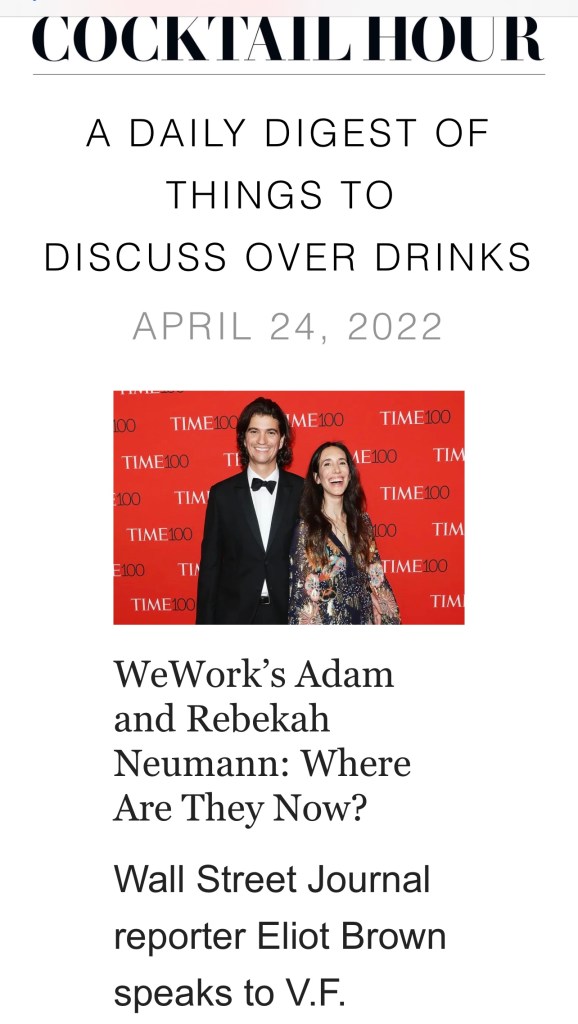
WeWork’s Adam and Rebekah Neumann: Where Are They Now?
I am sharing this story with you because most people I speak to seem very confused about the outcome of Adam Neumann’s journey with WeWork. After reading this, I once again feel like we are living in a world being led by bullies and dare devils. Maybe it has always been like this but many of us never truly understood it—-LWH
Wall StreetJournal reporter Eliot Brown speaks to V.F. about Adam Neumann’s “golden parachute” and what the disgraced tech leader has been up to since his WeWork exit, as depicted in the finale of Apple TV+’s WeCrashed.
Apple TV+’s WeCrashed ends its eight-episode run on Friday, with Adam Neumann (played by Jared Leto) exiting WeWork with his storied “golden parachute” deal. The astonishing exit package was estimated to be worth over $1 billion—even though the company, under his leadership, lost roughly $40 billion of its $47 billion valuation, withdrew its IPO, and screwed over employees hoping valuable stock shares would offset long hours and alarming office culture. (It later went public through an SPAC.)
This infuriating exit is eased, to WeCrashed viewers at least, by a coda sequence in the finale episode, “The One With All the Money.” After a few moments of beach bliss with wife Rebekah (Anne Hathaway) on the Dead Sea in Israel, Adam jumps into the water. Rebekah accepts a call on Adam’s phone from SoftBank chief executive Masayoshi Son (Kim Eui-sung) and takes a message.
“You will never get that buyout package. Not a single penny,” the billionaire investor tells him. “The next time we speak, it will be through lawyers.”
Clearly, this fictional flourish was added for comic—or even audience-consoling—purposes. But did Adam and Rebekah—these flamboyant, entitled, polarizing characters onscreen and off—get any kind of kiss-off from the financial community?
How did he feel about the Dead Sea conclusion, especially considering his expertise in all things Adam and Rebekah Neumann? “I was laughing hysterically, and I thought that was a fantastic way to end [the show],” Brown tells Vanity Fair. That said, he doubts the scene is factually accurate. “To the extent that the phone call ever happened, I seriously doubt it. First of all, they were in New York at the time. Second of all, I think it was more the type of thing that they found out through lawyers and/or The Wall Street Journal.”
The Neumanns’ real-life public kiss-off, if you want to call it that, wasn’t nearly as direct or theatrical. In early 2020, Brown reported that SoftBank was taking steps to back out of Adam’s exit deal. Adam sued SoftBank, before reaching a settlement with the Japanese firm that reportedly awarded him 50% of what was initially offered—leaving Adam with $480 million instead of $960 million, $50 million for legal fees, another $50 million for a noncompete fee, and a five-year extension on a $430 million loan.
“When they settled, Adam did well, maybe even better in the end, even though the rest of the shareholders did worse,” says Brown. “Which is really a perfect coda for how much Adam put me over we,as he would call it. In the end, [Adam and Rebekah] got an enormous amount of that money.” (Per Brown and Farrell’s reporting, SoftBank renegotiated to clear the way for a public offering.)
Factoring in the couple’s real-estate investments, Brown adds, “Adam left [WeWork] a billionaire. Compared to some of the other founders on other streaming service tech shows right now, that’s a very different ending.”
After relocating to Israel for a period after the Neumanns’ WeWork exit, the family returned to the Hamptons, where Adam proceeded to negotiate an even better deal for himself with SoftBank. The Neumanns laid low during the pandemic, save for one Hamptons sighting of Adam barefoot, holding a pizza box, and standing next to a rabbi.
This past October, WeWork finally went public—and Adam celebrated by hosting what the New York Post described as “a booze-soaked party for more than 100 of his earliest employees.” Champagne was served as early as 9 a.m. One Post source added, “The irony is not lost on the fact that they are inviting former employees who got no money from the company they nearly destroyed, and in some cases, some who were laid off after the last IPO attempt. And it is day drinking just like the olden days.”
Meanwhile, according to Brown, Adam “bought an outrageously large house in Florida, which happens to have no capital gains tax, and has been spending a lot of time down there. On the investment side, he has been telling people he wants to build apartments for the future of living. So what that means exactly is a little unclear, but he’s literally buying apartment buildings. Does he think he can build it into a business that gets a tech valuation? I don’t know, but he certainly thinks he can build it into a big business. He’s investing in crypto companies, he’s investing in prop-tech companies.”
“You get the sense from people around him that he has not changed,” Brown adds. “Early on, I think some of his friends sensed a large amount of remorse and that he had gotten really subdued. But if you talk to those people now, I think they would say that was a fleeting moment.” Referring to Adam’s first public interview since leaving WeWork, last November, Brown said, “If you look at the New York Timesinterview, he didn’t apologize. And I know that stung a lot of former WeWork staffers a lot.”
So what are we, aghast witnesses and WeCrashed audience members, supposed to learn from this tale of a barefoot man who became a billionaire by preaching togetherness while simultaneously screwing over his employees?
“His approach was the right one for capitalistic gain,” levels Brown. “He enriched himself tremendously, at the expense of a lot of investors and employees, and he played that very well. I think the broader lesson, which is sort of the focal point of our book, was that the Silicon Valley start-up machine is really irrational or certainly prone to being extremely irrational…. You had literally more money than had ever gone into any start-up besides Uber going into a midsize office-space sublease company, because everyone thought it was some transformative tech company…. I think it’s easy to lose track of reality, particularly in Silicon Valley, and that’s what propelled this entire story.”
Pickleball’s the new jam: Why it’s now the fastest-growing sport
A hybrid of badminton, pingpong and tennis, it was the fastest-growing sport in the country from 2019 to 2021, according to an industry group that tracks sport participation.
Derrick Marsh and Kate Stoia play pickleball in McLaren Park in San Francisco on Aug. 17, 2021. Pickleball, which began on the West Coast more than 50 years ago with a badminton court, pingpong paddles and a whiffle ball, has seen a boom in popularity in the past five years, accelerated by the pandemic.
By Elliott Ramos
Wendy Siegel had never played a sport in her life.
The 53-year-old mom of three was bored. It was the first summer of the pandemic, and everything was closed in Highland Park, a suburb of Chicago. A friend recommended they try pickleball — a racquet sport played on a smaller tennis-like court.null
“I honestly had never played any kind of sport,” Siegel said. “It was totally new.”
It took several lessons to learn to hit the ball, which is slightly larger than a tennis ball and made of plastic. But Siegel was hooked after her first class and kept at it. Having now played regularly since August 2020, she says she’s improved.
“I feel pretty good about myself going out there,” Siegel said. “Now, I like to call myself Sporty Spice.”
Siegel is one of more than a half-million people who have picked up a pickleball paddle since 2020, according to the latest data from the Sports & Fitness Industry Association. And while some started playing as a safe pandemic activity, the sport has been growing in popularity for years, with participation doubling since 2014. It was even named the official sport of the state of Washington in March.
“The pandemic certainly helped accelerate the growth of the sport, but it was growing very steadily before that,” said Stu Upson, the CEO of USA Pickleball, the sport’s governing body in the U.S., responsible for the rules, rulebook, some tournaments and promoting the sport’s growth.
About 17 percent of players are 65 and older, while a third are under 25, according to the Sports & Fitness Industry Association’s 2022 Pickleball Report, which surveyed 18,000 Americans on their participation in 100 sports and activities.
Upson suspects the sport has grown because it’s easy to learn. “When people try it and then they start playing, they don’t say they just play — they say they were addicted to it.”
According to Upson, pickleball was created in the 1960s by two families who lived just west of Seattle, on Bainbridge Island. The families, Upson said, invented the game out of boredom, using the badminton court and net, a perforated ball and table tennis paddles they had on hand. The game was supposedly named after one of their dogs, Pickles.
Today, pickleball is a mix of tennis, pingpong and badminton. The ball itself has circular holes in it, while the paddle — about the size of a table tennis paddle — is rectangular.
Players hit the ball back and forth along a 20-foot by 44-foot court — about a third of a tennis court. The games, which go until one side reaches 11 points, usually last 15-25 minutes and have a steady pace that can pick up fast as volleys go back and forth, not unlike tennis. But while a tennis player may try to whack the ball as hard as possible, a skilled pickleballer will use slight movements to control the lighter, plastic ball.
The pickleball paddle may have started out as one used for table tennis, but companies such as Joola are looking to cash in on the pickleball craze with paddles specific to the sport.
The company has manufactured table tennis equipment for close to 70 years, and this is the first time the company has branched out into a new sport, said Richard Lee, Joola’s president.
“As a table tennis purist, it was never really in my mind to get started in the sport,” Lee said. “Finally, last summer, we gave it a shot with Covid and absolutely fell in love with it.”
He said that he heard about a pickleball court being built behind their Maryland offices and grabbed some paddles to give it a try. There were two people already playing, pickleball star athletes Ben Johns and his brother, Collin, who explained the game to Lee and his friend.
“We had no idea who they were, and just saw two young guys going at it at a really fast pace and just playing amazingly,” Lee recalled. “We saw what the sport can be like.”
Ben Johns, a senior at the University of Maryland, is ranked No. 1 in the world for doubles, mixed doubles and singles by the Professional Pickleball Association. Collin Johns is ranked 6th in doubles.
The 23-year-old has played tournaments with Michael Phelps, the former Olympic swimmer, and Larry Fitzgerald, the ex-receiver for the NFL’s Arizona Cardinals.
As the sport grew in popularity, players took to social media to set up matches, creating a sprawling network of pickup groups on Facebook and WhatsApp. A Facebook group for players in Chicago has 3,100 members, while one in northern Seattle has more than 2,000 members.
Fitness centers have begun to offer classes and install pickleball courts, even setting up friendly competitions between other athletic clubs. And specialty venues — like Chicken N Pickle, which has six locations across the country, including one in Kansas City — boast food, drinks and pickleball courts for families and friends to play and socialize.
Seattle resident Ben Winston learned to play pickleball in a decidedly nonfancy location: an elementary school parking lot, with a portable net and chalk to mark the lines.
He and his wife moved to Seattle in the months leading up to the pandemic. Then lockdowns hit, and with the encouragement of a friend, the two formed a pandemic “pod” with the friends they played with in the parking lot.
Since graduating to actual courts, Winston, who is 31, said he has played with a range of people: a former NBA player, a bus driver and people of all ages and skill levels. That’s part of what he likes about the game.
“I’m capable of getting my butt kicked by 70-year-old women,” Winston said. “They’ve been playing for a while, and they just have this craftiness and guile to them.”
He’s not the only player who finds himself playing older opponents.
Wendy Siegel embraced becoming a pickleball mom and said matches have brought her closer to her father, who still plays in his 80s.
Still, she has no problem besting a younger player and hanging out with opponents afterward.
“We’ve totally become friends,” Siegel said. “[I] go to their birthday parties — like their 40-year-old birthday parties.
“I’m 53. I feel like a total mom.”
🍷🍷🍷🍷🍷🍷🍷🍷🍷🍷🍷🍷🍷🍷🍷
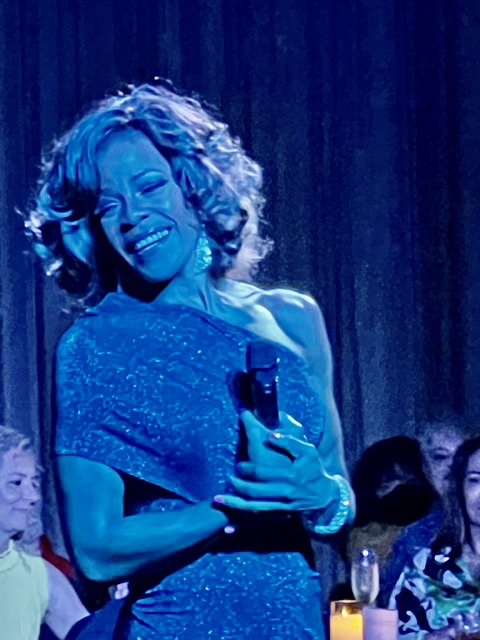
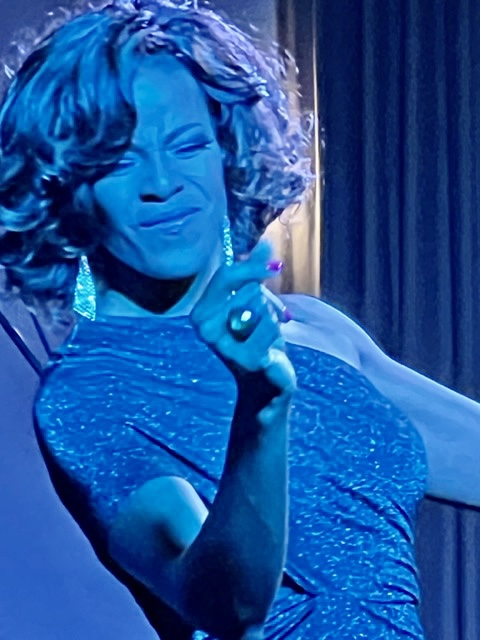
Nicole Henry has established herself among the jazz world’s most acclaimed performers. We are fortunate to know her personally due to various social circles. A group of us, Gail Williams, Dawn McCall, Marcia and Richie Grand, and Eliot and yours truly, first dined at the farm to table Orno Restaurant in the THesis Hotel and then went to hear Nicole give a standing ovation performance.































 DigiDame