Meet the Retirees Who Live on Cruise Ships

Many moons ago, I met a retired couple who spent at least half the year cruising on Crystal Cruises. We were someplace in Europe. What was even more surprising was that they were the parents of Norman Olson of AudioSource. Norman’s father, Sidney, was also a well known figure in the consumer electronics business. He started Olson Electronics, a very popular retail chain in Ohio.

So there they were, Mr. and Mrs. Olson, living their everyday lives cruising around the world. They always booked two rooms, one for them and one for their luggage. I thought that was so cool. It was the craziest thing I ever heard. Decades later, I realized that they figured out a great way to spend their retirement years without the usual day-to-day hassles. They had everything they needed on board: doctors, salons, laundry services, housekeeping, entertainment, meals, new friends, much more. They were definitely ahead of their time.

Make sure you listen to the podcast interview we did with Maurice Zarmati on “Lying on the Beach.” He was an executive with Carnival Cruises for decades. https://youtu.be/IZyYymFKjdw. He really gives you the best reasons for going on a vacation.

Think about the following story in Condé Nast Traveler. It certainly offers an alternative lifestyle.

Santorini, water, cruise, boat, blue sky


Meet the Retirees Who Live on Cruise Ships

LAURA KINIRY

PEOPLE ASK, ‘DON’T YOU GET BORED AT SEA?’” SAYS JANICE YETKE, 77. “I SAY, ARE YOU KIDDING ME?”

Boat, cruise, Nature, Outdoors, Mountain, Ice, Water, Banister, Handrail, and Landscape

When Jeff Farschman, 72, first retired from his role as vice president at Lockheed Martin Services in 2004, he planned on spending his winters as a snowbird enjoying the warm temperatures of the Caribbean. But that all changed when Hurricane Ivan wreaked havoc on Grand Cayman, his island of choice, in September of that same year—so he made what would become a life-changing pivot. Since he’d already booked himself on a week-long cruise to Bermuda, Farschman decided to extend his travels to include six back-to-back cruises (four to Bermuda and two to the Caribbean) culminating as a 47-day trip. This extensive journey became the impetus for how he now spends his retirement: living seven-to-eight months annually aboard Holland America Line cruise ship.

It turns out Farschman is just one of dozens of retired (and retirement-age) people spending a bulk of their time living at sea. There are plenty of ways to make it happen, from combining stand-alone itineraries to purchasing a unit on a residential cruise ship. “People ask, ‘don’t you get bored at sea?’” says Janice Yetke, 77, a (semi) retired travel agent who lives four months a year aboard a ship. “I say, are you kidding me? Let me show you a daily program. There’s so much to do if you want to do it.”

Yetke and her husband, Richard, 80, have found Holland America Line’s Grand World Voyage—an annual cruise that circumnavigates the globe for up to 128 days—to be the perfect way to escape Chicago’s harsh winters while seeing the world. “You have a room on the ship, and that’s your home,” says Yetke. “The staff feeds you, provides entertainment, and cleans your room twice a day. It all meets our needs at this stage in life, and of course we make friends—because the same people come back year after year.” The Yetke’s have already taken Holland America Line’s Grand World Voyage 12 times, and they’re tentatively booked on the 2023 voyage aboard Holland America’s 1,917 passenger MS Zuiderdam.

A big selling point for Yetke on the company’s world cruises: They typically sail round-trip from Fort Lauderdale, Florida. “I don’t want to fly halfway around the world to get on a cruise ship,” she says. “Florida is easy.”

Around the world cruises are a popular way to spend months at sea.

While Sydney-based wellness CEO Tony de Leede, 69, could retire, he’s not yet ready. Instead, de Leede has found a way to run his various businesses while still living a portion of his life at sea. For eight years, de Leede owned apartments aboard The World, a private 165-residence cruise ship that launched in 2002. During that time, he spent three-to-five months aboard annually. “The concept of combining a nice environment to work from and then going to sleep in Venice and waking up in Croatia,” says de Leede, “It’s great.”

In fact, one of de Leede’s fondest memories comes from his time aboard The World, when he was in the midst of balancing his work/sea life. “I was on the phone with one of my companies back in Australia,” says de Leede, “and the captain came over the intercom and invited everyone to come and have a swim in the Arctic circle.” De Leede ended his call, and minutes later he was jumping into the sea’s frigid waters. “Now I can say that I’ve swum in the Arctic Circle,” he says. “There aren’t too many people who can say that!

De Leede recently purchased a two-bedroom space aboard Storylines’ MV Narrative, a larger residential ship set to launch in 2024 with 547 fully-furnished, one-to-four-bedroom apartments (most with balconies) and 20 dining options, including a Greek tavern and an oyster bar. The ship is also equipped with 24-hour fitness and wellness facilities, a lap pool, a dedicated co-working space, and an onboard bowling alley. But there’s one real game changer, according to de Leede: “They’re the first residential ship to allow pets on board.”

Living aboard a cruise ship doesn’t come cheap. For example, fully furnished residences aboard the MV Narrative cost between $1 million and $8 million, and there are a limited number of 12- and 24-year leases available, which start at $400K. In addition, there are the monthly homeowner’s association-style fees, which vary according to the size of a residence and cover everything from ship fuel to housekeeping, as well as all standard food and drink. In essence, it’s a fee similar to the kind of packages that you often pre-pay for on a typical cruise ship.

In Farschman’s case, his costs depend on the types of cruises that he’s taking that year (for example, whether it’s one Grand Voyage or back-to-back Caribbean cruises), if he decides to book independent tours at specific ports, and if he’s paying for a windowless inside cabin or splurging on a waterside balcony room. “There are so many variables,” he says, “but I probably average $200 to $300 a day including taxes for Grand Voyages and say, $150 to $200 a day for more traditional cruises.” Like most other cruisers who spent a good chunk of their year at sea, he keeps a stationary home to be close to friends and family.

By booking longer trips rather than purchasing residences outright, world cruises still allow passengers like the Yetke’s to settle in, make friends, and travel the globe on a line they feel comfortable with. “Longer cruises also provide more time for travelers to slow down and immerse themselves in a destination,” says Carol Cabezas, president of the luxury cruise company, Azamara. In fact, Azamara will launch its first-ever five-month world voyage in 2024: a 155-day circumnavigation of the globe that will include iconic destinations such as India’s Taj Mahal and the Great Wall of China.

Many world cruises are also broken up into smaller segments, so that friends or family members can join for a dedicated portion, say cruising the Panama Canal or a tour of the South Pacific. But for cruise-enthusiasts like de Leede and Farshman, the itinerary of a ship is often secondary—they simply love life on the water. 

To date, Farschman has sailed on 165 cruises resulting in over 3500 days at sea, the bulk of which has been on Holland America Line. It’s the company’s large ship size, wonderful food, and excellent service that keeps him coming back, not to mention the camaraderie. He even travels consistently with two sisters he met aboard a Grand World Voyage in 2014. “My family is generally supportive of my onboard lifestyle,” he says. “It makes the time that we spend together even more special. As for my friends, the majority of them are aboard these ships.”

Image may contain: Vehicle, Transportation, Boat, Outdoors, Nature, Land, Water, Shoreline, Ocean, Sea, Vegetation, and Plant

© Condé Nast 2022
One Of The First Big Tech Mavericks

I interviewed him many times early in my career. Always a delight. I can’t believe this is the end.

A Taste Of Reality Any Way You Slice It

UkraineWar

Shaken at First, Many Russians Now Rally Behind Putin’s Invasion

Polls and interviews show many Russians now accept the Kremlin’s assertion that their country is under siege from the West. Opponents are leaving the country or keeping quiet.

By Anton TroianovskiIvan Nechepurenko and Valeriya Safronova

April 1, 2022

Sign up for the Russia-Ukraine War Briefing. Every evening, we’ll send you a summary of the day’s biggest news. Get it sent to your inbox.

The stream of antiwar letters to a St. Petersburg lawmaker has dried up. Some Russians who had criticized the Kremlin have turned into cheerleaders for the war. Those who publicly oppose it have found the word “traitor” scrawled on their apartment door.

Five weeks into President Vladimir V. Putin’s invasion of Ukraine, there are signs that the Russian public’s initial shock has given way to a mix of support for their troops and anger at the West. On television, entertainment shows have been replaced by extra helpings of propaganda, resulting in an around-the-clock barrage of falsehoods about the “Nazis” who run Ukraine and American-funded Ukrainian bioweapons laboratories.

Polls and interviews show that many Russians now accept Mr. Putin’s contention that their country is under siege from the West and had no choice but to attack. The war’s opponents are leaving the country or keeping quiet.

“We are in a time machine, hurtling into the glorious past,” an opposition politician in the western Russian region of Kaliningrad, Solomon I. Ginzburg, said in a telephone interview. He portrayed it as a political and economic regression into Soviet times. “I would call it a devolution, or an involution.”

The public’s endorsement of the war lacks the patriotic groundswell that greeted the annexation of Crimea in 2014. But polls released this week by Russia’s most respected independent pollster, Levada, showed Mr. Putin’s approval rating hitting 83 percent, up from 69 percent in January. Eighty-one percent said they supported the war, describing the need to protect Russian speakers as its primary justification.

Moscow police officers detained an anti-war protester in February. Protests have largely dried up in recent weeks.

Analysts cautioned that as the economic pain wrought by sanctions deepens in the coming months, the public mood could shift yet again. Some also argued that polls in wartime have limited significance, with many Russians fearful of voicing dissent, or even their true opinion, to a stranger at a time when new censorship laws are punishing any deviation from the Kremlin narrative with as much as 15 years in prison.

But even accounting for that effect, Denis Volkov, Levada’s director, said his group’s surveys showed that many Russians had adopted the belief that a besieged Russia had to rally around its leader.

Particularly effective in that regard, he said, was the steady drumbeat of Western sanctions, with airspace closures, visa restrictions and the departure of popular companies like McDonald’s and Ikea feeding the Kremlin line that the West is waging an economic war on the Russian people.

“The confrontation with the West has consolidated people,” Mr. Volkov said.

As a result, those who still oppose the war have retreated into a parallel reality of YouTube streams and Facebook posts increasingly removed from the broader Russian public. Facebook and Instagram are now inaccessible inside Russia without special software, and Russia’s most prominent independent outlets have all been forced to shut down.

In the southern city of Rostov-on-Don, near the border with Ukraine, a local activist, Sergei Shalygin, said that two friends who had previously joined him in pro-democracy campaigns had drifted into the pro-war camp. They have taken to forwarding him Russian propaganda posts on the messaging app Telegram that claim to show atrocities committed by Ukrainian “fascists.”

Commuters reading news on their mobile devices in the Moscow subway on Saturday. Independent news has virtually disappeared.

“There’s a dividing line being drawn, as in the civil war,” he said, referring to the aftermath of the Russian Revolution a century ago. “It was a war of brother against brother, and now something similar is happening — a war without blood this time, but a moral one, a very serious one.”

Mr. Shalygin and other observers elsewhere in Russia pointed out in interviews that most supporters of the war did not appear to be especially enthusiastic. Back in 2014, when Russia annexed Crimea in a quick and bloodless campaign, he recalled, every other car seemed to sport the orange-and-black St. George’s ribbon, a symbol of support for Mr. Putin’s aggressive foreign policy. 

Now, while the government has tried to popularize the letter “Z” as an endorsement of the war, Mr. Shalygin said it’s rare to see a car sporting it; the symbol is mainly popping up on public transit and government-sponsored billboards. The “Z” first appeared painted on Russian military vehicles taking part in the Ukraine invasion.

Live Updates: Russia-Ukraine War

Updated April 2, 2022, 6:18 a.m. ET31 minutes ago31 minutes ago

“Enthusiasm — I don’t see it,” said Sergei Belanovsky, a prominent Russian sociologist. “What I rather see is apathy.”

Indeed, while the Levada poll found 81 percent of Russians supporting the war, it also found that 35 percent of Russians said they paid “practically no attention” to it — indicating that a significant number reflexively backed the war without having much interest in it. The Kremlin appears keen to keep it that way, continuing to insist that the conflict must be called a “special military operation” rather than a “war” or an “invasion.”

A concert in March marked the anniversary of Russia’s annexation of Crimea, a move that was very popular among the public. 

But for those who watch television, the propaganda has been inescapable, with additional newscasts and high-octane talk shows replacing entertainment programming on state-controlled channels.

On Friday, the program schedule for the Kremlin-controlled Channel 1 listed 15 hours of news-related content, compared with five hours on the Friday before the invasion. Last month, the channel launched a new program called “Antifake” dedicated to debunking Western “disinformation,” featuring a host best known for a show about funny animal videos.

In a phone interview from the Siberian city of Ulan-Ude, Stanislav Brykov, a 34-year-old small business owner, said that while war was a bad thing, this one had been forced on Russia by the United States. As a result, he said, Russians had no choice but to unite around their armed forces.

“It would be a shame for those servicemen protecting our interests to lose their lives for nothing,” Mr. Brykov said.

He put a friend named Mikhail, 35, on the phone. Mikhail had criticized the government in the past, but now, he said, it was time to put disagreements aside.

“While people are frowning at us everywhere outside our borders, at least for this period of time, we have to stick together,” Mikhail said.

The war’s opponents are becoming targets of pervasive propaganda that depicts them as the enemy within. Mr. Putin set the tone in a speech on March 16, referring to pro-Western Russians as “scum and traitors” to be cleansed from society.

Russians who fled the country in Istanbul in March.

In the last two weeks, a dozenactivists, journalists and opposition figures in Russia have arrived home to find the letter “Z” or the words “traitor” or “collaborator” on their doors.

Aleksei Venediktov, the former editor in chief of Echo of Moscow, the liberal radio station forced to shut down in early March, said he found a severed pig’s head outside his door last week and a sticker that said “Jewish pig.” On Wednesday, Lucy Stein, a member of the protest group Pussy Riot who sits on a municipal council in Moscow, found a photo of herself taped to her apartment door with a message printed on it: “Don’t sell your homeland.”

She said she suspected a secretive police unit was behind the attack, though Dmitri S. Peskov, the Kremlin’s spokesman, on Thursday said such incidents were “hooliganism.”

Antiwar protests, which led to more than 15,000 arrests across the country in the first weeks of the war, have largely petered out. By some estimates, several hundred thousand Russians have fled amid outrage over the war and fear of conscription and closed borders; a trade organization said that at least 50,000 tech workers alone had left the country.

In St. Petersburg, which had been the site of some of the biggest protests, Boris Vishnevsky, a local opposition lawmaker, said he had received about 100 letters asking him “to do everything” to stop the war in its first two weeks, and only one supporting it. But after Mr. Putin signed legislation effectively criminalizing dissent over the war, that stream of letters dried up.

President Vladimir V. Putin’s face and the letter Z at a shop in Belgrade, Serbia, last month.

“These laws have been effective because they threaten people with prison terms,” he said. “If not for this, then the change in public opinion would be rather clear, and it wouldn’t be to the benefit of the government.”

In a phone interview, a political analyst in Moscow, 45, described visiting police stations across the city in the last month after her teenage child’s repeated arrests at protests. Now, the teenager is receiving threats on social media, leading her to conclude that the authorities had passed along her child’s name to people who bully activists online.

But she also found that the police officers she dealt with did not seem particularly aggressive, or enthusiastic about the war. Overall, she believed that most Russians were too scared to voice opposition, and were convinced that there was nothing they could do about it. She asked that her name not be published for fear of endangering her and her child.

“This is the state of someone who feels like a particle in the ocean,” she said. “Someone else has decided everything for them. This learned passivity is our tragedy

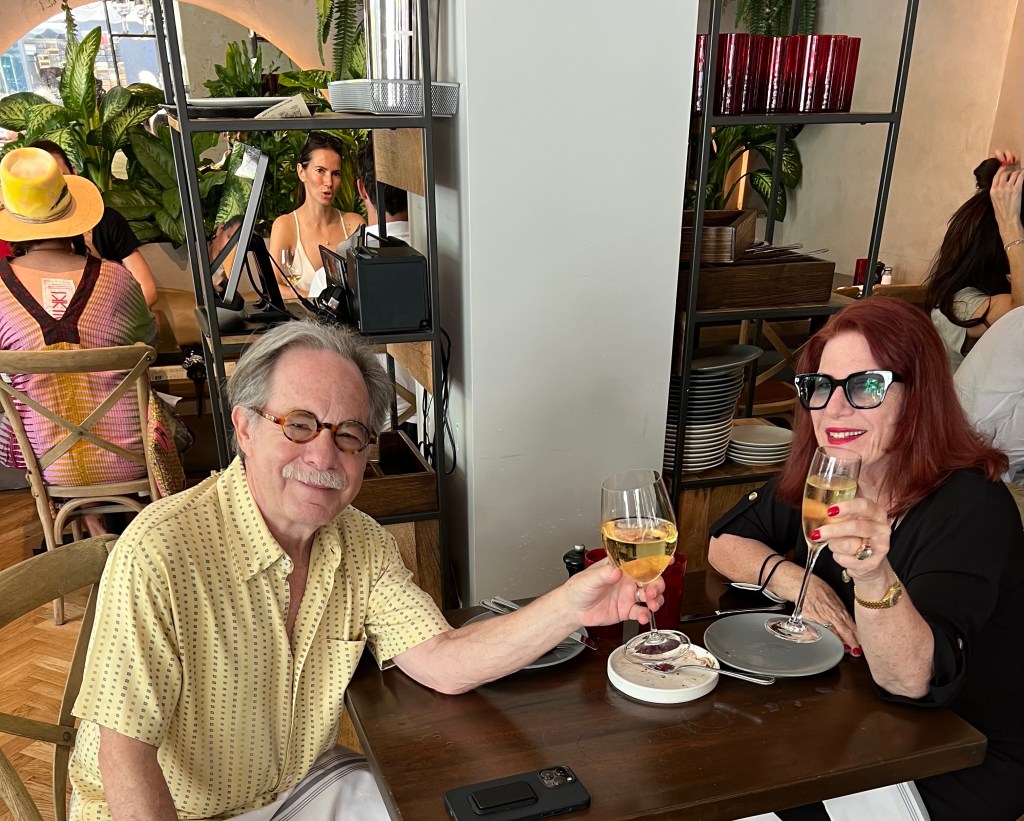
Happy Anniversary To Us

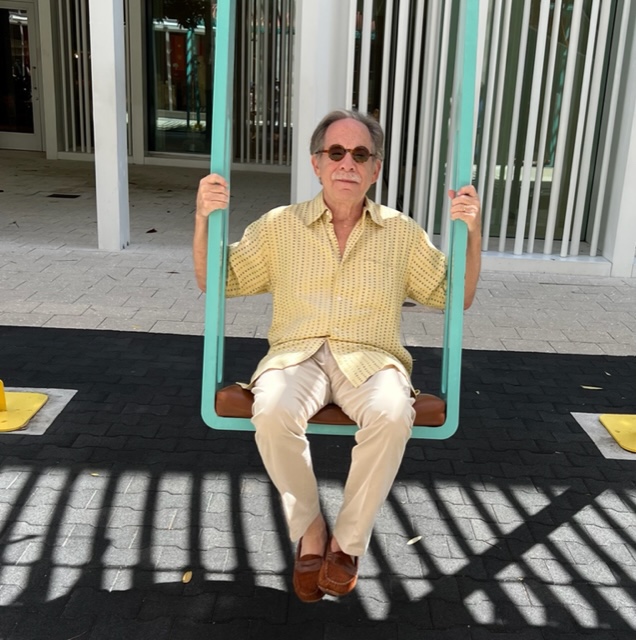
Guess who drank more Champagne? We are still a swinging couple.

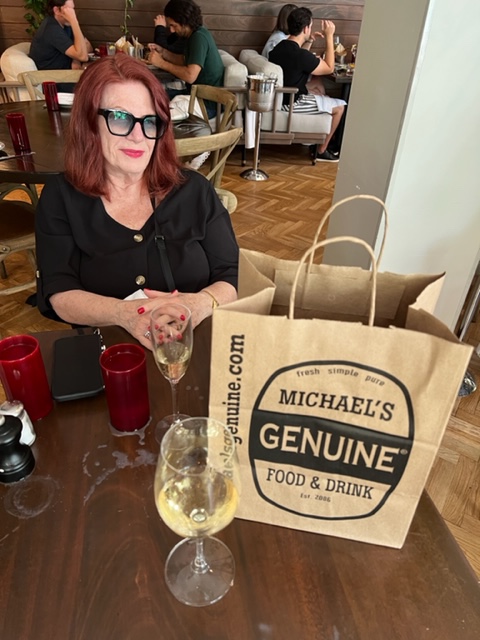
45 years ago Eliot and I moved in together at 301 East 62nd St. NYC. We started HWH PR at the same time. We are still a swinging couple. Celebrated at the Design Center. Guess who drank more Champagne at Michaels Genuine.

Stories Of Interest


The bills fall into two separate but related trends of legislation.

Iowa governor signs antisemitism, Israel boycott bills – The Forward

https://forward.com/fast-forward/484561/iowa-governor-signs-antisemitism-israel-boycott-bills/

————————————————————————

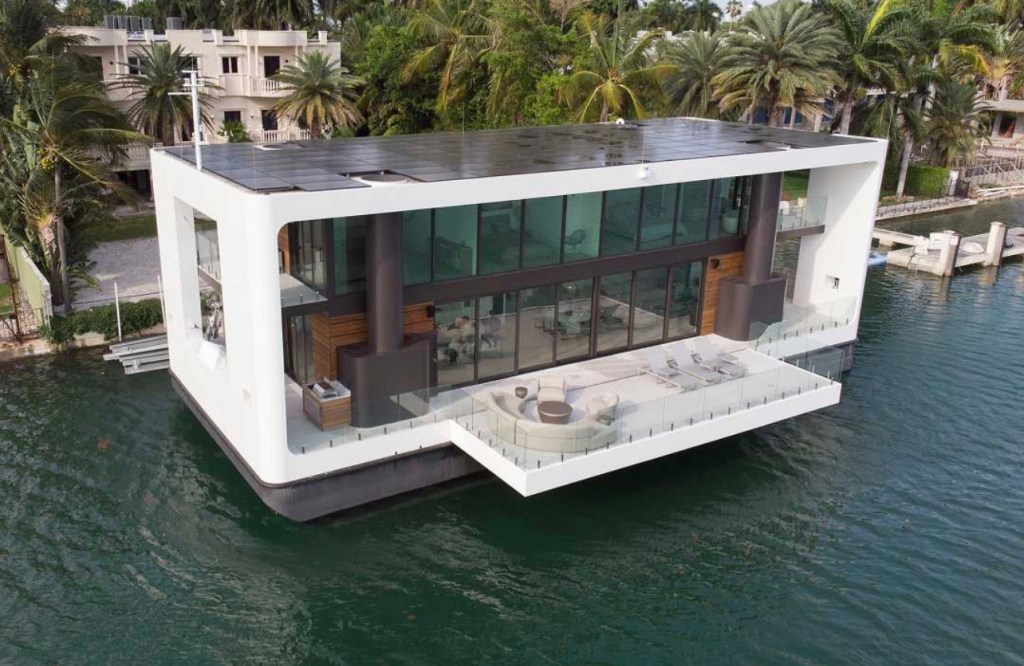
Miami mansion owners shun taxes, sue city: ‘Our house is really a boat’

https://nypost.com/2022/03/30/miami-mansion-owners-say-house-is-a-boat-for-tax-purposes/?utm_campaign=iphone_nyp&utm_source=mail_app

———————————————————————-

Leaked Audio: BuzzFeed Staffers React to News Cuts at Internal Meeting

https://www.businessinsider.com/leaked-audio-buzzfeed-staffers-react-to-news-cuts-internal-meeting-2022-3

————————————————————————

Chris Wallace Says Life at Fox News Became ‘Unsustainable’ 

As he starts a new streaming show at CNN, the longtime TV anchor reflects on his decision to leave Fox News after 18 years.

https://www.nytimes.com/2022/03/27/business/media/chris-wallace-cnn-fox-news.amp.html

———————————————————————-

An Andy Warhol Portrait of Marilyn Monroe May Sell For a New World Record | Architectural Digest

https://www.architecturaldigest.com/story/andy-warhol-portrait-marilyn-monroe-sell-new-world-record

———————————————————————

Vera Gissing, Who Was Rescued by ‘Britain’s Schindler,’ Dies at 93 

She was not quite 11 when train convoys organized by a London stockbroker carried her and hundreds of other Jewish children from Czechoslovakia on the eve of World War II.

The popular electronics chain that scammed America

Thank you Dick Krain, VP of Grey Advertising. We have friends since the 1970s. ❤️❤️❤️❤️❤️ I enjoy this article very much and now will share with others.

The Hustle

Crazy Eddie boasted some of the most impressive retail sales in the country. But its owner was more interested in conducting a brazen fraud.

Mark Dent

On September 13, 1984, as stocks wavered through a bear market, a regional electronics chain held a hyped initial public offering.

If it seems odd that a purveyor of VCRs and stereos could make investors swoon, remember that this was the 1980s, and people were getting pumped about cellular phones that were roughly the size of microwaves. And know that this electronics company was Crazy Eddie, a brand that, in so many ways, was breaking the usual rules.  

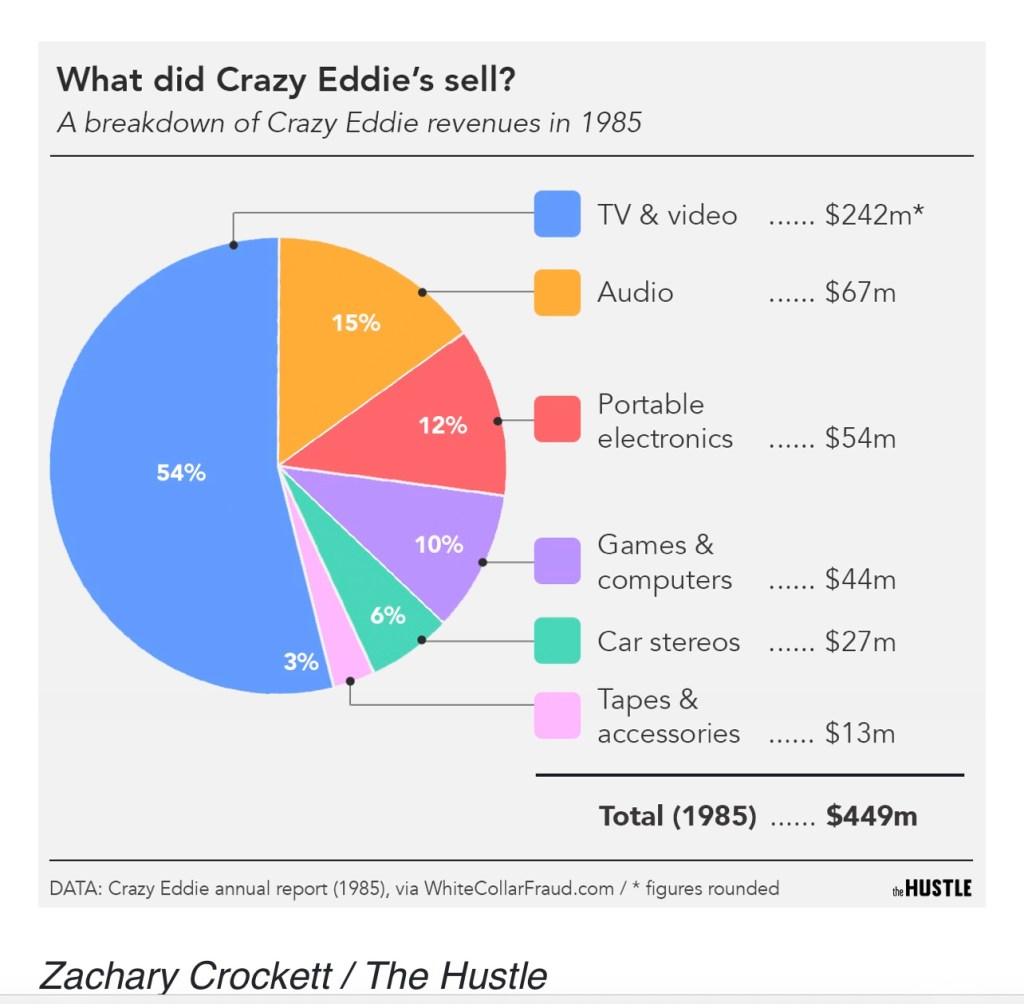
The previous fiscal year, Crazy Eddie’s annual revenues were ~$134m, or ~$372m today. More impressively, the 13-store New York City-area chain led the electronics industry in sales per square foot and profit margins.    

Crazy Eddie was also a cultural sensation, rising to fame with absurd commercials that Dan Akroyd parodied on Saturday Night Live. In the 1984 movie Splash, Darryl Hannah’s character watched a Crazy Eddie ad when she first discovered TV. 

That first day, investors purchased nearly 2m shares of Crazy Eddie for $8 apiece, under the ticker CRZY. By the end of the year, the stock would climb 25%, far outpacing a flat market and boosting Crazy Eddie’s plans for greater expansion.

There was just one major problem.

Crazy Eddie had been lying about its numbers since its inception — and the higher the stock soared the further founder Eddie Antar went to maintain the illusion. 

“It was Goodfellas,” one attorney later told the Philadelphia Inquirer, “except they operated with briefcases instead of guns.” 

The insaaaaane rise of Crazy Eddie

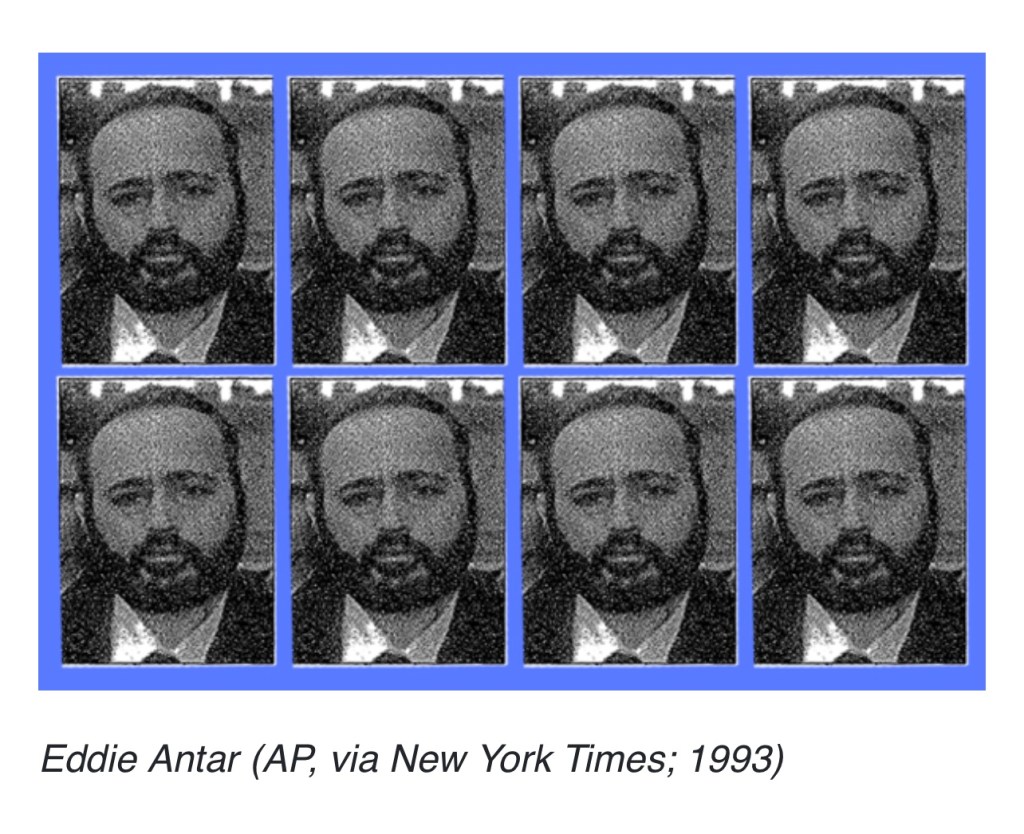
Eddie Antar was a 22-year-old high school dropout when he opened his first store in 1969, near the Sheepshead Bay neighborhood of Brooklyn.

He was the classic outer-borough tough guy: almost bald with a scraggly goatee, allergic to wearing anything but sweats, crude yet charming at the same time.

Antar believed people would flock to stores that sold items like speakers, VCRs, and televisions under the same roof — and he was right.

Industry-wide, sales of electronics jumped from $8.5B in the late 1960s to $35B by the mid-1980s. 

By 1979, Antar had 8 stores and shared the success with his family, which was part of a tightknit Syrian Jewish community in Brooklyn. His father, Sam M. Antar, uncle Eddy Antar, and brothers Mitchell and Allen Antar all held key positions. 

Meanwhile, Eddie Antar made sure everyone in New York City knew his business by flooding TV and radio with catchy ads shaped by advertising director Larry Weiss.

Weiss was well-connected in the radio and music industries and hired radio DJ Jerry Carroll to be Crazy Eddie’s spokesperson. (Other candidates for the job included the Godfather of Soul, James Brown.)

Taking inspiration from the humor of Mad magazine, Weiss developed commercials that played off music trends and the cultural zeitgeist. Most commercials featured Carroll delivering the signature catchphrase, “His prices are insaaaaaaaane.”

The ads were as catchy as they were unavoidable. By the early 80s, Crazy Eddie was spending ~$5.5m (~~$15.3m today)  on advertising and claimed to be the largest purchaser of radio and TV advertising in the New York market.

And Antar built upon the ubiquitous marketing with innovative customer service:

  • Crazy Eddie stores stayed open on holidays and Sundays, at a time when many retailers still followed a Chick-Fil-A schedule.
  • Antar rarely listed prices in ads but guaranteed he would have the lowest prices in New York and matched competitors’ offers if his customers found a better deal. Fewer than 1 in 5 Crazy Eddie customers tried to match prices. 

“In business — and in life in general — he was daring and took chances, and wasn’t afraid of consequences,” Weiss told The Hustle

Weiss had no idea Antar was partaking in business practices that were more daring than he could imagine.

‘Nothing should go to the government’ 

Every night starting at 10:30, Crazy Eddie store managers descended on the Brooklyn home of Antar’s uncle (also named Eddy). They came with bags full of cash, checks, and receipts. 

Antar’s uncle used the cash to pay off expenses and then put the rest in a briefcase. When the briefcase got too full, he stored the cash under a radiator. And when there was no more room under the radiator, he started bringing the money to Antar’s father’s house, where he hid as much as $3.5m — ~$11m today — in a false ceiling.

Eddie Antar kept close tabs, usually calling his uncle twice a day to see how much money they were skimming. A family member later said Eddie Antar received ⅔ of the skimmed cash and Sam M. Antar, his father, the other third. 

The skimming strategy allowed Antar to not only hoard cash but also evade sales taxes. His employees were also paid off the books so Crazy Eddie could avoid payroll taxes. 

“There was a culture at Crazy Eddie that said nothing should go to the government,” wrote Antar’s cousin Sam E. Antar, who eventually became CFO at Crazy Eddie and has detailed his work in a series of blog posts.

As Antar’s business empire expanded, he vacationed in Europe and South America and bought properties at the Jersey Shore and in Miami. He churned through cars like they were clothes, once abandoning a vehicle on the Garden State Parkway and leaving it to burn.

He also kept as much as $200k in cash stashed under his bed at any given time. 

“Money was always in the house,” said Debbie Rosen Antar, Antar’s first wife, to investigators in the late 1980s. “And if I needed it and I asked him, he would say, ‘Go underneath the bed and take what you need.’” 

Despite the success, Antar managed to keep a low profile, content with letting people think Jerry Carroll was Crazy Eddie and declining almost all interviews. If his workers talked to the press, it was usually on the condition of anonymity because they didn’t want to say something stupid and end up on the wrong side of their boss. 

They knew the key to staying on Antar’s good side. As one employee told the New York Daily News in 1984, “He respects loyalty.” 

A rising stock and an angry family

Why would a company built on a family fraud go public?  

Somebody told Antar he could keep making millions skimming cash, but he could make tens of millions if the company traded on the stock market. 

Strangely, Crazy Eddie’s fraudulent history gave it an advantage. To provide the illusion of quickly increasing profits ahead of the IPO, the Antars simply reduced the amount of cash they were skimming. With millions more on the ledger instead of in the family’s pockets, the company’s profits looked more impressive. 

As a public company, Crazy Eddie then made up for its inability to skim cash by initiating new fraud streams.  

  • The company embellished its inventories by millions of dollars to appear better-stocked and better positioned for profits.
  • The Antar family laundered profits it had previously skimmed — and deposited in foreign bank accounts — back into the company to inflate revenues.

Outside the family, nobody had a clue something fishy was going on, least of all Crazy Eddie’s auditors.

To conceal the fraud, employees shuffled excess merchandise from store to store or borrowed it from friendly competitors to make inventories appear larger. As an added protection, Sam E. Antar says he distracted the auditors, who were mostly single men, by setting them up on dinner dates with Crazy Eddie’s most attractive workers.   

From 1984 to 1987, Crazy Eddie grew to 43 stores and its stock price reached $79. Antar and other family members sold most of their stock at elevated levels, cashing in a purported ~$90m and fooling investors. 

“We arrogantly committed our crimes simply because we could and we had no empathy whatsoever for our victims,” Sam E. Antar later wrote.

But some family members were not pleased with their take.

Despite enriching their pockets with stock and above-market salaries, tensions had flared for years, with Eddie Antar’s father and 2 brothers jealous of his status as family patriarch. 
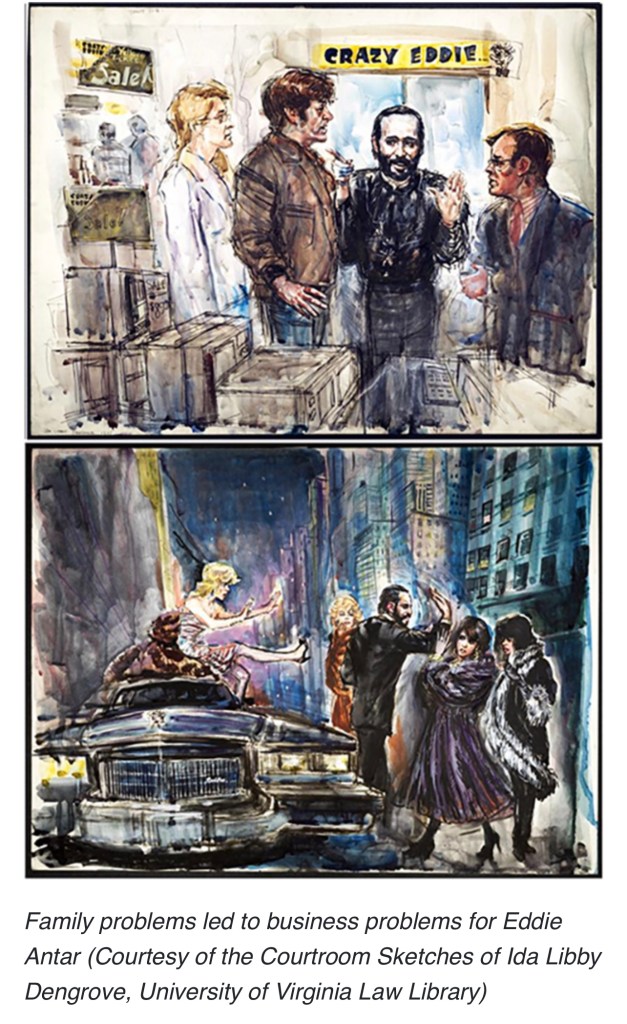
The turning point was on New Year’s Eve in 1983, a few months before the IPO. Antar’s father tipped off his daughter and Antar’s wife that Antar would be on a date with his mistress in Manhattan. They caught him in the act, and a street fight nearly erupted.

Antar’s father later described the blowup as the “New Year’s Eve Massacre.” It created a simmering family feud that boiled over when the business went south. 

In 1987, Crazy Eddie started losing money as the electronics industry grew more competitive and it struggled to manage its many new stores. The stock sank like a rock, to below its IPO value. In November 1987, a hostile investment group led by Houston entrepreneur Elias Zinn pounced, purchasing Crazy Eddie.  

As Antar’s cousin later recounted, Antar thought the sale would at least give them an opportunity to pin the fraud on the new owners. But Zinn immediately discovered $45m of listed inventory was missing. Stores soon closed, and the company went bankrupt in 1989. 

Worse for Antar was that 2 disgruntled ex-employees teamed up with Antar’s father to lodge a fraud complaint with the SEC. The FBI started sniffing around, too. 

In February 1990, Antar fled the country.

Over the next 2 years, he used forged Brazilian and Israeli passports to globe-trot through Tel Aviv, Zurich, São Paulo, and the Cayman Islands, with an estimated $60m at his disposal. 

The ‘Darth Vader of capitalism’

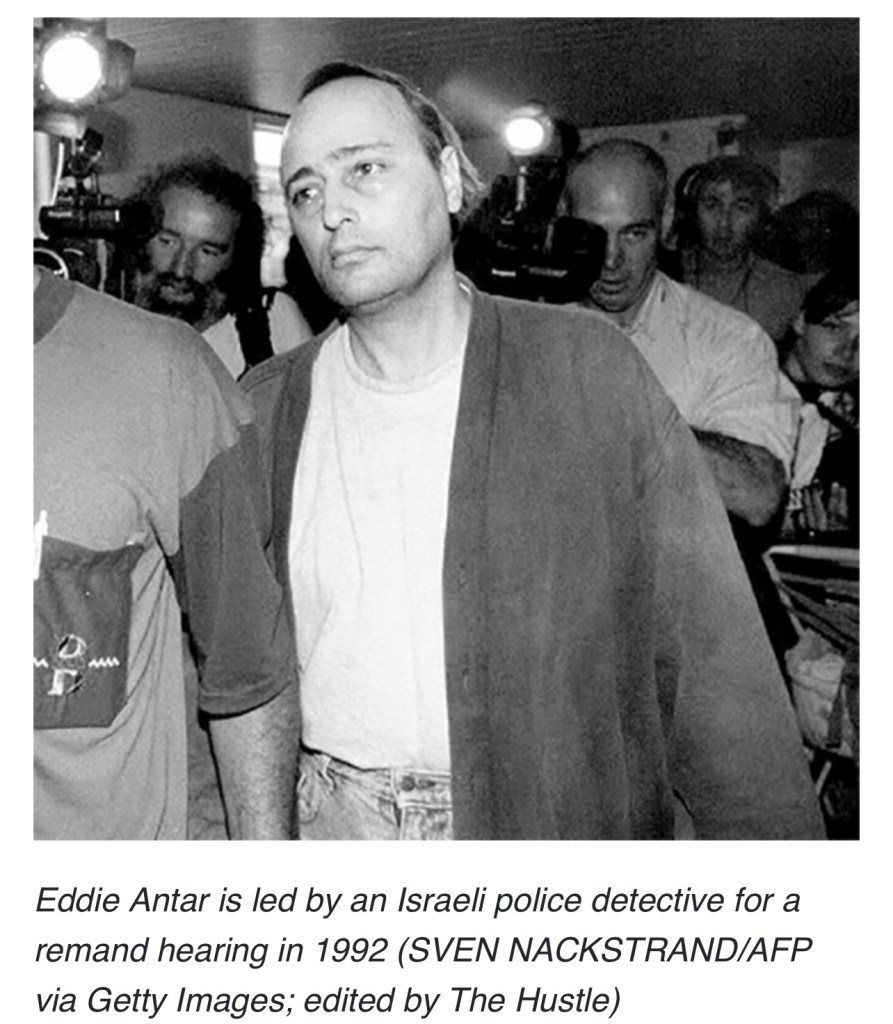
On June 24, 1992, Israeli police stationed themselves outside a luxurious home in a suburb of Tel Aviv. Authorities, including the US Marshals and Interpol, had grown suspicious after detecting a money transfer between 2 names believed to be aliases for Antar. 

The police arrested Antar and raided the home, uncovering $60k in cash, passports, birth certificates, and paperwork for forming a corporation without a lawyer.   

Antar was on the run for ~2 years before getting caught in Israel. (Wikimedia Commons)

Antar faced a federal trial a year later for bilking investors out of hundreds of millions of dollars in multiple stock and bond sales. 

The US Attorney’s Office for the District of New Jersey, headed by future George W. Bush cabinet member Michael Chertoff, revealed details that seemed to be plucked from a Scorsese film. Antar had…

  • Assumed names like David Boris Levy and Harry P. Shalom
  • Created Liberian shell companies 
  • Strapped $100k to his chest before boarding a plane 

The press compared the Antars to the “Addams Family” and to the Ewing family from the TV show Dallas

Still, the case was hardly a slam dunk. There was basically no paper trail, and inventory fraud isn’t the easiest concept to grasp. Antar might have escaped a conviction if he hadn’t eschewed what he expected out of his own employees: loyalty.  

Before fleeing the US, Antar had abandoned Sam E. Antar, who was facing enormous pressure from the feds because he had orchestrated much of the fraud as leader of Crazy Eddie’s finances. Sam E. Antar ended up pleading guilty to 2 offenses in exchange for testifying and was the prosecution’s star witness in a trial that stretched on for weeks.

At sentencing, the US Attorney’s Office asked for — and received — the maximum allowable sentence of 12.5 years. Antar was ordered to repay $121m to investors. 

“He is a kind of Darth Vader of capitalism,” Chertoff said at the sentencing hearing. 

But his fraud didn’t involve any special mastery of the laws. Anyone could have done it.  

“It was completely brazen,” Paul Weissman, who also prosecuted Antar for the US Attorney’s Office for the District of New Jersey, told The Hustle. “It was about as basic as you can get.”

Antar was released from prison in 1999.

After his release, he apologized to and reconnected with Larry Weiss, his former marketing director, and they launched CrazyEddie.com. In an entirely different world for consumer electronics, there was no comeback for Antar. The business venture failed.

Out of prison and no longer in the limelight, he agreed to interviews every so often before his 2016 death. Antar, who deflected blame for his crimes onto his family, thought of himself as more of a trendsetter than a fraudster. 

“Everybody knows Crazy Eddie. What can I tell you?” he told The Record in 2012. “I changed the business. I changed the whole business

10 Gilded Age Landmarks in New York City Still Standing Today

So many of family and friends are talking about HBO’s “The Gilded Age” that I decided to copy and paste an article that Town&Country recently published about the palatial mansions still standing from that era in NYC. While some of us know the history of these landmarks, the following story gives us a renewed appreciation of several magnificent buildings.

They may no longer house robber barons but several of the era’s important architectural gems have survived to this day.

BY 

In case HBO’s The Gilded Age hasn’t made clear enough already, there was once upon a time, circa 1880s, when the avenues and boulevards of New York City glittered with rows upon rows of palatial mansions built for robber barons named Vanderbilt, Astor, and Carnegie. In the century and a half since, the city’s landscape may have changed—and titans of industry today may prefer gleaming pied-à-terre castles in the sky—but a number sumptuous relics of the Gilded Age still stand. 

Grand estates that once housed and entertained tycoons of steel, railroads, finance, and oil have since been transformed into cultural centers (see: the Park Avenue Armory, the Argentinian consulate, the Ukrainian Institute of America), museums (the Cooper Hewitt, the Jewish Museum, the Morgan Library), hotels (the Lotte Palace, the Waldorf Astoria), even jewelry stores (Fifth Avenue’s Cartier flagship). 

With the season finale of The Gilded Age, living vicariously through the fictional lives of the van Rhijns and Russells will have to wait until season two, though a real life taste of Old New York splendor can be had whenever, courtesy of a number of significant mansions that have stood the test of time—below, a small sampling.

The Plant House

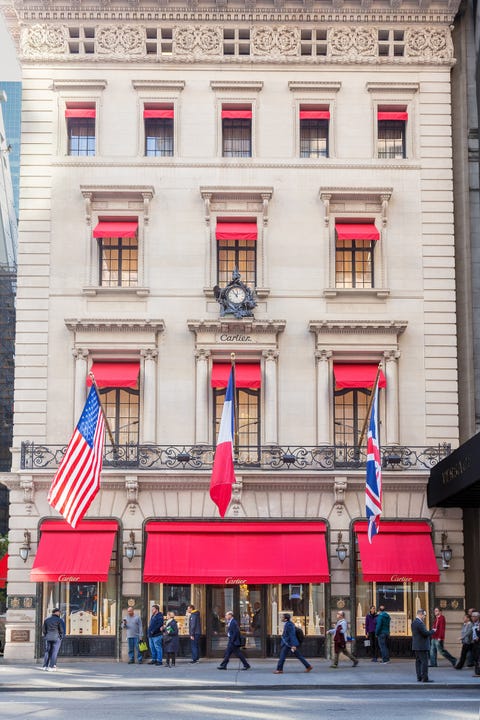
cartier building on 5th avenue, midtown manhattan, new york city

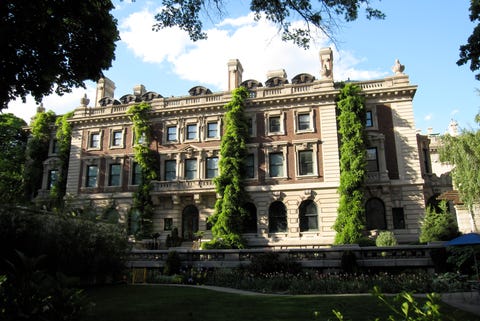
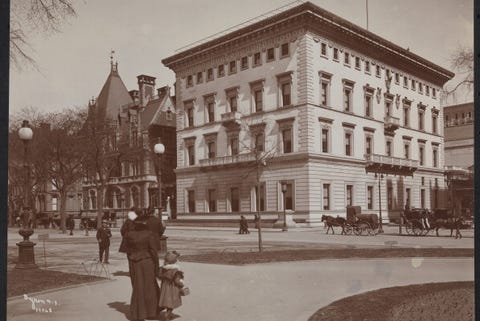
By the turn of the 20th century, the nouveau riche Vanderbilts had taken over the stretch of Fifth Avenue between 51st and 57th streets by building colossal palaces. There was the French Renaissance and Gothic style castle that Alva and William K. Vanderbilt (who inspired the Russells of The Gilded Age) commissioned in 1882 on the corner of 52nd Street. Next door that same year, William H. Vanderbilt (William K.’s father) built his Doric and Corinthian style Triple Palace. And also in 1882, Cornelius II built what would become the city’s largest single family house on the block that is now Bergdorf’sIn the early 1900s, the family sold one of their plots to Morgan Plant, son of railroad tycoon Henry Plant, who, by 1905, officially became a neighbor on Vanderbilt Row with a mansion that is now the iconic Cartier maison—in 1917, Louis and Pierre Cartier bought the Plant residence for $100 in cash and a double-stranded pearl necklace valued at the time at $1 million. 

The Carnegie Mansion

carnegie mansion

Rather than join his peers who were clustered farther south along Fifth Avenue, Andrew Carnegie ventured north in search of land large enough to accommodate a garden. He found it, on 91st and Fifth, and oversaw the construction of a 64-room English Georgian country home in the middle of Manhattan. But for all its bucolic charms, the mansion was far ahead of its time: it was the first American residence to have a steel frame and among the first to have a private Otis Elevator and central heating. Carnegie moved in in 1902 and lived there until his death in 1919. In the 1970s, his eponymous philanthropic corporation gave the estate to the Smithsonian and it became the home of the Cooper-Hewitt in 1976.

The Henry Clay Frick House

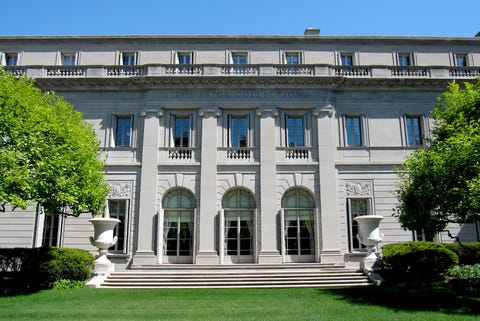
frick mansion

By Gilded Age standards steel and railroad magnate Henry Clay Frick arrived later to the NYC real estate scene, around 1912—prior to that he was renting out William H. Vanderbilt’s mansion at 640 Fifth. Still, the estate he commissioned from notable Beaux-Arts architecture firm Carrère and Hasting (designers of the New York Public Library) would go on to have an outsize impact on the city, not only for the neoclassical structure itself but also for the immense collection of Old Master paintings, French porcelain, and 18th-century decorative arts he left behind (which now makes up the Frick Collection). 

The Morgan House

exterior of the jp morgan library

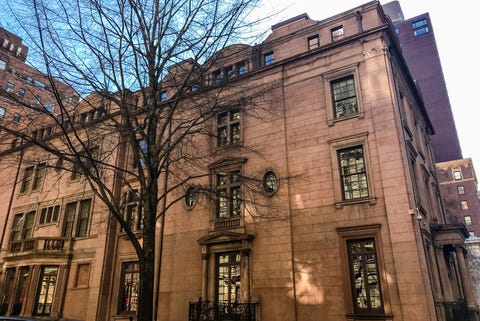
Before New York’s richest migrated farther uptown and took claim of the Upper East Side, their preferred playground was Murray Hilla—after all it was where Caroline Astor, the Mrs. Astor, lived. Among the important homes in the neighborhood were a trio of brownstones built in the 1850s for the Phelps, Stokes, and Dodge families. Between 1881 and 1904, banker John Pierpont Morgan purchased the properties, using one as his residence (which was demolished in 1928), razing another for a garden, and gifting the last, a 45-room brownstone, to his son Jack. Today, it’s part of the Morgan Library.

The Morgan Library

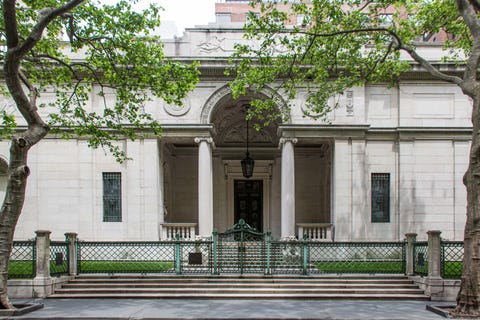
morgan library

As his fortunes reached ever more stratospheric heights, J.P. Morgan developed a passion for investing in rare books and manuscripts. By the early 20th century, his collections had far outgrown his private residence and so he commissioned McKim, Mead & White to design a library next door, to be built according to his exacting standards. “He wanted the most perfect structure that human hands could erect and was willing to pay whatever it cost,” the Wall Street Journal reported in 1906.

The Metropolitan Club

metropolitan club

J.P. Morgan is also the one to thank for the Metropolitan Club, a private institution he formed in 1891 along with the likes of William K. Vanderbilt and James A. Roosevelt (an uncle of future president Teddy Roosevelt) as original members. Today, the McKim, Mead & White-designed edifice still serves its founding ethos, though now the club admits women. 

The Sinclair House

the sinclair house

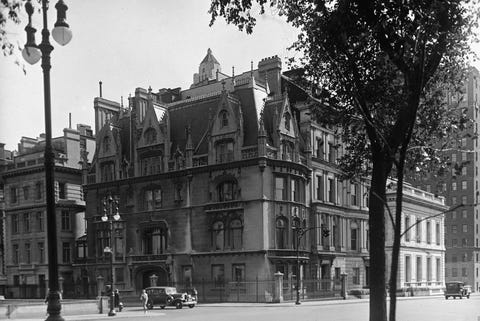
Still one of the most unique landmarks in New York City, the Sinclair House, named for one of its later owners (oil baron Harry Sinclair), was built in the late 1800s in the French Renaissance style by C.P.H. Gilbert. Its Gothic arches, gargoyle heads, and intricate details impressed both the man who commissioned the palatial urban chateau, industrialist Isaac Fletcher, and architecture critics. Since 1955, the property, which commands the corner of Fifth Avenue and 79th street, has been the home of the Ukrainian Institute of America.

The Villard Mansions

lotte palace

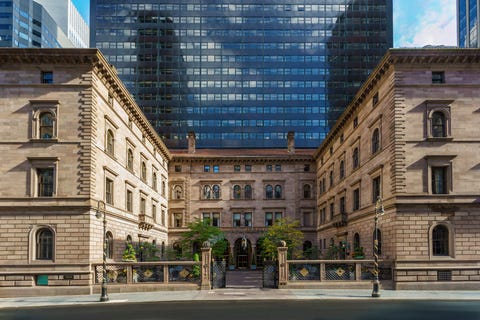
Shortly before he went bankrupt, railroad magnate Henry Villard commissioned not one but six Italian Renaissance style residences on Madison Avenue. Loosely inspired by his favorite palazzos in Rome, they were built around the one percenters’ design bragging right of the time: a courtyard. After his change in fortune, the homes went through a long list of owners before it turned into the centerpiece of the Palace Hotel (now the Lotte New York Palace) in the ’70s. 

The Seventh Regiment Armory

park ave armory

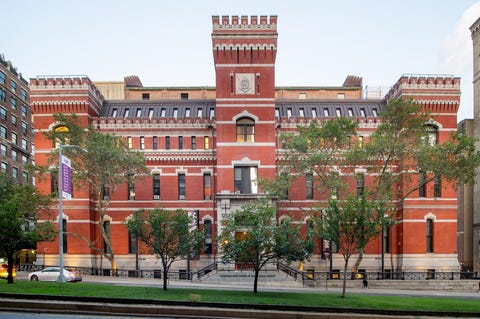
Gilded Age one percenters had a lot to protect and one of the ways to do so was to build armories for volunteer regiments. As high society migrated from the Lower East Side to Murray Hill to the Upper East Side, so too did the headquarters of the 7th New York Militia Regiment, which was known as the Silk Stocking Regiment because of its disproportionate number of members who were part of the Gilded Age elite. In 1880, it found its last permanent home on Park Avenue with a Gothic style building that featured, among other things, a library designed by Louis Comfort Tiffany and a Veterans Room with ornate hand carved wood paneling. Today it’s the Park Avenue Armory, a center now more for the rich to shop at art and design fairs than to plot defense strategies.

The Waldorf Astoria

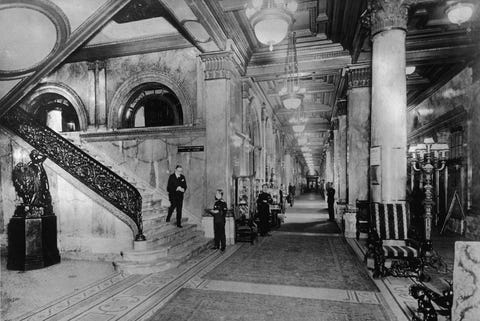
peacock alley at the waldorf astoria hotel

While the current iteration of the Waldorf Astoria is a glittering Art Deco grande dame that is currently celebrating its 90th anniversary, the hotel’s real roots stretch back to the Gilded Age. The first Waldorf-Astoria, built in the 1890s as two neighboring hotels on Fifth Avenue and 34th Street, was the result of a feud between members of the Astor family. One might also venture so far as to say the hotel had a hand in the one percenters’ great migration farther uptown: William Waldorf Astor, at odds with his aunt Caroline over the title of the Mrs. Astor (after having inherited his father’s holdings to become head of the family, he believed it belonged to his wife Mamie), took over his father’s estate next to his aunt’s and proceeded to build an eponymous luxury hotel with the express purpose of overshadowing Mrs. Astor’s mansion. Caroline, in turn, decided Murray Hill no longer fashionable for her set and simply moved uptown. While the original Waldorf no longer exists—the Astors sold the land to the developers of the Empire State Building—its most famous elements, like the iconic Peacock Alley, have lived on in the Waldorf 2.0

Celebrating Women Artists

Q

Thank you from Fountainhead Arts to John DeFaro, Zachary Belil, Shawn Clarke, Harry Redlich, Ruth Steinik Greenberg, Howard Greenberg and Eliot Hess for joining us last night as we celebrate these fabulous women artists. Let me know if you want to attend next month’s events.

The women featured in the Fountainhead Arts video. Eliot and I sponsor a monthly dinner with the visiting artists. Dan Mikesell, and Kathryn Mikesell, (next to me) are FH founders.
Chad Hughes, our waiter at the Lido at The Standard, got creative with a series of videos.
Remember her? Still beautiful after all these years.

My Eighth Week As The Miami Life Editor Of The Three Tomatoes

Lois Whitman-Hess

Miami Life Editor

The Three Tomatoes


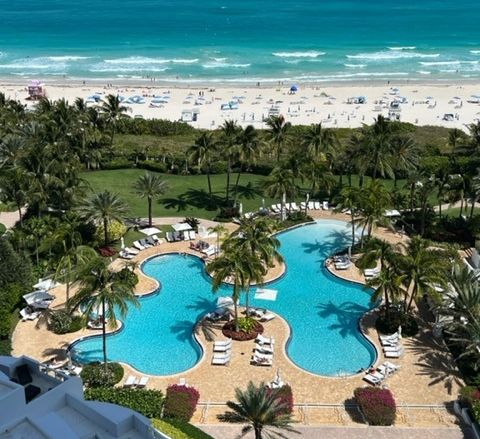
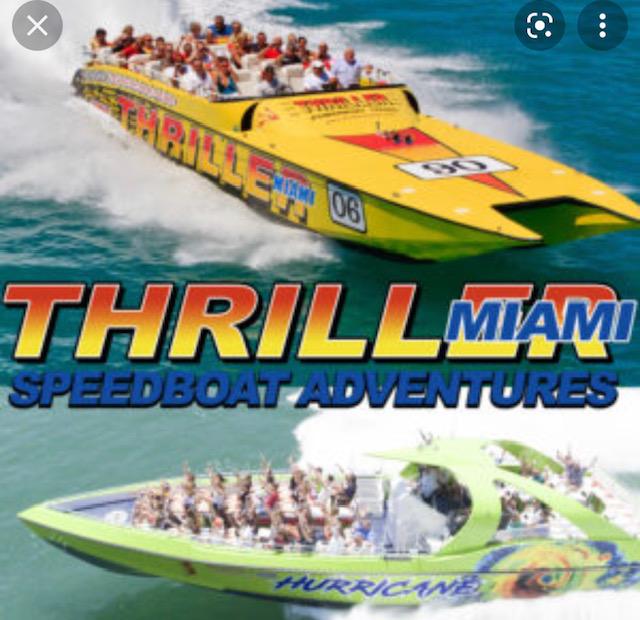
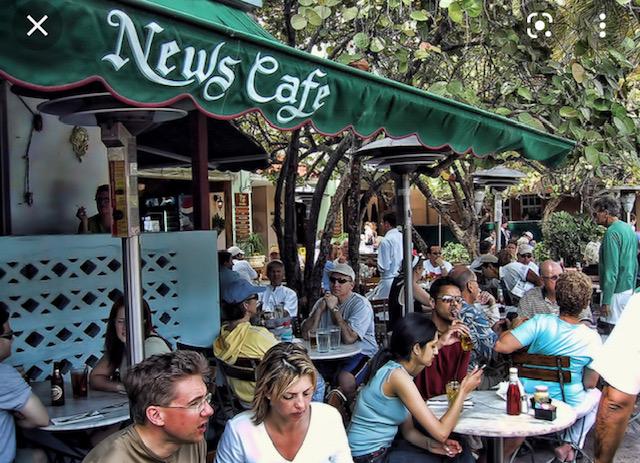
If you want to have a speedboat experience in Miami that you will never forget, I have just the boat for you. I couldn’t believe my ears. I just heard that one of the most famous restaurants in Miami is coming back to life. Do you need a good stretch? Well there’s a new concept in Miami called the Stretch Zone Method. And shh…my husband Eliot and I went behind the gates at one of the most private beach clubs in Miami, nestled in these condos in the picture above. I’m sharing the secrets, but don’t tell anyone. 

A Thrill You Will Remember Forever 

If you like thrills, I have just the boat for you. It’s called the Thriller. You may find yourself holding on for dear life as you speed along the Miami waterways like they did in the TV show called Miami Vice. The Thriller is the only sightseeing tour boat that goes out to the ocean and speeds along South Beach. That sight alone is worth the trip to Miami.

GET THE DETAILS

Start Spreading the News

I just heard that The News Café in Miami is coming back to life. It quietly closed during Covid. Most folks on the beach were devastated. It was much more than a restaurant. It was an institution that represented the vitality of the city of Miami. Everyone went there to see and be seen. It’s reopening on Ocean Drive at the newly renamed Tony Hotel South Beach, exactly where it was before. I can’t wait.

GET THE DETAILS

Miami May Be a Stretch for You

Someone read my mind. I just received a promotional piece from Stretch Zone Method, a new concept in Miami, that said “stretch practitioners will move my muscles in ways that will achieve lasting gains.” Now that sounded very interesting considering I sit at my computer all day.  My muscles need a good workout on a consistent basis. 

GET THE DETAILS

Behind The Gates

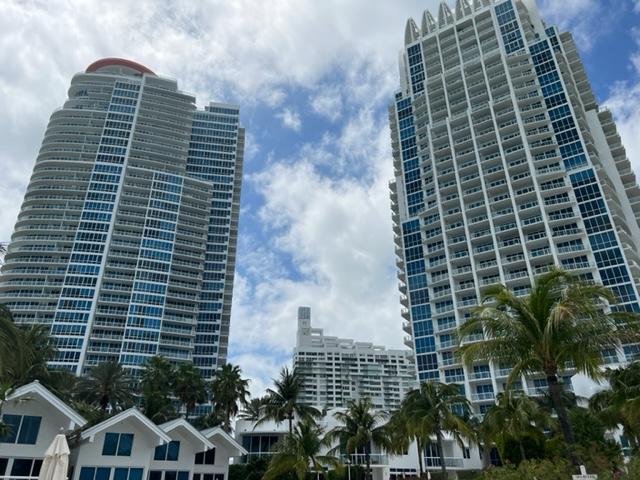
I’m taking you behind the scenes at one of the most private beach clubs in Miami. The Patio is located at the Continuum Condominiums, and very few residents or visitors to Miami ever get to see it. You have to be invited by someone who lives in one of the two luxury towers which are situated next to the beach at the tip of South Pointe Park. It’s one of the most beautiful settings you have ever seen.

GET THE DETAILS

All Aboard With Maurice Zarmati

From left, Carnival executives Giora Israel, Micky Arison and Maurice Zarmati

Maurice Zarmati is one of the original Carnival Cruise line VIP’s. He also happens to be my neighbor. I really lucked out when he agreed to do this podcast interview. He has been busy celebrating 50 years of the Carnival Cruise company.

He started in 1972 as Southeast regional representative and ultimately became VP worldwide sales, before going on to lead Costa Cruises of North America as president and CEO. Maurice has seen the cruise industry grow as the ships keep getting bigger and bigger AHOY MAURICE— WELCOME ABOARD THE LIDO DECK OF THE SS LYING ON THE BEACH


———————————————————————

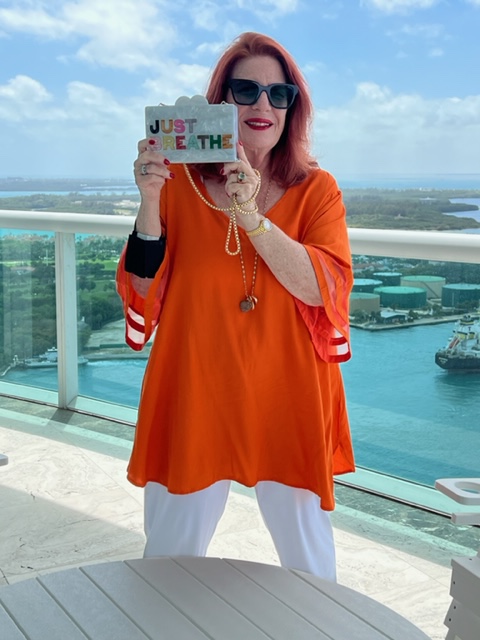
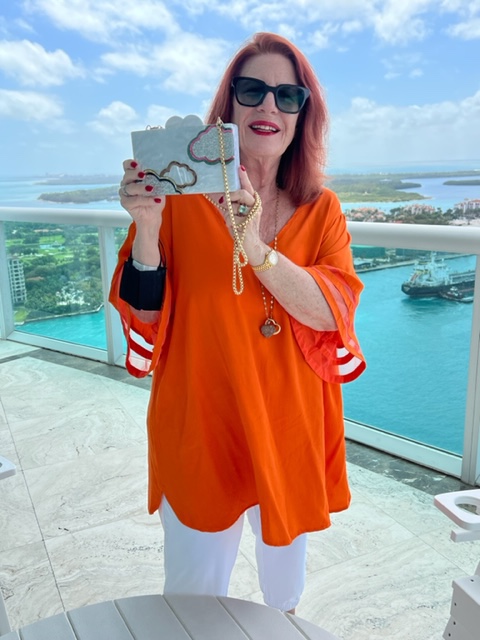
I Love Elizabeth Sutton Clutches

Check them out at http://www.elizabethsutton.com