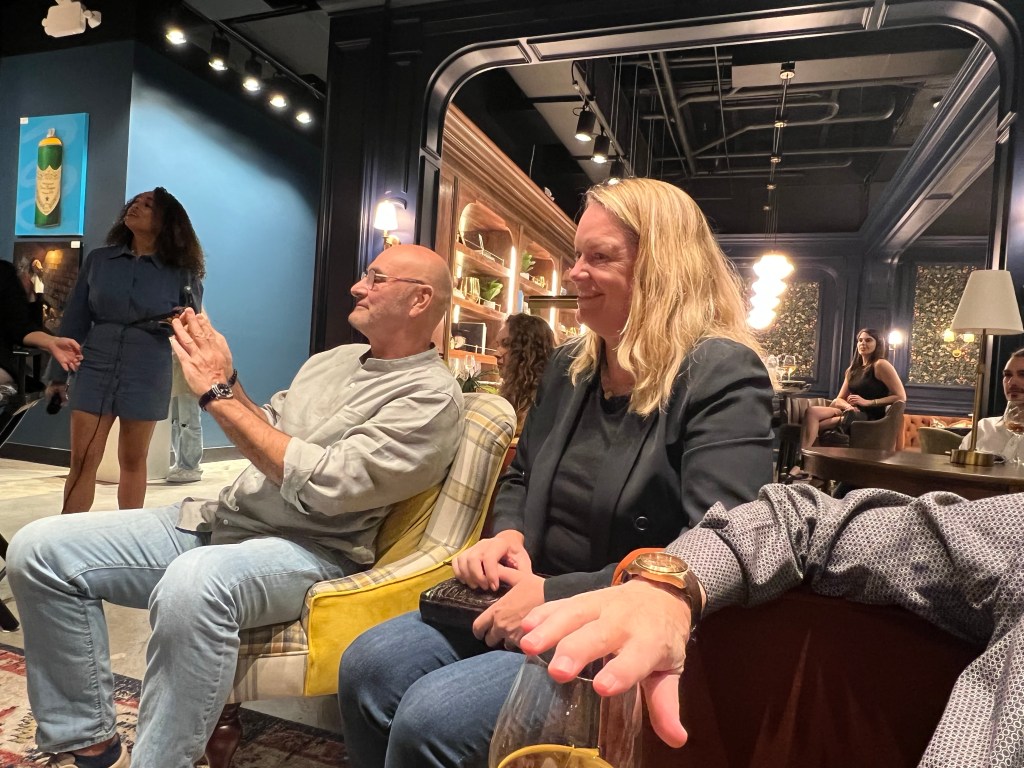
We learned all about the buying and selling of art at Ampersand Studios in Miami last night. Kathryn Quinlivan Mikesell of Fountainhead Arts continues to invite us into this fascinating world. Alison Davis Jan Gerits Eliot Hess asking all the great questions.
———————————————————————
Amazing Coverage In Inc Magazine
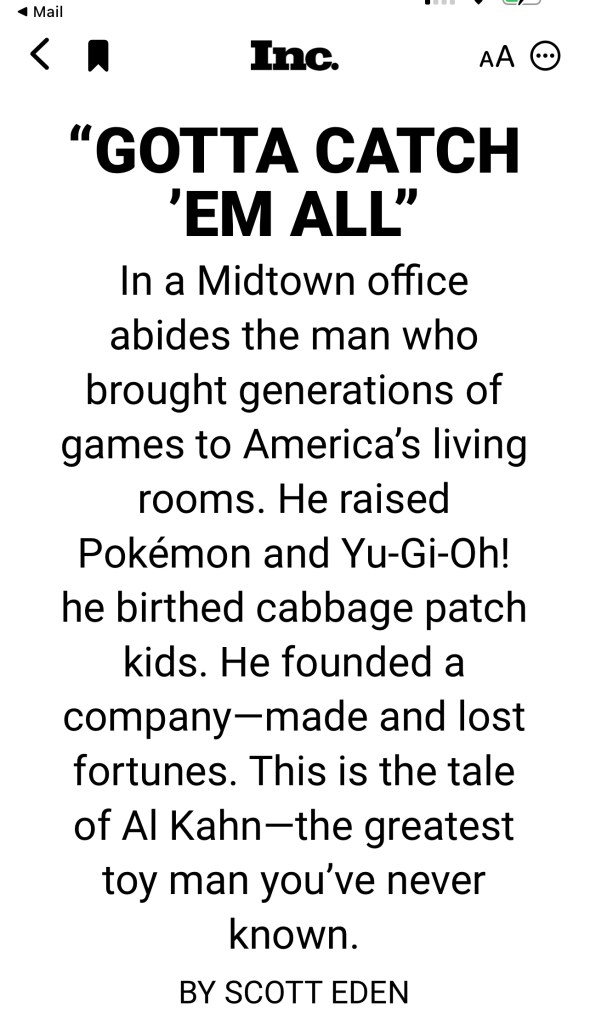
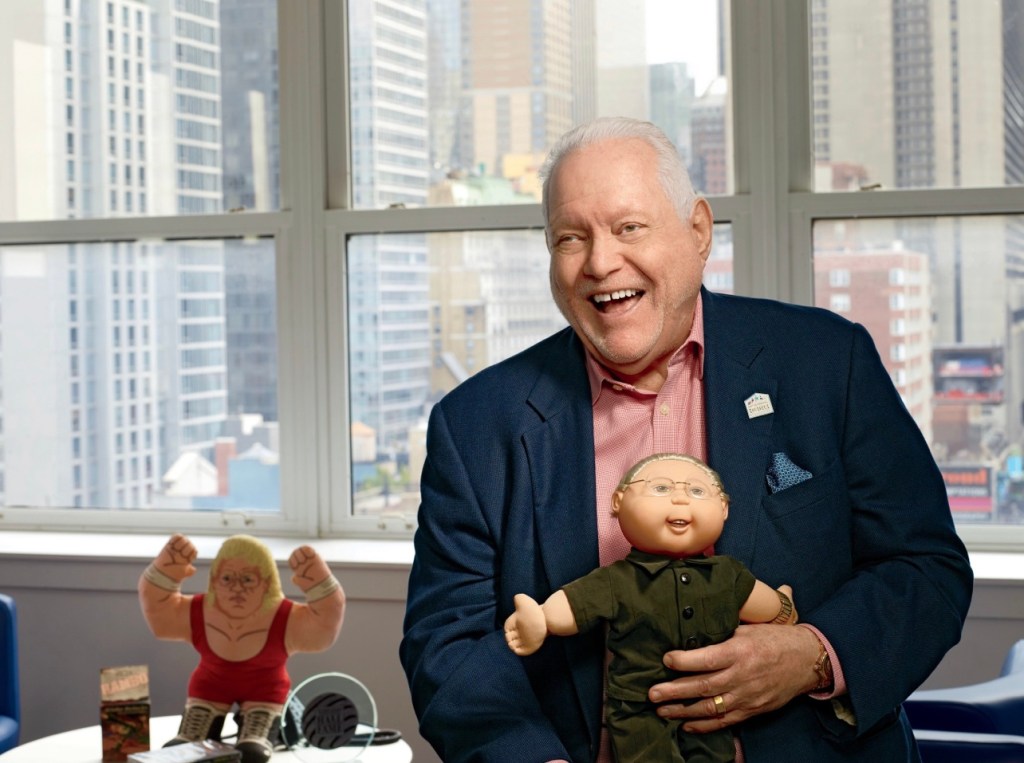
The toy life of Al Kahn, long time client and friend, is featured in the current issue of Inc. He is reaching for the stratosphere again with 30 new projects and a happy marriage to the beautiful Jillian Crane.
My body is a senior but my state of mind is 18 years old. I would love to start all over again because the digital world is going to be a whole new universe I want to explore. That’s why I try never to miss a session of the Virtual Events Group (online) because founder Robin Raskin features everyone who is introducing new digital platforms in Metaverse. I know you think that you won’t be a part of this world, but give it a year. You will be bouncing around the Metaverse like all of the early adopters.
Yesterday we were introduced to Virbela, This is a new kind of workplace that uses the virtual world as a solution to real-world challenges facing organizations, remote workers, and learners today.
Virbela is now the actual office space for a growing number of companies. The company promotes productivity, collaboration, and realistic interactions. They want to empower companies to grow and scale their businesses and ideas – faster, more efficiently, and more sustainably
It’s time to wrap your heads around the metaverse.
Robin Raskin is an American writer, author, publisher, TV personality and conference and events creator best known for her ability to simplify technology for non-technologists
When Cathy Hackl’s son wanted to throw a party for his 9th birthday, he didn’t ask for favors for his friends or themed decorations. Instead, he asked if they could hold the celebration on Roblox. On the digital platform, which allows users to play and create a multitude of games, Hackl’s son and his friends would attend the party as their virtual avatars.
“They hung out and played and they went to other different games together,” she says. “Just because it happens in a virtual space doesn’t make it less real. It’s very real to my son.”
The futility of throwing an outdoor pandemic-friendly event in January wasn’t the only reason Hackl’s son lobbied for a digital event. Roblox might be unknown to many over the age of, say, 25, but the 13-year-old platform is booming. Available on most desktop and mobile platforms, it is simultaneously a venue for free games, a creation engine that allows users to generate new activities of their own, and a marketplace to sell those experiences, as well as side products like outfits for a personalized avatar.
It’s also part of the “metaverse.” Once a niche concept beloved of tech enthusiasts, the idea of a centralized virtual world, a “place” parallel to the physical world, has careened into the mainstream landscape this year, as epitomized by Facebook’s decision in October to rebrand as Meta. Millions of people are spending hours a day in virtual social spaces like Roblox and Fortnite. Interest in purely digital ownership—and the technology that proponents believe can ensure the security of persistent virtual experiences—has spiked dramatically, with non-fungible tokens (NFTs) and cryptocurrencies making headlines. Virtual productivity platforms are growing too, with Facebook and Microsoft announcing new ways to collaborate online. Nike is even, analysts say, preparing to sell virtual sneakers. Hybrid offices, video-based education and online social communities are just a few of the ways in which more of our lives—for better or worse—is spent in digital spaces.
People like Hackl have already been heading in that direction for years.
After she was introduced to VR in the late 2000s, Hackl says she “pivoted really hard” into it. She reoriented her media career toward cinematic virtual reality work and then moved onto work with headset manufacturers, eventually serving as a “VR evangelist” for the HTC Vive headset. Today she says she’s known as the “godmother of the metaverse.”
For many younger people, like her son, such a pivot isn’t even necessary: they’re growing up with the expectation that a large part of their future will exist in the metaverse. It might be time for the rest of us to get on board—whether we like it or not.
Metawhat?
The word “metaverse” is often traced to Neal Stephenson’s 1992 dystopic, cyberpunk novel Snow Crash, and many see a more recent inspiration in the dazzling warren of experiences at the heart of Earnest Cline’s 2011 novel Ready Player One. However, the metaverse is far from the stuff of sci-fi. It’s not even new.
Online communities have existed since at least the mid-1980s, and grew in the 1990s with chatrooms, AOL instant messenger and the first social media sites. The game World of Warcraft became a persistent social scene for millions in the early 2000s, and communities have continued to sprout up within and around games. Today, logging onto Fortnite, joining a chat with friends over a console platform and launching into a game with them is, especially to younger generations, just as social an experience as most other physical interactions.
Whether in virtual reality (VR), augmented reality (AR) or simply on a screen, the promise of the metaverse is to allow a greater overlap of our digital and physical lives in wealth, socialization, productivity, shopping and entertainment. These two worlds are already interwoven, no headset required: Think about the Uber app telling you via location data how far away the car is. Think about how Netflix gauges what you’ve watched before to make suggestions. Think about how the LiDAR scanner on newer iPhones can take a 3D scan of your surroundings. At its core, the metaverse (also known to many as “web3”) is an evolution of our current Internet.
Steve Aoki | The Future of Innovation
0 seconds of 15 minutes, 25 seconds
Next Up
“You’ve got your goggles on, 10 years from now, but they’re just a pair of sunglasses that happens to have the ability to bring you into the metaverse experience,” says John Riccitiello, CEO of Unity, maker of a video game engine that is increasingly used to develop immersive experiences on other platforms. “You’re walking by a restaurant, you look at it, the menu pops up. What your friends have said about it pops up.”
For Riccitiello, the most exciting part of the metaverse is what it might mean for our relationships.
The idea that we might be able to “feel like we’re together when we’re not,” he argues, could likely lead someone to create a company on par with Facebook and Apple.
Banks and investors are taking note.
“There’s clearly a kind of a desire to move that direction,” says John Egan, CEO of L’Atelier BNP Paribas and an investment analyst focusing on emerging technologies. “This metaverse concept gives us the opportunity to create any universe that we’ve ever imagined.”
More than a social network
Hackl’s son wasn’t alone in having a birthday party on Roblox over the past year; the 16-year-old creator of the Roblox game Math Obby, who goes by the username 0bid0, threw himself a party to which he invited not just friends from school and Twitter, but also fans of the game. “I couldn’t manage to make plans in real life because of the pandemic, so I took the chance of building a cool place to host the virtual event,” he tells TIME.
Kids are not the only ones wading out into the metaverse breakers. Paul Tomlinson, 41, has worked remotely for years, living in rural Maine with his family and managing tax and financial-processing software for a firm that works with municipal and state governments. There’s “nothing sexy” about the job, he says, but it does involve needing to have eyes on a large amount of data at once. A few years ago, this meant his desk had four different computer monitors on it. The cumbersome office setup was already a difficult and messy solution, but add in a disruptive (but adorable) cat and it became untenable.
Tomlinson had always been interested in virtual reality, but it wasn’t until he tried the Oculus Quest headset and was introduced to a productivity app called Immersed that he found the answers to his work conundrum. Immersed pairs with your computer and, in the headset, sets up a workspace that allows for multiple virtual screens that you can arrange or size in whatever way you choose. And, crucially for Tomlinson, it’s very difficult for cats to mess with virtual desktops.
“Within a week, I took the monitors off of my desk,” he says. “It just made my life so much better.”
For more than two years now, he has almost exclusively used virtual reality for his 40- to 50-hour work weeks: “Unless it’s a business-critical meeting, I typically don’t take off the headset.”
What Paul Tomlinson’s office setup looks like in the physical world Paul Tomlinson
Immersed VR has already netted millions in investment dollars and partnered with Facebook, Microsoft and Samsung in various roles. And for companies developing headsets, the COVID-19 work shake up provides an opportunity to do just as Renji Bijoy, Immersed VR’s founder and CEO suggests, making the case that VR is less of a novelty and more of a quality-of-life tool.
Few companies want that narrative shift more than Facebook, now Meta. Dodging damaging leaks, deflecting international calls for antitrust action and shrugging off its own stalled attempts to launch a decentralized digital currency, the social network, which owns the VR brand Oculus, has leaned far into the future that it promises to provide. Late in the summer, Facebook announced Horizons Workrooms (through the use of its Oculus Quest) as an alternative to the Zoom meetings that have become commonplace to many remote workers. (Facebook declined multiple requests to provide comment on this story.)
For now, spending any part of a workday in the metaverse still seems like a far-off dream for most of the global workforce. Tomlinson recognizes this. His coworkers took a while to adjust to the fact that he usually appears in group video meetings as an avatar, and his family is “not as enamored” as he is. Still, he sees himself as a “pioneer,” of the future, and is comfortable in that role.
“I am an outlier, and it’s a good thing that we have outliers who don’t get bored easily,” he says. “I have no hang ups about strapping boxes to my face for eight hours a day. I can do that.”
Real money in the metaverse
A new kind of working from home is only part of what the metaverse can provide those out to make a buck. Case in point: metaverse entrepreneur Carrie Tatsu, 48. She has spent over 15 years making her living designing, marketing and selling avatars, pets and accessories for citizens of Second Life, a game that launched in 2003 as a blank-slate digital world where users could buy land and spend actual money on in-world customizable clothing. (If you think that sounds a great deal like the metaverse currently being touted by big tech, you would be correct.) Tatsu joined in a moment of dissatisfaction with her marketing job. Because she likes cats, she bought a pet for her avatar. The decision launched her career.
“I thought, well, you know, I think I can make a better cat,” Tatsu says.
It didn’t take long before she and her ex-husband set up a store, Zooby, and earned enough for her to quit her physical-world job to focus on creating Second Life pets and accessories full time. She quickly noticed the way other players were forging real connections to those virtual animals. “There was a paradigm shift in the way I looked at this,” she says. “This wasn’t like joining a video game and competing on something like a first-person shooter. This was a very emotional attachment to something that wasn’t physical.”

“You can imagine a future where I can go to the [virtual] hat store, and I have a very seamless experience to customize my hat I created, and now I can potentially then sell that hat to other people in the metaverse,” Roblox Chief Product Officer Manuel Bronstein says. “We made it very easy for people to start monetizing those creations.”
Many of those who are taking advantage of that potential are young users. Josh Okunola, for example, is a 17-year-old digital artist from Nigeria, currently studying in London, who has been playing Roblox since 2014. After a few years of exploring, he grew curious about the games’ development tools and using his own artistic talent on the platform. In 2018, he netted his first Roblox paycheck—for $7—though he says his parents didn’t believe it was real because, unable to withdraw it from PayPal, he could only spend it on digital goods.
With blockchain-based games, players can turn the time they spend into cryptocurrency. In the popular Axie Infinity, players buy, train and breed Pokemon-like creatures that are themselves NFTs, each one individually registered on the Ethereum blockchain. An active marketplace allows players to sell the creatures for cryptocurrency. Axie Infinity has seen a lot of international popularity during the pandemic; the Philippines has particularly seen a great deal of growth, with players of all ages using the game to earn money. You need to own three of these “Axies” before you can even play the game, and currently the lowest priced creatures on the marketplace are over $100.
These purely digital opportunities to make a living are inspiring a young generation to believe that the metaverse is the place to make their fortunes.
“Eventually I was able to cash out $1,000 from the platform,” Okunola says of his Roblox art. “My parents were [in] shock because it was very rare to see a 16-year-old make that much in just a little time from a side hobby.”
Reality Check
If there were ever any hope of weaning children off screen time, it was dashed by the pandemic. One German study published by DAK-Gesundheit found that usage of social media and video games was up by at least 60% in 2020 over 2019 among children between 12 and 17. Now imagine not just a screen, but a world.
Tatsu is the mother of two children and, despite having created a successful career in digital spaces, she insists that her children spend as much of their time as possible in the real world.
“It’s so important for humans to be with humans in real life,” she says. “And so I think that as kids grow up in this space, there will have to be outlets for people to engage, go smell a flower here, walk in on a trail, have a real conversation with your friend and throw a ball. I mean, even though you can simulate that, the simulation is not the same. And so I feel in some ways bad for my kids.”
We all have far more to worry about in digital spaces than just time spent. The very probable idea that this is the direction technological innovation is heading does little to take into account whether it should be the direction we are heading.
If the metaverse is essentially an extension of the internet we currently have, one only has to think about the myriad problems that we have yet to solve in our online existence—hacking, catfishing, harassment, hate speech—to see how truly perilous a future on the metaverse could be.
“These false images—again, going back to deepfakes—not only are used to trick users into giving away personal details, but also from a political perspective to convince them of something happening that has not happened or is just simply not true,” Charlotte Newton, a thematic analyst at GlobalData, says.
“It’s important to recognize that there are five really important problems we haven’t yet solved in the mobile internet: data rights, data security, radicalization, misinformation and platform power,” says Matthew Ball, author of the forthcoming The Metaverse: And How it Will Revolutionize Everything. “If the fundamental premise of the metaverse is that we will spend more of our time, labor, leisure, wealth, existence inside virtual worlds, then by definition, every one of those five problems is exacerbated. The amount of data captured and the importance of that data goes up, or the risks of data loss are intensified.”
There’s perhaps a reason many fictional touchstones for a metaverse, including Ready Player One and Snow Crash, take place in grim dystopias.
“There’s no way the metaverse is going to help with things like income inequality, or food deserts, people who cannot buy groceries, disparities and access to health care,” says science fiction writer Ted Chiang, on whose work the 2016 movie Arrival was based. “None of those things are things that you can deliver through the metaverse.”
The Vision
True adherents would beg to differ. They believe that the metaverse has benefits for all, that it can expand access, opportunity, social networks and mental health—though even they have to admit that a lot of the good the metaverse can do is still speculative, and depends on a confluence of events, from hardware deployment to data infrastructure developments, on very fuzzy timelines.
What does exist for sure, argue proponents like Tatsu, is the already realized potential for the metaverse to increase empathy and inspire kindness.
“I think that when you’re in a virtual space, they’re usually smaller, they’re usually more intimate. And I think that when we move into this world, where you really customize your avatar, you develop a more intimate relationship with the people you have online,” she says. “Even though you’re behind a screen or you’re behind a headset, you still see somebody.”
A few years ago, a surreal YouTube video made its way around the internet. In the middle of a standard VRChat session, which is itself a mosh pit of clashing avatars and frenetic voice chat, a user who was wearing a full body tracking suit apparently had a seizure. The episode underscored not only the actual distance between people in virtual spaces, but also the outpouring of concern for the person behind a red robot avatar.
Hackl sees the upcoming shift in technologies as a chance to shape a more inclusive mission and purpose. “I feel we’re working on the printing press of the future,” she says, ”being able to preserve, let’s say, a language that is soon to disappear. If you’re able to retain not only in a flat video, you’ll see the sound and you’ll see the movement of lips and stuff. In a 3D performance capture and an actual 3D video, you’ll be able to see a lot of the nuances of how the tongue moves, and the teeth move, and you’ll be able to preserve the same dances as well as artifacts, stories, all sorts of things. I believe that that is something we’re working on today to preserve those stories for the future.”
To her, that future will be a better one, thanks in part to the metaverse.
“When I look at the architects of the internet, they were all men,” Hackl says. “Being a Latina woman that is very publicly out there, I want more people like me. We need to see people like me, in these public facing roles, because you can inspire a lot more people to join and say, ‘Hey, I am welcome in this metaverse world. I can build.’”
For those whose lives are already being lived partly in the metaverse—despite its pitfalls and risks—that building has begun.
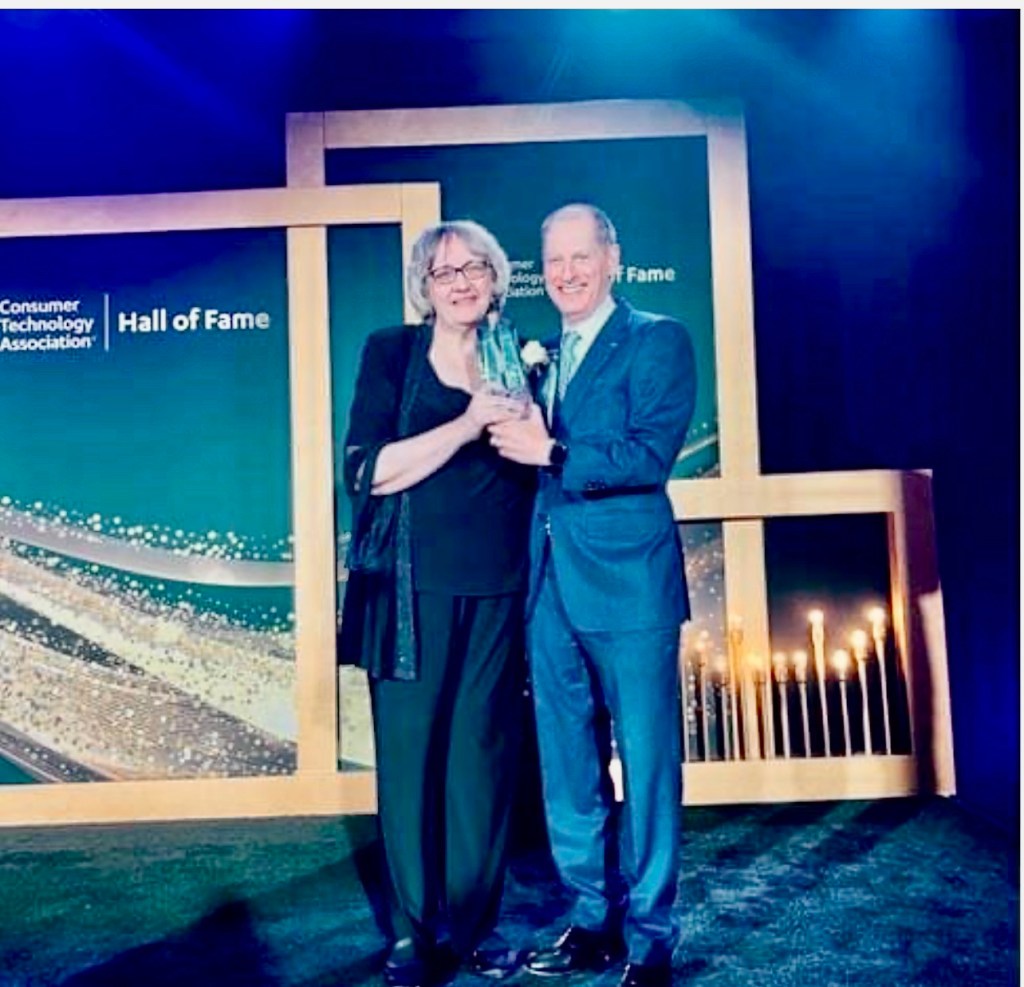
We had the pleasure of meeting Vint Cerf and Bob Kakn, the two men who were responsible for inventing the Internet last week. The two inventors, along with our favorite gal friends, Robin Raskin and Nancy Klosek, were inducted into the Consumer Technology Association Hall of Fame, at a dinner in NYC. Robin Raskin is a popular tech journalist, and founder of Living In Digital Times, a conference and exhibition company, and Nancy Klosek was a favorite tech journalist for Audio Video International and Dealerscope. Both are trade publications.
Robin and Nancy were thrilled to be recognized alongside Vint Cerf and Bob Kahn, who co-invented the TCP/IP protocols responsible for originating DARPA’s Internet program. They’re better known as the “Fathers of the Internet.” Everyone at the dinner will forever remember Vint Cerf saying, “when kids say old people don’t understand the internet, I say, oh yeah? I invented it!!”
So many senior members of the tech industry stood up and applauded. It was a very gratifying moment and should be told to as many young folks as possible.
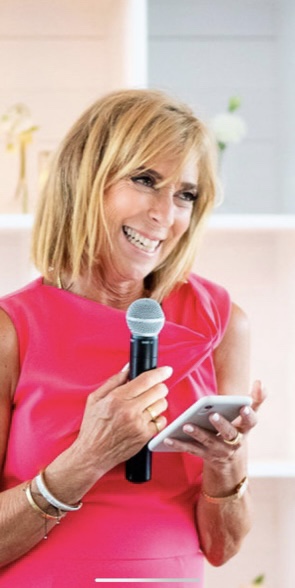
Nancy Klosek receiving her award from Gary Shapiro, President of the Consumer Technology Association.Robin Raskin, the lady in red, poses with her admirers.
This story explains it all.
Vint Cerf and Bob Kahn, co-inventors of TCP/IP protocol
While it’s true that both Vinton Cerf and Bob Kahn made of their many of their own notable accomplishments, it was their partnership that drove the creation of the TCP/IP protocol as one of the core components of the Internet.
The partnership can be traced back to when Cerf was a graduate student at UCLA and Kahn, who was working on hardware for the ARPANET. But it wasn’t until 1973 that when Kahn, who as then working for Defense Advanced Research Projects Agency (DARPA), rejoined his UCLA colleague to create the TCP/IP protocol.
There were two major events that led Kahn to start developing the TCP/IP protocol.
During the International Computer Communication Conference in the fall of 1972 when he was working at the Information Processing Techniques Office (IPTO) within ARPA, Kahn demonstrated the ARPANET by connecting 20 different computers. This was described as “the watershed event that made people suddenly realize that packet switching was a real technology.”
But it was in 1973 when Kahn was working on a satellite network project that he got the inspiration to develop what eventually became the TCP protocol. Initially, the TCP protocol was meant to be a replacement for the ARPANET’s NCP protocol. All of his work on TCP/IP helped laid the groundwork for open-architecture networking, a concept that enables any computer and network to freely speak with one another despite the hardware or software they use on their particular system.
In 1976, Cerf joined Kahn at DARPA (the Defense Advanced Research Projects Agency) and stayed there until 1982. Then, like fellow Internet pioneer Larry Roberts, he realized that packet switching and the Internet had commercial applicability, so he joined MCI, now Verizon Business (NYSE: VZ), where he developed the MCI Mail service that was connected to the Internet.
Along with driving the commercialization of e-mail, Cerf was a key figure in forming and funding the Internet Corporation for Assigned Names and Numbers (ICANN), an organization that manages IPv4 and IPv6 address spaces and assigns address blocks to regional Internet registries such as the American Registry for Internet Numbers (ARIN).
In the early 1990s, the two men synched up again to form the Internet Society (ISOC), an organization that aims to drive awareness around Internet-related standards, education and policy.
Their influence continues to resonate in 2011 through their activism and corporate work.
Since 2005, Cerf has served as Google’s (Nasdaq: GOOG) vice president and chief Internet evangelist and on the UN’s Broadband Commission for Digital Development, which has set a goal of expanding the availability of broadband services. Meanwhile Kahn serves as the Chairman, CEO and President of the Corporation for National Research Initiatives (CNRI) that is set on providing funding for research and development for the National Information Infrastructure.
I just got back to Miami Beach from NYC. The streets, the restaurants, the theaters. the cabarets houses, the museums, the art galleries, and the event venues are all filled with people. The city is totally vibrant. The only place where ghosts are dancing 24/7 are in the thousands of offices that are still empty, and probably will be for a long time. I just can’t imagine what it’s like having to pay for office space that is not being used. It used to cost us over $25,000 a month in rent for our PR agency.
We did that for 25 years. I get the heebie-jeebies when I think about the money we had to generate just to cover our overhead. For many companies that amount of money is small change compared to what they have to spend to keep their office lights on. Look at the space ship building Apple built. It was the dream office building Steve Jobs always wanted. Now it’s practically an empty shell.
As time goes on, more and more folks will return to the office just to get out of their homes. However, it took Covid-19 to make us all aware of the joys of working remotely. This is a concept that many of us will worship forever
Only 28% of New York office workers are back in the office
Only 28% of Manhattan office workers are back at their desks and fewer than half will be back by January, according to a new survey.
Employers expect that 49% of office workers will return on an average weekday by January, according to a survey of 188 big employers in Manhattan by the Partnership for New York City.
More than a third of employers expect their office space needs in Manhattan will decline over the next five years, according to the poll.
Continued weakness in the office sector could prove costly for New York City’s budget, as it means a loss in property taxes.
.
According to the survey, more than a third of employers expect their office space needs in Manhattan will decline over the next five years, and 13% expect a reduction in their New York City workforce.
“Post-pandemic, remote work is here to stay,” said Kathryn Wylde, president and CEO of the Partnership for New York City, the city’s leading business group. “There is going to be a permanent relook at keeping offices and jobs in New York City.”
Office vacancy rates in New York City are now at a 30-year high of 18.6%. The value of the city’s commercial real estate has fallen by $28.6 billion, or 16.6%, reducing property tax revenue by up to $1.7 billion this fiscal year, according to a recent report from New York State Comptroller Thomas DiNapoli. Property taxes are the largest source of revenue for New York City, and commercial property is the largest source of property taxes, so continued weakness in the office sector could prove costly for the city’s budget.
While commercial real estate landlords and developers say leasing activity is strong and workers will return to the office, many employers say the city’s high taxes, long commutes and high costs could prolong any recovery in the commercial sector.
By January, only 13% of Manhattan office workers are expected to be in the workplace five days per week, according to the survey. A third will be in three days per week, 15% will be in two days per week, 7% will be in one day per week and 21% will still be fully remote.
The industry with the highest expected average daily attendance in January will be real estate (80%) followed by law firms (61%) and financial services (47%). The industries with the lowest expected attendance in January will be accounting (36%), consulting (30%) and tech (24%).
Wylde said that in addition to workers staying remote, the city is grappling with high-earning business owners and financial partners leaving New York for tax reasons and taking their companies and workforce with them.
“The danger is that when the high earners leave, they take operations with them,” Wylde said. “So we hear now of operations in asset management and other areas, not just individual high earners, but the real business operations moving to Texas, to Tennessee, to Florida.”
Wylde said 22% of financial firms plan to reduce their New York City-based workforce in the next five years — an alarming number, given that financial-services are the economic backbone of New York City.
“What’s going to happen over the next 5 to 10 years in terms of our economic and tax dependence on a population that now knows its highly mobile,” she said.
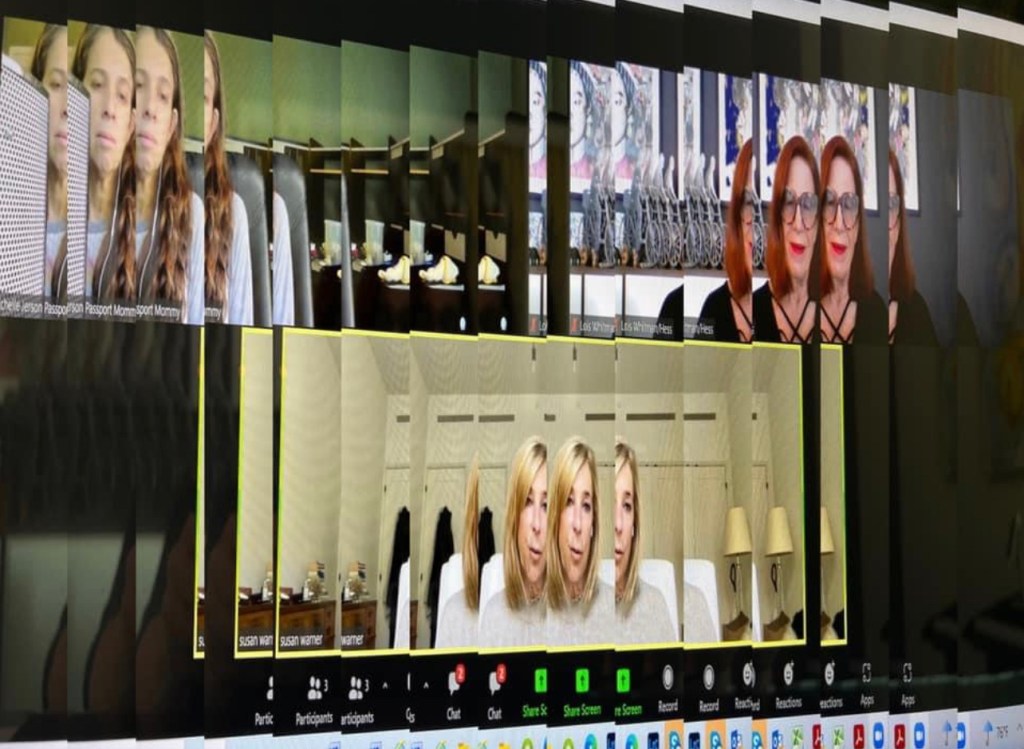
Meet my client Susan Warner. This is a very unusual assignment. My job is to help her tell her story to the world. We are using broadcast, internet, print, in-person talks, zoom meetings, special appearances, essays, and anything we can think of.
Susan just did an interview with “Passport Mommy” that dives into two subjects that many of us think about all the time but are too skittish to discuss, death and sex. Susan tells us about coping with death and recovering and then the dating and the relationship journey.
Susan Warner is an educator, wife and mother. Unfortunately, she has suffered profound loss with the death of her son and husband six months apart. The catastrophic loss was almost too much to bear. Luckily, Susan shares how she got through it all and what life is like dating at an older age during these times.
Michelle Jerson is the host of the national radio show, “Passport Mommy,” heard on 55 stations with an audience of 3.2 million. It is also a podcast and can be found on your favorite podcasting platform. Passport Mommy is a magazine style talk show that covers topics ranging from travel, wellness, and finance to education and lifestyle. Motherhood is a journey and Michelle aims to bring enlightening guests to her audience to help educate and enrich their lives.
The following story appeared in the Washington Post. This was a frequent topic many of us discussed over the years as we spent many hours of our lives going back and forth to school and then to work. If you want to calculate how many hours of your life you spent commuting, click here.https://www.washingtonpost.com/opinions/interactive/2021/commute-calculator-pandemic. If you have trouble opening it, let me know.
For many people who have been able to work from home during the pandemic, the prospect of commuting to the office again can feel like a challenge. But fear not: Graphics columnist Sergio Peçanha has developed a handy interactive calculator to help people better understand how much time they spend in transit.
My one-hour commute to and from work each day, for example, adds up to more than 10 full days each year — enough time to watch 150 films, or all of “Squid Game” 30 times. By the end of my career, that might add up to 14 months of my life. Yikes!
But time is just one way to quantify the cost of commuting. As Peçanha points out, transportation is the largest contributor of greenhouse gas emissions in the United States. And the financial costs of office work add up significantly, especially when you include the price of buying lunch or coffee.
In 2019, Americans spent an average of about one hour commuting to and from work each day. That may not have seemed like a big deal before the pandemic, but it has become a hard sell for many who’ve worked from home for more than a year now and learned that the show went on just fine from a distance.
If you are an American with average commute time, you would spend about 250 hours in transit each year — that adds up to more than 10 days. By the end of your career, you might spend nearly a year of life commuting.
If instead of commuting an hour, you used that time learning a language, in one year you would probably be fluent enough to get by in a foreign country. In a lifetime, you could learn multiple languages, become a black beltand a life-of-the-party guitar player.
If you spent the time binge-watching Netflix, one year of commuting would be enough to watch more than 150films.Or all nine episodes of “Squid Game” back to back 30 times.
You could also spend that time with friends, gardening, getting fit, cooking, knitting, sleeping or doomscrolling. Even people who do something pleasant or useful during their commutes could find a more comfortable place to do those same things.
Or, if you’re like me, you could scatter all those activities throughout your days, because you’re too undisciplined to make anything really useful with the time you just found. What you do doesn’t really matter: The point is that the pandemic gave that time back to us. It makes no sense to lose it again.
And time is just one way to quantify what we lose if we revive the commute. There’s also the pollution we produce and the money we squander and the loss of the unmatchable joy that comes with working in our pajamas.
Transportation is the largest contributor of greenhouse gases in the United States, mostly from cars, SUVs and small trucks. The average annual cost of commuting is somewhere between $2,000 and $5,000, depending on where you live. If you spend even $10 more a day on coffee and lunch at work, that adds up to about $2,500 per year (eating at home costs about half that).
As for the pajamas, they are just a metaphor for the small privileges of working from home that add up to quality of life — from keeping up with the laundry to spending more time with people we love and working with our pets nearby.
It is hard to argue that the benefit of commuting more than once a week or so is worth the toll on the planet, on the purse and on your quality of life. I don’t mean that meeting colleagues in person is not useful, sometimes important or even fun. The first time I saw my boss after a year and a half, I hugged him — and I meant it.
But when we used to meet every day there was no hug. What is the point of going back to a life where you don’t regularly hug your boss?
Methodology
Calculations were based on 250 work days per year, 40-hour workweeks, eight-hour workdays and a career length of 40 years. The calculation for full-length feature films was based on 90 minutes run time.
Sources: U.S. Census; U.S. Environmental Protection Agency; Netflix.
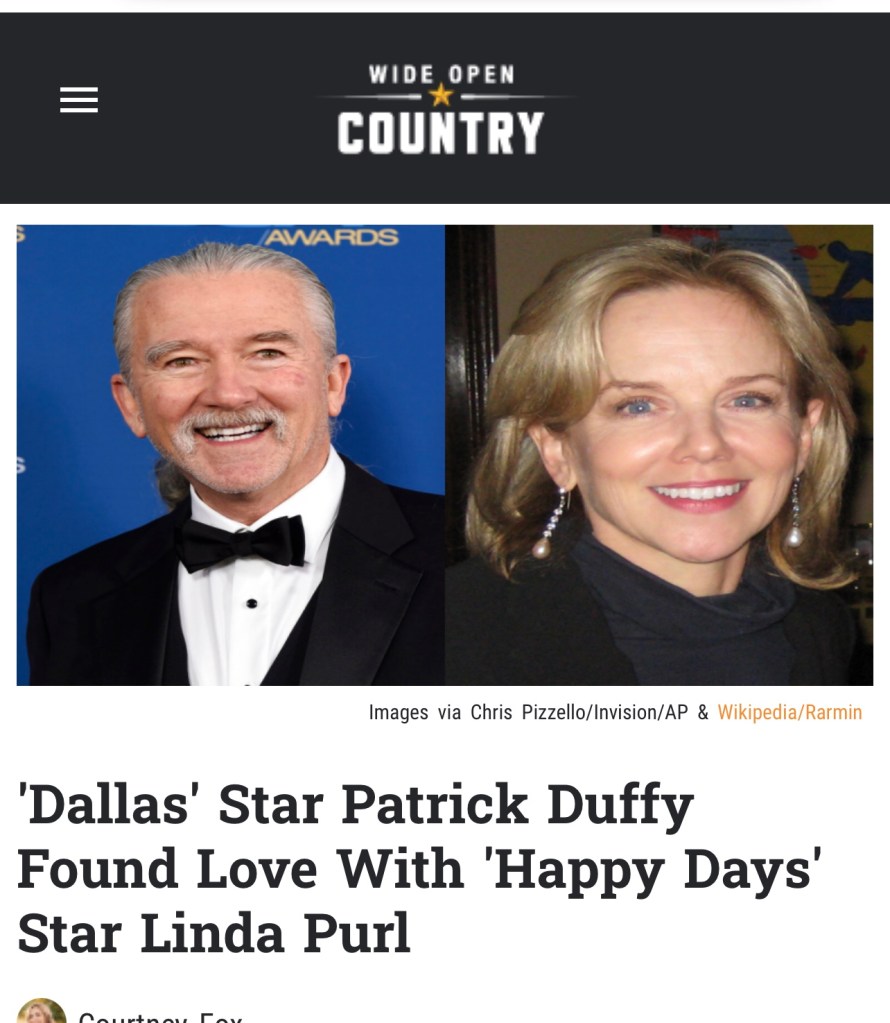
I heard this story a few months ago from my friend Ron Abel but actress/singer Linda Purl told it last night to the audience at Birdland. She and actor Patrick Duffy found love again over Zoom during the pandemic. You can read all about it below.
Our artist client, Allen Hirsch, has accomplished the impossible. He paints on mesh, or any composition made out of strings, to show what it’s like to see the world through a structure like a fence. As an artist, he feels we see surrounding reflections on a fence that we never would have noticed if we just looked at the landscape in front of us.
Allen accomplishes this by placing spots of paint on the strings that make you think he created the painting on the canvas. It’s quite remarkable. Very few artists have the skill to paint this way. Once you see the painting in person, or below, you will still think that it was created on the canvas. It’s a very tricky visual experience.
Why am I writing about this? Until you enter Allen’s world, and hang around for a while, you have no idea how many creative endeavors he has been involved in. I found the string paintings in his SoHo loft a few years ago and it has taken this long to get an assortment of them to show you. Our PR agency represents Allen for his smartphone case inventions. Called HANDL New York, the accessories give you the perfect grip and kickstands for all kinds of important uses. Only an artist like Allen could have figured this out. Read his bio below.
Allen Hirsch is an American painter, writer, inventor, entrepreneur, and New York City developer.
He was born in Encino, California in 1959. He received a B.F.A at Syracuse University, and also attended Camberwell School of Arts in London, Skowhegan School, New York Studio School and received a M.A from Rosary College in Florence, Italy in 1986.
In 1982, he was discovered outside the Whitney Museum exhibiting a begging self portrait by Eugene Mihaesco. He was then asked to do covers for TIME Magazine from between 1983 to 1991.
In 1993, he painted the inaugural portrait of Bill Clinton for the National Portrait Gallery in Washington. The painting subsequently hung in the White House during his tenure.
He won a Society of Illustrators Award for “Drugs” cover of TIME in 1986 and received the Hitchcock Award for Landscape Painting from the National Academy Museum in 1997.
In the 1980s and 1990s, he painted portrait commissions and self-portraits, exploring the brain’s projection on the right and left sides of the face, painting with left and right hands to express “the duality of the psyche.” He developed a technique “New Cubism” where the image is formed and buried at the same time and invented “String Paintings.”
Allen has also been making digital art since the first Macintosh came out in 1984.
Allen traveled frequently to Venezuela from 1995-2015 and painted the life on the coast of African descendants brought there as slaves in the 18th Century. It was there he rescued Benjamin, an orphaned capuchin monkey and brought him to New York.
A documentary on their life and art together called “Long Live Benjamin” was produced by the New York Times and won an Emmy in 2017.
Painting from life, Allen has documented many of the dramatic events in NYC including 9/11, the Hurricane Sandy blackout, and the COVID 19 shutdown. He also created a series of scores of paintings of his view on Lafayette Street in different lights and seasons.
He has exhibited at Allan Stone Gallery, Louis Stern Fine Arts, Monique Goldstrom Gallery , American Art Gallery, the National Academy Museum and the National Portrait Gallery.
Allen has written for the New York Times and other publications. He has several books in development on his art, monkey and a new study on Pieter de Hooch.
In 2013, Allen invented HANDL, a new way to ergonomically hold and stand cellphones based on his experience with hand movement and touch projection in art. HANDL has been used by the world’s top celebrities and athletes and currently in mass retailers in the USA and abroad. Allen has over 30 patents involving cell phone holding apparatus around the world.
Allen purchased an important SoHo retail space in 2003 and conceived of a diner/basement experience that resulted in La Esquina, one of downtown NYC’s most popular nightspots. He also founded The Kaaterskill, currently an inn and wedding venue in upstate New York
My new book project. My client/author is wearing the blue sweater and our publisher is sporting the beard. Look closely. He is the son of a very famous actor. He lives in Woodstock.
————————————————————————
Eliot Hess captured the very red skies over Miami with a blimp floating in the middle of it.
————————————————————————
This is the 39th episode of “What The Heck Is That?” Steve Greenberg’s game show is the star of YouTube. Subscribe and like it. We want you to be a charter member. Very prestigious.





























 DigiDame

