Author and screenwriter Joan Didion died this week at 87. Joan Didion put Miami under a microscope 30 years ago — and saw the city of today | Editorial by the Miami Herald Editorial Board.
Famed author Joan Didion died this week, more than 30 years after Miami caught her eye, and she turned her sharp, insightful sense of observation on us.
Didion began visiting the city in 1985 to soak in what made it tick. By 1987 she had published her book, simply titled “Miami.” It made a splash.
The Los Angeles Times’ obituary described Didion — a California girl — as a “novelist and screenwriter who chronicled American culture and consciousness with cool detachment, humor and a brittle awareness of disorder.”
Cuban exiles and their impact on Miami, socially and politically, were at the crux of Didion’s book, but “Miami” also talked about the newly built Metrorail, the shame of Overtown, drug dealers everywhere and the dreamers and scammers that this lured — and still does.
She was one of the first literary voices, before Tom Wolfe tried with “Back to Blood,” to notice there is something unusual and unique about us. Something that happens when a city channels Casablanca, a place where refugees, Cubans, Haitians, Nicaraguans, Salvadorans turn a foreign city into an outpost of the political upheaval in their homelands. And how that influences that rest of us.
Here’s a review of “Miami” from the Los Angeles Times in 1987:
“The theme of Joan Didion’s book is the powerfully seductive exploration of the political maelstrom in Miami. She sees, in the vortex plotting by exiles against Fidel Castro’s Cuba and Daniel Ortega’s Nicaragua and in the splintering rivalries among the exiles themselves, something far beyond ideology. They have become, she argues — so vividly that you can smell every crushed frangipani blossom — an invasion, a tropicalization of the causes dear to the American Right; a contamination, if you like … Miami is us.”
Back then, Miami was called the city of the future, this nation’s future. And Didion was astute enough to see it first
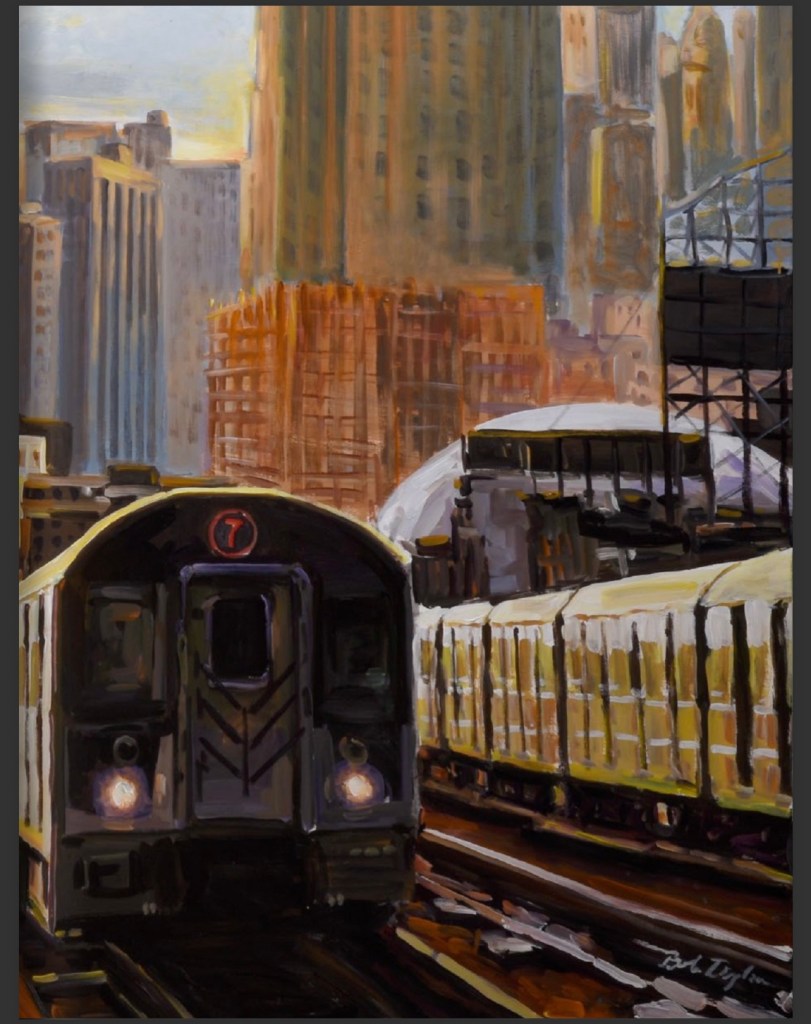
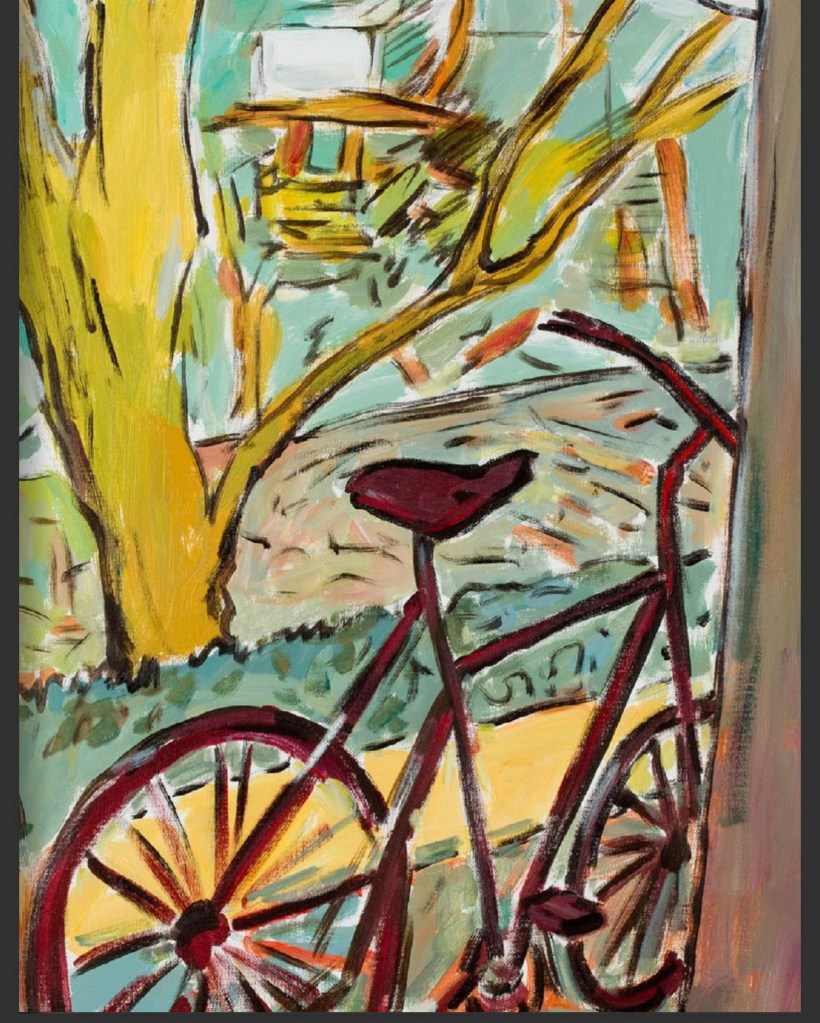
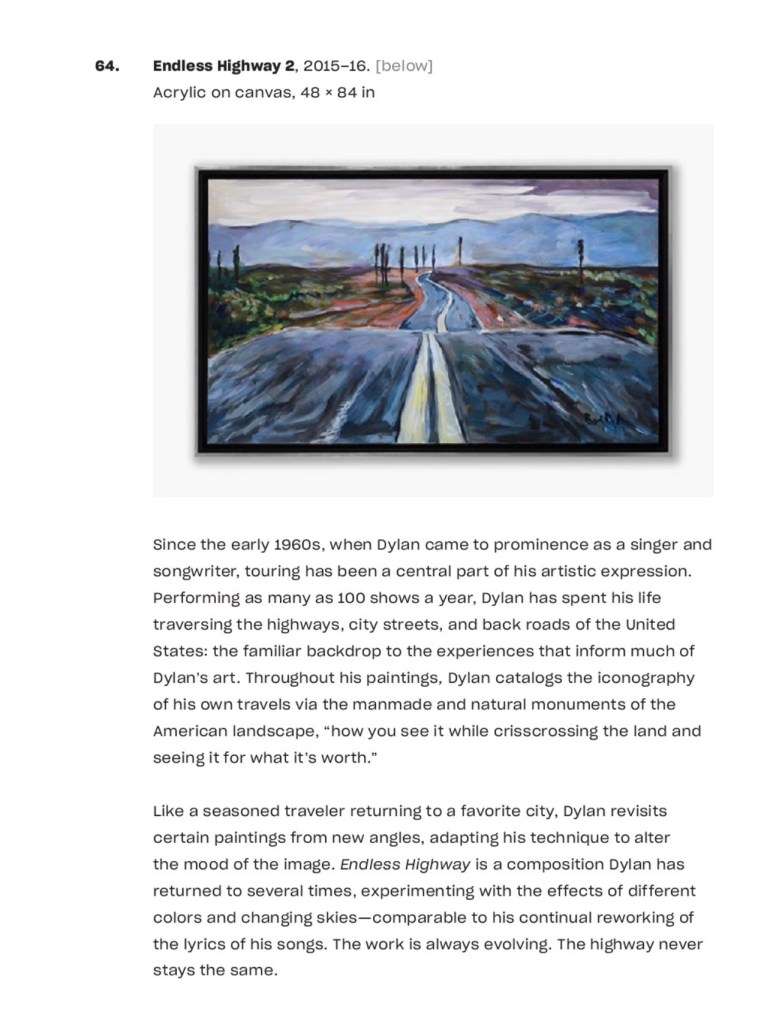
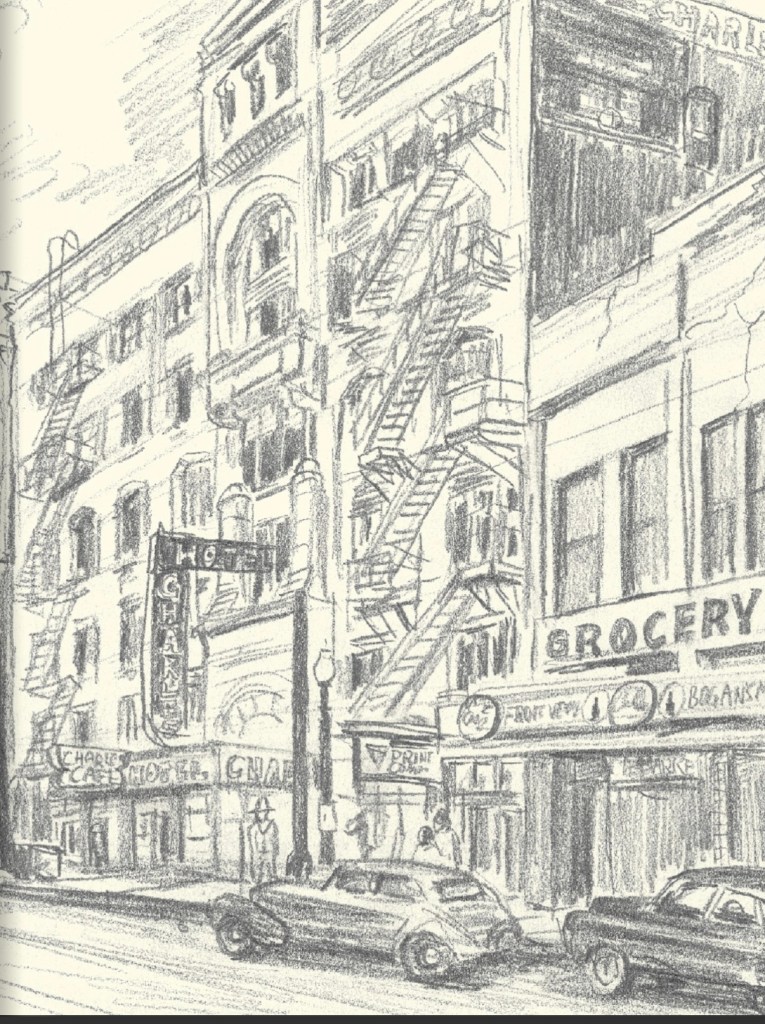
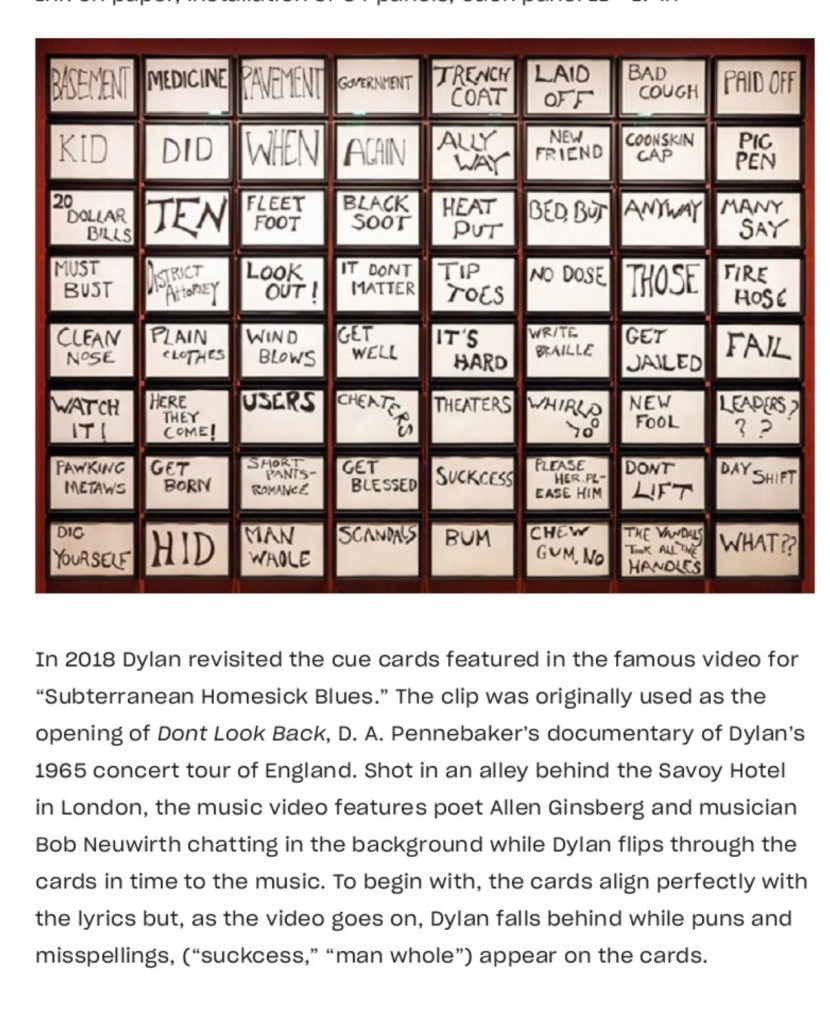
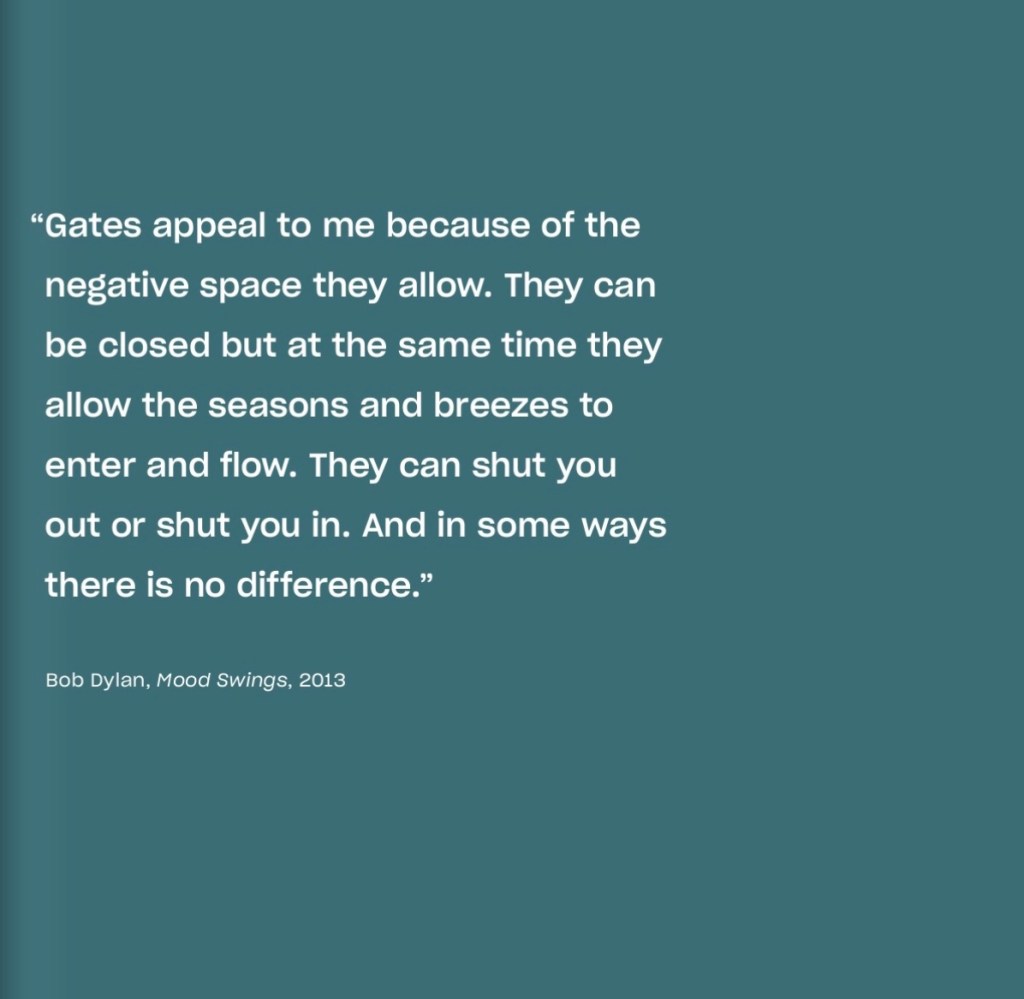
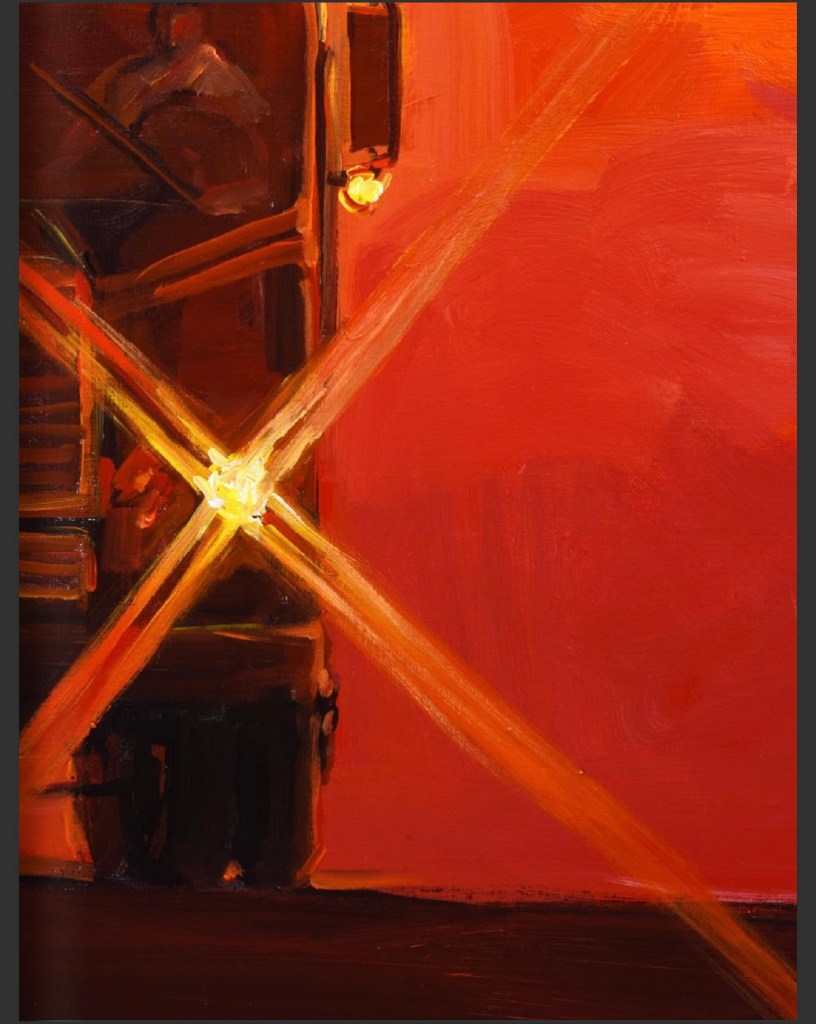
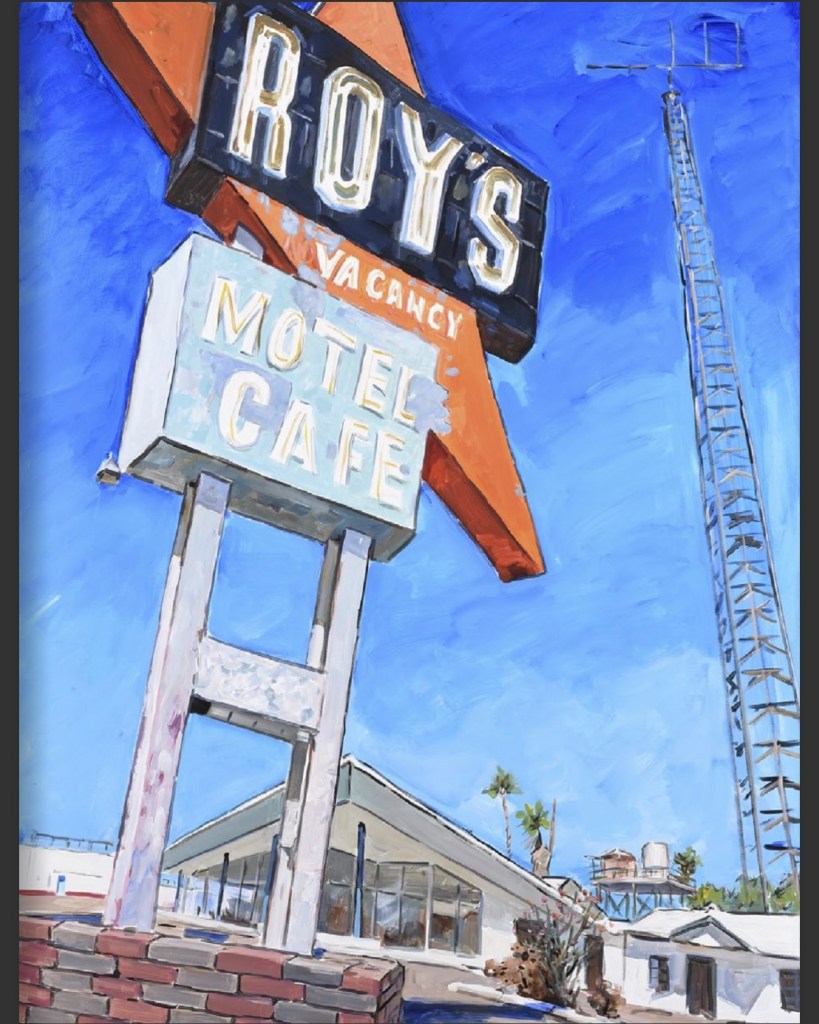
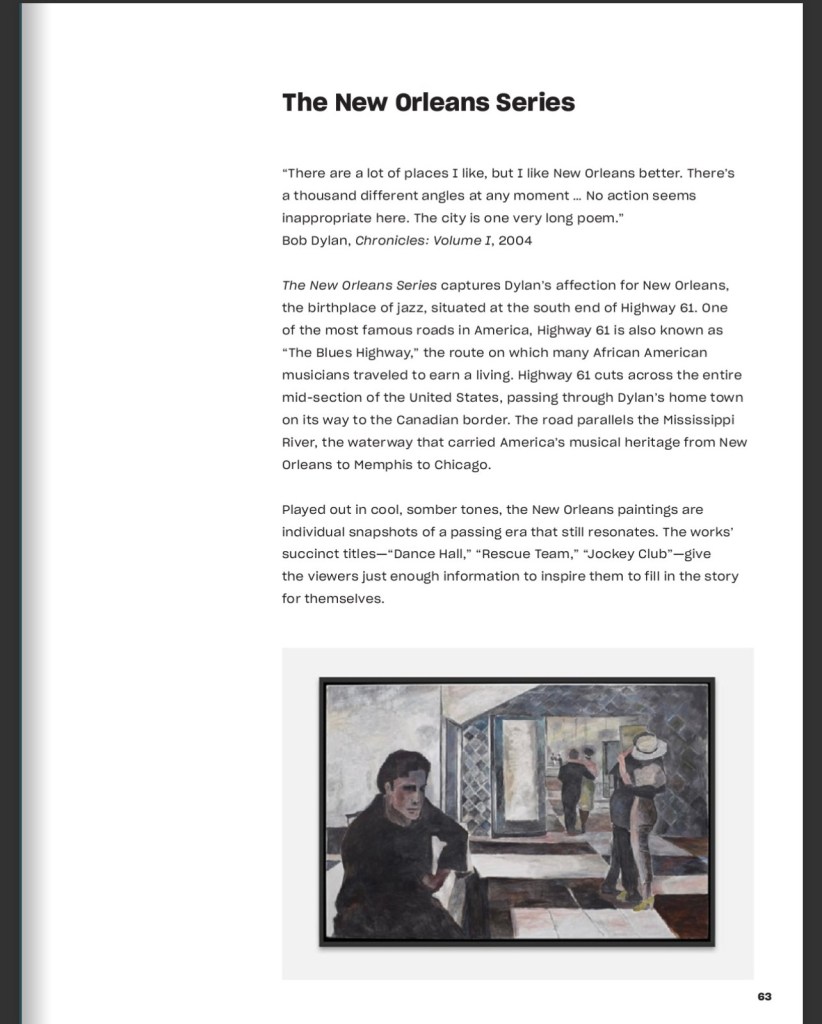
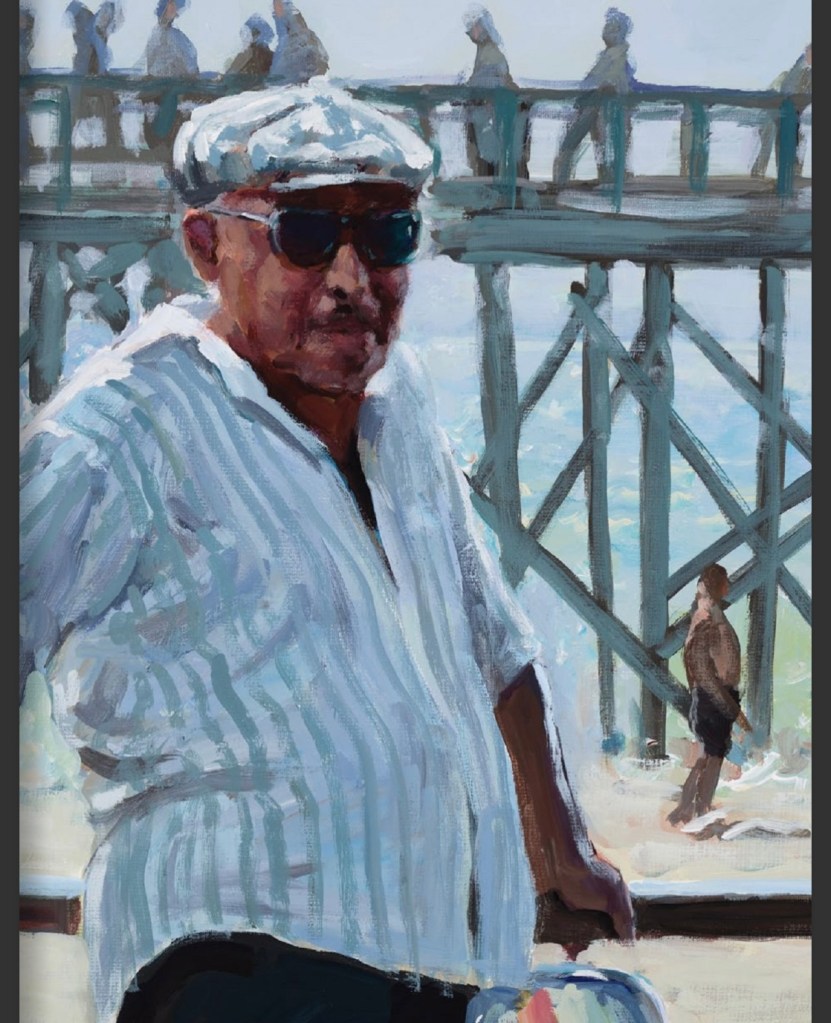
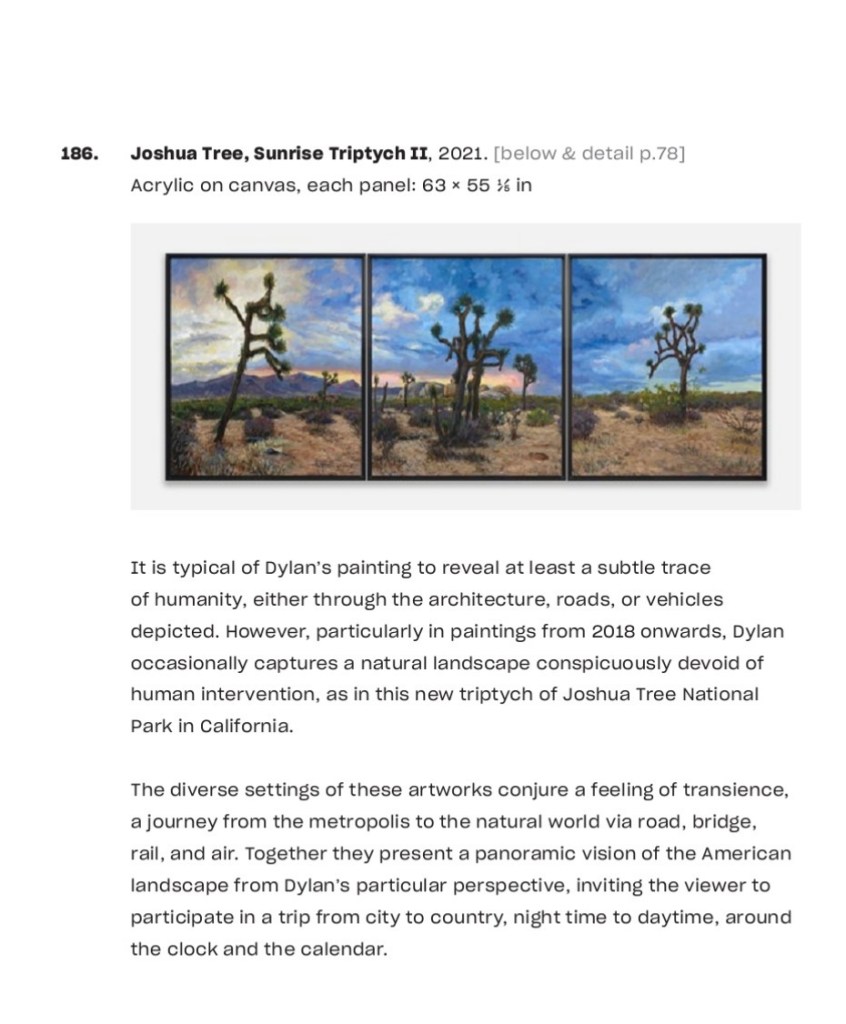
The Patricia and Phillip Frost Art Museum, on the Sweetwater (an area in Miami) campus of Florida International University, FIU, is featuring the works of Bob Dylan. Museum visits are rare these days with so many viruses being passed around. Thank goodness for digital experiences. I could stare at these paintings forever and wonder what was Dylan thinking about? I want to know why he chose certain subjects. His songs make us think about what he is describing. His paintings make us think for ourselves. The following is a small representation of what is being shown.
A man is getting into the shower just as his wife is finishing up her shower, when the doorbell rings. The wife quickly wraps herself in a towel and runs downstairs. When she opens the door, there stands Bob, the next-door neighbor.
Before she says a word, Bob says, “I’ll give you $800 to drop that towel. “
After thinking for a moment, the woman drops her towel and stands naked in front of Bob After a few seconds, Bob hands her $800 and leaves.
The woman wraps back up in the towel and goes back upstairs. When she gets to the bathroom, her husband asks, “Who was that?”
“It was Bob the next door neighbor,” she replies.
“Great!” the husband says, “did he say anything about the $800 he owes me?”
Moral of the story :
If you share critical information pertaining to credit and risk with your shareholders in time, you may be in a position to prevent avoidable exposure .
Lesson 2:
A priest offered a Nun a lift. She got in and crossed her legs, forcing her gown to reveal a leg. The priest nearly had an accident. After controlling the car, he stealthily slid his hand up her leg.
The nun said, “Father, remember Psalm 129?” The priest removed his hand. But, changing gears, he let his hand slide up her leg again.
The nun once again said, “Father, remember Psalm 129?”
The priest apologized “Sorry sister but the flesh is weak.”
Arriving at the convent, the nun sighed heavily and went on her way.
On his arrival at the church, the priest rushed to look up Psalm 129
It said, “Go forth and seek, further up, you will find glory.”
Moral of the story:
If you are not well informed in your job, you might miss a great opportunity .
Lesson 3:
A sales rep, an administration clerk, and the manager are walking to lunch when they find an antique oil lamp. They rub it and a Genie comes out.
The Genie says, “I’ll give each of you just one wish.”
“Me first! Me first!” says the admin clerk. “I want to be in the Bahamas , driving a speedboat, without a care in the world.”
Puff! She’s gone.
“Me next! Me next!” says the sales rep. “I want to be in Hawaii , relaxing on the beach with my personal masseuse, an endless supply of Pina Coladas and the love of my life.”
Puff! He’s gone.
“OK, you’re up,” the Genie says to the manager.
The manager says, “I want those two back in the office after lunch.”
Moral of the story:
Always let your boss have the first say.
Lesson 4
An eagle was sitting on a tree resting, doing nothing. A small rabbit saw the eagle and asked him, “Can I also sit like you and do nothing?”
The eagle answered: “Sure , why not.”
So, the rabbit sat on the ground below the eagle and rested. All of a sudden, a fox appeared, jumped on the rabbit and ate it.
Moral of the story:
To be sitting and doing nothing, you must be sitting very, very high up.
Lesson 5
A turkey was chatting with a bull. “I would love to be able to get to the top of that tree,” sighed the turkey, “but I haven’t got the energy.”
“Well, why don’t you nibble on some of my droppings?” replied the bull. They’re packed with nutrients.”
The turkey pecked at a lump of dung, and found it actually gave him enough strength to reach the lowest branch of the tree. The next day, after eating some more dung, he reached the second branch. Finally after a fourth night, the turkey was proudly perched at the top of the tree.
He was promptly spotted by a farmer, who shot him out of the tree.
Moral of the story:
BullShit might get you to the top, but it won’t keep you there.
Lesson 6
A little bird was flying south for the Winter. It was so cold the bird froze and fell to the ground into a large field. While he was lying there, a cow came by and dropped some dung on him.
As the frozen bird lay there in the pile of cow dung, he began to realize how warm he was. The dung was actually thawing him out! He lay there all warm and happy, and soon began to sing for joy.
A passing cat heard the bird singing and came to investigate. Following the sound, the cat discovered the bird under the pile of cow dung, and promptly dug him out and ate him.
Morals of the story:
(1) Not everyone who shits on you is your enemy.
(2) Not everyone who gets you out of shit is your friend.
(3) And when you’re in deep shit, it’s best to keep your mouth shut!
We were introduced to Elizabeth Sutton by our lawyer Neil Goldstein who I featured in yesterday’s DigiDame. It didn’t take too long for Neil to suggest that we work with Elizabeth to promote her super stardom career. We are now in collaboration with Elizabeth to make that happen.
Elizabeth Sutton Is The Artist And Designer You Need To Know About Right Now
In just four years, Elizabeth Sutton has seemingly come out of nowhere to become an incredibly successful artist, designer, entrepreneur, and podcaster. Combining whimsy, lots of color and a big dose of humor into her work, it still remains sophisticated.
Raised in a Modern Orthodox Jewish household in Brooklyn, Sutton married young and lost (almost) everything in a divorce. However, that’s not the only challenge she’s experienced on her way up. But, like her signature butterfly designs, she’s managed to come out of the cocoon of pain to a thriving business and beautiful new life.
Artist As Influencer
Elizabeth Sutton’s story isn’t that of a typical New York City artist. She didn’t rise through the ranks at Parsons, or another prominent art school. Rather, she began to create out of necessity. After getting married at 21, things began to fall apart both with her marriage as well as financially. In the middle of renovating her apartment, she realized she wasn’t going to be able to afford the art she wanted. So, she decided to make her own.
Then, after a no-pressure arts and crafts day with a friend, she posted a few of her paintings to Instagram for fun. “Somebody sent me a message saying I love your art. I just moved, would you be interested in making me something? And I said sure, a little bit of time, a little bit of money, why not? And that’s really how my career started,” Sutton tells me.
But this wasn’t the first time there was interest in her work “Over the years, people have come to my apartment and saw the collages that I made and asked me to buy them. I didn’t take them seriously,” she reveals.
However, after realizing she could have a career in art, Sutton circled back. “I hit a bunch of them up and asked if they were still interested. Some of them said yes.”
Then things just began to happen. Sutton would leave her art in the lobby of her Upper East Side apartment while pulling her car around to transport her work for delivery. Women in the building would notice the art and ask the doormen where it came from. Sutton started to get clients.
In 2016, star of Bravo’s Million Dollar Listing New York, Ryan Serhant contacted Sutton to place her art in a new development in Tribeca. It ended up on the show, which was yet another win for the emerging artist.
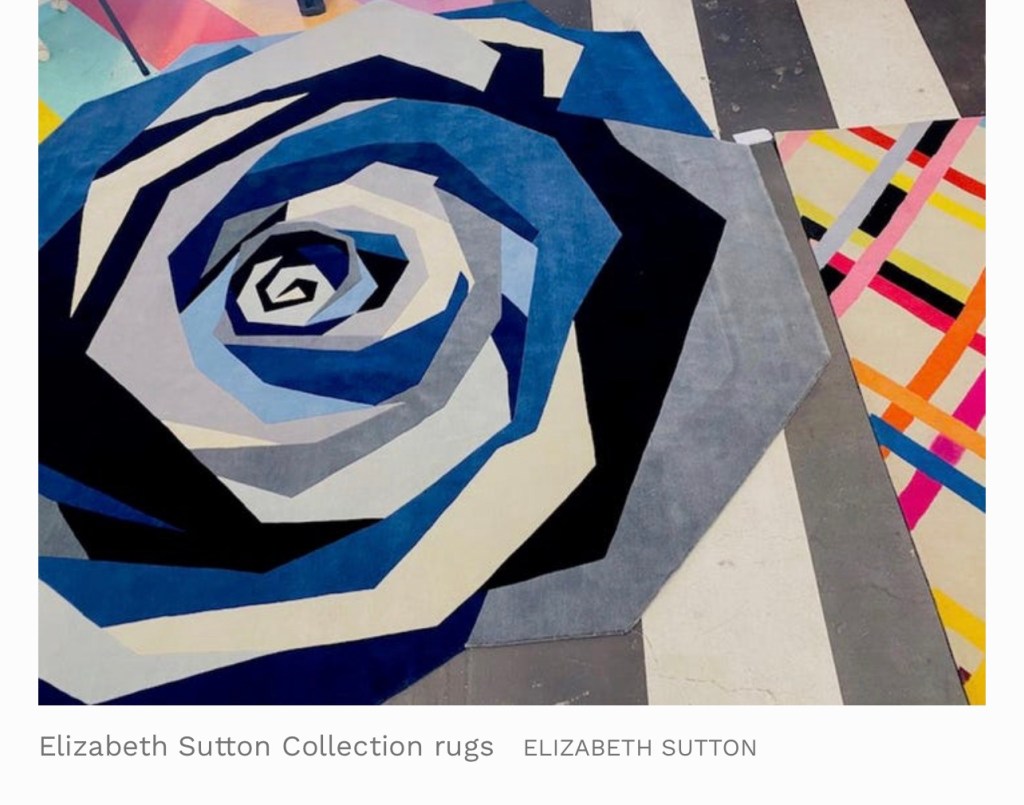
Elizabeth Sutton Collection
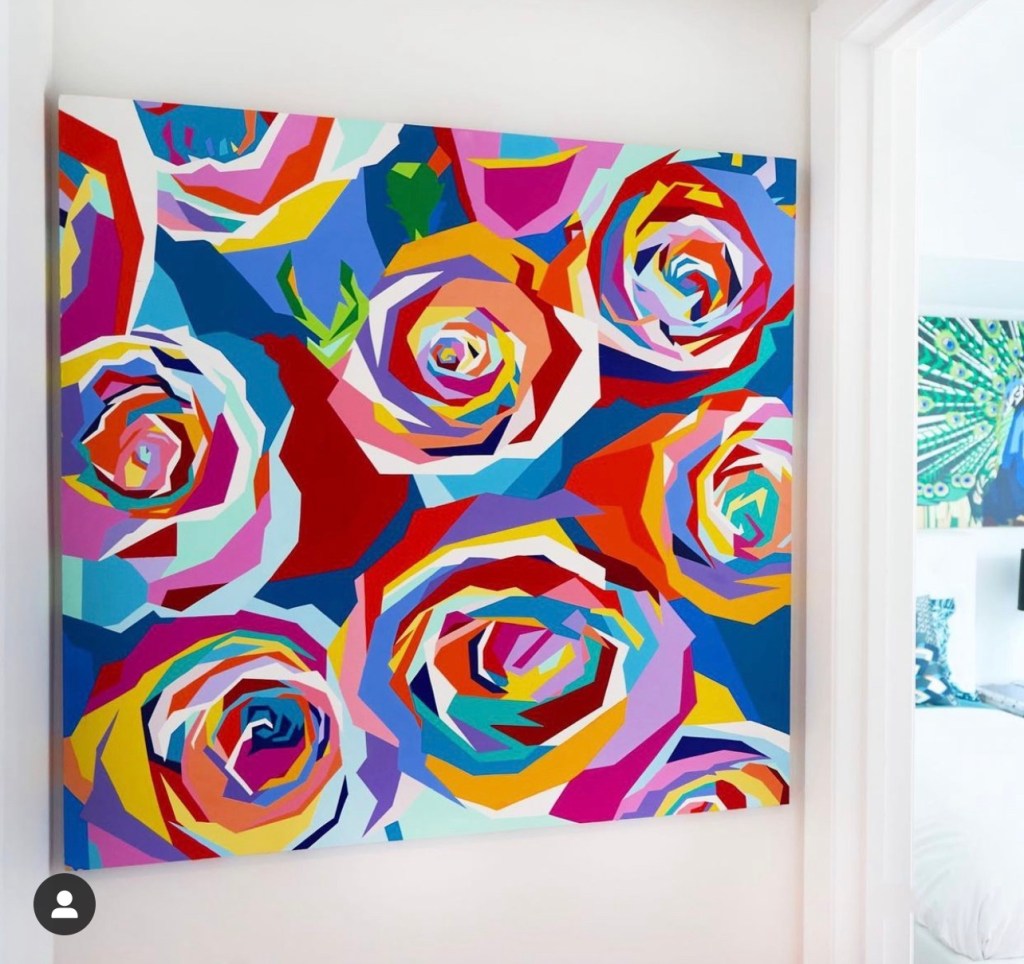
Today, Sutton’s fine art and print collections fall into several categories: Animals, Geometrics/Patterns, Florals, Landscapes, Portraits, Quotes, and Butterflies, which are her signature. This design is used on her logo, packaging, and many of the other products she creates.
If there is another component of Sutton’s work that truly reflects who she is as a person, it’s her “Quote Line.”
A large acrylic and glitter work reads: “Thank you Daddy. I appreciate your issues,” which is a tribute to the father who left her family as a teenager. She still doesn’t have a relationship with him.
Other pieces read “Dance Through The Pain,” and “Art Heals All Wounds,” which tell the story of the challenges she’s had in life such as her assistant and close friend tragically dying in a car accident the night of her birthday party a few years ago.
But perhaps the most telling piece is a black and white mixed media sign that reads “Life is fucking complicated.” What could be a better reflection of life right now?
Home Decor Line
Sutton isn’t just an artist, she’s a true creator whose designs can be integrated into any room of the home. She’s translated her butterfly logo into chic drawer knobs perfect for adding a touch of whimsy onto a dresser or étagère.
They’re even beautiful in a bathroom. Made of solid brass, the gold-plated pulls are available in gold, rose gold, and nickel finishes.
In addition to her decor line, Sutton also has a stunning fashion accessory collection with handbags, handbag straps, belts and luggage tags.
Collaboration With Tile Bar
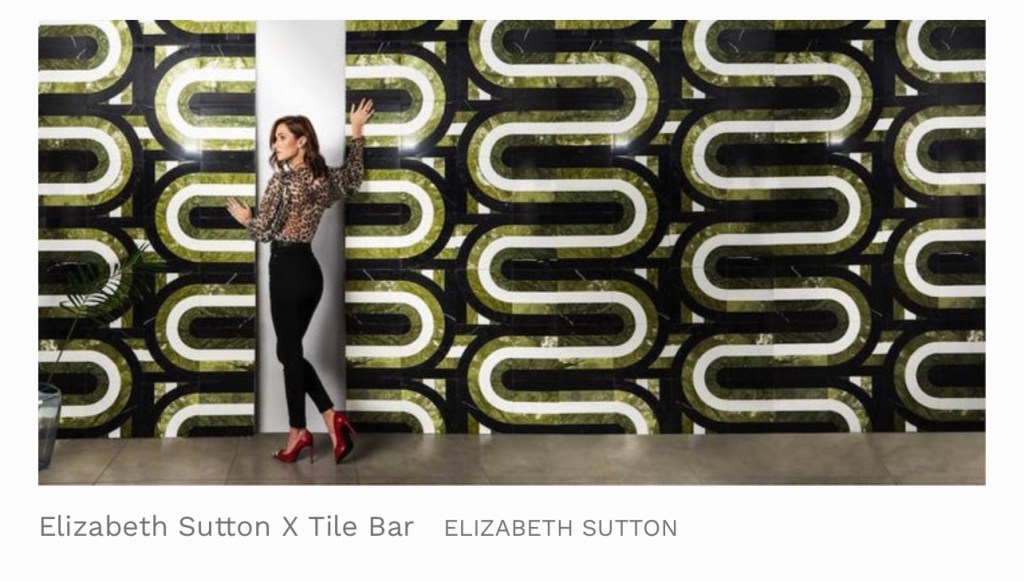
Her most successful collaboration to date has been with TileBar, which debuted during the 2019 Architectural Digest Design Show in New York and won Best In Show for wall treatments.
With six colorways in three formats, these polished marble tiles can have more than 100 different layouts. The style of these tiles, like everything else the artist does, truly embodies elevated whimsy.
Paint Collection With Janovic
The same year, Sutton partnered with New York City paint institution Janovic on a line of Benjamin Moore paints inspired by her life called Shades of Grey, Autumn Allure, New York Goes to the Eden Rock, St. Barth’s, Earth Wind and Fire and Head in the Clouds.
To promote the collaboration, Sutton painted murals on the facades on four of Janovic’s buildings.
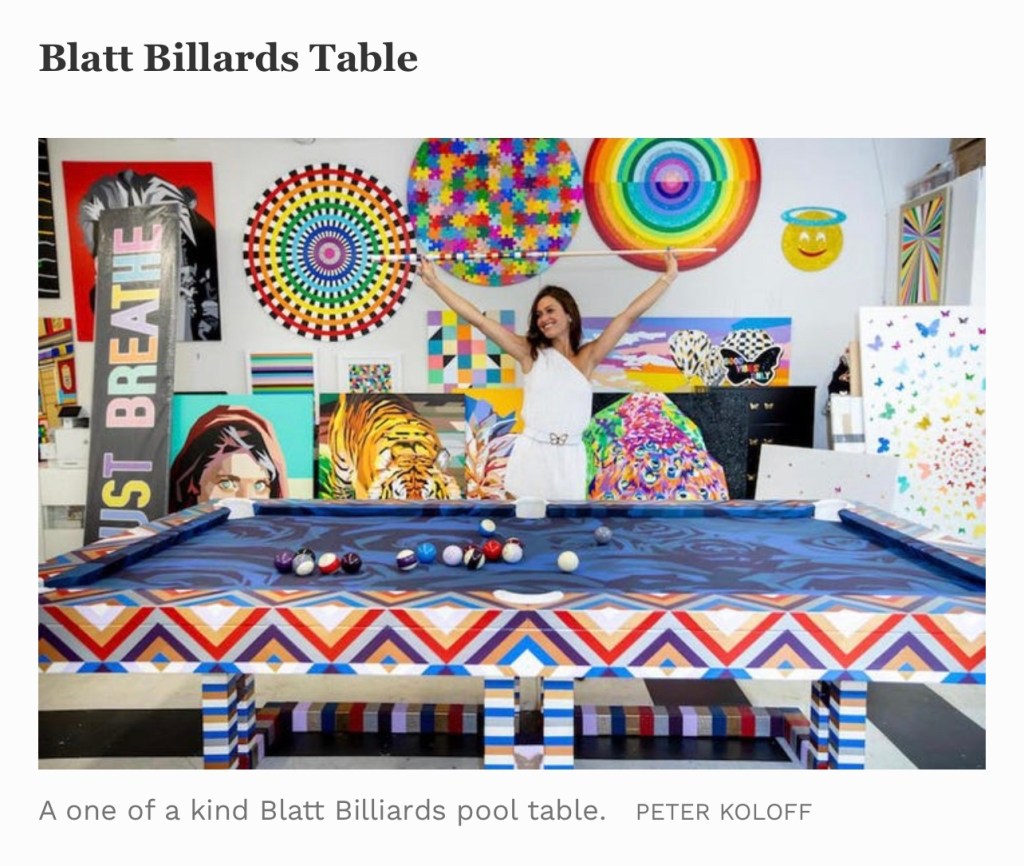
Sutton recently completed what she considers her most creative work to date— a custom built Blatt Billiards pool table. It features three different hand painted geometric abstractions, custom dyed and embossed Italian leather wrap around the base as well as printed felt featuring her noted artwork, Buy Yourself Roses. There are even custom balls with her trademark butterfly logo. “This table is my creative baby and included over 1000 hours of labor,” Sutton tells me. The price tag?
The Summer Of Staying Home
On July 22nd, Sutton launched a rug line featuring five different designs including a blue rose (which is rose-shaped), a round butterfly rug, a plaid rug as well as prisms and starbursts.
These are the artist’s signature designs in a combination of both bright and contrasting colors. Made of wool with a cotton foundation, these pieces are more than accents, they’re true statement decor.
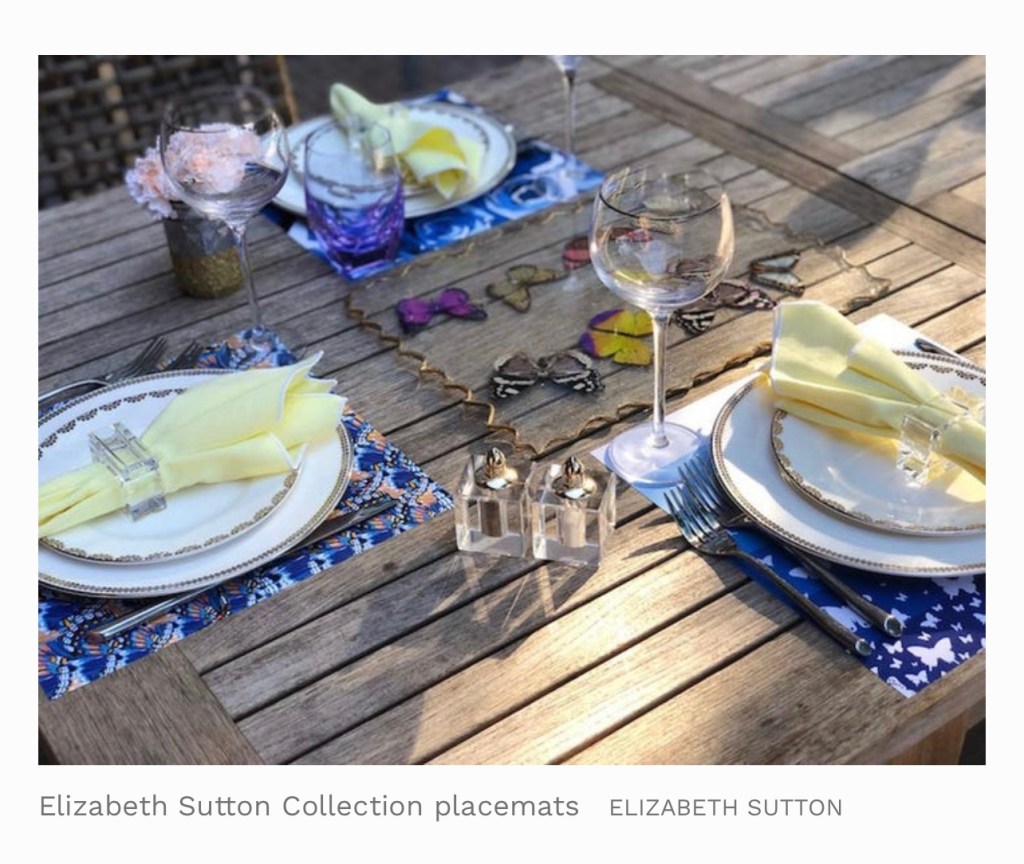
In addition to rugs, Sutton also launched an affordable line of 32 different placemats in a variety of styles from floral to butterflies, hot air balloons, and other animal designs.
Made of sustainably sourced materials, these disposable placemats are ideal for dinner parties and as Sutton personally knows, families with children.
Looking Forward
As for the future, even after a challenging time, Sutton is incredibly optimistic. The artist tells me, “I am so grateful to have found something I truly love to do, something that fulfills me from the inside and makes me happy on the outside. I feel I am a much better role model for my children as well, having gotten more intelligent and confident thru my career, and I hope to instill these values into them—that with hard work and passion they can achieve their dreams. And of course, I am grateful for my team and my support system that provides me with the opportunities and assistance to make my dreams come true, one day at a time.”
Our winning NY lawyer, Neil S. Goldstein, was a major player in the Warner Music Group deal this week. Lawyers around the world call on Neil for his strategic brilliance. He has been our attorney for 43 years. He was working on the deal while he stayed with us during Art Basel. He worked around the clock but never told us what it was all about. He shared it with us today. Congrats Neil. You are a rock star.
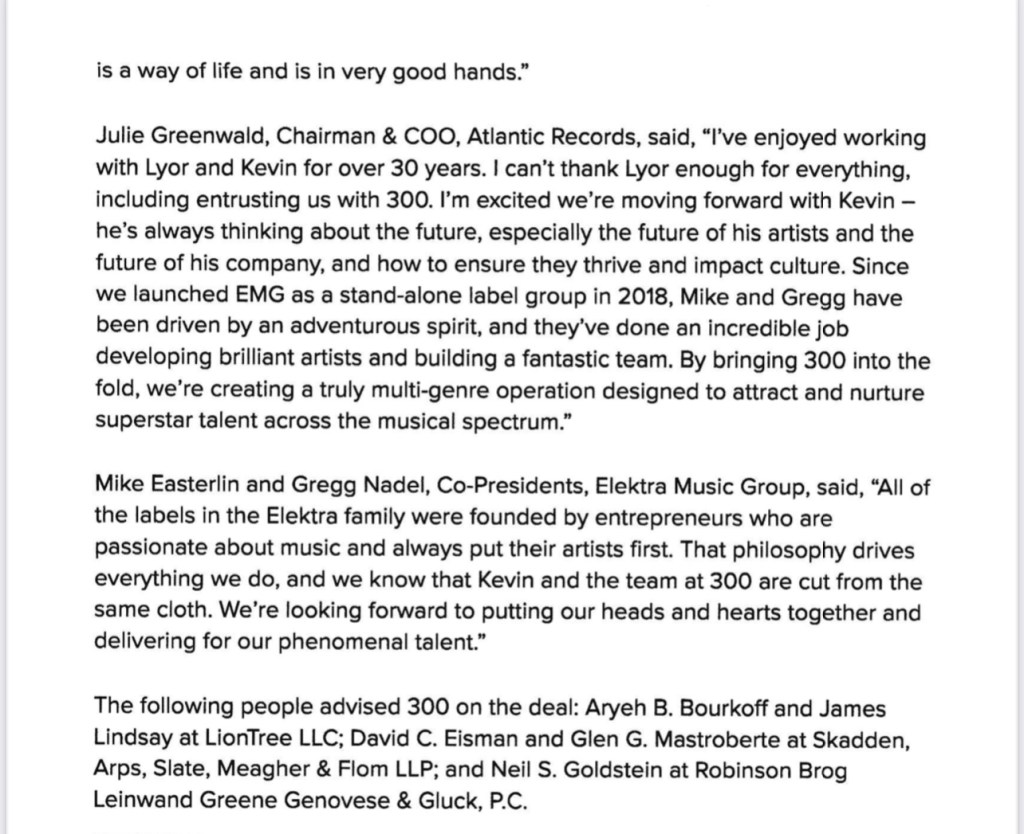
The following people advised 30O on the deal: Aryeh B. Bourkoff and James Lindsay at LionTree LLC; David C. Eisman and Glen G. Mastroberte at Skadden, Arps, Slate, Meagher & Flom LLP; and Neil S. Goldstein at Robinson Brog Leinwand Greene Genovese & Gluck, P.C
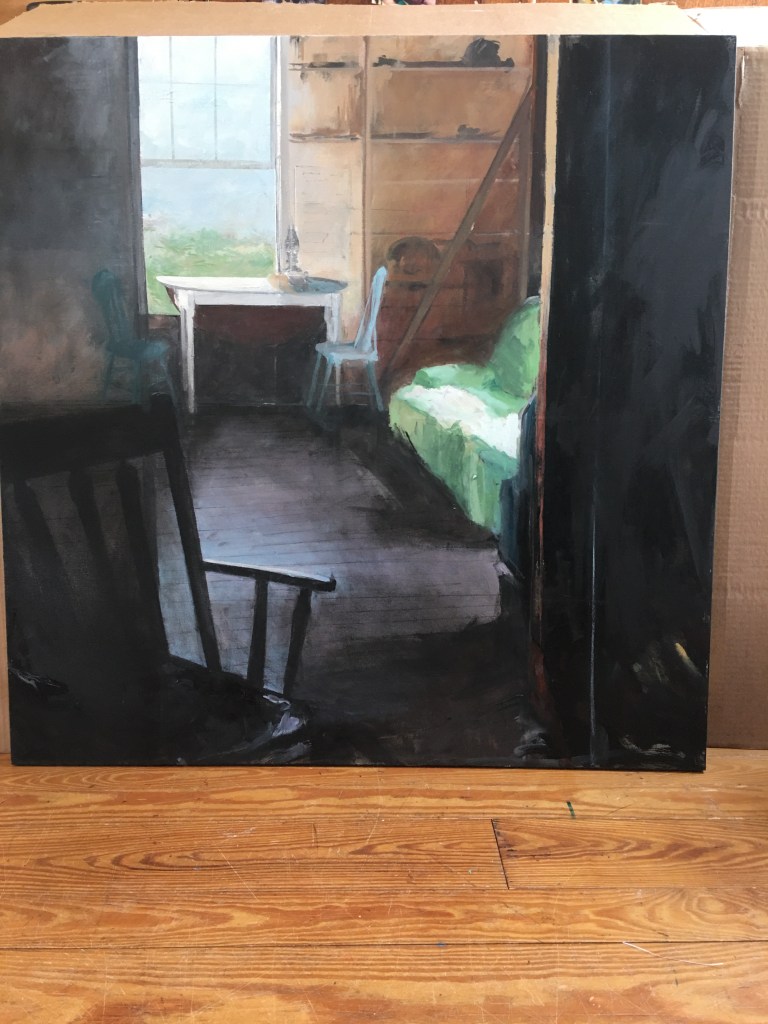
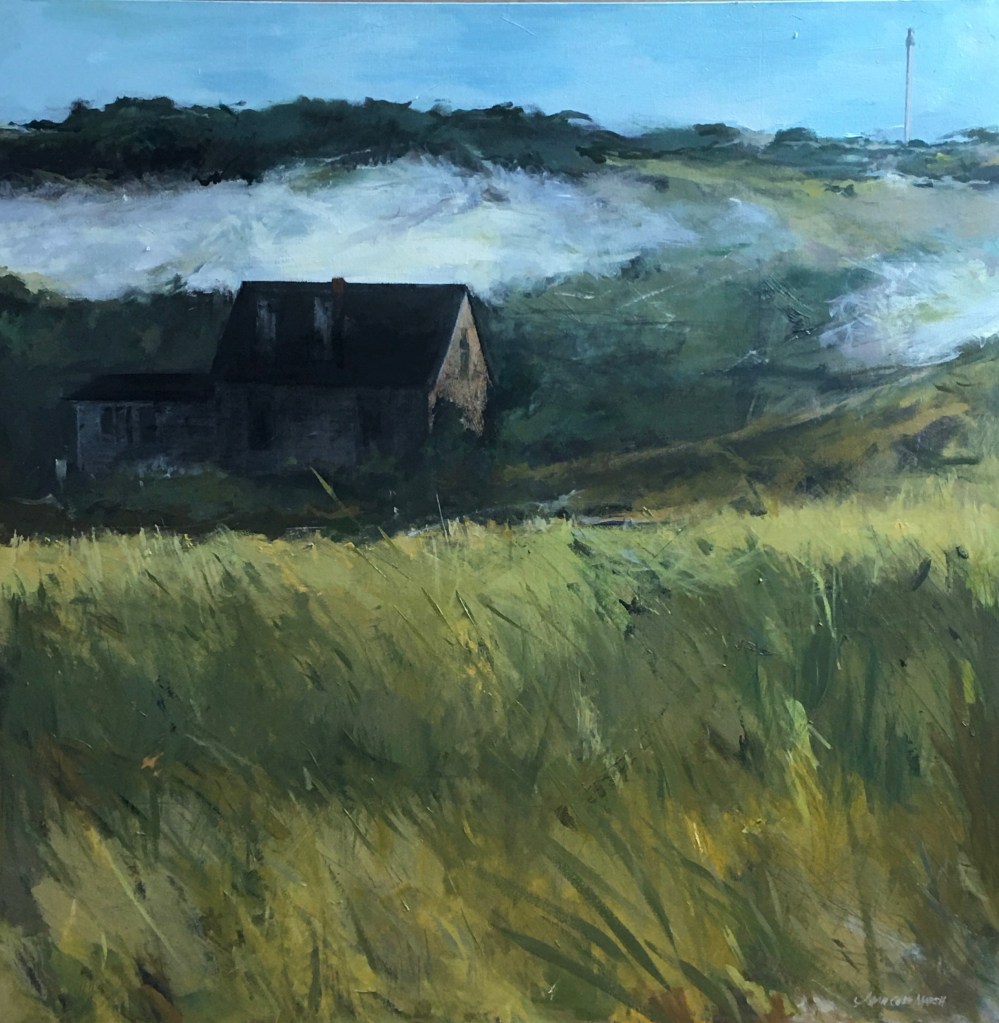
Eliot and I bought this painting from Joan Cobb Marsh because it’s so profound. It’s nothing like the rest of our collection.
I’m a city girl. I just can’t imagine why anyone would ever want to live alone, for any period of time, in a rustic shack in the dunes of Provincetown. No one else is around for miles. There is no running water or electricity and you must bring everything you need to safely survive the stay. It gives me the shivers to think about my artist friend Joan Cobb Marsh, an oil painter, who lived alone in that barren environment for weeks while she freed herself of any outside influences so she could truly capture the ever changing colors of the sky, the drifting sand, the waves in the ocean and the endless movement of tumbleweed.
If you Google the area you will learn that at least 19 well- known painters and writers also secluded themselves in the dune shacks on the thousands of acres of sand dunes between Provincetown and Truro. Among those that are listed are Eugene O’Neill, EE Cummings, Harry Kemp, Norman Mailer, Tennessee Williams and Jack Kerouac.
I must have asked Joan a dozen times over our decade plus-year relationship if she was scared to be in the dunes alone. I don’t think she clearly understood the question, or the nervous nelly person asking it. She would always answer that living in the dunes cleared her mind and allowed her to truly get close to her work without any distractions.
“I loved it out there. It was very serene. You had to bring your own food and water. I left some of the water outside so the sun could warm it.” She showered outside in some sort of a mobile contraption that sounded too open air for me. “What if someone saw you,” I asked? Joan sighed, “No one was around and if they were, let them look.”
A photo of one of the shacksAnother photo of a shackJoan Cobb Marsh deep in conversation. A Joan Cobb Marsh paintingA Joan Cobb Marsh ProductionA Joan Cobb Marsh CreationA Self Portrait
Joan was more focused on the fact that she was experiencing the life of many of her ancestors who came to PTown (the nickname) before any true modern day advantages ever took place. She wanted her art to reflect the history of an area of the world that she says is so special. One of Joan’s greatest possessions is a piece of a boat that sank centuries ago when folks first came to the Cape. It’s her connection to the past and reminds her of what life used to be like.
Joan and her husband Al have lived in Ptown full time for 27 years. Their Cape Cod styled house is directly on the bay. Yes, there have been times that the bay water has reached close to the back deck. Joan is totally calm about it. She is also relaxed about living through severe snow and rain storms without a generator. “Who wants to listen to that humming sound all the time. We have a kerosene lamp if we really need it. When the weather gets real bad we will turn off all the lights, sit on the porch and watch the magic show. We have seen colors that most have never witnessed. It makes me drop back into some other state. I don’t know. Maybe it’s like taking drugs. I’ve never done that, but I imagine that’s what it is like.”
After listening to Joan explain her feelings, I would almost like to join her and Al in this timeout period, especially with the state of the world right now.
Joan has been vacationing in Ptown for most of her life. Her parents and grandparents were Ptown pioneers with homes on Commercial Street, the main drag. Joan and Al met at Rochester Institute of Technology, both earned BFA’s.
Joan was a graphic supervisor for 15 years at the Department of Instructional Development, RIT and four years an adjunct professor at Department of Continuing Education. developed a college course, and taught advertising techniques to photo students. Her gallery representation includes:
-Ellen Harris Gallery, Ptown MA
-Kiley Court Gallery, Ptown, MA
-WilliamsMcCall Gallery, Miami Beach Fl.
Al also received his MFA at the University of Rochester, worked as a lab technician at the Atomic Energy project and was a science teacher in the Greece School District.
Joan and Al have adult children and grandchildren who live in various parts of the country. The offspring are also involved in the arts. Eliot and I own a number of works from granddaughter Claire, (University of Pennsylvania graduate) who has been living in Japan for the last few years.
Joan told me, in more than one conversation, that she and Al picked PTown to live in because they knew, in the off months (when there are few tourists), they could turn off all of the distractions that consume and aggravate most of us. They have their fair share of disturbances but they sure have more peace and time to pursue their personal interests. Life in the dunes was pretty similar. When Joan was not painting all day, she would sit outside her shack and just dream.
The following is a quote from Joan’s bio.
“There is no logical explanation of visual data. A person stops, looks… all is on the canvas and the viewer is now in the arena of new experiences. A painter’s mandate is a good-faith attempt to capture the fleeting visual beauty of our relationships with worldly stimuli. In a glimpse resides an eternity.”
Everyone I speak to is totally aggravated by their personal situations, or how much the world has changed in the last few years. Some folks, including myself, are on the brink of opening their windows and yelling to the universe, “ I’m as mad as hell and I’m not going to take this anymore!” You know where that came from?
Actor Peter Finch said that line in the movie Network, which premiered in New York City on November 27, 1976. Before you scream your guts out, read about “Reflect Orb” which I describe below. I will see the product live at CES in January. I will let you know if it helped me feel, and see things, in a more positive light. Wouldn’t that be wonderful?
Reflect is a wellness tech company that is launching a purple orb that uses biofeedback to help guide you towards your calmest self.
The Reflect Orb is a soft, round device with a glowing light ring that changes color in response to your stress levels. Whether you currently practice meditation or are just looking to find a wellness practice that helps your body to calm down during stressful times, the Reflect Orb seamlessly blends wellness philosophies with science-backed practices to help you learn and develop everyday habits that guide you to a relaxed state of mind.
How it Works: Each day, set aside a few minutes in your schedule when you can concentrate on your practice. Settle into your favorite spot, allowing yourself to feel present in the moment. Then, activate your Orb by placing both hands on either side in order to begin your session. The Reflect Orb measures and analyzes your body’s physiological signals and provides continuous visual indications of your mental state. The calmer you are, the closer to white the light ring will be.
This feedback helps you guide yourself toward a calm state. The Reflect App displays the data received from the Reflect Orb to help you track your personal progress, as well as provides a daily journal where you can log your feelings after each use. You can use the app to set notifications to set aside time in your day for self-reflection; while analyzing your data can help you better understand what you are feeling. Over time, and with consistent use, Reflect will help you to gain control of your mental and emotional wellbeing.