Jerry Della Femina’s Fiscal Cliff PR Spin

Jerry Della Femina

Jerry Della Femina

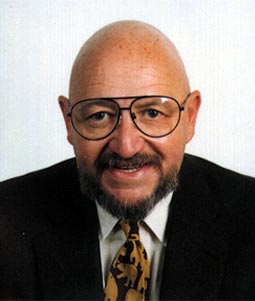
I almost fell off my chair at breakfast this morning when I read a story The New York Post published about Jerry Della Femina, one of the most creative guys in the advertising business, being forced to sell his $25 million house in East Hampton because of President Obama’s fiscal policies. Della Femina blamed Obama for his financial woes. He was quoted as saying “I want the proceeds of this sale to go to my kids and my grandkids. I don’t want my money going to Obama, and that’s what’s going to happen in the New Year. That’s why I sold right now, that’s why I wanted to get this done.”

Sold for $25 million

Sold for $25 million

The Rupert Murdoch owned newspaper explained, “A fall off the fiscal cliff could trigger a 40 percent rise in taxes on short-term investments and a 5 percent spike in taxes on long-term capital gains.” The legendary ad man was the genius behind Meow Mix and Absolut Vodka campaigns. The 8,500 square-foot house sold for $25 million even though those in the know claim it was on the block for years for $40 million.

I met Jerry 25 years ago when he and I worked for BellSouth as independent agencies. He had the advertising portion and I had the PR. We were working on the precursor for Blackberry. Jerry and I introduced the first wireless email device into the world. The unit was the size of a brick and everyone at the time said no one wanted wireless email. He worked very hard to prove everyone wrong. We didn’t know the answers ourselves but we had a great client, Janet Boudris, who could clearly see the future.

Because of that working relationship, I was in Jerry’s company a lot. There wasn’t a minute that he wasn’t absolutely sensational. Clever as clever could be. Eliot and I went to his East Hampton home a few times so we know the house he is talking about. Honestly, the New York Post is calling the house a mansion or estate, but from my recollection it was a nice, sizeable home. The location was outstanding. I have been to many homes on the ocean but Jerry’s house was in an exceptional spot. It was situated on a cliff with a full view of the ocean from every window in the house and certainly every spot around his pool.

Jerry’s comment about being forced to sell the house because of the fiscal cliff is totally unfair. Jerry is probably selling the house because as we all get older, we don’t want to carry the overhead we did in the heyday of our careers. How do I know this? Because it is happening to me and many people I know, who lived a fast lane life with fast lane expenses. Jerry owns a fabulous NYC townhouse plus several homes in Palm Beach. He probably looked at the monthly money coming in and what was going out. As we get older something has to give. East Hampton was the most sensible to go.

To blame Obama is absolutely ridiculous, but that is Jerry’s spin. I just couldn’t sit back and read that BS in the Post. Blame old age. We still may be relevant and creative but we may not be able to generate money like we did in our 40s and 50s, certainly not in the advertising and PR business. The new kid on the block is raking in the dough.

The World Didn’t End, What’s Next?

20121221-210609.jpg

We made it! We are still here! I wasn’t really worried, but it did cross my mind. What a day I had. We took an early flight from New York to Miami during a heavy downpour and strong winds. The take off was like being in a spaceship shooting for the stars. Once we got here it was rush, rush to get things done for the holidays.

Every year at this time I make New Year’s resolutions I never keep. I promised myself that if the world didn’t end I would walk at least 10,000 steps a day, (you start losing weight at 12,500 steps according to my friend, Dr. Howard Stark), I would eat more protein and less junk, and try to sleep longer each night. I average four or five hours because my mind is on overtime.

For the last year, I have been using FitBit, a Bluetooth pedometer which has really made me conscious of how much I walk each day. I average 7,000 steps, which is not the desired amount, but much better than what I used to do.

The gadgets for monitoring wellness have been increasing significantly since the advent of Bluetooth. It is really wonderful to have a gizmo that tallies up many of your daily activities and then keeps records of them on a dedicated application.

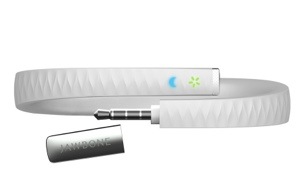
Ed Baig, a USA Today tech reporter, really got serious about his wellbeing a few years ago. He lost a lot of weight and has a frequent exercise routine. I know him for 20 years and I have to say he looks younger and more energized than ever before. That is why I am reporting on a device he highlighted today that he says can help us change many of our bad habits. It’s called the Jawbone’s Up band, It costs $100 and can help you live a more healthful life.

The device is a bracelet that works in combination with an app on your iPhone, iPad or iPod Touch. It motivates you to break those unhealthy habits.

The company is known for producing popular wireless Bluetooth headsets and Jambox portable electronic speakers.

Up has a sturdy steel frame encased in a flexible hard rubber wristband. Built-in motion sensors can track the steps you’ve taken, distance traveled, pace, calories burned, and the hours you were in a deep or light state of slumber. The band comes in small, medium and large and multiple colors. It works in tandem with the free companion iOS app, which you must download from Apple’s iTunes Store. Jawbone says an Android version is coming.

To sync the device to the Jawbone app, lift off the cap at one end of the band which reveals a mini-jack that plugs into the headset jack of your mobile device. Then open the app, tap a sync icon and wait a few seconds for the process to be completed.

I am not saying this is the ultimate wellness device, but I have heard other’s rave about it. It is worth a try and may help us keep the promise we made to ourselves for the New Year.

20121221-210632.jpg

The Names Were Changed To Protect The Guilty

area 51I have so many funny and remarkable stories about attending CES over the years that it will take a little time to remember all of the shenanigans. The one that sticks out the most is when my PR agency, HWH PR, represented a company called Intelegen , a small cap public company (a penny stock). Intelegen was going to introduce a new type of TV that was supposed to be better than high definition. Two women out of Silicon Valley headed up the company and wanted to put a special PR spin on the introduction, so they claimed they found the technology in Area 51, a secret military base. They spent a million dollars building a look-a-like military base structure in the parking lot just outside the Las Vegas Convention Center for a press conference to show off the new technology.

I asked Jenny, the CEO, to see the new technology hours before the conference. She gave me some tap dance answer that it was still being unwrapped in the shipping area of CES. Not to worry. We lined the entrance to the structure with folding chairs for the press. About 100 members of the media showed up. Jenny kept them waiting a half hour until some of the press folks started yelling out for the press conference to start. Still no Jenny. It got so bad over the next 15 minutes that a few of the older members of the press started to yell out obscenities. “What the f**k is going on?” was one of the familiar ones. It continued to get much worse. Finally, an hour late Jenny appeared. She got booed immediately. She just smiled. She babbled for 15 minutes about how she got in to Area 51 (all fictitious) and why the technology was so advanced. She was boring everyone. Then the bedlam started. “We want to see the TV! Shut up already! We have been here for two hours! Stop the BS! Show us the goods!”

Then the unthinkable happened. Jenny told the audience that the product never arrived. The grumbling was more than my ears could handle. All of a sudden, I felt that I was transported from Earth to another planet. While I felt bad for myself repping this fraud, I felt worse for my young staff who I imagined were quite demoralized given the looks of shock and dismay on their faces. If I were one of them, I would have felt like I needed to look for a new job because HWH just got a bad rap. To this day, there are one or two press people around who remind me of that event.

infidelity

If that was not bad enough, we also had another client who was not exactly faithful to his wife. He was having a long term relationship with one of the young gals who worked for CES management. When I first met him, he was a rather large guy. Then he lost 75 pounds and discovered that he had some sex appeal. Most of the time when I visited his company, he would ask for alone time with me to share photos of his escapades. I would give him all the right reactions to make him feel special (his monthly retainer was huge for the time), and then I would actually meet with his staff to make sure HWH was actually involved in important work so we couldn’t get accused of any CEO personal favors. My relationship with the number one guy forced us to do double the work load just to secure our relationship.

The CEO, Joseph, used to sleep in the same hotel room with his girlfriend during CES. One year his wife showed up on day two of the show. Luggage in hand, she called him from the lobby of the hotel announcing her surprise arrival. He went into full panic. He immediately called me. I had to go downstairs to the lobby, explain that he was in a meeting, and take her to lunch. The girlfriend moved her stuff into my room and I was stuck with her for the remainder of the convention. The things I’d do for our clients.

The owner of the publication I worked for many years ago almost strangled me one morning at the show because I had stopped the presses the night before when I noticed the pagination of our daily magazine was out of order. Most of it was written in advance. We kept page one and a wrap-around for daily news. I was at the local Vegas printer proof reading the draft when I noticed the mistake. I was editor-in-chief, so I could make the call. My boss didn’t agree and was furious that the publication was late to the show floor. I would have called him when I saw the mistake, but he was busy entertaining some broad in his room. How would I have known that? He told me he didn’t want to be disturbed when I had last spoken to him. So be it.

fist fight

Then there’s the time I got an urgent call at 10 pm to go to the CES hotel suite of the CEO for a major Asian company. Many of you own this company’s TV sets. Lucky for me, I was located at the same hotel. When I arrived at the suite, the head American executive was sitting on the coach with a swollen red face. I found out that they had had a fist fight after some screaming had gotten out of control. I have no idea who threw the first punch. I was called to the suite to settle the argument about why the American guy was getting more editorial coverage than the Asian chief. The truth was the Asian exec was really shy and the American guy had a huge ego. The American did offer his boss several opportunities, but he had declined. They really were both jealous of each other and probably wanted to use their fists to settle the score. I told the truth and eventually got fired after a 17 year relationship. The American executive got bounced, too. Ironically, the Asian official was called back to Korea (oops, I gave away another clue) six months later. I haven’t represented this company for seven years. Since I left, they have hired and fired eight agencies.

Okay, I am filled with hundreds of stories, but I have to end this somewhere. The one last story is about two reporters who were dating. They were very well known in the consumer electronics industry. They denied the relationship until she got pregnant. Only a few of us knew the situation. They decided to get married during CES in one of the Vegas wedding chapels. They left the press room at noon and were back by 2 pm, hitched. I was giving a press conference at 3 pm. They both attended. We announced the marriage over the microphone, and the press conference turned into their wedding reception. Everyone still remembers that day. They lasted about 12 years.

I Have Attended Every CES, Who Cares?

20121219-201006.jpg

While the world is getting ready for the end-of-the-year holidays, the 200,000 people who are planning to attend the Consumer Electronics Show (CES) in Las Vegas are in preparation mode for the January 7th to 11th event. CES is the largest trade show in the world and the center of innovation. I have been attending CES since its inception in 1967. There are only a handful of industry people who have been around as long as I have. Most early show attendees are either retired or dead. I was 19 at my first show so the fact that I lasted longer than most is no big surprise.

I used to have a lot of clout in the industry because our PR agency repped some of the biggest names in the business: Samsung, Sony, DuPont, Panasonic, JVC, Olivetti, Sanyo, and Philips. There were others but I can’t remember them all without checking our records. We also represented hundreds of smaller companies that were big at the time and are nowhere now. I was an industry reporter for the first 11 years of my CES journey (at Home Furnishings Daily and then at Consumer Electronics Monthly).

Then I became the owner of an agency that pitched more innovative products to the press than anyone else on earth. I got very little recognition for my accomplishments, though, because the founder of CES, Jack Wayman, had a girlfriend in PR for many years who competed against me. And now I am not a part of the in-crowd who work directly for the organizers. This in-crowd comes and goes, so I decided to stay as far away from that group as possible. They can’t take away from me the dubious distinction as “the longest survivor.”

Oddly enough, my agency is repping two products at CES that are getting a lot of the attention from the press: a 110-inch 4K TV set and the first high definition portable audio player. One of the biggest concerns I have in my working life is staying relevant, so I am thrilled to be in the middle of all the action without any formal CES affiliation.

I am in a giddy mood because today the Associated Press did a story on our client who is introducing the first high definition portable audio player at CES. The article is being picked up by hundreds of print and broadcast outlets. There is nothing finer in the world of a publicist. We pitched the product and the writer at AP did the rest. These days the digital world calls the editorial pickup that we are experiencing from AP “going viral.” Click here to see the original AP story and click here to see how Yahoo picked it up.

Tomorrow I am going to write about some of my most unbelievable moments at CES. A few are X-rated, so be sure to come back.

20121219-201103.jpg

20121219-201153.jpg

Love It or Leave It

instaDid you hear all the moaning and groaning that went on today? Millions of Instagram users found out that the photos they have been posting on the app might be used by the photo-sharing service without any permission or compensation to them? Instagram stated that as of January 16th, any photos that you add to your account (or possibly any existing ones) can be used for their advertising, sponsored content, or promotions. You still own your photos, but now you are giving Instagram “a service license” to use your content.

The press, bloggers, and Instagram users went wild on every social media site (Facebook, Twitter, and LinkedIn to name a few) complaining about this misuse of personal photos. What is even worse is that the public at large can appear in an Instagram advertisement just by innocently being included in the photo that was posted. For example, if I was in a group photo taken at an office party and it was posted on Instagram, my face could eventually end up on the side of a bus if it was chosen for a company advertising campaign. I don’t have to be an Instagram user, just an innocent bystander.

There was so much commotion about this that Kevin Systrom, Chief Executive at Instagram, issued a statement late today that said the public got the wrong message and they were going to spell it out in “easier to understand” language in the next day or two. I call their response ”back peddling” because they never expected such a backlash.

This is where social media is so terrific. I hope every senior who reads this post starts to understand why social media platforms are so important in this day and age. Facebook and Twitter are not just for posting what people ate for lunch, but rather to discuss very important issues. In this case, a ground swell may have reversed Instagram’s earlier decision.

It was cleverly pointed out in the press that Instagram has to do something to make money. Facebook paid $1 billion for it last April and is now pressuring them to produce because they want a big return on their investment. Funny how members of Facebook may have killed their first attempt to become a cash cow. I personally find it very rewarding to be alive during the evolution of technology and software programs. Let’s see where this story ends up.

In case you want more info, click here for The New York Times explanation.

We are a Virtual Experiment for Columbia University

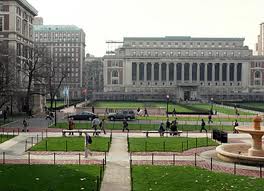
cUvirtual2I usually don’t like to mix HWH PR with DigiDame unless there is something new to learn. I believe that this is one of those times. I know that I mentioned this in one of my posts a few months ago but I will reiterate. HWH is the first PR agency selected by Columbia University to conduct a virtual PR internship program. That means that the interns we employ from Columbia this semester, January through April, all work remotely. They don’t see us, we don’t see them. They will be doing work for us in a Starbucks, their home, the campus, on an airplane, train, any place that has an Internet connection.

In fact, one of the students will be working for us from London because this is her semester abroad. A business friend, who is pretty tech savvy, recently asked me, “Why would you pick a student who is going to London for the semester when you can get interns from Columbia University who are right here in Manhattan?” I was a little surprised by the question so I eagerly answered, “There is no difference where a person is situated when they are working virtually. They can be in the next building or thousands of miles away. It doesn’t matter. We are not meeting face-to-face on any regular basis and if we have to talk, we will schedule it by email in advance.” Then he said, “That is going to be a little difficult considering there is a time difference.”

I explained, “Quite contraire. I feel it is easier. I give her an assignment in the evening and it’s waiting for me when I return to work the next day.” HWH has had an internship program for almost 30 years. One of the reasons why Columbia picked us is because we have a lot of experience with them. We have been using interns from colleges all over the United States for 30 years. If a student is not from the New York area, they usually work for us during holidays or the summer periods. Many of them get housing at the NYU dorms when the regular students are on break.

What Columbia liked about HWH is the way we treat interns. The minute they come onboard they get assigned real work, no filing, making copies and collating like in the pre-Internet days. They get assigned research work, writing assignment for press releases, social media, media alerts, and blogs. They also immediately intereact with the press. Unlike most of PR agencies, we do not fear interns saying the wrong thing to a member of the media. In just a few days, most interns know exactly how a PR agency functions and what the objectives and strategies are. College students today know their way around the Internet as well, if not better, than full time workers who are out of college a few years. The younger the better. They grew up using digital technology longer and have natural instincts that make them adjust to assignments better and deeper. Years ago, we had to show interns how to use some of our databases and subscription services. Now the minute we give them the user name and password, they go to work. Explanations are not needed.

What is scary is that they get the work done faster and surface results that we never would have achieved ourselves. They just know retrieve better info from any kind of software program. They grew up with these programs and instinctively know how to manage and organize the research and lists needed to fulfill an assignment. Long before Columbia University ever asked HWH to be the first PR agency to participate in their program, we were working with interns on a virtual basis. If they couldn’t make it to the office because of weather or they were not feeling well, we would give them assignments to work on remotely.

In this day and age, you do not have to be sitting in the same office to get work done. In fact, I find it better if there is no chit, chat. If someone does have a question he or she texts or calls. That is very rare though. When I ask to talk to an intern, they default to texting. That is their form of communications, fast, to the point and documented. It works for them, it works for us.

The real reason I am writing this post is not just because of the Columbia association, but because the workforce will be moving in this direction as well in the coming years. The day of the actual office will be soon be a thing of the past. Of course, there are exceptions to the rule but even those situations will find a way to work virtually also. Don’t think this is a bad thing. Remember, I told you about the efficiency, accuracy and productivity of the new crop of interns each year. Just think that you will no longer be aggravated about what to wear to work, the hours you’re spending commuting and annoying co-workers.

Everyone will still have the option to get together when they really want to see each other rather than when they are being forced to.

To Be Young Again

Ten years ago, SantaCon would have been impossible to organize. Today, thanks to digital communications, young fun-loving folks gather in hundreds of major towns and cities around the world to celebrate the start of the holidays.

They parade around in small groups dressed in Santa Claus costumes visiting bars and public places showing off their creativity. These make great photo-ops. This has been going on for a few years, but yesterday’s event was massive in most participating areas.

The advent of social media has made this annual event as popular as some major holidays. Groups organized themselves by posting their whereabouts on Twitter and Facebook. We did a lot of walking around Manhattan yesterday visiting friends, so we easily spotted hundreds dressed in festive costumes. Everyone seemed to be having a lot of good, safe fun spreading cheer and goodwill. We can all use more universal harmony.

First photo is a group who started a whole new initiative.

20121216-210700.jpg

20121216-210739.jpg

20121216-210759.jpg

20121216-210822.jpg

20121216-211229.jpg

20121216-211256.jpg

20121216-211330.jpg

We are not Too Late for a Second Career

Just when a friend of mine lost all hope of getting a job at 68 years of age, he was offered a CEO position at a financial services company in Raleigh, NC. Ken had been out of work for eight years and just could not land a position. Prior to that, he held sales and marketing positions at various companies. We would sit on the phone for hours bemoaning our fate. All the good jobs and assignments were going to younger people.

Then one day Ken’s granddaughter introduced him to several social media platforms, Twitter, LinkedIn, Facebook, others. He started to socialize online the way he used to network in person. He dedicated himself to only posting info that made him look desirable for a high ranking position: 1-Business stories he found in his daily readings about a targeted niche. 2-Short, positive thoughts about changes in the specific industry he was interested in. 3-Inspiring comments about recent industry speeches and activities that he posted on other people’s blogs, podcasts, videos and group discussions.

Ken’s main goal was to appear knowledgeable and ageless. He carefully scrutinized every sentence he posted so that he always appeared positive, hopeful, and determined. There was never an attitude, a need to show-off or self-righteousness. It was all about presenting himself as a confident individual who knows how to get things done.

He was very disciplined about his postings. Ken made himself extremely visible and consistent. One day he received an email from a member of the board of a medium-sized financial company in Raleigh that mostly deals with real estate investments. The email was an invitation to a roundtable discussion about the stock market being held at company headquarters. Other outsiders were being invited too. He had to pay for his travel. All else was comped.

He went. When Ken came back from the two-day meeting he was a new man. Not only did he feel refreshed and enthused, but he felt relevant for the first time in years. His participation in social
media gave him the business degree he never got. He taught himself so much about what was happening in business today that he actually became more knowledgable than many executives 10 years younger than himself.

Ken used the time away from the daily grind of business to actually become a strategist. The roundtable discussion in Raleigh was really an audition for all those who were invited to participate. Ken got the highest marks because he was the only one who understood and appreciated how to use today’s digital assets.

Today, Ken travels to Raleigh every Monday through Thursday and works from his home in Alpine, NJ on Fridays. He plans to work until he drops. He said he spent eight years in a forced retirement already and was miserable. These days he feels more alive and satisfied. While he doesn’t have much time to BS with me anymore, he doesn’t miss a day of being a voice online. He is gaining more traction than ever before and is teaching his grandchildren social resume skills that will be their calling card in the future.

SodaStream of Consciousness

sodaEliot and I rarely go food shopping. We lead a carefree life and buy things we need as we go along. We don’t have any one to answer to. We go to work, eat breakfast in the office, eat lunch out and then do random things during dinner time like meet friends, go to shows, movies or someone’s house. When we are home, we order in or eat a Lean Cuisine and ice cream.

Eliot hates when we buy food at the supermarket and then we have to throw it out because it spoiled. He would rather starve. Our lifestyle suits us until we have friends sleep over. It is very embarrassing that we don’t have a thing in our refrigerator. Not even soda. We run out all the time.

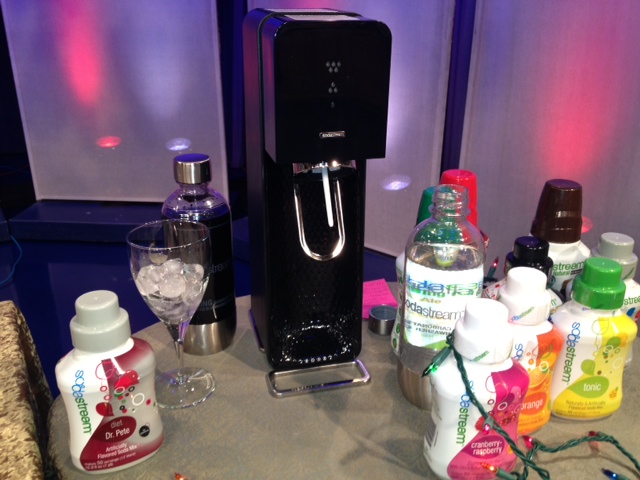
My friend Steve is bunking in with us this weekend and brought us a present so we would never run out of soda. It’s called SodaStream, a soda maker that takes regular tap water and turns it into soda without the usual nutrasweet or high fructose corn syrup. I have been resisting this product from Steve for a long time because I don’t like do-it-yourself anything. I want to buy everything ready to go.

Steve was determined to get us to be SodaStream junkies. He demonstrates this product on his TV gadget tours. He gave us 12 out of the 60 available favors. I still resisted. He couldn’t understand why.

“You are the DigiDame,” exclaimed Steve. “You are supposed to like all gadgets. What is your problem?” I had to agree to try it. Steve made Eliot a root beer and a diet coke for me. We both loved our respective flavors. Steve was so pleased. Now our refrigerator is filled …with concentrated soda favors.

“Why don’t you write about it?” Steve suggested. “It is the hottest kitchen gadget this year.” Powered by a refillable CO2 canister, the SodaStream allows you to create three levels of fizziness. The SodaStream Source is priced from $129.99 and is available at top department stores and retailers including Bed Bath & Beyond, Macy’s, and other fine retailers. Visit http://www.sodastream.com.

Calling All Taxis

20121214-213421.jpg

20121214-212703.jpg

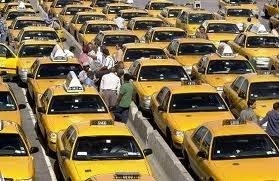
In case you haven’t heard, NYC’s Taxi and Limousine Commission has agreed to allow New Yorkers to hail a cab right from their smartphones. This has been an on-and-off service for over a year. Just when app maker Uber Technologies was ready to launch, the Mayor’s office pulled the deal because they didn’t want taxi drivers texting while behind the wheel. I am not sure how all of this got reversed, but now the T&L Commission has agreed to try the service for a certain period of time. It starts in February.

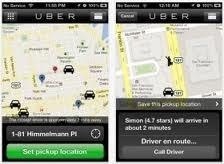
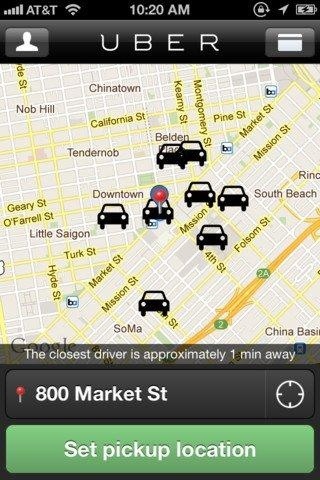
Über is an on-demand car service that allows anyone to request a ride via mobile app, text message, or the web. Drivers arrive curbside in just minutes, you can track the arrival of your ride on your iPhone or Android, credit card only, and you’ll receive a text message when the driver arrives.

Über is located in San Francisco, Seattle, Boston, Los Angeles, Atlanta, Denver, Sydney, Chicago, Washington DC, Toronto, San Diego, and Dallas.

People who download the app can now use their smartphone to retrieve a cab right where they are standing. NYC’s TLC’s chairman, David Yassky, has approved the proposed short term plan only with strict “geographical” stipulations. For example, Manhattan residents can only summon a taxi if it is within a .5 mile radius from their location. However, elsewhere the distance between a cab and the customer is increased to a maximum of 1.5 miles.

Anyone who is a regular in NYC knows how difficult it can sometimes be to hail a cab, which is what designers had in mind when they created this app. After downloading the app, you simply type in your anticipated pickup location. After your location is recognized, you can request what type of car you want to be picked up in, a taxi, an SUV, a black car, or an exclusive UBERx car. Users must type their credit card information into the app, as the service automatically records the charge with the tip included, and sends a receipt of your bill to your email account as well as to your personal Uber app once the ride is over. Not only does the app then tell you the minimum fare, maximum number of people that can fit in the car, and the estimated time of arrival, but it also tells you who your driver will be, accompanied by his picture, customer ratings, and a contact number just in case you need to call. The best part about this app is its accessibility. It is free to download and use, except for the taxi fare of course.

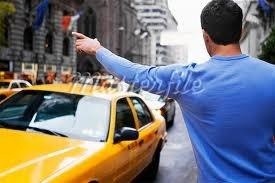
I was anxious to hear what New Yorkers had to say about hailing a cab via an app, so I took to the streets to ask both drivers and passengers what they thought. I questioned six drivers over the last three days and 10 frequent taxi riders. The consensus is that way down the road this will become standard once everyone gets used to it. For right now this is an option. You can still hail a cab from the curb. It has been most compared to the resistance to use credit cards in taxis. At first everyone hated it because it took passengers much longer to leave the taxi once they reached their destination. Now, some find it faster than paying in cash. Others are concerned about waiting for taxis on the side of a road and they don’t show. All of the concerns will be ironed out during the experiment.

Personally, I would like Uber to find a way to tell taxi drivers the quickest way to get to a destination. Every cab I get takes the longest way. I love when the drivers get defensive with me when I try to tell them not to go west when we have to go east. We usually get into a heated debate and then end up joking with each other by the end of the trip. It is all a part of the New York experience.

20121214-212735.jpg

20121214-212802.jpg