STYLECASTER LEADING FASHION INDUSTRY AS DIGITAL PIONEERS

If you think that Vogue, Marie Claire, WWD, and Elle rule the fashion world, think again. The Internet has changed all that. For the last few years, the generation that is wearing all the trendy, tight fitting, and transparent clothes,is turning to StyleCaster.com as their fashion source. That is not to say that the other fashion magazines are not as relevant. I am just letting you know that StyleCaster is most talked about by the best selling and notable designers, as well as the fashionistas, because of its cutting edge ways of presenting the news. No other fashion publication can keep up with StyleCaster because the owners are digitally oriented and are employing all the latest technologies.

Today, StyleCaster has 2.5 million unique monthly visitors. However, the company says it reaches more than 10 million people on a monthly basis and has partnered with more than 50 top-tier advertising partners since its launch in 2009. 

Ari Goldberg

Ari Goldberg, CEO of StyleCaster Media Group, along with his brother David, Chief Marketing Officer, used to be relegated to the back of the runway shows when they first co-founded the company. Today, they sit in the front row next to Anna Wintour and The Project Runway cast. They are constantly being talked about in all of the publications that cover the Internet (such as The WSJ, Tech Crunch and Mashable) because they are the first to adopt new technologies in both editorial and digital practices. From day one, they owned video production facilities and were shooting original editorial content in-house, as well as from the runway shows. No one else was doing that. 

Before starting StyleCaster, Ari was Vice President of Strategy and Business Development for LeBron James and LRMR Marketing. He was also Director of Business Development for Steve Stoute at Translation Consultation + Branding Imaging. He co-founded  Sociocast Networks and was instrumental in the founding of Last Pictures, Qwiki, and SaveFans. David worked at CNET, a leader in digital technology, and at the major brand, Theory. 

David Goldberg

The two brothers are constantly marrying the editorial world with social media. Just a month ago they announced another editorial breakthrough. StyleCaster launched the first platform where readers, on a worldwide basis, will now have the opportunity to engage with everyone from bloggers and thought-leaders, to designers and retailers. The in-house editorial content from the StyleCaster staff will now be featured on News.StyleCaster.com and BeautyHigh.com. The content from the public will be prominently ranked by popularity. As many of you know, that is a huge trend in social media. StyleCaster will also introduce the proprietary “Love” button – a one-click tool that lets StyleCasters support the contributions of their fellow community members. Every “Love” brings a submission closer to the top of StyleCaster.com.

StyleCaster’s community members will be able to: 

  1. Share photos
  2. Share links to articles and products
  3. Share the ‘Love’ with StyleCaster’s proprietary “Love” button 

StyleCaster recently raised $1 million in its Series A-1 Funding in November 2011. The bridge round, which included Zynga’s Owen Van Natta, raised StyleCaster’s funding up to $5.5 million since its Series A round in 2009.

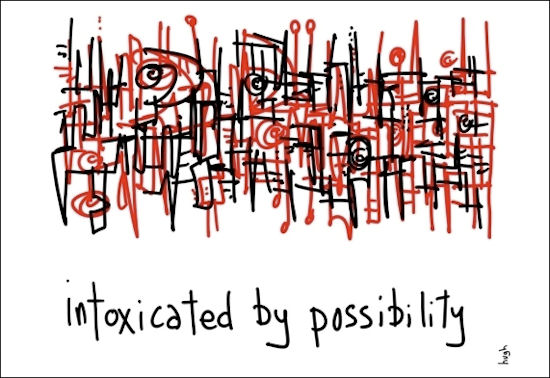
WHO ARE HUGH?

Meet Hugh MacLeod. He is well known in the digital world with 36,000 followers on Twitter. I wanted you to meet him because much of what he says applies to people of all ages. Hugh is a cartoonist, a blogger and author. Most of all he is a realist. He talks about things most of us are afraid to surface or even seriously think about.  His company, gapingvoid, is a weblog where his illustrations spread messages, inspire people, help businesses kick butt and support causes. He was blogging long before anyone actually knew what a blog was.The reason why Hugh is often referred to as a digital guru is because he used the Internet to achieve creative freedom. 

Hugh often says that the Internet allowed him to get out of the corporate world which was more about internal politics and less about true creative ideas. For years he was stiffled, sufficated, stressed by the suits. Then he met up with Jason Korman, an entrepreneur who can spot trends before they actually happen. Both men became fearless pioneers on the Internet with a new concept called gapingvoid, a multi-level platform that encourages others to find their voice and learn ways to express it. Hugh has written three books about lifestyle and business topics. His latest one is a love letter to blogging.

As an artist, he wants his work seen and heard. He doesn’t want gatekeepers to stand in his way of reaching out to the community he adores. “If  blogs exis­ted back when I was a kid,” he writes, “a lot of my crea­tive peers wouldn’t have given up their dreams in order to go do some bill-paying govern­ment job. And what’s true for artists is also true for ANYONE who gives a damn about their work. Too many voi­ces, lost unnecessarily.”


THE DOUBLE LIFE OF AN AUDIO BOOK JUNKIE

Living the life of a person who listens to audio books from services like Audible is very multi-dimensional. No longer do I read a book in isolation. I remember so many times in the past, when I was reading a printed book that I loved, I just wanted to hug it all the time. I hated when I finished reading it because that meant we would part forever. I would place the book on a shelf near me and blow kisses to it once in a while. I would call friends and sometimes strangers to see if they read the book so we could talk about it.  Then I joined book groups because I wanted to share what I had read with others.  I really didn’t like most of these groups because they were usually made up of people I knew or friends of theirs. We usually spent more time discussing everyone’s life then the book. So then I joined a more serious book club. The heated debates were so violent I feared for my life (not really but it sounds good). There was one bitch who screamed so loud and pulled at her hair with such force that I thought she was going to split in two. The fact that she downed five or six glasses of wine didn’t help either. 

I just didn’t want to be victimized. Live book clubs were supposed to be intellectually stimulating experiences, not bully fights.  I decided after five or six of these face-to-face gatherings, that all of my future interactions would take place online. I joined two online discussions  groups through publishing houses, but shortly discovered that many of the participants disappeared in a day or two. I really wanted a community where there was a sense of commitment and lots of related services. 

I don’t remember how I found Audible but it must have been through one of their advertisements. They offer a 100,000 plus titles (every genre imaginable) as well as radio shows, podcasts, stand-up comedy and recordings from captains of industries that cover culture, politics, business and entertainment. The narrators, many of them famous actors or the authors themselves, just don’t read word for word, they provide vocal inflections. You hear a giggle, a deep breath, a pause, an accent or a cough that enhances the experience and confirms that you are totally realizing the essence of the book.  That first exhilarating experience happened to me when I listened to James Michener’s South Pacific on an audio cassette in my car. I had a long three hour drive and I didn’t want the trip to be monotonous. I picked a book that I wouldn’t ordinarily read in print. The three hour trip felt like three minutes because I had never experienced Michener before. Listening to descriptions about faraway places and the adventures of getting there, were beyond anything that I had ever imagined. I felt like a whole slice of life was given to me on a silver platter. 

I also love that I can now discuss my books 24/7, 365 days a year on Audible. I always have someone to converse with on my terms. Most audio book clubs offer message boards, discussions with authors,  reviews,  a list of books you’ve bought, what you wish for, new entries, a gift area and instructional videos on how to get started.  I feel like I am part of a club that has been tailored just for me. I can pay monthly or annually and I even get credits for buying books. Sometimes I feel like they are giving me more books for free than I actually purchase. 

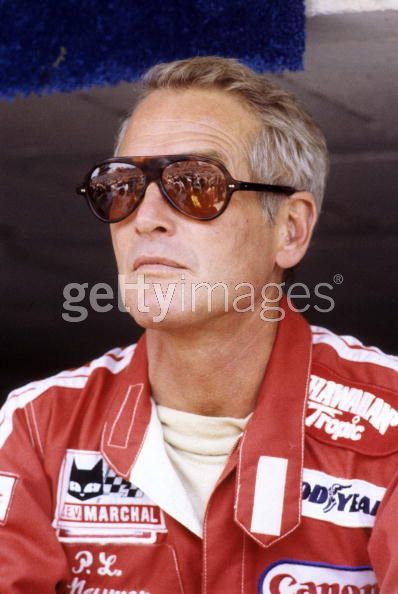
Lately I have done the unthinkable.  I buy an audio book from Audible and I then buy the same book for my iPad as well.  I love listening to the book, then searching on my iPad for the parts that I want to repeat to others. I underscore in yellow and use the electronic book marks for searching purposes.  I am just one of those people who likes to share interesting thoughts with others.  I recently listened to Steven Tyler’s, “Does The Noise In My Head Bother You?”  What an odd choice for conservative me?  Not at all. I am thrilled to hear all about the behind the scenes life of a rocker and the risks he took. I love the part when he was jumping on a trampoline in an outdoor Connecticut activity center after hours.  All of a sudden the owner appeared and asked him to leave. He explained that he was letting off steam before performing in a concert that night. The young owner invited him back to his house, not too far away. They were drinking a few beers when the guy’s father showed up. Paul Newman walked in with a racing friend. Tyler was blown away. The young owner was Scott Newman. He spent the next hour or two trading entertainment war stories. He couldn’t believe that he was in the presence of a legend. He described the situation with such surreal detail and such excitement. I was glad I heard it in the spoken word.  The 16 hours it took me on the treadmill to hear Tyler’s entire book was extremely enjoyable.  At the end of each session, I felt a sense of renewal. His life was so foreign to me that it forced me to think about my future in a way I never thought possible.


MY DIRTY LITTLE SECRET

I have to admit this in the first line of my post. I listen to audiobooks. I listen to them on my iPhone, iPad and iPod, whatever device is accessible at the time.  It has changed my life. I never would have experienced James Michener, Mark Twain, William Faulkner, F. Scott Fitzgerald, Walter Issacson, Stephen King and lately, Joyce Carol Oates, if I didn’t belong to Audible and other audio book clubs. You can poo poo me all you want. I can hear you now, “There is nothing like sitting down with a book and reading it yourself page after page.”  Let’s not get into a discussion about printed books versus eBooks at this time. We can save that for another discussion.  Yes, reading a book with your own interpretation and visual sense is a very satisfying and rewarding experience. I still read books and I also read several newspapers each day (okay maybe peruse). Also, six online blogs (Huffington Post, Mashable, AllThingsD, The Daily Beast, CNET, Tech Crunch) and countless news, entertainment and specialty magazines. There isn’t enough hours in the day to cover all this, do my job, shower, dress, make phone calls, see friends, exercise, watch TV or a movie, read and post on Facebook, Twitter and LinkedIn.

However, there is always time for an audiobook. I listen while I am on the treadmill (yes I know it doesn’t show), in the car, the subway, on a flight to wherever, waiting for my doctor, a business appointment that is always late, in the middle of the night when I can’t sleep, when I knit, on the beach, in the park and during long walks. It is just marvelous. It is a different kind of experience than reading the book yourself. Frankly, I think you capture more. You hear stuff your eyes can’t capture, especially from the authors who read their books themselves. I remember when I listened to Harry Markopolos reading “No One Would Listen, A True Financial Thriller.” That was his book about trying to get the Securities and Exchange Commission (SEC) to take a meeting with him so he could expose Bernie Madoff. I almost fell off the treadmill when I listened to the part about his paranoia that Bernie was going to have him killed. He bought a gun, barricaded his home and was always on the lookout for thugs.  I was laughing a little too much. What was very serious to Harry was somehow humorous to me, since we all know that Harry was not even on Bernie’s radar screen most of the time. I don’t think you could have picked this up through the written word. Maybe, but it was pretty remarkable hearing Harry describe his emotions.

I also don’t feel I would have grabbed the highs and lows of what Joyce Carol Oates describes in her book “A Widow’s Story,” the immediate experiences of widowhood. I felt her 13 months of pain, anguish, terror and depression. Very few authors write like Oates. She describes peeling an onion like an exhilarating experience. You don’t want to miss a word. I tried reading her in the past, but didn’t have the patience to comprehend what she had to offer. I can do it now because I’ve learned to appreciate her every word. I was so involved in her story, that I got very upset when I found out that she had remarried  13 months later, but had left that out of the book. Her publisher defends her in a story in the New York Times, saying that her subsequent life had nothing to do with what she went through after the death of her husband, Raymond Smith. Hmmm!

I can go on and on about the virtues of listening to an audio book, but I have gone way beyond the limits of how long a blog post should be. Tomorrow I will tell you about the intricacies of belonging to an audio book club and other personal experiences I’ve had listening to James Michener and even,  I hate to admit, Steven Tyler.


OPEN FOR BUSINESS

Conducting business is so different these days. Everything is an open book. Yesteryear, if you had a business problem, you would seek counsel from a close, trusted friend under an oath of the utmost secrecy. Today, the younger set candidly goes online to openly post a question on Twitter, Facebook, LinkedIn, or any other social platform. Within minutes, the question is answered by several, if not 20 or 30 eager connections that are more than willing to dispense their expert advice. That could possibly save hours, days, or even weeks of grief worrying about the challenge; not to mention the hundreds, if not thousands of dollars that were saved by not making the wrong decisions. 

Let’s take this process one step further. A few entrepreneurs got together a few years ago to create Ohours, an in-office, one-on-one meet-up between young (there is no requirement that you really have to be young) people just starting out and experts in a wide variety of fields who volunteer their time. All of the experts post their available time slots on the Ohours website and usually host the meetings in their office or by phone. That is not to say that many meetings do not take place at a Starbucks, a pizza joint or even on a park bench. The one big caveat that is posted on the Ohours site is that the meetings don’t last more than 20 minutes. Sometimes the meetings last longer, but the experts usually volunteer for three meetings in a row so everyone has to adhere to the schedule. 

There are many meet-up groups like this around the country. What is so amazing about them is that the volunteers are usually well known, successful business people who you normally wouldn’t have the chance to meet in a million years. Now, you not only get the chance to meet them, but you are getting free advice that can possibly send you into orbit. How remarkable is that? Big names in finance, marketing, media, security, real estate, science, fashion and entertainment have devoted countless hours to this concept. 

I have even volunteered my time. I have met some of the most creative, ambitious, and promising young people of my career. None of them are frivolous, just the opposite. They are determined to make their ideas work and they are willing to put in the sweat equity to make it happen. To be completely honest, I usually volunteer my time because after each session I am usually even more inspired about my own work than ever before. Yes, even at my stage of the game.  I find talking to people with new ideas so invigorating that I can’t wait to reinvent myself one more time. 

Every time I visit the Ohours website to peruse who is volunteering their time, the topics being discussed and the folks who are seeking counsel, I think to myself, “why wasn’t this available when I was starting out?”  The answer is easy. There was no Internet.

TO TWEET OR NOT TO TWEET, THAT IS THE QUESTION

 While many folks around my age bracket and older like Facebook, most have not joined Twitter. I am not sure why, other than they don’t understand the benefits. I am going to tell you in plain and simple terms why you should join. It is great for researching people and topics. Most of the younger generation is on Twitter because they use it as a vanity stage or they actually discuss important topics, both personal and business with each other. It has become their main news source and there are good reasons why. The digital community is all about participating in the making of the news, not necessarily sitting back reading about it. 

For example, one Twitter user sees an airplane actually land on the Hudson River. Instead of dialing 911, he or she posts it on Twitter and the word spreads faster than anyone can imagine. A 911 operator can even be one of the people on that person’s Twitter list. The next thing you know everyone springs into action. Everyone does their part to report the news or do something about it. You are no longer idly sitting by, picking your nose, wondering what is going on. You are now getting a blow by blow account of the developments just as if you were on a news team. Unless you have experienced this, you just can’t imagine the excitement and euphoria you get, especially if you have helped save lives. 


The other benefit that I think is so important, yet rarely gets talked about in my generation, is that you can search the tweets (opinions) of people you most respect and actually post your thoughts for them to see as well. All you have to do is post their their Twitter name preceded by the @ sign (e.g., @digidame for my Twitter account) on your post and when they search he or she will see your comments. Do that long enough and there is a good likelihood that those people will start following you. I almost fell over when Mark Cuban, owner of the Dallas Mavericks and big time investor in startups, actually answered one of my tweets. I walked around for the rest of the day feeling like I was actually somebody. The important thing to remember is that @TwitterName signs are for people and #hashtag signs are for topics.

I would strongly suggest that you start using the search area on Twitter before you start discussing or ranting a topic. The search area is called Discover and it is wonderful because it features the important stories of the day, activities, trends, who to follow, categories to browse, and the place to find friends.  Just this morning I read a story that the Discover tab on Twitter is getting an update. I love learning that because that always means good things. In this case the Discover tab is going to present content that Twitter says is even more personalized and meaningful to the user. “To do this, Twitter has incorporated additional personalization ‘signals,’ including tweets that are popular among the people that a user follows. The new design shows who tweeted about particular stories/content after which the user can view, reply to, retweet and favorite said tweet. The update will be rolled out over the coming weeks.” See more information on Cynopsis.  

If you have any questions about getting started on Twitter, leave a comment on DigiDame or email me. If I don’t know the answer, I will get someone quickly who will answer you. Remember, we are all a part of the digital revolution. Getting info should be instantaneous. 

To ease you into the Twitter process, here is a story Time magazine wrote about the most important people to follow. Somehow I trust you to find your own. It won’t take you too long to get your own online circle of friends. And when you do, you will be socializing with Tweet meetups in your neighborhood, but that is just an option. I do promise you that your life reading the news is going to change forever. You will never pick up a print publication again.

A NEW KIND OF PARADISE

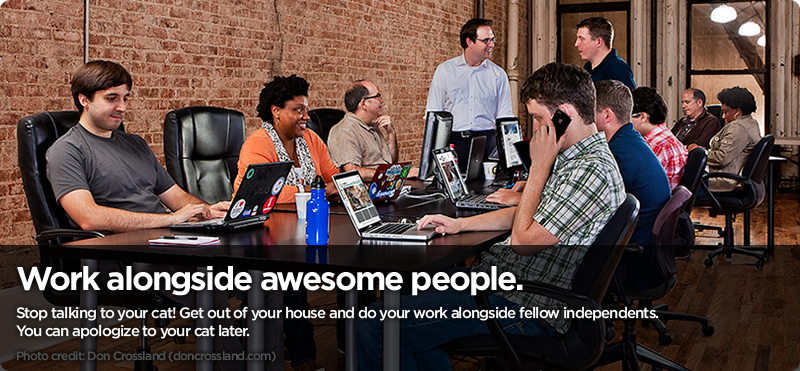
There’s a whole new phenomenon going on in office space that most people over 50 are clueless about.  It’s called “coworking”  and if you Google It, you will see that many cities around the United States offer these types of work environments and related services. These offices are not the fancy executive suites like the ones Regus offers, with beautiful wood paneled walls, large professional multi-media conference rooms, a main reception area and a dining area. 

We are talking membership fees of $30-a day (unannounced), or a $300-a-month to be a part of a no frills community of independents (most of them in their 20’s and 30’s) that just don’t want to work from a home office or Starbucks.  They would rather be in a large room with a bunch of strangers, network, make friends, trade war stories and get their work done.   It reminds me of a college study hall, rows of tables and chairs filled with young folks who BYOC (Bring Your Own Computer). 

One such well-respected and very well known place is New Work City, in New York. Don’t you just love that name?  NWC states it the best, “We are building a new kind of workforce together.” Tony Bacigalupo and Peter Chislett are the co-creators. I spoke with Peter yesterday who told me there are a few older people who cowork at NWC. I dared to ask how old.  “I would guess they are in their 40s because they have children in college,” he replied.  I gasped and then laughed out loud. “Peter, I am in my 60s. Someone in their 40s is rather young to me.”   

The whole premise of NWC and others like it, is that you work with a community of people who support you. If you have a tech question, or give advice on your business model. You might opt to participate in gatherings by and for the members or even make yourself available for happy hours and movie nights, they are there for you.. 

Peter explained that this concept isn’t new but there are definitely more and more people who prefer to work where, when and how they want.  I also asked about the noise level. Is there a quiet room? “People don’t come here for quiet. They can get that at home. People love the stimulation of the noise.  We even have a few who picked this environment to write their books. No silence for them. This is all about being among awesome creative and brilliant people.” 

At that moment I cried a little inside.  Why weren’t there places like this when I was starting out?  I want to work in a social club. I wonder how many people have met within the walls of NWC, gotten married, had babies or even formed companies?  I will find out the next time I talk to Peter. There is so much more to this story. 

Here is a video that Tony made when he first started NWC. Be sure to watch it. It will take you inside the life of independent thinkers.   

THE MIRACLES OF DIGITAL FUNDRAISING

It is amazing how the world has changed. When we were growing up, we were expected to become a doctor, lawyer, teacher, accountant, secretary or something where the foundation of the business was well established. All we had to be is smart enough to jump on the already established bandwagon. If we told our parents we wanted to become writers, musicians, inventors or artists of any kind, they would go directly to a house of worship and pray to their higher power to give us proper guidance. 

I know you are chuckling reading this, because it happened to all of us, whether rich or poor. Our parents wanted us either in the family business or settled somewhere they didn’t have to worry about. 

Jump forward 40 to 50 years. Today, parents are asking children, “Why can’t you be one of those geniuses who invent something on the Internet? Do you want to work for the rest of your life and report to a boss who will use and abuse you? “ 

Times have certainly changed. Today hundreds, if not thousands of 20 and 30 year olds are all trying to be the next Mark Zuckerberg (Facebook), Steve Jobs (Apple) and Kevin Systrom and Mike Krieger (Instagram).  Even if someone has a job, their minds are working overtime to come up with that one idea that is going to allow them to make a lot of money and sit at home in their pj’s all day. 

A lot of the young creative types were dissuaded over the years, because venture capitalists and angel investors require a lot of paper work and financial proof that proposed business models are going to work.  Raising money is more difficult than creating and building the invention.  You have to stand in front of the suits to prove that your idea was more worthy than the thousands of other proposals they’ve seen before. 

All that has changed as noted in the front page of the New York Times today. Kickstarter, a website that raises money from the public (the digital term is crowd funding) for creative projects (films, music, games, food projects and digital inventions, etc.). raised over $7 million in just a few days for The Pebble, a watch that was developed to work with the iPhone. You have to read the story to see how the money came pouring in. http://nyti.ms/Ixx1gj . If you know anything about fundraising, you would quickly realize that the money raised by Kickstarter for The Pebble was equivalent to a second round of capital financing. That means that The Pebble didn’t have to prove itself like others to command millions of dollars.

Kickstarter is one of those ideas that most investment people probably thought was not a going to work. Who is going to give money to a project online? Guess what? Kickstarter has raised more than $200 million for 20,000 projects so far, or about 44 percent of those that sought financing on the site. Kickstarter takes 5% of the funds raised. Amazon charges an additional 3-5%. The entire evolution of Kickstarter is amazing and what they did for The Pebble is nothing short of a miracle of the digital world.  You have to digest what I just told you about and think to yourself, “Who would have ever thought?”

THE NEW WORLD OF JOURNALISM GIVES BIRTH TO BLOGGING


For some reason, many members of the senior generation are totally oblivious as to what is happening in newspaper reporting. I have heard some say that their favorite reporters are no longer with the publications they religiously read. They think it has something to do with the economy. That is partially true. However, the accurate explanation is that the Internet has changed the dynamics of writing. Many of the old timers just couldn’t or wouldn’t keep up with the structural changes needed for digital reporting. All of a sudden editors wanted shorter stories, less background checks and fewer explanations.

There was fierce competition from something called a blog. Blogs were free flowing essays from a new breed of young writers who wrote whatever they wanted, whenever and wherever. They didn’t have fact checkers, copy editors or bosses breathing down their necks with non-relevant assignments. At first, bloggers were shunned from press events and front row seats. It took a few years, but a good number of them from the world of tech, financial, fashion and beauty, became more important to their industries than the writers who were covering them for 20 or 30 years. They had the freedom to flex their muscles and they took every advantage of it. Unlike their predecessors, they learned the tricks of digital reporting that allowed them new avenues of exposure and networking.

Today stories are no longer about who, what, where, why and how.  They are all about the three C’s: created content, contributed content and collected content. Bloggers no longer have to cover every element of a story to make a point. They just use the three C’s as I am about to do. Instead of posting hundreds of words of copy to underscore what I am talking about,  I am going to share a link with you that will  that will give you further details on this topic. Hopefully someday someone will use my copy (link) to fill out their story.

http://mashable.com/2012/04/27/tips-great-content-curation/?utm_source=iphoneapp

MY EXPLANATION OF A BLOG

It never occured to me to devote one blog post to explaining what blogging is all about. Since I started DigiDame, I have received several calls from friends asking me to define a blog and its purpose.  There are many more qualified folks that can detail the true definition of a blog then myself. However, I will try to explain it in my terms and provide a link to Wikipedia that can also be of assistance. http://en.wikipedia.org/wiki/Blog

A blog is an online diary which can be personal or professional (for business purposes). The entries are called “posts.”  The frequency of a post depends on the person writing the blog but most serious bloggers post at least once a day. The whole purpose of a blog is to have the ability to express independent beliefs without having some higher authority edit your thoughts.  Most blogs are written on templates that provide options for pictures, videos, links to related stories, tags (words that can be used for browsing and searching purposes),  font formats and overall structure. Blog posts are displayed with the latest entry first.   

I personally don’t like the reverse chronological order because I find it confusing. Unless you have read the blog posts from the beginning there could be references that you don’t understand. I don’t have a solution, so I have to live with it. I am not sure how others feel about the ordering, but I can’t imagine them liking it, because most blog posts are not self-explanatory. A lot of assumption is granted to the writer. That is true for traditional printed newspapers as well these days.  

In the next post, I will share the latest trends in posting, some of which I’ve just learned myself. I started DigiDame to make sure people my age and older know all about the opportunities in the digital world.  Make sure you read it, because there are some new trends that have changed the world of journalism that you’ll want to know about.