
Anyone Who Has Ever Owned A Dog Will Understand—LWH

The ritual reminds us of the joy animals bring to people’s lives and the spiritual connection between man and beast
By Linda Matchan

June 26, 2023

BOSTON – The chairs were set up, the wine was chilling for the kiddush, and the homemade baked goods for the oneg ready to be served. The blue and white balloons were dancing expectantly in the breeze.

Then came the guests. Bessie. Joy. Bella. Lyla. Carl. Miggy. Lui. Daisy. A dozen dogs, plus their humans, although Kesem, a Maltipoo, couldn’t attend because of an injury. (He fell off the grooming table.) Mookie had a scheduling conflict, but sent a card extending best wishes on “your wonderful simcha!” 

He wore a yarmulke and a tallit, designed with scholarly precision by my sister Judy in Houston. Two rabbis officiated. 

No doubt I’ve lost some readers by now. I can picture the eyes rolling, sense the disdain. 

Bark Mitzvahs — and yes, there have been enough of them to merit a Wikipedia entry — have been derided by Jews more observant than myself as everything from the desecration of a sacred tradition to liberal-leaning Judaism run amok. 

And it’s not only Jews who think it’s bonkers. “I don’t mind dogs getting together,” a dog-loving Christian friend told me before declining my invitation. “But I don’t see how you make it into a religious thing. This is way out there.”

Let me just say that there was a time when I, too, rolled my eyes at the anthropomorphizing of dogs — the hosting of dog weddings, the drop-ins at yappy hours — let alone a parody of a sacred Jewish coming-of-age ceremony. 

And maybe if I didn’t feel so indebted to Coco, the barky rescue dog my son adopted for me after my husband died; or if I weren’t so dog tired of living under an oppressive blanket of pandemic anxiety and isolation, so hungry for some communal expression of giddiness and joy, I might feel the same way today.

But why not celebrate, Jewishly, the life of our loyal old dogs?

I took my inspiration from Rabbi Steve Gross of the Houston Congregation for Reform Judaism, who’s officiated at five Bark Mitzvahs in his temple’s parking lot since 2016, each drawing as many as 200 dogs. It was my sister who told me about it and persuaded me to come this year. I flew there from Boston, but the Bark Mitzvah was rained out and I couldn’t be there for the rain date.

Still, Gross was in good spirits when I met him at the synagogue that morning, even as the rain soaked the giant blue sparkly “BARK MITZVAH” sign on the lawn. 

He explained the idea for a Bark Mitzvah was two-fold. “First, there is the slightly tongue-in-cheek playfulness that dog lovers have when their dogs become 13,” he said. “People would say to me, ‘I think it’s time for a Bark Mitzvah.’”

He’d also seen that Episcopal and Catholic churches he engaged with around the city designated a special day to bless animals. His synagogue has about 250 families, many with dogs, so it seemed like an auspicious place to host something similar, call it a Bark Mitzvah, and open it up to the wider community. He estimates about one-third of the pets are “non-Jewish dogs.”

“Oh my gosh, this is probably one of the most attended events in our entire congregation,” said Gross, who is currently dogless. “Two hundred people in my parking lot is more than I get on a Friday night.”

The Top 10 Jewish Dogs of All Time

The event starts out with a short ceremony, Gross said, with “a recognition of the value dogs bring to us as human beings and a reminder of God’s creation in our lives every day.” There is a shehechiyanu celebrating the joy pets bring to humans’ lives, and a reading from the Book of Genesis about the day God created animals.

“It’s a way to generate community around a shared interest,” Gross said. “When people are in line to enjoy a cookie at the oneg after Shabbat, there’s a little bit of superficial conversation that takes place. At the Bark Mitzvah – and we could have called it the Jewish Day of Blessing Dogs, which is catchy, right? – what you see happen is what happens at dog parks all the time. Dogs, just like babies, open up a deeper level of conversation with total strangers.”

There is also a “mitzvah” component. The 40 or so vendors in the parking lot include animal rescue organizations and Animeals on Wheels, which delivers dog meals to Meals on Wheels clients so they don’t feel compelled to share their own food and resources with their pets.

This is also dog merch a-plenty – “Chewish” bone-shaped dog toys, pet-friendly flooring, a climate-controlled mobile dog gym equipped with treadmills. (“A mitzvah for the owners,” Gross said.)

He acknowledges he’s gotten pushback from some community members who consider a Bark Mitzvah disrespectful, even disgraceful. “They say we’re elevating dogs to the level of people. That dogs don’t have any halakhic authority.” But Gross pushes back on the pushback.

“You can be playful for Purim but not a Bark Mitzvah? Maybe they are not understanding that Bar Mitzvahs aren’t being made fun of. We are utilizing one term for something else; we do that all the time with Hebrew words,” he said, citing the only-in-Texas example of an event in Houston hosted by an Orthodox congregation. Meant for shul members who pack heat, it was called “Glocks & Bagels.” (He allows that “lox” isn’t Hebrew, but stands by his point.)

“I honestly think this is a beautiful way for us to celebrate our pets,” he said. “It elevates that love in a way that can be shared.”

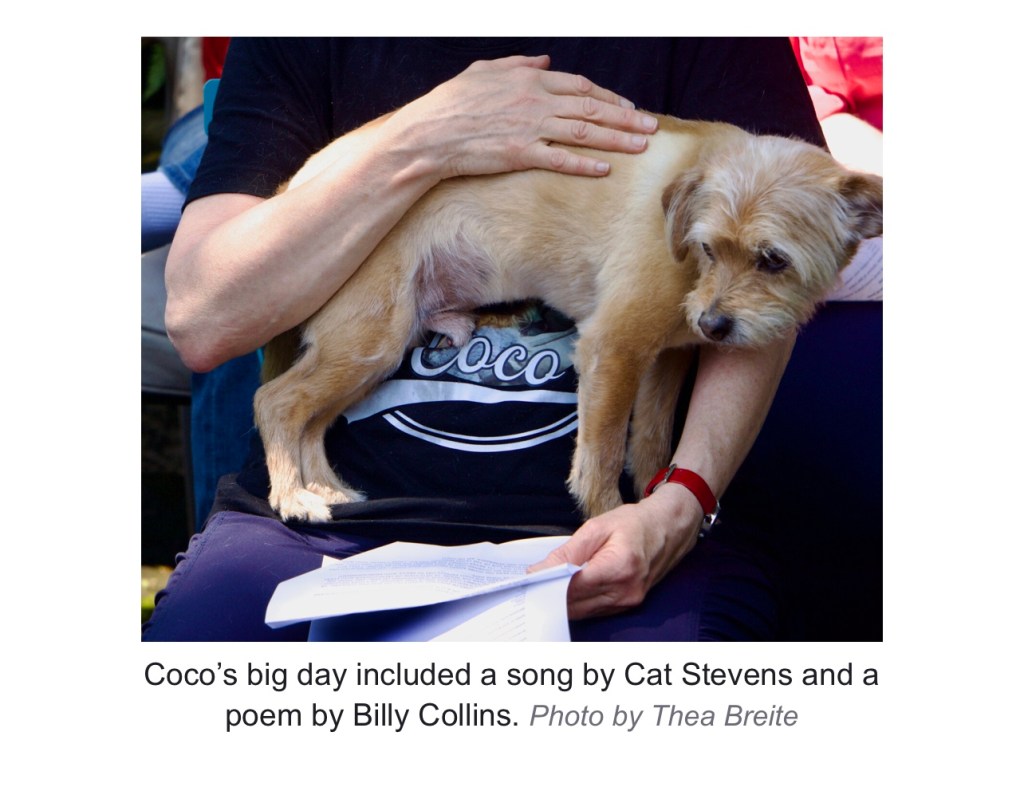
The Bark Mitzvah eventually took place in April, though the numbers were a bit diminished — only about 100 dogs showed up — because of bad weather. Coco turned 13 in April, too, so back in Boston I began the preparations for his own Bark Mitzvah in my back yard.

Some of it came together easily — the Bark Mitzvah cake, the cookies shaped like bones and fire hydrants, the doggie bags, identifying a Mitzvah project to support, in this case Shultz’s Guest House, a local dog rescue shelter. 

A bigger challenge was finding a rabbi who wouldn’t think I was unhinged. I reached out — apprehensively — to Rabbi Michael Swarttz of Beth Tikvah Synagogue in Westborough, Massachusetts; I’d met him years ago in my neighborhood dog park.

“I’m writing with what might seem like a bizarre question,” I emailed, re-introducing myself and outlining my plan.

“Your idea is not bizarre to me at all,” he wrote back. “I would love to participate. I have thought of trying to do one at my congregation.” Even better, his wife, Carol Glass, was also a rabbi and wanted to co-officiate. Both of them, I learned, later, thought of Bark Mitzvahs as a creative way to celebrate the bond between two species.

“I really believe that animals have a soul, as do all things that are alive,” Glass told me. “In terms of looking at God and my connection to Judaism, I’ve always had an impulse to dig into Judaism and broaden it, and make it more inclusive. Not to buy into the tradition that it can’t be malleable, or added to, or changed.”

We worked together on the flow of the service. Each dog was recognized by name. We sang, and listened to an old Cat Stevens number called “I Love My Dog.” Swarttz read a poem exalting dogs (“Dharma,” by U.S. Poet Laureate Billy Collins). Glass, a hospice chaplain and spiritual director, said a Mi Sheberach (prayer for healing) for Kesem and for “all pets in need/ so that they may know life and health, joy and peace.”

I’d been expecting chaos in my yard, but the animals all sat calmly with their humans and listened attentively to the rabbis, or so it seemed. This may have been the only barkless day in Coco’s life.

I spoke about my attachment to Coco and wished him, in Yiddish, a much longer life, biz hundert un tsvantsik. Until 120, canine hara.

Finally, we all threw dog treats, and yelled – what else? “Muzzle tov!”

She Runs A $500 Million Company. Maybe It’s Time To Take Her Seriously

Read TIME’s Interview With Kim Kardashian

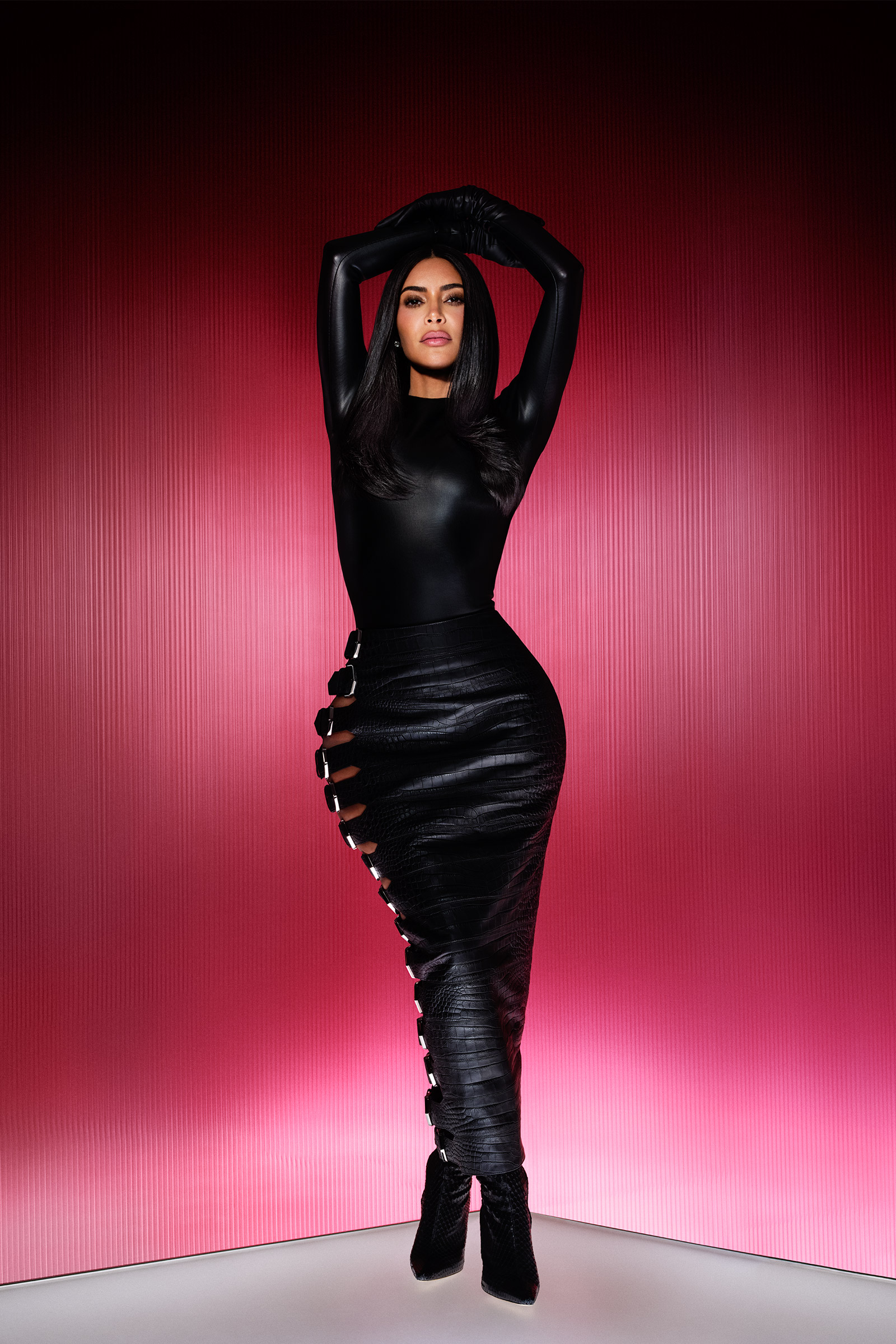
Kim Kardashian, founder of SKIMS, photographed on April 25 in New York City. (Dana Scruggs for TIME)

Kim Kardashian, founder of SKIMS, photographed on April 25 in New York City.

Dana Scruggs for TIME

BY BELINDA LUSCOMBE 

JUNE 25, 2023

British people have a name for their royal family that grasps at its weird status as both a family and a money-making enterprise. They call it ‘The Firm.” The U.S. has dispensed with the monarchy, but it still has The Firm. They’re known as the Kardashians. The Kardashians live lives of fairy-tale glamor and opulence, their influence powered not by a factory or an investment portfolio, but by making the most fascinating version of themselves. And they work hard at it. 

Unlike the monarchy, the Kardashians are at liberty to market their name and have done so liberally. The most successful of these name-trepreneurs is Kim, the middle daughter. She has created many brands, but it is her shapewear line, Skims that has really caught fire. It took in $500 million in revenues last year, according to CEO Jens Grede, and sales were up 86% year over year in April, at a time when the sector was down generally. Founded in 2019, it was valued early last year at $3.2 billion. (That’s $2 billion higher than iconic shapewear brand Spanx ever rose.)

In this interview, Kardashian, who is on her first ever TIME cover this week representing Skims as one of TIME’s 100 Most Influential Companies of 2023, discusses the role she plays at Skims, and how the brand has changed the way people see her, and how it led to her founding her own private equity fund late last year.

Tell me a little bit about what a day at Skims looks like for you?

I’ll get up, I’ll work out, I’ll take my kids to school and then I’ll come straight here to my office and have Skims meetings about what our next campaigns will look like and what our next commercial will look like and photographers and directors that I want to work with and who I think will be good for what campaign. Then I’ll have a full fit meeting that will take maybe an hour to two hours. And I’ll have a fit model to see it on a different body type. I always like to see it on myself. I know how I like things to feel. There’s never been a product that I haven’t seen and approved. Maybe one time, when there was a supply chain issue, where I said ‘O.K. we need this product. Let’s do it in a ribbed material.’ I don’t happen to be the biggest fan of ribs and now it’s our best-selling fabric. So of course, I’ll keep it but that was surprising to me. 

Did you notice a tipping point, where you thought, ‘Oh, this is going to be so much bigger than my other businesses?’

Obviously you dream big and you have big hopes but this definitely exceeded everything that I ever imagined especially starting as primarily a shapewear brand. I’m also the kind of person where I never get too excited, but there are those moments. I remember I walked into some Hollywood party and there were a lot of well-known people and one of the girls, an actress, she literally yelled ‘Skims!’ as soon as I walked in the room, and someone just lifted her top and goes, ‘I’m wearing a Skims!’ I don’t know if it’s called imposter syndrome or whatever, I still always feel that, but I think it’s part of what keeps me going. I never dreamed that this would be my life. 

Do you think Skims’ success has changed the way people see you?

I do. I think at the beginning when I didn’t really understand where my path or my career was going because I was just kind of winging it, I would do licensing deals with a lot of different companies that would contradict themselves, like a cupcake brand with a weight loss pill at the same time. I wanted to eat that cupcake, but I also wanted to lose weight. I think people maybe have appreciated or seen growth and an evolution. And I think that people can see the work in it. 

Beauty standards have expanded, but let’s not pretend they don’t exist. You’re the model for many of your campaigns. Do you worry about aging? 

I understand that maybe in my 50s I’m not going to be wanting to pose in my underwear and do campaigns all the time. Some days I feel confident, some days I don’t. I am mindful of that. Having a sustainable brand was always the goal. I love being a part of the campaigns, but I am very realistic that it’s not sustainable forever to be in every single one of them. I mean, I hope we all give ourselves as much grace as possible. We’ll do anything we can to look as young as we can. We’re not going to go out not trying, but I am realistic that there will be a time when I might do certain campaigns that are pajamas and robes and more covered up. 

Skims was launched in 2019. In 2021, it was valued at $1.6 billion, and then nine months later at $3.2 billion. Is that kind of success important to you? 

I do think it’s important when people want to invest. It validates that people believe that you will be successful, and they will invest themselves to help grow the business. I’ve learned so much about that space. Especially having started my private equity fund and learning about the companies that they invest in and what it really takes to grow a business. 

Tell me a bit about SKKY Partners; what sort of companies are you hoping to invest in?

Anything from consumer brands to even [the] food and beverage space; anything from fashion and retail to beauty and haircare. We have a really good team; my partners did the investments in brands like Supreme and Beats by Dre and were able to build them up and sell them and there’s something really culturally relevant about those. In order to ultimately make an investment, we have to feel we really believe in the culture behind what the brand is. I’ve been on both ends; I’ve been on the side where I’ve had investments that have been great relationships, and I’ve had investments that maybe a partner didn’t really understand the DNA of what I was about. I’ve just done so many licensing deals and deals that just haven’t worked out. And I feel like I can really support them on the other end to really be a founder’s investor. I think we have a different perspective and a different advantage that people are really recognizing in this space.

Do you think that without Skims you would have been able to start a private equity fund?

I don’t think I would have had the curiosity and the information to understand what a real good investor brings to the table. I’m close with ours, and I have a lot of friends in the business now and I’ve learned a lot and I don’t think I would have understood it enough. Skims has taught me everything.

You’ve had so much success. What do you still feel like you will have left to prove? Why are you still working so hard?

I think I’m just a curious person. And I just like to learn. There are times when I get a bit overwhelmed, which is really rare. And I will take a minute and just say ‘Can we clear my schedule for a day? I just need to be with my babies, and I just need to take it all in.’ I am getting to a place where I feel like there’s nothing more precious than time. I think sometimes people don’t realize how important time is and live their life as if it’s endless. I think I’ve realized that for a really long time because of my dad passing when I was 22. I do have limits and it’s not that I feel like I need to prove anything. It’s that I just genuinely like trying new things and seeing what I like and don’t like and sometimes I like to do things that are just uncomfortable. I think sometimes you need a little kick in that way to see what you’re really made of.

How to Stay Calm During a Bumpy Flight

Even the most seasoned travelers can get a little anxious when the plane starts shaking.

An illustration of three people sitting in the window seats of an airplane. The chairs are dark blue with a light blue interior wall and outside of the windows is a pink and orange sunset with clouds and part of the plane's wing.

By Christina Caron

June 15, 2023, 5:00 a.m. ET

On a recent flight to Chicago, Allison Levy said she was “white-knuckling” the armrest as the plane rumbled and shook for brief periods of time.

Ms. Levy, 47, who lives in Arlington, Va., started to take deep breaths and tried to reassure herself: “It’s like a bumpy road — it’s not a big deal.”

But, she added, “if I knew the person next to me, I’d definitely grip their thigh.”

Airplane turbulence, which is usually caused by large changes in airflow in the Earth’s upper atmosphere, is generally a minor nuisance.

But this year alone, there have been multipleinstances of severe turbulence on flights that have led to dozens of passenger injuries. And scientists have warned that we may have bumpier flights in the years ahead because of elevated carbon dioxide emissions that are warming the atmosphere, which can alter the speed and direction of the wind.

This is unwelcome news for everyone, especially those of us who are already scared of flying, like Ms. Levy.

Here are several ways to help calm your nerves if you’re eager to travel but dreading potential turbulence.

Turbulence is not usually a cause for concern. It’s far more common to encounter low to moderate turbulence than the severe kind that throws heavy drink carts into the air.

“While pilots can ease most turbulence, it is still unavoidable or unexpected for some flights, but planes are designed to safely withstand the impacts,” the Air Line Pilots Association, a prominent pilots’ union, said in a statement.

It may also help to know that, according to a 2020 study, it has never been safer to travel on a commercial airline.

Passenger injuries from turbulence are rare. In the 13 years spanning 2009 to 2022, for example, a total of 34 passengers were seriously injured because of turbulence, according to data from the Federal Aviation Administration. And the last turbulence-related death on a major airline happened more than 25 years ago, the National Transportation Safety Board said in a 2021 report.

Traveling by plane is much safer than traveling by car: The odds of dying during a commercial flight in the United States are too small to calculate, according to the National Safety Council. Meanwhile, the chances of dying in a motor vehicle crash are 1 in 93, the nonprofit advocacy group says.

It might be tempting to reach for an alcoholic beverage in the hopes of calming your nerves, but “remember that what you eat and drink impacts your anxiety and how you are feeling,” said Dr. Uma Naidoo, the director of nutritional and metabolic psychiatry at Massachusetts General Hospital and the author of “This Is Your Brain on Food.”

Too much alcohol is dehydrating and can also produce feelings of nausea. That’s a bad combination with turbulence, which can leave passengers queasy, too.

“Staying hydrated, perhaps skipping the coffee or wine on the plane, can help create a sense of calm,” Dr. Naidoo said.

If turbulence (or the mere thought of it) makes your heart race, taking steps to control your breathing can be a simple and powerful way to help soothe your body, Dr. Naidoo said. One example is 4-4-8 breathing: Take a breath in for four counts, hold your breath for four counts and then exhale for eight counts. Repeat.

As an alternative, you can also try belly breathing or controlled breathing.

“With practice, they can become a normal part of your response to stress and anxiety,” Dr. Naidoo said.

Some travelers might find it helpful to try exposure therapy, which involves gradually facing specific fears and anxieties until they feel less frightening.

Brenda K. Wiederhold, a psychologist in San Diego, regularly sees patients who have an intense fear of flying. For more than two decades, she has used both real-life scenarios and virtual reality to help expose patients to various scenarios like airplane turbulence.

Turbulence is akin to rolling waves, she tells her clients. “You don’t think, Oh my goodness, this boat is going to crash!” she said. Instead, you think: There are waves today.

Other patients, including some with anxiety disorders, may benefit from medication like Xanax, but such a drug should be taken only under supervision of a doctor.

Strong turbulence can sometimes appear without warning, a phenomenon known as clear air turbulence. The Federal Aviation Administration advises passengers to wear their seatbelt at all times, not just when the seatbelt light is on, and to secure children under the age of 2 in an F.A.A.-approved car seat or restraint device to reduce the possibility of injuries during unexpected turbulence.

“The biggest danger is not being secured,” said Kristie Koerbel, who has worked as a flight attendant for 21 years. “If you are seated with your seatbelt fastened, there is no reason to fear turbulence.”
Where you sit can make a difference. Passengers in window seats are less likely to be struck by any projectile objects, suitcases falling out of overhead bins or ceiling tiles coming down, said Sara Nelson, the president of the largest flight attendant union. In addition, seats near the front and next to the wing will typically be less bumpy compared to the back of the aircraft. In severe turbulence, though, where you’re sitting won’t make a difference, Ms. Nelson said.

Think about what calms you in general and try to do some of those activities on the flight. For her trip to Chicago, Ms. Levy brought a sketchbook for doodling, her favorite music and some crossword puzzles. She also spoke to her doctor about taking a low dose of Xanax (though she isn’t convinced that it helped).

Finally, keep an eye on the weather. Thunderstorms typically develop in the warmer months of spring, summer and fall, according to the National Weather Service, and can create turbulence. If you have the flexibility to postpone your flight, you might try for a day with clearer skies in the hopes of a smoother ride.

And remember, “the plane is not going to take off if it’s not safe,” Ms. Nelson said.

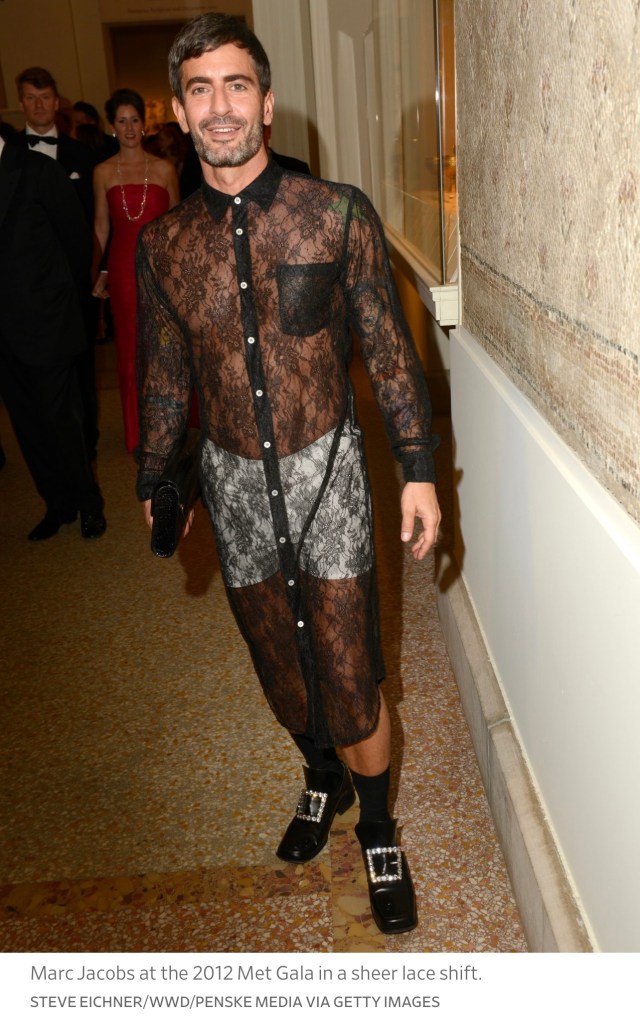
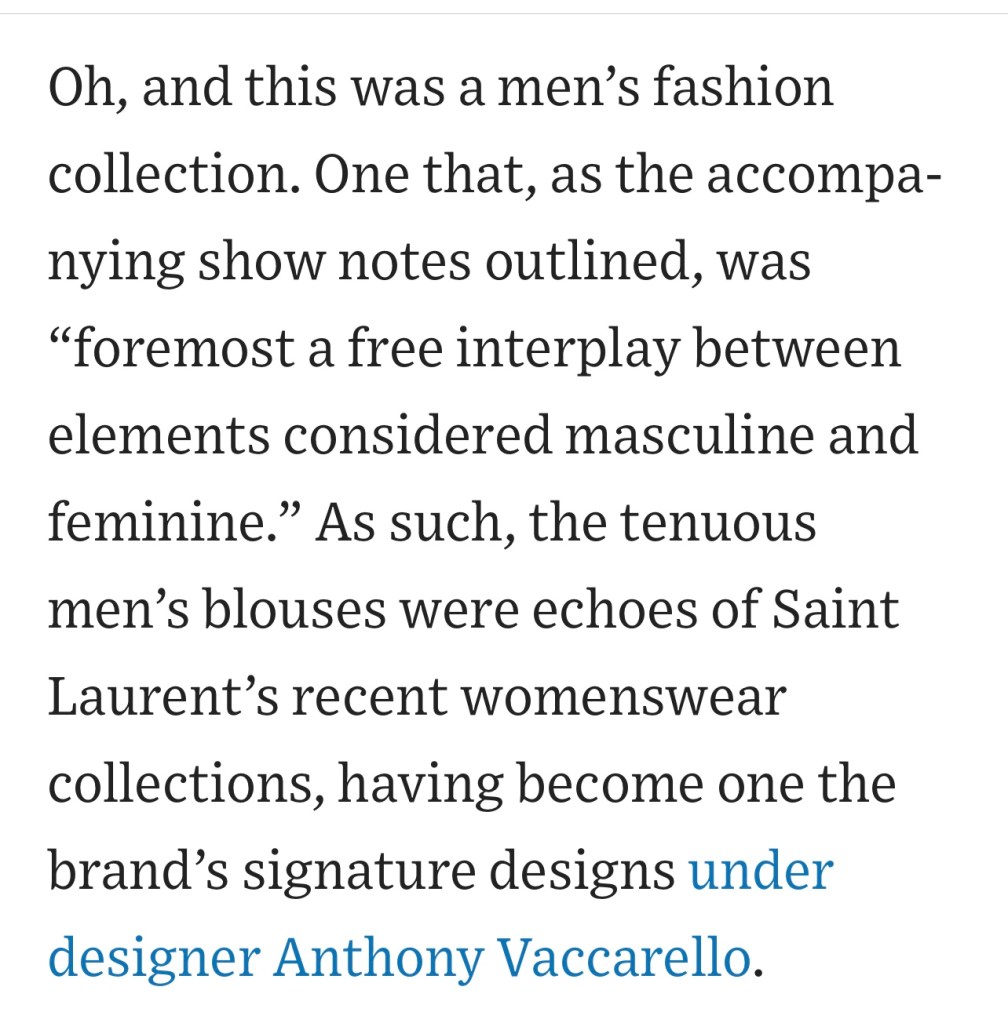
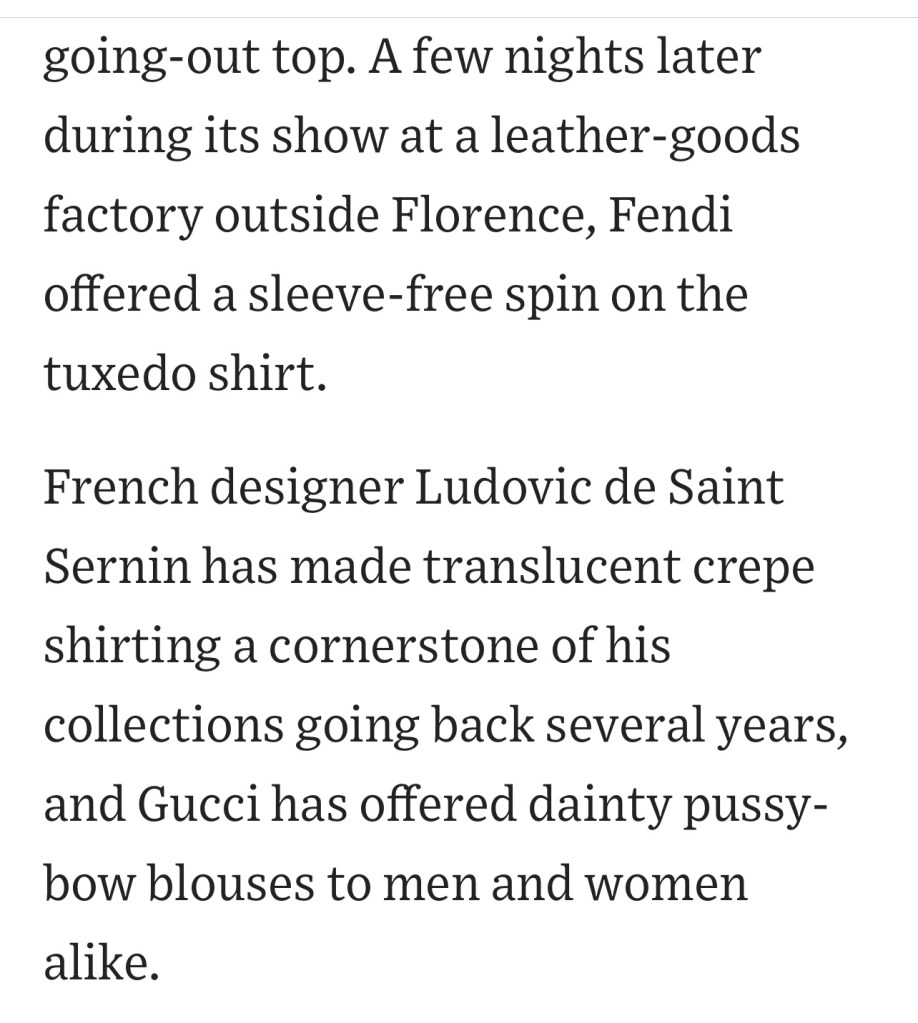
Welcome To The Era Of The “He -Halter”

“I’m reliving my days as a WWD reporter. Maybe I’m just an innovation junkie. I see something new and I want to report on it.” —-LWH

New York City will charge drivers going downtown. Other cities may be next

I’m interested in your thoughts—LWH

Each day 700,000 cars, taxis and trucks pour into Lower Manhattan, one of the busiest areas in the world with some of the worst gridlock in the United States.

By , CNN

Vehicles sit in traffic while exiting the Williamsburg Bridge on May 10, 2023 in New York City.
Vehicles sit in traffic while exiting the Williamsburg Bridge on May 10, 2023 in New York City. CNN — Erik Pendzich/Shutterstock

President Joe Biden’s administration is set to allow New York City to move forward with a landmark program that will toll vehicles entering Lower Manhattan, after a public review period ends Monday. 

The toll is formally known as the Central Business District Tolling Program — but it’s commonly called “congestion pricing.”

In practice it works like any other toll, but because it specifically charges people to drive in the traffic-choked area below 60th street in Manhattan, it would be the first program of its kind in the United States.

Proposals range from charging vehicles $9 to $23 during peak hours, and it’s set to go into effect next spring.

The plan had been delayed for years, but it cleared a milestone last month when the Federal Highway Administration signed off on the release of an environmental assessment. The public has until Monday to review the report, and the federal government is widely expected to approve it shortly after.

From there, the New York Metropolitan Transportation Authority (MTA) can finalize toll rates, as well as discounts and exemptions for certain drivers. 

New York City is still clawing out of from the devastating impact of the Covid-19 pandemic. Congestion pricing advocates say it’s a crucial piece of the city’s recovery and a way to re-imagine the city for the future. 

“This program is critical to New York City’s long-term success,” New York Gov. Kathy Hochul said last month.

The plan would also mark the culmination of more than a half-century of efforts to implement congestion pricing in New York City. Despite support from several New York City mayors and state governors, car and truck owners in outer boroughs and the suburbs helped defeat proposals.

In 2007 Mayor Michael Bloomberg called congestion “the elephant in the room” when proposing a toll program, which state lawmakers killed. A decade later, Gov. Andrew Cuomo — who had long resisted congestion pricing — said it was “an idea whose time has come” and declared a subway state of emergency after increased delays and a derailmentthat injured dozens. Two years later, the state gave the MTA approval to design a congestion pricing program.

Ultimately, it was the need to improve New York City’s public transit that became the rallying cry for congestion pricing.

Worst gridlock in United States

Each day 700,000 cars, taxis and trucks pour into Lower Manhattan, one of the busiest areas in the world with some of the worst gridlock in the United States.

Car travel at just 7.1 mph on average in the congestion price zone, and it’s a downward trend. Public bus speeds have also declined 28% since 2010. New Yorkers lose 117 hours on average each year sitting in traffic, costing them nearly $2,000 in lost productivity and other costs, according to one estimate.

The toll is designed to reduce the number of vehicles entering the congestion zone by at least 10% every day and slash the number of miles cars travel within the zone by 5%. 

Congestion comes with physical and societal costs, too: more accidents, carbon emissions and pollution happen as belching, honking cars take up space that could be optimized for pedestrians and outdoor dining.

Proponents also note it will improve public transit, an essential part of New York life. About 75% of trips downtown are via public transit. 

But public-transit ridership is 35% to 45% lower compared to pre-pandemic levels. The MTA says congestion fees will generate a critical source of revenue to fund $15 billion in future investments to modernize the city’s 100-year-old public transit system.

Congestion pricing is designed to improve New York City's subways and buses, which have struggled to recover since the pandemic.

Yuki Iwamura/Bloomberg/Getty Images

Congestion pricing is designed to improve New York City’s subways and buses, which have struggled to recover since the pandemic.

The improvements, like new subway cars and electric signals, are crucial to draw new riders and improve speed and accessibility — especially for low-income and minority residents, who are least likely to own cars, say plan advocates.

New York City is “dependent on public transit,” said Kate Slevin, the executive vice president of the Regional Plan Association, an urban planning and policy group. “We’re relying on that revenue to pay for needed upgrades and investments that ensure reliable, good transit service.”

Improving public transportation is also key to New York City’s post-pandemic economic recovery: If commutes to work are too unreliable, people are less likely to visit the office and shop at stores around their workplaces. Congestion charge advocates hope the program will create more space for amenities like wider sidewalks, bike lanes, plazas, benches, trees and public bathrooms.

“100 years ago we decided the automobile was the way to go, so we narrowed sidewalks and built highways,” said Sam Schwartz, former New York City traffic commissioner and founder of an eponymous consulting firm. “But the future of New York City is that the pedestrian should be king and queen. Everything should be subservient to the pedestrian.” 

Benefits, critiques and mitigation measures

While no other US city has yet implemented congestion pricing, Stockholm, London and Singapore have had it for years.

These cities have reported benefits like decreased carbon dioxide pollution, higher average speeds, and congestion reduction.

Just one year after London added its charge in 2003, traffic congestion dropped by 30% and average speeds increased by the same percentage. In Stockholm, one study found the rate of children’s acute asthma visits to the doctor fell by about 50% compared to rates before the program launched in 2007.

Some groups are fiercely opposed to congestion charges in New York City, however. Taxi and ride-share drivers, largely a low-income and immigrant workforce, fear it will hurt drivers already struggling to make ends meet. The MTA said congestion pricing could reduce demand for taxis by up to 17% in the zone.

Commuters and legislators from New York City’s outer boroughs and New Jersey say the program hurts drivers who have no viable way to reach downtown Manhattan other than by car, and that this would disproportionately impact low-income drivers. (But out of a region of 28 million people, just an estimated 16,100 low-income people commute to work via car in Lower Manhattan, according to the MTA.)

Other critics say it could divert more traffic and pollution from diesel trucks in Manhattan into lower-income areas like the Bronx, which has the highest rates of asthma hospitalization in the city. 

The MTA and other agencies have plans to mitigate many of these adverse effects, however.

Taxis and for-hire vehicles will be tolled only once a day. Drivers who make less than $50,000 a year or are enrolled in certain government aid programs will get 25% discounts after their first 10 trips every month. Trucks and other vehicles will get 50% discounts during overnight hours.

Additionally, the MTA pledged $10 million to install air filtration units in schools near highways, $20 million for a program to fight asthma, and other investments to improve air quality and the enviornment in areas where more traffic could be diverted.

The stakes of New York City’s program are high, and leaders in other cities are watching the results closely.

If successful, congestion pricing could be a model for other US cities, which are trying to recover from the pandemic and face similar challenges of climate change and aging public infrastructure.

“It’s good to see New York City’s program is moving forward,” said the Los Angeles Times Editorial Board last month. “Los Angeles should watch, learn and go next.”

You Will Want a Piece of Pastis


Www.thethreetomatoes.com
Miami Life Editor—LWH

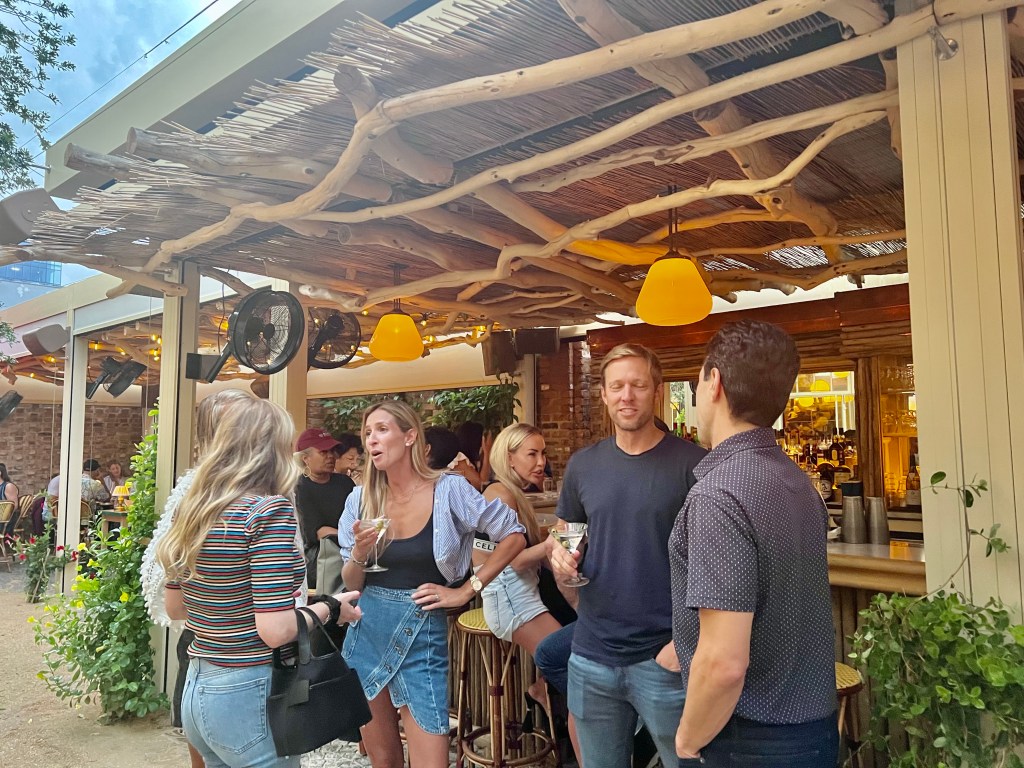
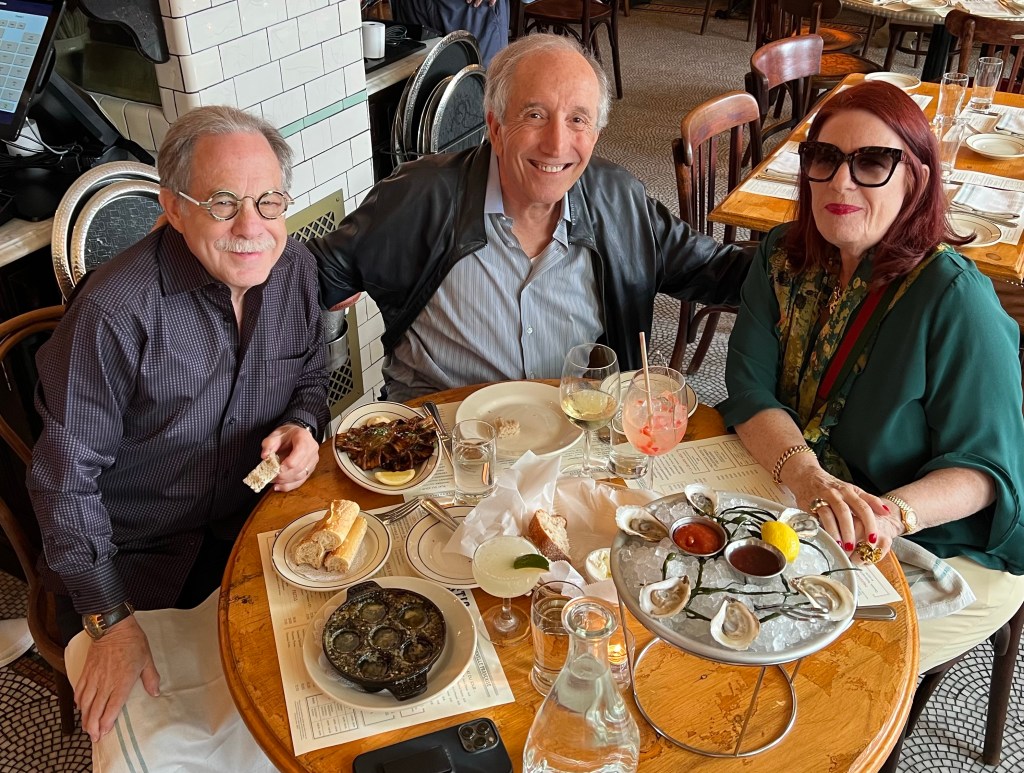
This is the second time I am writing about Pastis, the New York City Parisian-style brasserie which got its fame in the Meatpacking District. Thank you very much Sex in the City for all the scenes that you filmed at the restaurant. The owners, Keith McNally and Stephen Starr, have now taken their signature “je ne sais quoi” vibe that they created over the years and brought it to the Wynwood district of Miami.

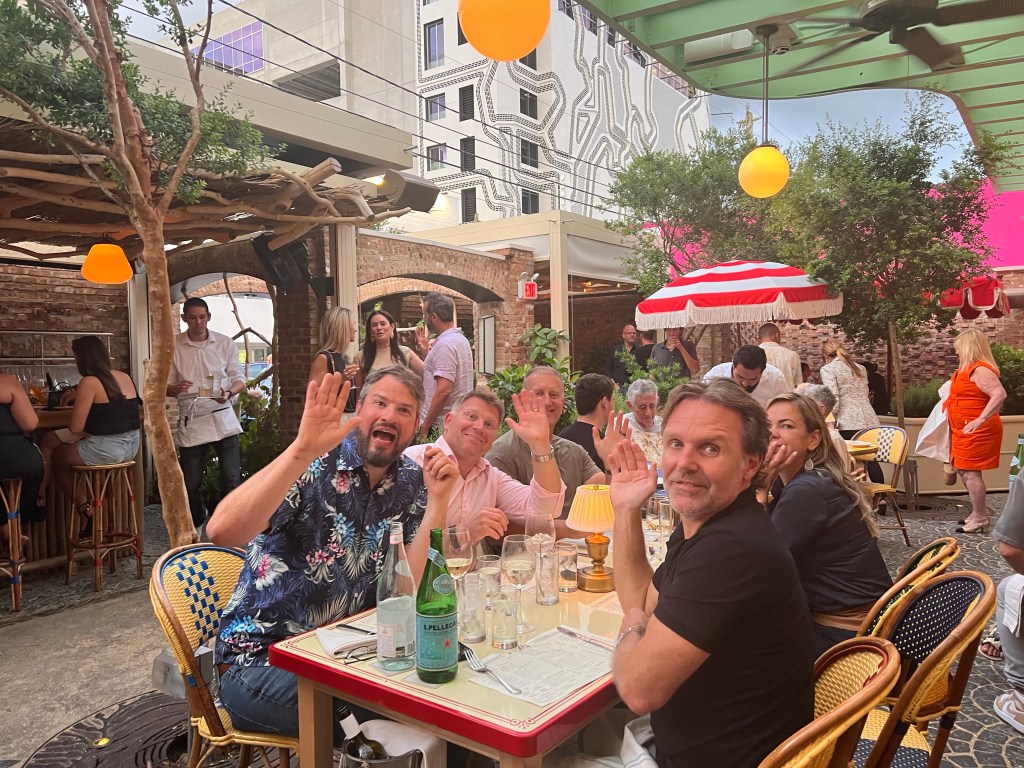
Eliot (husband) and I dined there last night with our neighbor Maurice Zarmati, a long-time top executive with Carnival Cruise Lines. He certainly knows the hospitality business better than most. He made friends with all the important staff members so we can easily get reservations on busy nights.

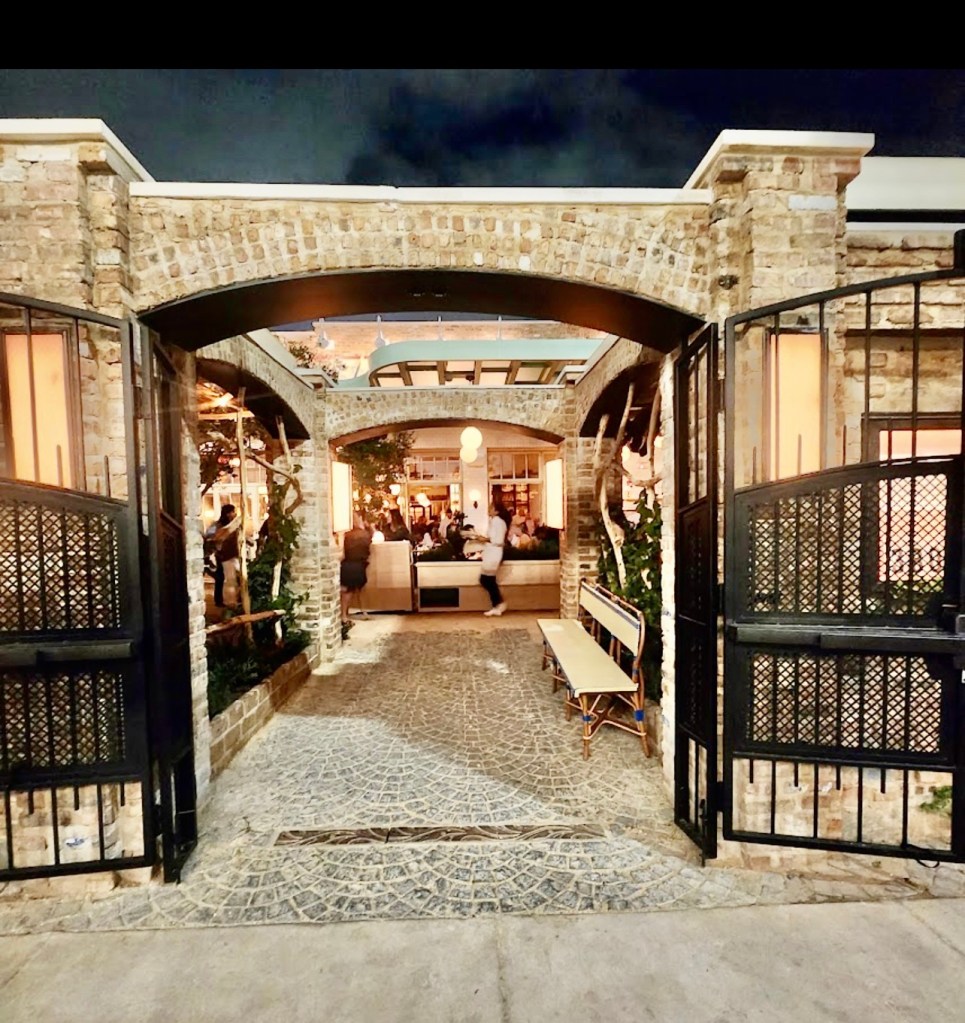
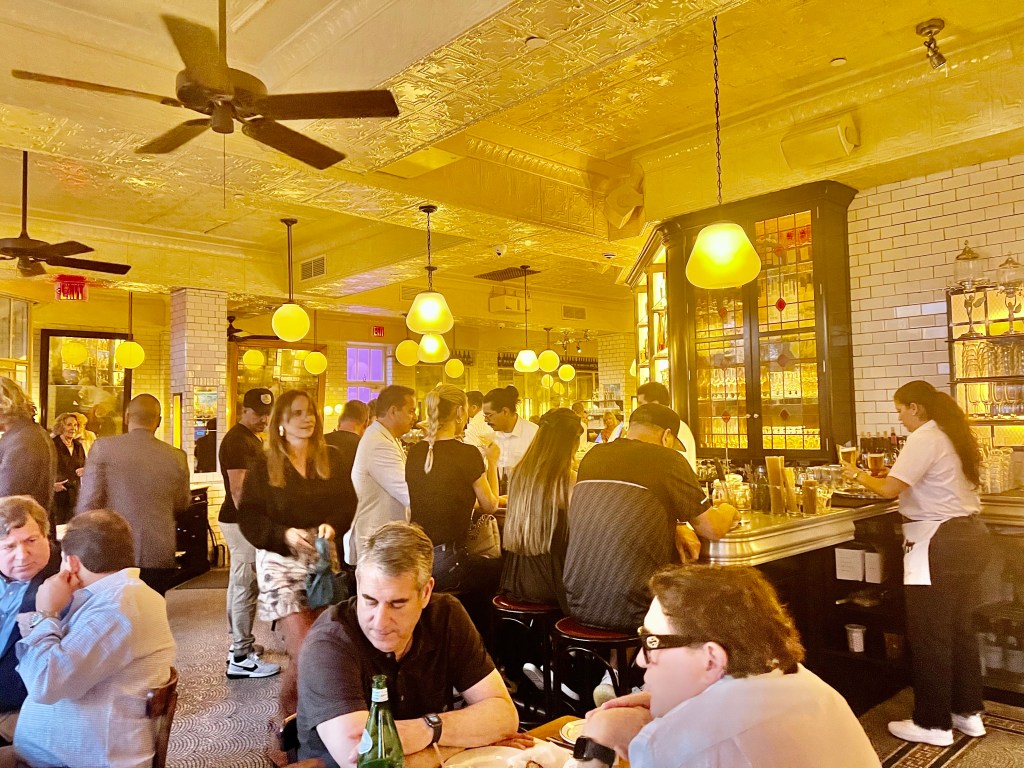
From the minute we walked in, to the minute we left, we felt like we were experiencing the high life. The service was impeccable. They also must have spent a fortune on the decor because you absolutely feel like you are in a very upscale Parisian bistro. The white tiles paired with rich wood tones give you a feeling of total elegance. The curb appeal is the brick archway that leads into a garden area where patrons can opt to dine outdoors. Equipped with its own sizable bar area, the garden area is better for spotting the new arrivals.

The snazzy restaurant was obviously designed for people watching because the restaurant is totally open to the garden area. It’s very exciting to see who arrives next. Last night was filled with fashionistas who forgot to cover certain areas of their bodies. Maurice, who is single, was certainly creating a little stir for himself. It’s amazing how the unattached can spot others who supposedly are available. Eliot was doing his fair share of looking. The women last night looked like runway models.

Now let’s get to the food. Maurice and I had Dover Sole à la Meunière and Eliot had Duck. Maurice started off with Crispy Artichokes, Eliot had Escargots and I had Oysters. We also pigged out on desserts. The men had Creme Brulee and I had Profiteroles.

I dare to say that Pastis has that New York special “something in the air” that most restaurants in Miami are missing. I’m not complaining. The restaurants here are wonderful but when something shines you just have to spotlight it.

Ooh la la!

🌺🌺🌺🌺🌺🌺🌺🌺🌺🌺🌺🌺🌺🌺🌺🌺🌺🌺

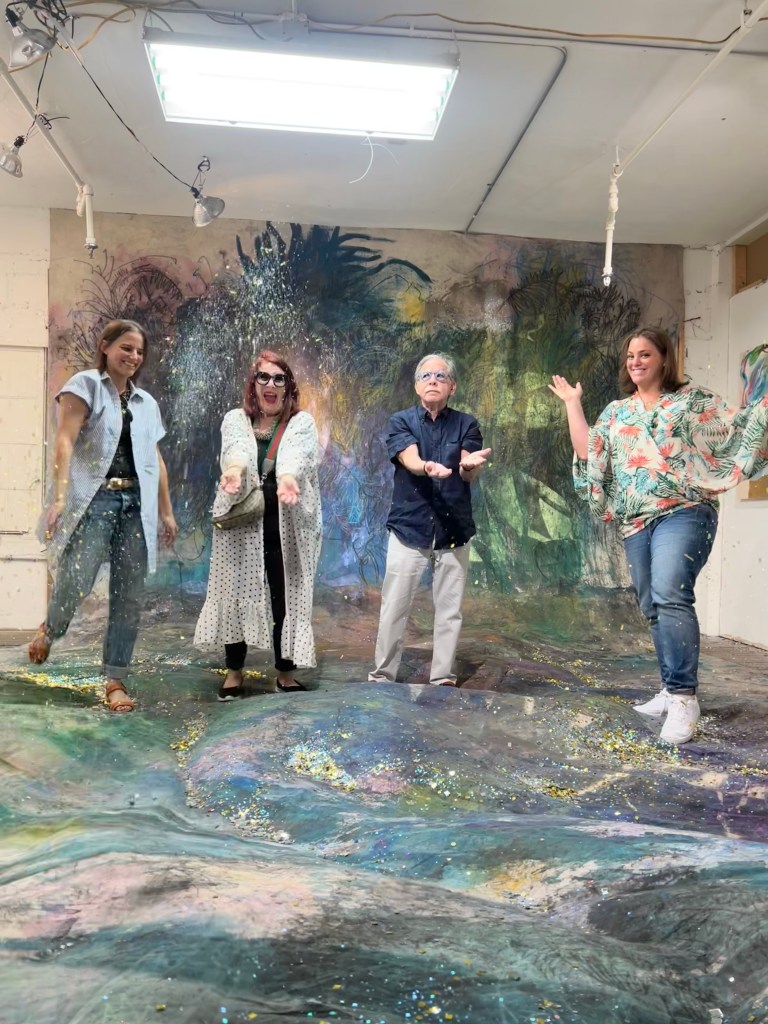
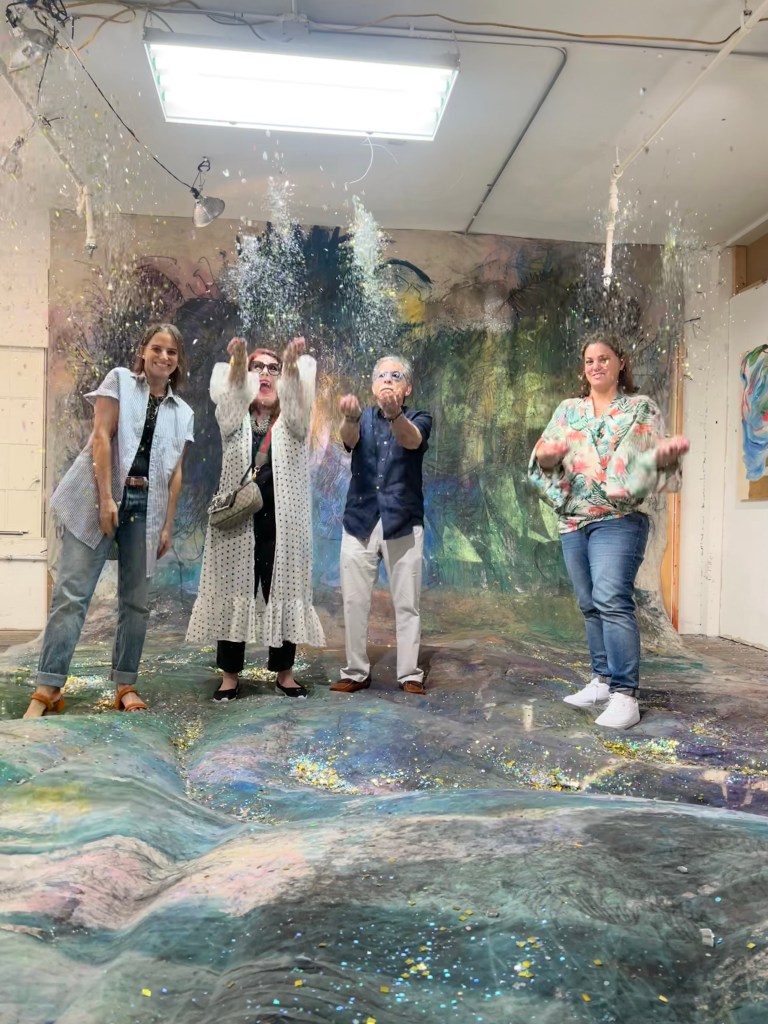
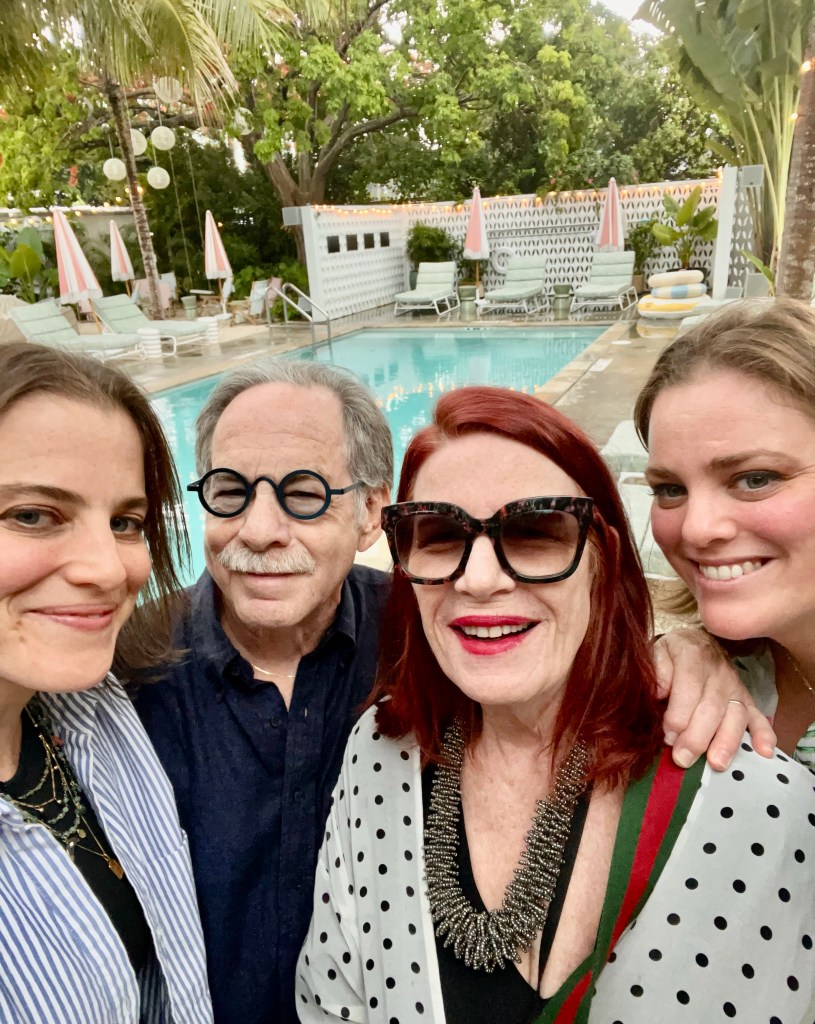
We finally got to experience Alex Nuñez’s award winning, brilliant and unique installation which uses canvas like you have never seen before. We were fully submersed in the scale of her work (16’ x 65’) which is currently being displayed at Fountainhead Studio. Alex, me, Eliot, Danielle Nuñez.

The canvas is covered with 50 lbs of double sided mirrors and iridescent confetti, which shift according to the audience’s path. The sense of equilibrioception is activated navigating this space of undulating canvas.

Fans are placed beneath this large canvas to create a kinetic sculptural painting. This unique combination allows the work to be seen in constant motion, altering space and distorting areas of vision. The large scale, hypnotic motion and sound of the work transform the painting into a living character. The fans mimic a rapid, mechanical breath, pulsating life into a vivid array of line and color.

Alex received the C12 Emerging Artist Fellowship Award from Hunter College’s MFA in Studio Art program.

Love being in the middle of art.

.

🌺🌺🌺🌺🌺🌺🌺🌺🌺🌺🌺🌺🌺🌺🌺🌺🌺🌺

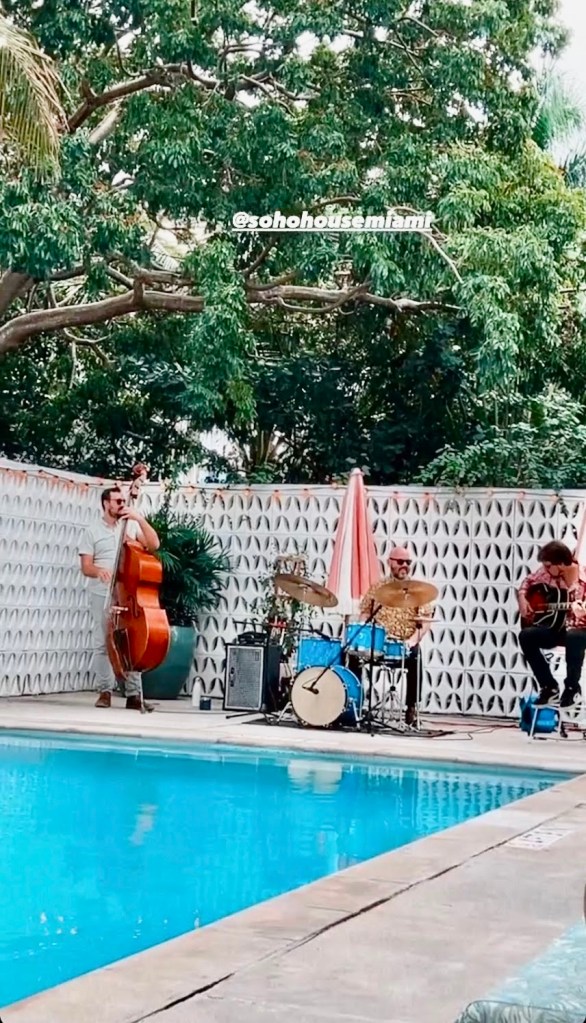
After having fun at the art installations, Alex Nuñez and Danielle Nunez took us to the Soho House in Edgewater/Wynwood. What a great escape. We laughed and compared life notes for hours. Thank you gals for sharing your membership.

Discover A Whole New Miami With “City Life Guru”

This is my Miami Life column for http://www.thethreetomatoes.com, June 9, 2023

Not only does Miami have great weather, the best beaches, plenty of sunshine, outstanding restaurants and an exciting nightlife, it now has City Life Guru.

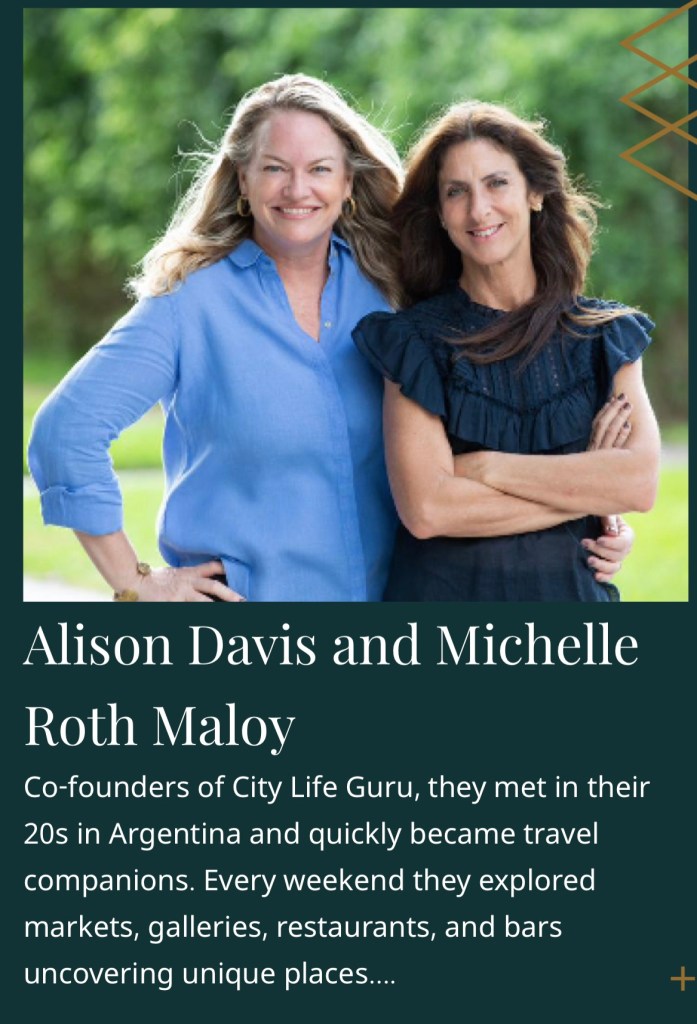
The new digital publication is like no other. Co-founders,  Alison Davis and Michelle Roth Maloy, have created a new type of newsletter that provides hidden gems all over Miami that most of the mainstream publications will never talk about. 

While City Life Guru may occasionally cover the typical glitz and glamour of Miami, the newsletter is going to provide a platform where local experts recommend specialty restaurants, pop-up exhibits, boutique clothing shops, native theater productions, unique marketplaces, and home furnishings from all over the world.

Miami has needed a publication like this for a long time. It’s a city that embraces a multicultural population. People who live in Miami, or tourists who visit here, are usually curious, sophisticated world travelers who enjoy different cultures, ethnic food and diverse social practices. 

Here are some of the areas that most folks know very little about: 

Allapattah—Diverse Latin neighborhood

Aventura—World class shopping

Bal Harbour—Luxury open air mall and fancy restaurants.

Coconut Grove—Historic hamlet filled with jungle/lush landscaping and bayfront and sidewalk cafes.

Coral Gables—Mediterranean architecture, luxury suburban life.

Doral—World class golf courses and parks.

Downtown Miami/Brickell —Industry and entertainment meet city life.

Everglades Area—Hiking, biking, camping, canoeing, and airboats. Explore the wetlands.

Hialeah—Hispanic culture and fun and games.

Historic Overtown—A Black heritage with rich history.

Key Biscayne—Sandy beaches, nature preserves, and outdoor restaurants.

Little Haiti—Lively arts and culture to Creole flavors.

Little Havana —The heart of Miami’s Cuban diaspora.

Miami Beach: Mid Beach—Enjoy South Beach cool and North Beach calm.

Miami Beach: North Beach—The relaxed Miami Beach neighborhood from 60th streetto Surfside.

Miami Beach: South Beach—Life of the rich and famous. Very seasonal. Fancy restaurants.

Miami Design District—The luxurious destination for fashion, art, architecture, and five dining.

Miami Gardens —International food and quiet parks

North Miami Beach Area—Home to 44,000 multicultural residents celebrating inclusivity, creativity, and innovation.

South Dade—Farmland, exotic fruit stands, and the unique ecosystems of two national parks.

Sunny Isles Beach—Quiet beaches, family activities, romantic hotels.

Surfside —Lavish resorts, Jewish comfort food, Sandy white beaches.

Wynwood —Home to art galleries, retail stores, antique shops, eclectic bars, artisanal eateries and street art.

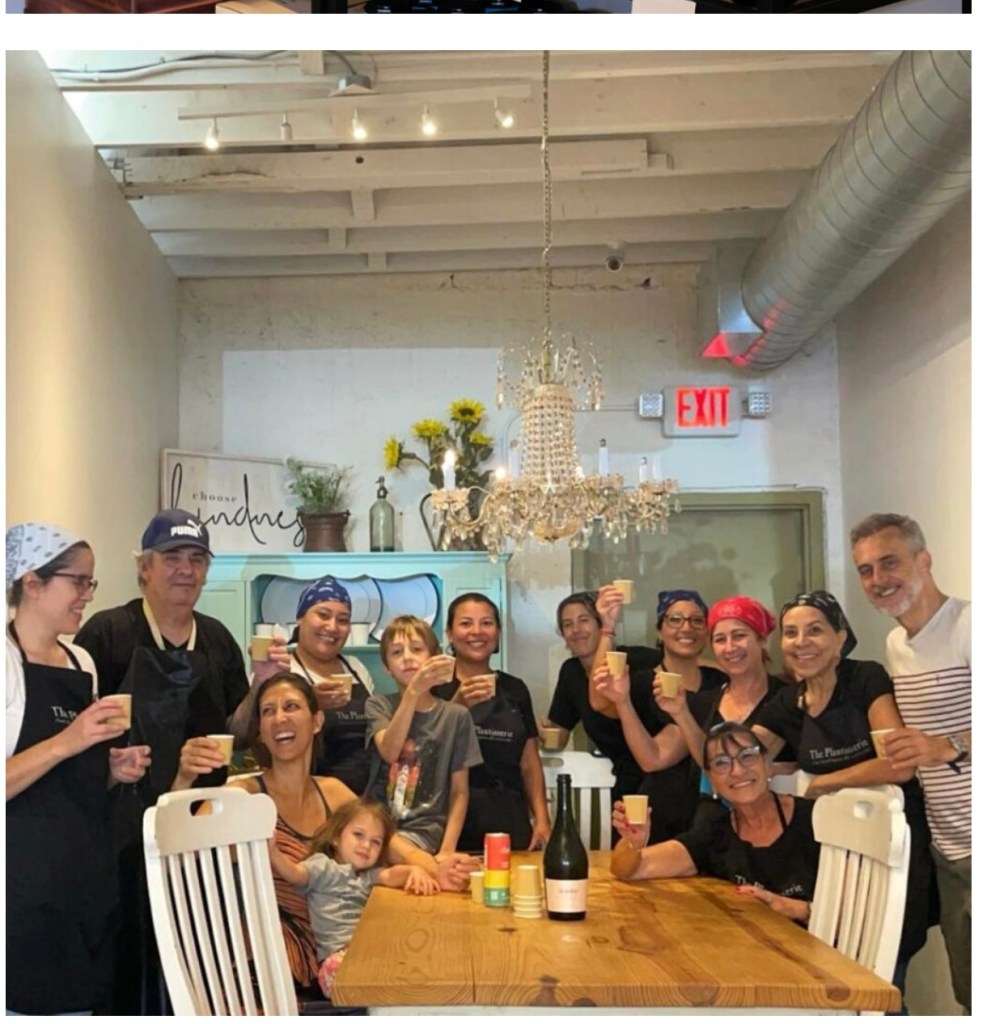
One of the recent “finds” that Alison and Michelle just uncovered in Little River is a vegetarian restaurant that offers healthy, clean, homemade style food that you can purchase by the pound. Maria Laura Alemann, along with her husband, opened Plantisserie in order to introduce Miamians to all of her new dishes. She “veganized” all of her childhood favorite recipes: curries,lasagnas, stuffed eggplants, empanadas and even pizzas.

Plantisserie is located at:

7316 NE 2ND AVE
Little River
Miami, Fl 33138

The restaurant now has a cult-like following among non-vegetarians and vegans alike. One of the secrets is that Maria hires actual grandmothers to cook traditional recipes. I personally think that’s brilliant. Everyone appreciates a home cooked meal even if it’s done remotely.

Alison and Michelle have a knack for gallivanting around to find new things and places for all of us. They have been doing it for years. They met in their 20s. Alison said, “Michelle’s dad is from Argentina and her mom is from Brooklyn. My mother is from Argentina and my father is from Maine. We had a lot in common when we met in Buenos Aires.  I was working in advertising. She had an internship with a law firm. We  quickly became great friends. She moved in with me for a year and a half. We traveled around Buenos Aires and discovered  it was very multicultural. We both loved the differentneighborhoods. There was so much to do. We loved exploring together.”

Every weekend they went to markets, galleries, restaurants, and bars uncovering unique places. Michelle returned to her hometown of Miami a few years later and continued her law career becoming an Assistant State Attorney and then a defense attorney. Alison’s advertising career took her to New York, Singapore, Indonesia and eventually to Miami

Alison added, “We are both married now. Michelle has children. We still find plenty of time to enjoy Miami together the way we did in Buenos Aires”.

Michelle lives in Miami’s Bay Harbor. She actually grew up in Miami Beach. Alison lives in Williams Island. She also lived in Morningside for several years and before that across from the Standard Hotel in Miami Beach. They are both well acquainted with Miami.

The women point out that unlike most other cities many Miami residents are grateful that both English and Spanish are spoken here. “The Cubans and the South Americans love living in Miami and they want to stay here forever,” added Alison. “They are just nostalgic about their native tongue. They make every effort to speak English but they don’t to forget the Spanish language. Many Americans who live in Miami speak enough Spanish to communicate with their new friends and neighbors.”

One of the most valuable elements of City Life Guru are the city guides that allow you to walk through the different areas of Miami and know exactly where you are going. Alison explained “We want people to take our guides and walk through the streets and discover things on their own. We just finished Little Haiti. It’s such a fantastic neighborhood. The area has the most unique places plus  incredible galleries and restaurants. Look for the Caribbean marketplace on Saturdays. It’s incredible.”

Alison and Michelle invite everyone who are interested in Miami to go to their website and sign up for the newsletter.www.citylifeguru.com.

Alison and Michelle will shortly be launching a major advertising and marketing campaign for their new venture. It should be the talk of the town.

“Never Say Never, Never Say Always”

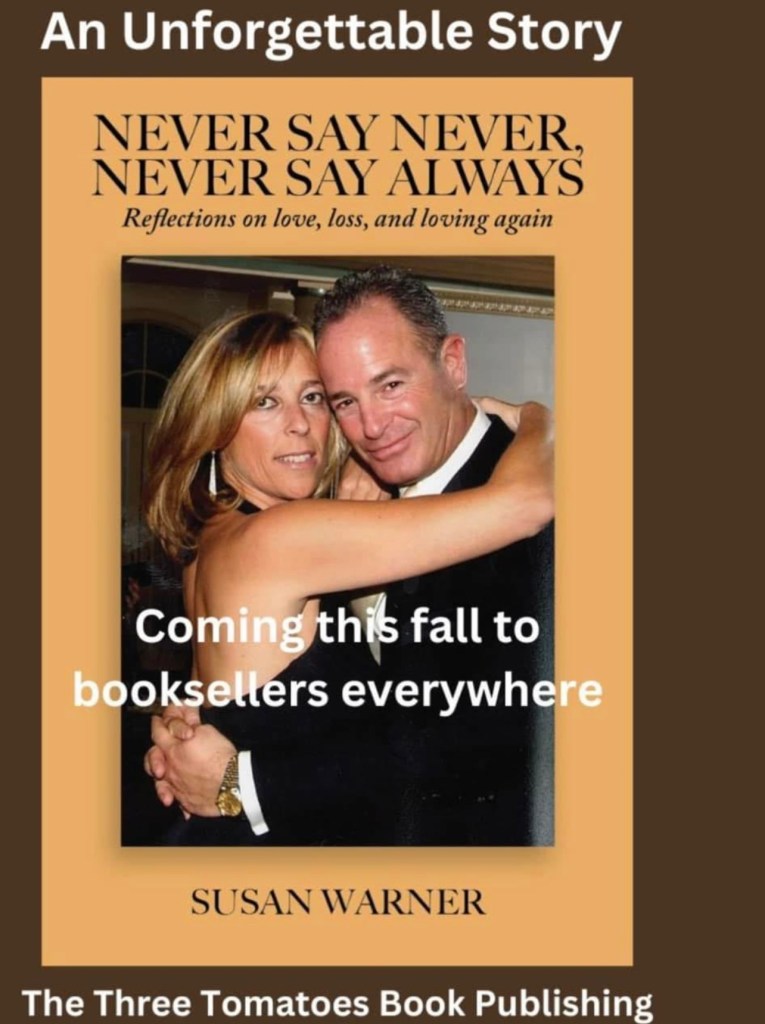
Meet Susan Sall Warner. I have been an advisor and publicist on her upcoming book, “Never Say Never, Never Say Always,” for a year and a half.

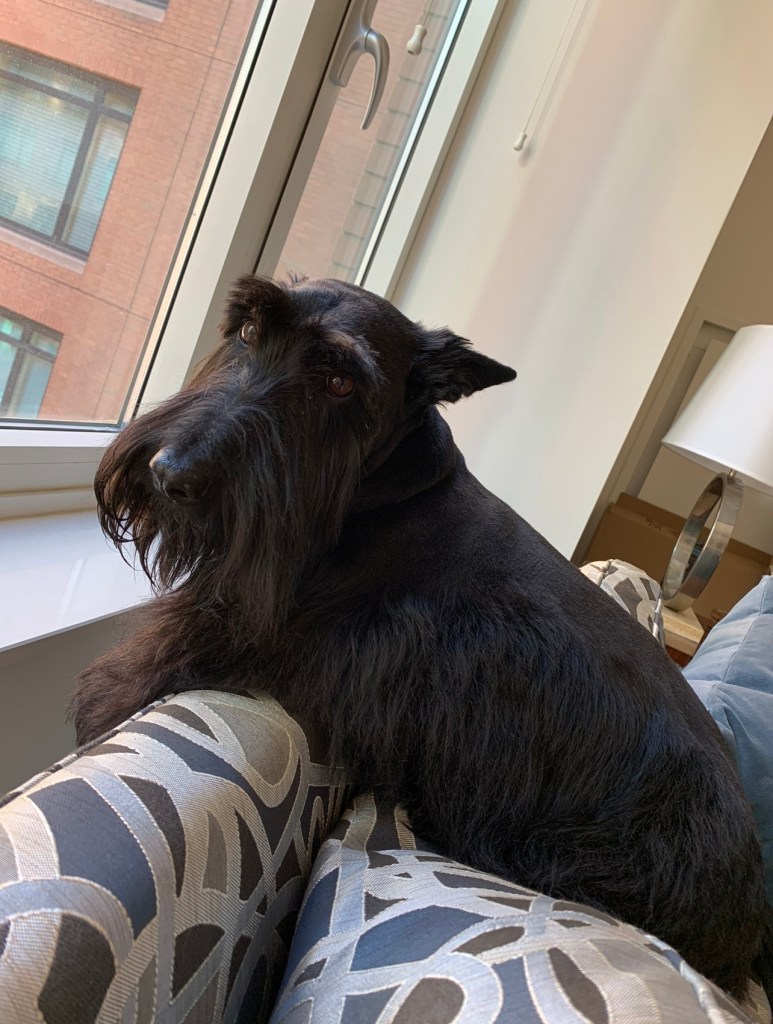
The podcast that we just did together, number 26, explains how important her Scottish Terrier, Winston, is in her life, especially when she was deep in grief.

Winston has constantly been at Susan Warner’s side since her son David, and then her husband Michael, died six years ago. Everyone who owns a dog knows the irreplaceable comfort that a dog brings on a daily basis. When crises strikes, their companionship is irreplaceable. Pets represent normalcy, consistency, devotion, tender love, no judgement, and loyalty.

Susan’s upcoming book, “Never Say Never, Never Say Always,” will devote a chapter to Winston because he holds a very special place in her life and recovery. He could probably tell us secrets about Susan no one knows. Winston is a major part of Susan’s return to normalcy and a major part of her heart. Everyone who meets Winston knows he deserves so much credit.

This podcast is devoted to Winston.

Listen to episode 2 of Susan’s podcast here – https://susanswarner.com/podcast/episode26/

The Susan is Suddenly Single Podcast is also available on popular podcast sites:

Amazon Music – https://music.amazon.com/podcasts/40b861c5-ffe5-4154-9100-546ee878dd74

Apple Podcasts – https://podcasts.apple.com/us/podcast/susan-is-suddenly-single/id1614156310

Google Podcasts – https://podcasts.google.com/feed/aHR0cHM6Ly9zdXNhbnN3YXJuZXIuY29tL2ZlZWQvcG9kY2FzdA

PocketCasts – https://pca.st/pan920jg

Spotify – https://open.spotify.com/show/1E9r3nWgusLU2gTMhRMtky

Audible – https://www.audible.com/pd/B09VFZZLHX

I Am Woman, Hear Me Roar!

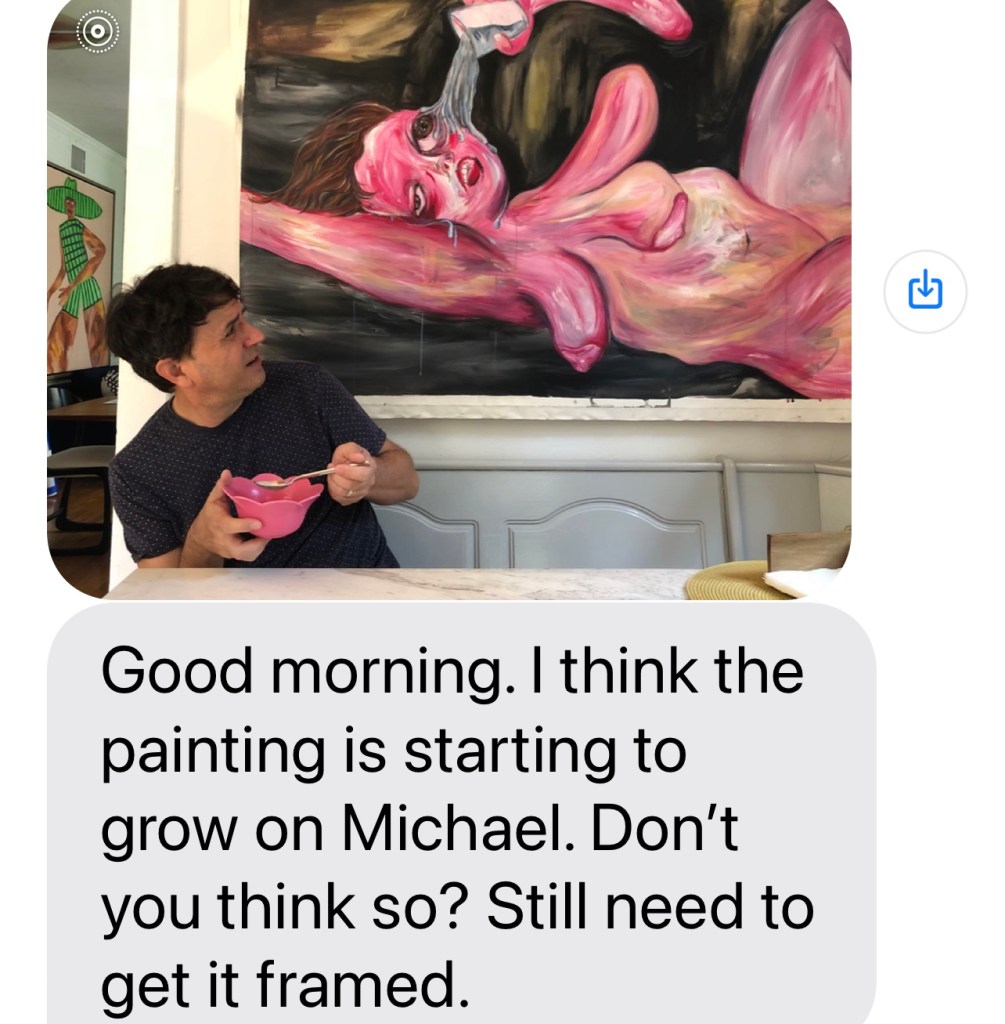
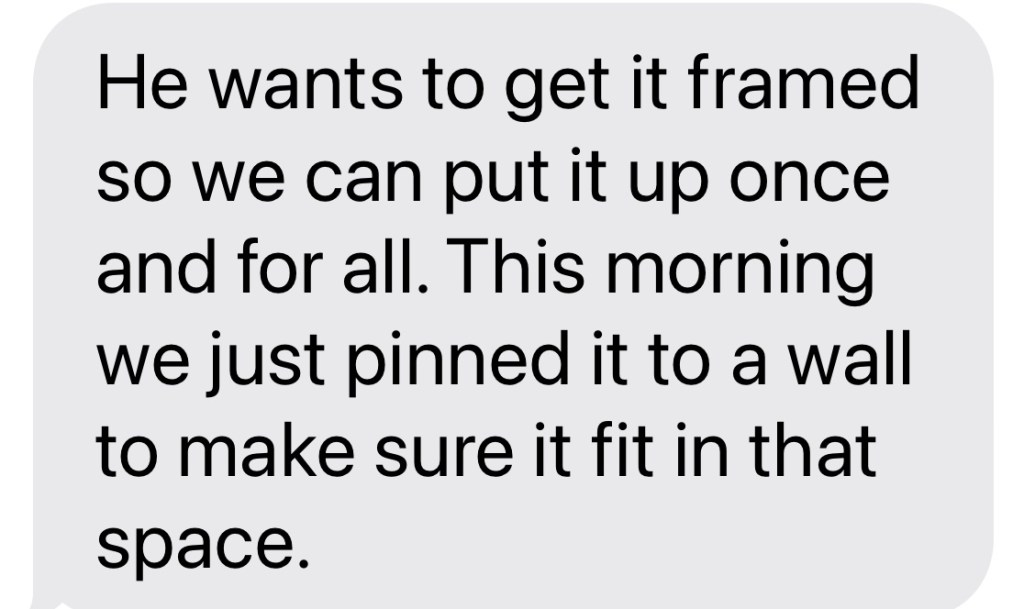
I received the text below from my friend. We were on the same art tour in Buenos Aires. That’s where she bought the painting from one of the most popular artists in Argentina. When you know the artist and the history behind the painting, you absolutely adore it.