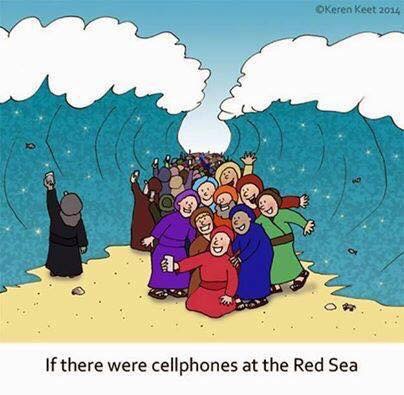
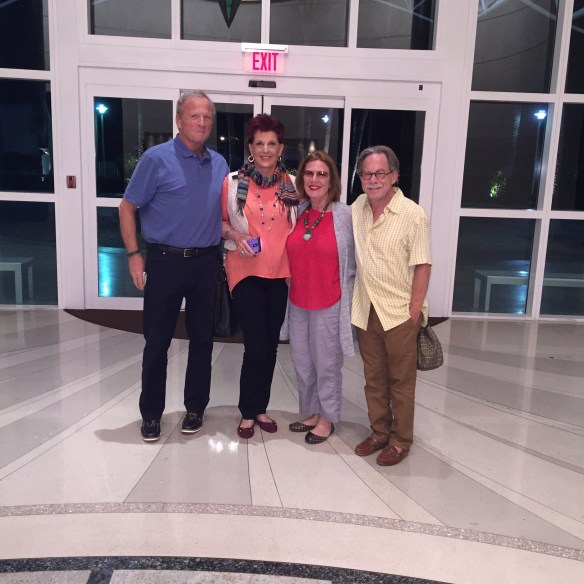
My stunning Guatemalan girlfriend Ana pictured here with her handsome husband Tony, still have their good looks despite recent injuries. We can’t be too careful in our active lives.
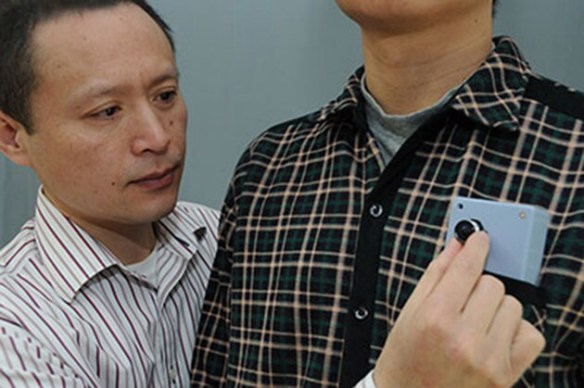
Image from Engadget. A camera using auditory alerts.
In the last three weeks, I have heard four horror stories of contemporaries getting hurt in their own homes. A slip on an area rug (a broken nose), a fall from a ladder, (broken hip), a bump on a shower handle (a black eye) and a cut on a piece of glass (multiple stitches on several fingers). Ouch“
I’m not saying accidents don’t happen to younger relatives and friends as well but an increasing number of 60-plus year old pals are feeling much more vulnerable these days. It may be all the stories we are exposed to on Facebook.
Nevertheless, I wanted to tell you about a pocket camera being worked on by scientists from Massachusetts Eye and Ear and the Schepens Eye Research Institute. I first read about it on the tech site Engadget. They are hoping it might be a giant step forward for the visually impaired.
Okay, it’s been a few years since I’ve had my period, but how is it possible that I didn’t hear about a new technological advancement in sustainable feminine hygiene products.
Much to my surprise, more and more women are using menstrual cups. That’s right, menstrual cups that don’t have to be changed for 12 hours. They look like upside-down bell-shaped devices. It’s made of a nontoxic material (medical-grade silicone).
One of the reasons why the menstrual cups are so popular is because women want to live in a world that is environmentally-friendly. Disposable tampons are no longer considered PC. The menstrual cups are reusable and are priced from $20 to $40. Some of the prominent brands are Softcup, Intimina, and Diva Cup. All the cups are regulated by the Food and Drug Administration.
There is so much more to this story. Racked.com, a shopping and fashion site, offers the complete story. Click here. If you are going to tell your children and grandchildren about these cups, I recommend that they seek the advice of their doctors first. I’m just reporting the news.
I wanted to share this press release with all of you. I have never been prouder of the tech industry as I am today.
FOR IMMEDIATE RELEASE: April 1, 2015
Stephen Peters | stephen.peters@hrc.org | 202-423-2860
Tech Industry Leaders Make Unprecedented & Historic Joint Statement to Legislators: Add LGBT Non-Discrimination Protections to Civil Rights Laws
WASHINGTON – Today, in response to a host of anti-LGBT bills pending or signed in to law in states around the country, tech industry leaders signed an unprecedented joint statement supporting the addition of non-discrimination protections for LGBT people to civil rights laws. Other leaders are also expected to sign on later today.
“This unprecedented and historic effort by the giants of the tech industry should be a clarion call to policymakers that discriminating against LGBT people is not acceptable in today’s marketplace of ideas,” said HRC President Chad Griffin.“These leaders have made it clear: if states want high tech jobs, they must put fully inclusive nondiscrimination protections in place immediately.”
“If anything can be learned from the battle for fairness and equality in Indiana, Arkansas, and other states, it’s that LGBT people deserve to be protected from unjust discrimination,” said Max Levchin, CEO of Affirm, and the organizer of the joint statement. “We are proud to stand on the side of liberty and justice and call on all legislatures to add sexual orientation and gender identity as protected classes in non-discrimination protections. This will ensure that no one faces discrimination while everyone preserves their right to live out their faith.”
Joint Statement from Tech Industry Leaders
The values of diversity, fairness and equality are central to our industry. These values fuel creativity and inspiration, and those in turn make the U.S. technology sector the most admired in the world today.
We believe it is critically important to speak out about proposed bills and existing laws that would put the rights of minorities at risk. The transparent and open economy of the future depends on it, and the values of this great nation are at stake.
Religious freedom, inclusion, and diversity can co-exist and everyone including LGBT people and people of faith should be protected under their states’ civil rights laws. No person should have to fear losing their job or be denied service or housing because of who they are or whom they love.
However, right now those values are being called into question in states across the country. In more than twenty states, legislatures are considering legislation that could empower individuals or businesses to discriminate against LGBT people by denying them service if it they felt it violated their religious beliefs.
To ensure no one faces discrimination and ensure everyone preserves their right to live out their faith, we call on all legislatures to add sexual orientation and gender identity as protected classes to their civil rights laws and to explicitly forbid discrimination or denial of services to anyone.
Anything less will only serve to place barriers between people, create hurdles to creativity and inclusion, and smother the kind of open and transparent society that is necessary to create the jobs of the future. Discrimination is bad for business and that’s why we’ve taken the time to join this joint statement.
Sincerely,
Max Levchin, CEO, Affirm
Mark Pincus, Chairman, Zynga
Jeremy Stoppelman, CEO, Yelp
Marc Benioff, CEO, SalesForce
Jack Dorsey, CEO, Square
Dick Costolo, CEO, Twitter
Joe Green, CEO, Lyft
Brian Chesky, CEO, AirBnB
Joe Gebbia, CPO, AirBnB
Nathan Blecharczyk, CTO, AirBnB
Ron Conway, CEO, Axon JuriMed Group LLC
John Donahoe, CEO, Ebay
Paul Graham, CoFounder, YCombinator
Rich Barton, Chairman, Zillow Group
Chad Hurley, CEO, Mixbit
Adora Cheung, CEO, Homejoy
Phil Libin, CEO, Evernote
Trevor Traina, CEO, IfOnly
Nirav Tolia, CEO, NextDoor
Dion Lim, CEO, NextLesson
Bret Taylor, CEO, Quip
Joe Lonsdale, CEO, Formation 8
Thomas Layton, Chairman, Elance-odesk
Fabio Rosati, CEO, Elance-odesk
Dave Morin, CEO, Path
Mark Goldstein, Chairman, BackOps
Kevin Rose, CEO, North Technologies
Yves Behar, CCO, Jawbone
Padmasree Warrior, CTSO, Cisco Systems
Tony Conrad, CEO, about.me
Sunil Paul, CEO, Sidecar
Michael Moritz, Chairman, Sequoia Capital
Dan Schulman, President, PayPal
Devin Wenig, President, eBay Marketplaces
Robert Hohman, CEO, Glassdoor
Laurene Powell Jobs, Founder and Chair, Emerson Collective
Mohan Warrior, CEO, Alphalight
David Spector, CIO, Penny Mac
Shervin Pishevar, CoFounder, Sherpa Ventures
The Human Rights Campaign is America’s largest civil rights organization working to achieve lesbian, gay, bisexual and transgender equality. HRC envisions a world where LGBT people are embraced as full members of society at home, at work and in every community.

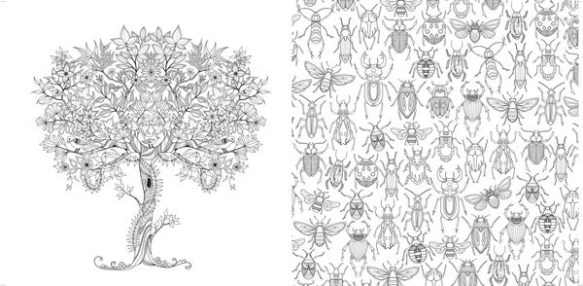
Illustrations from Barnes and Noble and Amazon
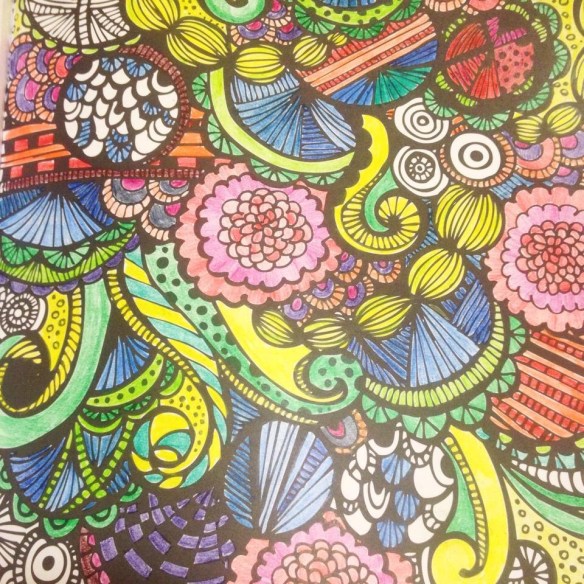
As a youngster, my happiest days was when I was coloring in a coloring book. I would go into a zone that was peaceful, full of hope, and very mysterious.

Images: Digitalartsonline.uk.
Six months from now, you will be able to buy a Barbie for the really young ones in your life that will be able to have a conversation with them. We are entering the era of a whole new world of digital toys. I’m not sure many of you are going to like, it but you don’t have much choice. Most toys in the future will be digitally-enabled.
Mattel plans to introduce Hello Barbie, a Wi-Fi enabled version of their iconic doll, right after the summer. Barbie will be using ToyTalk’s technology system “to analyze a child’s speech and produce relevant responses,” according to the company’s press releases.
ToyTalk of San Francisco creates conversational characters for children. Founded in 2011, ToyTalk is known for its animated conversational apps, Winston Show and SpeakaZoo. The apps help young children “engage in complex dialogue with a menagerie of make-believe characters.”
Read about what the toy industry and early childhood educators think about Mattel’s new Barbie. The New York Times had a great piece on this development.
For the past week, I’ve been writing to you from Maui. I’m here with Eliot, daughter Whitney, her boyfriend, Fredrick, and cousins Darren, Larry, Beth, Jeff, and Hanna. We try to go away together at least once a year, plus see each other Thanksgiving time at the Jeff Young’s extravaganza feast.
Other cousins are welcome to join in at any time. The charter group may come and go too depending on schedules but we try to pick a date far enough out that everyone can plan ahead.
Everyone has heavy work schedules so we all are equipped with the devices that keep us connected. Whitney is the only one who is completely disconnected. She doesn’t believe in mixing Maui with work. Her outgoing email message is:
“Aloha! I am on a mindful vacation in Maui, without phone or computer, and won’t be checking email until I return on March 30. If this is an urgent matter, you may contact my assistant. He will be able to reach me.”
The rest of us don’t mind checking in with the office a few times a day. As far as I’m concerned, I prefer working from the road. Otherwise, I could never go away. I’m taking advantage of the Interent. I love my virtual office existence and feel blessed that I’m living in a time that this is possible.
Twice this week, I had to wake up at 4:30am and 5:30am for conference calls. I also answered emails and wrote several pitch letters. I scored a few major editorial hits and wrote new DigiDame everyday.
I didn’t miss a meal or an activity with the family. I slept six hours a night and read several newspapers a day. Somehow you learn to pace yourself. Yes, there are times when it’s stressful but many things on vacation can be challenging. Whitney, Fredrick, Larry and Darren went zip lining today. That would make my BP go haywire.
Checking emails is a piece of cake. I’m on the ground, not suspended a thousand feet over a waterfall. I know what I can handle. Mixing work and pleasure is my honor in this day of digital conveniences.


A new era has entered the world of broadcasting. It’s called live-streaming. I may finally get my chance at on-air reporting. This is all made possible because of two new apps, Periscope and Meerkat. They allow you to broadcast live.
Meerkat and Periscope can only be broadcasted live when there is a real time distribution platform like Twitter. There will be plenty of other formats in the future.
The amazing thing about live streaming is that your viewers are watching your broadcast as you are taping. These two apps are in tremendous competition with each other because this is the future of Internet broadcasting.
Watch the videos for a full explanation. Twitter owns Periscope but don’t discount Meerkat. They both have unique features that make each of them very attractive.
Tomorrow I will tell you about the tremendous funding they are both attracting.
The war has just begun!!!
If you upgraded to Apple iOS 8 on your iPhone, you should be taking advantage of the Health app that was provided free of charge. I believe Android folks have had a similar app for quite sometime.
I didn’t even know it was there until my friend told me about it. I saw it but never paid attention to it. Then I noticed that my friend wasn’t wearing a Fitbit of any kind anymore. I asked him why and, at first, he was coy about it.
Annoying me, wouldn’t let up, until one day he said that he uses the iPhone health app now because it offers many of the features found in the all of the fitness gadgets.
I really didn’t believe him until I started using it myself. The apple health app gives you heart rate, calories burned, blood sugar, cholesterol, all in one place. There is also a place to store all of your important health information: blood type, allergies, etc.
There is so much more to read about the Apple health app. Click here.