The Last Step in Being Upwardly Mobile

20130604-213615.jpg

20130604-213605.jpg

I dream of the day that I will be taking a trip around the world and perhaps not coming back to New York or Miami for months, maybe a year. I am not planning to retire but I would like to know what it’s like to be free of the same scenery every day for a very long period of time. The Internet has given me the freedom to be anywhere on Earth as long as it has WiFi.

I can conduct my business with clients, the press, employees, associates, and strategic partners by email, text, Skype, Twitter, and Facebook. No one (young or old) wants to talk on the telephone anymore unless it’s absolutely necessary. They want to avoid long-winded conversations or my silly jokes. All kidding aside, it’s not just me. People in business are just so busy multitasking that they have little time to converse. While some of you may regret the lost art of conversation on the landline, you have to admit that much of it was repetitive or one-sided.

The one thing holding us back, believe it or not, was the mail. One of Eliot’s daily passions is to get the mail. He reminds me so much of my grandparents who would park themselves on folding chairs outside their apartment building in Brooklyn waiting for the mail everyday. The mailman was almost a family member. Eliot waits for client checks, his favorite magazines, book deliveries, bills, online purchases — the list got longer and longer.

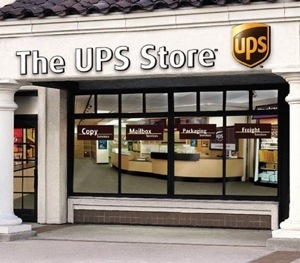
We finally put a stop to all the insanity that had us tied down. We transferred all our mail to a nearby UPS store that offers all kinds of services including sending our mail to us anywhere in the world. Many folks we know caught on to this service years ago out of necessity, but even they say the service options keep getting better and better. Many options are totally free.

When I went with Eliot to sign all the papers that would authorize me as a co-owner of our mailbox, I noticed that a lot of the people who were dropping by the UPS store were not homeless bums without a mailbox. Rather they were upscale neighborhood residents living in multi-million dollar townhouses who don’t want the daily intrusion of mailmen, or traveling business people who prefer not to have letters and packages stacked up in their lobbies.

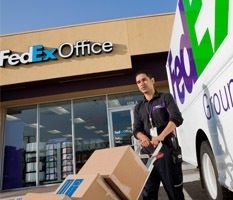
Both UPS and Fedex have some of the same services and exclusive added bonuses. Click on the links below to see the actual differences, but here is a list of major advantages:

  1. Email alerts letting you know when there are package and letter deliveries.
  2. Mail storage and will call.
  3. Mail forwarding both local and out-of-town.
  4. Both website and app tracking.
  5. Package tracking so you know where your packages are all the time.

All I have to say is, If my grandparents could only see me now!

You can compare the UPS and Fed Ex mailbox options on CNET.

QR Codes to Save Lives

20130603-232639.jpg

Every time I get into my car I think about whether I should lock the doors. I don’t like the idea of getting into an accident and no one will be able to pull me out because the doors are locked. Then I worry about leaving my doors unlocked and having someone open one and jump in. That happened to me once.

I was driving my brother’s Volkswagen Karmann Ghia convertible uptown through the tunnel on Park Avenue when all of a sudden an inebriated suit opened the passenger door when I stopped at the red light. He sat right down and asked where we were going. I saw my whole life flash in front of me. I don’t remember what I said but before the light turned green he left.

I can remember the panic and shock as if it were yesterday. I often think about it. Apparently, the topic of auto entry is on the minds of a lot of people. Car companies are thinking more about getting into our automobiles too, especially when we are trapped inside of them. Mercedes-Benz just announced that they are placing QR codes on the fuel doors and the roofs of their new cars so that emergency responders can quickly get access.

According to the developer of this welcome solution, Mercedes said in a recent press call that the QR codes will link to a copy of the car’s schematics so that responders will know exactly where the tanks, batteries, and electrical wiring is located. The schematics, called ‘rescue sheets,’ will allow anyone with a smartphone or a tablet with a QR app to direct emergency personnel to a website with the specific rescue sheet they need to reference. Mercedes chose these two spots on the car to put the stickers because it seldom occurs that both these parts are badly damaged in the same accident, and they are furthermore easily accessible from the outside.

In a surprising move, Mercedes said QR codes can also be retrofitted for existing cars. The automaker is also waiving its right to patent this idea so that other car companies can implement this sort of technology.

20130603-232239.jpg

20130604-002951.jpg

20130604-002958.jpg

Locking Eyeballs

20130602-211630.jpg

I have always been suspicious of people who don’t look me in the eye during a conversation. This has been going on forever. Sometimes it has irked me so much I’ve actually asked the person to look my way. Most obliged, but after a few minutes they’d go back to their usual habit of focusing on something over my head.

Today, I discovered that eye contact is becoming less frequent for many people at work and in social settings. Thanks to mobile devices, a growing number of folks are losing their emotional connection with family members as well as casual acquaintances. I don’t know about everyone else, but I can’t keep going around forcing people to look at me.

Sue Shellenbarger, who writes Work and Family for the Wall Street Journal, recently wrote that when she was having a conversation with someone, suddenly his eyes would drop to the smartphone. She feels this is happening more than ever. Quantified Impressions, a communications analytics company, reported that adults make eye contact between 30% and 60% of the time in an average conversation. They should be making eye contact 60% to 70% of the time to create a sense of emotional connection.

Shellenbarger points out that it has almost become culturally acceptable to answer that phone at dinner, or to glance down to check your emails. A study from Computers in Human Behavior claims that many people have FOMO, or “fear of missing out” on social opportunities.

A 2009 research review in Image and Vision Computing showed that, compared with others, people who are high-status tend to look longer at people they’re talking to.

For those folks who are shy, insecure, or have just gotten into bad cell phone habits, Shellenbarger’s column recommends holding eye contact for seven to ten seconds in a one-on-one conversation, and for three to five seconds in a group setting.

It’s so difficult for me to believe I’m writing about this subject because I love to have eye contact with people. I remember the segments with Larry David on Curb Your Enthusiasm  when he gets very close to friends so he can examine their eyes to see if they are telling the truth. I relate to that. Eyes convey information that words do not. I check my mobile email many times during the day, but would never think of looking away long enough to miss that almighty expression.

20130602-211649.jpg

NY Times Enters the Sponsored News Business

20130601-232830.jpg

Many people over 50 remember the affectionate nickname for The New York Times, “The Grey Lady.” The world’s most important newspaper got that name because in its 161-year-old history there has always been a higher than usual percentage of text compared to graphics. That has always been The New York Times way.

Now the unthinkable has happened. I can barely utter the words. I never thought I would live to see the day, but it has arrived. Our beloved bible for breaking news stories is considering publishing advertiser-sponsored stories on its website.

That means the average reader will not be able to tell the difference between a real story and a fake one. The Times says it will clearly mark the advertising-sponsored stories, but there is no guarantee that the public will comprehend the difference. Friends close to the company say desperate times call for desperate measures. The Times has suffered declining revenues for ten straight quarters in a row and has to do something fast to reverse its misfortune.

The New York Times reported that its annual advertising revenue has fallen almost in half, to $711.8 million last year from $1.27 billion in 2006. The recession, coupled with the proliferation of mobile devices, has devastated the newspaper.

Most newspapers that have a print edition can’t compete with digital formats. That’s why The Times is going to depend more on its web version to bring in the money. Thirty-five-million visitors a month is nothing to sneeze at.

While I can’t stand the thought of The New York Times going the way of tabloids and small town newspapers, I realize it’s a business. I worry for my friends who feel The New York Times is one of the last pure things in their life. I guess we all have to grow up.

Zeroing In on the Hotspot

20130531-214722.jpg

I’m one of those people who can’t stand finding out that I missed a particular art gallery, a legendary candy store, or even a special restaurant when I left a town I was visiting. I could have been there on vacation or a business trip.

Usually, I don’t spend enough time researching a new area, or I’m too quick to assume there’s nothing worthwhile for me to justify my time. I have a New York attitude. If it’s not in New York, then it’s second rate. Thank goodness age has given me the wisdom to know how wrong I have been. Now I want to know every little thing. I want my options. What golden nuggets lie where? Lucky for me, I live in the age of Google and Wikipedia. I have Google to help me with my writings and I have Wikipedia to help me identify what I would like to see when I travel.

I was thrilled to learn that Wikipedia launched a new feature called “Nearby” that recommends articles based on a user’s location. The Nearby page helps readers learn more about their current surroundings. For example, visitors to the Los Angeles Wikipedia page will see articles on the the Pantages Theater and what is currently playing there.

As many more traveling baby boomers take to the road or skies, Wikipedia Nearby is going to replace the Fodor guides we all used to carry on first trips out of our comfort zones.

Happy trails to you!

20130531-214735.jpg

The New Face of Email

20130530-212843.jpg

It’s starting with Google’s Gmail, but other email service companies can’t be too far behind. Gmail is now offering users the option of being able to organize emails according to importance. A sorter will help you categorize messages: which ones you should read immediately and which ones you can read later. Gmail offers three tabs: primary, social, and promotions.

It’s all very sensible. Google Gmail learns to identify primary emails that are most important. The Social tab contains message updates from various social networks, like Twitter, Facebook, LinkedIn, Tumblr, and Yelp. Promotions contains newsletters, party invites, and concert announcements. You can also add additional tabs to help manage electronic bills, banking statements, and messages from forum boards.

Itamar Gilad, a product manager at Google, was quoted as saying, “All emails compete for our attention and it’s getting more difficult to focus on the things we need to get done.” My thoughts exactly. I get no less than 500 emails a day, many of them from people inside my company. We no longer get up from our chairs to talk to each other. We send emails. When we scream at each other we use CAPS.

At the end of each work day, I wonder if my life is now being measured in emails rather than years. I’m not complaining; it’s my livelihood. However, I’m all for organization. I do get distracted by emails from Bloomingdale’s, friends, and the theater. I am not sure if classifying emails into tabs is going to cure my habit of procrastination, but I’m willing to give it a try.

20130530-212917.jpg

Rise Above the Noise

Many DigiDame readers have spoken to me about ideas that they want to bring to market. Some ideas are just that, ideas. Others are inventions, concepts, or services. It doesn’t matter what stage you are at, you need two things: money and a marketing plan. I learned early on from the money people that they will not give you a dime (and you shouldn’t even think of spending a cent your own money either) unless you have a clear plan about how you are going to market “the big idea” and who are your target audience.

That may seem like a simple concept to you. But, in reality, it is much more difficult to make a marketing plan than it is to develop an idea. Most sophisticated investors claim that they have seen more great ideas go down the drain because no one really knew how to market the product or concept. The good news is that no one person has the corner on ideas for marketing. Sometimes the best idea comes from the guy behind the counter at the candy store down the street. The not-so-good news is that marketing ideas have to be executed the right way and often reinvented to succeed. What works one day doesn’t always work the next. To some, that is the fun of it.

So far, the ratio of good ideas to terrible ones in the world of marketing is five per cent to 95 per cent. I may be slightly exaggerating, but you get my drift. I am not even saying that my ideas are the good ones, but at least I know which ones work and what effort has to be put into a project to make something happen. I am sure you’ve heard the expression “Success is ten percent inspiration and ninety percent perspiration.” Thomas Alva Edison. One of the major reasons I am still around after all these years is that I am willing to sweat. I would not recommend this kind of challenge to everyone, but if you are passionate about what you do then you have a good chance of succeeding. I have said this before and I will say it again. “You can make it happen. You can make it work. You possess the power.”

This post is surrounded by two videos that our client RELM Wireless created to “rise above the noise” in the land of the mobile radio business. We had nothing to do with the creative. I wish we had. This will get the attention of the press and prospective buyers of their product line. There are eight videos in total which get sent out on a weekly basis to targeted audiences. They are abstract and funny. It beats the usual pitch. This is just one of many marketing tactics. I hope you get the idea.

Everyone Fears Technology

My good friend Dick Krain sent me a video this morning that I could easily relate to. I wish I could say I haven’t been a victim, but I have. Have yourself a good laugh. I did.

I’ve always thought it was my “New Yawk” accent that hampered me when speaking to a voice recognition service. I’ve wanted to scream every time after dialing 411 for information. It is always such a waste of my time. No matter how slowly I speak, I always get transferred to a live operator. Please, just give me the live operator to begin with.

If I ever needed to be taught a lesson, this is it: for the last two years, I only seek someone’s email address or phone number through Google rather than through a voice recognition service. When I get the number I need, I don’t even bother to write it down or record it into my contacts. I just click on the number and let the program do the rest. That, to me, is a truly civilized way to get addresses and phone numbers.

Every time I have to deal with technology, there is always a new challenge. Just when I think I have something figured out, another thing pops up that stalls me. I always felt that I was the only one with these troubles. Now, after seeing this hilarious video, I know better. Everyone in technology runs into speed bumps. What matters is if you have the tenacity to deal with them. Patience, Lois!

New Media Takes Over Old Media Office Space

20130527-233619.jpg

I had a good laugh yesterday when I read that Yahoo is going to occupy the 9th through 12th floors of the former headquarters of The New York Times on West 43rd Street. Suddenly, being in the Flatiron District, which is supposedly the hub of everything digital, is not of concern anymore. Tumblr, which Yahoo recently acquired for $1.1 billion, is located in “Silicon Alley,” on 21st Street between Park Avenue South and Broadway. Their plan is to remain there.

To that I say phooey. I bet they move uptown very quickly. I have often visited the Tumblr office. Sparse and humble are the best words I can use to describe it. I think I remember seeing a ping pong table somewhere in their office, but when a few of the 175 people see the new Yahoo office, they will never go home again. Yahoo plans to load the joint with the same attractions as in the Google and Facebook offices: outdoor terraces, cafeterias with endless food from around the world, lounge areas, meditation rooms, game areas, and media centers. David Karp, founder of Tumblr, may try to keep his autonomy for a certain period of time, but sooner rather than later, he will succumb to the midtown super-office space.

Personally, I think the whole pitch that digital companies should be strategically located downtown was good PR hype from some real estate developer. Certain companies believe if they are located in the thick of things, they will automatically become a big success. Nothing could be further from the truth.

Several friends of mine set up shop five years ago in Dumbo (Down Under Manhattan Bridge Overpass), the digital/Internet area of Brooklyn. The area is loaded with startups and research centers. They actually believed if one company in Dumbo was successful, they all would be. All five companies went south within a few years. Every time we drive pass Dumbo, I feel so nostalgic that all my pals are gone from that vicinity.

I started noticing late last year that that the digital industry was maturing. Ten years ago most of the kids were in their early 20s. Today, many are married with kids of their own. Interestingly enough, older folks (40s, 50s, 60s) now work for Internet companies. Today, more and more people are interested in making companies successful rather than throwing hoops during office hours.

If you would have told me ten years ago that Yahoo would be replacing The New York Times in that legendary spot, I would have suggested that you were on drugs. I visited that building many times to pitch stories. I swear the building is filled with ghosts of some of the best newspaper people in the business. How fitting that Yahoo, a model of new journalism, would occupy the footprint of the most respected newspaper in the world.

All the news that’s fit to digitize.

The World of TV Viewing Is Forever Changing

20130526-233421.jpg

I can’t keep up with the changing world of TV program viewing options. There are so many choices out there that I kind of shut down when I hear young friends talking about their choices.

All I know is that more and more younger folks are not paying for cable and instead are getting all of their favorite programs over the Internet. They either watch their shows on a computer, TV, iPad, or even an iPhone.

The National Cable & Telecommunications Association confirmed that the largest subscription video provider in the country today is Netflix. They are experimenting with alternative ways to deliver programming to the American consumer. Eliot and I just finished bingeing (the term Netflix uses for marathon viewing) on the streaming media provider’s thirteen hours of House of Cards starring Kevin Spacey and Robin Wright. It was great to process the entire series at once instead of waiting for a new episode each week.

TV cable companies are getting more and more concerned about Netflix, Amazon, Google Play, Hulu, iTunes, YouTube, and many other online video services. Consumers have been lured away from cable because of lower prices and flexible viewing from these alternative sources.

To understand all of the options available today, USA Today provided the best possible summary. Click here.