Newsweek Published Susan’s Story

Susan S. Warner

‘I Lost My Husband and Son Within 7 Months’

SUSAN WARNER


The pain of losing a child is unnatural and indescribable. There is a hole in your heart that will never close and never heal. I lost my son to suicide in August, 2017. But seven months later, I also lost my magnificent husband.

My son David was magnanimous, loving, caring and charismatic. His personality was larger than life. But his demons were overpowering. He believed he didn’t deserve our love, that he didn’t deserve happiness. I know he thought that we would all be better off without his struggles and his disappointments—however misguided that was. But he believed it and acted upon it.

David’s death was earth-shattering. There was so much pain and numbness. I kept thinking about how I had carried him for 9 months, I had felt his life inside me, and that had brought me a depth of love only a mother could know.

My husband Michael felt responsible, often lost in the feelings that he could have done more for his son. Our friends and family shared in our pain and felt the pain that we experienced. We were loved and cocooned. It wasn’t my loss, it was our loss.

Deaths of this nature can rip a marriage and a family apart, but David’s death did the opposite. My husband Michael and I were closer than ever, protecting each other, loving each other even more, if possible. Our daughter Elizabeth brought us so much joy and jumped in to attempt to fill the gaping hole in our family.

Susan Warner with her son, David. Susan lost her son to suicide in 2017

Susan Warner with her son, David. Warner lost her son to suicide in 2017.

And then we returned from a vacation and Michael was convinced his gallbladder was acting up again. Testing revealed a mass. Over the next eight weeks, I stepped into the role of cheerleader, guidance counselor, and caretaker. I tried to believe I could make Michael better and that we could get through this.

Often, as the sun dimmed at the end of the day, we would lie in bed together and tell stories to each other. He particularly loved to hear me tell stories. As we lay together, me in the crook of his shoulder, listening to his heartbeat, we would reminisce about our meeting, our early married life, the birth of the children, their accomplishments, and our love. It was the one place I felt safe, that the world would spare us, as long as I was enveloped in his arms.

We often spoke about what we meant to each other. We were going to grow old together, walk into the sunset together. We felt fulfilled in our love, but I felt robbed that our love story was ending too soon.

It was difficult and it was dark. But Michael was an optimist. And he hoped. Hope is a word I generally struggle with now. He did not think that death was as imminent as it was. But his decline was so rapid, and Micheal died eight weeks after his diagnosis.

I felt Michael was going to our son David, spiritually, and that brought me comfort. I always picture them together, loving, laughing, as souls travel in pairs. I have reconciled that Michael had to go to David to protect him, which is why he had to leave us, while I needed to stay and protect Elizabeth. I understand this force as a parent.

On March 18, 2018, as I prepared to bury my husband, I remember thinking: “Don’t ever utter, ‘things can’t get worse,’ because they can.” Over a thousand people attended Michael’s funeral. Shiva, our seven-day mourning period, was brutal, necessary and mind-numbing. I wanted to leave and go home, but this new life was my home. I felt completely enveloped by the situation, without an escape.

Susan Warner with her husband Michael. Susan lost her husband just seven months after her son passed away.

I am fortunate to have such a supportive family and friends. They were there for me, like a safety net—some stronger than others—and they held Elizabeth and me up. And that was real. My daughter stayed with me for about a week after Michael’s death until we mutually decided it was time for her to go home, resume work and for us to establish our new norms. It was time to move forward.

I don’t think I taught myself to cope, it seems innate. I lost my mother at a young age, and I coped. This experience set the foundation for moving forward. When the doctors delivered Michael’s grim prognosis in the hospital, I took a walk with Elizabeth. Of course we were devastated, clinging tight to one another through moans and tears. But I tried to explain in that corridor that we had another chapter to write, a right turn to make. This was not the end for us. As far as coping skills go, I knew I always wanted to live. I knew I was going to jump into the next chapter—hesitant or reluctant, I was going to jump.

There are still triggers and there is still pain. But I am making another chapter, a right turn. I’m moving forward with Michael and David on my shoulder. I recently went to our little bucolic cemetery in Sag Harbor, New York, where my men are buried. I cried; it was brutal. I miss them every day.

But there are new relationships to forge and new experiences to have. I have chosen to wake up ready to become a better version of me, most days. There is so much more of me to grow and discover. I have one shot at this life, and it is my overwhelming desire to give it everything I’ve got.

Susan Warner is a writer and host of the podcast Susan is Suddenly Single. Find out more at her website, susanswarner.com.

Forbes Scooped AD On The Elizabeth Sutton Story

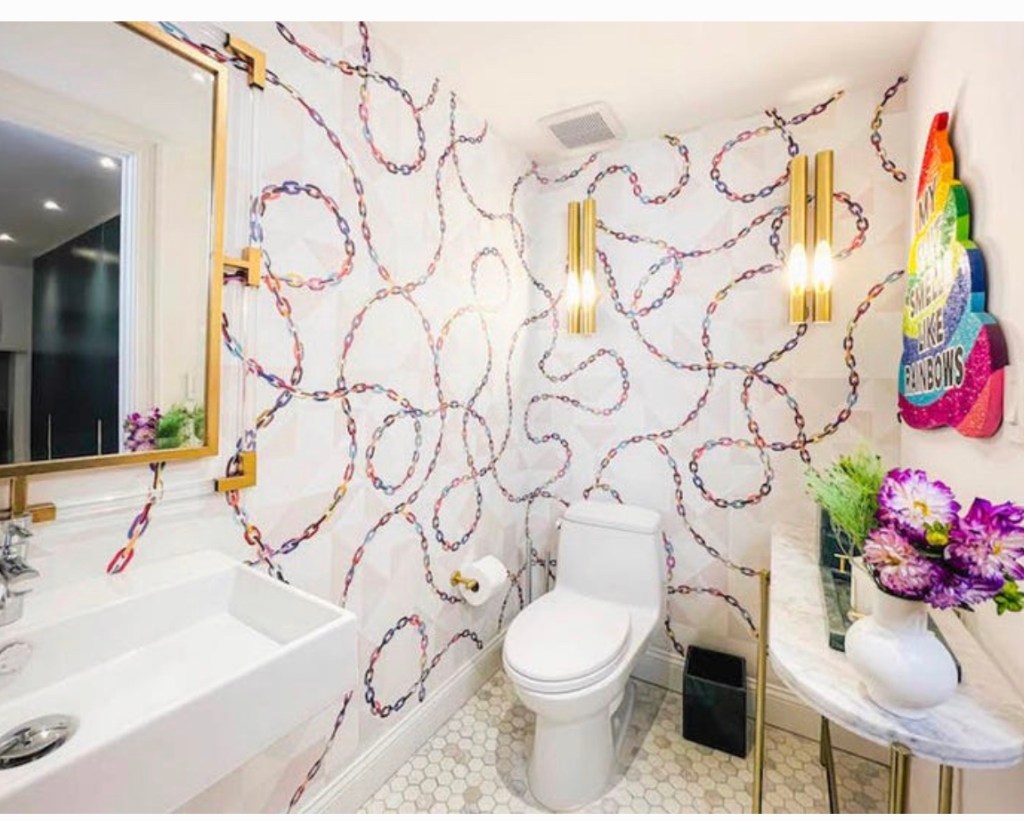
Artist Elizabeth Sutton Redefines “Sutton Place” With A Whimsical Townhouse Renovation

By Amanda Lauren

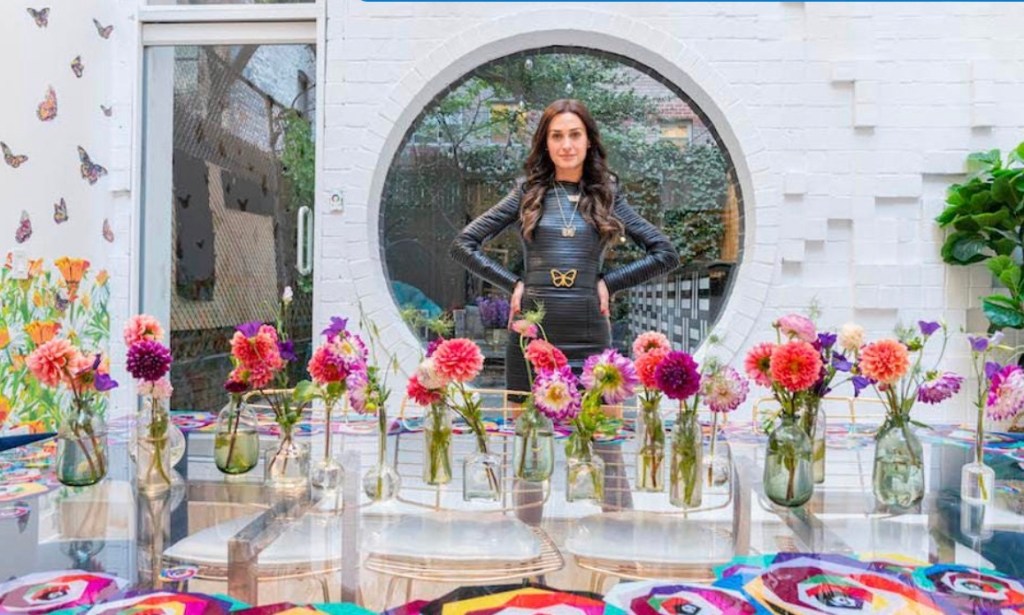
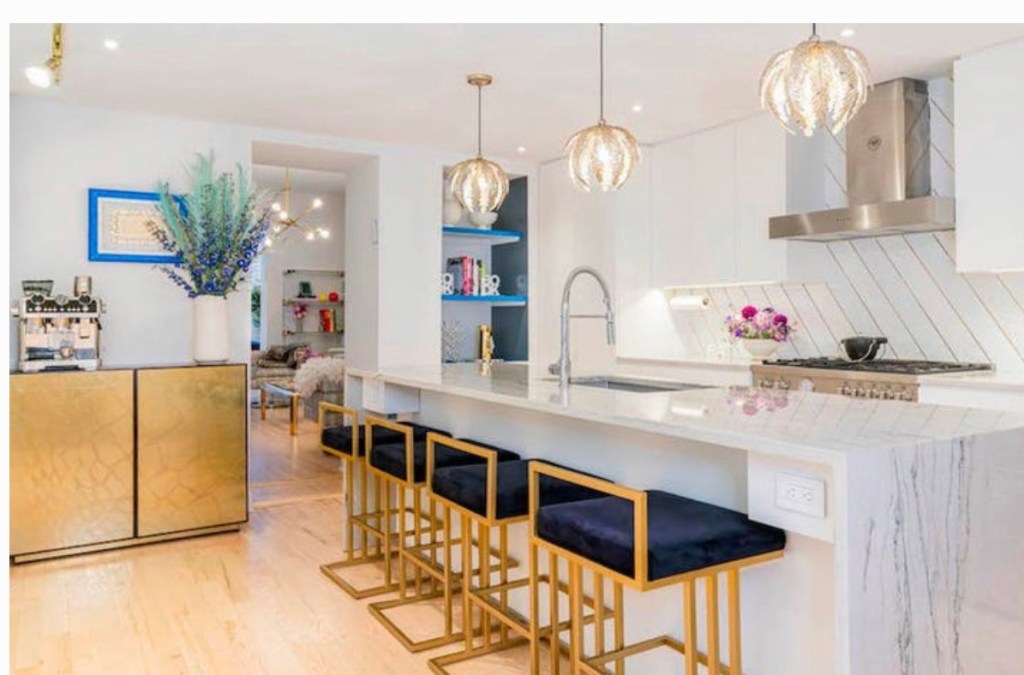
There’s nothing like a classic pre-war New York City townhouse, especially in the charming neighborhood of Sutton Place. These properties aren’t easy to come by, particularly for renters. Another challenge of these spaces is making them your own. No one knows this better than artist Elizabeth Sutton. The native New Yorker recently moved to a 6950 square foot townhouse with five bedrooms, three and a half bathrooms, and a beautiful backyard.

This isn’t just a home for Sutton and her two children, it’s also her studio and headquarters for her thriving business. The mom-turned-artist turned entrepreneur has licensed her designs to Tilebar, the Raynor Group, and Sur La Mur, among others on unique lines of tiles, office chairs, wallpaper, and more.

Sutton saw this townhouse not only as an opportunity to create a wonderland-inspired space to reflect her brand and showcase her various collaborations, but also to be her personal dream house to live, work, and create. I recently spoke with Sutton about the process.

Amanda Lauren: How did you find this incredible townhome?

Elizabeth Sutton: I found the townhouse on Streeteasy. I moved to Miami during Covid and missed home. I was stalking the market every single night. I decided I was going to combine my budgets for my personal apartment and studio and see if anything interesting popped up.

I saw the square footage and that it was an empty white box with a basement for storage. My brain saw a 6000 square foot blank canvas, with an opportunity for my creativity to run wild, to create a perfect showcase for my various home collections.

I sent my broker, Stefani Berkin, to check it out so she could send me videos and assess the space for herself. I signed the lease site unseen. It was definitely a gamble, but I felt it in my gut and knew it was the right choice.

Lauren: What are your favorite features of the home?

Sutton: One of my bucket list career goals is to design a boutique hotel with each room having a different theme. I saw this townhouse as an opportunity to show industry leaders within the development, architecture, and interior design spheres what Elizabeth Sutton, as a creative, can produce.

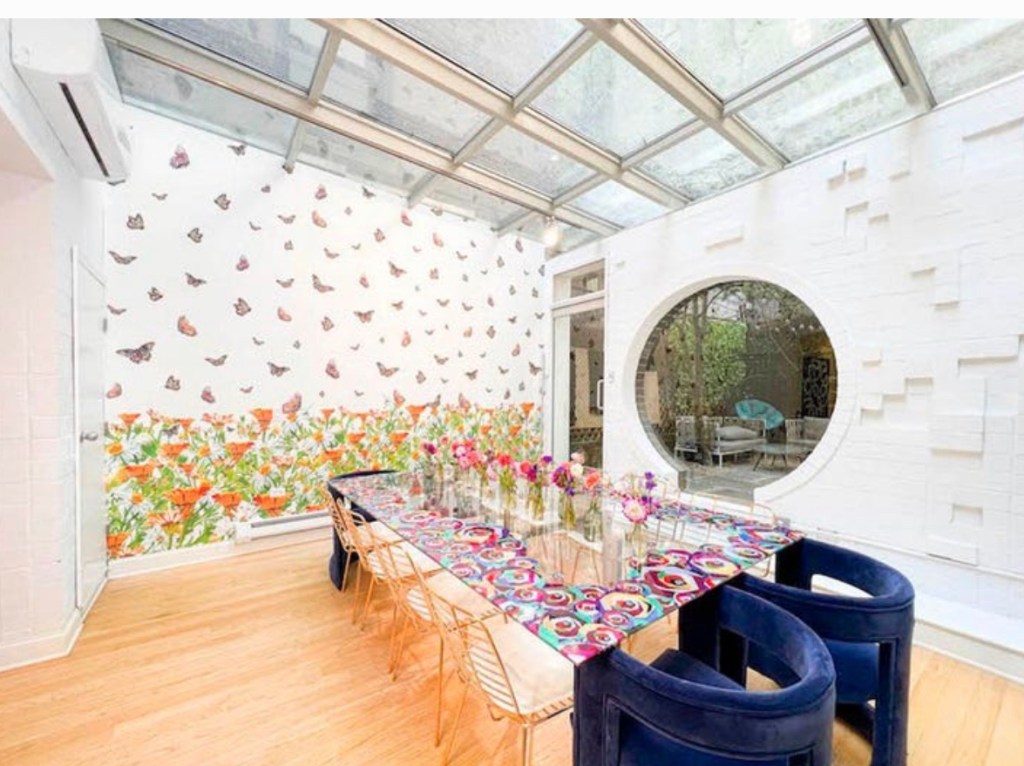
The large kitchen, sunlit dining room, huge circular window leading to the backyard, and tall ceiling heights on the first two floors felt ideal and optimal for hosting and entertainment purposes, something that I love to do both personally and need to do more of professionally.

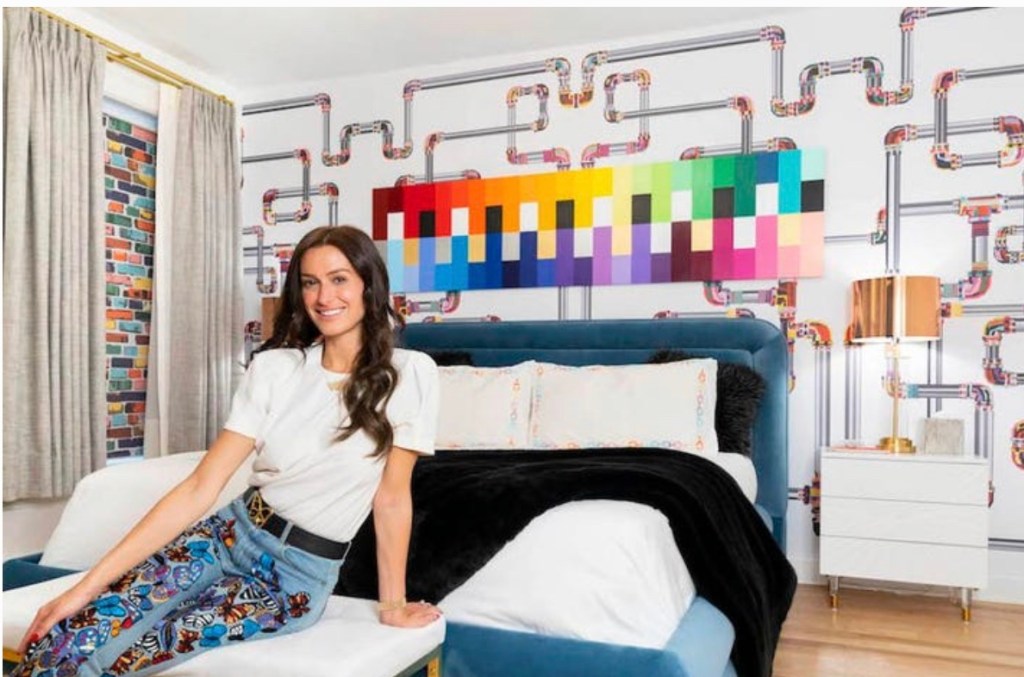
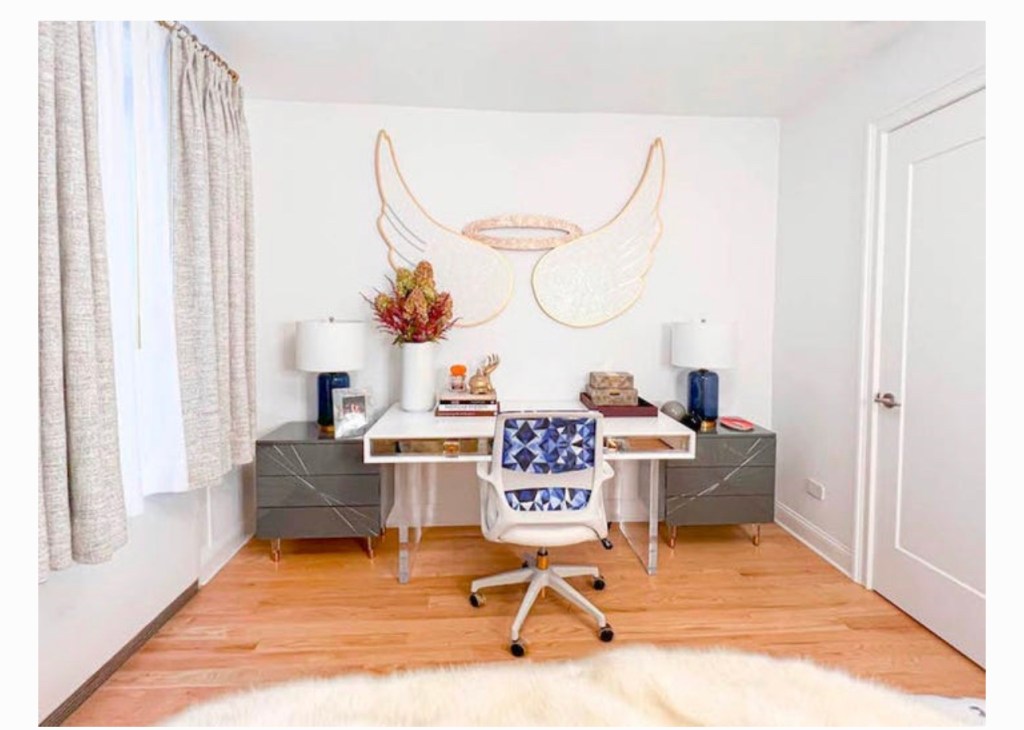
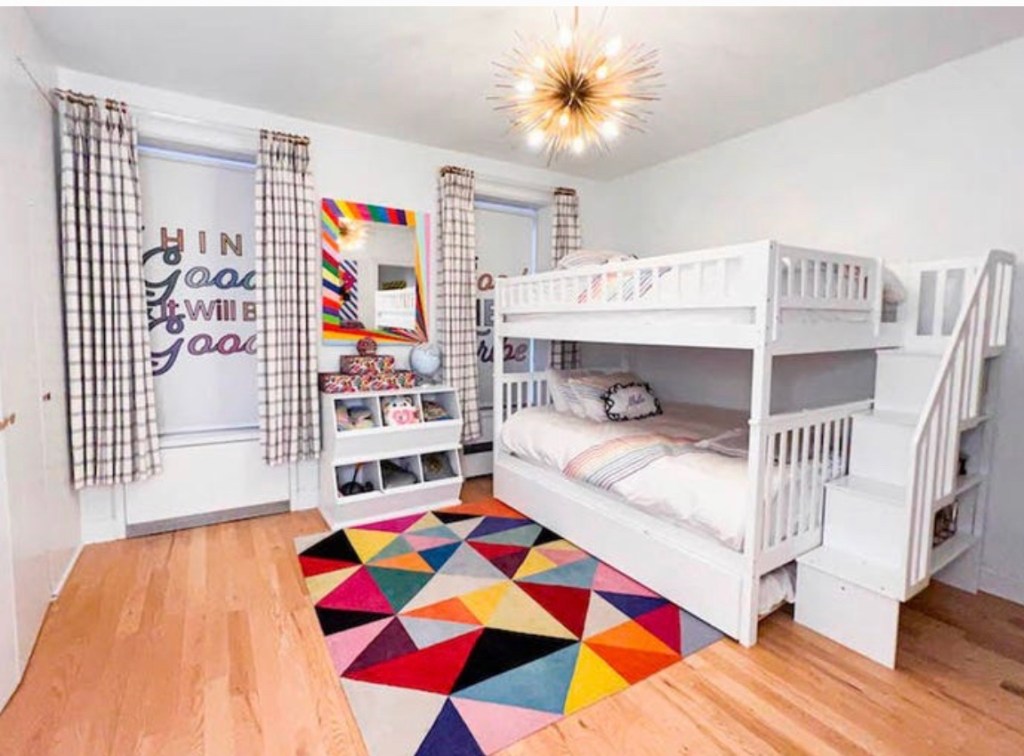
My work floor, home studio and home office have some of the boldest designs I’ve ever created including positive mantras on custom roller shades, and a 60 inch magnificent brass lighting fixture that I custom designed and painted. The pipe wallpaper in my master bedroom is truly genius. This house has unique and amazing energy.

Lauren: Why did you decide to combine your home, studio and office spaces?

Sutton: I have been working from home for the past two years and moved to Miami after Covid hit. I am a single mother of two kids and run a very robust, dynamic, and demanding business. The commute from my apartment to my studio, there and back, used to take over an hour and a half out of my day. Living and working in the same space is more efficient for my schedule.

There are some drawbacks, in that I can never separate my work from my life, but my family and I get to benefit from the extra square footage that my business’ budget had for the studio. Living in a box in New York is much harder when you have experienced lots of space.

Lauren: What was the townhouse like when you moved in?

Sutton: Honestly, it wasn’t in the best condition. It was brand new in the sense it had just been completely renovated, but it was still towards the end of its construction phase with no built-out closets, a completely unfinished backyard, and really old carpentry.

Lauren: What changes did you make to the space?

Sutton: I changed everything. I removed all existing light fixtures and hardware, built out a bar in the backyard, and covered the tile and every single wall with wallpaper or fine art.

I added gorgeous track lighting, custom-made light fixtures, and decorative accents, including glittered picture frames. We accessorized with magnificent pillows, custom linens and towels that I designed with Mehlrose NY.

There are amazing artistic pieces of glasswork in collaboration with Galaxy Glass and Stone, including custom mirrors, a stunning custom glass tabletop, and a completely unique shower glass door.

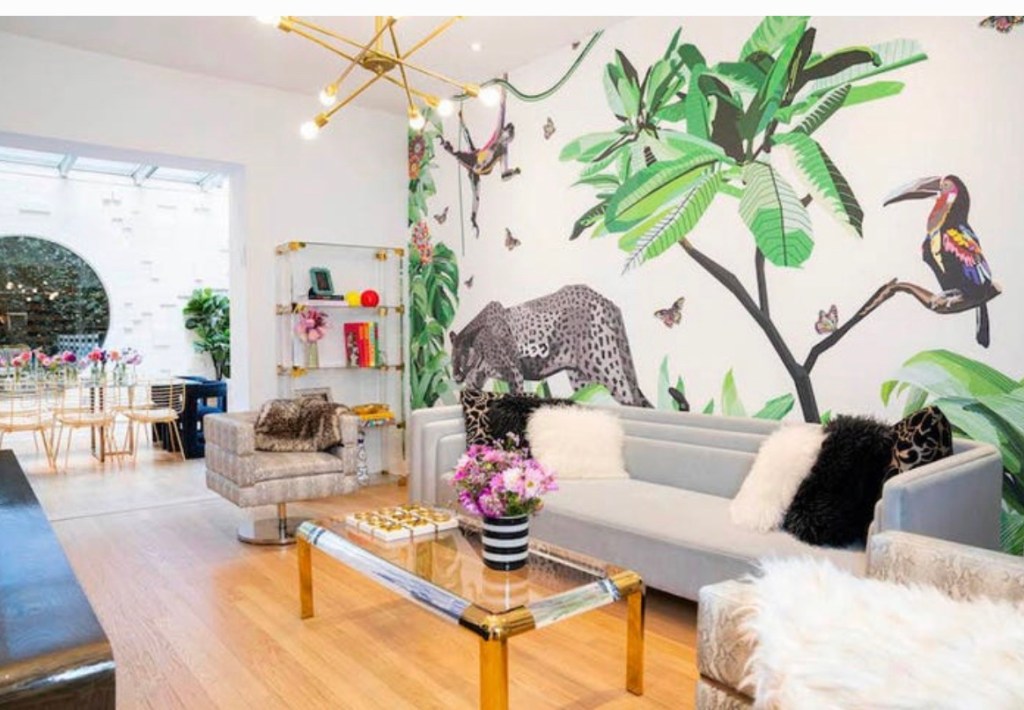
The home has a highly curated ambiance from the moment you enter the front door as from the color story, to the pattern, purpose, and energy. You walk past seven grayscale butterfly artworks, into my jungle-themed living room, through my ‘Secret Garden’ dining room, and finally, you get to the whimsical backyard. Plus, we added amazing sound for ambiance, with Gadget AV solutions.

In collaboration with LeNoble Lumber, my favorite construction supplier, my team and I milled wood in the backyard to build out all the closets and the backyard space. We created the ultimate mood, calling it our enchanted garden with LED rainbow and string lights, an innovative bar featuring my Arc tile collection, an egg chair from Lighting World Decor, and a glass bar top featuring my favorite John Lennon quote. We worked with Edge Landscape to outfit the yard with bluestone and ivy to complete the space.

We designed every room using luxury decor from my wallpaper collection with Sur La Mur, to custom fixtures from NSA lighting, as well as magnificent furniture from Modshop, gorgeous decorative accents from Mehlrose NY, and award-winning tile collections with Tilebar. We also created custom statement window shades for every room with NV Window Treatments.

We added a feature wall next to my studio to showcase all my products including clutches, belts, backpacks, and puzzles, so that clients and buyers visiting the space can see everything properly showcased.

Lauren: It seems everything takes much longer than anticipated these days due to supply chain issues. How long did the renovation take you and your team?

Sutton: The whole thing would have taken most people a year. It took us four months. We pulled off a miracle.

Lauren: Do you have any additional plans for the space?

Sutton: We are still waiting for a few finishing touches. I regularly rotate out the artwork. So that will always change within the space. I am also newly addicted to floral arrangements from Fleur La Table which I change weekly because fresh flowers bring all design elements to life.

Lauren: Most landlords will not allow this level of renovation. How did you manage to negotiate this into your lease?

Sutton: My broker was the liaison between myself and the landlord throughout the negotiations. I signed quickly without seeing the space in person because I was told there was another offer. I made it clear to my broker what my intentions were, but didn’t have a formal conversation with the landlord about the plans until after I signed.

They didn’t have a problem with me putting up wallpaper. Their biggest concern was that I bring everything back to its original state, but I’ve added tons of value. The bones of the building are really special, but it definitely needed work. It is always helpful when you have a great landlord.

Lauren: Do you have any tips for truly transforming a home that isn’t necessarily your style and making it your own?

Sutton: It depends on what about the home specifically doesn’t align with your style. Is it the tile, flooring, bathrooms, moldings, paint colors, lighting, or something else?

My advice is, don’t do what I did and rush the process. I needed to get it together quickly for work purposes. If you own the home, enhance it one room at a time. First, focus on the bones, and starting with the rooms you spend the most time in. A fresh coat of paint can go a long way. Lighting is very important as a base, as it has the ability to truly make a space feel way larger. Flooring and tiles come next. Only then would I focus my dollars on fixtures, furniture and equipment.

If you are renting, I would do the opposite. Focus your dollars and the things you can remove once you leave such as furniture, art, peel-and-stick wallpaper, throw pillows, blankets, and other decorative items.

Lauren: Do you have any tips to share about creating spaces with a lot of color tastefully?

Sutton: I love working with neutral furniture and adding color everywhere else, but balance is essential. The colors need to be complimentary. If you have very colorful art, wallpaper, and decorative accents, keep the furniture neutral. If you have colorful furniture, I’d keep the art and wallpaper neutral. Emerald pairs beautifully with lavenders and sorbets. Brights always balance well with pure black and white. I love pastels mixed with greyscale, and jewel tones mixed with beiges and siennas.

Amanda Lauren

I am a writer, design expert, host of the podcast Bougie Adjacent, and comedic performer. I also created an online course that teaches small business how to pitch writers called Pitch Please. Originally from the Upper East Side of Manhattan, I currently live in the Hancock Park neighborhood of Los Angeles, but spend summers in The Hamptons. I am absolutely fascinated by all aspects of décor and design. It once took me six months to choose a soap dispenser and I can’t even remember what it looked like. I like bright prints, southern exposure and any location you can call a “village or town.” There are currently over 100 episodes of House Hunters on my DVR.

Join Fountainhead Arts

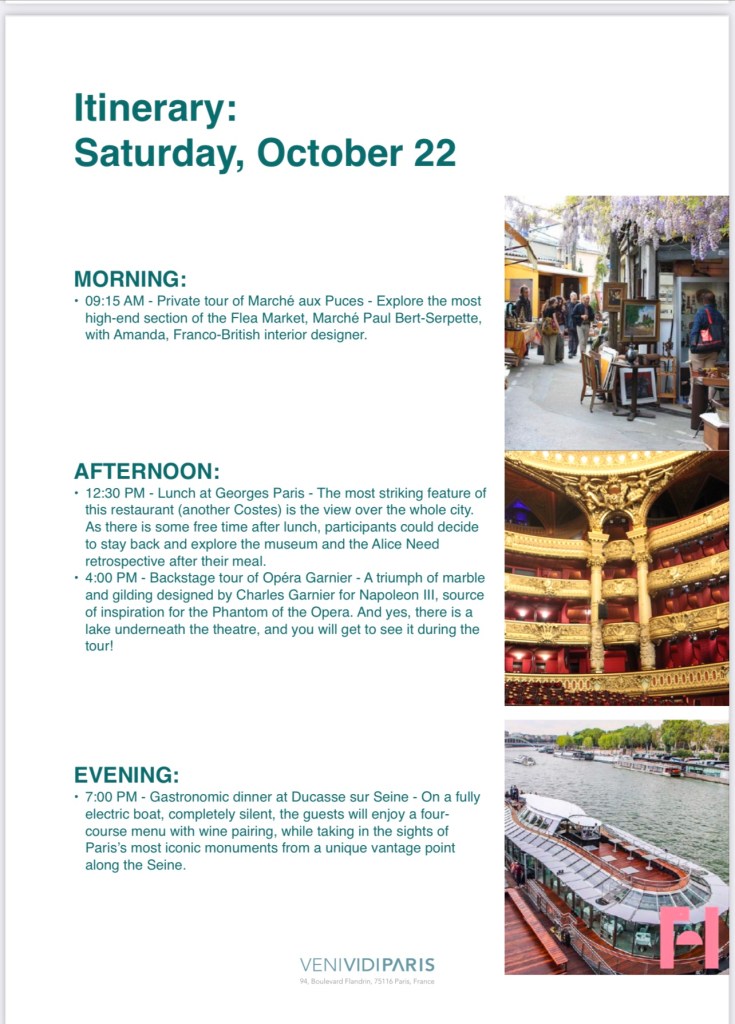
The gastronomic dinner at Ducasse sur Seine on a full electric boat, completely silent. We enjoyed a four-course menu with wine pairing, while taking in the sights of Paris’s most iconic monuments from a unique vantage point along the Seine.
Nicole Blackburn of Ocean Reef glammed it up for our last Fountainhead dinner in Paris together. Photo by Eliot Hess
Eliot captured the Parisian appeal
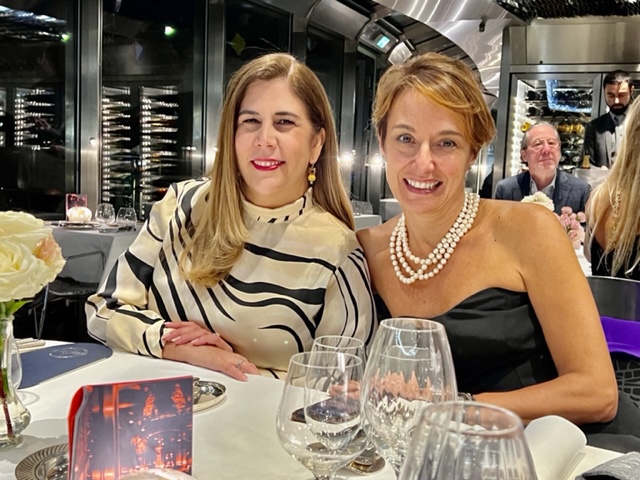
Teresa Enriquez, Executive Chief Assistant Public Defender of Recruitment and Litigation, Miami-Dade Public Defender’s Office and
Sarah Bartesaghi Truong | Founder, Venividi, Paris
. Photo by Eliot Hess.
Not easy getting all of us together. Two still missing

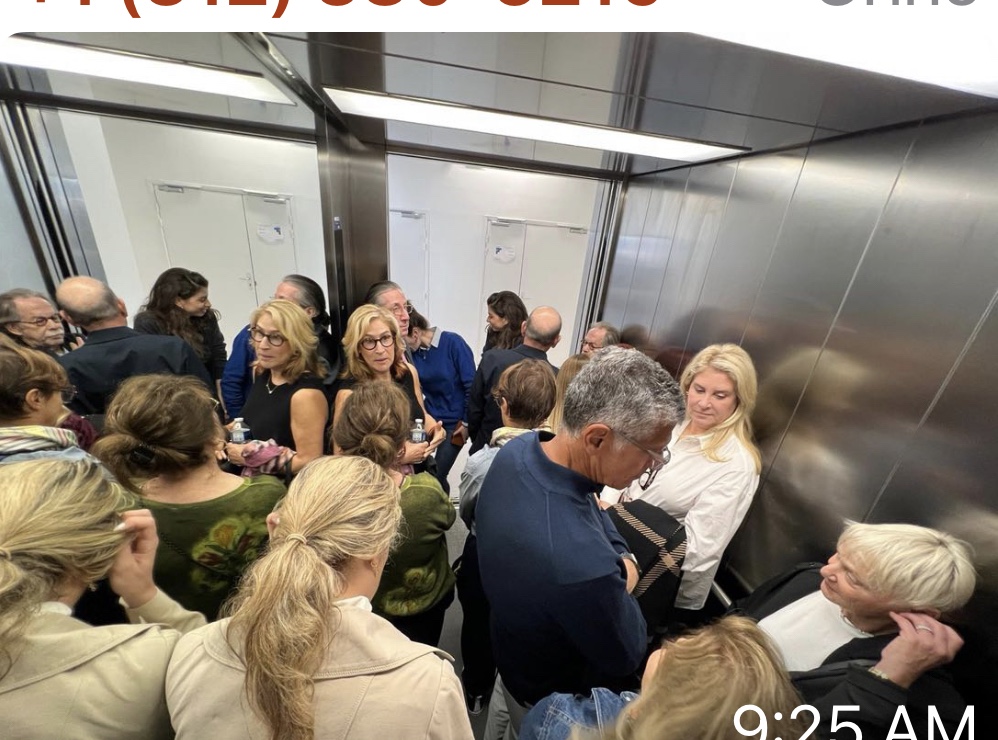
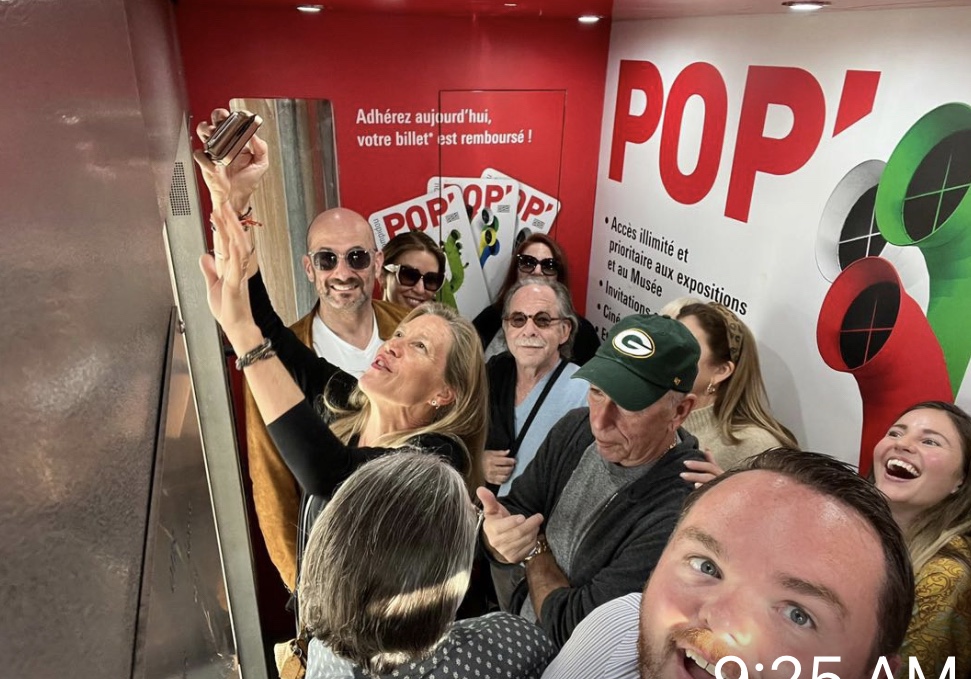
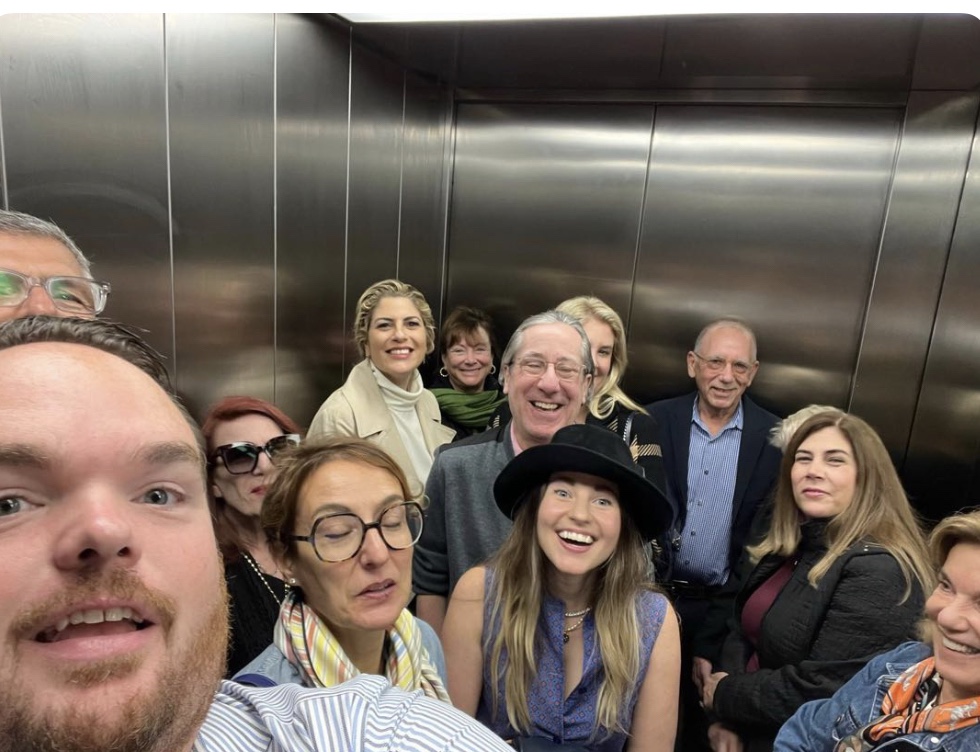
Elevator photos
Elevator Photos
Elevator Photos
Elevator Photos
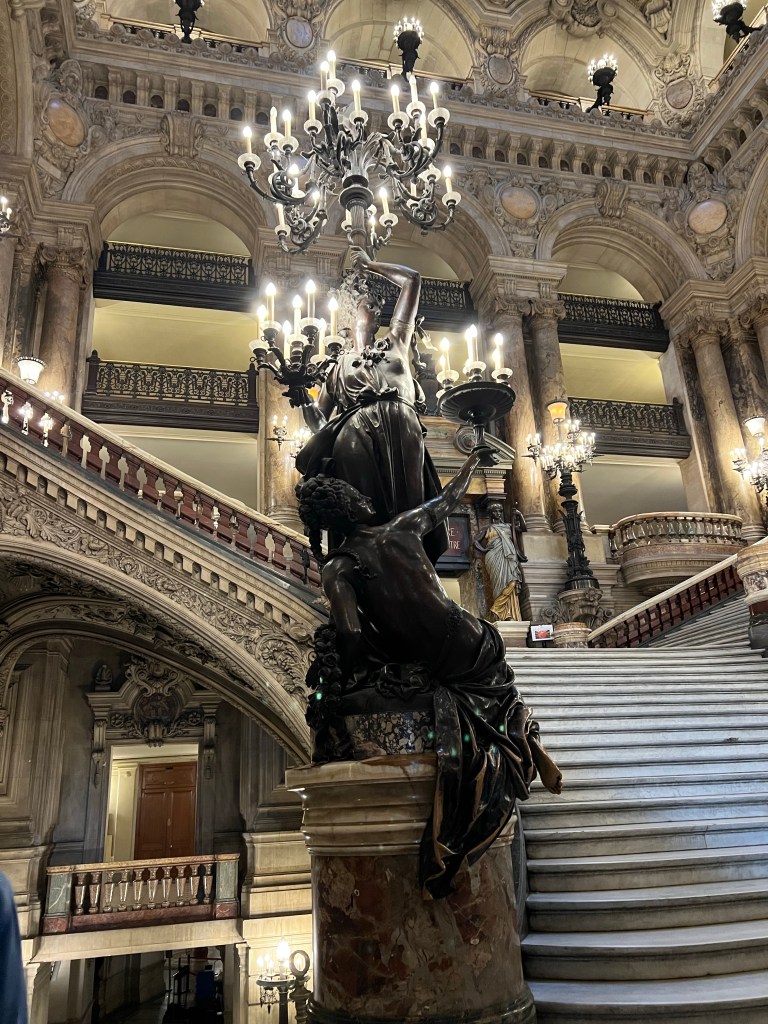
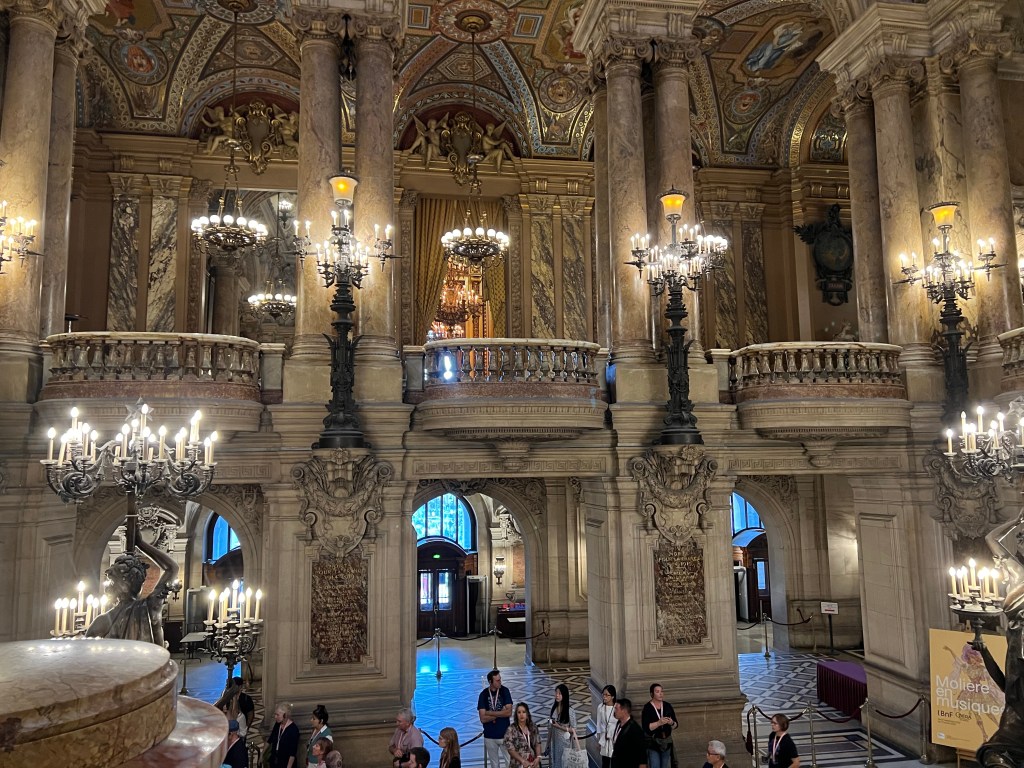
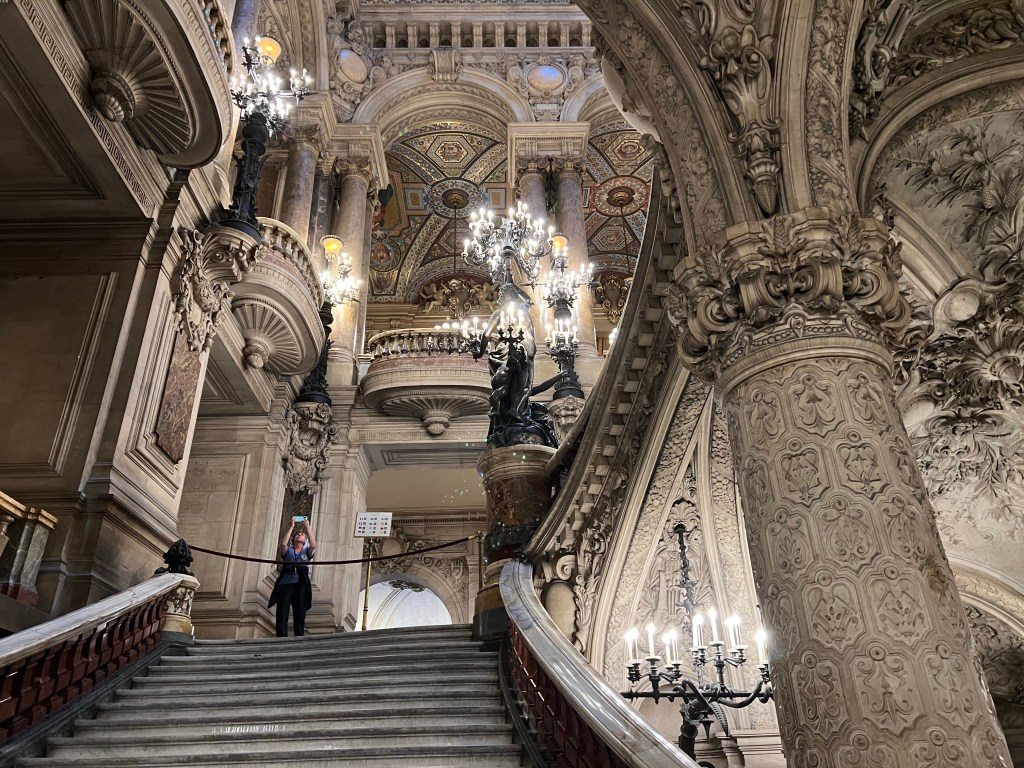
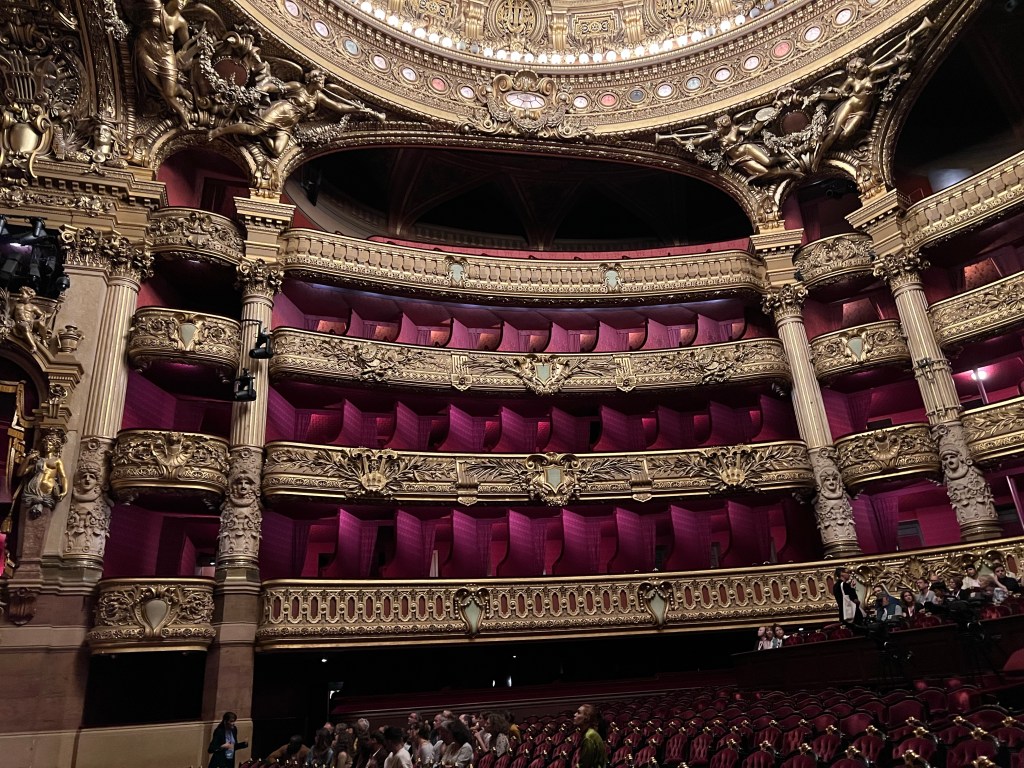
The bottom of the opera house which sits on the Seine. We took a peek at the river.
Lulama Wolf, Johannesburg, South Africa
The Breeder Gallery, Athens, Greece

“More Of That—More Of Less”
Acrylic and sand on canvas
New To The Hess Collection
Photo By Teresa Enriques

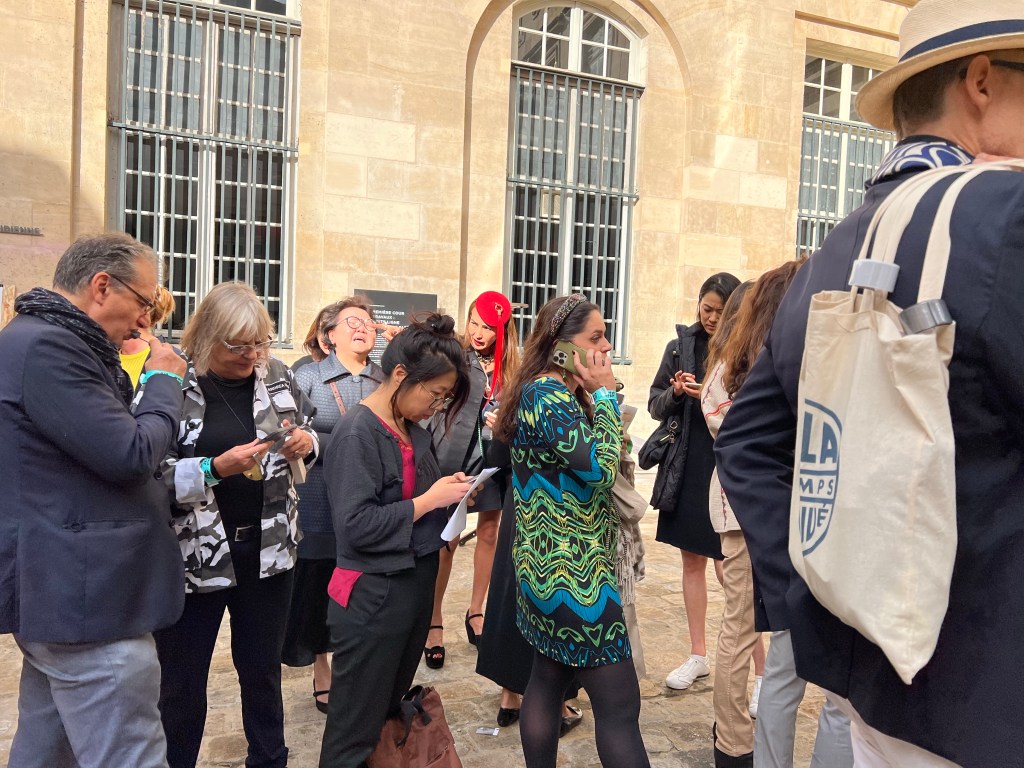
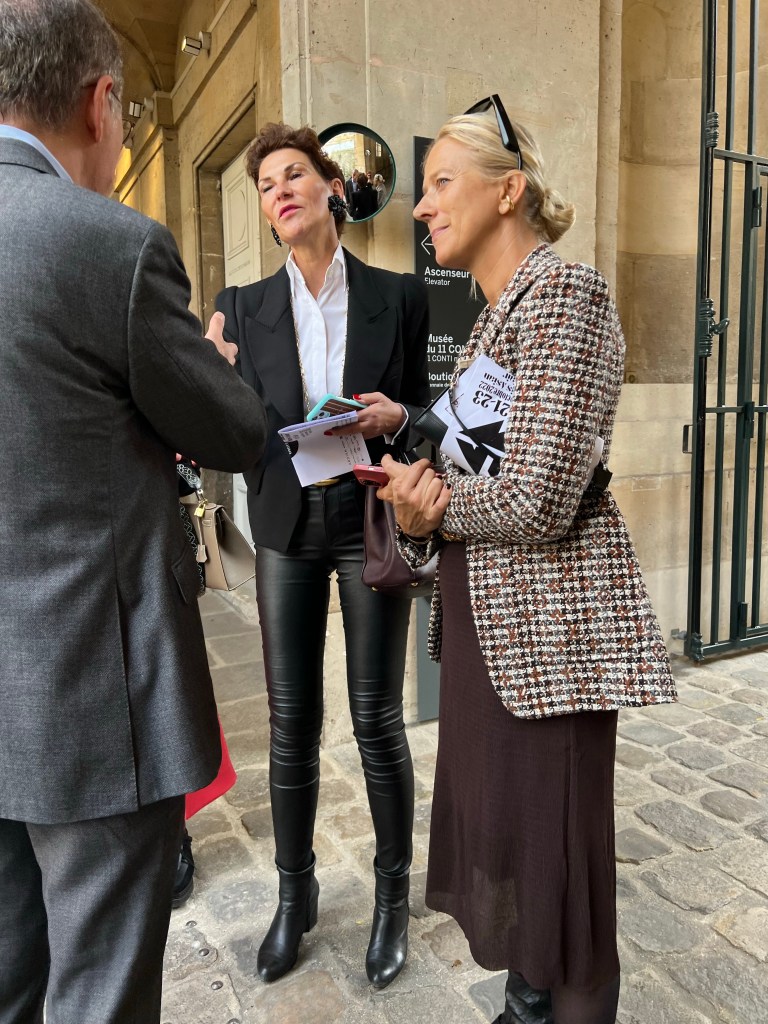
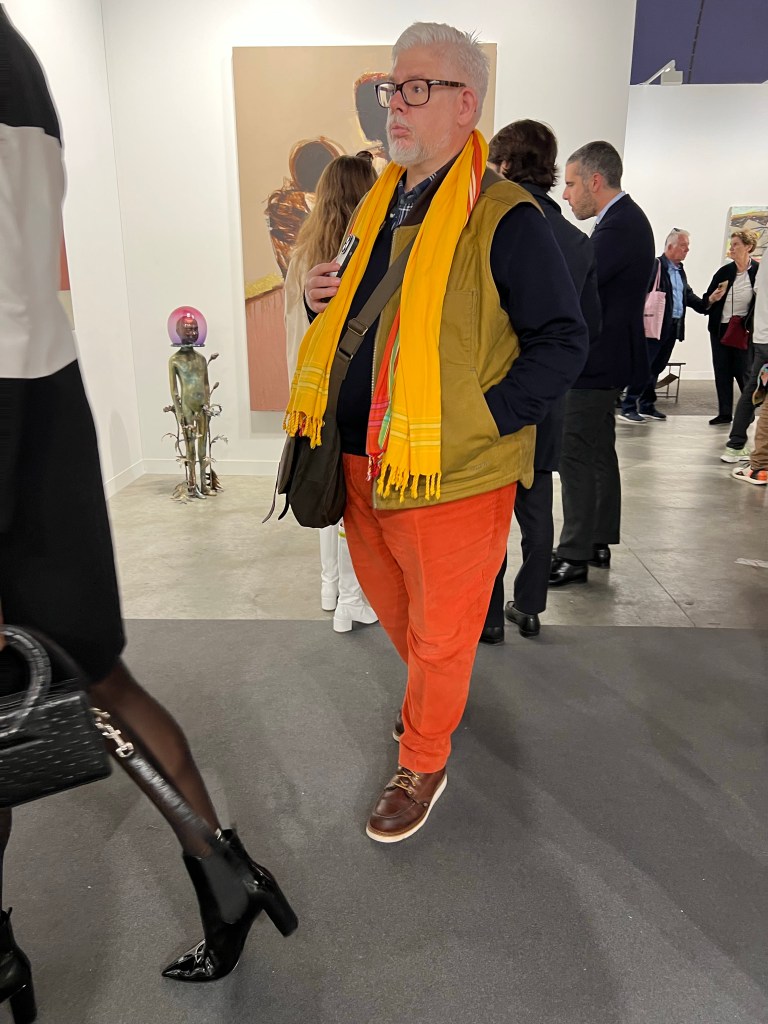
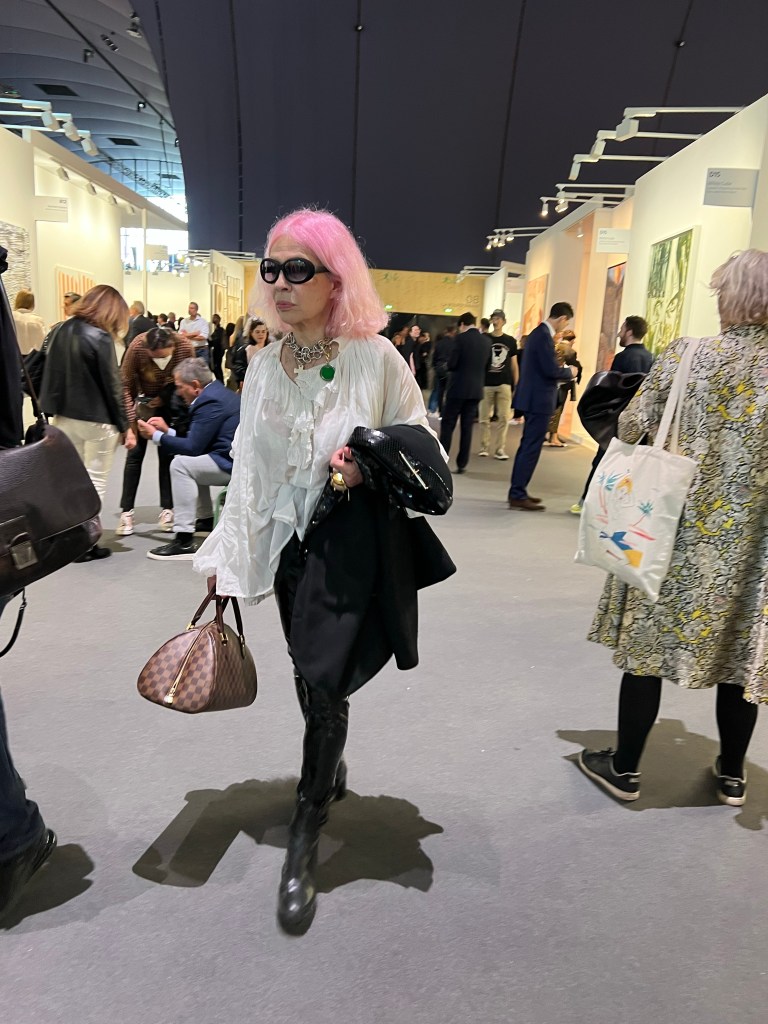
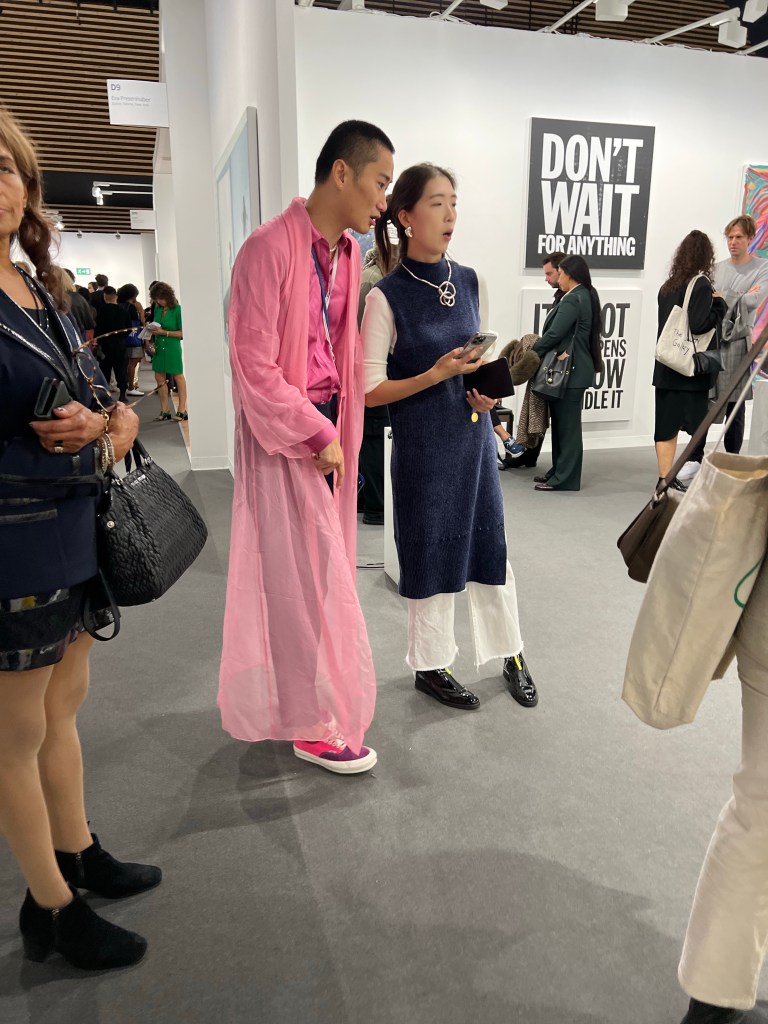
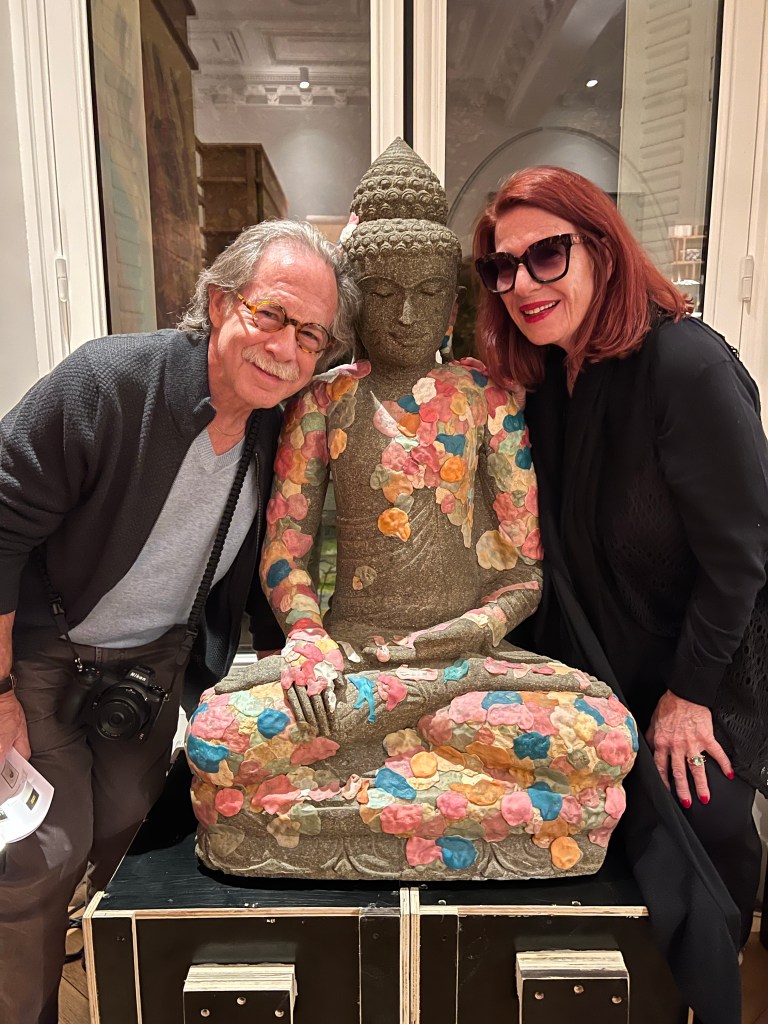
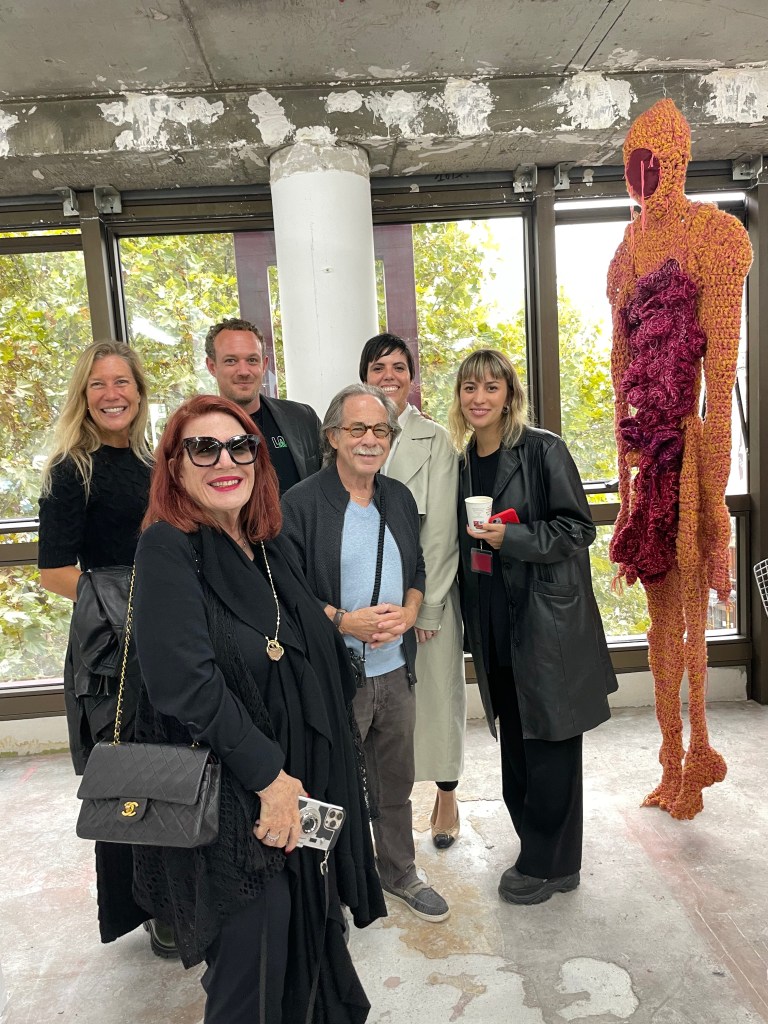
Our Week At Art Basel Paris

This photo will go down in history. Amani Lewis, (hugging Eliot) one of the most popular artists in recent years, and a Fountainhead Arts alumni, joined us with her assistants, for lunch. Her Art Basel Paris pieces and her solo show at LGDR Paris sold out before the exhibits opened. Several folks in the crowd are her collectors. What an exhilarating experience to be a part of.

The whole gang at Cafe Stern.
The lineup of restaurants this week:
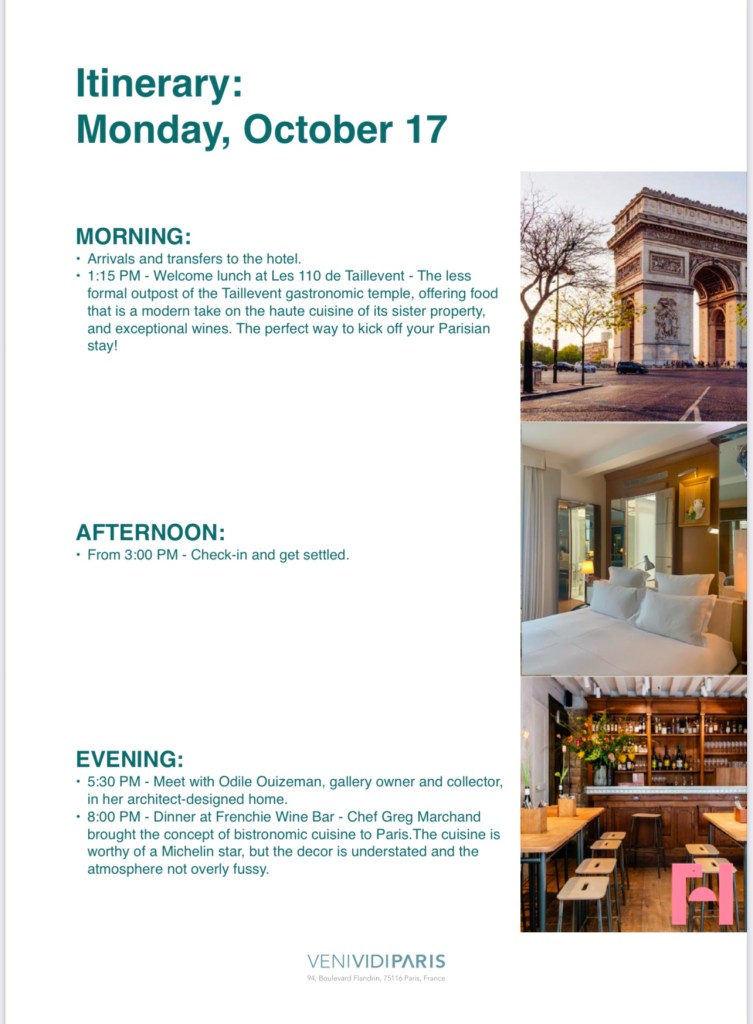
Les 110 de Taillevent
Frenchie Wine Bar
Tawlet Paris
Elmer
Lilly Wang
Asia Now Champagne Dim Sum
Maison Rabih Kayrouz
Coco Paris
Georges Paris
Ducasse Sur Seine

Say hello to a new member of our family. Artist: Yornel Martinez

The Wynnie Mynerva (@wynniemynerva and Ginsberg Galeria of Lima and Madrid fan club at the Paris Internationale fair.

I Wonder Who Is Going To Buy This And Why?

If art collectors buy paintings for millions of dollars, why wouldn’t someone see the value of owning a piece of art history? The following story appeared in Artnet News. —-LWH


Art History

Marc Chagall’s Catskills Studio, Where He Painted More Than 100 Works, Just Went Up for Sale for $240,000

Vittoria Benzine,

The two-bedroom, 840-square-foot property has been lovingly preserved.

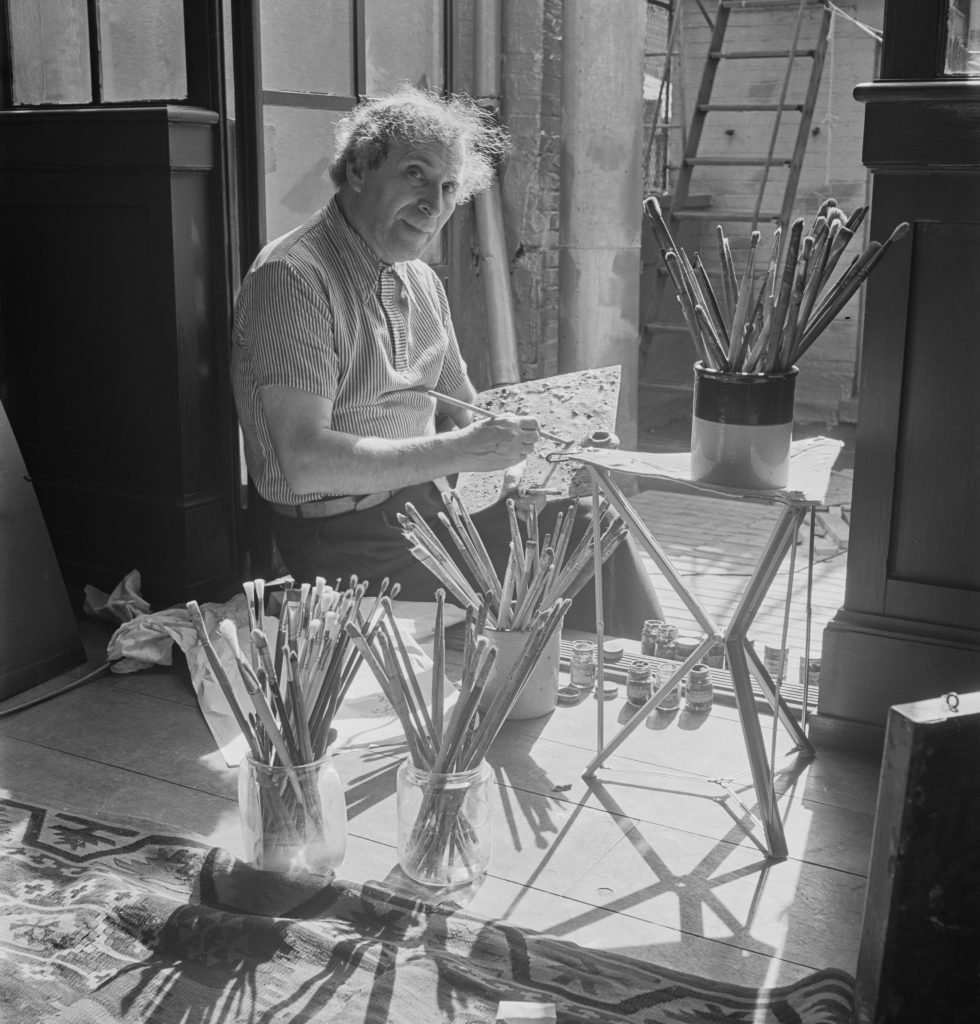
Artist Marc Chagall in his studio, circa 1942. (Photo by Pix/Michael Ochs Archives/Getty Images)

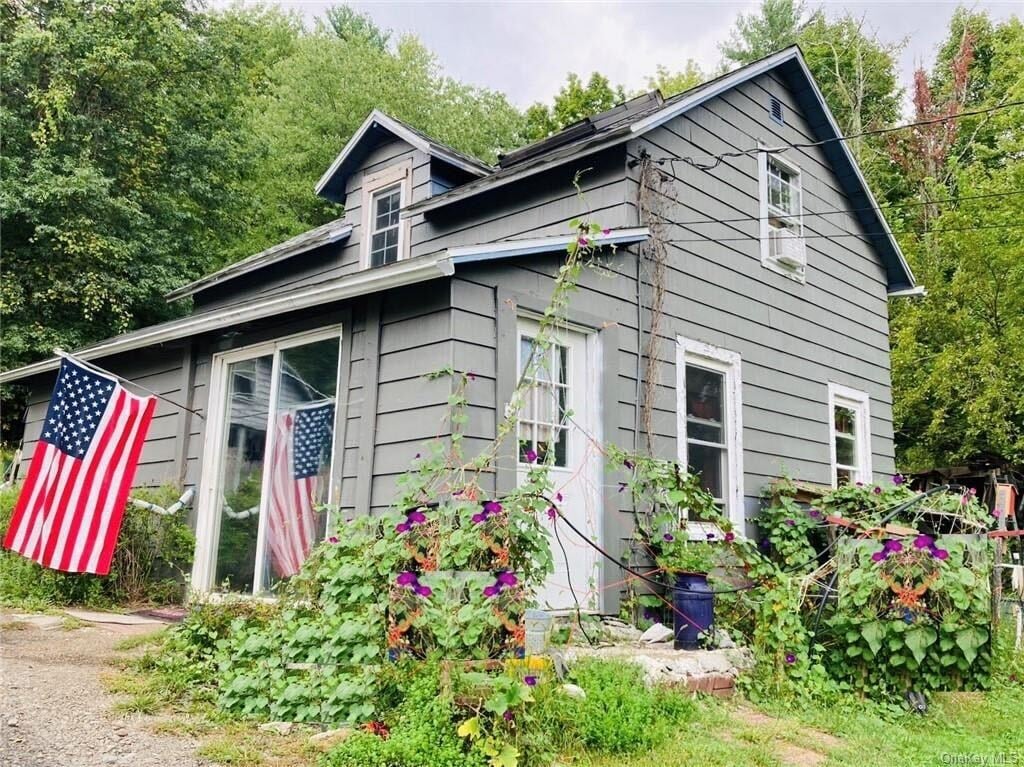
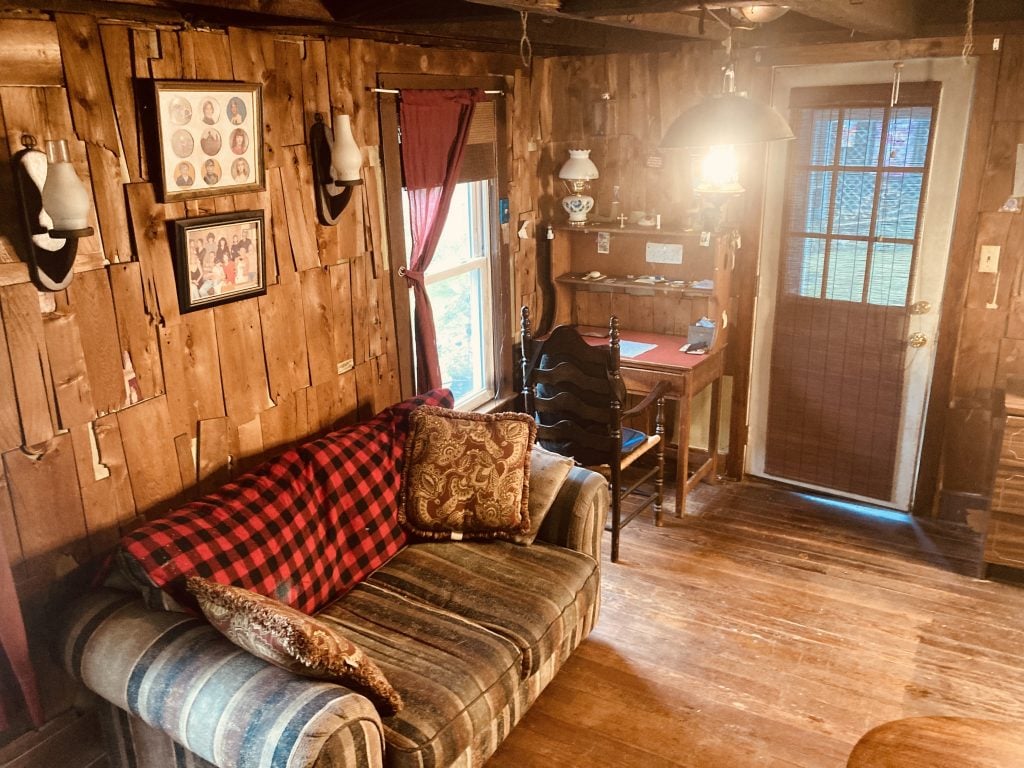
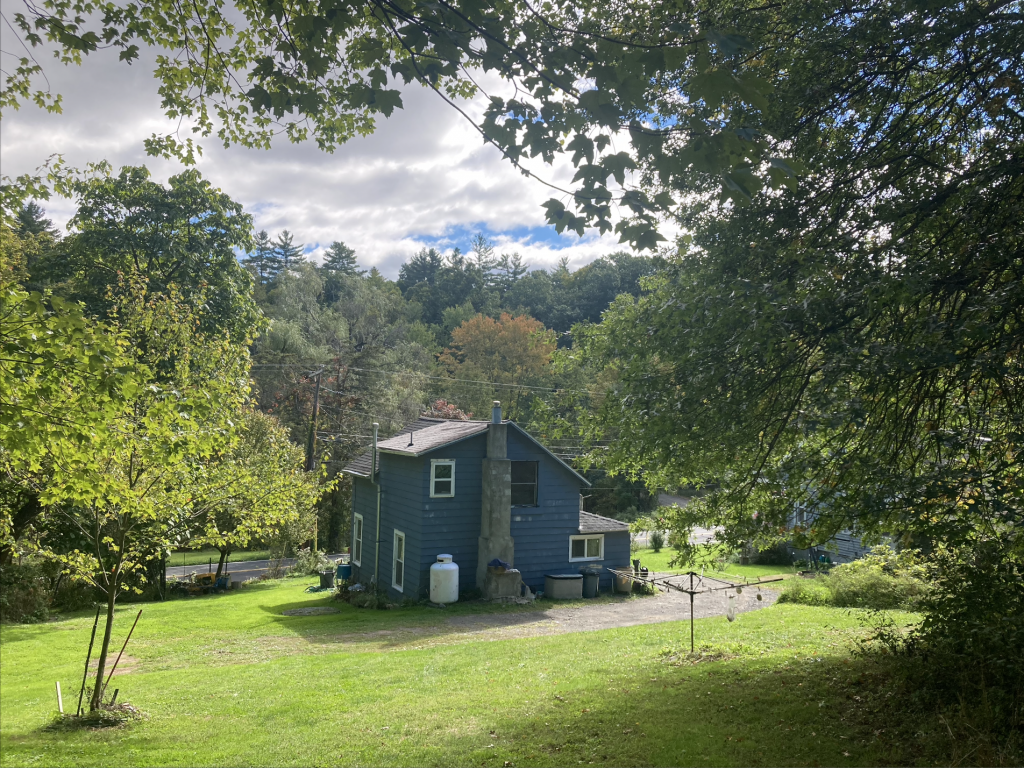
The cottage in New York’s Catskills Mountains that served as Marc Chagall’s studio from April 1946 to August 1948 has just hit the market. Located at 420 Mohonk Road in High Falls, the real estate firm Berkshire Hathaway is asking $240,000 for the two-bedroom, 840-square-foot property, which features a tiled mudroom, original wood floors, and a spacious skylight in the main bedroom.
Chagall was born in 1887 to a Jewish family living near the city of Vitebsk—then part of the Russian Empire, now modern-day Belarus. He moved to Paris in 1910, but returned home just before the start of World War I to marry his sweetheart, Bella Rosenfield, who gave birth to their daughter Ida in 1915. In September 1923, the family fled the increasingly strict Soviet Union for Paris.
By May 1940, antisemitism was rife throughout Vichy France and so the Chagalls, with help from Emergency Rescue Committee, fled to the U.S. in 1941, eventually settling in New York City.

Bella died from an infection in 1944 and Chagall soon fell into a malaise that could only be cured by his new housekeeper, Virginia Haggard McNeil. Twenty-eight years his junior, McNeil left her husband and began to model for Chagall.

Exterior of Chagall's studio at 420 Mohonk Road. All photos courtesy of Berkshire Hathaway.

Exterior of Chagall’s studio at 420 Mohonk Road. All photos courtesy of Berkshire Hathaway.

McNeil headed upstate alone after she became pregnant with Chagall’s child. “Marc was terribly upset by this inescapable evidence of our new love,” McNeil wrote later. When the artist suggested she look for a home for them in the area, McNeil came across an expansive plot with two buildings, including the cottage that reminded Chagall of the isbas or traditional dwellings found in Vitebsk.

Works produced during this prolific period in Chagall’s career show a preference for a more simplified style than seen in his earlier artwork. The property’s surrounding gardens inspired The Redhead, Green Dream, Arum Lilies, and Bouquet with Flying Lovers—all painted here, alongside Self Portrait with Wall Clock and Flayed Ox.

Inside Chagall’s former studio. Courtesy of Berkshire Hathaway.

In total, Chagall created 100 paintings, lithographs, and sketches at High Falls.

His time in High Falls, however, wasn’t all idyll. Real estate agent Ellie Perez told the New York Post that the F.B.I. regularly dropped in to search the premises. In 1948, the U.S. government denied Chagall’s visa due to his leftist politics. The family moved back to France, and had sold the property by 1952. McNeil left Chagall for a Belgian photographer that same year.

“The new owner divided the house and art studio parcels, and sold them separately,” Rik Rydant told the Poughkeepsie Journal. In 2011, he co-curated a local show exploring Chagall’s time in the town.

Rear view of 420 Mohonk Road. Courtesy of Berkshire Hathaway.

The current occupant, Larry Lynch, has lived in the studio parcel since 1970—and has kept everything original.

“The listing has attracted all sorts of folks,” Perez told Artnet News. “We’ve had [interest from] artists and people from the historical society.”
Follow Artnet News on Facebook

Mighty Mel

By Lois Whitman Hess,
Miami Life Editor
Mel Schlesser

Believe it or not, Miami Beach has a Lincoln Center. It’s not as massive as the Lincoln Center in New York, but it certainly is an important building to the creative community in Miami Beach thanks to owner Mel Schlesser, who is also president of Jameck Development Inc. Lincoln Center is located at Lincoln Road and Euclid Avenue.

The real estate developer decided to bring back the artist community to Lincoln Road during the pandemic by providing them with affordable studio space to create their masterpieces at the Lincoln Center. It turned out to be one of the most popular creative spaces for artists because of its location and surrounding amenities. Art collectors often stop by to see new works and to converse with the artists. The art complex is called Peekaboo Studios.

Mel said he is very interested in making sure Lincoln Road makes every effort to keep its status as one of the most important areas for arts and entertainment. “There are other areas of Miami (Wynwood, Allapattah, Miami Design District) that have the same goals, but the beach is the beach. You can’t compete with that. Everyone wants to be in close proximity to the water. That’s why Lincoln Road has more potential than any where else.

“It’s true that Lincoln Road is going through a transformation now because of the pandemic, but so is every other area. I know the Lincoln Road Business Improvement committee has many exciting plans for the near future so I am very optimistic.”

Mel was one of the founding members of the committee years ago because he truly believed Lincoln Road is a city treasure. “I have been developing real estate properties in this town for four decades so I know a gem when I see it.  The combination of a long string of restaurants in an outdoor mall along with one retail establishment after another, is the right formula to draw traffic. People love to eat and shop all the time.”

Jayda Knight, artist and Peekaboo Studios Manager, Mel Schlesser and yours truly

It was at this moment in the interview that Mel revealed that he is going to turn the Lincoln Center building into an unique arts and entertainment hotel. “It’s truly going to be amazing. We are adding two more floors to the building and expanding out into the parking lot. We have been working on this for quite a while. All of the permits and legal documents have been taken care of.”

The new hotel is going to feature art galleries, art studios and public space. It’s going to be a major destination for everyone who loves culture and entertainment.  Mel is very excited about this expansion because he wants to give back to the community that he dearly loves.

In addition to that,  a 90 ft by 30 ft Keith Haring banner will be on display on the south side of the 1111 Lincoln Road from November 15 to the end of January. This is just in time for Art Basel. Called “Miss Liberty,” the banner was originally commissioned for the “City Kids” charity in New York.  It has been on display in Philadelphia, Europe, and New York City. Mel has been working on the details of this project for a while and knows this is going to be the talk of the town during Art Basel.

Another major attraction coming to Lincoln Road is a holiday market.  Urbanspace, the company that operates the biggest holiday markets in New York City, has picked Lincoln Road, Miami as their next location. As previously reported in The Three Tomatoes, the new holiday pop up shops will be open from November 15th to February 15th.

Urbanspace is hoping to have 100 local and out-of-state vendors participate in this first venture. That means all kinds of goodies will be sold including home goods, children’s toys and apparel, stationery, books and prints, men’s and women’s apparel and accessories, jewelry, kitchen and garden items and food and drinks.

Mel was one of the early real estate developers in Miami along with Tony Goldman, Craig Robbins,  and Saul Gross. These are the men who saw the potential of Miami Beach when Grandma and Grandpa were sitting on their rocking chairs in front of their rent control apartments.

As Mel puts it, “I was tired of the cold weather in New York. I could only use my sail boat a few months a year. My grandmother was living in Miami so I knew my way around. One day I was sitting on Ocean Drive looking at the ocean, the sand, and the sun  thinking “this is paradise. This is how I want to live. I have to get in on the action.”

The other real estate developers felt the same way. The one difference was that Mel had a major criminal law practice in Manhattan. Most of the time he was representing murderers, thieves, and con artists. He loved his work but he was intrigued by a new way of life under constant sun.

He took the leap and has never had a minute of regret.  He has built some of the grandest buildings in Miami Beach. Nothing can be more satisfying than walking past one of his projects knowing his vision built that place.

He’s not done yet. He hopes the new hotel will be his biggest and his best. “You can’t go wrong when you combine arts and entertainment. It’s a natural draw.