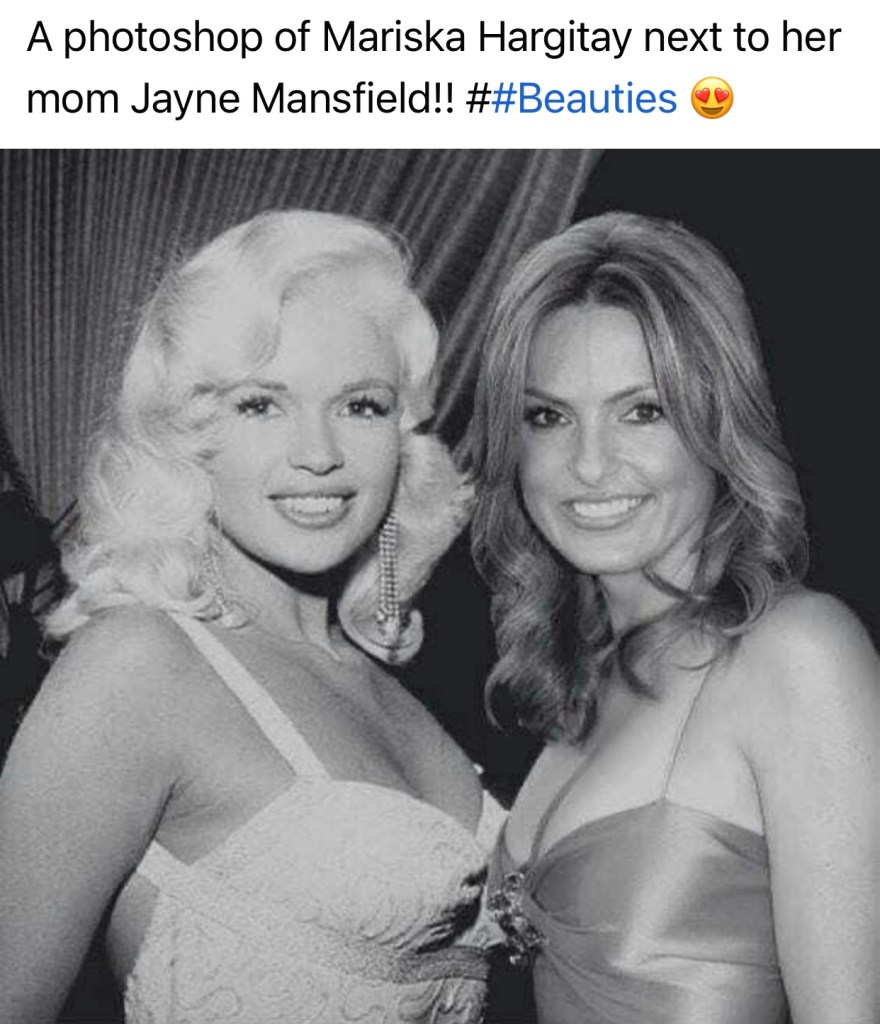
Thank you cousin Harvey Oshinsky. I laughed until I cried.
On his 70th birthday, a man was given a gift certificate from his wife.
The certificate was for consultation with an Indian medicine man living on a nearby reservation who was rumored to have a simple cure for erectile dysfunction.
The husband went to the reservation and saw the medicine man. The old Indian gave him a potion and, with a grip on his shoulder, warned “This is a powerful medicine.”
You take only a teaspoonful, and then say: ‘1-2-3.’ When you do, you will become more manly than you have ever been in your life, and you can perform for as long as you want.” The man thanked the old Indian, and as he walked away, he turned and asked “How do I stop the medicine from working?”
“Your partner must say ‘1-2-3-4,’ he responded, “but when she does, the medicine will not work again until the next full moon.”
He was very eager to see if it worked so he went home, showered, shaved, took a spoonful of the medicine, and then invited his wife to join him in the bedroom.
When she came in, he took off his clothes and said: “1-2 3!” Immediately, he was the manliest of men. His wife was excited and began throwing off her clothes, and asked: “What was the 1-2-3 for ?”
And that, boys and girls, is why we should never end our sentences with a preposition, because we could end up with a dangling participle.
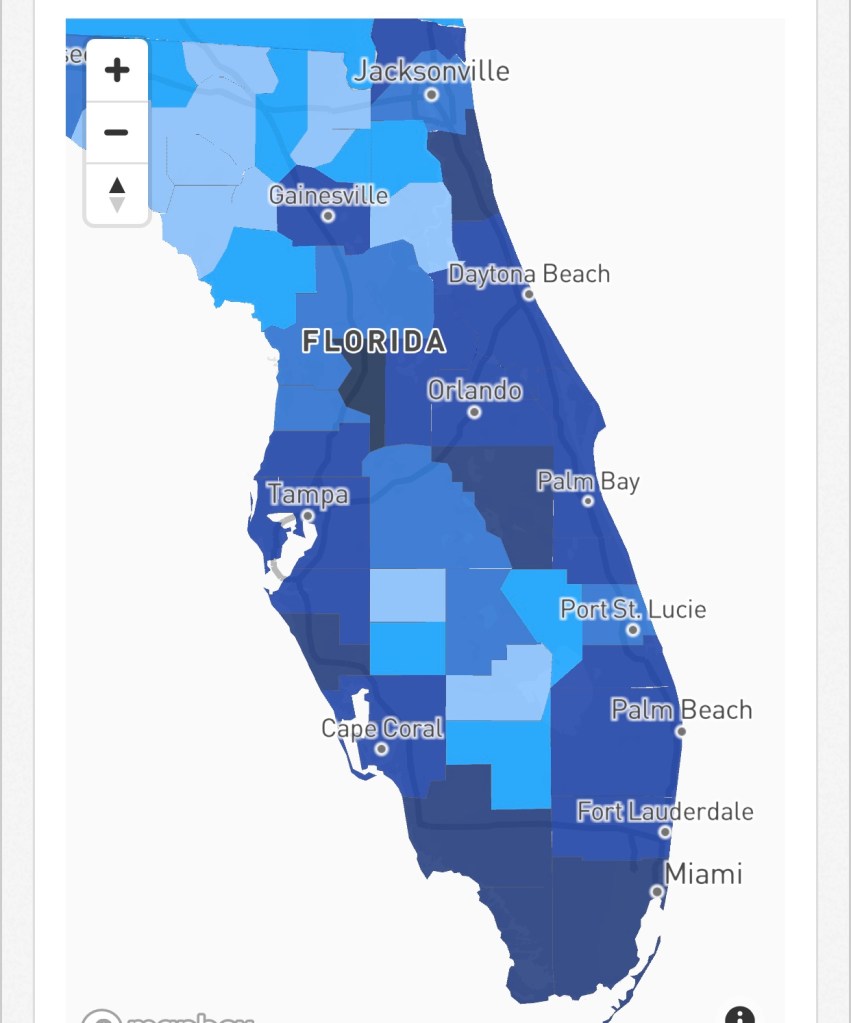
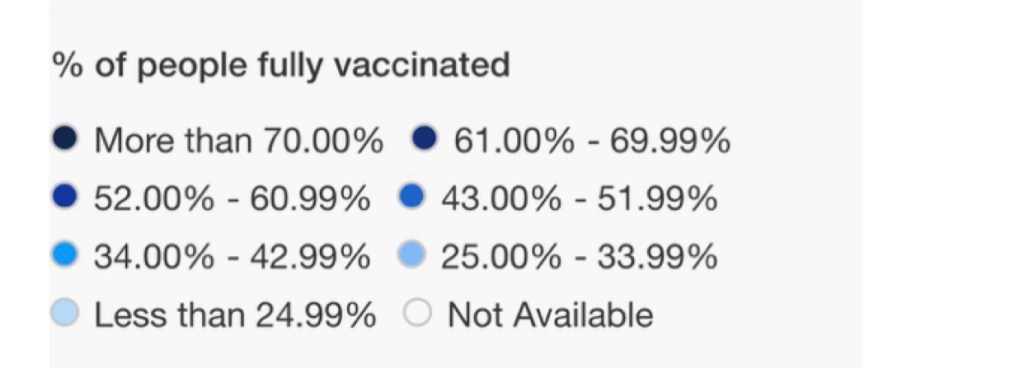
Become a resident in Florida. Floridians are getting smarter. We already have 70 per cent of Miami Dade and Broward residents vaccinated. Other counties are realizing that DeSantis is just like Trump, cruel. Nikki Fried can beat DeSantis. Let’s make it happen.
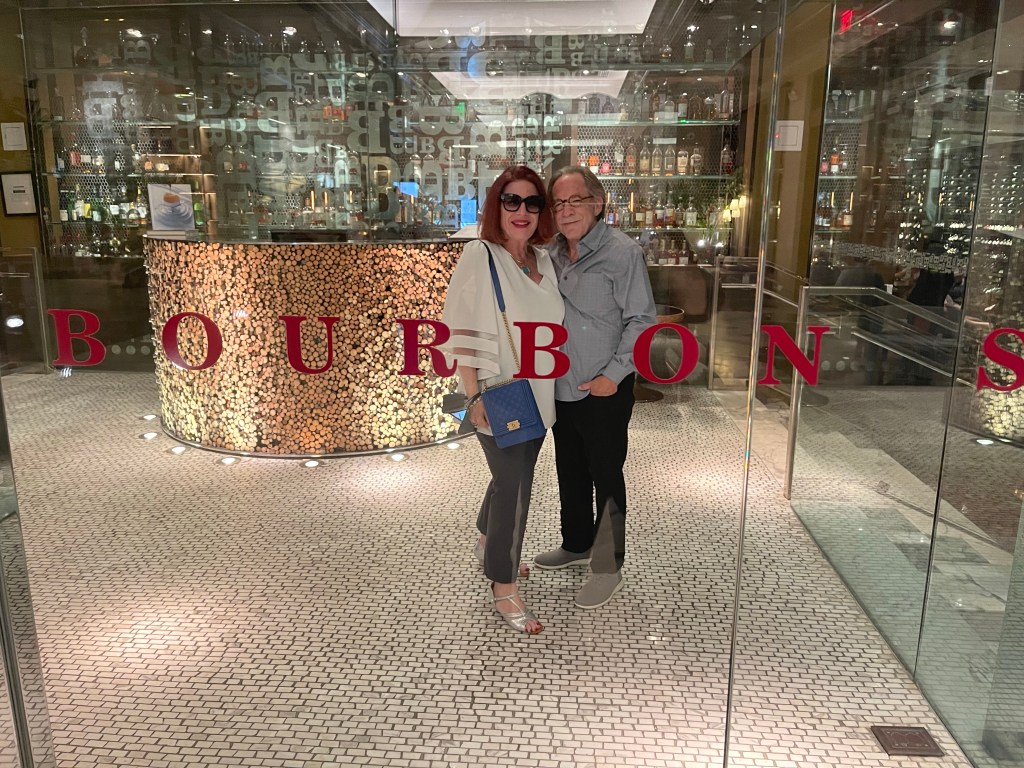
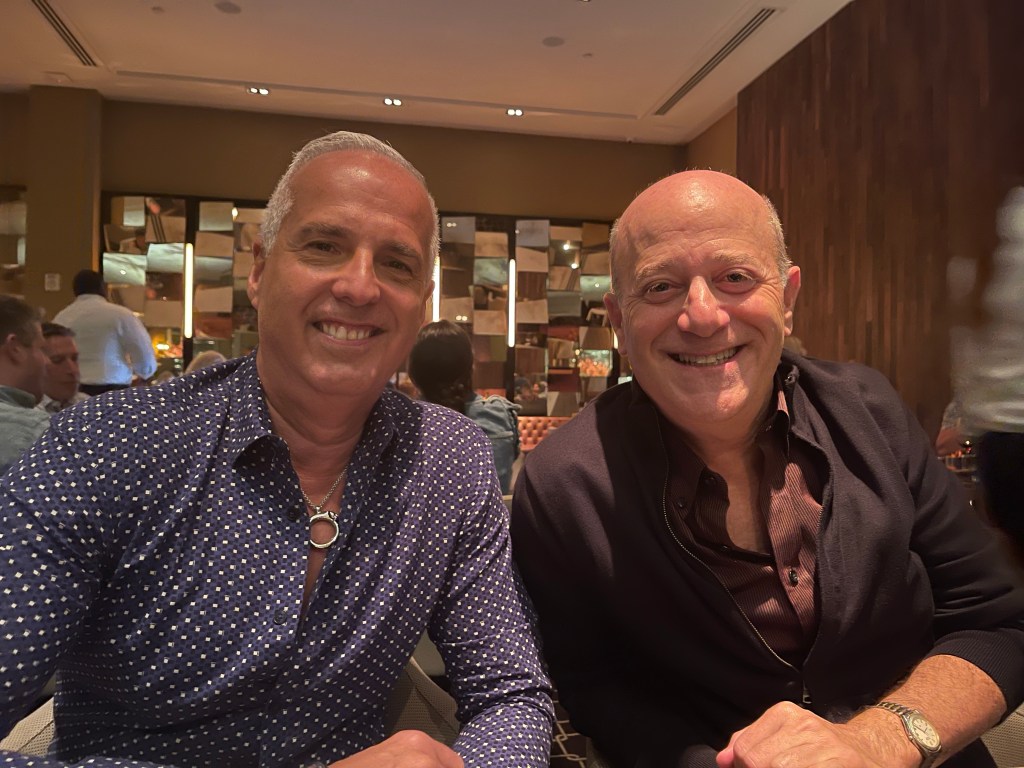
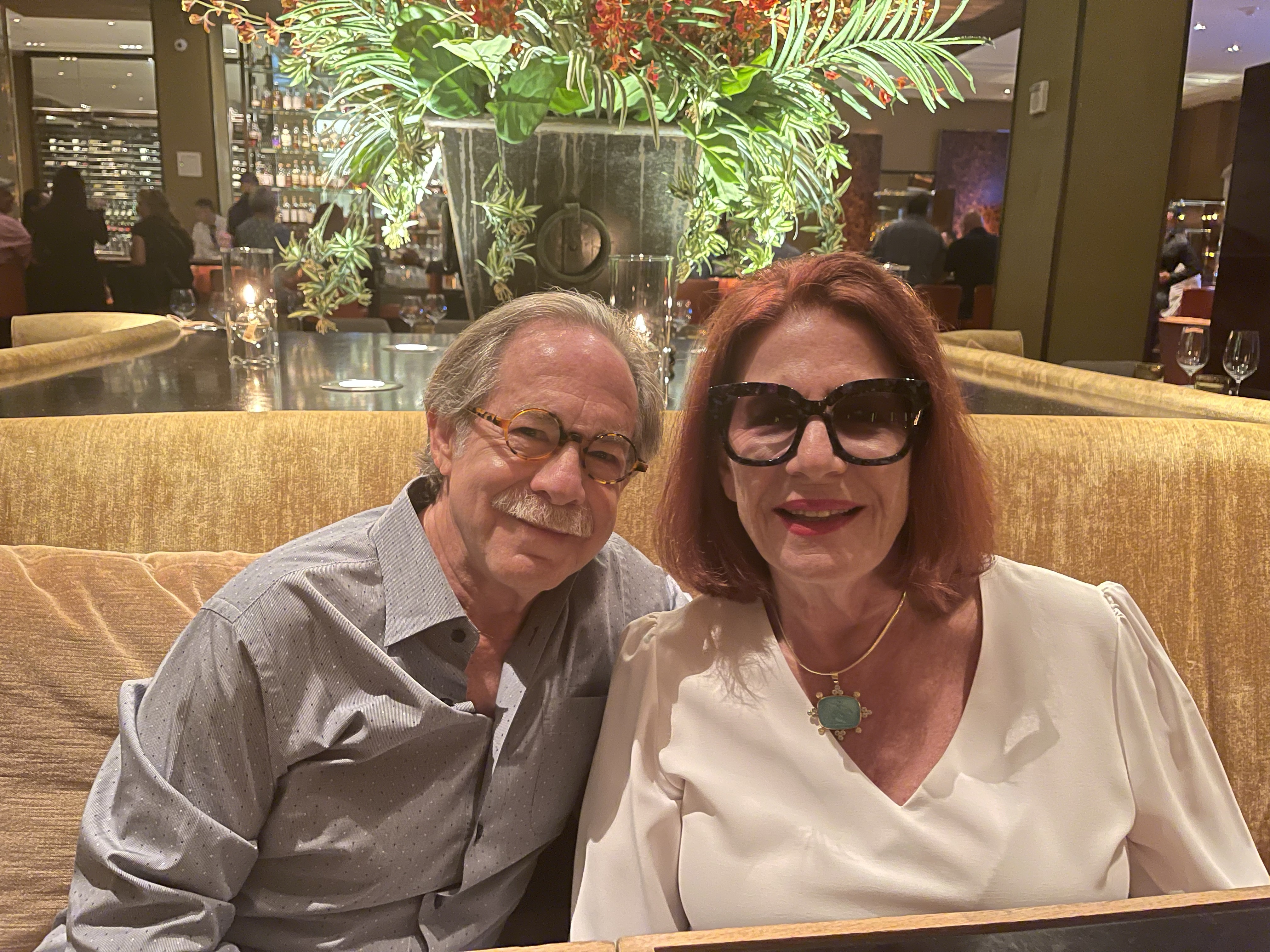
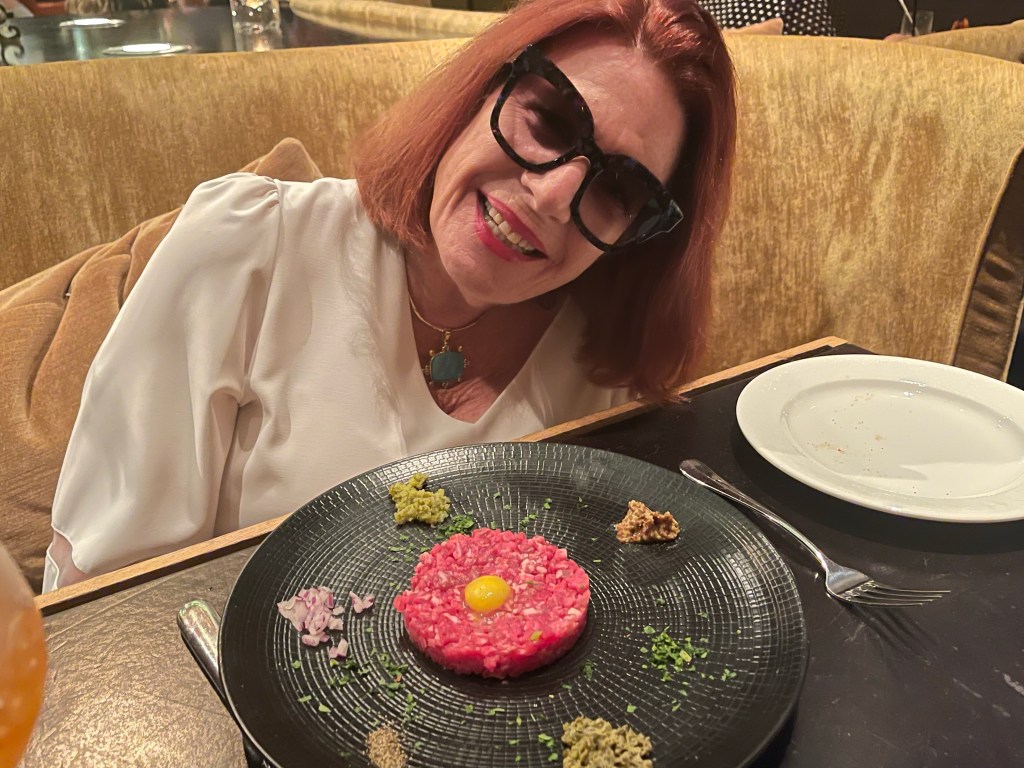
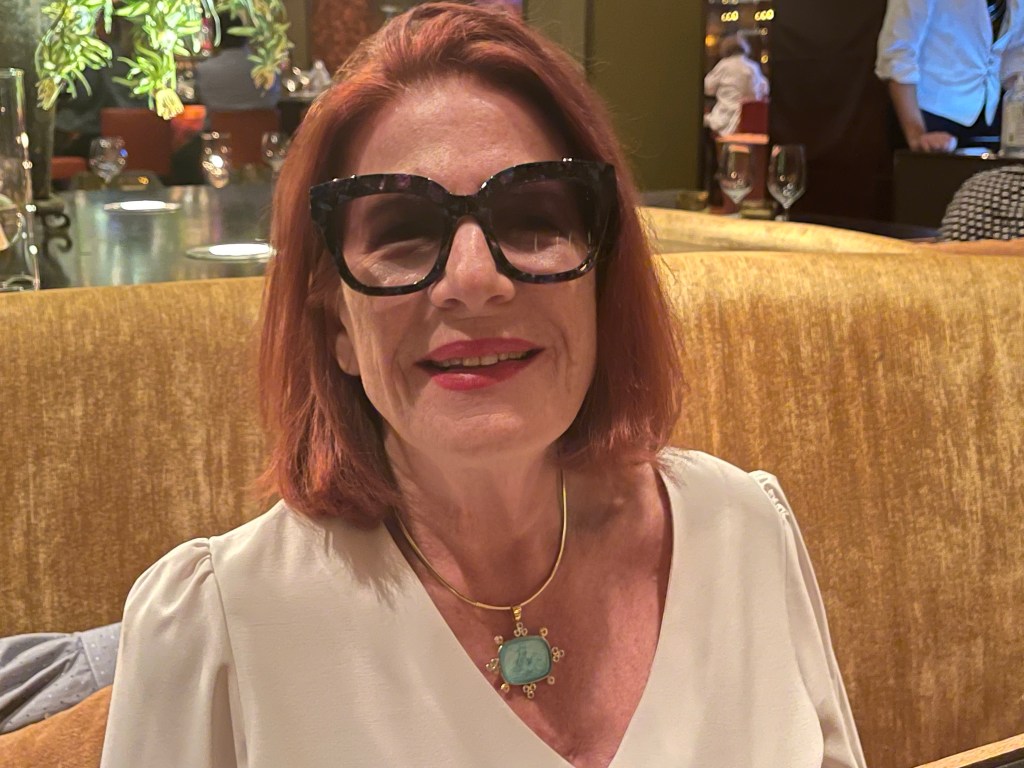
The grand finale. One more celebration! Steve Greenberg and Robert Armada hosted a magnificent steak birthday dinner for Eliot at Bourbon’s in Turnberry Resort and Spa. It was a wonderful night with lots of surprises.
Love this photo An evening of smilesYes, we are a little tipsy.Eliot loved being the giant in the crowd.Steve and Robert love dining with the little people.The piano bar at TurnberrySo many rooms for funTotal luxuryFountains galore The restaurant was stunningYes. I ate steak tartare. It was delicious.Bonnie, this one is for you We had to sing for our dinner
Before we start reading Harry McCracken’s very long story in Wired Magazine about Facebook’s attempt to introduce smart glasses, just remember that Google tried this too. Let me know your opinion if you would consider lwearing glasses with tons of information right on front of your eyes. —-LWH
Mark Zuckerberg has big plans for smart eyewear. Facebook’s first stab at the idea is not a huge deal—but it avoids privacy pitfalls that could come later.
Mark Zuckerberg’s mind often turns to the inadequacies of smartphones—especially their disruptive clunkiness as a tool for engaging with other humans
“On the one hand, they provide so much value, so you’re not going to not use them,” explains Facebook’s CEO. “But I think the fact that we basically take this thing out of our pocket and kind of have our head stuck in it for a while is just not how we all want to interact.”
Zuckerberg has expressed variations on this sentiment when discussing Facebook’s Oculus VR headsets, its research into augmented-reality wearables, and its ambition to become “a metaverse company.” But in this particular case, he’s giving me the rationale behind Ray-Ban Stories, the new smart glasses that go on sale today, a year after he first teased them at the company’s Facebook Connect virtual conference.
A joint project between the Facebook Reality Labs hardware group and the 84-year-old Ray-Ban sunglasses brand—itself an arm of French-Italian optical-goods behemoth EssilorLuxottica—the new glasses are nowhere near as futuristic as Facebook’s other gambits to diminish the smartphone’s central place in our lives. In fact, the features they offer, starting at $299, are quite similar to products already on the market. You can use them to take photos and shoot brief videos while your phone remains in your pocket or purse—just like Snap’s Spectacles, which have been around for half a decade now. They also deliver open-ear audio for listening to music and making phone calls, as smart glasses from Amazon and Bose do.
They sport cameras, microphones, and open-ear audio playback, but they’re still recognizably Ray-Bans.
And yet Ray-Ban Stories could be more than a mere straggling addition to an existing category. Smart glasses remain a curiosity rather than a hit with the masses: Snap, for example, has always positioned Spectacles as a quirky experiment and isn’t even selling the newest version, instead doling it out for free to creators who provide sufficiently enticing pitches. That leaves the door open for a new arrival—whether it’s Facebook and Ray-Ban or someone else—to take the idea mainstream.
But because this is Facebook we’re talking about, Ray-Ban Stories unleash a Pandora’s Box of questions that Snap’s Spectacles have not generally provoked. Is Facebook going to use the glasses and the information they capture to data-mine our lives in formerly impossible ways? What does it mean for privacy when you build cameras into eyeglasses, where people might not expect them? Are we going to see users stream stuff from their glasses onto Facebook or Instagram in ways that could be inappropriate? (My colleague Jeff Beer confronted some of the other concerns about “Facebook on your face” last September when Zuckerberg revealed the plan for smart Ray-Bans.)
While Ray-Ban Stories are no epoch-shifting breakthrough in themselves, they might ratchet Facebook that much closer to its goal of creating AR glasses that blend the digital and physical worlds in ways that aren’t yet possible. That’s true both from a technological standpoint—the more the company knows about miniaturizing electronics, the better—and getting the world acclimated to eyewear that packs sensors, computing power, and connectivity.
Zuckerberg acknowledges as much, calling Ray-Ban Stories “one milestone on the path to what we envision is the long-term augmented reality glasses.” He adds that “there’s a bunch of work that still needs to be done there, but while we’re working on that long-term vision, I think it’s also helpful to kind of work our way up and say ‘What’s possible and what can we unlock for people today?’ And that’s what this product ends up being.”
After spending a week and a half with a pre-release pair of Ray-Ban Stories, I can report that what’s possible today can be fun. But it’s also immature enough that, if anything, it left me newly appreciative of how capable smartphone cameras have become.
The best news: Trying the smart sunglasses for myself did make clear that many dystopian fears about Facebook-powered eyewear do not apply here. Instead of plunging into a brave new world rife with unsettling implications, they never get anywhere close to the precipice.
RAY-BANS, ONLY SMART
Cramming all the advanced technology necessary for virtual or augmented reality into a headset remains a challenge: Putting on Facebook’s Oculus Quest 2 or Microsoft’s HoloLens 2, the preeminent products in their respective categories, still feels like strapping a boat anchor to your head. By contrast, the cameras and audio components required by the Ray-Ban Stories don’t take up too much space. Which is essential, because EssilorLuxottica had one inviolate design goal: “We wanted to have a real Ray-Ban on your face, not a compromise,” says Luxottica global design and market research executive Matteo Battiston.
The eyeglasses maker started with the dimensions of a classic pair of Wayfarers—Ray-Ban’s most storied model—and increased them by just a skosh to accommodate electronics. Then it worked with Facebook to determine what was possible in that allotted space. “They really delivered in keeping up with our design expectations,” says Rocco Basilico, EssilorLuxottica’s chief wearables officer. “We were giving them boundaries.” Even the weight didn’t budge much: The Ray-Ban Stories Wayfarers are only 5 grams heavier than a standard unelectrified pair.
Examine Ray-Ban Stories closely, and you will see plenty of evidence of the added technology, from the two cameras on the front to the power switch and shutter button on the temples to the hefty carrying case, which has an embedded battery of its own for recharging the glasses. (Not so apparent: a touch surface on the right temple for tasks such as pausing video.) New accouterments aside, the overall effect remains so true to the Ray-Bay ethos that when I sauntered in the room wearing a pair for the first time, my wife simply asked me why I was wearing my sunglasses inside.
Ray-Ban Stories are available in multiple frame styles and lens options, including clear and prescription lenses.
Along with Ray-Ban’s iconic brand and look, EssilorLuxottica brought the ability to immediately scale the smart-glasses concept up into a product portfolio in a way that Facebook surely couldn’t have pulled off on its own. Ray-Ban Stories will be available in two sizes of Wayfarers as well as Meteor and Round frames, with five color choices and multiple lens types, including clear, Transitions, and prescription options. With the same technology available on so many types of Ray-Bans—20 in all—Stories might feel more like an upgrade option than a buying decision unto itself: As Basilico puts it, “for $100 more, you get a Wayfarer with superpowers.”
Facebook’s View app can apply 3D-like effects to photos (but note that it severed the guy on the left’s head).
“Superpowers” might be overselling it a bit. I don’t have to be convinced that life has plenty of moments when you might want to capture still photos or video, and a smartphone would prove unwieldy. In my case, one prime example is when I’m pedaling an e-bike around the Bay Area; for the record, Zuckerberg says that he’s been using the glasses while skiing, surfing, canoeing, and teaching his daughter to fence.
But once I’d begun using the glasses to document my bike trips and other out-and-about experiences, I learned to temper my expectations. The Ray-Ban Stories’ two 5 MP cameras don’t deliver image quality that compares with that of a serious modern smartphone, even though Facebook says that it uses AI to enhance the results. (The dual cameras allow the Facebook View app for iOS and Android to perform some cute special effects with still photos, such as turning them into mini-videos that zoom in with a two-and-a-half-dimensional effect.) Nor does the 105-degree field of view match that of the human eye; I found that I couldn’t mentally crop the image I was looking at, leading to chopped-off heads in close-up people photos.
The glasses’ photos lack the sharpness of a good smartphone snapshot, and it’s hard to precisely frame your subject.
It’s also tricky to record an exact instant in time, because the glasses’ interface for taking still photos is far from snappy. You can choose between saying “Hey, Facebook, take a photo” (using a voice input feature called the Facebook Assistant) or holding down a button, and in either case it takes a couple of seconds until the capture happens. I ended up more inclined to shoot video, which maxes out at 30 seconds per clip with 1184-by-1184 resolution but requires less precision to create something worth saving.
:
Managing the glasses’ storage and battery was also a larger responsibility than I anticipated. The onboard memory can hold a maximum of 35 30-second videos or 500 photos at a time, after which you must do a phone transfer to free up space. The battery life is rated at six hours of “moderate” use, but I drained the glasses in a couple of hours on one bike jaunt. You probably want to tote the charging case even though it’s a pocket-strainer.
I don’t mean to suggest that Ray-Ban Stories are more trouble than they’re worth. If you’re buying sunglasses anyway, the audio features might be worth the price of admission by themselves. (They’re great for listening in situations where you don’t want to block out all external noise, such as walking or biking city streets.) But you’ll be happiest with the cameras if you’re pretty forgiving on image quality—and don’t try to use them as anything like a wholesale replacement for your phone’s camera, inconvenient though it can sometimes be.
DYSTOPIA AVERTED
If Ray-Ban Stories were more wildly ambitious, more items on the long list of potential concerns about a Facebook computer you wear on your face would come into play. But their features aren’t even in the same Zip Code as the AR Facebook is also working on, where technologies such as facial recognition could easily go awry if mishandled. And Facebook and Ray-Ban have also backed away from some of the potentially creepy functionality that a pair of glasses with built-in cameras could enable.
For one thing, they made it difficult to use the glasses in a truly inconspicuous, privacy-violating manner. “There is an enormous responsibility for privacy, trust, security, transparency—not only for the person who buys that product, but also for everyone around them while they’re wearing it,” says Matthew Simari, director of product for Facebook Reality Labs.
Beyond the basic fact that the two camera lenses are in no way concealed, the sound effects they make as you use them—including a classic simulated shutter click—can’t be turned off. A prominent white LED near the right lens’s Ray-Ban logo glows whenever the cameras are in use: “That’s something that I think it’s worth noting smartphones don’t even do today,” says Zuckerberg. According to Simari, this LED is designed to be visible from up to 25 feet away, and some potential frame colors got nixed on the grounds that they provided insufficient contrast with it. (Another LED on the inside of the frames reminds the user when imagery is being captured.)

The fact that these glasses have cameras is even more apparent when the LED lights up.
It’s certainly possible to take photos and videos with Ray-Ban Stories more discreetly than with a smartphone: As I roamed an outdoor antique fair, I used them to snap anything that caught my eye, and I’d be surprised if anyone noticed me touching the temple to initiate image capture. Buzzfeed’s Katie Notopoulos covered up the LED with tape and marker ink, then was told by a Facebook VP that doing so was a violation of the glasses’ terms of service. But anyone who’s set on taking covert photos for truly nefarious purposes, such as stalking or movie-theater piracy, has better options. And if the glasses sell well, they could become too familiar to be used without calling attention to themselves.
Other aspects of Ray-Ban Stories’ emphasis on privacy address the person wearing the glasses. Facebook says that it can’t see your photos or videos and doesn’t use them to target you with ads. You can shut off its ability to collect data such as the number of photos you take and the length of your videos, which it aggregates to better understand usage.The View app, which you use to manage the glasses, keeps a log of commands the Facebook Assistant heard you say; you can review them, delete them, or turn off the Assistant and control the glasses through taps, swipes, and button presses.
>
People get sensitive about anything that sounds too much like Facebook jacking into your brain, but Ray-Ban Stories don’t even jack directly into Facebook itself. (On iPhones, at least, this is partially due to Apple not doing much to facilitate wireless data transfers from external devices.) You can’t stream anything directly into your Facebook account: Getting photos and videos off the glasses and into the View smartphone app via Wi-Fi is a manual process, whereupon it’s just as easy to share them to TikTok or iMessage as Facebook or Instagram. (You do need a Facebook account to use the View app.)

Facebook’s View app tries to steer users into being “good stewards” of the smart glasses.
Of course, no matter how adroitly Facebook errs on the side of sidestepping potential privacy quagmires, people won’t respond solely to the design decisions that it and EssilorLuxottica have made. They will also have an instinctive reaction to the concept of cameras embedded into a pair of glasses—and if history is any guide, many will assume the worst. (Exhibit A: Google Glass, whose negative reception helped doom it as a consumer product.)
“[T]he truth is, wearable cameras freak people out,” my colleague Mark Wilson wrote back in 2016, when he was assessing Snap’s original Spectacles. Nothing has happened in the subsequent five years to ensure that Ray-Bans Stories won’t provoke their share of freakouts—especially among those inclined to be wary of anything that carries Facebook’s imprimatur.
Zuckerberg says that as people get to try Ray-Ban Stories for themselves and—he expects—find them cool and useful, the notion of taking photos with your glasses will reach a state of normalcy it hasn’t yet attained. “Part of the deal with any technology is that you see that value,” he says. “I don’t think we inherently want to go through our lives carrying a phone around in our pocket. We do it because it creates a lot of value for us.”
It’s at least possible that smart glasses like Ray-Ban Stories will follow a trajectory similar to that of the camera phone. Almost everyone has forgotten that when the first phones with built-in cameras hit the market in the mid aughts,they made a lot of people profoundly uneasy, provoked calls for new legislation, and even inspired new technologies designed to foil their use. It was only later, after camera phones gained widespread popularity, that they became relatively uncontroversial.
Does Zuckerberg grant that Facebook’s association with Ray-Ban Stories could make them a tougher sell? Not really. “I think that there are probably people who would be skeptical of any specific company,” he told me, though he also stressed that skeptics should understand that they won’t be used for ad targeting.
Still, it’s not like Facebook is pretending that smart glasses don’t have a comfort-level hurdle to clear. Its privacy webpage for RayBan Stories lists places where you should use the power switch to turn the glasses off, from locker rooms to houses of worship; the View app includes etiquette tips such as encouraging customers to demo how the now-recording LED works before taking pictures. Such features are about nudging anyone who buys the glasses into being “a good steward and thoughtful in their behavior,” says Simari.
THE SHAPE OF GLASSES TO COME
None of the Facebook and EssilorLuxottica executives I spoke with took the bait when I gave them the chance to make predictions about how well Ray-Ban Stories will fare on the market. However, they all expressed optimism for it as a beachhead in a category that will matter: “In the near future, smart glasses will be a big part of our business,” says EssilorLuxottica wearables chief Basilico.
Zuckerberg, meanwhile, is thinking out through the early 2030s—and sees a place for the direct descendants of Ray-Ban Stories even though his ultimate goal is to build rich augmented reality into a similar form factor at the same price—with all-day battery life, yet—thereby ushering in an era when “phones are just a little less central in our lives.”
“I think it could be quite a long time before the full vision of what we talk about as augmented reality glasses becomes a $300 product,” he muses. “It may very well be that for another decade or so, there also are parallel smart glasses products. Maybe they have a display, maybe they don’t. But basically different tracks, so that the technology can be accessible to more people.”
So many impossible-to-predict developments could trip up this long-term plan. But consumer reaction to Ray-Ban Stories—good, bad, or indifferent—may tell us at least as much about its prospects as any prediction Mark Zuckerberg could make.
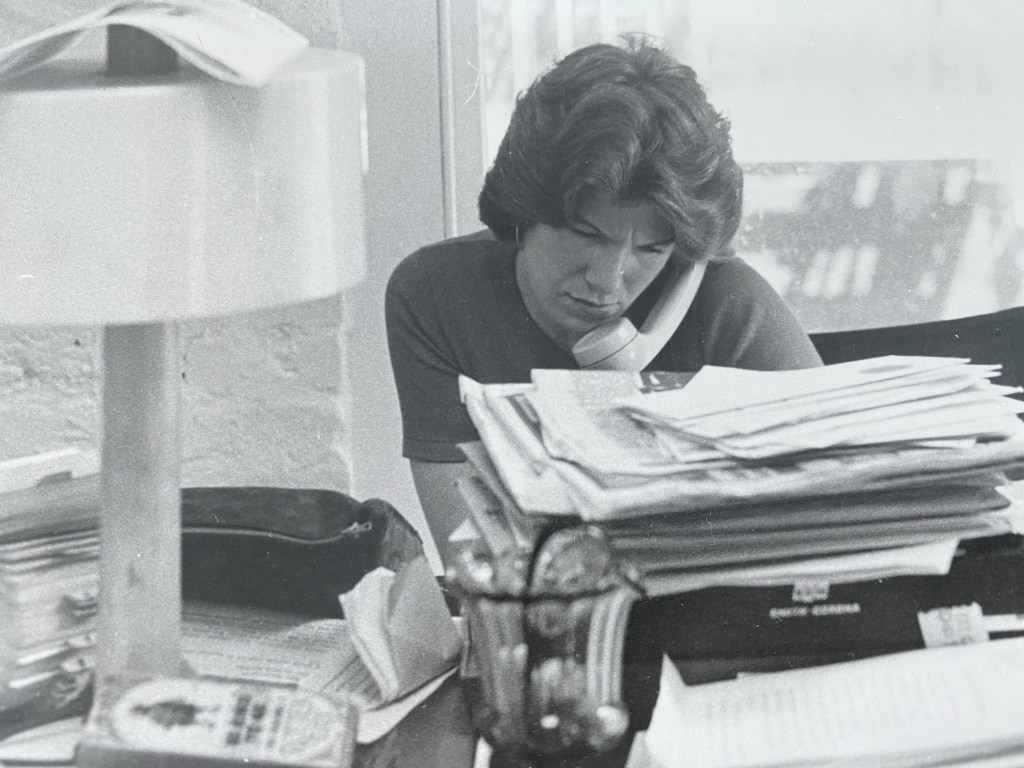
Taking notes for a big story I was going to write.
I walked into the city room of Fairchild Publications on September 9, 1966. Many people reading this weren’t even alive then. I was. It was one of the greatest days of my life. Fifty five years later I am still pitching away.
Never would have made it without Eliot Hess, Richard Ekstract, Bernie Lett, Frank Tricarico, Aaron Neretin, Manning Greenberg, Cathy Ciccolella, Marvin Klapper, Ed McCloughlin, S. David Feir, Warren Zorek, Stanley Hochstadt, Neil Goldstein, Gary Shapiro, John Hollands, Rob Reis, Harry Elias, Harry Fox, Maurice deHond, Frank O’Connell, Steve Greenberg, and my brother Steve Schneider who told me in the summer of 1966 that I was good for something
While most of the colleagues I started with are either gone or retired, I will be at my computer today working the press on a big financial story I am trying to place. I am also on deadline to help sell two companies, make a motivational speaker a star, help get several books published, secure profile stories for three businesses, and promote a number of new innovative products.
As long as there are individuals who want to hire me, I will still be plugging away. It takes my mind off of Trump and the Pandemic.
If you are in the need of healing, or you know someone else who needs healing, chant that person’s name during the following musical prayer. It will be one of the most healthy moments you have experienced in a long time.
The healing prayer by Rabbi Marc Philippe of Temple Emanu-El of Miami Beach and Alyssa Landry. Both are personal friends of mine.
I recorded this yesterday during the Rosh Hashanah service. There is a 20 second interruption in the recording. Stick with it. Let it play out. The ending is breathtaking.
I want to invite you to a fundraiser for the Fountainhead Residency on Tuesday, September 14th, at the home of Alexa and Adam Wolman in Coco Plum, Miami.
Not to be missed. The home is one of the best examples of why Miami is now considered one of the most prominent cities for art collectors.
The media is continuously recognizing Fountainhead as a major force that has made Miami a serious international city for art education, creation, collecting, commerce and networking. Fountainhead offers a year-round residency program, flexible and affordable artists’ studios, the Miami Dade County-wide open studios event called “Artists Open,”and a series of career-focused programs.
Each month Fountainhead hosts three national/international artists at the residency so they can create, connect, engage and be inspired, infusing Miami with artistic talent from around the world. Since 2008, Fountainhead has hosted over 450 artists from 47 countries.
Meet co-founder Kathryn Mikesell
We want you to become a member. There are many different dollar levels you can join in on. One thing I can guarantee. You will meet the most interesting and fun people ever. Everyone who belongs to Fountainhead loves life and always want to explore new opportunities. Your social life will be extraordinary.
I am a board member and a networker. We just wanted to share this opportunity with you.
If you are interested, I will give you further details for the event. If you can’t make the event, join anyway. We have activities every month and you can accompany Eliot and I at any time.
First access to artwork made available by Residency and Studios artists
Invitations to national and international art tours including artists’ studio visits, private museum tours, unique experiences in collectors’ home all combined with curated meals, and other cultural events.
Private studio visits with all visiting artists enabling you to dive in and learn about each artist and their practice
Tours of collectors’ homes
Invitations to national and international VIP Art Fair programs
Personal referrals to our broad database of art handlers, framers, conservators and other art service professionals
VIP Passes for Miami Art Fair week
Limited memberships available
Designated Named Artist Fellowships $15,000 JOIN NOW
This is an opportunity to create a legacy while providing direct support to artists and The Fountainhead Residency. Designated fellowships are based institutionally, geographically, discipline-based and/or diversity based. For each fellowship, the team will work with you to define the designation, criteria for selection, method of outreach, and additional programming. Each fellowship includes roundtrip airfare, travel insurance for international artists, and shipping, materials and per-diem stipends for artists. Additional benefits include:
Your name will be proudly displayed on Fountainhead website donor page, and included in our newsletters, event invites and other communications, and the artist’s page
Private introduction to the artist upon arrival
Opportunity to host a private meet and greet for family and friends *catering and all associated costs not included
All benefits provided to Visionarymembers
Advanced notice of all incoming Fountainhead Residency artists
One-on-one studio visits with all Fountainhead Residency and Studios artists
Invitation to a family dinner at Fountainhead Residency
VIP Passes to many of the art fairs in December, nationally and internationally
Shepard Broad Foundation Carlo and Micol Schejola Foundation Francie Bishop Good and David Horvitz The de Groot Foundation The Hillsdale Fund The Heinz Endowments Lois Whitman-Hess and Eliot Hess Alexa and Adam Wolman Hesty Leibtag and Terry Verk Adriana and Ricardo Malfitano Joan Quinlivan Heather and Jay Schreibman Leslie and Michael Weissman Jane Wesman and Donald Savelson
Benefactor and Visionary Members
A
Alexandra Bain Alexandra Rutten Alison Cohen Alison Davis Alison Weiss Amanda Dobin Amy Kornik Amy Pollack Anne Coppenrath Avi Bernstein Avra Jain
B
Barbara Salk Bill Fuller Bruce Taub
C
Cathy Leff Celso Gonzalez-Falla Claire Racanelli Carla Tobin Carole Server Chris Adamo Christoper Barake
D
Danie Gómez-Ortigoza David Black David Lombardi David Rosow David Ross David Sharp Debi Hoffman Debi Weschler Diane Grob Dina Mitrani Donald Weiss
E
Eliot Hess Ellie Taub Eric Schneider
F
Fabien Castanier Fredrick Black
G
George Dufornier Greg Diamond Gina Chase
H
Hesty Leibtag Howard Krass
J
Jan Gerits Jen Samway Jill Stone Joe Furst John Barnett John Ellis Josh Cohen Joyce Virga Juan Toro
K
Karen Boyer Kate Friedman Kelley Johnson Kyung Yoon
L
Laura Randall Lee Cohen Hare Lesley Goldwasser Leslie Rosenzweig Linda Diamond Lindsey Freidman Lisa Smith Liza Gallardo Walton
M
Matt Landau Marie Elena Angulo Mark Blackburn Mario Cader-Frech Martine Marchand Mary Heidrich Matt Anderson Matthew Lieberman Michael Rosen Michael Samway Mindy Solomon Misha Kornik Moises Esquenazi
N
Nancy Bernstein Nicole McAree
O
Oliver Frankel
P
Pauline Shender
R
Rachel Wagner Furst Randi Wolfson Rebecca Dinar Renee Delaplaine Renee Rosenberg Rhonda Mitrani Robert Borlenghi Robert Shub Robin Lipson Roger Baumann Rolf Coppenrath Ron Rosenzweig Rouslana Andriyanova Ruth Greenberg
Eliot took this photo as we were arriving in Miami. Fisher Island on the bottom of photo, the port of Miami to the left, all of the Islands where the celebrities live, Miami Beach to the right. Happy New Year to all.
———————————————
We got our booster shots yesterday. So far no reaction.
——————————————-
Eliot looked out the window of our hotel, the 1 Hotel, 58th and Sixth, and shot this photo of a bride and groom who decided that this crosswalk was the beginning of their journey together, Mazel Tov!
The minute I saw the headline above I knew I had to share this information with you. It’s so nice to know that these folks exist and it’s possible to reach these numbers. Good luck to all.
By Lia Beck for Yahoo News
If you need proof that age is just a number, look no further than the celebs listed below. These stars are 20 of the oldest celebrities still living in 2021, and they range from actors to singers to composers to heads of state. Each of these celebrities has made it into their 90s or 100s, and has shared some words of wisdom or inspired through their work along the way. From a legendary singer explaining why life passions are so important to the Queen of England sharing that she doesn’t worry about aging, there’s something to learn from each of them. Read on to find out more about these famous nonagenarians and centenarians.
Burt Bacharach, 93
Birthday: May 12, 1928
We start our list with Burt Bacharach, who is 93 years old. The composer is known particularly for his work with Dionne Warwick, including the songs “Walk on By” and “I Say a Little Prayer.” He also composed “The Look of Love,” “Raindrops Keep Fallin’ on My Head,” and many more hits. Bacharach continues to work to this day, and talked about his new music in a 2020 interview with The Washington Post.
2
Estelle Harris, 93
Birthday: Apr. 4, 1928
Estelle Harris is probably best known for playing George’s mother, Estelle Costanza, on Seinfeld. Another major role was voicing Mrs. Potato Head in three of the Toy Story movies, including 2019’s Toy Story 4, which is her most recent credit. In a 2013 interview with the Associated Press, Harris talked about watching Seinfeld become popular with younger generations. “In the last year or two, all of a sudden these youngsters recognize me as Mrs. Costanza, Estelle Costanza,” she said. “So we have a whole new age group, and I’m getting a lot of fan mail from these young people too.”
3
William Daniels, 94
Birthday: Mar. 31, 1927
Your age will determine how you best know William Daniels. The actor played Dustin Hoffman‘s character’s dad in The Graduate in the ’60s, starred as John Adams in the musical 1776 in the ’70s, was Mark on St. Elsewhere in the 1980s, and played Mr. Feeny on Boy Meets World in the ’90s—a role he revived for Girl Meets World in the 2010s.
Daniels reflected on 70 years of marriage with his wife, Bonnie Bartlett, in a video for Forbes in 2021. “I think our relationship is based on mutual respect and I think she is smarter than me, better actor than me, and so I just hang on, you know, and try to get along,” he said.
4
Harry Belafonte, 94
Birthday: Mar. 1, 1927
Singer Harry Belafonte is known for bringing Calypso music out of the Caribbean with songs like “Day-O (The Banana Boat Song.” He’s also an actor and civil rights activist. In 2016, Belafonte shared some of his life wisdom on Today. “I think people who have not experienced a life passion—something that they want to get up everyday and go do—have really missed the fullest value of life,” the then-89-year-old singer said.
5
Sidney Poitier, 94
Birthday: Feb. 20, 1927
Sidney Poitier was the first Black performer to win the Academy Award for Best Actor. After a hugely successful career, he retired from acting and later became an ambassador from the Bahamas to Japan. In a 2000 interview with Oprah Winfrey, when he was 73, Poitier said of what he was looking forward to, “I’d like to write, act, teach, lecture—anything creative. I must also service my curiosity. I want to continue to wonder about things, because there is a young man inside me, and he is energetic and mentally active.”
6
Lisa Lu, 94
Birthday: Jan. 19, 1927
Lisa Lu has had successful acting careers in both Chinese and American films and TV shows. She has appeared in movies including The Last Emperor, The Joy Luck Club, and, most recently, Crazy Rich Asians. She is still acting, with two new films in the works. In a 2019 interview with That Is China, the actor was asked if she worries about aging. “I don’t worry about it,” she said, “because films require characters of all different ages. Acting isn’t just about starring as the main character … If you like acting it doesn’t matter as long as you act well in whatever role you have, then that’s fine.”
7
Tony Bennett, 95
Birthday: Aug. 3, 1926
Legendary singer Tony Bennett only just retired from stage performances at age 95. He will continue to otherwise make music and has a new album with Lady Gaga coming out in October. Bennett also has Alzheimer’s disease. His wife, Susan Benedetto, told AARP the Magazine in 2020, “There’s a lot about him that I miss, because he’s not the old Tony anymore. But when he sings, he’s the old Tony.”
8
Mel Brooks, 95
Birthday: June 28, 1926
Producer and director Mel Brooks is a comedy legend thanks to his films The Producers, Blazing Saddles, and Young Frankenstein. And he’s still working. “I knew from a very early age, I knew that comedy was my thing,” Brooks told CBS Sunday Morning in 2019. “It was me. Because people would look down at my crib, I was only a few months old, and they would laugh. And I said, ‘That’s it, that’s it. That’s what I want!'”
Natural historian and TV host and producer David Attenborough is another member of the 95 club, and he’s most famous for the BBC documentary series Life and Planet Earth.
Attenborough has been very reflective about his long life and career, including in his film David Attenborough: A Life On Our Planet. Asked about watching footage of his younger self in the doc by The Guardian, Attenborough said, “I thought, in my own mind, I haven’t changed. I feel exactly the same.”
10
Queen Elizabeth, 95
Birthday: Apr. 21, 1926
At 95, Queen Elizabeth II is both the oldest British monarch and the longest reigning. She has been queen for 69 years, beginning her reign in 1952.
In a recently resurfaced video of Queen Elizabeth sitting for a portrait for her 80th birthday, she said something about seeing herself age through artwork. When the painter asked if that upset her, she responded with a surprisingly casual “nah”, which made the video go viral.
11
Dick Van Dyke, 95
Birthday: Dec. 13, 1925
Actor Dick Van Dyke of Mary Poppins, Chitty Chitty Bang Bang, and The Dick Van Dyke Show is 95, too. And he’s determined to make it to 100. While appearing on CBS This Morning in June 2021, he showed off his workout regimen, which includes crunches. “I’m 95, and a lot of my friends won’t do these,” he said. “So all you old guys out there, listen to me, I’m telling you: You can keep going for a long [time].”
12
Angela Lansbury, 95
Birthday: October 16, 1925
Angela Lansbury has had a lengthy career as an actor, from Oscar-nominated films during the Golden Age of Hollywood, to her starring role on Murder, She Wrote, and beyond. During an interview with Larry King in 2018, Lansbury said, “I think that I’m interested in every part of life. In other words, not just acting. But everything that is given to us as human beings to indulge ourselves in our lives, that’s what interests me. My grandchildren, my life, cooking, driving, being independent, I think is very much part of my credo.” Asked if she would ever retire, she responded, “No, I don’t think so. I’ll probably pass away with one hand on my script.”
13
Jimmy Carter, 96
Birthday: Oct. 1, 1924
The 39th president of the United States, Jimmy Carter, is 96 years old, making him both the oldest living president and the longest-living president in history. Carter wrote a book about getting older, The Virtues of Aging, published in 1998 when he was 74. In 2013, he told The Washington Post (via Insider) of his active lifestyle, “I was an avid runner until I was 80 and my knees gave out. I have two new knees, and those have worked well. Now I swim regularly at home and when I travel. I’m active around the house, and with painting and woodworking.”
14
Eva Marie Saint, 97
Birthday: July 4, 1924
Actor Eva Marie Saint is known for roles in beloved films including North by Northwest and On the Waterfront, for which she won an Oscar for Best Supporting Actress. In 2014, she had a small role in Winter’s Tale as a character over 100 years old. “Made me feel young,” she joked to Metro US. She continued of the part, “I just prefer to do roles where it’s a strong lady and she’s not ill and she’s not in a wheelchair—and that may happen, and there’s nothing wrong with that. But as long as I can portray somebody who still makes a difference in the world, that’s what I like to do.”
15
Bob Barker, 97
Birthday: December 12, 1923
Generations of game show fans know Bob Barkeras the host of The Price Is Right, wielding the mic from 1972 to 2007. In a 2015 interview with the Associated Press, Barker said, “I’m a complete success in retirement. I think it’s because I did it not too soon, not too late, but at just the right time. I’ve never regretted it.” He added with a laugh, “People ask me often what do I miss most about The Price Is Right and I answer honestly: It’s the money. That, I miss.”
16
Norman Lear, 99
Birthday: July 27, 1922
TV writer and producer Norman Lear is responsible for many classic TV shows, including All in the Family, The Jeffersons, Good Times, and One Day at a Time. He still works as producer to this day, most recently on the Netflix reboot of One Day at a Timeand the documentary Rita Moreno: Just a Girl Who Decided to Go for It. In July, he shared with Entertainment Weeklyhow he was celebrating his 99th birthday. “I’m on a plane tomorrow morning for our home in Vermont with all my kids and grandkids, which will take place at a farm we’ve owned for 35 years or so,” he said. Asked if he will ever retire, he replied, “I think I will be retired, but I will not retire.”
17
Betty White, 99
Birthday: Jan. 17, 1922
Betty White‘s career in entertainment began when she was a young girl in the ’30s. She is best known for her roles as Sue Ann Nivens on The Mary Tyler Moore Show and as Rose Nylund on The Golden Girls. “Best thing about being in your 90s is you’re spoiled rotten,” she said on Betty White’s Second Annual 90th Birthday Special in 2013 (via People). “Everybody spoils you like mad and they treat you with such respect because you’re old. Little do they know, you haven’t changed. You haven’t changed in [the brain]. You’re just 90 every place else.”
18
Nehemiah Persoff, 102
Birthday: Aug. 2, 1919
Character actor Nehemiah Persoff has appeared in many notable films during his lengthy career, including On the Waterfront, Some Like It Hot, Twins, and as the voice of Papa Mousekewitz in theAmerican Tail movies. He is also often remembered for playing Barbra Streisand‘s character’s father in Yentl. When Persoff retired from acting in 1999, he began focusing more on his painting. He explained in a 2014 interview with Senior Voice that he took it up after suffering a transient ischemic attackknown as a “mini stroke.”
“I would recommend to all seniors that they try painting,” he said. “They will be surprised by their ability, and the peace and calm that concentrating on the painting provides.”
19
Caren Marsh-Doll, 102
Birthday: April 6, 1919
Caren Marsh-Doll is an actor who worked in the ’30s, ’40s, and ’50s before retiring and becoming a dance teacher. Along with playing plenty of her own roles, Marsh Doll was Judy Garland‘s stand-in forThe Wizard of Oz and Ziegfeld Girl, and is one of few people who worked on The Wizard of Oz and are still living. Because of this, in recent years, she has attended a few Wizard of Oz festivals. “When you’re 19 and working on a film, you don’t really think it’s something that you’ll still be known as a part of when you’re 92,” she told Syracuse.com of the classic movie in 2011.
20
Marsha Hunt, 103
Birthday: October 17, 1917
At 103, Marsha Hunt is considered the oldest living actor from Hollywood’s Golden Age. She appeared in many films during her career, including Pride and Prejudice, Born to the West, and The Human Comedy. After being named on the Hollywood blacklist during the McCarthy era, she became a humanitarian focused on world hunger, and later homelessness and the support of same-sex marriage, as reported by Patch. Asked about her long life by the Associated Press in 2020, Hunt said, “I don’t think it’s long. I hope it will be long. I think I’m just very lucky. I have no enemies that I know of and I have no hatred. I go around loving people and getting along with them