
Tap, Tap, Save and Share the Last 60 Seconds

20130910-173834.jpg

20130910-173818.jpg

Ever since I can remember, I have wanted to record everything I heard because there were gems that I wanted to save and share with others. Anything from someone giving me an idea to an inspirational quote, travel directions, phone numbers, addresses, email, a book recommendation, new business leads, a creative concept, a to-do list, blog subject reminders, and people to call.

You would think that I would carry around a recorder or a pen, pencil, and paper. It doesn’t work. Half the time I can’t find them in my handbag (I even tried a smaller bag), and by the time I do, I forgot what was said.

I am very excited about the Kapture always-on wristband. The website explains:

“The band records audio in a 60-second buffered loop. The buffered loop continuously overwrites itself until the user taps the device to save a clip of the previous 60 seconds. The saved file is downloaded to your smartphone where the duration can be shortened and you can name, tag, filter, and even share it.”

All you have to do is: Talk. Tap. Share. If you don’t tap, it won’t save.

A Kapture app has been designed to be the user interface (UI) for the wearable device.

I don’t know about you, but this is going to be my favorite piece of jewelry. I have so many uses for it my head is spinning. I hope it will help me be much more productive.

Synchronized Running


It’s amazing! The digital world thinks of everything. If there is a void, they fill it. Such is the case for those who love to read a book when they run on a treadmill. I tried to do it several times and immediately got nauseous.

That’s when I switched to audio books. It just made more sense. I found it very enjoyable. Much to my surprise, a lot of folks don’t agree with me. They want to read a book and see the text. That’s that. End of story.

Weartrons to the rescue. The young company has invented a gadget called Run-n-Read that miraculously allows you to read text on a tablet while you are running.

Picture this, the text bounces with you. It stays in sync with your eyes. I know this sounds impossible but it works. Watch the video above if you need proof.

A tiny clip-on device attaches to your headband, shirt, or wherever. The device works with an e-reader app on your tablet to track the movements of your head and shoulders. An explanation from the company says, “Keeping the text bouncing in sync with your eyes, the system essentially makes reading while running in a stationary position as easy as reading while standing motionless.”

I haven’t tried it but I am eager to. Testimonials on the video imply that it works. Turning pages is easy too. All you have to do is tap the device once for a forward page turn and twice to page backwards.

In addition to its reader features, the system also doubles as a fitness tracker. Basically, it counts steps and provides other fitness data.

Available on Android and iOS devices, the software is offered as a free tool to be used with the clip-on component. You can be one of the first to report back on it. The Run-n-Read is currently available to early adopters for $55 on the company’s fundraising website.

20130909-193747.jpg

20130909-193737.jpg

All The Books You Can Read in a Month

20130908-204300.jpg

Eric Schneider and I met 47 years ago at Fairchild Publications where I worked for many years. September 9th is my work anniversary. Today, Eric and his wife Gail live a few blocks away from us in South Beach. He is a successful publisher. We continue pursuing our passions. Now for today’s post.
20130908-202519.jpg

20130908-202533.jpg

It was just a matter of time before someone created the same kind of service for books as we have for movies. A new startup called Oyster Books, located steps away from the Ace Hotel in Manhattan, a huge gathering place for the digital community, has been created to offer owners of mobile devices the ability to access countless books on a monthly subscription basis.

As soon as you join the Oyster club, you have unlimited access to a library of 100,000 titles for $9.95 a month. Every genre is available, and the list of titles is growing rapidly. Most of the big name publishers have joined forces with Oyster: Harper Collins, Houghton Mifflin, Worman, Melville House, Rodale, Open Road Media, Rosetta Books, and F+W Media.

Oyster is being smart about its rollout. Instead of letting the company’s servers get overwhelmed with orders, Oyster is pacing itself. I signed up a few days ago and I am still waiting for my official acceptance.

Once I am in, I will be able to see what my friends are reading, unless they activate a privacy option. I look forward to having Oyster learn my likes and dislikes so I can receive recommendations on other books I might appreciate. It’s always rewarding to learn about a new book. I like that I’ll be in the know about certain titles and able to put them on my “to read” list. It ensures many hours of satisfying entertainment.

Oyster was co-founded by three self-proclaimed technologists and bookworms, Eric Stromberg, Andrew Brown, and Willem Van Lancker. Learn more about their passion for books here.

It looks like we all better get used to the idea of “access versus ownership” when it comes to music, reading, housing, and transportation. As successful business models like Spotify, Über, Airbnb, and Netflix have demonstrated, this is the wave of the future.

Bicycle-Powered Treehouse Elevator


This is what I call innovative. I have always loved treehouses. Being a city kid, I rarely got to visit one. When I did, I just loved the panoramic view from above. It was all about fantasy.

My last treehouse visit was about two years ago at a home of Terri Weinstein in Coral Gables, Florida. It was very difficult to capture the structure in a photo because it was covered with branches and leaves. Getting up there was an experience. I think I still have some faded cuts.

There was no question about it. Once you were up there, the view was dreamy. You got the best view of the garden and the use of coral throughout the patio and pool area. We hung out for just enough time to truly remember why treehouses are just so much fun. Getting down was just as painful as going up.

Inventor Ethan Schlusser has a better alternative. He uses bike pedals that are connected to a pulley system to lift himself 30 feet up in the air. When he gets to just the right level, he climbs into his waiting tree-borne abode.

Make sure you watch the video above. If you have a better idea, let me know.

Meanwhile, here are some treehouses for adults.

20130907-172314.jpg

20130907-172355.jpg

20130907-172415.jpg

20130907-172444.jpg

Happy New Year

20130907-145259.jpg

20130907-145321.jpg
Liat, Roi, and Reut at Best Buy, Miami Beach

We had a wonderful Rosh Hashanah dinner in Miami with Whitney, Fredrick, Williams, and our Israeli cousins Liat, Roi, and Reut. Our cousins are on an extended vacation and luckily we were in Miami when they made a stop here. While we are miles and many years apart, it felt like we see each other every day and are all the same exact age. We were totally united. That is one of the big advantages of Facebook.

I did a little recuperating this afternoon listening to some very interesting stories from Umano. I wanted to share them with you.

Don’t Be a Bully Because You Have a Big Vocabulary

8 Ways To Get Out Of A Rut & Get Moving

Save yourself a trip to the doctors office. Talk to a physician online.

Jack Nicholson’s unconfirmed memory loss.

At 5 pm, the Royal Caribbean, Majesty of the Seas, floated right under our balcony with sister-in-law Dorothy and niece Valerie on board. We gave them a great Bon Voyage sendoff.

20130907-145509.jpg

20130907-145529.jpg

Leftovers with Rene and Howard

20130907-145618.jpg

Someone Tell Jack Nicholson to Start Playing Video Games

20130905-200803.jpg

The other day there was a rumor that Jack Nicholson, age 73, was a retiring from the movies because he had a difficult time remembering lines. He hasn’t acknowledge the report yet. He also hadn’t denied it either.

He needs to read the recent NY Times article that says the challenges of certain video games can improve short-term memory and long-term focus of people who are as old as 80. The findings just got published in a scientific journal called Nature. The article is appropriately named, “Game Changer.”

The gist of the article says that recent research “shows you can take older people who aren’t functioning well and make them cognitively younger through video game training.” That may mean a whole new market for video games: octogenarians.

A study from the University of Rochester shows

Heavy use of certain off-the-shelf, intense shooting games can lead to improvements in a user’s ability to ignore distractions, and even learn. Brain scientists have discovered that swerving around cars while simultaneously picking out road signs in a video game can improve memory.”


All the researchers quoted in the story admit that the study is very young and still in the very stages. However, we all know that active minds stay fresh and vibrant. If video games and other intense mind games, help the cause, I say “Shoot away.”

Stolen Hotel Towels Are Sending Signals to Be Rescued

20130904-165316.jpg

20130904-165305.jpg

If you lifted a towel, wash cloth, bath mat, or even a bed sheet from a hotel you recently visited, there is a chance that the police will be knocking at your door very soon.

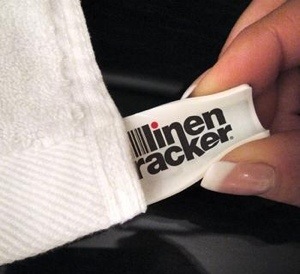
More and more hotel linens are sporting a patented chip designed to track its whereabouts. I kid you not.

Here is the good news. More than likely the linens you took by mistake (cough, cough) don’t have the tracking gizmo in it. However, in a few years I would bet that every item that is not nailed down in a hotel will contain a radio-frequency identification chip (RFID) that keeps real time inventory of frequently misplaced or stolen goods. That means each item can be traced from the guest room to the laundry, storage, and out-the-door.

I had the pleasure of talking the other day to the guy who started it all, William Serbin. His company, Linen Technology Tracking, is located in Miami. He was in the linen industry for many years and quickly became familiar with the challenges hotels face in monitoring linens. Each month hotels can lose five to 20 percent of towels, sheets and robes. That gets pretty expensive to replace.

When Serbin came up with the monitoring idea he had to make sure the chips were waterproof. Now they are tough enough to go through more than 300 wash cycles. He also admitted that while the trackers have caught a number of towel thieves the real value is just helping the hotel keep track of their inventory.

According to the Linen Technology website, “The entire system is designed around using RFID technology to identify linen within a facility. The RFID technology component consists of a microchip that has an ID and RFID reader and antenna that can receive the ID as a radio signal from the chip to identify it. Linentracker is fully FCC compliant.

“The information can be accessed by hotel management by running various reports through the Linentracker dashboard. As a result, hotel management will gain knowledge of the current loss, age of their inventory, wash counts, up-to-date inventory levels and more. The system works within a self-contained network and does not have to connect to the corporate network for any information.”

A Parking Meter that Talks to You

20130903-175051.jpg

20130903-175100.jpg

The biggest nightmare about metered parking is making sure your minutes don’t run out. Countless times over the years I have watched people racing down the streets of Manhattan to feed a meter before a traffic cop could show up. I also remember being in the movies, restaurants, and concerts when friends had to suddenly leave the premises in order to make sure their parking meter didn’t expire.

While I knew about PayByPhone quite a while ago, I never witnessed how it actually worked. Just like a neophyte, I stood there in amazement yesterday morning when a bunch of us went out for breakfast in Midtown Miami and no one left the table as we sat for hours talking. I did see a few friends pull out their smartphones, bring up the PayByPhone app, click on two bars, announce that they had just extended their parking meters by an hour, and order more coffee. I marveled at both the convenience and the brilliance of such an invention.

Then I really got blown away when one of my friends got an alert that he needed to feed the meter. It was a 10 minute warning. Once again, he pulled out his smartphone, tapped the app twice, and put his cell away. I just sat there in awe. It’s one thing to write about technology. It’s another to see it in action.

No more coins or pay-and-display receipts. It’s now even easier to pay for your parking using PayByPhone. It’s available on iPhone, Android, and Blackberry.

PayByPhone is now North America’s leading provider of mobile payments in the parking industry. PayByPhone operates across North America and Europe in over 180 cities including London, Miami, Vancouver, Newcastle, San Francisco, and Paris. Over three million people have signed up to use the PayByPhone service.

Inpatient Treatment for Internet Addiction

20130902-191328.jpg

An increasing number of retired friends are complaining to me that they are spending too much time in front of the computer screen. They think they have an Internet addiction. They wake up very early each day and go straight to the computer. Some even turn on their smartphone or tablet without getting out of bed (me).

Hours fly by and, before they know it, it’s 10:30 or 11am. They haven’t even started their day. They missed their exercise routines and breakfasts. By the time they shower and shave, it’s noon. They go straight to lunch. They claim there is a whole new time shift. Many admit they love it. It’s the best part of their day.

They spend quiet time reading online newspapers and magazines. The convenience of having it all in one place is still a novelty. They are also spending greater time on Facebook, chatting online with far away friends, playing word games, listening to audio books, music, and podcasts. Some spend countless hours researching discounts on travel and recreation.

Many spouses and friends don’t like it. They are worried about their isolation and addiction to the Internet. Apparently, my friends are not alone. There seems to be a slow growing epidemic among baby boomers.

Treatment facilities are springing up all over the country. A psychiatric hospital in central Pennsylvania has announced that it is the nation’s first facility to offer inpatient treatment. The 10-day program opens on September 9th at the Behavioral Health Services at Bradford Regional Medical Center. It’s $14,000, no insurance. Ouch! Coincidentally, that’s the same day as my 47th anniversary of working. Is someone trying to tell me something?

Dr. Kimberly Young, the psychologist who founded the program, said in an interview on ABC News, “Internet addiction is a problem that can be more pervasive than alcoholism. The Internet is free, legal and fat free.”

The not-for-profit program takes place inside a wing of the hospital designated for other addicts. These patients will undergo a psychological evaluation and learn ways they can minimally use the Internet and avoid problematic applications.

My question is where are the treatment centers for couch potatoes and sports enthusiasts who spend weekends in front of the television set? I like my Internet addiction. It keeps me balanced and informed. What about you?

Happy 10th Birthday Skype

20130901-222342.jpg

I have some friends who spend three to four hours a day on Skype. It has changed their lives. Family and friends who live far apart now see each other on a daily basis. It has truly changed the world of communications.

It’s popularity just keeps growing. The Internet calling service just announced that it connected 70 million people through its Internet calling service at once. That number is mind boggling. I try to imagine all those people talking to each other at once. Kind of like the scene in Bye Bye Birdie.

A leading Internet statistics company, Statista, also revealed:

1) The average time spent on a Skype conversation is 27 minutes.

2) Active Skype users spend 100 minutes a month on the service.

3) Thirty five percent of small businesses use Skype as a primary service.

4) Forty percent of all Skype calls use the video feature.

5) Microsoft bought Skype in 2011 for $8.5 billion.

Just 10 years agoonone million users used the service at once. In 2011, 30 million people made Skype calls at the same time, which is less than half the number concurrently connected .

Congrats Skype.