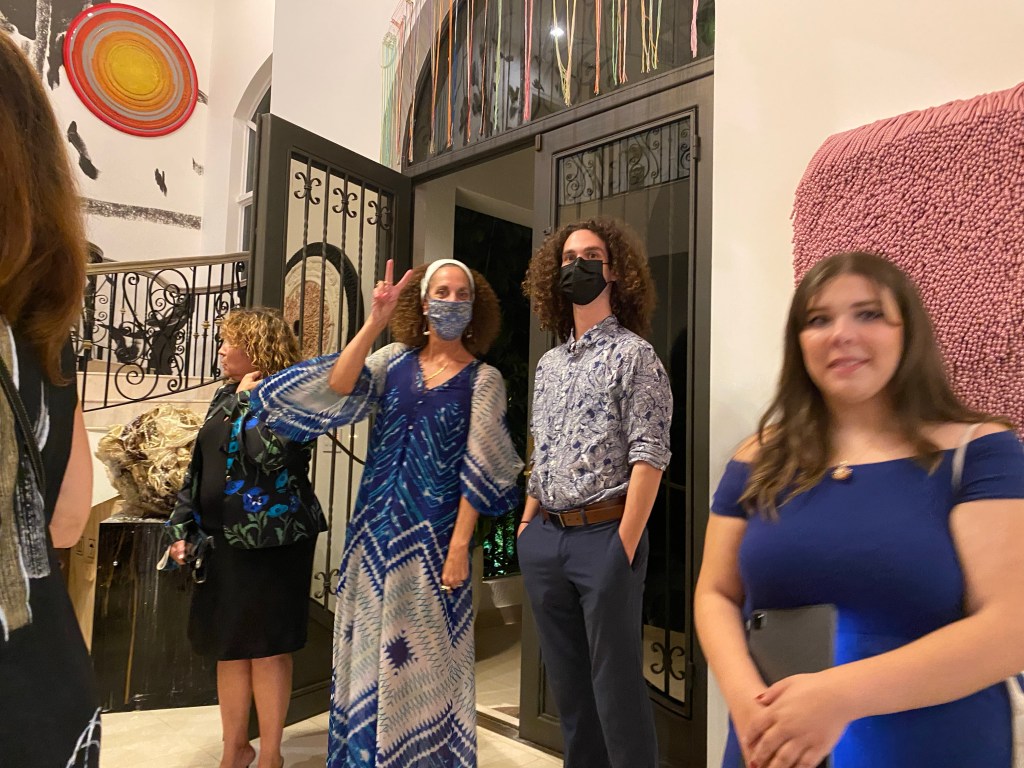
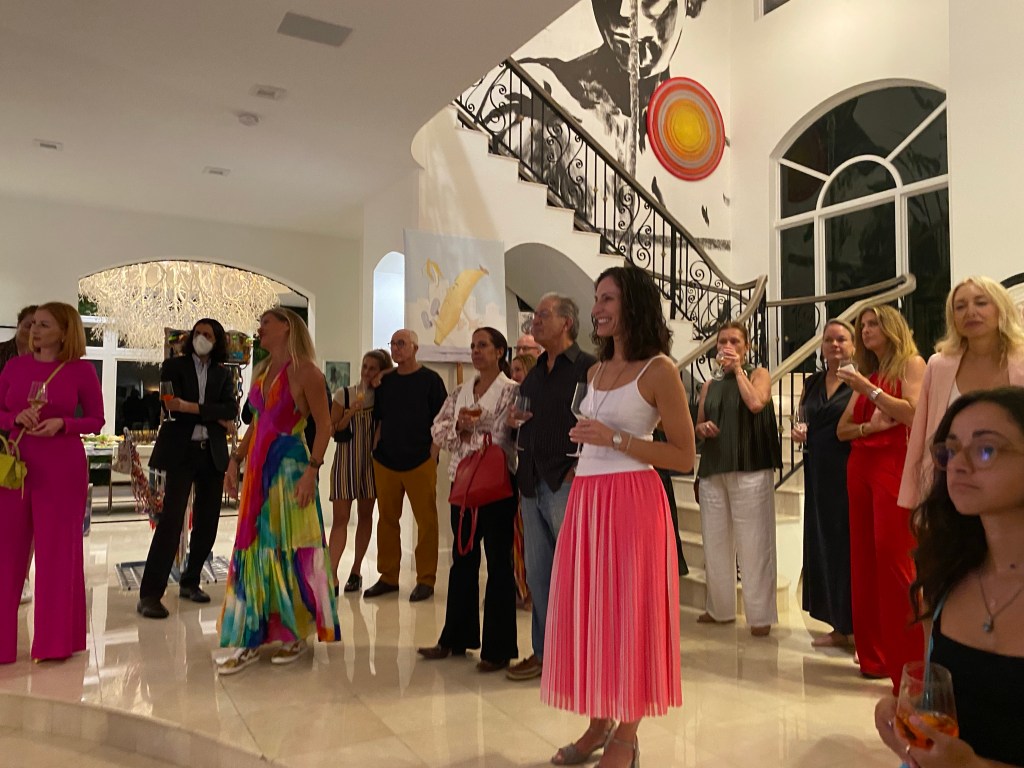
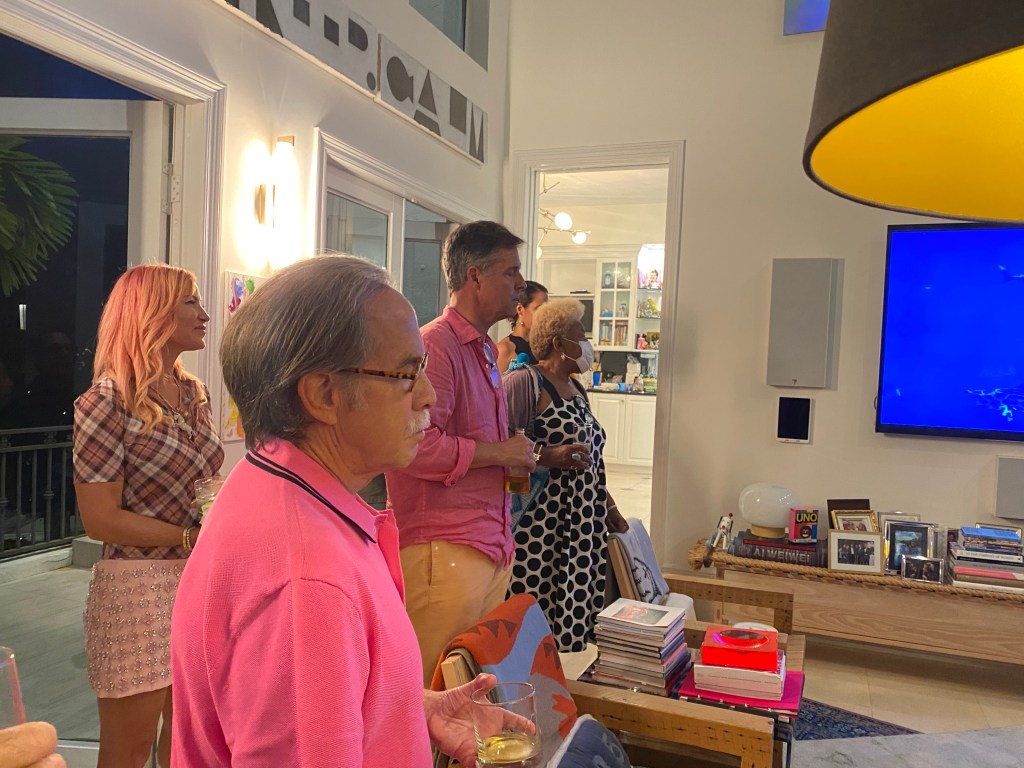
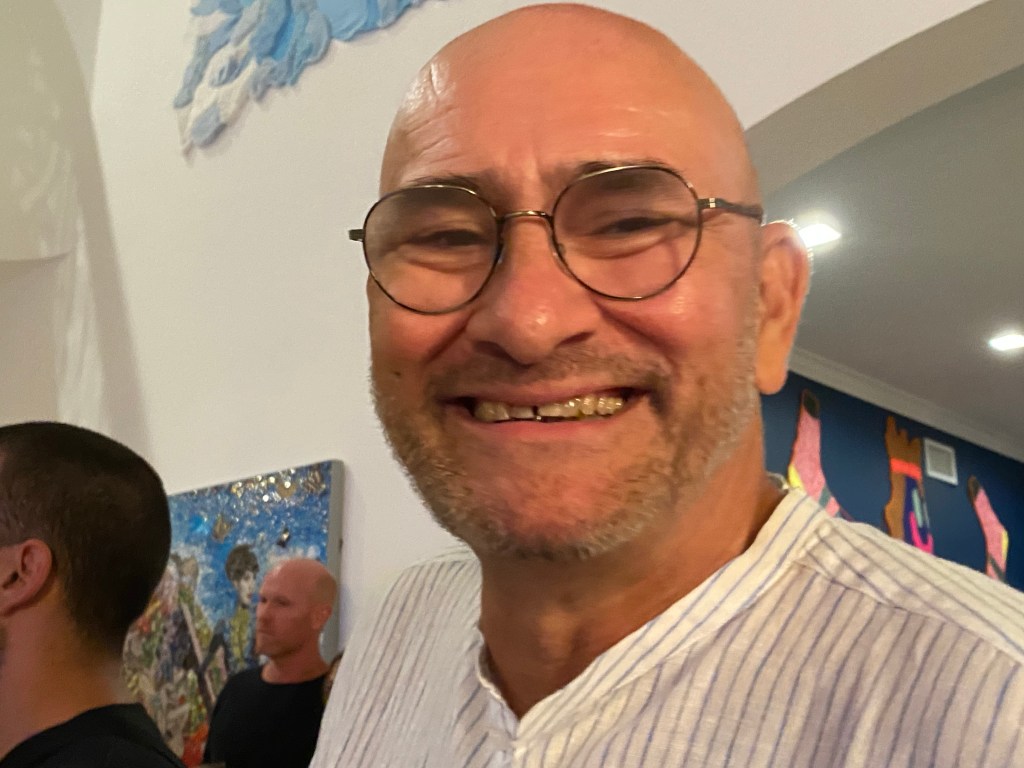
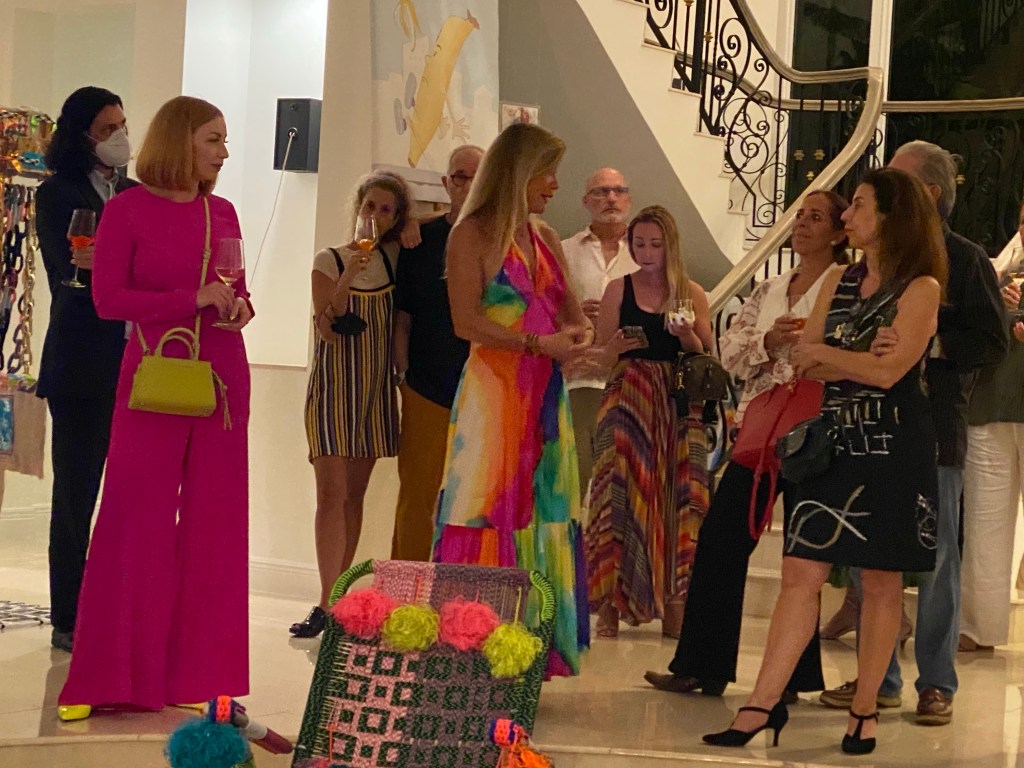
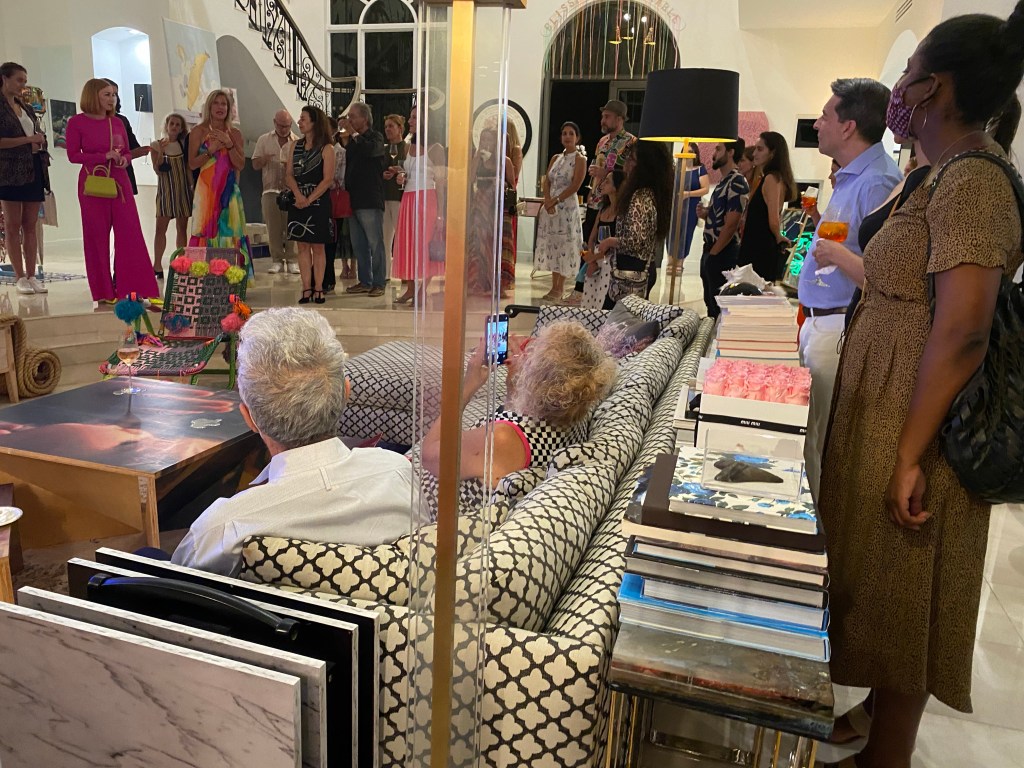
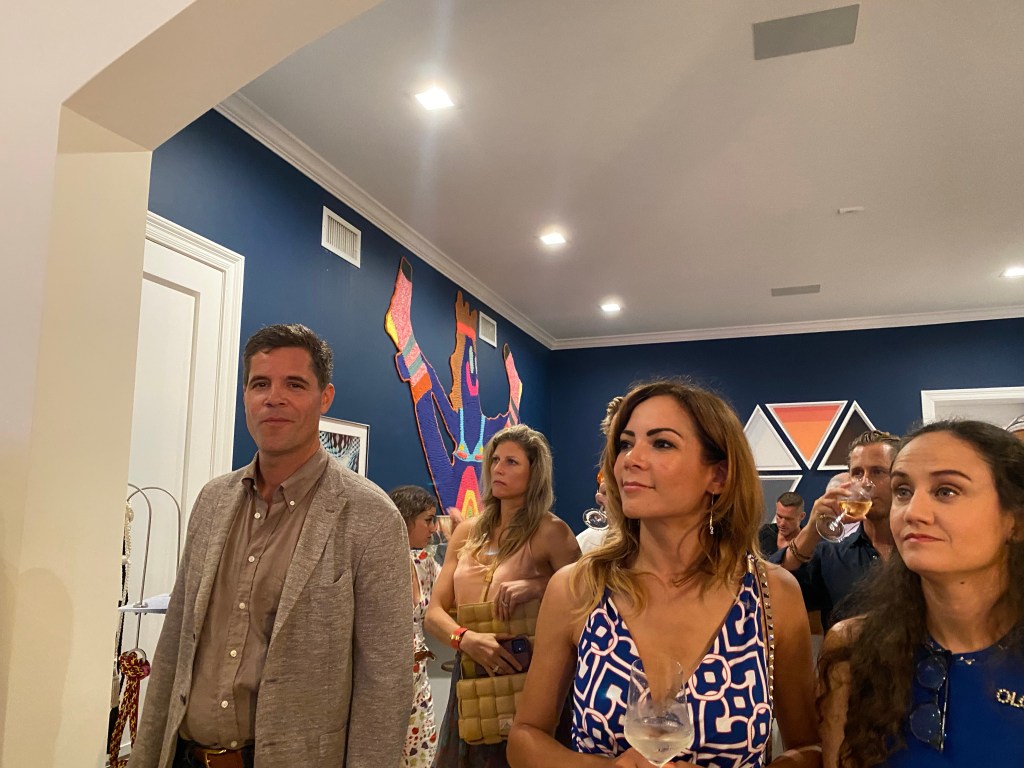
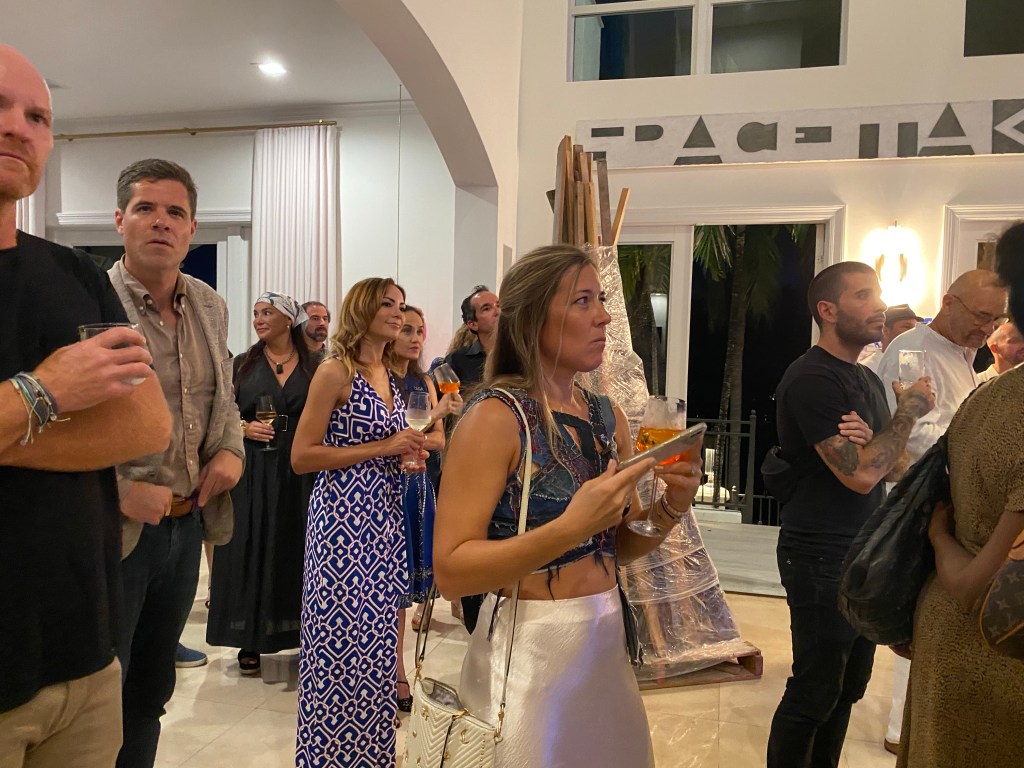
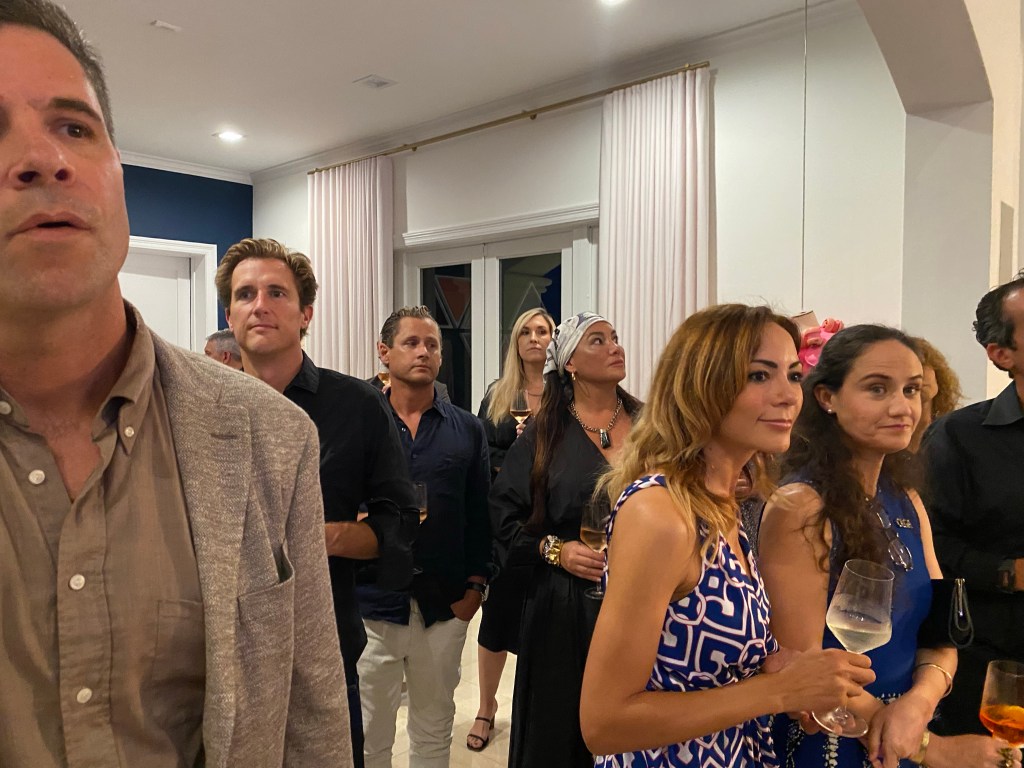
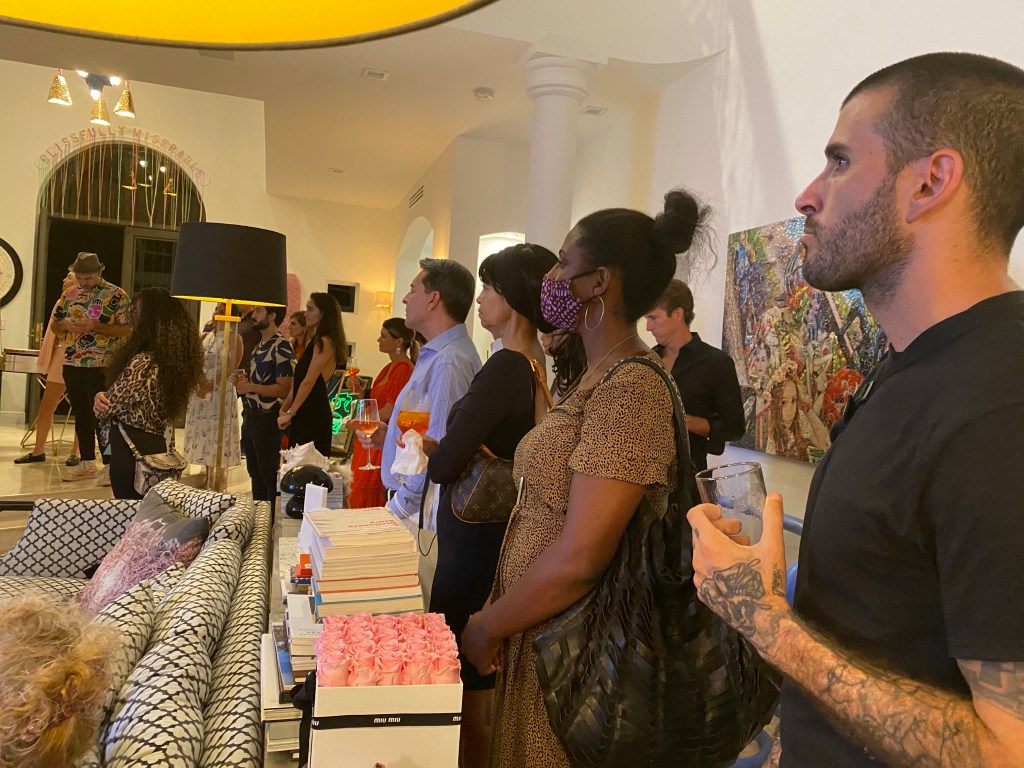
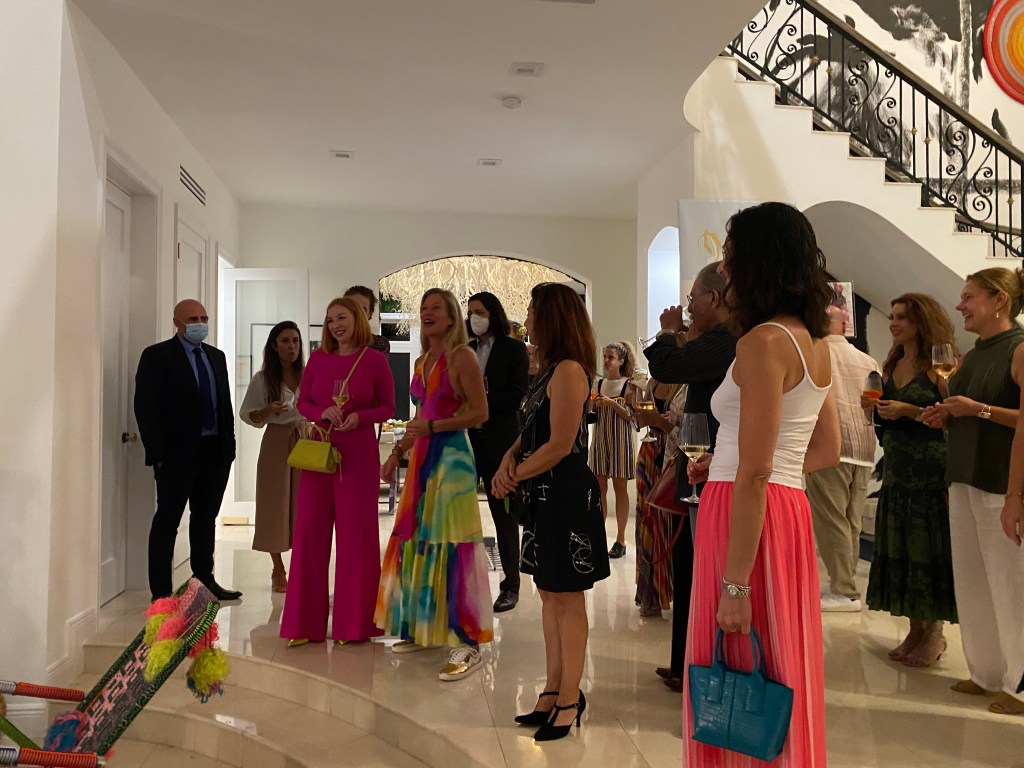
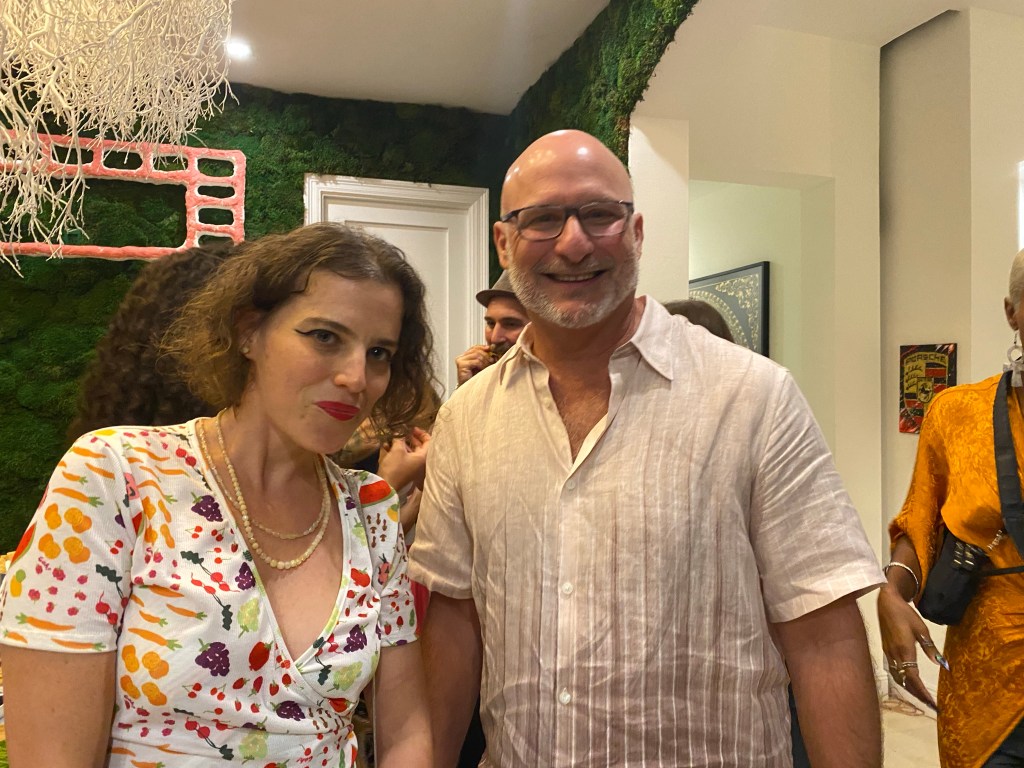
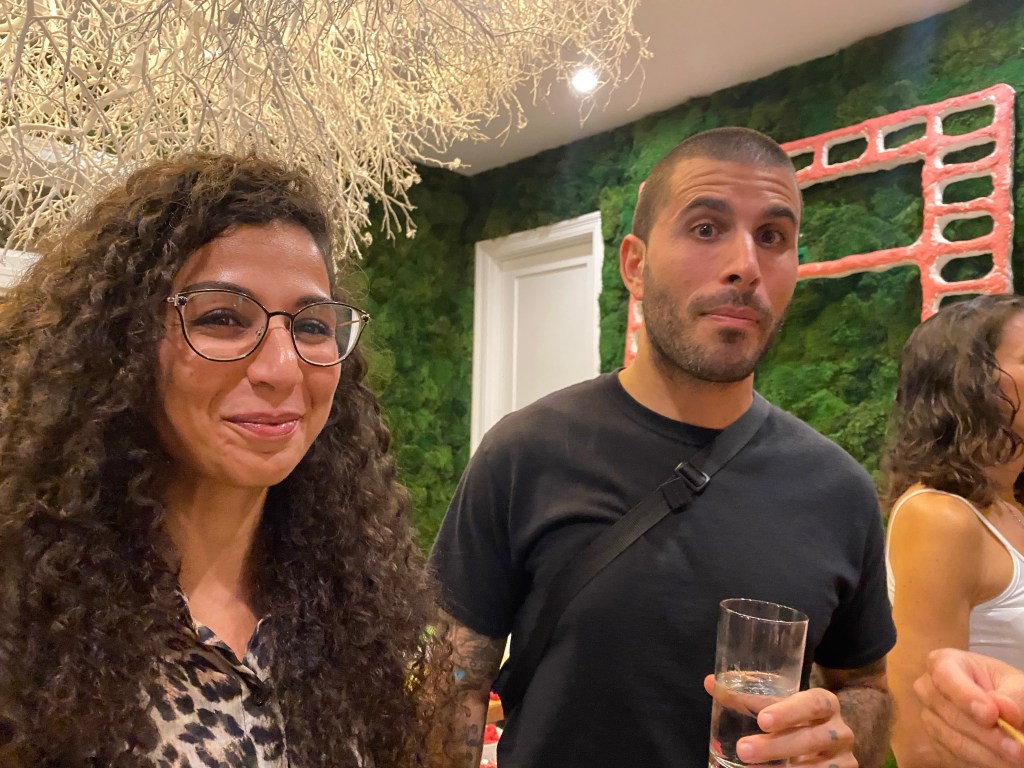
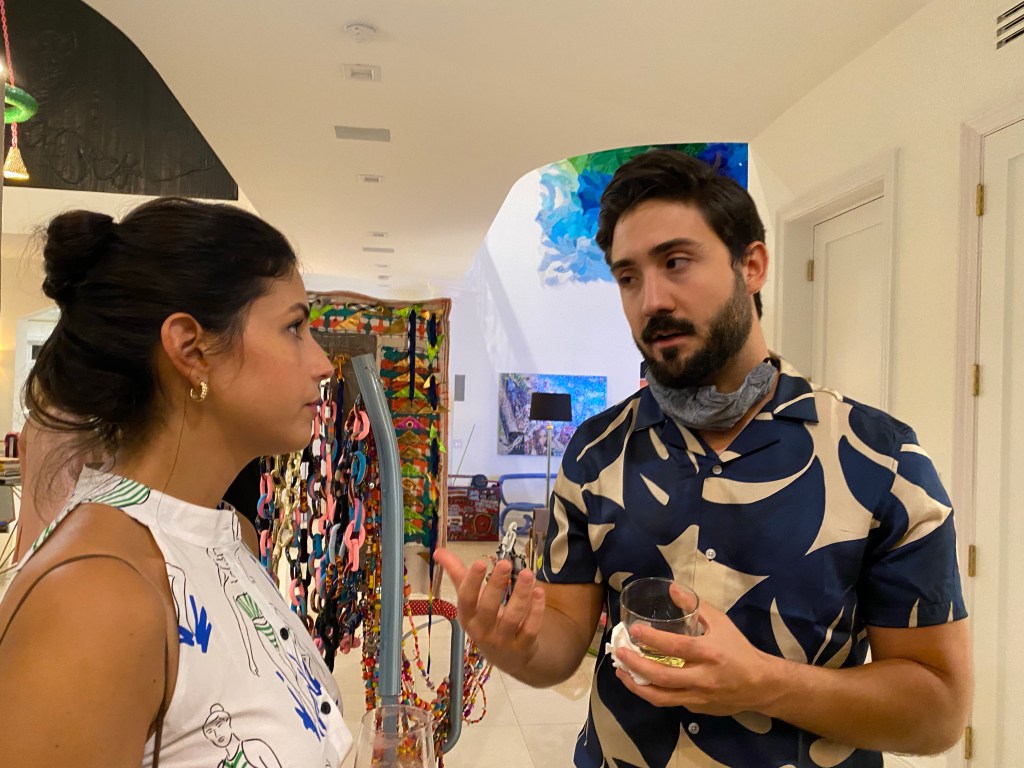
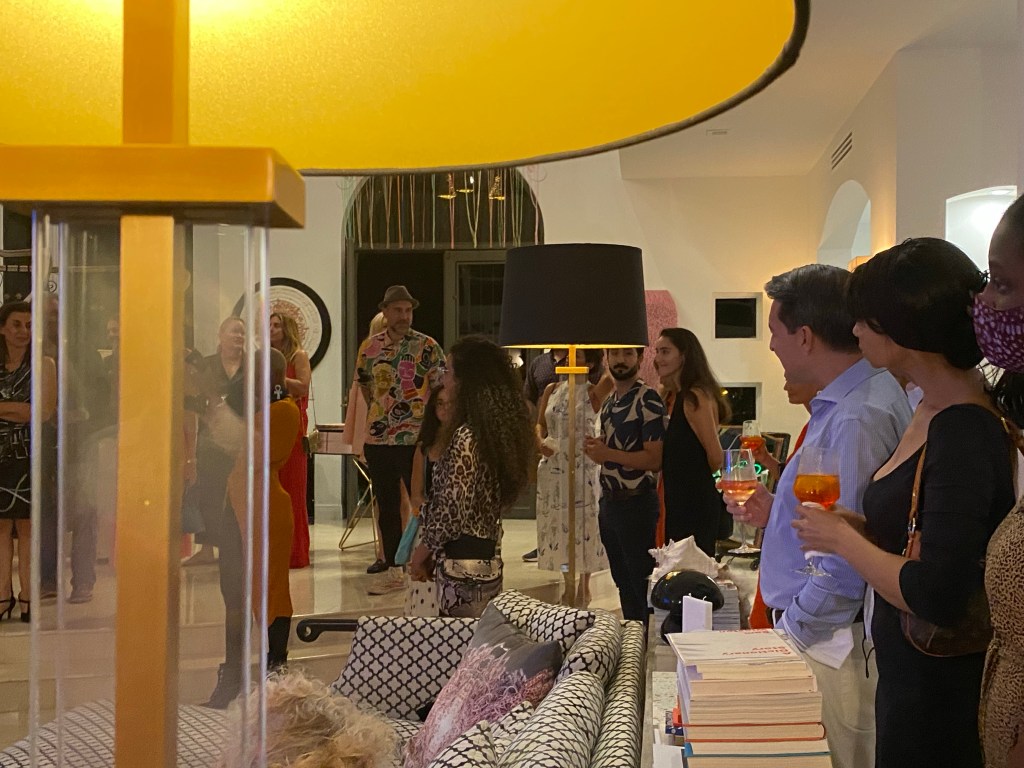
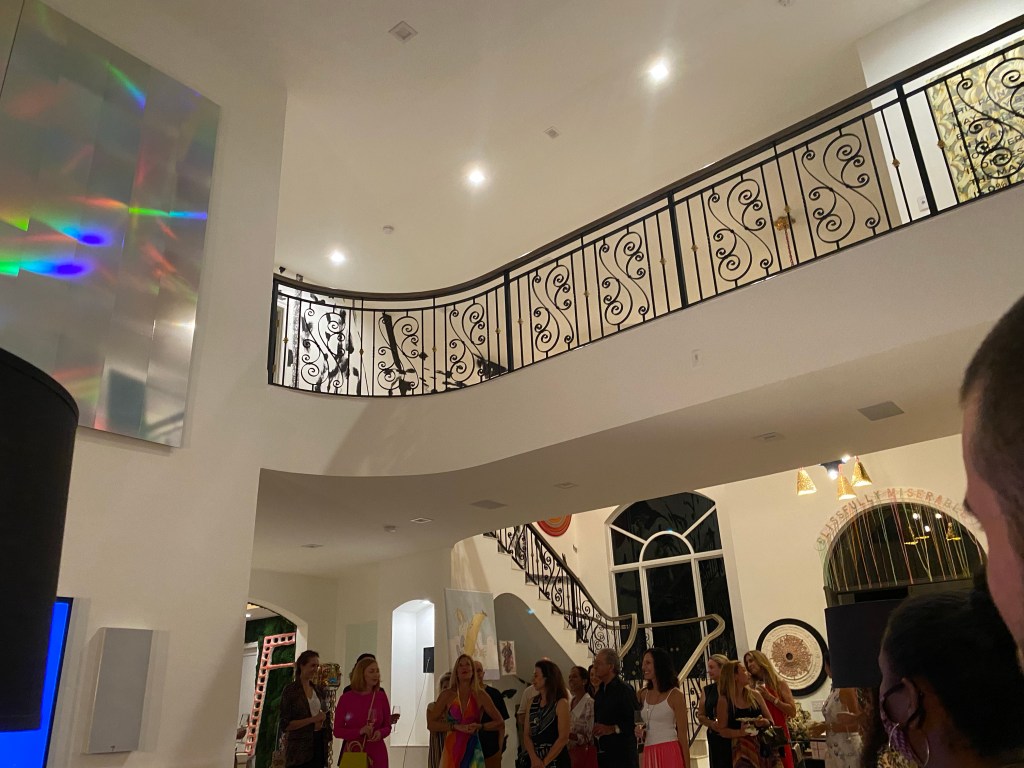
Eliot and I visited Bridge Red Studios/Project Space in (Biscayne Park), North Miami, yesterday. We admire the work of Evelyn Politzer. Like many others, she is taking the traditions of quilting, sewing, crocheting, embroidery, knitting and beadwork and turning them into art. Photos by Eliot Hess.
———————————————
Watching The Tony’s, Collage by LWHCocktail, Dinner, Sunset, Tony’s, Collage by LWH
Here’s how to stop WiFi coverage problems.This new device, RangeXTD, fits in the palm of your hand but packs a giant boost of power. RangeXTD increases the range of your WiFi and can boost speeds up to 300mbps. Remove WiFi deadspots at home and get the freedom to work, stream, and game in any room. An internal antenna boosts coverage throughout large homes, and can even provide strong coverage in your backyard. If you work from home or have a family that loves to game and stream, RangeXTD is a must!
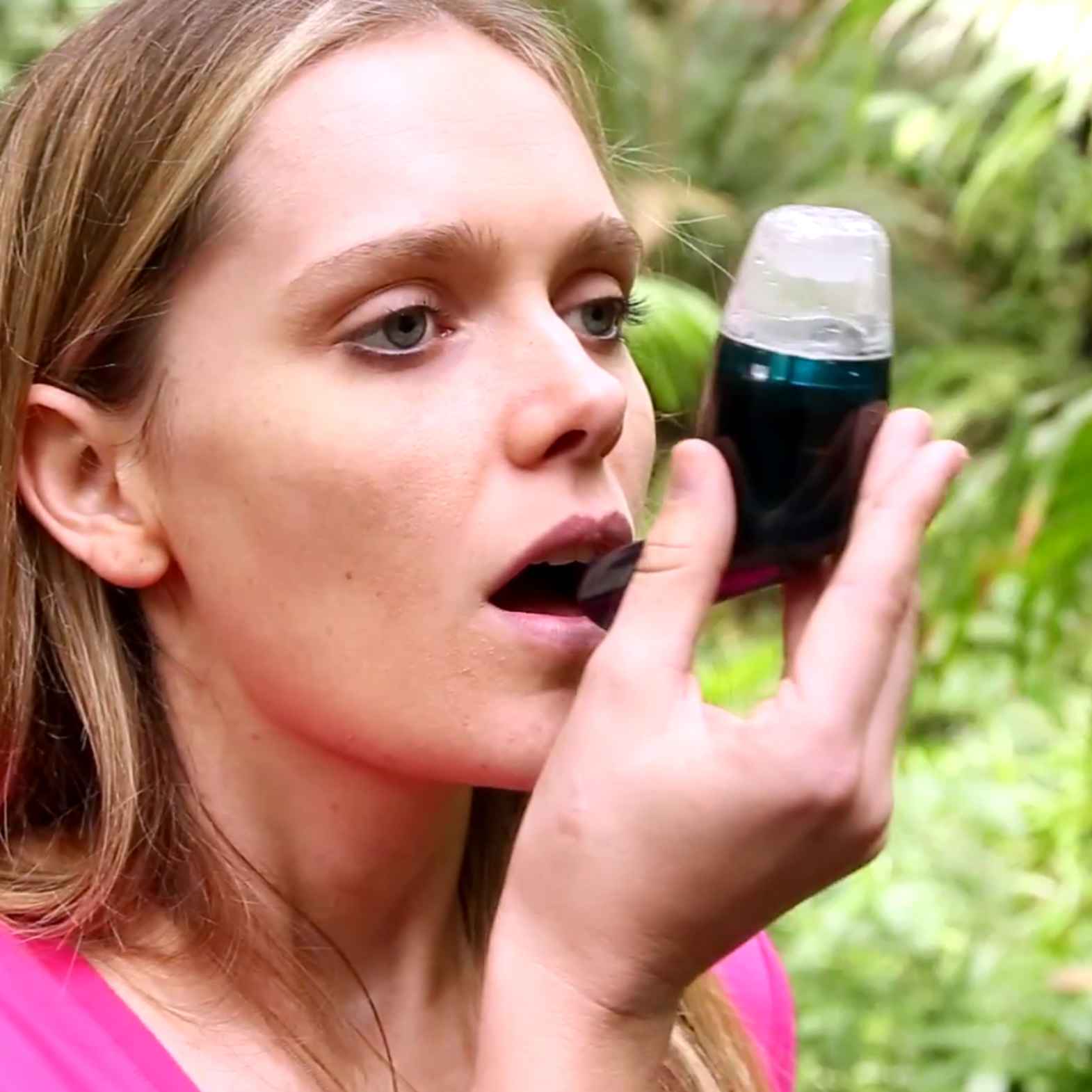
If you have a lung condition, AirPhysio could be your new best friend. This specially designed device uses a unique method to loosen the phlegm in your chest – helping you breathe easier in just a few days. Even better, this doesn’t require a prescription, it’s completely drug-free and safe. Hospitals have used the same technology for years, but now it’s available for personal use. It’s great for athletes and relieving symptoms of viruses as well.
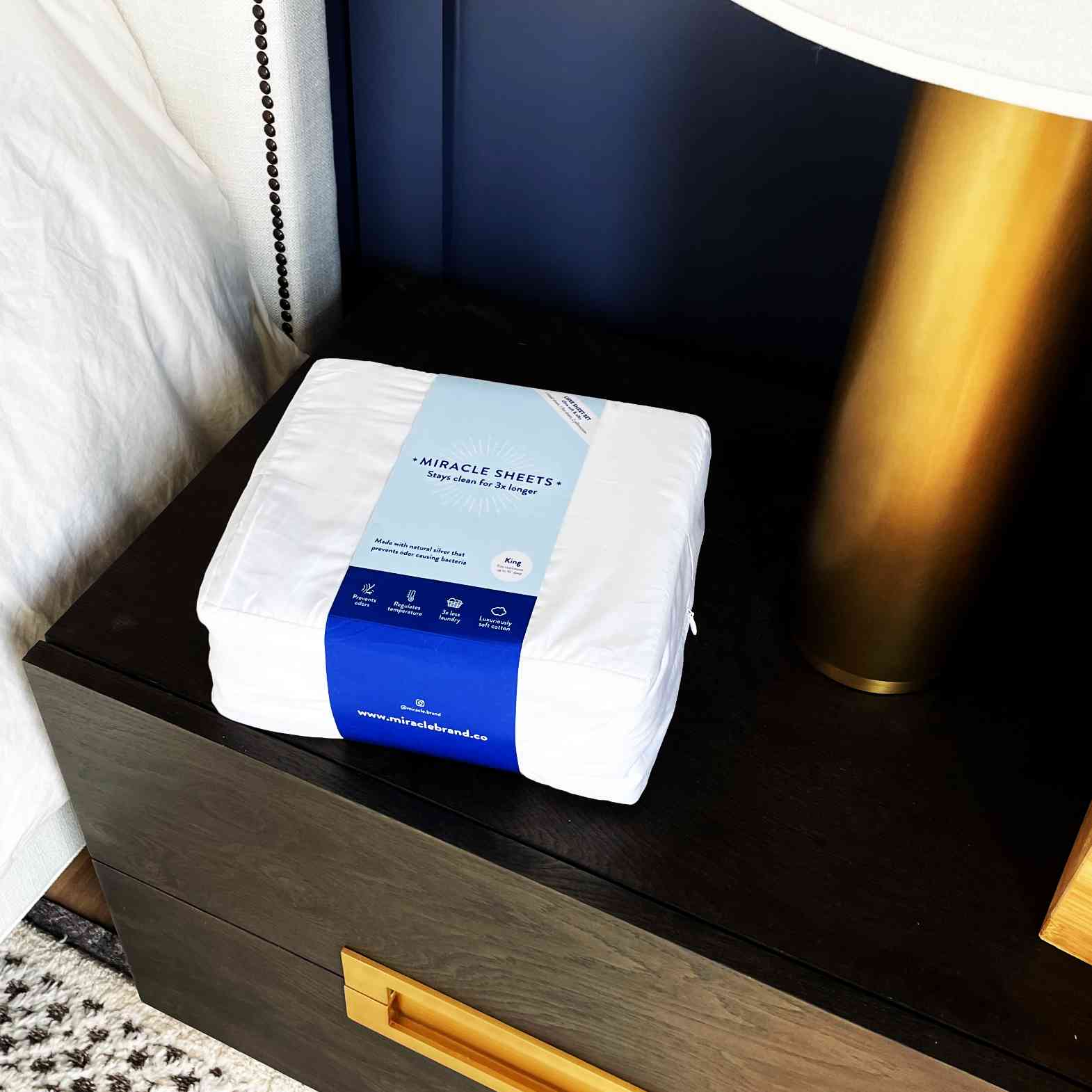
Miracle has created the world’s first ever self-cleaning, hygienic, luxury sheets. These sheets are able to fight bacteria, regulate temperature, and prevent the growth of odor-generating bacteria. Its natural bacteria fighting silver is the key to providing a cool, comfortable, and healthy night of sleep. Miracle sheets are going to be as productive as you.
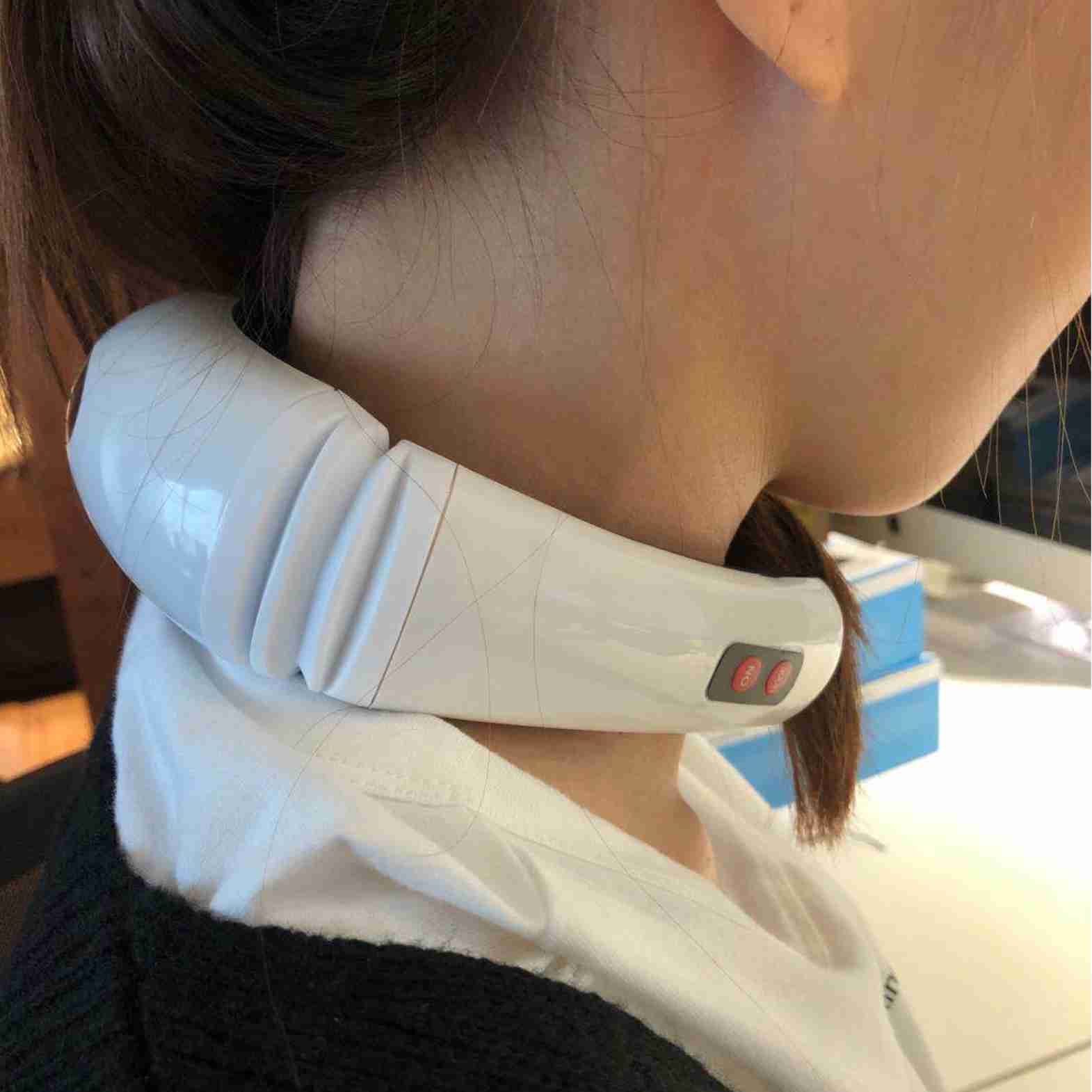
Sitting at the computer or texting with the wrong posture may be hurting your neck. NeckRelax works by relieving tension in your neck muscles by combining the powers of infrared heat, 6 distinctive massage modes, and electric frequencies, promoting pain relief and relaxation, which in turn can help reduce stress. All you need to do is wrap it around your neck and in minutes, your pain may begin melting away, giving you the energy you need to accomplish your goals.
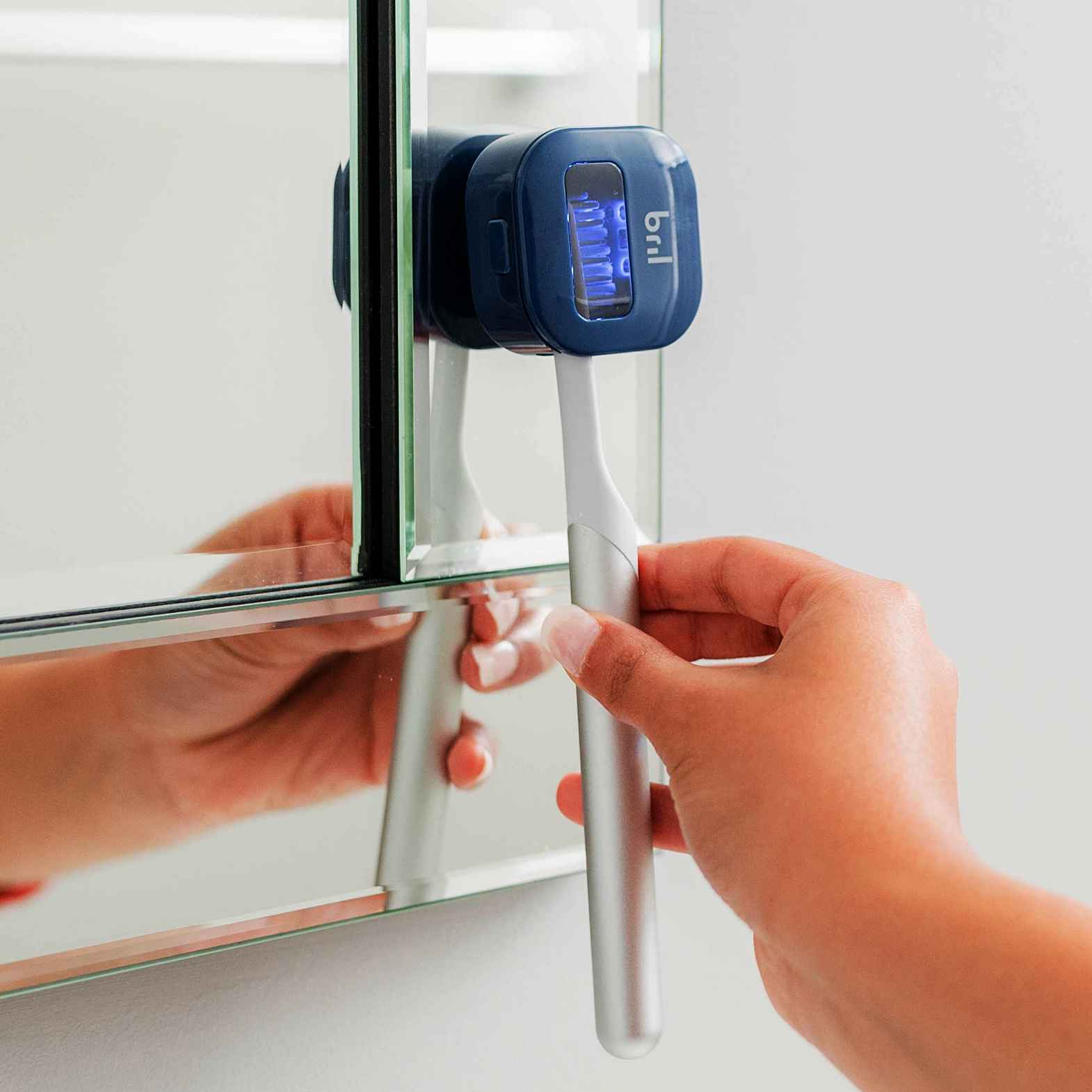
A toothbrush has about 100 million nasty germs crawling over it. To fix that, this device doubles as a germ-killer and toothbrush holder. It’s called Bril, and Bril is a registered class III medical device with the FDA. Bril is a portable toothbrush case that uses natural UV light to kill germs on the head of your toothbrush – protecting you and your family from germs, viruses and harmful bacteria.
GoDonut is the most universal and portable device stand ever built. It will work with your entire collection of mobile devices (with its case on or off), including your iPhone, iPad, Samsung Galaxy, LG, Kindle Fire, and more! Monitor your phone, read recipes in the kitchen, and view your devices without having to hold them. It’s an award-winning CES product, received praise by celebrities at the Golden Globe Awards, it’s made in the USA, and has sold over 500,000 units.
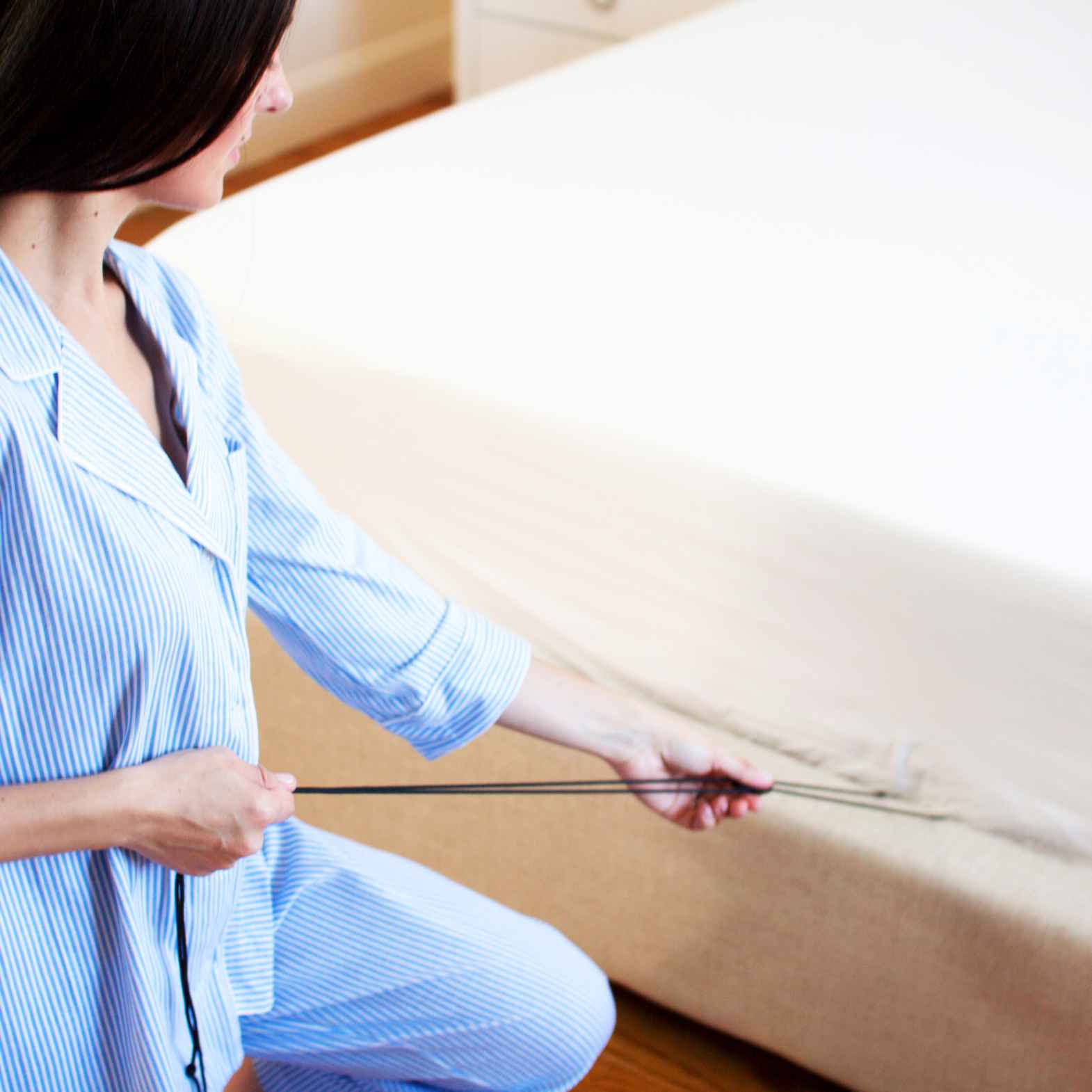
Bed Scrunchie is USA-made and unlike any other bed tightening system. It uses a “360-degree” technique, which makes your sheets perfectly tight every time (with hardly any effort). This little tool stops your bed sheets from coming off the mattress corners too. It works on ANY bed type or size – and on any size of sheets! Yes, even if your sheets are too small or too large for your bed, Bed Scrunchie can fix it (and keep ’em on tight).
Struggling with racing thoughts at night? Here’s a technique to stop them, naturally. Get lulled into a deep peacful sleep with Dodow. It is a metronome-light scientifically designed to block out overactive thought patterns. It is essentially combining yoga, meditation, and behavioral therapy. This makes it the safe way to effortlessly fall asleep. Using Dodow is so effective, customers report… “falling asleep before the 8-minute mode ends” and after a few months “not needing Dodow to fall asleep anymore.”
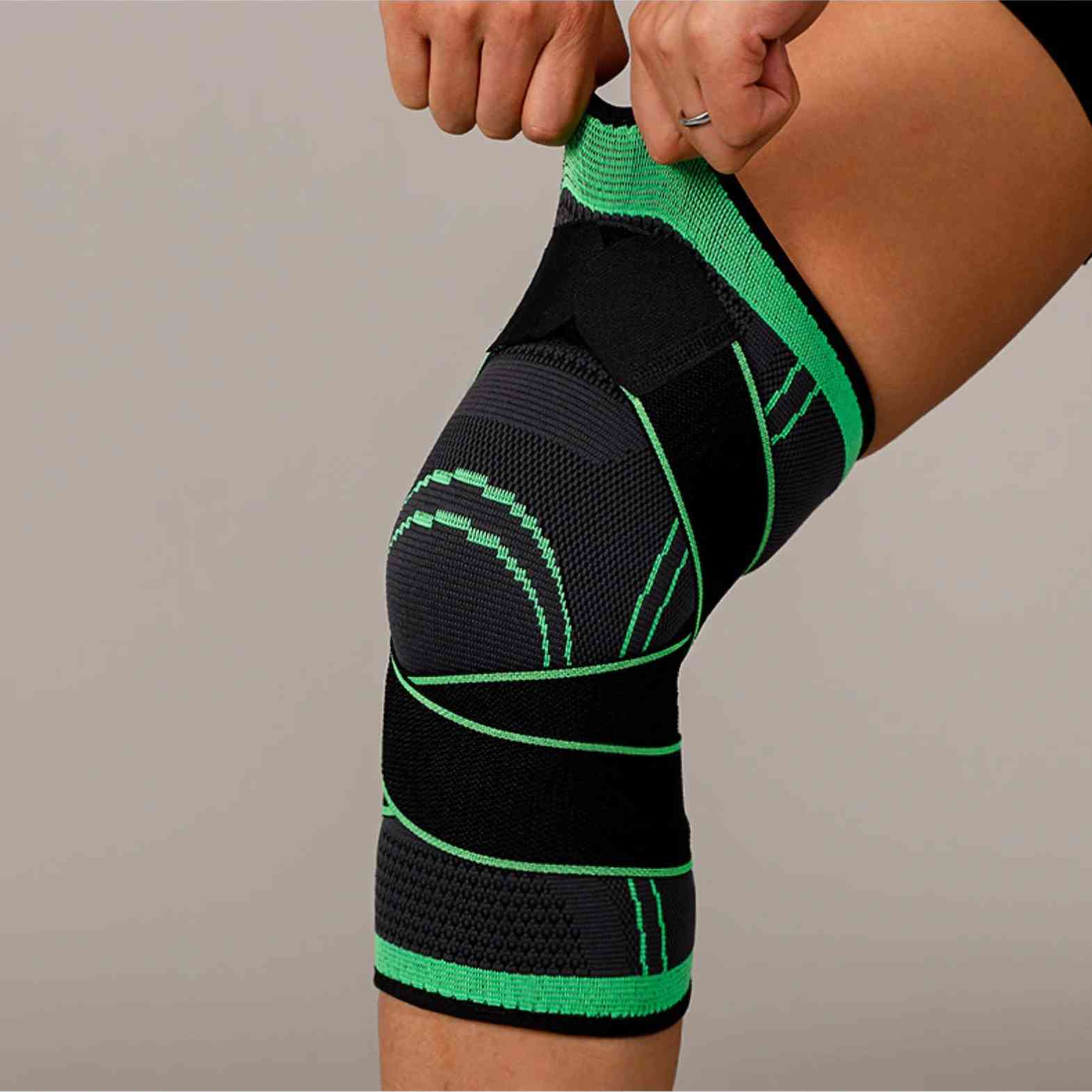
According to the Institute Of Medicine (IOM), nearly 1 out of 3 people currently experience some form of knee pain. If you want to beat joint pain, you MUST keep moving. But when you’re suffering from aches, pains, and stiffness – movement is the last thing on your mind. So, what’s the solution? “You need to keep moving and staying active, as much as you don’t want to. I made these knee sleeves to provide an all-natural option to help ease the stubborn pain,” says Caresole’s founder, Thomas Blumel.
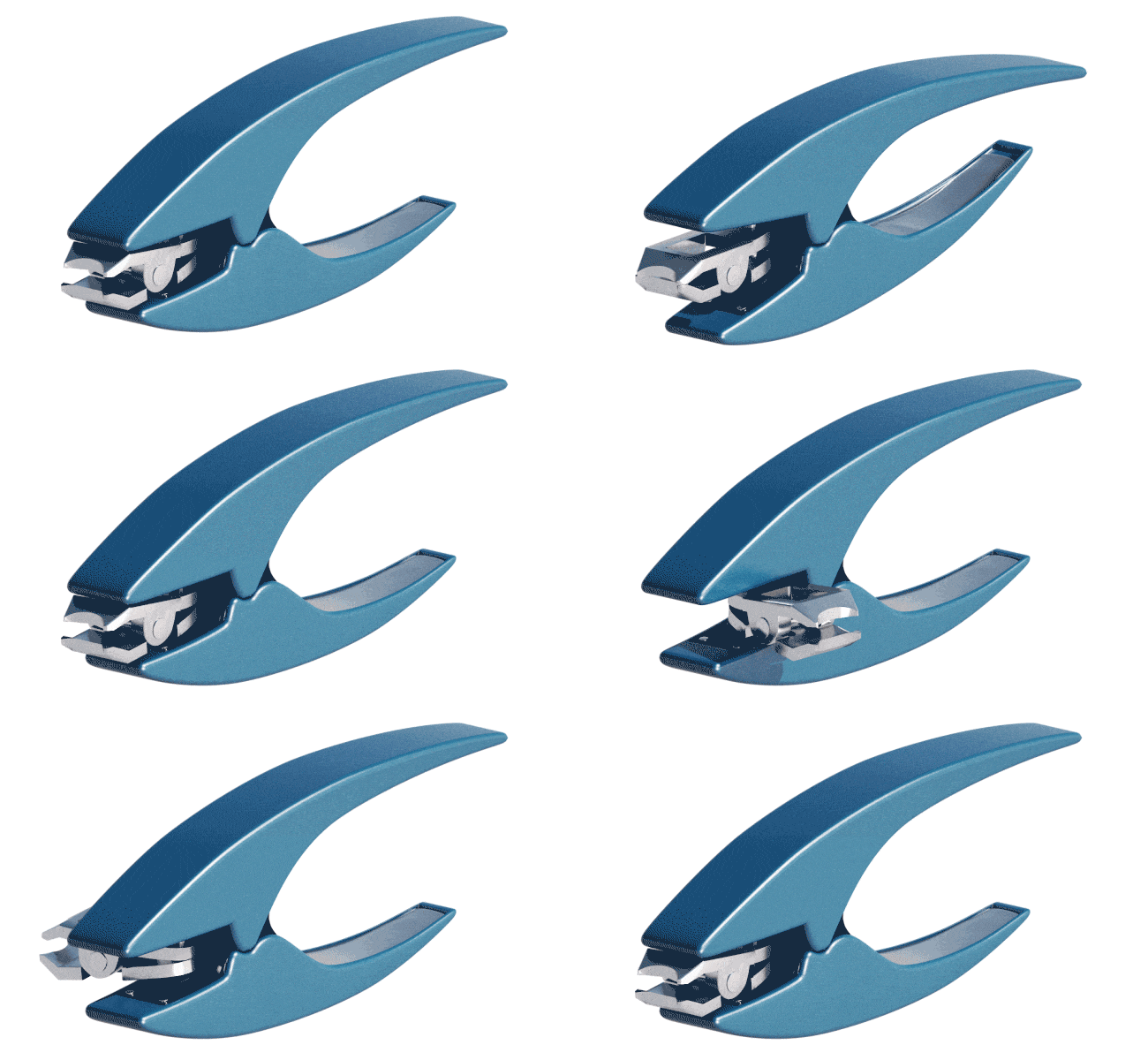
The company that developed CLIPPERPRO was founded by three orthopedic surgeons in San Diego. Thick, ingrown and tough nails are cut like butter and your hands are not injured.
This is not a joke. Wired Magazine just did an expose on this topic. Talk to your local politicians about this. We can cure this together.
Q
WHENEVER A PLASTIC bag or bottle degrades, it breaks into ever smaller pieces that work their way into nooks in the environment. When you wash synthetic fabrics, tiny plastic fibers break loose and flow out to sea.
When you drive, plastic bits fly off your tires and brakes. That’s why literally everywhere scientists look, they’re finding microplastics—specks of synthetic material that measure less than 5 millimeters long. They’re on the most remote mountaintops and in the deepest oceans.
They’re blowing vast distances in the wind to sully once pristine regions like the Arctic. In 11 protected areas in the western US, the equivalent of 120 million ground-up plastic bottles are falling out of the sky each year.
And now, microplastics are coming out of babies. In a pilot study published today, scientists describe sifting through infants’ dirty diapers and finding an average of 36,000 nanograms of polyethylene terephthalate (PET) per gram of feces, 10 times the amount they found in adult feces.
They even found it in newborns’ first feces. PET is an extremely common polymer that’s known as polyester when it’s used in clothing, and it is also used to make plastic bottles. The finding comes a year after another team of researchers calculated that preparing hot formula in plastic bottles severely erodes the material, which could dose babies with several million microplastic particles a day, and perhaps nearly a billion a year.
Although adults are bigger, scientists think that in some ways infants have more exposure. In addition to drinking from bottles, babies could be ingesting microplastics in a dizzying number of ways. They have a habit of putting everything in their mouths—plastic toys of all kinds, but they’ll also chew on fabrics.
(Microplastics that shed from synthetic textiles are known more specifically as microfibers, but they’re plastic all the same.) Babies’ foods are wrapped in single-use plastics. Children drink from plastic sippy cups and eat off plastic plates. The carpets they crawl on are often made of polyester. Even hardwood floors are coated in polymers that shed microplastics. Any of this could generate tiny particles that children breathe or swallow.
Indoor dust is also emerging as a major route of microplastic exposure, especially for infants. (In general, indoor air is absolutely lousy with them; each year you could be inhaling tens of thousands of particles.) Severalstudies of indoor spaces have shown that each day in a typical household, 10,000 microfibers might land on a single square meter of floor, having flown off of clothing, couches, and bed sheets. Infants spend a significant amount of their time crawling through the stuff, agitating the settled fibers and kicking them up into the air.
“Unfortunately, with the modern lifestyle, babies are exposed to so many different things for which we don’t know what kind of effect they can have later in their life,” says Kurunthachalam Kannan, an environmental health scientist at New York University School of Medicine and coauthor of the new paper, which appears in the journal Environmental Science and Technology Letters.
The researchers did their tally by collecting dirty diapers from six 1-year-olds and running the feces through a filter to collect the microplastics. They did the same with three samples of meconium—a newborn’s first feces—and stool samples from 10 adults. In addition to analyzing the samples for PET, they also looked for polycarbonate plastic, which is used as a lightweight alternative to glass, for instance in eyeglass lenses. To make sure that they only counted the microplastics that came from the infants’ guts, and not from their diapers, they ruled out the plastic that the diapers were made of: polypropylene, a polymer that’s distinct from polycarbonate and PET.The news of the future, now.
All told, PET concentrations were 10 times higher in infants than in adults, while polycarbonate levels were more even between the two groups. The researchers found smaller amounts of both polymers in the meconium, suggesting that babies are born with plastics already in their systems. This echoes previous studies that have found microplastics in human placentas and meconium.
What this all means for human health—and, more urgently, for infant health—scientists are now racing to find out. Different varieties of plastic can contain any of at least 10,000 different chemicals, a quarter of which are of concern for people, according to a recent study from researchers at ETH Zürich in Switzerland. These additives serve all kinds of plastic-making purposes, like providing flexibility, extra strength, or protection from UV bombardment, which degrades the material. Microplastics may contain heavy metals like lead, but they also tend to accumulate heavy metals and other pollutants as they tumble through the environment. They also readily grow a microbial community of viruses, bacteria, and fungi, many of which are human pathogens.
Of particular concern are a class of chemicals called endocrine-disrupting chemicals, or EDCs, which disrupt hormones and have been connected to reproductive, neurological, and metabolic problems, for instance increased obesity. The infamous plastic ingredient bisphenol A, or BPA, is one such EDC that has been linked to various cancers.
“We should be concerned because the EDCs in microplastics have been shown to be linked with several adverse outcomes in human and animal studies,” says Jodi Flaws, a reproductive toxicologist at the University of Illinois at Urbana-Champaign, who led a 2020 study from the Endocrine Society on plastics. (She wasn’t involved in this new research.) “Some of the microplastics contain chemicals that can interfere with the normal function of the endocrine system.”
Infants are especially vulnerable to EDCs, since the development of their bodies depends on a healthy endocrine system. “I strongly believe that these chemicals do affect early life stages,” says Kannan. “That’s a vulnerable period.”
This new research adds to a growing body of evidence that babies are highly exposed to microplastic. “This is a very interesting paper with some very worrying numbers,” says University of Strathclyde microplastic researcher Deonie Allen, who wasn’t involved in the study. “We need to look at everything a child is exposed to, not just their bottles and toys.”ADVERTISEMENTnull
Since infants are passing microplastics in their feces, that means the gut could be absorbing some of the particles, like it would absorb nutrients from food. This is known as translocation: Particularly small particles might pass through the gut wall and end up in other organs, including the brain. Researchers have actually demonstrated this in carp by feeding them plastic particles, which translocated through the gut and worked their way to the head, where they caused brain damage that manifested as behavioral problems: Compared to control fish, the individuals with plastic particles in their brains were less active and ate more slowly.
But that was done with very high concentrations of particles, and in an entirely different species. While scientists know that EDCs are bad news, they don’t yet know what level of microplastic exposure it would take to cause problems in the human body. “We need many more studies to confirm the doses and types of chemicals in microplastics that lead to adverse outcomes,” says Flaws.
In the meantime, microplastics researchers say you can limit children’s contact with particles. Do not prepare infant formula with hot water in a plastic bottle—use a glass bottle and transfer it over to the plastic one once the liquid reaches room temperature. Vacuum and sweep to keep floors clear of microfibers. Avoid plastic wrappers and containers when possible. Microplastics have contaminated every aspect of our lives, so while you’ll never get rid of them, you can at least reduce your family’s exposure.
Richard Buckley, Longtime Fashion Journalist, Dies at 72—Tom Ford’s Partner
and that’s not all. Check second story.
The fashion journalist’s death at home Sunday was revealed by his companion of 35 years, Tom Ford.
Richard Buckley COURTESY PHOTO
Longtime fashion journalist Richard Buckley died Sunday at age 72.
“It is with great sadness that Tom Ford announces the death of his beloved husband of 35 years, Richard Buckley,” a statement from the designer said. “Richard passed away peacefully at their home in Los Angeles last night with Tom and their son Jack by his side. He died of natural causes after a long illness.”
Buckley was born in Binghamton, N.Y., in 1948 and was raised as part of a military family in New York, France and Germany. After graduating from the University of Maryland in Munich, he began to pursue a career in journalism in 1979 at New York Magazine. In 1982, he moved to Paris as the European editor of Fairchild Publications’ Daily News Record, the men’s wear counterpart to WWD. In that and subsequent roles, he had the uncanny ability to spot what was “next” — the young designer who would become the Next Big Thing; a club everyone would soon be flocking to, or a musician, actor or actress set to explode onto the scene.
A man with ramrod straight posture and piercing blue eyes, Buckley’s inquisitiveness knew few, if any, bounds, and he somehow managed to tap into what would be influencing men’s fashions not only a season ahead, but several seasons ahead. And he would do it all with a quietly diligent, soft-spoken manner that endeared him to almost everyone he met — and that hid a sense of humor that delighted in spotting the absurd, or that could make even the most cutting remark come across with seeming kindness.
In 1986, Buckley was called back to New York by editorial director John B. Fairchild to be editor in chief of the company’s newest publication, Scene, which was aimed at the twentysomething daughter of the reader of Fairchild’s W magazine. He also held the title of fashion editor at WWD. While Scene — which was meant to have the gritty feel of the downtown world it supposedly covered — never took off in the way Fairchild hoped, Buckley still managed to carve out a niche for it as an insider’s must-read to learn about the newest trends in fashion, music, art, culture and more.
After Scene shuttered, Buckley left Fairchild in 1988 to join Tina Brown at Vanity Fair, where he became social editor and, again, rapidly turned that beat into more than just a party page. In 1990, he and Ford would move to Milan, where Buckley became European editor of Mirabella magazine and contributing editor at Italian Vogue, while Ford joined the design staff at Gucci. After the couple relocated to Paris, Buckley became editor in chief of Vogue Hommes International. He would continue to contribute the occasional fashion article even after the couple moved to London. Buckley most recently lived in Los Angeles, New York and Santa Fe.
He is survived by his husband, Tom Ford, as well as their son, Alexander John Buckley Ford.
Funeral arrangements could not be learned at presstime.
———————————————
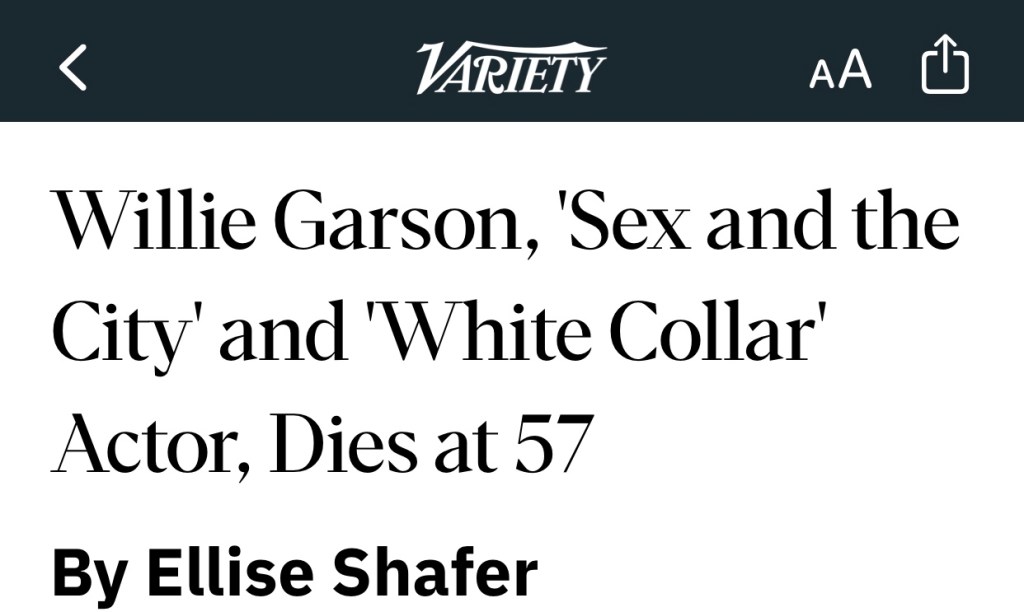
Willie Garson, an actor best known for playing Stanford Blatch in “Sex and the City” and Mozzie in “White Collar,” has died. He was 57.
A family member of Garson’s confirmed his death to Variety. A cause of death has not been disclosed.
In HBO’s wildly popular “Sex and the City” series, Garson portrayed talent agent Stanford, the witty and stylish best male friend of Carrie Bradshaw (Sarah Jessica Parker). Garson reprised the role in the franchise’s films, “Sex and the City” and “Sex and the City 2,” and had recently been filming HBO’s upcoming revival series, “And Just Like That.”
Beyond “Sex and the City,” Garson co-starred as cunning con man Mozzie on USA Network’s “White Collar” from 2009 to 2014. Garson was also known for playing the friendly doorman Ralph in the 2005 rom-com “Little Manhattan,” Gerald Hirsch in the “Hawaii Five-0” reboot from 2015 to 2020 and Henry Coffield on “NYPD Blue” in 1993.
As of this morning, the media is reporting that restrictions will be lifted for international travel this October. Let’s hope that the world will be healthy enough to continue what we consider a normal life. I’m optimistic so I am including today’s announcement from The New York Times as well as a Q and A from travel guru Rick Steves that was published in The New Yorker on how to get back in the action.
Eliot and I traveled extensively before the pandemic and would like to continue to do that sometime in the future. However, we are no different than most folks who feel we have to figure in the safety factor. We have our fingers crossed that one day we can pack our bags and take off for an undetermined period of time. Wouldn’t that be nice?
The Biden administration will lift restrictions on fully vaccinated international travelers in November.
The travel guidebook guru, at 66, discusses a year and a half without seeing Europe, the next chapter in post-pandemic travel, and why you should order whatever beverage the locals are having.
“The practical goal is to get people who have been to Disney World four or five times to try Portugal,” Steves says. “It won’t bite you.”
To a certain subset of anxious but enthusiastic middle-class Americans—for those who yearn to see Paris before they die, and want to make sure they don’t miss a croissant or fresco while they’re there—
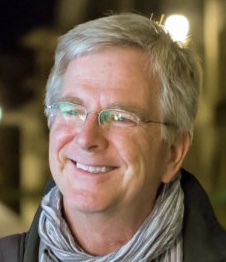
Rick Steves is a bona-fide travel celebrity. .
A Timesprofile labelled him as “one of the legendary PBS superdorks—right there in the pantheon with Mr. Rogers, Bob Ross and Big Bird.”
He was getting ready to hike Mont Blanc, his first trip abroad since March of 2020. He told me what he thinks the next chapter of post-pandemic travel might look like, and why you should always order whatever beverage the locals are having.
Where are you in the world?
I’m just sitting here in my beautiful little office at home, in my little town of Edmonds. I just gave a talk at the Rotary Club this morning. I got a nice walk in.
I know you are a big walker.
I get a lot of exercise when I’m in Europe. My body is used to it for four months out of the year. It’s this hunter-gatherer rhythm, where I can hibernate in the winter and get out in the wilds in the summer.
What was the Rotary Club talk about?
Travel after covid.
What was your message?
Well, you could get all the experts together on a panel and they don’t really know what travel is going to be like. My spiel is, if I had to predict, we’re going to get back to a sort of normalcy. Kind of like airports after 9/11. People said travel will never be the same. Well, airports will never be the same, but they’re still airports, even though you don’t have vast lobbies where you kind of glide across, and you’ve got all sorts of T.S.A. apparati, and you don’t have your loved ones taking you to the gates. I think travel is still going to be travel.
When the pandemic first hit, did you have to cancel a trip?
Every year since I was a kid—so, like, forty years—I’ve planned a hundred days in Europe. When covid hit, I had every hotel booked. We were going to make two TV shows in Poland and two TV shows in Iceland. I was going to fly to Turkey, because I wanted to check in on Turkey! Then I had to cancel that. And we had twenty-four thousand people signed up on Rick Steves tours.
Oh, my God.
Twenty-four thousand people’s travel dreams! They’d saved up. We just had to tell them, Here’s your money back. I was really determined from the get-go not to do what embarrasses me about a lot of other companies in the tourism industry, which is keep their money and give them credit. I just told my staff, O.K., we want to give every penny back. When it’s time to go again, we’ll let you know.
You still live where you grew up, right?
Right. It’s got a ferry dock. It’s got a Main Street. It’s the first real town north of Seattle. I never get tired of this.
It’s interesting to me that for such a globetrotter, you have not really moved. What’s that about?
That’s a good question. I think if you’re going to travel a lot—and I’ve spent a third of my adult life living out of a suitcase—when I come home, I like to be rooted in my community. I’m close to nature here. It’s nice just to be here and to not be Mr. Travel. I’m just Rick who lives on Edmund Street.
Did you ever consider moving to Europe full time?
No. I like to move around a lot in Europe. That’s the fun thing. I’ve toyed with buying a little idyllic place, like in “Under the Tuscan Sun” or something like that, but then I’d have to go back to that place. I don’t want to go back! For me, Europe is the wading pool for world exploration. My favorite countries may be elsewhere. I like Indonesia and India and Japan and Central America just as much when it comes to travel, but I’ve got a calling in life. And that is to inspire Americans to venture beyond Orlando. The practical goal is to get people who have been to Disney World four or five times to try Portugal. It won’t bite you.
I was actually planning to go to Portugal for the first time, right when the pandemic hit. I was so bummed not to go.
I know, I’m bummed, too. But our mantra has been: covid can derail our travel plans, but it cannot stop our travel dreams. On our social media, we started something called “daily dose of Europe.” I’ve also been hosting this thing called Monday Night Travel. We have two Zoom shows at five-thousand-person capacity every Monday. There’s an early show and a late show, or one show with me sober and one show with me more tipsy.
So you drink and just . . . talk about travelling somewhere? Is there a theme?
Yes! Like, “Today we’re going to Scotland, I’m drinking whisky! We’re going to have some shortbread, and I’ve got my friend from Scotland who woke up at three o’clock in the morning to be with us!”
I want to go all the way back. What was your childhood like? Did your parents travel before they were married?
My dad was a band director, and then he was a piano tuner, and then eventually a piano importer. My mom was just a hardworking homemaker. They amaze me with what they were able to do with three kids. Because we always had a boat, we always had a camper, and we always went skiing. Every Friday, they’d pick us up at school and, if it was sunny, we’d go to the islands. If it was rainy, we’d go east to the mountains. They really had this adventurous spirit on a meagre budget. Then somebody recommended that my dad import pianos from Germany. I remember I came home from school one day, and my dad said, “Son, we’re going to Europe to see the piano factories!” I thought, That’s a stupid idea. But I was fourteen years old. It opened my eyes to the
You watched the moon landing in Norway that year, right?
I was with my relatives in Norway, sitting on the carpet, watching Neil Armstrong. I remember even as a little egocentric and ethnocentric fourteen-year-old thinking, Well, back at home all of my friends are waving American flags like “Yay, America!” In Norway, people were celebrating it also, and they weren’t Americans. I was really thankful to have that little jolt.
So after that first trip to Europe, you just had to get back?
Yeah, I went a couple of times with my parents. We were in this wonderful classic train station, the Copenhagen train station, and I remember looking at kids a couple years older than me with their Eurail passes and their rucksacks. I looked over at my mom and dad, and I thought, I don’t need you guys for this. Europe can be myplayground. And I vowed to go back to Europe every summer after that. And at first I was just travelling purely for kicks. I was a piano teacher. The kids wouldn’t practice in the summer. I fully expected to be a piano teacher all my life.
Were you pretty broke when you first started going to Europe a lot?
Oh, I was very broke. I was travelling on peanuts, on three dollars a day or something like that. It was my “Europe through the gutter” days, I like to say. And then I got really good at travelling. And what was just as clear to me was, other people were making the same mistakes I had learned from my own school of hard knocks. And I thought, What a shame. They only have one trip, and they’re screwing up.
I know you started out by giving local talks about travelling on a budget in the nineteen-seventies. What was the first talk you did?
It was called “European Travel Cheap,” and it was at the University of Washington, at the Experimental College. I remember I wanted to take the hippie bus from Istanbul to Kathmandu across Asia. It was the thing you did back in the seventies. And it was a mystery—there weren’t good guidebooks back then for this kind of thing. And there was a guy, an old hippie vagabond, who was giving a talk, who had done this. So I’m sitting there with twenty other travel dreamers who wanted to do this epic trip, and he sat there in front of us totally unprepared. And I remember thinking, This is criminal. And I thought, I’ve got the information for Europe, and I should be sharing it. Inspired by that guy’s lousy class for the hippie bus across Asia, I put together “European Travel Cheap.” It was six Wednesday evenings. I thought fifty kids from the dorm would sign up. A hundred parents signed up.
My first book, “Europe Through The Back Door,” was 1980. I self-published it. Rented an I.B.M. Selectric typewriter. And my roommate was an artist, so he sketched it. I think I spent, like, two thousand dollars to take this hundred-and-eighty-page book up to the local publisher. I picked up two thousand copies in my station wagon and sold them for five dollars each. When you write a book, even if it’s worthless, it gives you credibility. People think, Oh, he’s an author.
How did you find the trademark Rick Steves voice?
I’m a big practitioner of reading your writing out loud before you call it done. If I had a little trick, it is not being formal and not being highfalutin with my writing. I make dad jokes, and I’m a sucker for alliteration. I think people want to be put at ease. Like, it’s O.K. to be a little dorky. It’s O.K. to laugh in a museum. You can be looking at the “Pietà” and you can still laugh.
How have you tried to keep innovating your tips since the seventies?
I’ve had a Maslow’s hierarchy of travel needs over the last decades. I didn’t have a big plan. But if I look back on it, the first decade was about cheap tricks—you know, you’ve got to catch the train, you’ve got to get a hotel, and get dinner. Then I wanted to talk about appreciating the culture, the history, the art, the cuisine. I can’t save you money on the cost to see the Roman aqueduct at Avignon, the Pont du Gard, but I can help you understand it better.
And where on this hierarchy do your more political takes on travel come in?
After 9/11, I found myself kind of politicized. People would hire me to go all over the country and give talks, thinking I’m going to talk about a nice hike and a nice café, and here I’m talking about drug-policy reform and legislating morality and environmental issues and how Europe is dealing with the fallout of an economy built on colonialism or whatever. And they said, “We didn’t hire you to talk about politics.” And then I thought, Well, I’d better change the name of my talk. So I started calling it “Travel as a Political Act.”
It really came along with this idea that I think is so fundamental, which is, the most frightened people are the people who don’t travel. Fear is for people who don’t get out very much.
Have you ever had a confrontation with somebody on one of your tours over the years, somebody who really didn’t want to step outside their box?
Yeah. There are simple things. Like when you fill out the little form at the hotel with your birthday. My birthday is May 10, 1955. All my life I’ve had it as 5/10/55. And in Europe it’s 10/5/55. We go middle, little, big—month, day, year. And we think that’s the normal way to do it. They go in a progression, little, middle, big. It’s more logical. A lot of my very ethnocentric travellers clench their fist and they draw back and they say, “I’m not going to let you tell me how to fill in this form. We fought and died for your way of life,” this sort of attitude.
Do you think now, in the current climate, you can push people further politically?
Yeah. I try to do reflective travel, like sitting down in the city hall in Oslo with a cousin of mine with one of my groups to talk about how people in Scandinavia so willingly pay high taxes. They hear it from a Scandinavian, and it’s much easier than for me to say, “We should have progressive taxation where wealthy people would pay more of their share.” You’ve got to be careful, because you don’t want to just rag on people who are on vacation.
Steves began his yearly travels to Europe as a piano teacher. “And at first I was just travelling purely for kicks,” he says.
I want to ask about this concept of seeming like a tourist. When I was a teen-ager, I travelled with my parents and I remember they had one of your guidebooks. I was so embarrassed to have it out. I was like, “Mom and Dad, put that away! I don’t want anyone to know we’re tourists!”
Well, we all dream that we could be invisible, but I think it’s futile. People are going to know. Should you have a camera bouncing on your belly and be speaking really loud and wearing a baseball cap and talking at people instead of with them? Of course not. I want to be a cultural chameleon when I travel. But I know that kids cringe when their parents get out their guidebooks. My family laughs every time I go on vacation, because I’ve got an itinerary and I’m writing it down. People roll their eyes, but somebody’s got to take the responsibility.
You sound like this extremely supercharged version of my dad. He’s the same on vacation. He’s like, “We’re waking up at six and we’re walking up to this mountain and we’re going to get to the top.” And I was always like, “I just want to read a novel on the balcony.”
If there’s a group of people without a leader, it just grinds to a halt. Somebody needs to go, “Do you know that museums are closed tomorrow? And this museum requires a reservation?” When I was a kid, I would travel with my friends from the dorm, and I was always organizing and they were complaining and sometimes I would just go on strike. And then after a few minutes they go, “O.K., Rick, you be the guide.” And then we got things done again.
Don’t you ever just go anywhere to sit on a beach?
If I’m on vacation, I love to be in the moment, but I rarely go on vacation. I’ve got a mission. I’d love to go to the South Pacific. It’s one place I’d really love to go. I’ve never been there. But if somebody gave me an all-expenses-paid ten-day trip to Fiji in a beautiful resort hotel and all the drinks and food I wanted, I’d think instead, For ten days, I really need to go to Spain and update my book for Andalusia.
How did your travelling impact your own family when your kids were young? I know you were gone for the summers, and they would come sometimes, but also you were away a lot.
It was terrible. I compromised my fathering and my parenting, and it was a hard choice. And I was caught up in the personal challenge of building a business. And it was costly to my relationship. We ended up getting a divorce. My kids for a long time did not like my work. Work was a four-letter word. Now I’ve got a wonderful relationship with my kids. And I would probably do it a little bit differently in retrospect, because once you’re done with those parenting years, you can’t get them back. But in the midst of it all, I was just doing my best.
Did you travel a lot with your wife before you had kids?
I don’t travel with people for fun. I just don’t. I travel alone, because I get more done when I’m on the road.
Do people ever accuse you of being Eurocentric, like “Rick, get off the Europe thing already”?
They do. But the name of my business is “Rick Steves’ Europe.” And I’m not saying it’s the whole world. There’s a lot going on on this planet! But I really believe if you’re going to be a teacher, it’s good to have a focus.
Let’s come back to this idea of “cultural chameleonism.” How do you suggest people achieve that abroad?
For a lot of people, their default is, “O.K., I want to drink, and my favorite drink is this Martini.” Well, you’ve got to get away from that when you’re travelling, O.K.? The question is not, Where can I get my drink? but, What do local people drink here? When I’m travelling, I physically change from country to country. When I’m in Greece, I go for a glass of ouzo. I never come home after a long day of work in Seattle and think, I’d like a nice cloudy glass of ouzo. That’s almost ridiculous. But when I’m in Greece, I don’t let a sunset go by without having a nice glass of ouzo.
When people tell me chocolate is to die for, that’s baloney! Unless you’re in Belgium, then chocolate’s really important. And when I go, I don’t just get a piece of chocolate. I go to a fine chocolateria and I learn about it and I enjoy the very best chocolate in the very best chocolate country. When I’m in Belgium, I like a milkshakey, rich, monk-made beer. When I’m in Prague, I like a nice refreshing Pilsner. When I go to Tuscany, it’s a full-bodied glass of vino rosso. I don’t think I’ve ever made a pot of tea here in my house. It makes no sense to me. But when I’m in England, a spot of tea after a nice day of sightseeing feels just right. When I’m in Scotland, I have a little shot of whisky each night.
This is a very beverage-forward world philosophy.
It may seem like just silly superficial stuff, but it helps you realize that yes, I am in Sicily, and in Sicily they eat late, they eat long, and they love their cannoli.
The Delta variant of the coronavirus has threatened to cause more European travel restrictions. Should people be making plans for next summer now?
Europe wants to enjoy and allow tourism, but it’s a fluid situation. Each country must look out for their safety. Add to that the reality that Europe is proud, and when it’s shut out it reciprocates by responding in kind. As is often the case, Americans don’t understand why they have less privilege than they expect, when the answer is simply reciprocity.
Should people be making European-travel plans for next summer? No one knows how we’ll be, societally, by then, but I fully expect to travel in the spring—as long as the situation is no worse than it is today.
I know you say travel will still be travel after covid. But will the crisis of the past two years affect how people view their place in the world?
I do think covid will pass for travellers. I’d bet in a year it will be old news. But climate change will be a bigger and bigger issue for the rest of our travelling days. I don’t think that our society has the collective ethics or political will to take the necessary immediate steps to fight climate change yet. But, as individuals, we can all do the right thing. That’s why my company plans to spend a million dollars in 2022, and each year after, to mitigate the carbon our tour members’ flights add to the mix.
After this difficult time, good people will have a generous attitude toward the rest of our world. To what degree the phrase “good people” represents the U.S.A. is an open question. But I stand by my belief that if everyone travelled to faraway lands and did it thoughtfully, they would come home as better global citizens.
Are you concerned about getting back out there at all?
Well, I’m concerned about what is a responsible message to give, as a leader in travel. Do I want to say, “Get out there and travel, go for it”? No. Patience is not an American forte. It’s certainly not a Rick Steves forte. But patience has been my middle name for the last year and a half.
When we do go back to Europe, I hope we’re mindful. Why are we travelling? I don’t think we’re going to want to stand in line with a bunch of people who just want to see the “Mona Lisa.” There’s ninety per cent of Europe that has no crowds, and you do have a choice. If you want to have more peaceful, more thoughtful travels, there are plenty of ways to do that.
Do you remember how to pack?
It’s funny, because I went on my first plane ride just a couple of weeks ago, and dealing with airports and packing it was like, I haven’t done this for a year and a half. It was a little bit of an adjustment. But I don’t think I’m going to be rusty about embracing the joy of travel. Post-covid, I want to be close to nature. I want to get away from the crowds. I want to take some moments and just sit on a rock and enjoy a commanding view and be thankful that I’m healthy and alive and able to get out and get to our world.
Two of our clients are boarding a plane to Paris this week to see this IRL. This is going to be spectacular.
——————————————-
——————————————-
I had no idea that when our PR company, HWH PR, represented Susan Polis Schutz for her memoir that her young son would become Governor of Colorado one day.Susan, and her husband Stephen, founded Blue Mountain Greeting Cards.
Gov. Jared Polis and Marlon Reis married on Wednesday after 18 years together.
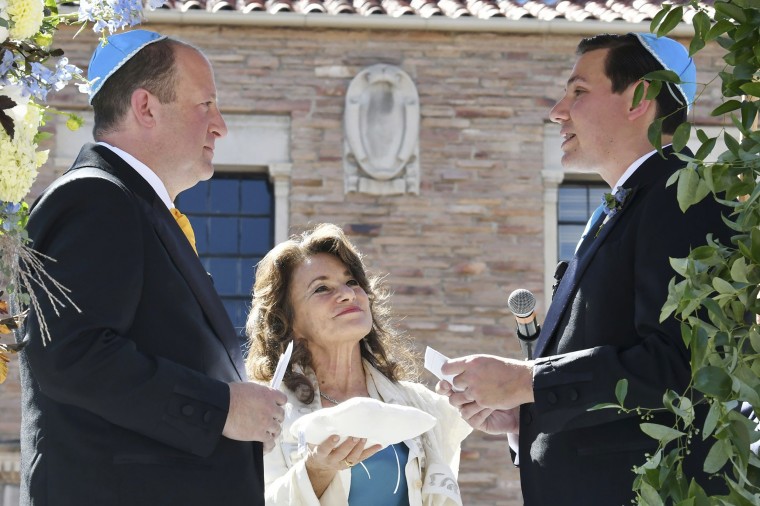
Rabbi Tirzah Firestone, center, officiates a traditional Jewish wedding ceremony for Colorado Gov. Jared Polis, left, and his partner, Marlon Reis, in Boulder, Colo. on Sept. 15, 2021.
Colorado Gov. Jared Polis, the first openly gay man elected governor in the United States, has married his longtime partner in the first same-sex marriage for a sitting governor.
Polis and Marlon Reis, who have been together for 18 years and were engaged in December, wed in a small traditional Jewish ceremony Wednesday, the governor’s office said.
“The greatest lesson we have learned over the past 18 months is that life as we know it can change in an instant. We are thankful for the health and well-being of our family and friends, and the opportunity to celebrate our life together as a married couple,” they said in a joint statement.
Polis, a Democrat, was elected governor in November 2018 and sworn in the following January. He previously served as a U.S. representative.
The couple was engaged in this winter before Reis was admitted to a hospital with Covid-19, NBC affiliate KUSA of Denver reported. Polis was also diagnosed with the disease but did not suffer severe symptoms. They are parents of two children, ages 7 and 9.
“We are both excited for this new chapter in our lives together, and our hearts are full with the blessings of health, love, and family,” Polis said in a Facebook post.
Polis is the first gay man elected governor in the country, but Oregon Gov. Kate Brown, a Democrat who identifies as bisexual, was the first openly LGBT person to be elected governor in 2016.
Wednesday’s ceremony marked the first same-sex marriage of a sitting governor. Former Rep. Barney Frank, D-Mass., was the first sitting member of Congress to marry someone of the same sex in 2012.
Susan today
Susan Polis Schutz (née Polis; born May 23, 1944) is an American poet, film maker and businesswoman who co-founded the greeting card and book publisher Blue Mountain Arts. She is the mother of Colorado Governor Jared Polis.
Susan 20 years ago with her husband
Stephen Schutz is an avid conservationist as well as an accomplished artist, photographer, and calligrapher. A native New Yorker, he spent his early years studying drawing and lettering as a student at the High School of Music and Art in New York City. He went on to attend M.I.T., where he received his undergraduate degree in physics. During this time, he continued to pursue his great interest in art by taking classes at the Boston Museum of Fine Art. He later entered Princeton University where he earned his PhD in theoretical physics. In addition to designing and illustrating all of Susan’s books, Stephen is the genius behind bluemountain.com—the Internet greeting card service he created and cofounded with the help of his and Susan’s elder son, Jared—which became one of the most popular and widely visited websites in the world. He holds a patent for his 5-D™ Stereograms, which are innovative, computer-generated illustrations and photographs containing hidden, multidimensional images that seem to “come alive.”
Together, Susan and Stephen are the cofounders of Blue Mountain Arts, the internationally renowned publisher known for its distinctive greeting cards, gifts, and poetry books. In her 2004 autobiography, Blue Mountain: Turning Dreams Into Reality, Susan recounts how she and Stephen met in 1965 at a social event at Princeton. Together, they participated in peace movements and anti-war demonstrations to voice their strong feelings against war and destruction of any kind. They motorcycled around the farmlands of New Jersey and spent many hours outdoors with each other enjoying their deep love and appreciation of nature. They daydreamed of how life should be.
Every little bit helps! We bought them last week after a Doctor friend gave the tests a strong recommendation. We know that nothing is 100 per cent accurate but at least we can try to help stop the spread.
——————————————-
———————————————
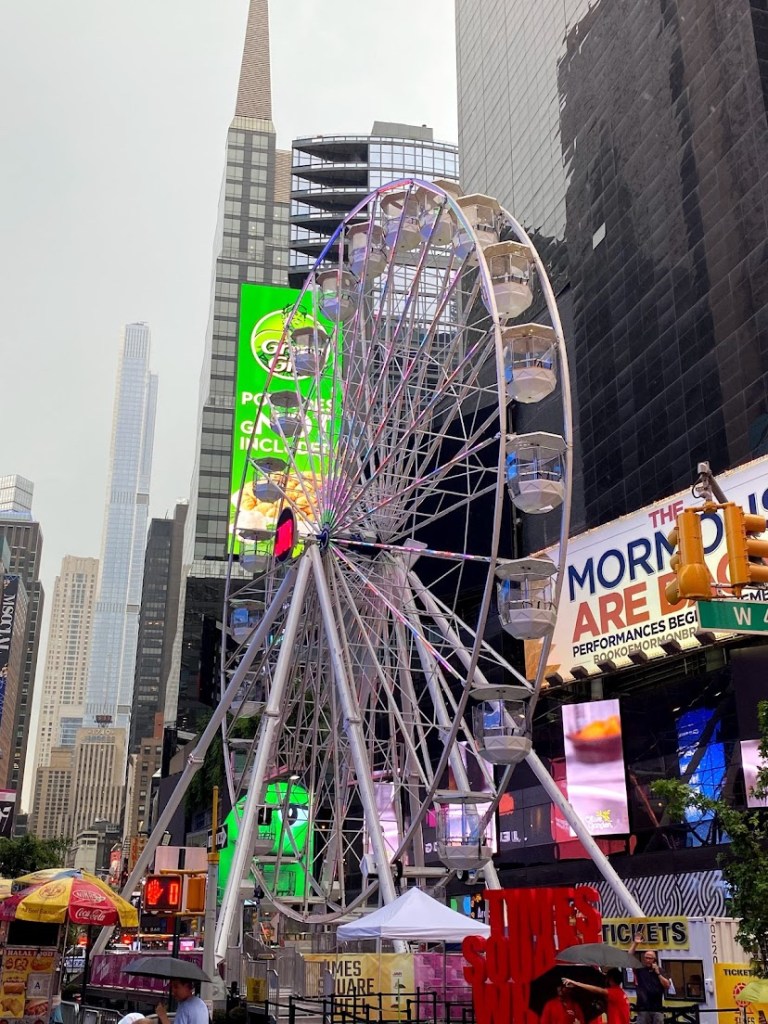
Still can’t believe this Ferris Wheel was installed in NYC Times Square. Can’t wait to take a ride on our next visit to NYC September 29 to October 4th.
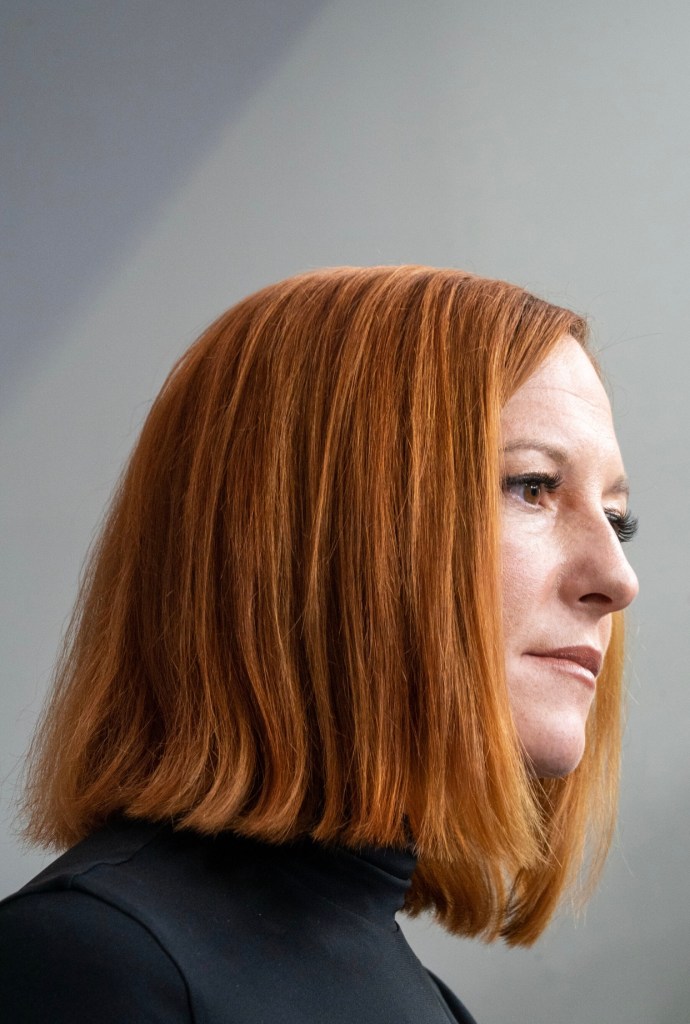
From the minute I first laid eyes on her, I said “Now, that’s a different look.” I’m so happy The New York Times did a profile on Jen Psaki. I get into so many conversations where she is the mystery woman. Many Americans don’t know a thing about her. This story should clear a few things up.
Bully Pulpit No More: Jen Psaki’s Turn at the Lectern
President Biden’s press secretary has tamped down the vitriol that colored news briefings during the Trump administration. She still may not answer your question, though.
WASHINGTON — Jen Psaki, President Biden’s press secretary, may be the most prominent spokeswoman in American politics, but political fame hits different in the post-Trump era.
The daily White House briefing, once a highly rated staple of daytime TV, rarely appears anymore on cable news. Sean Spicer and Sarah Huckabee Sanders, two former Trump press secretaries, became B-list celebrities; after nine months on the job, Ms. Psaki has not even rated an impersonation on “Saturday Night Live.”
But a cult of Psaki has proliferated online, where clips of her restrained, if occasionally withering exchanges with reporters have established this once obscure political strategist as an unlikely cultural force. Her retorts earn “yas queen” praise from liberals, while conservatives jeer her attempts at spin, particularly over the past month, when the confluence of the withdrawal from Afghanistan, extreme weather and coronavirus confusion meant the questions were more pointed and the answers more scrutinized.
Ms. Psaki, 42, a veteran communications operative who was twice passed over for the top job under her previous boss, former President Barack Obama, is an unlikely avatar for the smack-down-happy, we-have-no-choice-but-to-stan culture of modern social media. A onetime competitive swimmer who grew up with a Republican father in Greenwich, Conn., she was until this past year barely recognized beyond the Beltway in-crowd, who knew her as a capable technocrat type with deep ties to Democratic leadership.
Now the hashtag #jenpsakihas 139 million views on TikTok, and its pun of a cousin, #psakibomb (the P in Psaki is silent — get it?), has racked up more than 13 million. She posed for Annie Leibovitz in Vogue magazineand answered questions on the N.P.R. show “Wait Wait … Don’t Tell Me!” Olivia Rodrigo stood next to her for a briefing. Her exchanges with a regular foil, the Fox News correspondent Peter Doocy, often get memed.
As the TikTok user “fabiantiktoks30sclub” put it, in a clip with 65,000 likes: “Yassss queen jen psaki let the clown doocey have it!!”
Another moment caught fire online this month, as Texas was passing a law that effectively banned abortion in the state. A reporter from a Catholic news service pressed Ms. Psaki on why Mr. Biden, a Catholic, supported abortion rights.
“He believes that it’s up to a woman to make those decisions with her doctor,” Ms. Psaki replied. “I know you’ve never faced those choices. Nor have you ever been pregnant, but for women out there who have faced those choices, this is an incredibly difficult thing.”
Crisp and precise in her answers, even if she does not always respond directly to a reporter’s questions, Ms. Psaki, in her speaking style, is a contrast to Mr. Biden and his circuitous folksiness. In interviews, Washington correspondents often used the word “professional” — high praise in D.C. — to describe interactions with her, deeming her straightforward, detail-dense briefings a relief after an era where Mr. Trump’s minions repeatedly insulted, denigrated and frequently ignored journalists.
Sign Up for The Great Read Every weekday, we recommend one piece of exceptional writing from The Times — a narrative or essay that takes you someplace you might not expect to go. Get it sent to your inbox.
‘I Promised Snacks’
To be fair, the bar may be rather low.
“It’s a breath of fresh air to not have people personally attacked on a regular basis,” said April Ryan, a correspondent for The Grio who has covered White House press briefings since the 1990s and received her own share of vitriol from the Trump administration.
But even Mr. Doocy, whose own profile has been raised by his tough questions to Ms. Psaki, offered generous words.
“It never feels like I’m getting smacked down or vice versa,” Mr. Doocy said in an interview, during which he expressed respect for Ms. Psaki’s professionalism and good humor about their frequent contretemps. “I understand why it looks like that, some of the ways that stuff gets clipped, but it doesn’t feel like that in the room.”
He said he appreciates her personal side, too. “When I got back from my wedding,” Mr. Doocy recalled, “she made a point to tell everybody in the briefing room that I just got married. That’s a transcript I can print out and show to my kids one day.”
(Lest one think that momentof Fox-Biden comity penetrated the partisan mists, consider that the website Mediaite rendered their exchange as: “Jen Psaki Sweetly Congratulates Fox News Reporter for Getting Married — Then Cruelly Destroys His Innocent Questions.”)
Mr. Trump’s final press secretary, Kayleigh McEnany, held infrequent briefings, inadvertently exposed reporters to the coronavirusand was fond of insulting her interlocutors. She once rebuked the CNN correspondent Kaitlan Collins during a televised briefing by sneering from the lectern, “I don’t call on activists.”
Ms. Psaki, who declined to comment on the record for this article, has tried to maintain a more functional relationship with the press corps. In July, she led the briefing room in an impromptu “Happy Birthday” song for Steve Holland, a Reuters reporter. Another time, she brought chocolate chip cookies baked by her mother-in-law. (“I promised snacks,” she told the press corps.)
She grew up in various neighborhoods in and around Greenwich, although Ms. Psaki describes her family as hailing from a less affluent background than that gilded locale suggests. Her mother, a psychotherapist, is socially liberal. Her father, a local real estate developer who once filed for bankruptcy, voted for Ronald Reagan and George W. Bush; he switched parties after his daughter went to work for Mr. Obama’s 2008 campaign.
As a child, Ms. Psaki admired Barbara Walters, although her parents throttled her television time, offering up episodes of “20/20” as rewards for good behavior. She graduated from Greenwich High School — alma mater of another famed White House press aide, the former Trump communications director Hope Hicks — and attended the College of William & Mary in Virginia, where she served as president of the Chi Omega sorority.
Visitors to Ms. Psaki’s office will find a copy of the classic newspaper article “Yes, Virginia, There Is a Santa Claus” hanging on a wall — “a reminder to believe in magical things,” Ms. Psaki tells friends. She keeps a makeup and hair kit beside her overstuffed, color-coded leather briefing book, a West Wing equivalent to George Costanza’s bulging wallet.
A New York Times crossword puzzle from 2017, which featured her name in a clue, “___ Psaki, White House communications director under Obama,” is framed above the fireplace. (That puzzle appeared on a Friday, the second hardest of the week; her name popped up again in a Sunday puzzle — the widest circulated — this past February, perhaps a sign of growing recognition.) Near the crossword is a photograph of Mr. Obama on his hands and knees in the Oval Office with her daughter, then an infant.
It was under Mr. Obama that Ms. Psaki rose to prominence, serving as traveling press secretary for his 2008 campaign, becoming chief spokeswoman for Secretary of State John Kerry, and eventually being named the White House communications director.
Still, she was twice passed over for press secretary — first in 2011 for Jay Carney, then in 2014 for Josh Earnest — an experience that Ms. Psaki recently said left her “devastated.”
“It was a tough moment in the administration,” Robert Gibbs, Mr. Obama’s first press secretary and a mentor of Ms. Psaki, said of the decision to go with Mr. Carney. “They probably just thought she was a little too young to handle some of that.”
David Axelrod, Mr. Obama’s senior strategist, recalled: “There was a recognition that she was incredibly talented, but a feeling that she could get more seasoning doing a stint at State.” Now, he says, “Jen is as good as anyone I have seen in all the years I’ve been watching this stuff.”
Ms. Psaki has her own take. “I’m sort of, like, always a bridesmaid, and finally a bride,” she told Mr. Axelrod on a podcast this spring.
Back to the Beltway
She prepared for her current job through a series of practice briefings held over Zoom last December and January, with Mr. Gibbs and the former Obama press aide Eric Schultz impersonating reporters. “I was the one who tried to be like the biggest jerk or whatever,” Mr. Gibbs said, though he declined to specify which White House correspondent inspired his performance. “You want to get pushed the most and see what happens.”
Mr. Gibbs and others said that Ms. Psaki was most concerned with restoring normalcy to the press briefing, a Washington ritual whose credibility was eroded in the Trump years. Stephanie Grisham, one of Mr. Trump’s press secretaries, did not hold a single briefing. Her predecessor, Ms. Huckabee Sanders, urged Americans to watch a right-wing propaganda video “whether it’s accurate or not” and fabricated an anecdote about F.B.I. agents.
It was unusual, and highly deliberate, when Ms. Psaki staged her first formal briefing hours after Mr. Biden’s inauguration. Among her first words at the lectern was a pledge to tell the truth “even when it’s hard to hear.”
Not surprisingly, she has her share of detractors, especially on the right.
“I walked into the lion’s den every day — she walks into a bunch of kittens,” Sean Spicer, Mr. Trump’s first press secretary and now the 6 p.m. anchor on Newsmax, said in an interview.
Mr. Spicer often complains that White House correspondents who aggressively questioned the Trump administration now give Mr. Biden a free pass. (The correspondents disagree.) He also expressed displeasure over what he perceived to be a grievous insult on Ms. Psaki’s part. Speaking about why Trump loyalists were asked to resign from the board of the United States Military Academy, she told reporters, “I will let others evaluate whether they think Kellyanne Conway and Sean Spicer and others were qualified.”
“Jen chose to stand and question my qualifications and services to this country. Once she did that, the gloves were off,” Mr. Spicer said. (In 2017, when Mr. Spicer was roundly criticized for referring to Nazi death camps as “Holocaust centers,” Ms. Psaki was more magnanimous. “It’s a really tough job, everybody screws up,” she said on CNN at the time.)
Mr. Biden has urged Ms. Psaki to eschew acronyms and other governmental jargon, once chastising her for using the corporate term “R & D” — research and development — in a response. Unlike Mr. Trump, Mr. Biden does not usually watch briefings in real time, but he is known to catch snippets on cable news during the day when he has gaps in his schedule.
She has also conceded some missteps, like an early outing in which she seemed to lightly mock the Space Force, the new military branch created by President Trump. She now keeps a Space Force pin at her desk as a reminder of the impact of her words. (Absent from her office is the traditional flak jacket passed down cheekily among White House press secretaries; it apparently went missing in January.)
Mr. Biden is no one’s idea of a careful public speaker. (As Mr. Axelrod once put it, “He is not a precision instrument.”) Ms. Psaki’s primary task is to interpret and in some cases clean up his comments for the record, a responsibility that has been even tougher in recent weeks.
Rahm Emanuel, who worked with Ms. Psaki on Democratic campaigns and recommended her to the Obama team, said he texted Ronald Klain, Mr. Biden’s chief of staff, on the day her appointment was announced. “I said you’re going to count your blessings, in the days to come, that you made this decision,” he said. “You’re not going to have to worry about what goes on in that room.”
Mr. Emanuel said he played a role in Ms. Psaki’s personal life, too. He likes to take credit for nudging her future husband, Gregory Mecher, another Democratic aide, to ask her out on the campaign trail. (He later referred to himself as Mr. Mecher’s “wing man.”) The couple was married in 2010 under a mulberry tree at a Maryland estate; guests included Mr. Gibbs and the correspondent Jake Tapper.
They and their two children live in the Washington suburbs, not far from one of Ms. Psaki’s sisters, Stephanie, a senior adviser at the Department of Health and Human Services. Their families formed a pod amid the pandemic, and on Fridays she tries to leave the West Wing by 5:15 p.m. for a group pizza night. (Unlike his predecessor, Mr. Biden is not known for, say, firing his chief of staff as an end-of-week news dump and forcing his aides to scramble on a Friday evening.)
Ms. Psaki’s current internet stardom is a far cry from a darker moment of online infamy she endured earlier in her career, which friends say she now credits for giving her tough skin.
In the early 2010s, while serving as Mr. Kerry’s press secretary, Ms. Psaki’s name and likeness became the subject of a widespread anti-American campaign on Russian state TV. A leading pro-Kremlin propagandist, Dmitry Kiselyov, used his television program to coin the verb “Psaki-ing”: meaning an American who is confused and unable to understand basic information about world affairs.
It was a bewildering experience for Ms. Psaki, whose face was plastered across Russian propaganda outlets, to the extent that when her prospective job in the Biden administration was announced, some Russian news outlets wrote stories about it. “And so, Psaki returns,” one article read. “Carry popcorn.” In June, after he met President Biden for a summit in Geneva, Vladimir Putin described Ms. Psaki as “a young, educated and beautiful woman” who “gets things confused all the time.”
Some complaints from domestic critics are less about mental acuity and more about her approach to the briefings. “Rehearsed, scripted and boring,” Charlie Spiering, the White House correspondent for Breitbart News, wrote in an email.
For Ms. Psaki and her allies — who know the power of a certain bury-them-in-facts tedium — this may be more feature than bug. “You guys can be an ornery bunch, you know,” Mr. Axelrod said of the reporters who cover the White House. “She commands respect.”
Oleg Matsnev and Kitty Bennett contributed reporting.
Michael M. Grynbaum is a media correspondent covering the intersection of business, culture and politics. @grynbaum



























 DigiDame