The reclusive socialite Jocelyn Wildenstein, aka the “Catwomen” because of her extensive plastic surgery, lives near us in Miami Beach. She was married to Alec Wildenstein from 1978 to 1999. When she got divorced, she received a $100 million annual settlement. She explains that her late husband’s family cut her off and now she has nothing.
This has been confirmed by the people she is close to at Temple Emanu-El where she worships. I have seen her sitting with a male companion in the rear of the synagogue. She often wears large sunglasses to camouflage her identity. It’s difficult to believe that after such a lavish life style that she has nothing left but my sources tell me she lives modestly.
After reading the following article I do believe that she sought refuge from all the turmoil by constantly trying to improve her looks. The end results, for both finances and beauty, were not exactly what she envisioned.


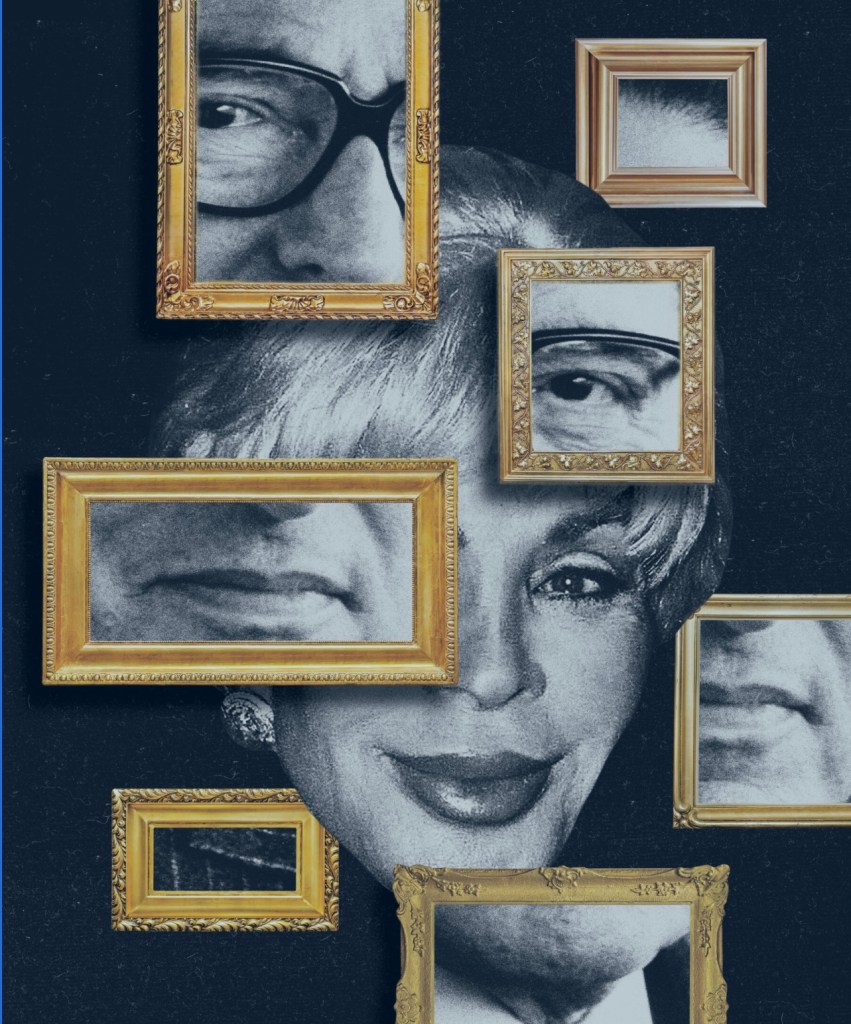
Photo illustration by Joan Wong
The Inheritance Case That Could Unravel an Art Dynasty
How a widow’s legal fight against the Wildenstein family of France has threatened their storied collection — and revealed the underbelly of the global art market.
By Rachel Corbett
Twenty years ago, a glamorous platinum-blond widow arrived at the Paris law office of Claude Dumont Beghi in tears. Someone was trying to take her horses — her “babies” — away, and she needed a lawyer to stop them.
She explained that her late husband was a breeder of champion thoroughbreds. The couple was a familiar sight at the racetracks in Chantilly and Paris: Daniel Wildenstein, gray-suited with a cane in the stands, and Sylvia Roth Wildenstein, a former model with a cigarette dangling from her lips. They first met in 1964, while she was walking couture shows in Paris and he was languishing in a marriage of convenience to a woman from another wealthy Jewish family of art collectors. Daniel, 16 years Sylvia’s senior, already had two grown sons when they met, and he didn’t want more children. So over the next 40 years they spent together, Sylvia cared for the horses as if they were the children she never had. When Daniel died of cancer in 2001, he left her a small stable.
Then, one morning about a year later, Sylvia’s phone rang. It was her horse trainer calling to say that he had spotted something odd in the local racing paper, Paris Turf: The results of Sylvia’s stable were no longer listed under her name. The French journalist Magali Serre’s 2013 book “Les Wildenstein” recounts the scene in great detail: Sylvia ran to fetch her copy and flipped to the page. Sure enough, the stable of “Madame Wildenstein” had been replaced by “Dayton Limited,” an Irish company owned by her stepsons. That’s when she called Dumont Beghi.
To the lawyer’s surprise, Sylvia showed up to their meeting with no proof of ownership for the horses and no information on her late husband’s estate. “She didn’t have any — any — documents at all,” Dumont Beghi says. Sylvia mentioned that she signed some papers shortly after her husband’s death, but she didn’t know what they said, nor did she have copies. “I put that in the corner of my mind,” Dumont Beghi says.
Why would a widow draped in diamonds and furs have no records from her wealthy husband’s estate? Dumont Beghi got the feeling there was more going on than a dispute over horses. But she went ahead and gave Sylvia the good news: She could simply decline to transfer the horses to her stepsons. Dumont Beghi sent a letter, halting the transaction.
Dumont Beghi recalls an almost instant kinship with Sylvia, who discovered that they were both Scorpios and lived in the same building complex in the posh 16th Arrondissement. After Dumont Beghi saved her horses, Sylvia trusted her completely, and she began to explain to Dumont Beghi the complexity of the situation. Daniel had fallen into a coma for 10 days before he died, and while he was under, his sons, Alec and Guy, showed up at the hospital along with lawyers from Switzerland, the United States and France. She recounted how, a few weeks after the funeral, her driver took her to the family’s 18th-century hôtel particulier, which housed an art research center, the Wildenstein Institute. Her stepsons told her she needed to hear something important. They had reviewed their father’s estate and discovered that he died in financial ruin. As his next of kin, Sylvia was about to inherit debts so large they would ruin her too.
Image

Sylvia Roth Wildenstein and Daniel Wildenstein in 2001.
Sylvia was stunned. She had never heard anything about money troubles from her husband. For 40 years, she had lived with chefs and chauffeurs, in at least five homes on three continents. But what did she know? She never signed the checks. Daniel, intellectual and rigid, ran the business, while Sylvia, who was light and cheerful, played the nurturer in the family. She was known to dote on Alec and Guy’s six children, whom she considered her grandkids. She trusted her stepsons completely, so when they told her that she must renounce her inheritance at once or face “catastrophe,” she didn’t blink. “I signed all the papers they presented to me. I signed, signed, signed” — even the ones written in Japanese, she later told Serre. They promised to take care of her financially and even offered to pay her 30,000 euros a month out of their own pockets. Sylvia was grateful.
But then, over the next few months, the reality of what she had done set in. Sylvia told Dumont Beghi how movers came to her apartment and took a beloved Pierre Bonnard painting off the wall. Then they came back for the furniture, because, she was told, it belonged to her husband’s business, which was now run by his sons. A letter came notifying her that Daniel’s 69 thoroughbreds were now owned by Guy and Alec’s stable. Her household staff stopped being paid. Soon, her stepsons told her she would have to move from her home on Avenue Montaigne to another apartment. (Alec died in 2008; Guy declined a request for an interview, though a representative answered some questions provided by The Times.)
She stopped receiving invitations to celebrate holidays and birthdays at the family’s ranch in Kenya or their castle in France. Guy shipped back her clothes and belongings from their British Virgin Islands compound, where she had vacationed for years with Daniel and their chef and pastry chef. As Sylvia spoke, two things became increasingly apparent to Dumont Beghi: One, Sylvia had renounced her inheritance. “She had no freedom.” she says, and “no proof. Not a shred of evidence.” No bank account, no income, no independence. It was as if “she died at the same time as her husband,” Dumont Beghi says.
The other thing that struck her was that the Wildensteins were more than merely rich.
“When she first came to me, I didn’t know anything about the family,” Dumont Beghi told me when I visited her this past winter at her office in Paris. To my left, a bronze bust of a panther stared from a pedestal at eye level. Behind her glass desk hung a print of a leopard prowling in a tree. Dumont Beghi is also the personal attorney for President Ali Bongo Ondimba of Gabon, who is widely considered a strongman, and often describes herself as a lone warrior woman in a jungle of male adversaries. She had never heard of the Wildenstein dynasty of art dealers. In fact, outside elite niches of the art world, few had, which was how Daniel wanted it. Dumont Beghi was about to find out why.
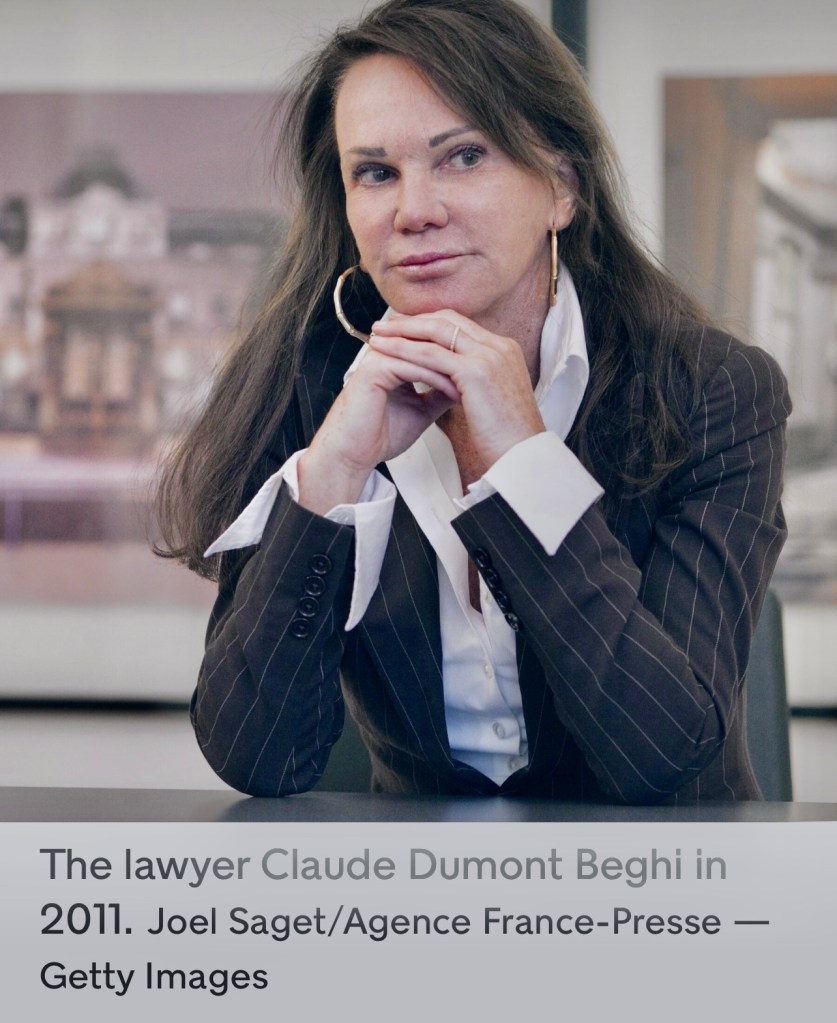
First, she drew up a list of known assets, which soon zigzagged into a chart of far-flung bank accounts, trusts and shell corporations. Over the course of several years, she would fly around the world to tax havens and free ports, prying open the armored vaults and anonymous accounts that mask many of the high-end transactions in the $68 billion global art market. Multimillion-dollar paintings can anonymously trade hands without, for example, any of the requisite titles or deeds of real estate transactions or the public disclosures required on Wall Street. She would learn that the inscrutability of the trade has made it a leading conduit for sanction-evading oligarchs and other billionaires looking to launder excess capital. The Wildensteins were not just masters of this system — they helped pioneer it.
Over 150 years, the family has amassed an art collection estimated to be worth billions by quietly buying up troves of European masterpieces that would be at home in the Louvre or the Vatican, holding their stock for generations and never revealing what they own. When Sylvia realized the magnitude of her stepsons’ deception, she devoted the rest of her life to unraveling the family’s financial machinations, and even left a will asking that Dumont Beghi continue her fight from beyond the grave.
Sylvia and her lawyer were never able to win the settlement they thought she deserved while she was alive. From the start, in 2004, a judge rejected Dumont Beghi’s attempt to cancel Sylvia’s renunciation of the inheritance; a few years later, a court rejected a subsequent claim that she was entitled to €450 million worth of art and assets, a figure the judge called “pharaonic.” The representative for Guy notes that, early on, Sylvia was awarded approximately €15 million, based on the value of Daniel’s French estate. “Dumont Beghi continued to litigate for several years, seeking to have certain trusts settled by Daniel Wildenstein included in the estate,” the representative says. “During this protracted litigation, Dumont Beghi made numerous, unsubstantiated allegations, but the court ultimately ruled against her client.”
Now, more than a decade after Sylvia’s death, their efforts have landed the Wildensteins before France’s highest court. The evidence she and Dumont Beghi brought forth has persuaded prosecutors that the Wildensteins are a criminal enterprise, responsible for operating, as a prosecutor for the state once put it, “the longest and the most sophisticated tax fraud” in modern French history.
Image

A trial this September will determine if the family and their associates owe a gargantuan tax bill. The last time prosecutors went after the Wildensteins, several years ago, they sought €866 million — €616 million in back taxes and a €250 million fine, as well as jail time for Guy. The consequences could do more than topple the family’s art empire. The case has provided an unusual view of how the ultrawealthy use the art market to evade taxes, and sometimes worse. Agents raiding Wildenstein vaults have turned up artworks long reported as missing, which fueled speculation that the family may have owned Nazi-looted or otherwise stolen art, and spurred a number of other lawsuits against the family in recent years. Financial distortions have saved the family hundreds of millions of dollars, prosecutors allege, but their treatment of Sylvia could cost them far more — and perhaps lead to the unraveling of their dynasty.
In order to prove that Alec and Guy misled Sylvia about her husband’s estate, Dumont Beghi first needed to know what assets they did report. But because Sylvia had renounced her inheritance, she didn’t even have a right to that information. “Every deed, every bank statement, every inventory item in the estate and every document related to the succession of Daniel Wildenstein is in the hands of Guy and Alec,” Dumont Beghi says, and they did not intend to turn them over.
Dumont Beghi’s first step, then, was to ask a court to nullify the agreement Sylvia signed giving up her inheritance. Only then could she access details about Daniel’s estate. Fortunately, she had a compelling precedent to show the judge. Sylvia wasn’t the first wife the Wildensteins had tried to cut off by pleading poverty: Jocelyne Wildenstein, Alec’s first wife, was similarly cut out of the family’s fortune during her 1999 divorce, with Alec claiming he was an unpaid personal assistant to his father. Documents revealed at court in New York — where the couple primarily lived — valued the family’s art collection at about $10 billion. The judge in the case said that Alec’s income statement “insults the intelligence of the court”; he settled for a rumored $3.8 billion — which would be the largest divorce settlement in New York history. (Jocelyne denies that the settlement was $3.8 billion but did concede that it was “huge.”)
Dumont Beghi argued that if the family was worth billions then, there was reason to doubt that Daniel, who orchestrated the deal between Alec and Jocelyne, died in ruinous debt just two years later. The French court ordered Guy and Alec to hand over the declaration of Daniel’s estate. It included some properties in France, a few cars, paintings and bank accounts, altogether totaling €42 million. Dumont Beghi didn’t believe that figure was anywhere near the estate’s true value, but still, “It’s not nothing, for someone who died broke.” And it showed, Dumont Beghi concluded, that Sylvia had renounced her inheritance under false pretenses.
Dumont Beghi’s next move was to get her hands on Daniel’s medical records. She learned that he spent his final days in an unresponsive, vegetative coma — and yet apparently signed a contract selling his 69 thoroughbreds (including Sylvia’s) to his sons for a bargain price. In 2005, a court granted Sylvia’s request to nullify her renunciation. It was only the beginning of what Dumont Beghi has called her international “treasure hunt” for every stashed masterpiece, undeclared property and offshore account left out of Daniel’s estate.
Her next order of business was to locate Sylvia’s beloved Bonnard nude, a gift from Daniel that his sons had removed from her wall. Dumont Beghi knew it was included in a trust that Daniel had set up for his wife in the Bahamas, but when she asked the trustee for information about its contents, management and regulations, she received no response.
Dumont Beghi decided to do her own research on Daniel’s collection of Bonnards. She learned from his memoir, “Marchands d’Art,” published two years before his death, that he considered their acquisition “the biggest coup” of his life. When Bonnard died in 1947, he left behind an enormous estate of some 700 paintings and thousands of drawings. Daniel learned that all of it was set to be inherited by three estranged nieces-in-law of the artist, and it gave him an idea. He approached another Bonnard relative who Daniel believed could also lay claim to the estate and told the man he would pay him $1 million to buy his inheritance rights. Then he armed the man with a “battalion” of lawyers to fight on his behalf.
After more than a decade in court, Daniel walked away with nearly 500 paintings; the nieces were left with just 25. (Daniel promised them some more to prevent further litigation.) In his memoir, Daniel revealed that he still owned 180 Bonnard paintings — and not just any Bonnards but “the most beautiful. The most magnificent.” He added that the great Bonnards were worth between $5 million and $7 million each. (Today they can sell for twice that.)

Dumont Beghi flew to the Bahamas to find out what other paintings by the artist Daniel may have left for Sylvia. She received a court order to open up the trust and found that Daniel had bequeathed no fewer than 19 Bonnards to her client. Though the trust was nominally in the Bahamas, the Bonnards were being held at the Geneva free port, a prisonlike complex of high-security storage facilities that is said to contain more art than the Louvre.
Independent of any national jurisdiction, free ports allow traders to ship and store property without paying taxes or customs duties. If a dealer buys a painting in one country, he can ship it to a free port without paying import taxes; then, when he is offered the right price, he can sell it there too, without paying capital gains. It has been estimated that $100 billion worth of art and collectibles are held in the Geneva free port alone, to say nothing of those in Zurich, Luxembourg, Singapore, Monaco, Delaware or Beijing.
Dumont Beghi flew to the Geneva free port, which is the size of 22 soccer fields, along with an appraiser to examine the Bonnards in person. Bonnard is “light,” Daniel wrote of his favorite artist, who is known above all for his radiant use of color. But when Dumont Beghi descended two flights down into the gloomy bunker, she found the paintings locked behind an armored door, including Sylvia’s “Pink Nude in the Bath,” its warm glow extinguished in the dark.
An acquaintance in the art world explained to Dumont Beghi that hundreds, if not thousands, of Wildenstein works are held in museums, but that the labels often identify their owners simply as “private collection.” So she wrote to the major museums — the Louvre, the Hermitage, the Prado — to ask whether Daniel Wildenstein ever lent or donated works to them. Surprisingly, she says, a few wrote back. The National Gallery in London told her that Daniel lent it valuable paintings by Poussin and Boucher. The Prado had recently bought a Velázquez portrait from Wildenstein & Co Inc. for €23 million.
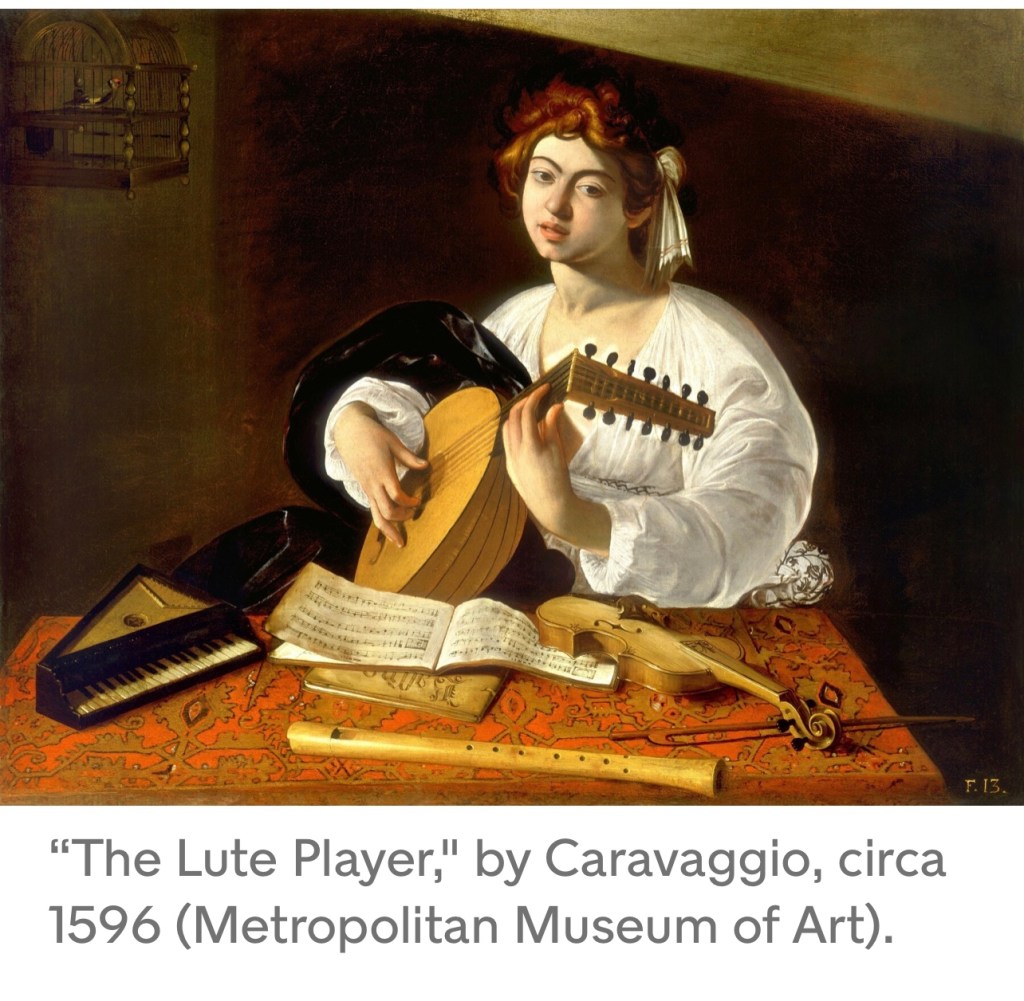
Then Dumont Beghi made perhaps the most important stop of her tour: the Metropolitan Museum of Art, where she stood before a painting she loved, Caravaggio’s late masterpiece “The Lute Player,” labeled on loan from a “private collection.” She searched the New York State Department’s records to see whether Wildenstein & Co. had ever borrowed money using works in its collection as collateral. Dozens of names were listed — Cézanne, David, Degas, Manet, Monet, Matisse, Rembrandt, Picasso and Rodin among them. And then there it was: “The Lute Player,” valued at upward of $100 million.
At that point she realized, “The company is titanic.”
.
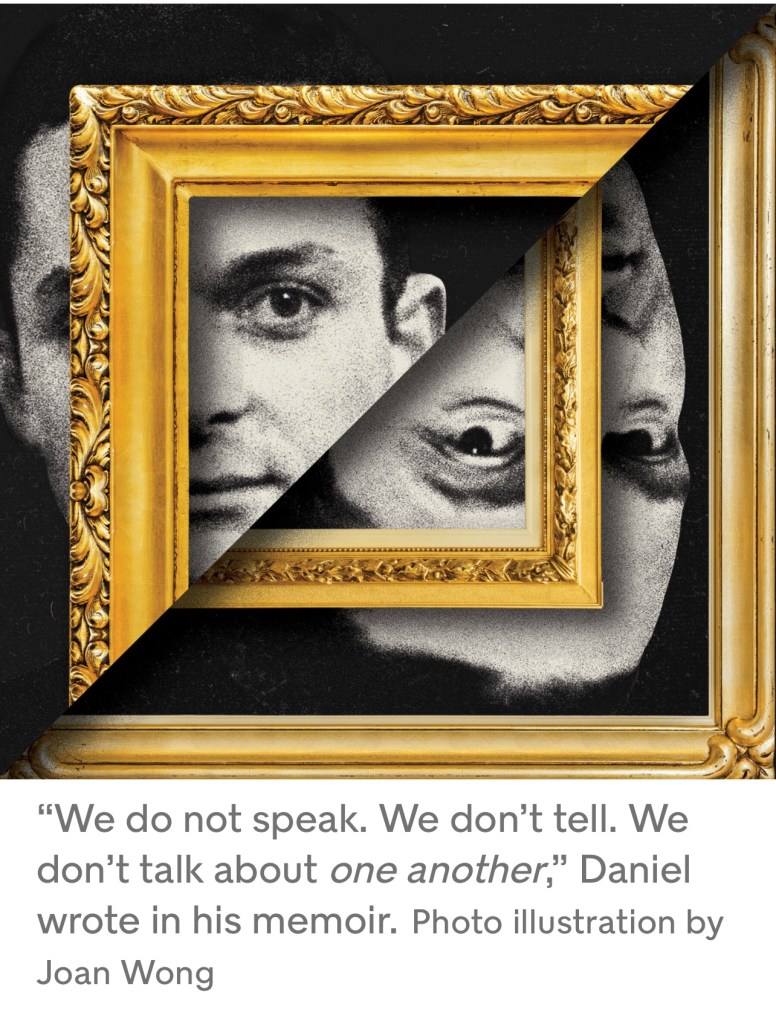
“In my family, we have elevated discretion to the level of muteness,” Daniel wrote in his memoir. “We do not speak. We don’t tell. We don’t talk about one another.”
This code of omertà has been the governing principle of the Wildenstein art dynasty since its founding five generations ago. A dealer “is not allowed to talk about his stock,” Daniel said. “Why? Because it’s the stuff of dreams. Every art dealer must maintain the illusion of the masterpieces he owns or does not own.” Many believed that his grandfather, the founding patriarch Nathan Wildenstein, for example, owned 10 Vermeers; he actually had just one. No one knows today whether the family still owns it, and that question is meaningful to art history. Experts believe Vermeer made about three dozen paintings in his life, and as many as nine could be missing.
A tailor from Alsace, Nathan had no training in art when, in the 1870s, a client asked him to sell some artwork she owned. He “holed himself up in the Louvre” for 10 days, according to Daniel, and came out a believer. He sold the art and used the 1,000 francs he earned to buy two more pictures, by the Rococo artists François Boucher and Maurice-Quentin de La Tour, which he resold. At the time, Nathan could afford 17th- and 18th-century French art because no one else wanted it, so he amassed passé — but to his eye, beautiful — paintings. He began dressing in embroidered waistcoats and top hats to pitch collectors and critics.
Soon Nathan was selling his taste to Rothschilds and Rockefellers, in Europe and the United States. While Nathan was grooming his young grandson to enter the family business, he took him to see a silent film about a man who wore a hat that everyone initially mocked; by the end of the movie, the whole town was wearing one. Nathan explained to Daniel that this was their family’s calling: “Find the guy’s hat and wear it before the others.” For Nathan, that hat was French art of the 18th century: Fragonard, Watteau, David. These are now among the most famous names in art history, but at the time they were synonymous with the French Revolution and the aristocrats it overthrew — a period the public wanted to put behind them, especially as they began to embrace the avant-garde era of Impressionism.
In 1905, Nathan bought an hôtel particulier in the center of Paris to house Wildenstein & Co. He expanded into Renaissance art and Impressionism and, when his son, Georges — Daniel’s father — was old enough to join the business, a bit of Modernism. Nathan bought a space down the street for Georges and his friend Paul Rosenberg to set up a small operation. The pair gave two of its floors to Picasso, whom they agreed, in 1918, to pay a generous salary in exchange for first pick of the artist’s works. Georges installed a red telephone in his office that had two direct lines: one connected to Rosenberg, the other to Picasso’s studio.
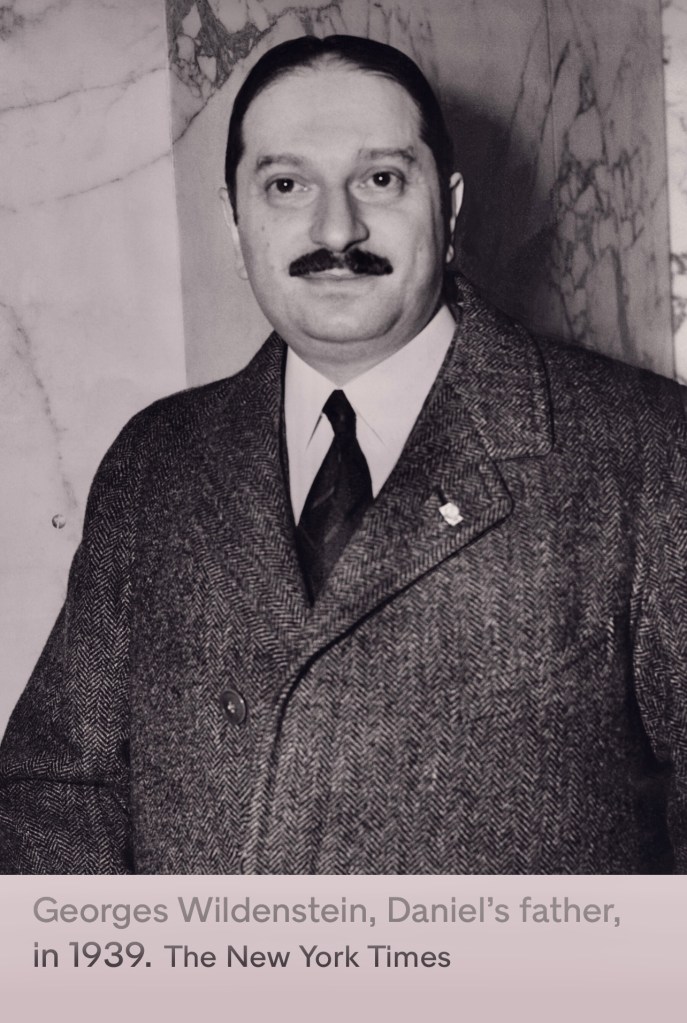
Upon Nathan’s death in 1934, Georges steered the family into an era of unprecedented prosperity by building an infrastructure around his artists’ markets. He organized exhibitions, edited an art journal and published definitive catalogs of works by artists in his inventory — Ingres, Fragonard, Chardin. (Daniel would later do the same with Monet, Manet and Gauguin.) The books were well respected and helped market their artists to museums. They also gave the family final say over authentication questions. Today anyone who thinks he or she owns a Monet that’s not in the Wildenstein book needs a nonprofit co-founded by Guy to sign off on it. (When the Wildenstein Institute handled the authentications directly, it developed a reputation for being unaccommodating.)
But Georges’s ruthless instincts also contributed to the “dark aura,” as one dealer put it, that would come to surround the Wildenstein name. Hitler’s personal curator told an Allied intelligence agent in an interrogation after the war that Georges did brisk business with the Nazis after fleeing to Provence, in the unoccupied zone. Once there, he helped the Germans locate important collections in occupied France in exchange for sparing his own. Profits from his newly “aryanized” gallery in Paris were said to be sent to New York, where he had opened a branch. (The representative for Guy denies this.)
Other art-dealing dynasties have since sprung up in the Wildenstein mold. They buy up huge quantities of blue-chip art and store it for years, until they effectively corner their own niches of the market and control the prices. The billionaire Nahmad brothers and their sons, based among London, New York and Monaco, reportedly bought more works by Picasso than any other family in the world (except the Picassos) and, for the most part, have locked them up in the Geneva free port for years while they accumulate value. The Mugrabi family of Pop Art dealer-collectors, led by its patriarch, Jose Mugrabi, and his two sons, have done the same with Andy Warhol, stockpiling some 1,000 works by the artist and keeping prices high by bidding his art up at auction, even if they don’t intend to buy. (The Mugrabi family did not respond to a request for comment.)
Those who complain that the art market today operates more like the stock market often blame these families, who shifted a value system once driven by connoisseurship to one based on the law of scarcity. (“Monet and Picasso are like Microsoft and Coca-Cola,” David Nahmad once said.) Their dominance derives from the fact that they’re family firms, bolstered by internal secrecy, pride and lifetimes of experience. As the Wildensteins proved, families can be structured like corporations, where the profit principle governs even relationships and succession plans. The few people who seem capable of undoing them are themselves. For the Wildensteins, the weight of the family legacy seems to have cracked the younger generations.
Even though Daniel described Georges as a “bad father,” he parented his own children in similarly severe ways. He enforced his father’s business tactics — extreme secrecy, consolidation of wealth in the bloodline — as laws of family life, too. Daniel tried to seclude his two children, Alec and Guy, at home and unmarried, to protect the family from publicity and divorce. They lived as if in another era — the French 18th century — with opulent floral décor, heavy drapes and footmen who stood behind their chairs during meals. As children, Guy and Alec commuted to the Lycée Français de New York by limousine, and they rarely had a play date. Alec was forbidden to play sports and attend university, Guy was prevented from pursuing acting and both were required to learn their father’s trade. Daniel was particularly strict with Alec, his elder son. According to a 1998 Vanity Fair article, he started taking Alec to brothels at age 15 in the hope that he would find prostitutes a satisfying alternative to a wife. When Alec defied his father and married Jocelyne, he did so secretly in Las Vegas with no guests. Eventually, Daniel’s sons and wives and children all lived together in his New York townhouse.

Those who know Daniel have said that he infantilized and humiliated his sons and that they’ve gone on to treat the women in their lives similarly. Guy, Sylvia believed, was jealous of Daniel and took it out on her; Alec blamed Jocelyne for the humiliating headlines generated by their divorce. (The New York Post dubbed her the “Bride of Wildenstein” for her apparently extensive plastic surgeries.) Alec, who wore bold pinstripe suits, was the flashier brother; Guy kept a lower profile but played on the Diables Bleus polo team with aristocratic friends, like the future King Charles III, the godfather of his eldest child. Colleagues remember that the brothers would sit quietly in meetings. Guy married a Swedish model named Kristina Hansson, who has never appeared in a tabloid. In fact, he once boasted that “hardly anyone knows what my wife looks like.” So when Daniel died in 2001, Guy was the clear successor to the family art empire, while Alec took over the horse business.
Guy, who is now 77, is the family’s patriarch and president of Wildenstein & Co. But mounting lawsuits and scandals have begun to drag him down. So far he has avoided any serious consequences — a fact some critics attribute to well-positioned friends like former President Nicolas Sarkozy or to the fortune at his disposal for defense counsel. But now that the family is on trial, Guy, it seems, may have taken the legacy of silence too far. The Wildenstein policy to preserve confidentiality at any cost may ultimately expose the family’s secrets.
In 2009, after a long string of setbacks, Dumont Beghi had a breakthrough. Over the years she had sent Liouba Wildenstein, Alec’s second wife, multiple summonses for information about the family’s assets. Unsurprisingly, she ignored them. But after Alec died of prostate cancer at age 67 in 2008, Liouba, a former model from Russia, found herself in trouble. According to Serre’s book, Alec owed €12 million in back taxes, and his father’s estate was still tied up in litigation with Sylvia. Guy offered to lend Liouba the money to help pay his brother’s debt — all she had to do in return was give him access to a trust Alec had set up for her, supposedly so Guy could reimburse himself later. But after the deal was done, Serre’s book recounts, Guy didn’t pay Liouba the millions he promised. He sent only small, sporadic sums — not enough to pay her tax bill or to live on. Liouba found herself in a situation much like Sylvia’s: cut out from the family, with no money and no recourse. (The representative for Guy says that he did issue the loan.)
That’s when Dumont Beghi’s phone rang. Liouba had finally decided to answer her third summons. She told me recently that she felt she had no choice but to take action: “Many women in the family had to fight for their rights,” she said. “The women want to be respected.” Twenty-four hours later, a lawyer would deliver Dumont Beghi dozens of documents that Liouba had found on Alec’s personal computer — contracts and letters about the family’s expansive network of offshore trusts — which would reveal what Dumont Beghi and Sylvia had long believed without being able to definitively prove.

.
The documents mapped how the Wildensteins had structured their patrimony, and hidden their wealth, for generations. Daniel’s estate, Dumont Beghi learned, included several hundred artworks — including the 180 Bonnards, hundreds of 16th- and 17th-century French paintings and dozens of works by old masters including Caravaggio, Velázquez and Fra Angelico. Then there was the real estate: multiple homes and buildings across France and the United States, the 58,000-acre ranch in Kenya and the 18-acre Virgin Islands compound. There was a Gulfstream IV jet, a yacht and the thoroughbred stable, which was registered to multiple intermediaries in England and Ireland. The art was held in shell companies and trusts in tax havens, including two previously unknown entities in the Cayman Islands and Guernsey. These were “operational structures specializing in tax evasion,” Dumont Beghi wrote, which also helped the family shield assets from divorce. (The representative for Guy disputes the accuracy of this recounting of the estate.)
According to Dumont Beghi, two trusts named Sylvia as a beneficiary, something Sylvia said she was unaware of. Also revealed was a letter from Guy and Alec’s Swiss lawyer seeking to remove Sylvia as beneficiary from one of the trusts. Investigators also discovered $250 million in art that Daniel had apparently ordered airlifted out of the United States while he was in his coma. (The representative for Guy denies that this is true, calling it “illogical.”)
Dumont Beghi rapidly began to issue new summonses and build an appeal for a review. But time was running out. Sylvia had been diagnosed with ovarian cancer, which was spreading. She was running out of resources, too. “I have no more money,” Serre recounted her saying. “This procedure has brought me to my knees.” She had paid more than €10 million in legal fees over the past eight years and had resorted to pawning her jewelry and relying on help from wealthy friends. In her final interview, she said of her stepsons, “They robbed me, and now they are waiting for me to die.”
Dumont Beghi continued on, believing that Sylvia was entitled to a settlement of $300 million. She filed a new criminal complaint against Guy and the heirs of Alec — his two children and Liouba — as well as their business associates, using the new information she had received. To her surprise, this time the government responded. The police raided the Wildenstein Institute and the family’s apartments on a court order to identify any assets that might have been concealed from Sylvia. In the basement, officers discovered vaults filled with hundreds of drawings, paintings and sculptures. Some of the frames were inscribed with swastikas.
Officers seized about 30 lost works by the likes of Degas and Berthe Morisot. Some had been reported stolen by a Jewish family during the war, and others were reported lost by families who had involved Daniel in the management of their estates. Guy pleaded ignorance: He never inspected that vault. And who could prove otherwise? The family took such pains to protect their inventory that no one knows what they really have, perhaps not even them. (The Wildensteins were cleared in one of the lost-painting suits; Guy has said that the Morisot may have been put there as a result of an oversight.)
Dumont Beghi’s involvement in the Wildenstein affair officially ended on Nov. 8, 2010, when she called Sylvia for the last time to wish her a happy 77th birthday. Five days later, Sylvia died at home in Paris. She was buried in the Wildenstein tomb next to her husband, but Guy had her maiden name, Roth, etched into the marble tombstone. Without a client, Dumont Beghi’s case was closed for good.

But the lawsuit was far from over for Guy, as the state picked up where Dumont Beghi left off. She had mapped for the government the global system through which the family moved money among nine companies registered in Ireland, four trusts on three islands, a handful of galleries and real estate companies and bank accounts in at least four countries, possibly depriving the French public of hundreds of millions of euros. In addition to the Swiss free port and the Paris vault, they had art in a nuclear bunker in the Catskills, a former fire station in New York and many other far-flung places. “I mean, there are pictures I have never seen that my great-grandfather bought,” Alec told Vanity Fair in 1998. They were, he said, “in vaults and crazy places, in back of other things.”
Over the next decade, the Wildenstein tax case wound its way through the French courts. At the same time, public outrage over tax loopholes for the wealthy was growing, and the government passed what is popularly known as the Wildenstein law to crack down on tax evasion via foreign trusts. Still, the family won two controversial acquittals, first in 2017 and then again in 2018.
But then, two years ago, France’s attorney general and tax authorities brought concerns about the decision to acquit the Wildensteins of tax fraud and money laundering to the Court of Cassation, France’s highest civil and criminal court. The lead judge in the 2017 case had said that the family displayed a “clear intention” to hide their wealth, but the tribunal let them off because, at the time, foreign trusts fell into a legal gray area. In reopening the case, the Court of Cassation disagreed, saying the lower court “disregarded” the facts.
“It’s really uncommon,” Dumont Beghi says of the upcoming retrial. She believes the path to victory will be much tougher for Guy and his co-defendants this time. Prosecutors will argue that the Wildensteins were, in fact, required to report their foreign trusts at the time of Daniel’s death, and later Alec’s. They also contend that the trustees improperly took orders from the family in violation of the rules of irrevocable trusts, which must be independently managed.
The extreme lengths to which the family went to obscure their wealth led French media to dub them “the Impressionists of finance.” But in reality many of their practices are commonplace in high levels of the art trade, which a 2020 U.S. Senate subcommittee called the “largest legal, unregulated market.” Unlike financial institutions, art businesses are not expressly subject to the Bank Secrecy Act, which requires firms to verify customers’ identities, report large cash transactions and flag suspicious activity. A study from the U.S. Department of the Treasury last year cited a figure estimating that money laundering and other financial crimes in the art market may amount to about $3 billion a year. (Britain and the European Union, however, have implemented anti-money-laundering regulations that require stricter due diligence in art transactions there.)
According to a report by Art Basel and UBS, auction houses did about $31 billion in sales last year. They say that they know who their clients are, but those may just be the names of art advisers or other intermediaries. And collectors’ insistence on anonymity, long framed as genteel discretion, hasn’t budged. The buyer of the most expensive artwork ever sold at auction, Leonardo da Vinci’s $450.3 million “Salvator Mundi,” registered at Christie’s a day before bidding with a $100 million down payment, identifying himself as one of 5,000 princes in Saudi Arabia. A few weeks later, it was revealed that the true buyer was Crown Prince Mohammed bin Salman — who was reportedly displaying the painting on his superyacht — and that a little-known cousin of his bought it as a proxy. It was billed by Christie’s as the “last Leonardo da Vinci painting in private hands,” but it’s only the “last” Leonardo until someone reveals another one, like the Madonna and child the Wildensteins sold in 1999 to an anonymous collector, who is still believed to own it.
Image

.
For a business that routinely transacts in secrecy jurisdictions, literally in the dark and underground, scarcity can be manufactured, and value is dictated by whatever someone is willing to pay. “A client’s privacy should be an art dealer’s primary concern,” Daniel wrote, calling it a matter of “respect.” But secrecy is also a core competitive advantage in a profession predicated on insider knowledge — a model the Wildensteins themselves relied on. The gallery kept a legendarily detailed directory of where every coveted painting in the world was located using intelligence sometimes gathered by spying on rival dealers — even, one competitor alleged, tapping phones. That system of ultra-insular knowledge and extreme scarcity is why, today, the dealers who bought “Salvator Mundi” for $1,175 at a New Orleans auction house were able to resell it for a reputed $80 million, and then, in the span of five years, see it flipped for $127.5 million to the collector who ultimately sold it to the Saudis for the record-breaking $450 million.
Younger dynasties like the Mugrabis and Nahmads have similarly been accused of strategically obscuring ownership of their assets to shield them from divorce or other legal claims. When a Frenchman accused the Nahmads of possessing a Modigliani painting, once estimated to be worth up to $25 million, that Nazis looted from his grandfather, they said it was owned by a company called International Art Center. A couple years later, the Panama Papers revealed that David Nahmad owns International Art Center, a holding company whose assets are stored in Geneva. (A representative for the Nahmad Collection says the case has “no merit.”)
“Many of these very wealthy families do sort of act like cartels,” says Christopher A. Marinello, a lawyer who recovers lost art. “We’re still dealing with these Nazi-looted-art cases because the art market hoped they would outlast the heirs.” The Wildensteins, too, he says, have handled “problematic” pictures, though none that he is currently pursuing are in their possession. Whenever he asks the family for information that might aid in his search for stolen pictures, they take a very long time to respond, he says, and are reluctant to provide information. “They’re just looking the other way,” he says. “It’s just this unwillingness to lift a finger and do anything.”
I met Dumont Beghi once more in New York, where she had come to visit galleries with her son, an artist and designer. At a windy table outside Harry Cipriani’s food hall on the Upper West Side, she told me that she plans to attend every day of the Wildenstein trial this fall. It will finally mark the end of the defining case of her career. “It’s my professional life, it’s my personal life,” she said. “I start something, I finish it. I will go every day. I want to see it through.”
Her long entanglement in the case created legal troubles for her too. Guy Wildenstein sued her for defamation in 2016. A few years later, she was convicted of tax fraud and money laundering for depositing $5.1 million she received from Sylvia in an undisclosed HSBC account in New York. She is currently pursuing a partial appeal and has suggested that the $5.1 million was a “customary gift.” (Guy dropped the defamation suit two years ago.)
In 2012, Dumont Beghi published a book about her seven years on the case, “L’Affaire Wildenstein.” In the opening lines, she describes it as “a story of two women alone facing the establishment,” run by privileged and powerful men like the Wildensteins — “a universe where women are omitted.” Some have questioned whether Dumont Beghi was really representing her client’s best interests in pursuing the costly, yearslong battle. But regardless of her motives, it’s obvious that the saga has become personal for her. Her eyes welled up when she spoke of Sylvia’s death. “She wanted the world to know that as a woman she wanted to be respected.” She described tax fraud as a crime that disproportionately deprives women. This is what she and Sylvia were fighting for. “It may be hard to understand the depth of our relationship,” she told me.
With a potential billion-dollar guillotine hanging over its neck, the house of Wildenstein is in unprecedented peril. Even before this latest legal trouble, its influence waned for years as the market for the historical art it sells declined, and museums are by now fully stocked. As Daniel reached his eighth decade, he started waking up in the mornings asking himself, “How long are we going to last?” The profession his family dominated for most of the 20th century had been overtaken by a new guard of contemporary-art dealers selling status baubles to Wall Street millionaires. These collectors weren’t interested in Rococo or Neoclassical art; they were spending millions on living stars like Damien Hirst, whose market the advertising tycoon Charles Saatchi has dominated since he bought up vast quantities of the artist’s early work. Daniel tried to get in on the frenzy by forming a joint venture with Pace Gallery in 1993. But its contemporary clients generally didn’t convert to Impressionism or old-master collectors, and vice versa. “It was a mistake,” Pace’s founder, Arne Glimcher, told me. “I think we did it because we were so flattered.” Pace bought back its shares plus inventory from Guy in 2011.
Image
“I see the end of this empire,” the old-masters expert Eric Turquin says. “The organization is too heavy for a market that has shrunk.”
Now the family appears to be liquidating some assets. In 2020, Guy and his wife put their Tudor estate in Millbrook, N.Y., which they spent a reported $50 million renovating, on the market for $20 million. Around the same time, their son, David, and his wife, the jewelry heiress Lucrezia Buccellati Wildenstein, listed their Connecticut equestrian compound for $6.9 million. The Virgin Islands property is up for sale, too, for $48 million. In 2016, while facing his initial tax trial in Paris, Guy listed his Sutton Square townhouse in Manhattan — Corcoran blurred the paintings on the walls, naturally — for nearly $40 million, only to finally offer it at a loss in March for $29.5 million. “I see the end of this empire,” the old-masters expert Eric Turquin says. “The organization is too heavy for a market that has shrunk. The market is one-tenth of what it used to be for 18th-century French art.”
Some market insiders have noticed that the family seems to be selling off more art lately, too. Though paintings are often sold at auction anonymously, provenance histories can reveal ownership information. In the past two years or so, “they sold a lot of paintings at auction, at Christie’s, not under their own name,” says Robert Simon, one of the old-masters dealers who rediscovered “Salvator Mundi.” “But when they’re cataloged, you can see that they’re shown by Wildenstein in previous shows or were acquired here and there.” He adds, “And then they’ve kind of shed their staff as well.” The mass liquidation of assets suggests that the family could be anticipating a large expenditure, like an overdue tax bill.
In 1932, Georges Wildenstein hired the society architect Horace Trumbauer to design the family’s majestic limestone gallery on East 64th Street, with marble floors, gilded wood paneling and lead vaults. “It was the grandest gallery in New York,” Simon says, recalling the heavy drapes the Wildensteins would pull back to reveal paintings to clients. It’s where they sold one of Raphael’s most treasured Madonnas, Caillebotte’s iconic cityscape “Paris Street; Rainy Day” and Cezanne’s largest and most lyrical “Bathers.”
Guy’s son, David, who is vice president of Wildenstein & Co., has described the building as “the soul of this company and the soul of this family.” Yet he helped sell it in 2017 for $79.8 million, then the highest price ever paid for a townhouse in New York. The contemporary-art gallery Lévy Gorvy Dayan has since taken occupancy of the space while Wildenstein & Co. has moved into a 15-story commercial building in Midtown, open by appointment only. “It’s like an office,” one dealer told me. “A small office.”