
You Are All Invited
Reply

I learned something interesting about art today. A curator for a large personal collection told me, “It doesn’t matter if you are a novice, or an expert. You are always learning.” That made me feel very comfortable in a world that I know very little about.
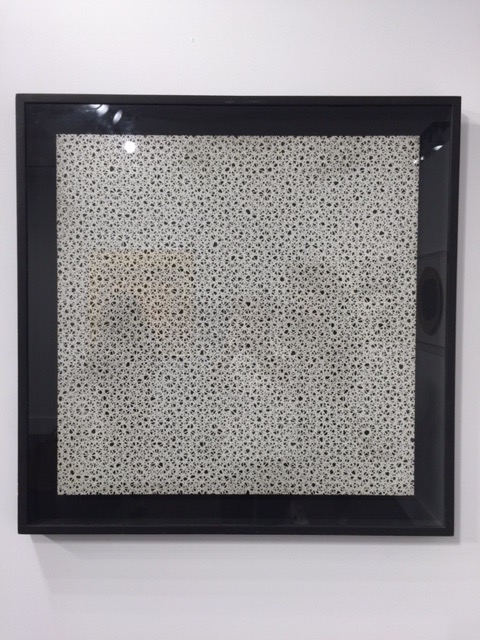
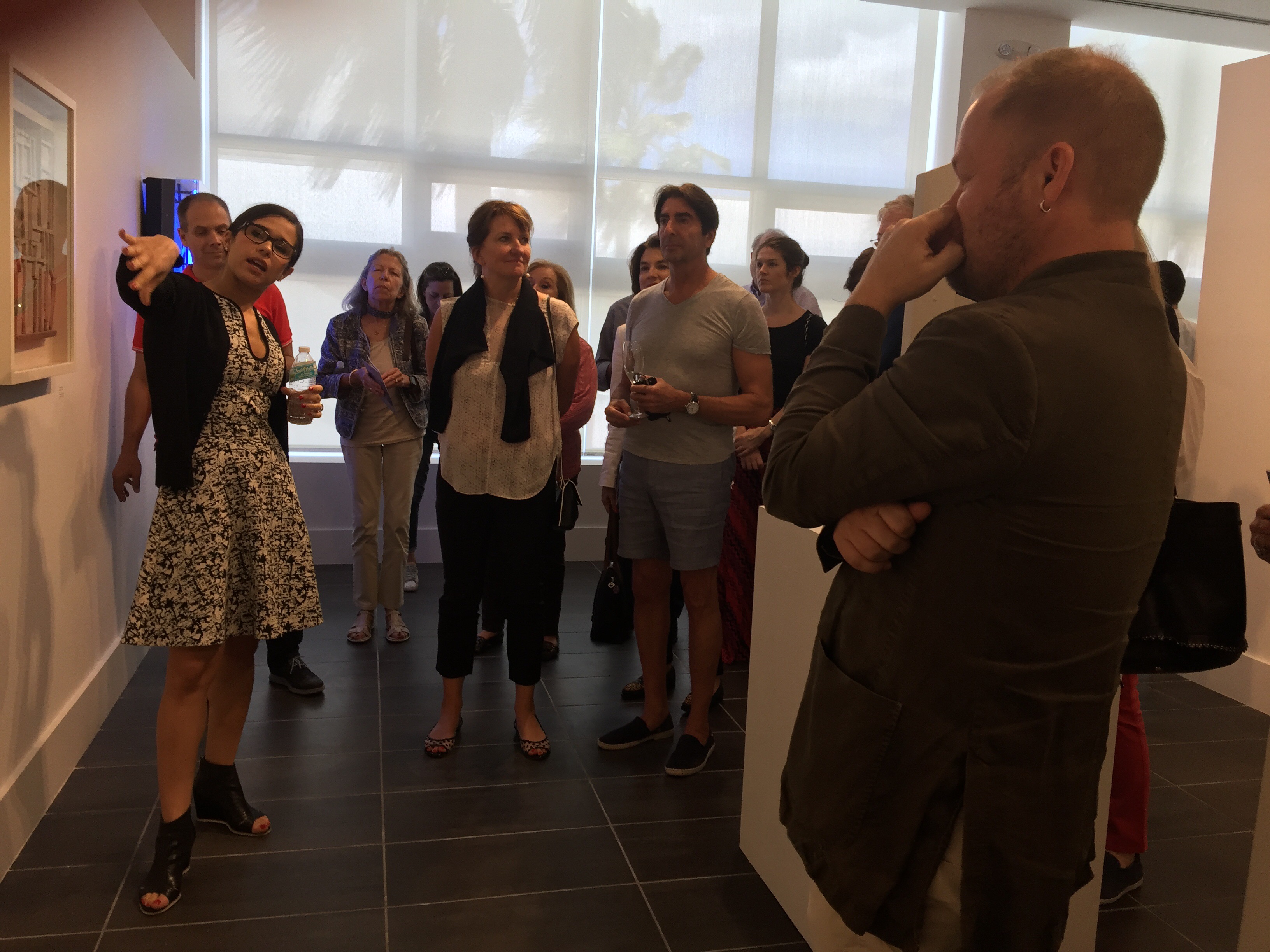
First stop. Juan Carlos Maldonado, president of Art&Art Collection, invited patrons of the Perez Art Museum of Miami PAMM to view his collection of abstract art. The Unbounded Line is a selection of work that shows the intricate and remarkable histories of abstract and constructivist. We loved the art Here are some of the pieces we saw.






Then off to Williams McCall at Frameworks where Eliot had three photos on display.



My favorites.




Some people will not want to fake it anymore, thanks to a new high tech condom ring. They will be more interested in measuring it. The i.Con smart condom is manufactured by British Condoms.
The i.Con and its companion app, tracks speed, “average thrust velocity,” duration, skin temperature, girth, calories burned, and frequency of sessions.
The i.Con also features a micro-USB charging port providing eight hours of use. The manufacturer swears “all data will be kept anonymous, but users will have the option to share their recent data with friends, or, indeed the world.”
Wow wee!!






The other day I saw a story in the New York Times about Vincent Mallozzi, the newspaper’s wedding reporter. I flipped out. He was the guy, who in 2008, wrote one of the first stories ever about how women were using the Internet to support each other after their divorce. My client was http://www.firstwivesworld.com.

Vinny Mallozzi worked for the sports section of The New York Times from 1986 until 2003, when he became a Weddings reporter and lived happily ever after. Here is the story about Vinny.
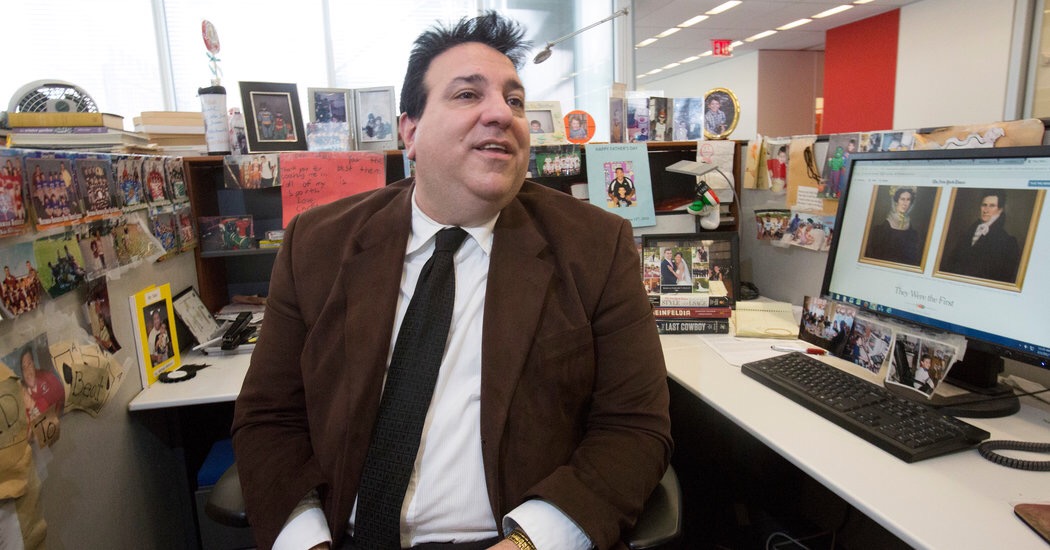
Vinny is the wedding reporter.
In 2008, Vinny called to say he thought it would be interesting to sit in on a live meeting for First Wives World so his readers could truly understand what challenges divorced women faced. He showed up with his photographer, Earl Wilson, and proceeded to stay for a few hours listening to the gripes and future plans of each woman.

Paul, Debbie and Jonas
I was amazed that almost 10 years later, I was able to Google the story and find it. It just reminded me how lucky I am to be involved in the digital world and how many great stories I have personally created in my career as a PR agent. While most days I want to rip the hair out of my head trying to get a writer to pay attention to my pitch, there are stories like this that make it all worthwhile.
Full disclosure: Allen Hirsch is my client.
Full disclosure: The documentary being featured in the New York Times about Allen’s love and experience with a capuchin monkey named Benjamin, took place years before I met him.
Full disclosure: If you ever loved an animal, you will identify with Allen and Benjamin’s relationship.

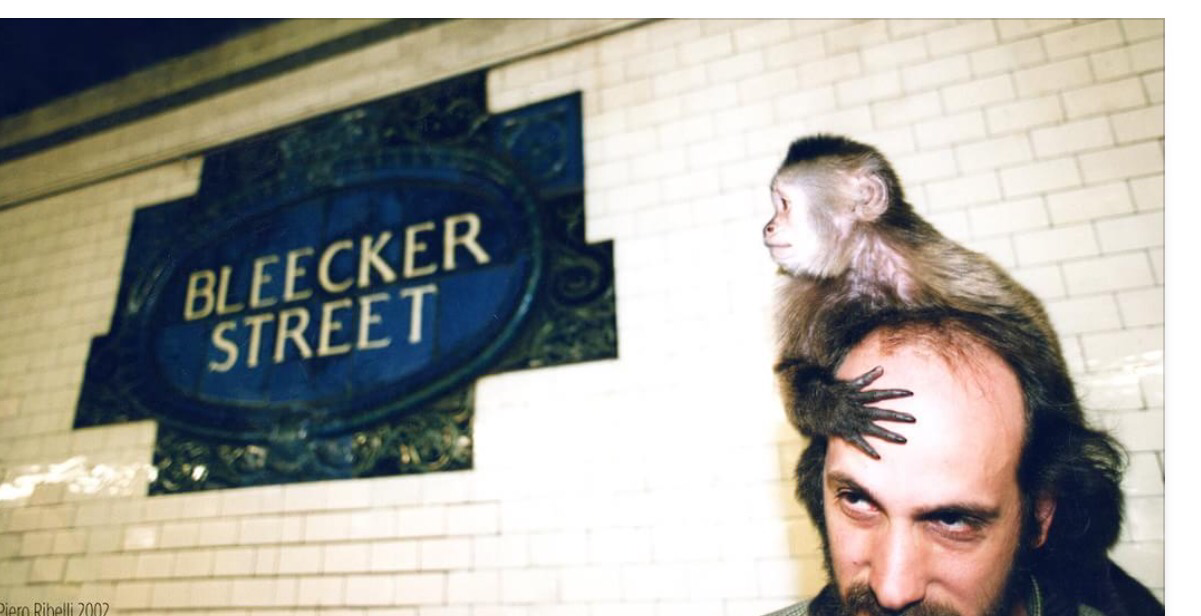
Allen Hirsch is an artist, writer, real estate developer, and inventor who lives in New York City. He invented the HandL line of phone cases that I represent for public relations.
Allen’s story is told in a series of videos called “Long Live Benjamin” in the Op-Doc section of the New York Times.
The documentary was created by Jimm Lasser, a Cannes Grand Prix and Emmy award-winning Creative Director at Wieden + Kennedy in New York and Biff Butler, a Cannes Lion, Clio and Emmy award-winning editor with Rock Paper Scissors. “Long Live Benjamin” is their first film.
Before you watch the videos, read Allen’s words.
“I’ve always struggled to be human, to know how to act and to what purpose. As a young New York artist, living in a tiny commercial storefront downtown on Crosby Street, I documented this process through drawing and painting self-portraits, which faithfully recorded the shifting moods and musings that swirled through my mind. This practice brought few answers, but did conjure the questions, which gazed back out at me starkly from the canvas.
“After marrying a woman from Caracas in the mid-1990s, I started traveling to Venezuela, where I became fascinated with the lives of people living on the jungle coast. The simplicity of sunlight, children’s laughter and the basic search for daily necessities was enough to quiet my New York rumblings. Then one day my wife brought home a cardboard box with a shriveled baby capuchin monkey, clinging to life. His mother had been killed by locals who liked monkey soup. It was a propitious moment and I immediately knew I was meant to care for him.”
Click here to access the videos.
Be ready to get emotional.
David Pogue of Yahoo Tech recently promised, in a series of social media posts, that he would show us how the dead can become alive again. Watch the video from CBS’s This Morning last Sunday to see how computers can recreate a dead person.
Pogue interviewed Paul Debevec of the Institute for Creative Technologies, at the University of Southern California, who invented the Light Stage, a machine that he says “produces a series of high-resolution photos from different angles to reconstruct a 3-D model of a dead subject’s face.”
Pogue explains that “once someone has been scanned into the Light Stage, engineers can digitally recreate him or her with about 50 different facial expressions.”
This new technology may not allow dead people to stay dead. Now that’s a scary thought. People you know from the past can now show up in your future. Pogue explains in the video. Don’t miss it.
Every once in a while, a friend or neighbor, asks to use my scanner. For those of you who don’t know what a scanner is, here is an easy explanation.
Wikipedia says, “A scanner is a device that analyzes the surface of an image, printed text or an object and converts it into a two-dimensional digital image. Scanners come in different shapes and sizes depending on the intended use. The most common scanner for home and offices today is the flatbed scanner.”
I don’t mind them using my scanner when they have to email a digital file to someone. What bothers me, is that I have to get dressed, and/or straighten up, before they enter my apartment. I don’t want them to see how messy I can be.
Those days may be gone forever once the Pup becomes available. It’s currently on Indiegogo, a crowd-funding site. It should be ready for retail in a few weeks. It’s a tiny hand-held scanner that is capable of accomplishing all kinds of jobs. I can let neighbors take the Pup home with them, scan all they want, and then return it to me.
For $169, I get to keep my privacy.
Read about all the features below and watch the video for a fun explanation.


It doesn’t happen too often, but there are days in Miami that we wake up to complete fog. I mean compete fog. We see nothing. I’m used to it now, but at first it was very eerie.
The fog usually burns off by 9am. You start to see the tops of buildings and the outlines of ships and boats. Eliot captured the sights, so I decided to share them with you.
Coincidentally, New York City experienced fog yesterday morning too. Our daughter Whitney posted an aerial view of the fog from her apartment as well. I included it because it is quite beautiful.








The west side of Manhattan. Photo by: Whitney Hess

Miami sunset a few days ago. Photo by: Eliot Hess.
I don’t think many DigiDame readers own their own drones, yet. I do believe that there is a strong possibility, that if we live long enough, we all will own one.
There is one young gal, Abby Speicher, CEO of DARTdrones, that wants to prepare all of us to be expert pilots. She appeared on Shark Tank last night looking for funding for her drone training and consulting business.
Speicher wants to make sure “that Unmanned Aerial Systems are safely integrated into the national airspace.” Mark Cuban became her investor. The company is located in Scranton, PA. offering training courses throughout the United States. Speicher is a serial entrepreneur who founded her first company at 17.

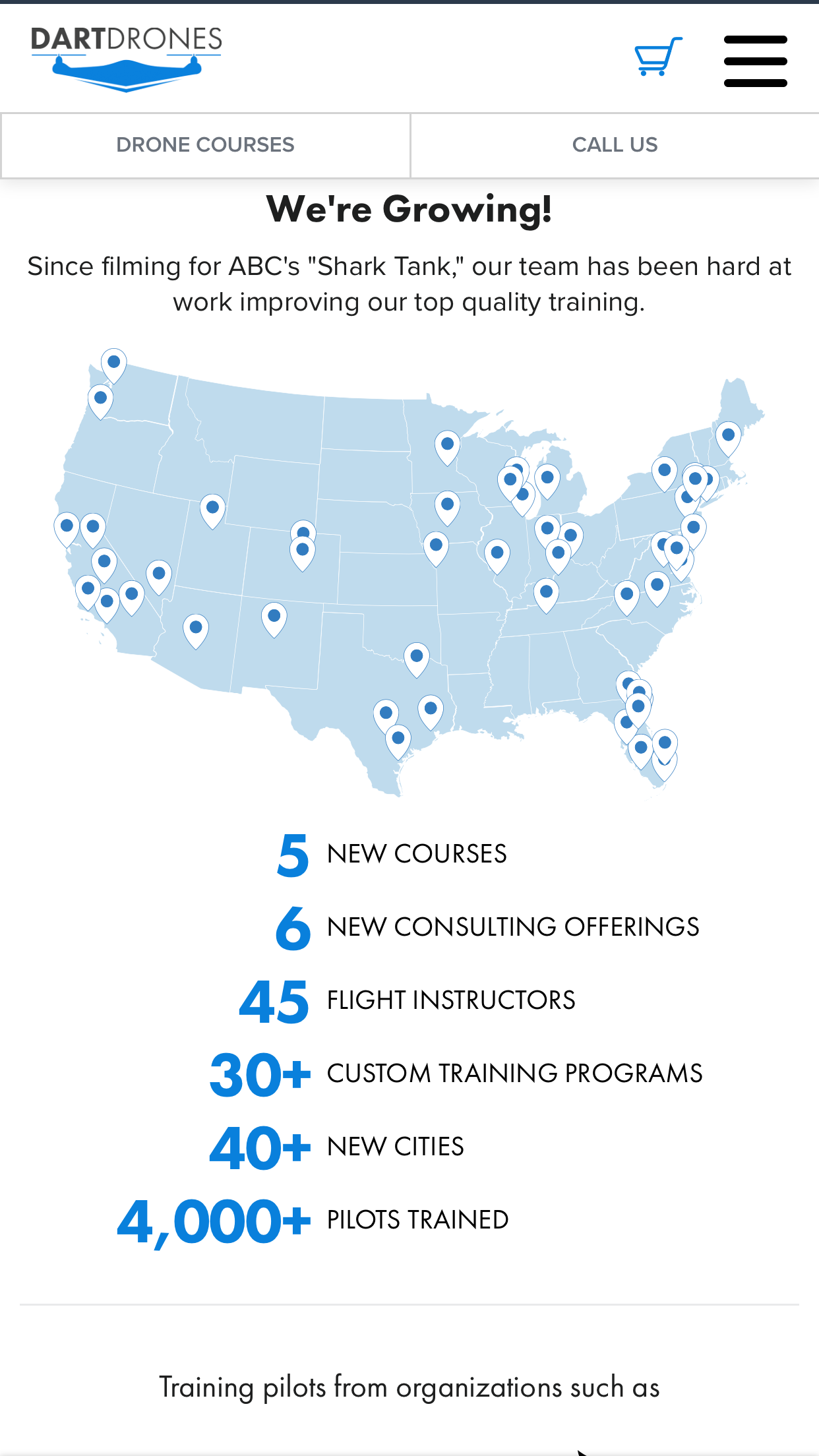
I was so happy to hear about this new venture because too many untrained people are flying drones. I’m not trying to encourage the use of UAS but I would like to see more people who know what they are doing at the controls.
In the meantime, duck.

