I still have the touch. Baby Lucy belongs to close pals Dana and Alex. Ruth and Howard are the grandparents. They gave me the honor of a bottle feeding. Thank you for this very special visit. Eliot and I loved it. Xoxoxoxo
🎶🎶🎶🎶🎶🎶🎶🎶🎶🎶🎶🎶🎶🎶🎶🎶🎶🎶
When Dylan Met The Beatles For The First Time. I’m reporting from the book,“The Last Days Of John Lennon.” I loved this part. —LWH.
Alfred Gilbert Aronowitz, the American rock journalist best known for introducing Bob Dylan to The Beatles in 1964, said it was “the crowning achievement of his career. Brian Epstein, the Beatles manager from 1962 until his death in 1967, arranged for the meeting in the Delmonico Hotel in NYC.
Minutes after meeting each other, Dylan admits to the Beatles that he really likes the line “I get high, I get high” in the song “I Want to Hold Your Hand.”
“Actually,” says John, “it’s ‘I can’t hide, I can’t hide.” Everyone in the room shares a laugh. Then Dylan adds, “Here I was, thinking you were singing about smoking pot.” John and Paul exchange embarrassed glances. “We, ah, haven’t really tried marijuana before.”
Dylan’s road manager, Victor Maymudes, rolls a joint for each Beatle. “Give it to my royal taster,” John says, pointing to Ringo. Ringo takes several hits…and can’t stop laughing. John joins in.
Paul spouts existential phil- osophy and wanders around hugging people, Ringo and George double over in hysterical laughter, especially when the room phone rings and Dylan answers it with, “This is Beatlemania here.” “It was such an amazing night,” George later says. “I felt really good. That was a hell of a night.”
🎶🎶🎶🎶🎶🎶🎶🎶🎶🎶🎶🎶🎶🎶🎶🎶🎶🎶
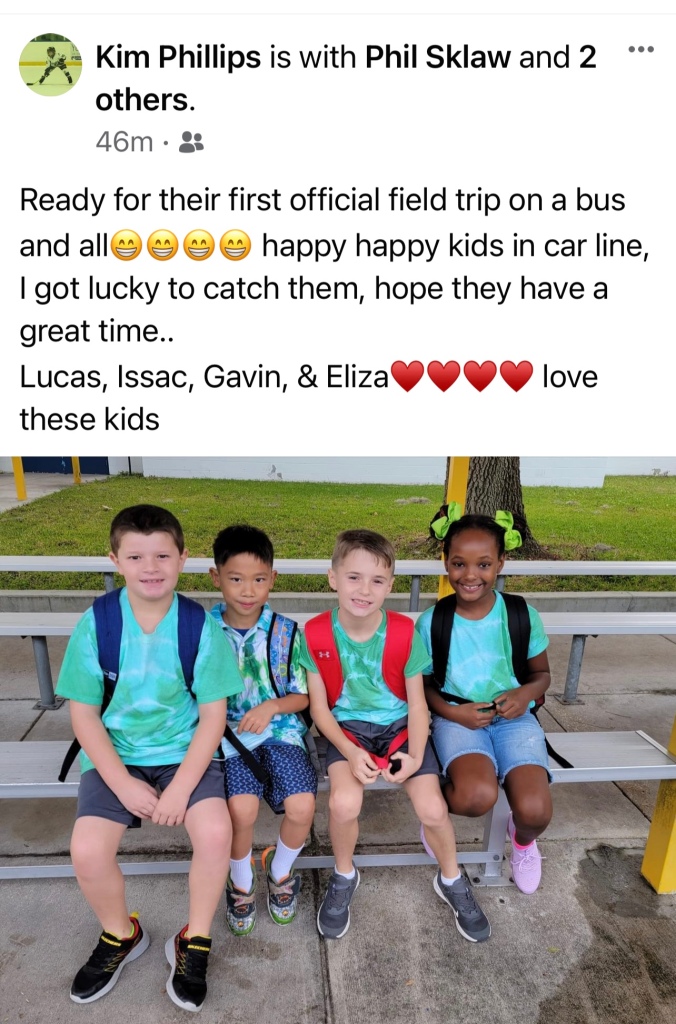
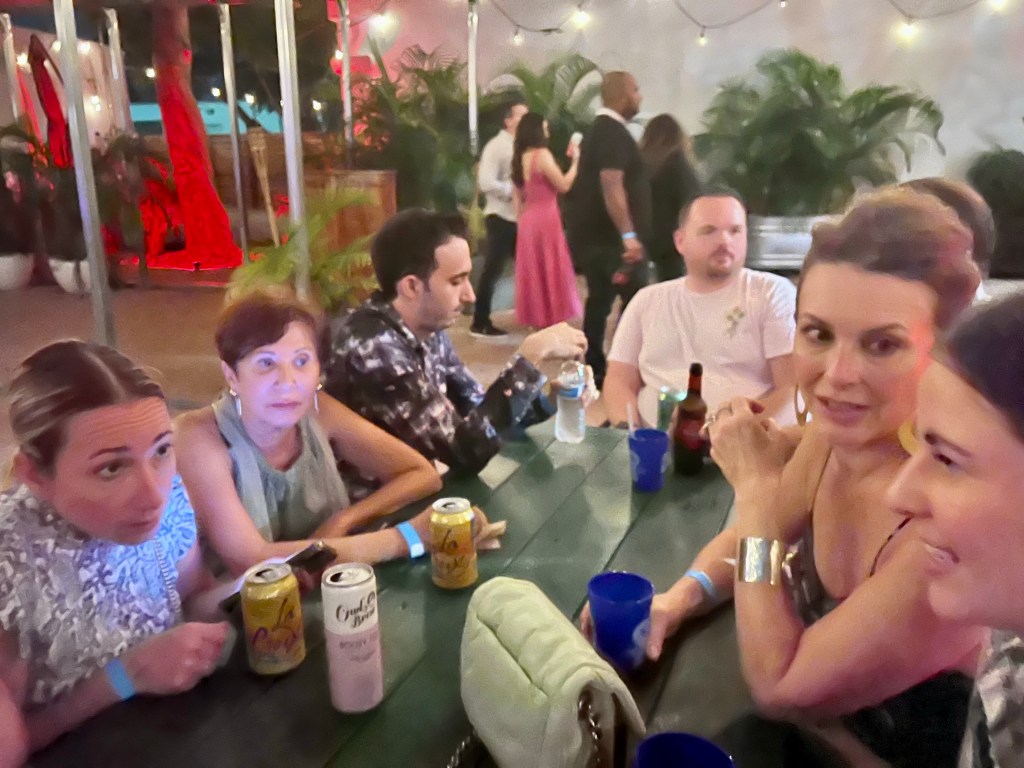
The photo below is of my godson’s son, Lucas. He is far left. Haha. Not sure of his political situation. Nevertheless, this photo makes me so happy, This is the world I want to live in.
Over 25 years celebrating very special, good times with Ruth and Howard Greenberg. Last night they took us to a brand new, glamorous restaurant in the Miami Design District for our birthdays. We had a ball and the food was delicious. Thank you Ruth and Howard. Ruth looked like a fashion model. It made me feel young and optimistic.
🎶🎶🎶🎶🎶🎶🎶🎶🎶🎶🎶🎶🎶🎶🎶🎶🎶🎶
Ruth and Howard topped the evening off for us at an alcoholic ice cream bar called Aubi and Ramsa in the Miami Design District. That was a super celebration treat. See if there is a bar near you. What’s better than eating ice cream and getting a buzz?
🎶🎶🎶🎶🎶🎶🎶🎶🎶🎶🎶🎶🎶🎶🎶🎶🎶🎶
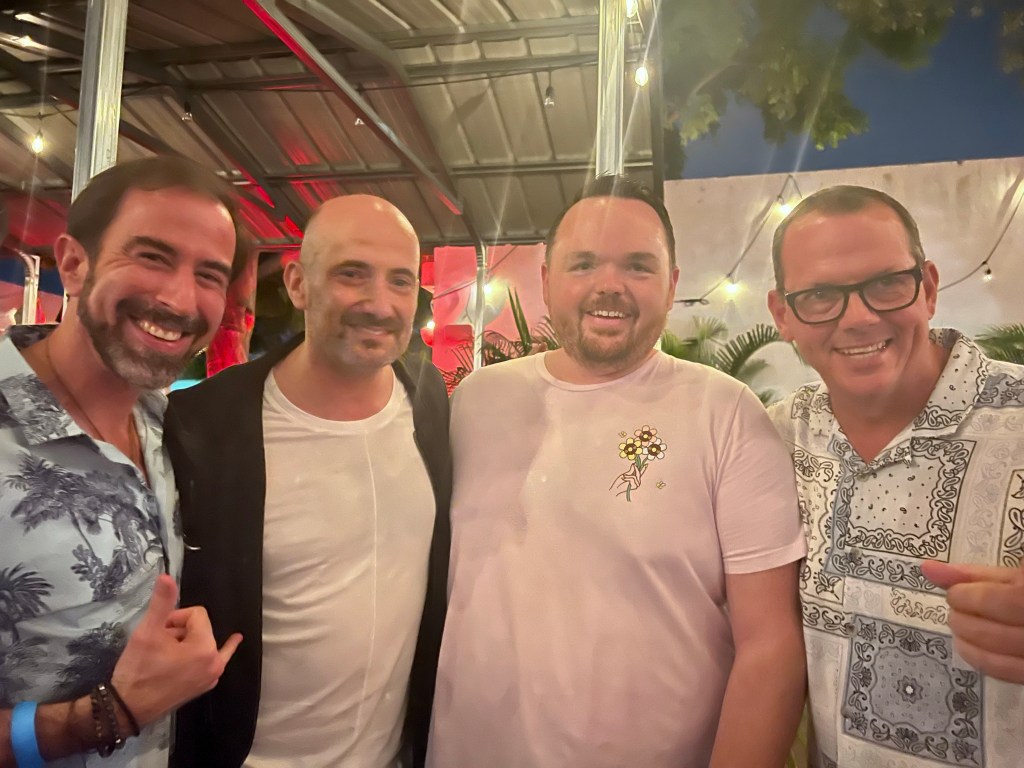
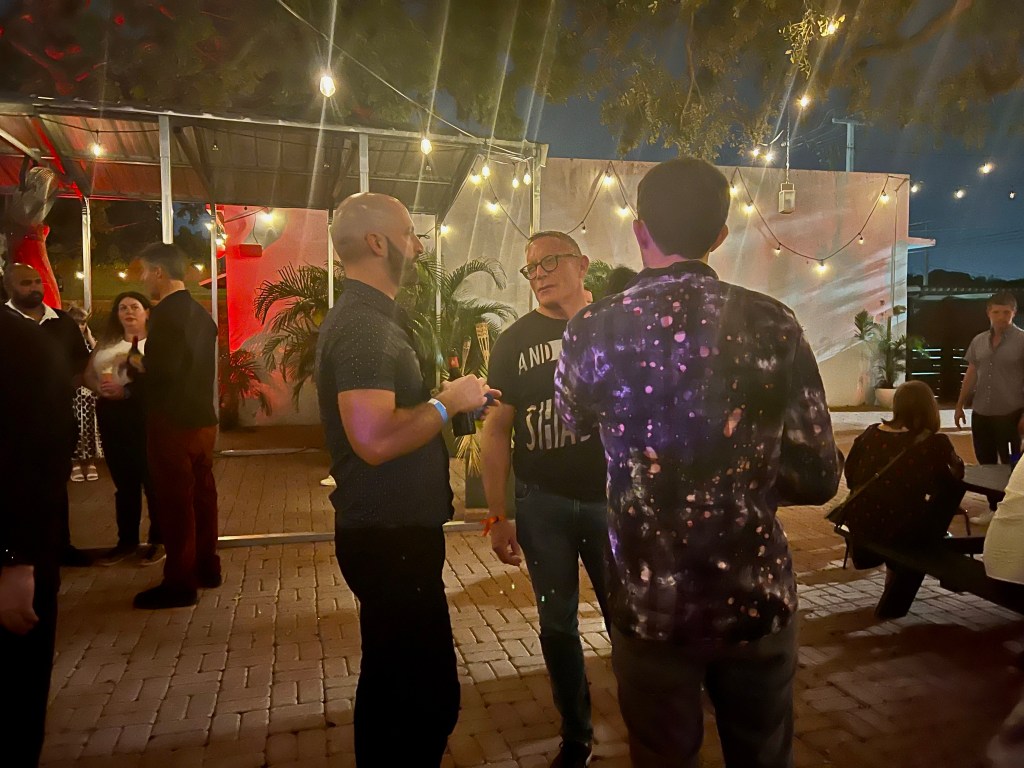
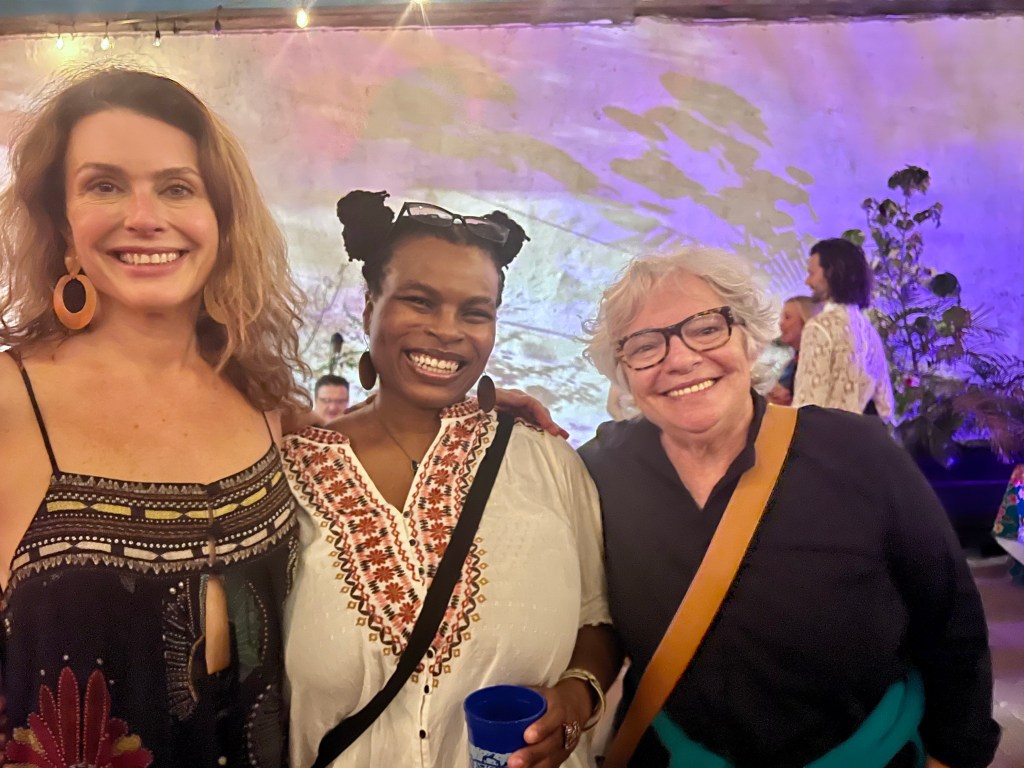
A few hundred folks showed up for Fountainhead Arts Little River studio visit and after party cocktails at Low Key. Many of my favorite artists and collectors showed up. Happy Times
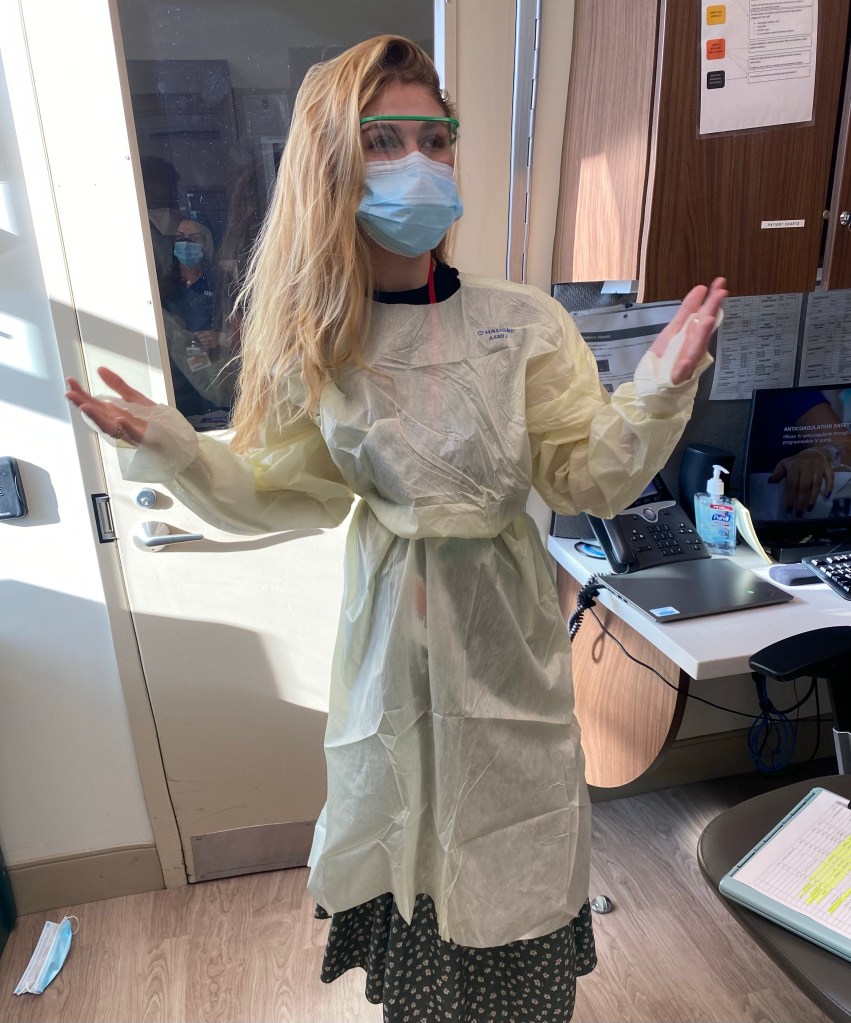
My cousin Hanna Young is dressed for work in a hazmat suit. She is a clinical psychiatric social worker and six of her patients have Covid. That’s what I call dedication.Eliot bought this for me in Paris. It will hang over our bed. @lulamawolf is the artist. She is from Johannesburg and she exudes style in her presentation and in her work.
#tbt Throwback Thursday
By Lois Whitman-Hess
If Samsung John Grundy didn’t speak up to the Korean marketing folks in Ridgefield Park, NJ, decades ago, chances are the company would still be making inferior products. I will never forget that day. I was getting berated by the MarCom people my agency, HWH PR, reported to in one of the conferences rooms. The Koreans were very upset with me because I pulled a magazine product review from being published. The editors of the magazine called me to say the product was a dud. They offered to nix the review because they didn’t want to embarrass Samsung and HWH.
I agreed to it. When I delivered the news to Samsung, the executives were furious with me. I will never forget the anger on their faces. After all, Samsung Korea, wanted Samsung United States, to secure product reviews in the big name publications. That was the most important mission assigned to the NJ marketing folks, and I had just ruined one of the first opportunities to make that happen.
I was startled that my clients didn’t understand that a bad review could have been a major setback for the growth of the company. They just kept telling me that I made a wrong decision and how disappointed they were. Their scolding lasted about a half hour when all of a sudden, John Grundy, one of the young American product executives, (who I didn’t even know at the time) stood up and told the MarCom staff how foolish they were. With a stern voice, he explained the ramifications of a bad review and how they should be thanking me instead of verbally beating me up.
The room went silent for about two minutes. It seemed like forever. It was rare, and probably forbidden, for an American executive to question, or criticize, a Korean counterpart, especially in public. Grundy didn’t care. He couldn’t stand listening to the ignorance. I was thrilled because Grundy was far more respected than I was. We were both trying to do the best for the company,
The MarCom people finally understood the consequences. Soon after that, Samsung established a product quality control department and those folks (from Korea) worked very closely with HWH PR. VP Russ Rowland of HWH was instrumental in helping Samsung win “Editors Choice Awards” for years to come. This new department was so thankful to HWH for helping them achieve greatness that they would issue us bonus checks twice a year. We continued to represent Samsung for 17 years.
This is not the first time I have told this story. I have thanked John Grundy a few times but it will never be enough. I know the names of everyone in that room when this situation occurred. I just didn’t feel it was necessary to reveal who they were.
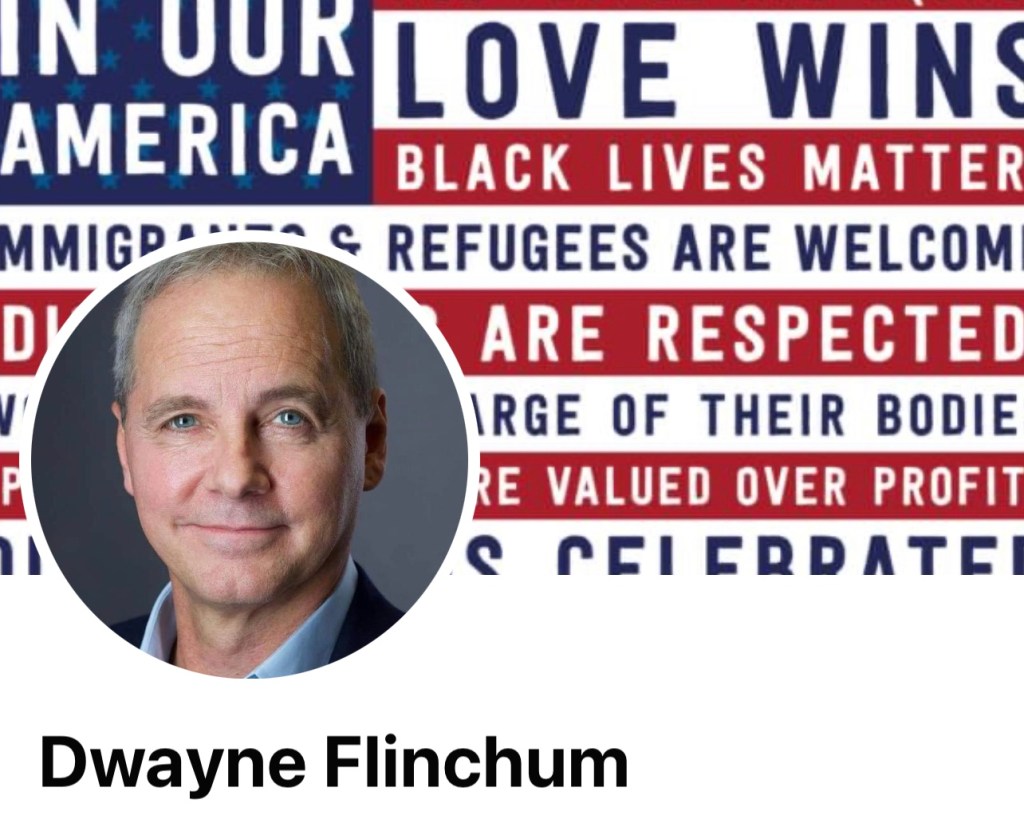
I love Dwayne’s words. He is friendly with my mentor Richard Ekstract. Richard always had nice things to say about Dwayne. That’s why I follow Dwayne on Facebook. Today when I woke up and read his essay, I wanted to share it with you.
“I was raised in a conservative family. I campaigned door-to-door for Senator John Warner in high school. Later, in the 80s, many of us were caught up in the “trickle-down” economics and bull market of the Reagan era and it was hard to argue against a robust economy. I even worked for The Heritage Foundation at one point in my career.
“But today, I think and feel differently. I believe in what the data says. I trust science. It isn’t perfect, but it’s far better than the instincts and opinions of a population (electorate) that gets much of its unqualified news on YouTube, or Twitter, or TikTok. Misinformation and propaganda are now widespread.
“Democrats, including the Biden administration, have followed the scientists and experts — creating smart, effective policies on climate change, mental health, healthcare and other important issues that are real threats to our society. Ironically, these Democratic policies will help tens of millions of people who claim to be die-hard conservatives.
“I’d like to see a kinder world, one full of tolerance, empathy and understanding. If we truly have empathy, we should all worry about the rights of women, the LGBTQ community, the elderly, children and mental health, the poor, marginalized and underserved communities, and more.
“I worry about social injustices in this country and I am now mindful enough to see the struggles that people of color face — the hate crimes, the hate speech, even the microaggressions. There’s also a growing movement of antisemitism.
“I worry about our human decency and I worry about our democracy. I worry about political violence and the threat of a growing autocracy — centralization of power in the hands of a few. Public office is no longer seen as public service; it’s a means to power, something to be won at any and all costs.
“How could this be happening in the America I grew up in? It was far from perfect, but there was always some semblance of reason and logic, and a sense of community and purpose that I think is missing now.
“So, as much as I try to avoid politics in personal posts on FB, I feel the need to state my opinion. As a country of people, we’re much better than this. As I vote in the mid-term elections, I will vote to save our planet because dire circumstances and events lie ahead if we do not act urgently. I will vote to protect people’s rights. I will vote to preserve equal access to voting, to proper healthcare, and to support a society that conducts itself through love, mutual support, empathy and kindness.
“I will vote for a party that takes its direction from the data and facts, the truth — at least, as well as we can know and understand it. The Republican leaders that garner the most attention today represent the opposite. They encourage us to think, “What’s in it for me?” Democrats ask, “How can we make a better society?”
“While one party seeks to look back and feels regressive, the other — in my humble opinion — seeks to look forward to meet real and dangerous threats that are emerging in the world. That party is more progressive, and it has my full support.”
I used to love visiting the Madison Avenue gallery that represented caricaturist Al Hirschfeld. It was a short walk from our apartment building, Margo Feiden was very theatrical looking. She was always very friendly and loved talking about Broadway Stars and Shows. You felt like a Showbiz insider after being in her company. You walked away feeling so energetic and alive. The world needs more people like Margo. RIP. —LWH
Margo Feiden, Hirschfeld’s Idiosyncratic Gallerist, Dies at 77
She handled the sales of the great caricaturist’s works and told stories of flying Diane Arbus in her plane and encountering the woman who shot Andy Warhol.
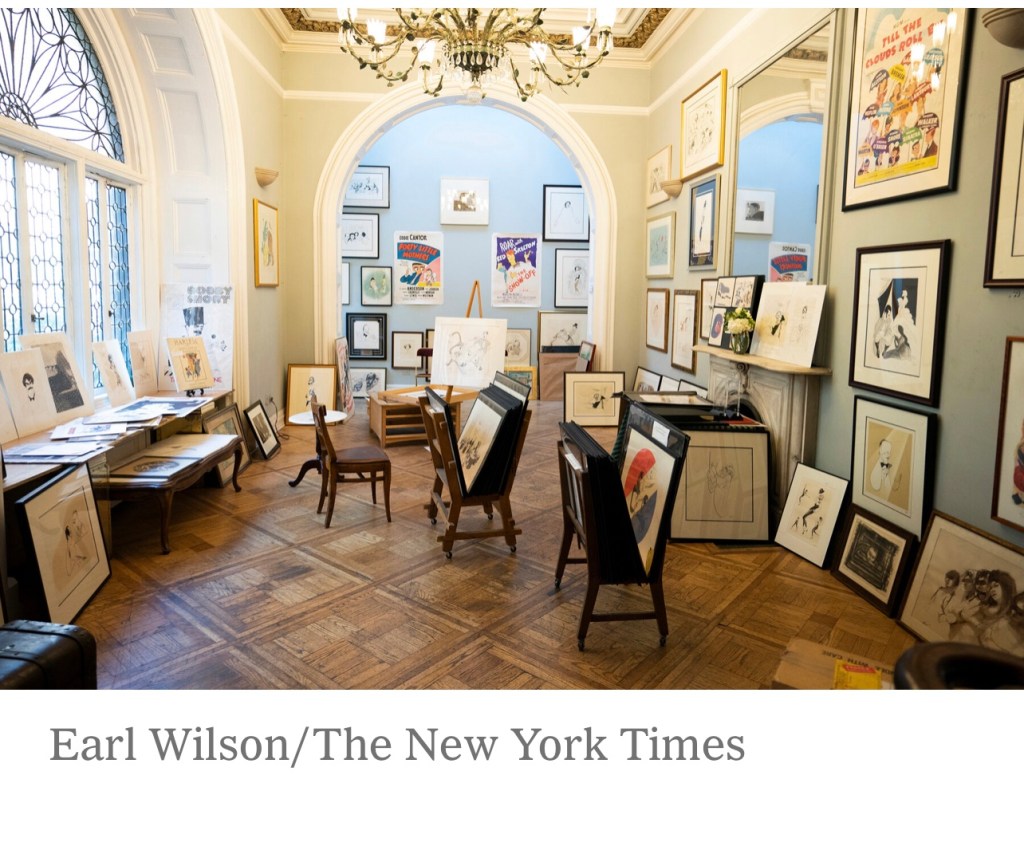
The scene on a recent Friday at a Greenwich Village townhouse was like a cross between an art opening and a rummage sale.
On the sidewalk, a barker urged passers-by to take a look. Inside the townhouse, a five-story mansion on East Ninth Street on the market for nearly $11 million, the wares included signed prints by the caricaturist Al Hirschfeld — elegant line drawings of Frank Sinatra, Jerry Seinfeld and dozens of others selling for thousands of dollars — as well as a plastic tub of electrical wiring, a heated massage cushion, a pair of 1998-edition Happy Holidays Barbies, and boxes of worn hats and purses.
Overseeing it all, somewhat reluctantly, was Jeremy Rosen, who for weeks has been trying to dispose of what his mother, who died in April in Manhattan, left behind.
She was Margo Feiden, a gallerist best known for the more than 30 years she spent representing Mr. Hirschfeld, the artist famous for his sketches of Broadway luminaries and other stars. Mr. Rosen described himself as “proudly estranged” from his mother, but it had fallen to him to sort through the abundant mix of junk and valuable art she left behind at the townhouse, which was both her home and the latest location of the Margo Feiden Galleries, which she founded in 1969. He said he would continue the estate sale for several weeks.
Ms. Feiden died on April 2 at 77. A report by the city health department listed an array of causes, including cardiopulmonary arrest, pneumonia, urinary tract infection and “failure to thrive.” Though her family placed a paid announcement of her death in The New York Times that month, her passing had gone otherwise unnoted until a Times reader called the estate sale to the newspaper’s attention.
Ms. Feiden occasionally showed other artists at her gallery, including the theater illustrator Don Freeman and the writer Kurt Vonnegut, who dabbled in drawing.
Mr. Hirschfeld, though, was her main client.
As Ms. Feiden told the story to The New York Times in 2000, she met him in 1970, a year after she opened her gallery, when he came in to browse and noticed a photograph of her with an airplane. She told him that she had a pilot’s license and that flying was her hobby. His response, she said, was “Any woman who can fly an airplane can sell my art.”
Her gallery started out on East 10th Street, later had an Upper East Side location on Madison Avenue and ended up back in the Village, on East Ninth Street. There were always Hirschfelds on the walls, but Ms. Feiden also mounted special exhibitions over the years.
For the opening night of a Hirschfeld retrospective in 1985, she had East 10th Street strung with pennants and balloons and positioned vendors on the sidewalk to hand out hot dogs, cotton candy and popcorn. An estimated 1,000 people showed up. A Times reporter covering the evening recorded this exchange.
Mr. Hirschfeld: “I want you to know I had nothing to do with this. She said she was having an exhibition. I didn’t know there was going to be a carnival.”
Ms. Feiden: “I didn’t tell him. I was afraid he wouldn’t have come.”
Mr. Hirschfeld: “She’s quite right.”
For three days in 1991, the Madison Avenue location was declared an official post office in honor of the release of stamps bearing Hirschfeld drawings. Three years later, to mark the 25th anniversary of the gallery, Ms. Feiden had a 40-foot caricature of Mr. Hirschfeld himself painted on the roadway. (Rain came before the sealing topcoat had set, and “he lost about 20 pounds,” she told The Times, though the painters returned to touch up the portrait.)
The Hirschfeld-Feiden relationship went through rough patches, especially in 2000, when Mr. Hirschfeld brought suit against Ms. Feiden, seeking more control over the sale and exhibition of his drawings and asking for more rigorous accounting of sales.
Later that year Mr. Hirschfeld withdrew the suit after reaching a new agreement with Ms. Feiden. Mr. Hirschfeld died in 2003, and 13 years later there was more acrimony: The Hirschfeld Foundation, which mounts exhibitions of his work and supports arts causes, sued Ms. Feiden, claiming that she had violated the 2000 agreement in numerous ways.
The case dragged on for years, with the court siding with the foundation in a series of rulings and awarding several hundred thousand dollars in damages. In 2020, the foundation said in an announcement on its websitethat it had “regained complete control of all of Al Hirschfeld’s work,” and that its relationship with Ms. Feiden was “100% terminated.”
But Mr. Hirschfeld was only one element of Ms. Feiden’s life.
Margo Feiden was born on Dec. 2, 1944, in Brooklyn and grew up in the Flatbush section. Her father, Joseph, was an electrical contractor. Her mother, Jewel (Eliasberg) Feiden, had early aspirations to be an actress before, her daughter once said, becoming a stockbroker later in life.
Ms. Feiden had an early interest in theater. She is said to have produced a production of the musical “Peter Pan” with high school students when she was 16. The next year she staged her own play, “Out Brief Candle.”
Perhaps those early theatrical forays led to a brush with infamy that Ms. Feiden said she had in 1968, though she didn’t tell the story publicly until this century. She said that on June 3 of that year, a woman named Valerie Solanas turned up at her apartment in Crown Heights, Brooklyn, insisting that Ms. Feiden produce a play she had written.
When Ms. Feiden declined, according to an account she gave to The Times in 2009, Ms. Solanas told her that she intended to shoot the artist Andy Warhol, which would make her so famous that Ms. Feiden would certainly change her mind. Another version of the tale, this one in The New York Post in 2018, presented the exchange somewhat differently: Ms. Solanas bluntly told Ms. Feiden, in so many words, that if she didn’t agree to stage the play, she would shoot Warhol.
In any case, Ms. Feiden said that after displaying a gun, the woman left her apartment; later that day, she did indeed shoot Warhol, who was severely injured. Ms. Feiden said she had tried to warn the police and others but was not taken seriously.
Ms. Feiden opened her gallery the next year. Some of the earliest attention she received was for her skill at restoring damaged works on paper. She had begun collecting lithographs and, seeing that many were showing wear, studied up on how to restore them.
In this period Ms. Feiden was also apparently making use of the pilot’s license she had acquired. She told the biographer Patricia Bosworth for her 1984 book about the photographer Diane Arbus that she used to take Arbus on joy rides over Manhattan, flying out of an airstrip on Long Island.
“Diane never spoke during these flights,” Ms. Feiden said. “She seemed mesmerized by the experience and relieved to be off the ground.”
Ms. Feiden’s unusual résumé added another entry in 1989 when she published “The Calorie Factor,” a book she had been researching for a decade, prompted by her own struggle to control her weight. At one point, she said, she hit 300 pounds, but by learning to count calories she shed half of that weight. The book — dozens of copies of which surrounded the entryway to her home during the estate sale — was an extremely detailed listing of how many calories were in which foods.
Ms. Feiden’s marriages to David Rosen and Stanley Goldmark ended in divorce. Her third husband, Julius Cohen, died in 1995. She is survived by a daughter, Bambi Goldmark, and Mr. Rosen.
Mr. Rosen lives in Austin, Texas, and before this year he had not spent much time at his mother’s townhouse. When he came to New York to see his mother in January, he found her home in a state of “squalor,” he said. “By anybody’s definition of ‘hoarder,’ she fit it,” he added.
He was speaking on the street outside his mother’s home. Twice, a garbage truck drove by, and he ran off to hurl a plastic bag of junk into it.
At the same time, Oscar Fuentes, a handyman who acted as Ms. Feiden’s caretaker at the end of her life, called out to anyone he saw on the street, trying to sound as inviting as possible.
“Welcome to our estate sale,” he said. “It’s movies and Broadway history.”
Neil Genzlinger is a writer for the Obituaries desk. Previously he was a television, film and theater critic. @genznyt • Facebook
Alex Traub works on the Obituaries desk and occasionally reports on New York City for other sections of the paper. @alexetraub
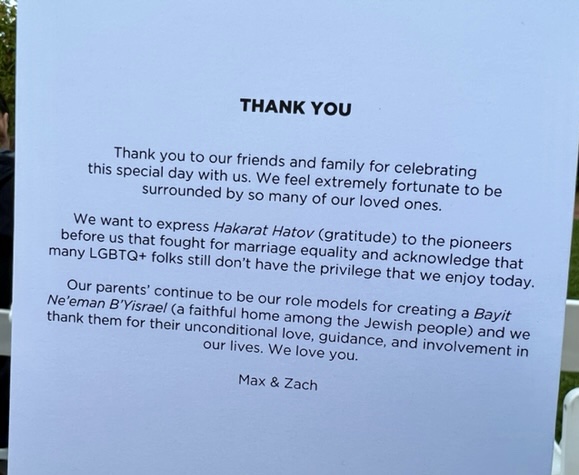
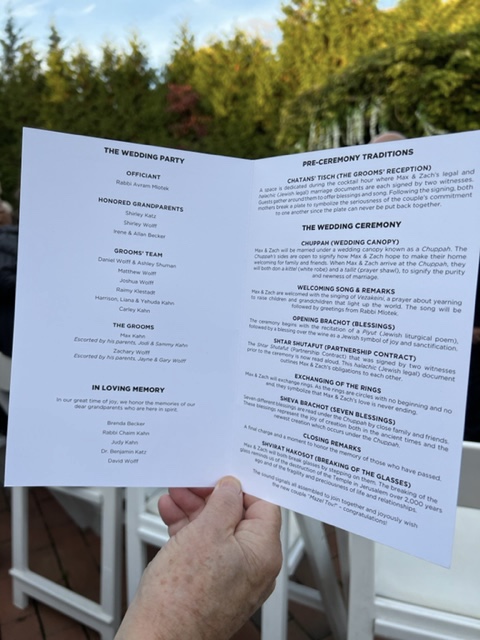
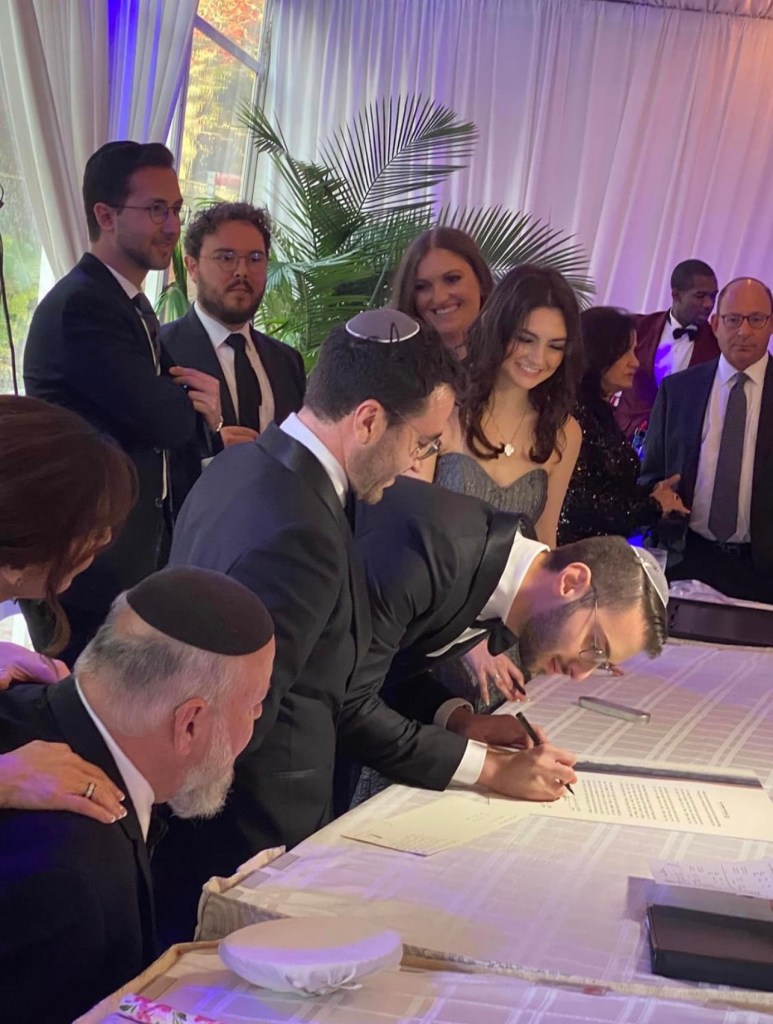
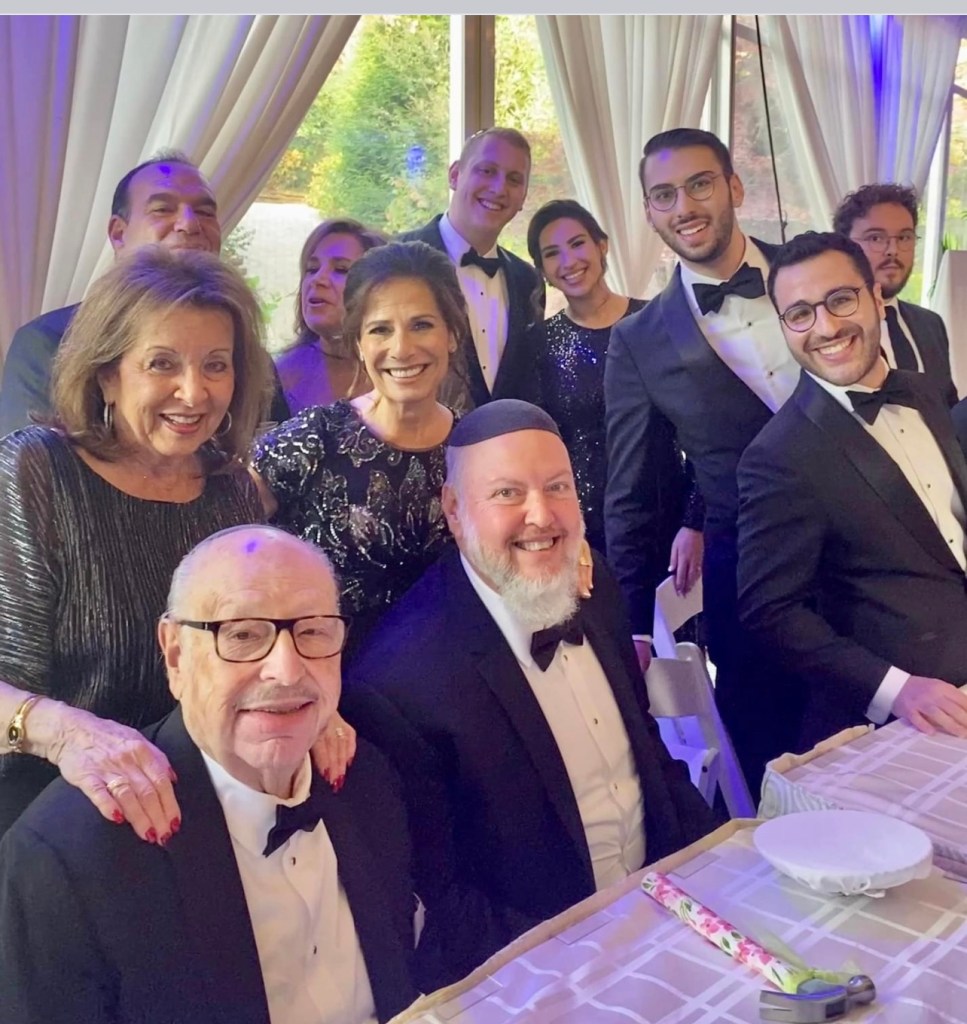
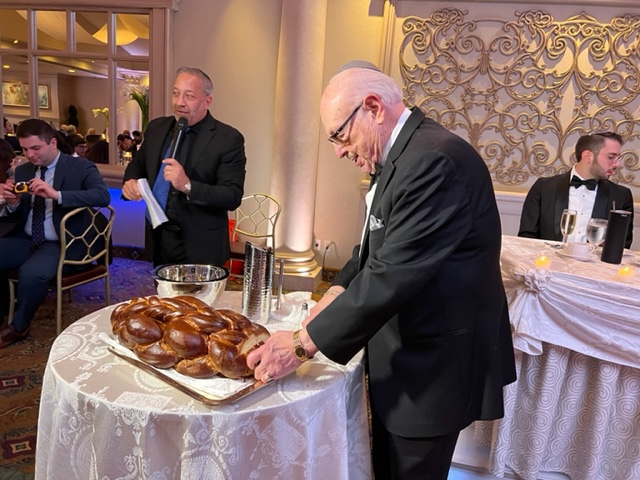
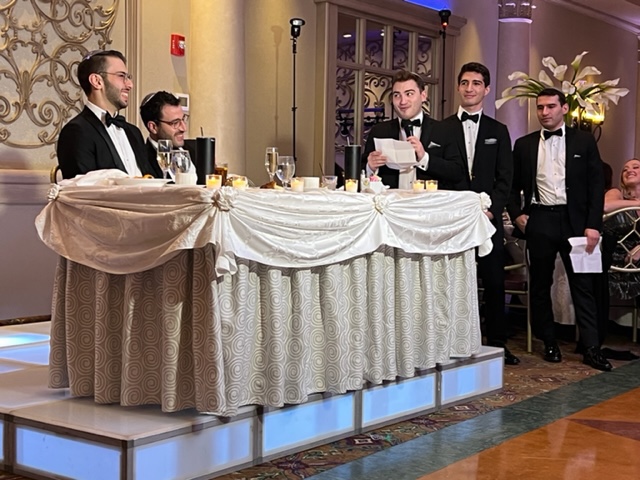
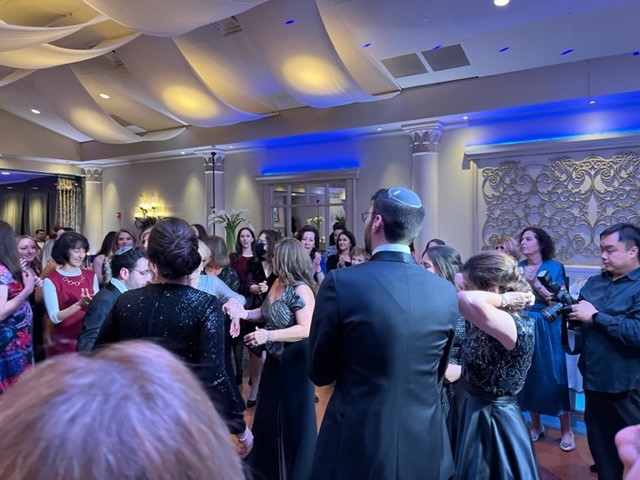
A very meaningful messageThe wedding ceremony programZach signing the ketubahMax signing the ketubahThe Kahn family filled with joyGrandparents Irene and Allan walking down the aisle. My first cousins Max and his parents, Jodi and Sammy KahnZach and his parents, Jayne and Gary Wolff Harrison (Max’s brother) & Liana Kahn with three month old baby Yehuda. They flew in from Israel. Sister Carly, always beautiful.The Grooms Over 200 guestsFirst cousins/sisters Marilyn Levine and Irene BeckerCousins Allan and Irene BeckerCousins Marilyn and Richard LevineGuess who ?Grandpa AllanThe GroomsZack’s brother’s (he is a triplet. The tallest one is the youngest brother to the triplets) welcome Max to the family and are thrilled to have another tall one on the team. Max is my kissing cousin. Now Zach gets kisses too.Closer look
The pain of losing a child is unnatural and indescribable. There is a hole in your heart that will never close and never heal. I lost my son to suicide in August, 2017. But seven months later, I also lost my magnificent husband.
My son David was magnanimous, loving, caring and charismatic. His personality was larger than life. But his demons were overpowering. He believed he didn’t deserve our love, that he didn’t deserve happiness. I know he thought that we would all be better off without his struggles and his disappointments—however misguided that was. But he believed it and acted upon it.
David’s death was earth-shattering. There was so much pain and numbness. I kept thinking about how I had carried him for 9 months, I had felt his life inside me, and that had brought me a depth of love only a mother could know.
My husband Michael felt responsible, often lost in the feelings that he could have done more for his son. Our friends and family shared in our pain and felt the pain that we experienced. We were loved and cocooned. It wasn’t my loss, it was our loss.
Deaths of this nature can rip a marriage and a family apart, but David’s death did the opposite. My husband Michael and I were closer than ever, protecting each other, loving each other even more, if possible. Our daughter Elizabeth brought us so much joy and jumped in to attempt to fill the gaping hole in our family.
Susan Warner with her son, David. Susan lost her son to suicide in 2017
Susan Warner with her son, David. Warner lost her son to suicide in 2017.
And then we returned from a vacation and Michael was convinced his gallbladder was acting up again. Testing revealed a mass. Over the next eight weeks, I stepped into the role of cheerleader, guidance counselor, and caretaker. I tried to believe I could make Michael better and that we could get through this.
Often, as the sun dimmed at the end of the day, we would lie in bed together and tell stories to each other. He particularly loved to hear me tell stories. As we lay together, me in the crook of his shoulder, listening to his heartbeat, we would reminisce about our meeting, our early married life, the birth of the children, their accomplishments, and our love. It was the one place I felt safe, that the world would spare us, as long as I was enveloped in his arms.
We often spoke about what we meant to each other. We were going to grow old together, walk into the sunset together. We felt fulfilled in our love, but I felt robbed that our love story was ending too soon.
It was difficult and it was dark. But Michael was an optimist. And he hoped. Hope is a word I generally struggle with now. He did not think that death was as imminent as it was. But his decline was so rapid, and Micheal died eight weeks after his diagnosis.
I felt Michael was going to our son David, spiritually, and that brought me comfort. I always picture them together, loving, laughing, as souls travel in pairs. I have reconciled that Michael had to go to David to protect him, which is why he had to leave us, while I needed to stay and protect Elizabeth. I understand this force as a parent.
On March 18, 2018, as I prepared to bury my husband, I remember thinking: “Don’t ever utter, ‘things can’t get worse,’ because they can.” Over a thousand people attended Michael’s funeral. Shiva, our seven-day mourning period, was brutal, necessary and mind-numbing. I wanted to leave and go home, but this new life was my home. I felt completely enveloped by the situation, without an escape.
Susan Warner with her husband Michael. Susan lost her husband just seven months after her son passed away.
I am fortunate to have such a supportive family and friends. They were there for me, like a safety net—some stronger than others—and they held Elizabeth and me up. And that was real. My daughter stayed with me for about a week after Michael’s death until we mutually decided it was time for her to go home, resume work and for us to establish our new norms. It was time to move forward.
I don’t think I taught myself to cope, it seems innate. I lost my mother at a young age, and I coped. This experience set the foundation for moving forward. When the doctors delivered Michael’s grim prognosis in the hospital, I took a walk with Elizabeth. Of course we were devastated, clinging tight to one another through moans and tears. But I tried to explain in that corridor that we had another chapter to write, a right turn to make. This was not the end for us. As far as coping skills go, I knew I always wanted to live. I knew I was going to jump into the next chapter—hesitant or reluctant, I was going to jump.
There are still triggers and there is still pain. But I am making another chapter, a right turn. I’m moving forward with Michael and David on my shoulder. I recently went to our little bucolic cemetery in Sag Harbor, New York, where my men are buried. I cried; it was brutal. I miss them every day.
But there are new relationships to forge and new experiences to have. I have chosen to wake up ready to become a better version of me, most days. There is so much more of me to grow and discover. I have one shot at this life, and it is my overwhelming desire to give it everything I’ve got.
Susan Warner is a writer and host of the podcast Susan is Suddenly Single. Find out more at her website, susanswarner.com.
The pain of losing a child is unnatural and indescribable. There is a hole in your heart that will never close and never heal. I lost my son to suicide in August, 2017. But seven months later, I also lost my magnificent husband.
My son David was magnanimous, loving, caring and charismatic. His personality was larger than life. But his demons were overpowering. He believed he didn’t deserve our love, that he didn’t deserve happiness. I know he thought that we would all be better off without his struggles and his disappointments—however misguided that was. But he believed it and acted upon it.
David’s death was earth-shattering. There was so much pain and numbness. I kept thinking about how I had carried him for 9 months, I had felt his life inside me, and that had brought me a depth of love only a mother could know.
My husband Michael felt responsible, often lost in the feelings that he could have done more for his son. Our friends and family shared in our pain and felt the pain that we experienced. We were loved and cocooned. It wasn’t my loss, it was our loss.
Deaths of this nature can rip a marriage and a family apart, but David’s death did the opposite. My husband Michael and I were closer than ever, protecting each other, loving each other even more, if possible. Our daughter Elizabeth brought us so much joy and jumped in to attempt to fill the gaping hole in our family.
Susan Warner with her son, David. Susan lost her son to suicide in 2017
Susan Warner with her son, David. Warner lost her son to suicide in 2017.
And then we returned from a vacation and Michael was convinced his gallbladder was acting up again. Testing revealed a mass. Over the next eight weeks, I stepped into the role of cheerleader, guidance counselor, and caretaker. I tried to believe I could make Michael better and that we could get through this.
Often, as the sun dimmed at the end of the day, we would lie in bed together and tell stories to each other. He particularly loved to hear me tell stories. As we lay together, me in the crook of his shoulder, listening to his heartbeat, we would reminisce about our meeting, our early married life, the birth of the children, their accomplishments, and our love. It was the one place I felt safe, that the world would spare us, as long as I was enveloped in his arms.
We often spoke about what we meant to each other. We were going to grow old together, walk into the sunset together. We felt fulfilled in our love, but I felt robbed that our love story was ending too soon.
It was difficult and it was dark. But Michael was an optimist. And he hoped. Hope is a word I generally struggle with now. He did not think that death was as imminent as it was. But his decline was so rapid, and Micheal died eight weeks after his diagnosis.
I felt Michael was going to our son David, spiritually, and that brought me comfort. I always picture them together, loving, laughing, as souls travel in pairs. I have reconciled that Michael had to go to David to protect him, which is why he had to leave us, while I needed to stay and protect Elizabeth. I understand this force as a parent.
On March 18, 2018, as I prepared to bury my husband, I remember thinking: “Don’t ever utter, ‘things can’t get worse,’ because they can.” Over a thousand people attended Michael’s funeral. Shiva, our seven-day mourning period, was brutal, necessary and mind-numbing. I wanted to leave and go home, but this new life was my home. I felt completely enveloped by the situation, without an escape.
Susan Warner with her husband Michael. Susan lost her husband just seven months after her son passed away.
I am fortunate to have such a supportive family and friends. They were there for me, like a safety net—some stronger than others—and they held Elizabeth and me up. And that was real. My daughter stayed with me for about a week after Michael’s death until we mutually decided it was time for her to go home, resume work and for us to establish our new norms. It was time to move forward.
I don’t think I taught myself to cope, it seems innate. I lost my mother at a young age, and I coped. This experience set the foundation for moving forward. When the doctors delivered Michael’s grim prognosis in the hospital, I took a walk with Elizabeth. Of course we were devastated, clinging tight to one another through moans and tears. But I tried to explain in that corridor that we had another chapter to write, a right turn to make. This was not the end for us. As far as coping skills go, I knew I always wanted to live. I knew I was going to jump into the next chapter—hesitant or reluctant, I was going to jump.
There are still triggers and there is still pain. But I am making another chapter, a right turn. I’m moving forward with Michael and David on my shoulder. I recently went to our little bucolic cemetery in Sag Harbor, New York, where my men are buried. I cried; it was brutal. I miss them every day.
But there are new relationships to forge and new experiences to have. I have chosen to wake up ready to become a better version of me, most days. There is so much more of me to grow and discover. I have one shot at this life, and it is my overwhelming desire to give it everything I’ve got.
Susan Warner is a writer and host of the podcast Susan is Suddenly Single. Find out more at her website, susanswarner.com.



































 DigiDame