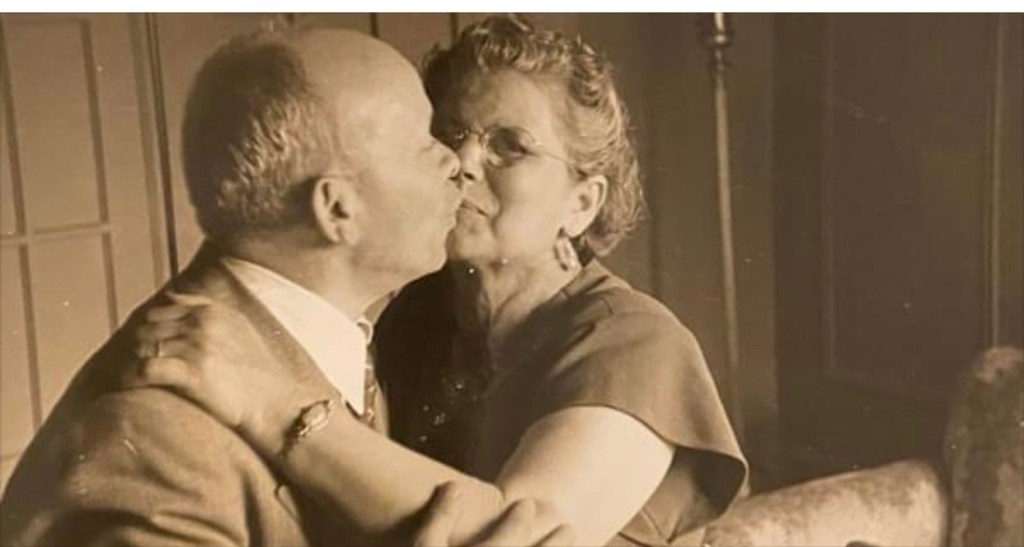
Lois, I was sitting at end of the table today looking at our extended family and thinking about the courage and hopes that drove Elsie and Jake to come to America in about 1906. I thought about the closeness that Ruby, Effie, Ruth and Dave had with each other despite their geographic distances. I was very glad that 115 years after Elsie and Jake first arrived here, their descendants could get together and enjoy the afternoon. The attached photo was in my mind a lot during our lunch. Sam Schneider
Grandpa Jake and Grandma Elsie Their children, Ruby, Ruthie, Effie and Davie
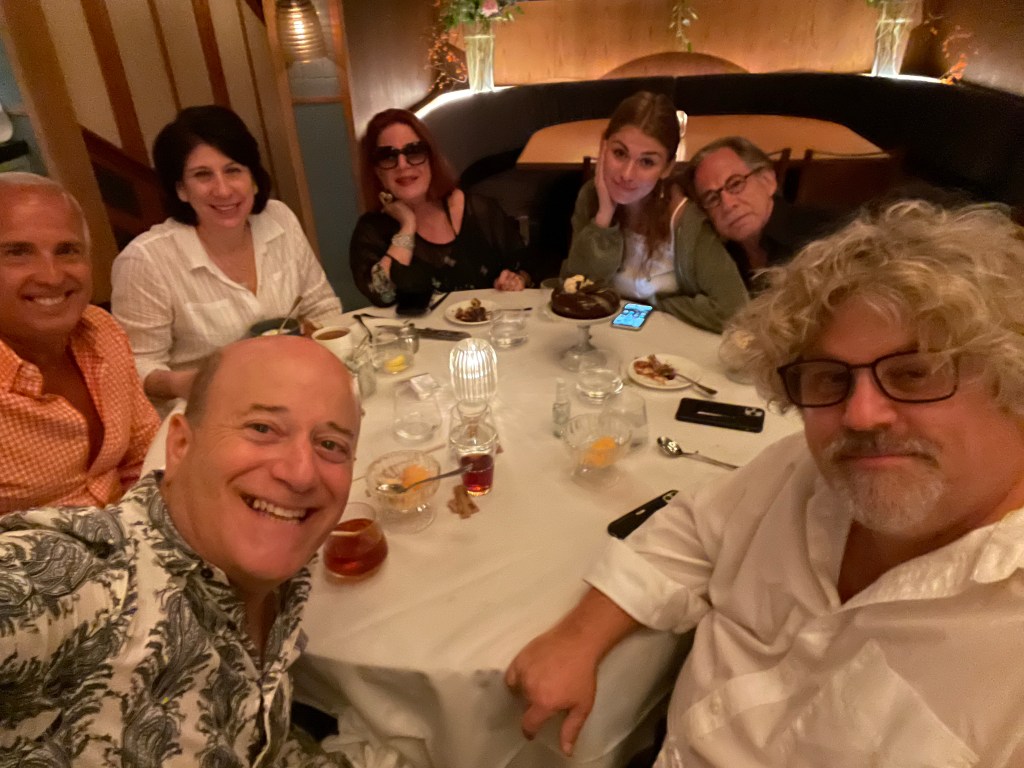
All the East coast cousins gathered today to welcome Jeff, Beth, and Hanna Young of Sherman Oaks, CA, to NYC and to wish Hanna good luck as she enters Columbia University’s Masters Program.
It was wonderful watching most of the younger cousins mingle and start memories of their own. We need to get together on a much more frequent basis. There is so much to share.
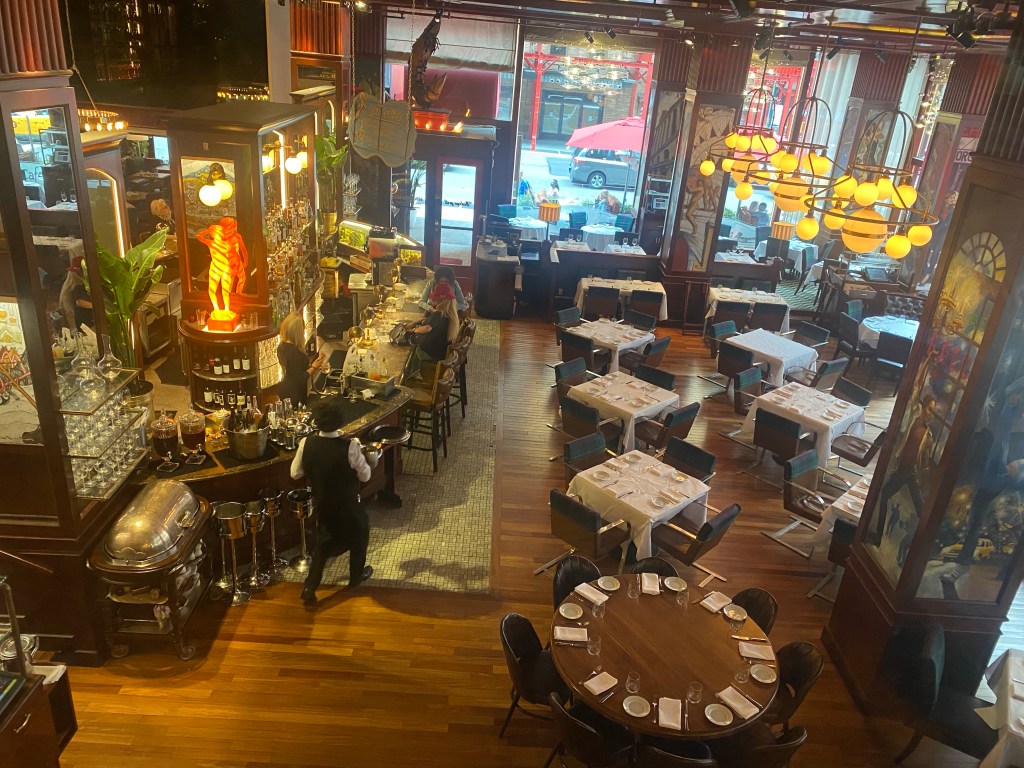
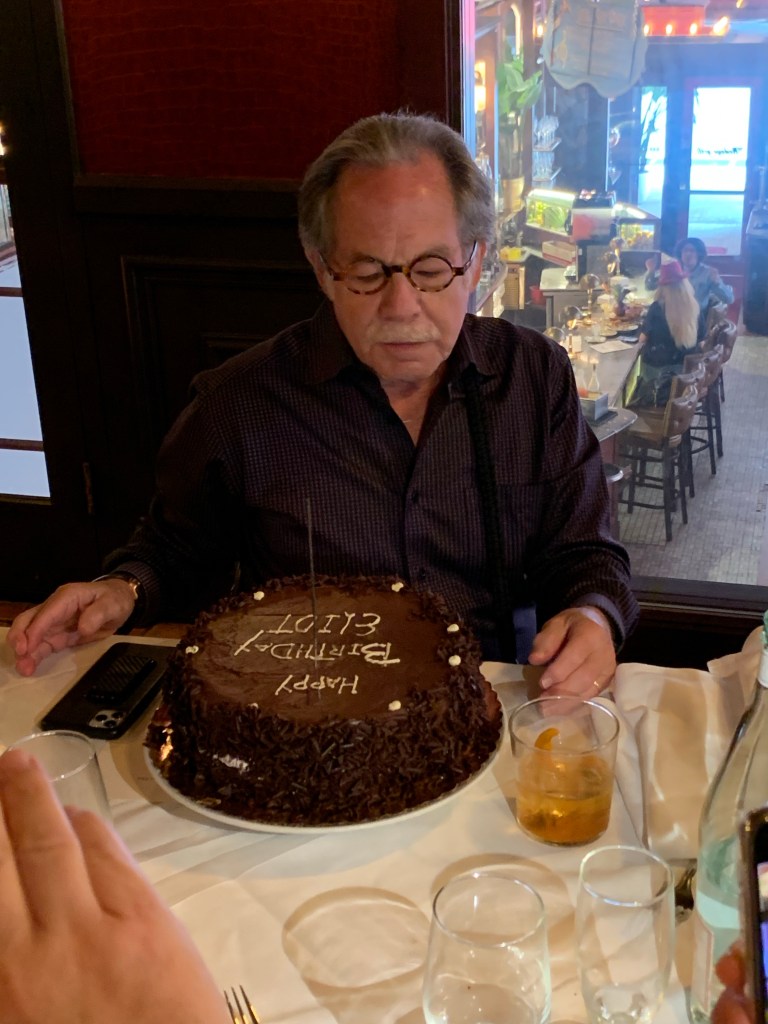
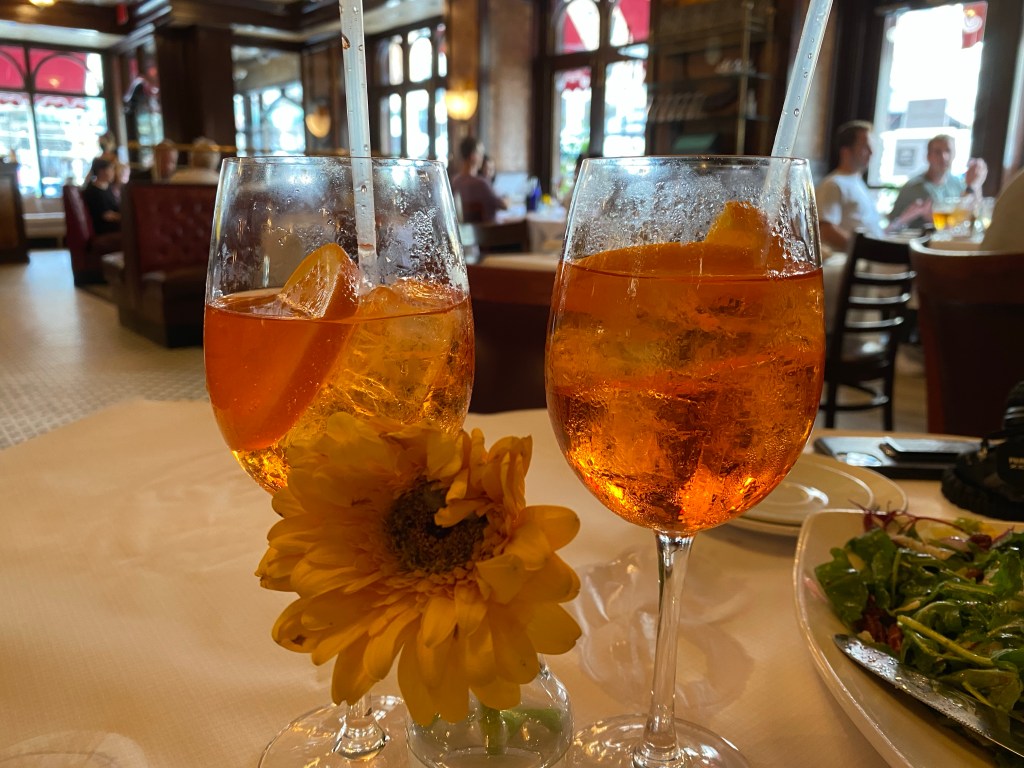
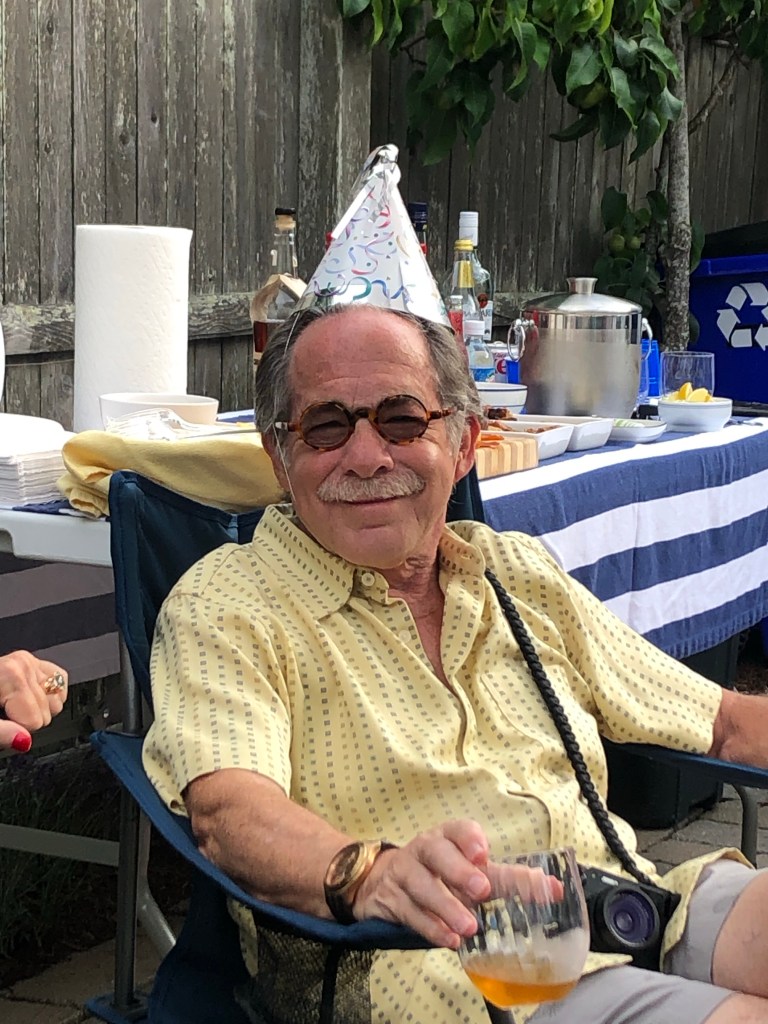
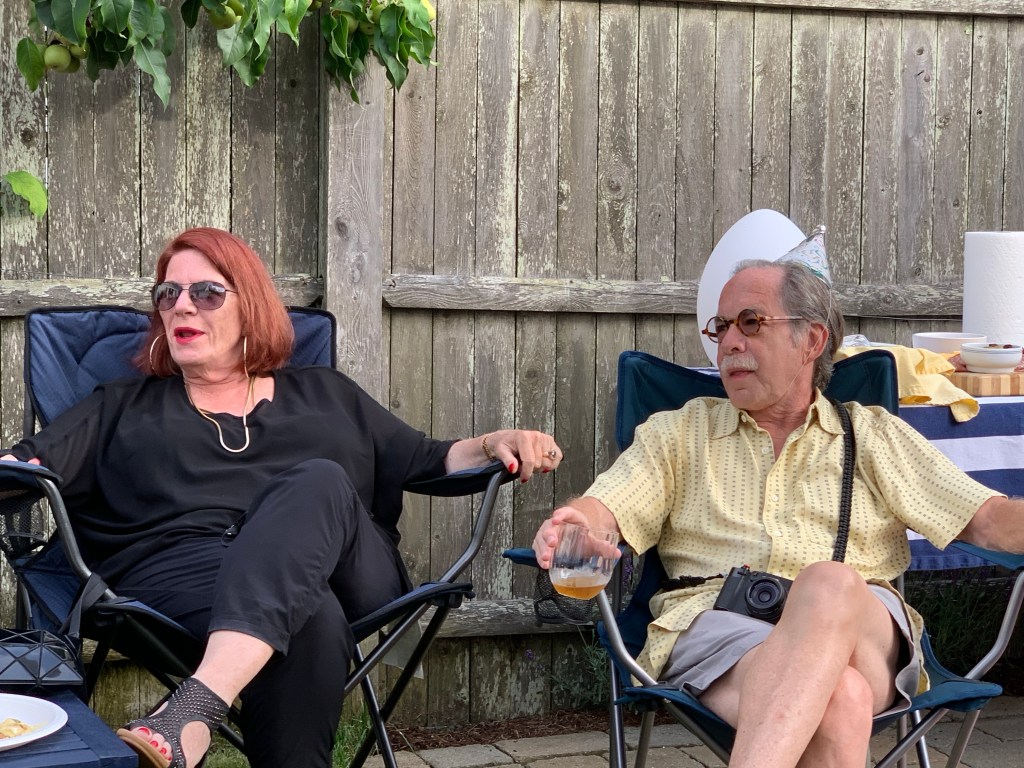
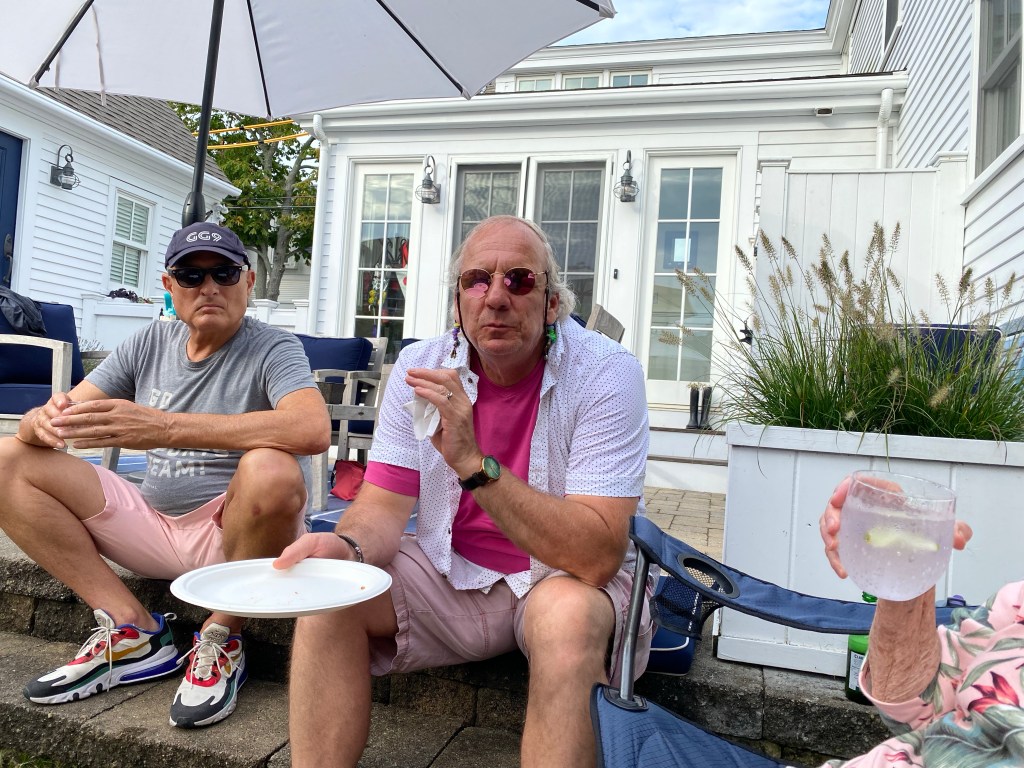
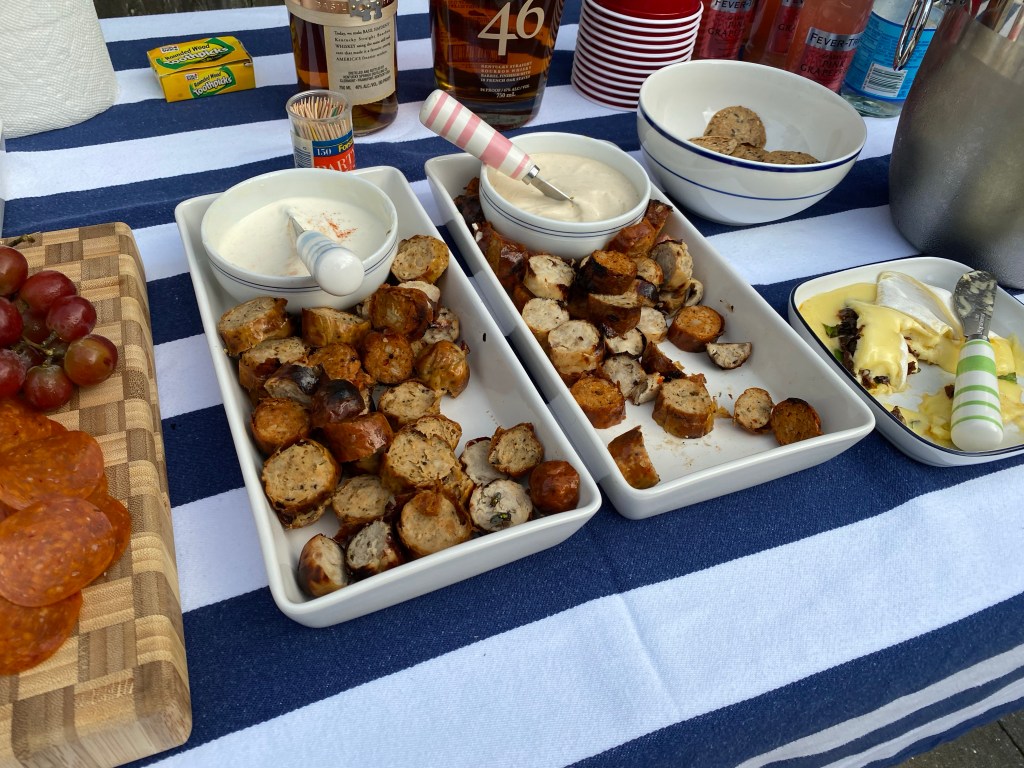
Steve and Robert joined in on the festivities the night before the cousin’s reunion. They have been proclaimed Hanna’s new East Coast uncles. We used the occasion to wish Eliot a Happy Birthday. Celebration timeThe spectacular view from our hotel room.
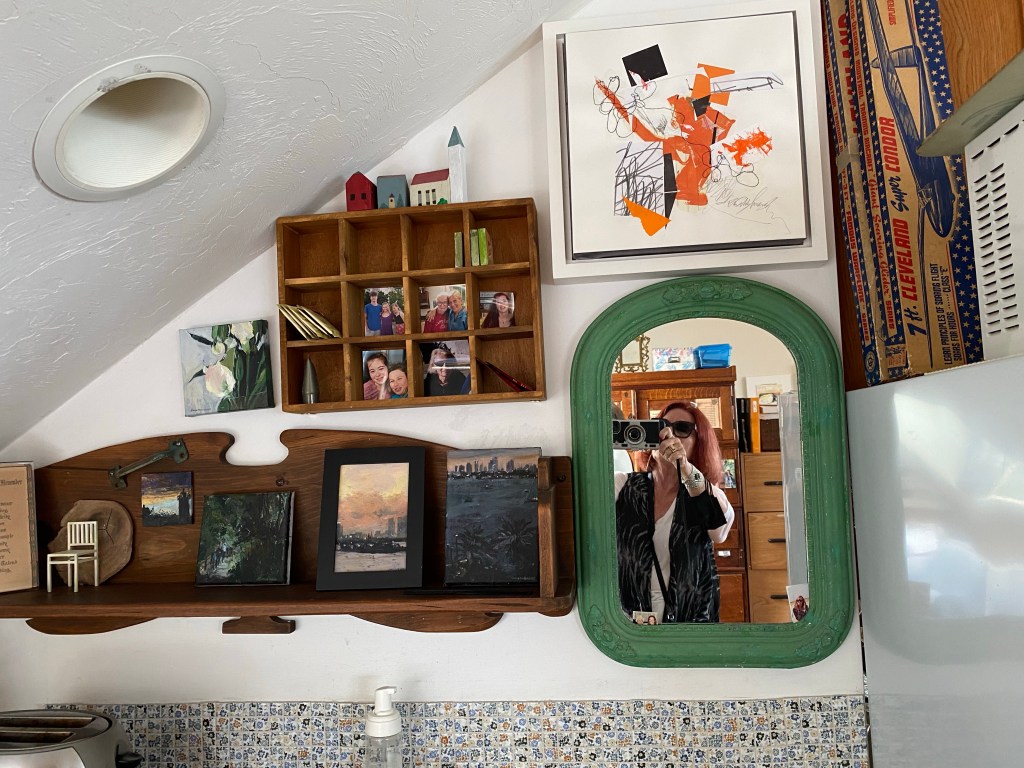
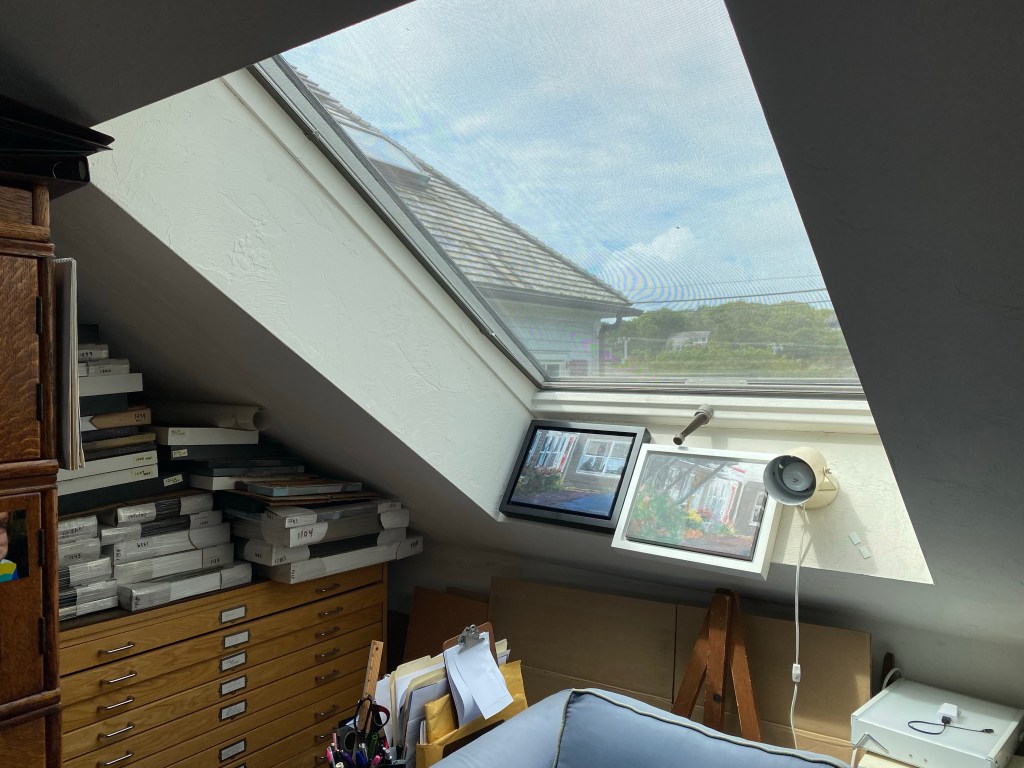
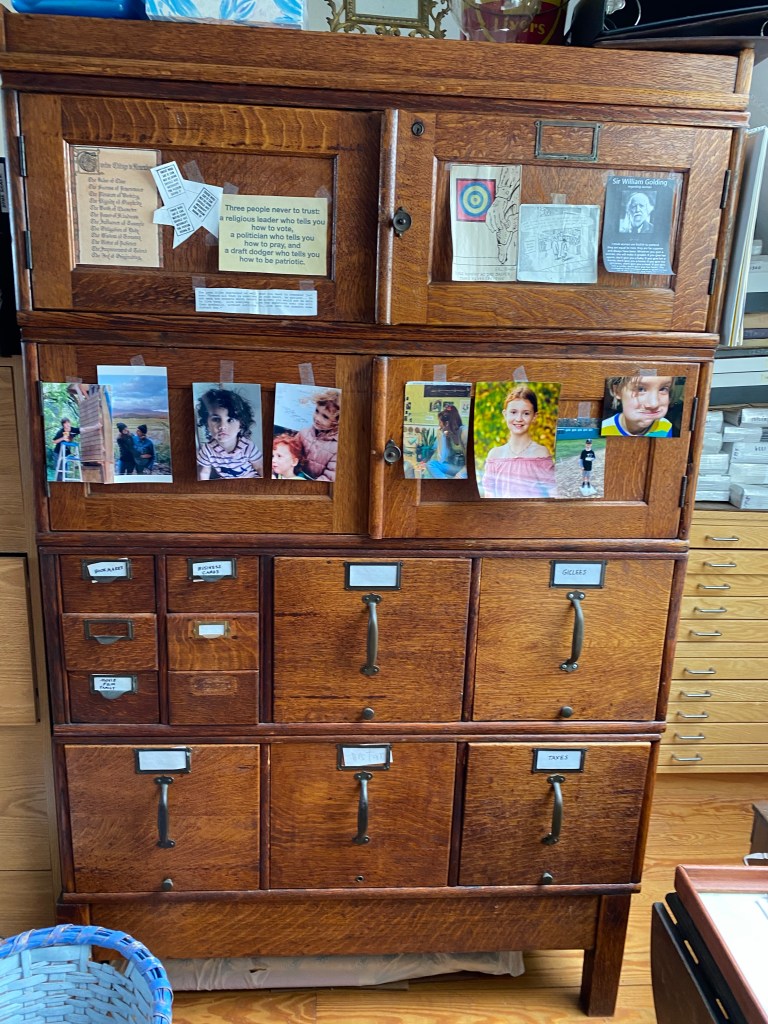
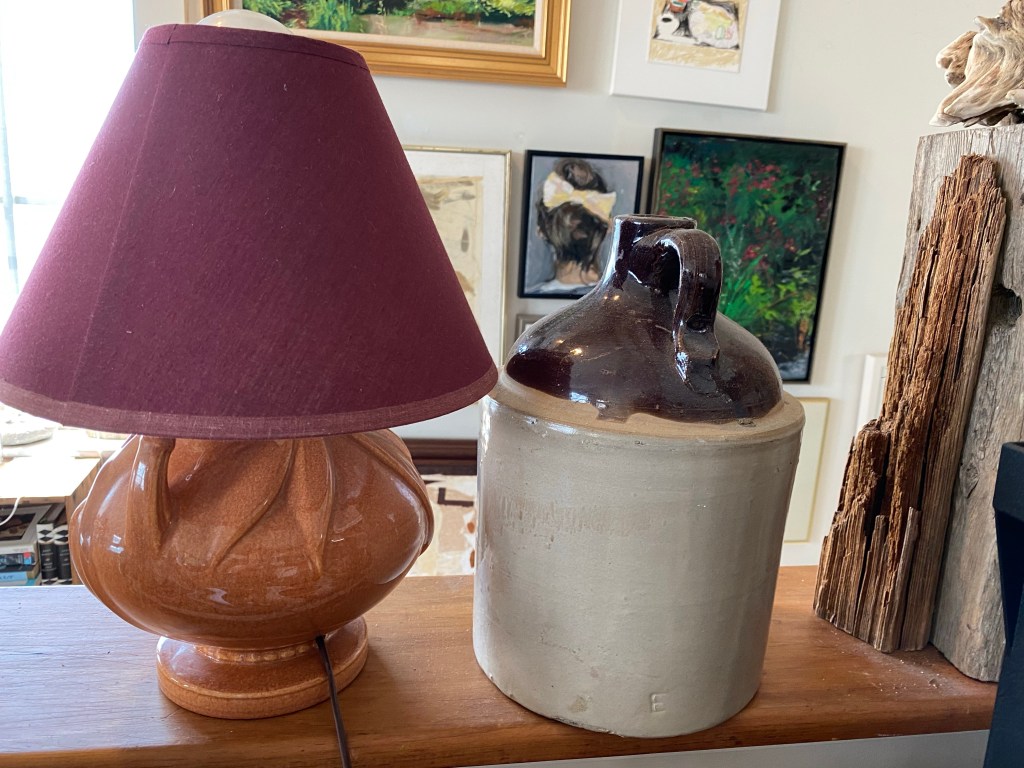
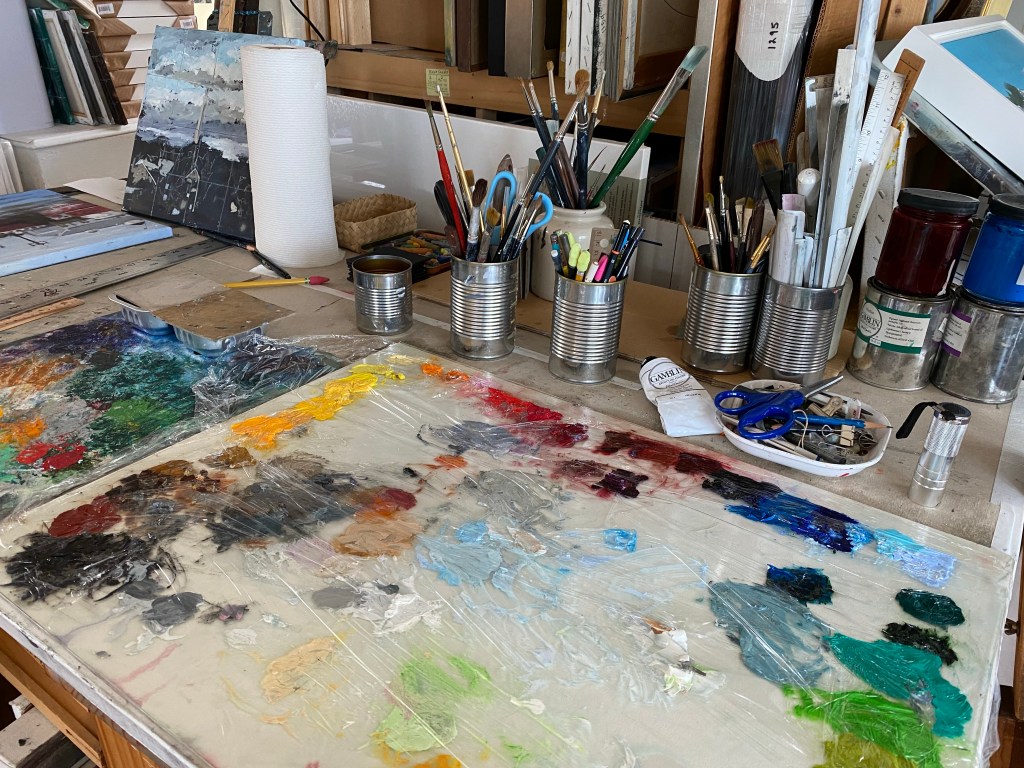
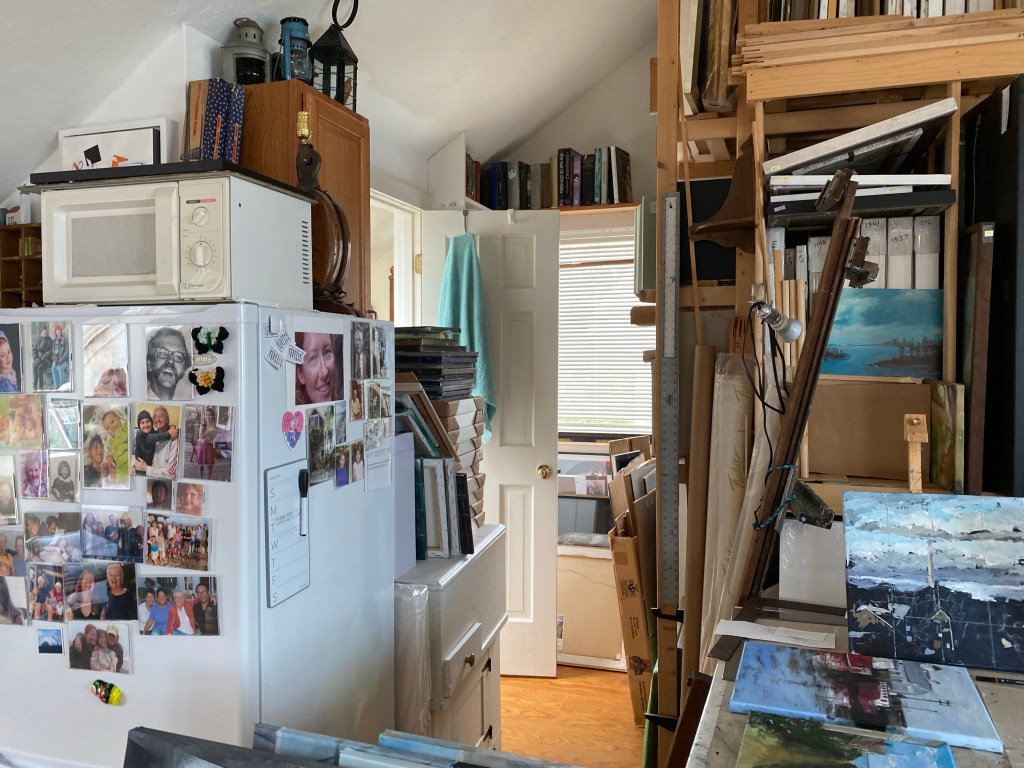
Every time I visit an artist in his/her/they studio, my mind starts to immediately wander about what really takes place during the process of creating a piece of art. In my opinion, a studio is much different than an office because everything that gets created is very visible within its walls. A studio tells a story.
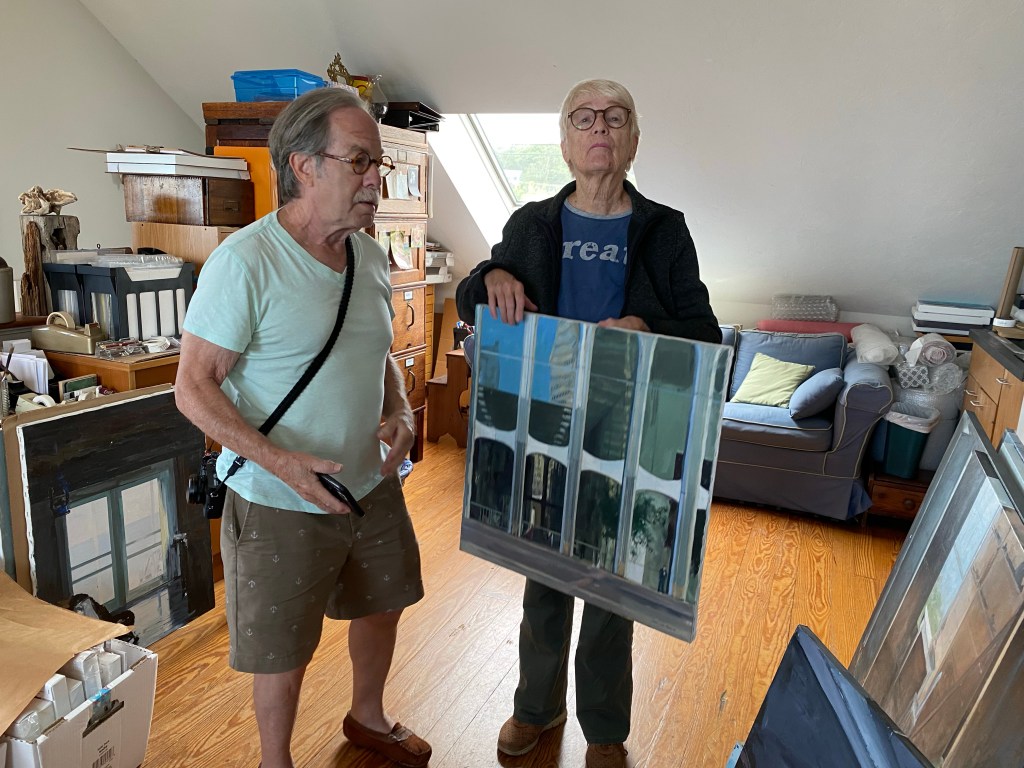
I recently visited the art studio of Joan Cobb Marsh in Provincetown, Massachusetts, and was blown away by its beauty, inspiration and comfort. I guess that’s what makes Joanie one of the most cherished artists in America.
The story covering this topic appeared in the New York Times a few weeks ago. You can click on the link below to read it. I asked the question in the headline above to several artists and collectors. Their responses are under the story.
We also want to know what you think. ?????
A Gallery Sells Hunter Bidens. The White House Says It Won’t Know Who’s Buying.
——————————————
Henry, art collector
“I can’t really comment on his work, since this is literally the first time I’ve seen it. However, I would assume that the extraordinarily high prices quoted reflect Hunter Biden’s notoriety rather than his artistic talent.”
———————————————
Doug, married to an art curator
1. “Hunter Biden is certainly free to become a painter and fine artist. There are no qualifications necessary. Some artists have formal training, others none.”
2. “As long as there’s no conflict of interest — i.e. the WH ethics committee — I’m all for Hunter painting all he wants.”
3. “If you’re a collector and you like his stuff, buy it.”
4. “If you’re an art love that thinks about investment, run the other way. The paintings I’ve seen are terrible, and in five or 10 years they will be worth much less than what you paid. You’re better off buying Bitcoins.”
———————————————
Steve, art collector
“I believe art is in the eye of the beholder and the hand of the artist, both determine the value. Unfortunately the greed of the broker does determine the entry price, but ultimately not its value. Caveat Emptor.”
———————————————
Neil, art collector
“It is a shame that more talented artists have difficulty making a living, while Mr. Biden, whose singular greatest talent seems to be the ability to exploit his relationship with the President, is finding a market for his work.
“The fact that the White House felt the “need” to disclaim knowledge of who the buyers were, reflects the sensitivity. and the potential for abuse.”
———————————————
Pauline, art collector
“I find the whole thing amusing, especially the prices quoted for a novice artist. Objectively, I think the image of his self-portrait shows a work of promise. The market will dictate what will actually happen, based on historical experience, celebrity artists rarely become stars in the art-world.”
———————————————
Erica, artist
“I give him credit for sticking with his desire to keep on creating artwork, no matter what the media frenzy says, and others criticize about it. It’s just that his name is already known for controversy; it’s the greedy marketing people that are out of touch and seizing up on it!”
———————————————
Ray, art publisher
“Clearly Hunter Biden’s artwork would not be priced at $500,000 if he wasn’t notorious.
“HOWEVER, I bet if you search for celebrity artwork, you might find similar situations — i.e. the artwork of John Lennon, David Bowie, Dennis Hopper, Johnny Depp, Joni Mitchell, Johnny Cash, Bob Dylan.
“It is amazing that there is no filter for Hunter Biden. That nobody in the Biden camp can stop him from cashing in on his father. BUT we have similar situations with most presidents. Billy Carter. Roger Clinton. Jenna Bush. And all the presidential kids that get into any college they want.
“It might be interesting to list the price ranges — or top asking prices — for celebrity artwork.”
As you probably know, Pickleball is all the rage in the world of sports. I decided to pick several YouTube videos that clue you in on a game that everyone is talking about. Watch the videos so you are not left out of the conversations even though you ever picked up a paddle.
I guess I just want to say I could never understand a word Cindy Adams wrote. It was all babble to me. Yet, the New York Post published what I thought were incoherent columns for decades. I thought she was going insane but apparently other crazies understood her code talk. So today I bow to her success even though she is a Republican. Yuk. So was Joan Rivers. Someone has to explain to me why these broads, who came from nothing, would choose a group that only thinks about “me” rather than “we.”
From The Cut in New York Magazine
Gossiping With Tabloid Icon Cindy Adams
The stalwart of the New York Post gets ready to tell all — kind of.
The penthouse that gossip built looms above Park Avenue guarded by a one-and-a-half-year-old Yorkie, Jellybean, who was sososososososoexcited to have a guest, and a 91-year-old New York Post columnist, Cindy Adams, who was not.
“What is it you’re looking for?” she asked me. “What do you want?!”
“I would never leave the Post,” Adams told me, “because I’m very loyal and because the New York Post is the flavor of New York. If you go to the Hamptons — I sold my house there, I don’t want to go to the Hamptons — they say that you can’t go to dinner unless you first go to the newsstand and pick up the Post. I don’t know about Colorado. I don’t care about Arkansas; I don’t even know where they are — but if you’re in New York, it’s the New York Post.”
On the page, Adams is a few hundred words of zigzagging chitchat concerned mostly with celebrities and socialites and personal friends or allies. To grab from a stack of Posts at random is to shake a Magic 8-Ball of Adams’s fortunes for the fortunate: One recent column included an update on Reese Witherspoon’s ascent to Hollywood moguldom amid news of her funding deal with Blackstone and, pegged to no news at all, a brief introduction to John Catsimatidis’s wife, Margo. The union of Mr. and Mrs. Catsimatidis is more than 30 years old, but Adams and Catsimatidis have a new partnership; as a side hustle, she’s hosting a talk-radio show on his station, WABC. (She left that part out.) Another recent column was devoted almost entirely to a casual accusation that movies create gun violence, which she backed up not with argument but by listing a random assortment of celebrities — Brad Pitt, Ice-T — who have owned firearms.
This is reporting of the kitten heel rather than the shoe leather — proudly transactional, rarely transparent, tailored not for the public interest but for private grievance or professional maneuvering or petty warfare. Adams has a term for the distinct manner in which she communicates: “I write smartmouth,” she said. “I write like a city person. My English is perfect, but I don’t write that way. I write the way a New Yorker sounds.” New York’s city editor, Christopher Bonanos, assessed the Adams style this way: “She’s the last known survivor of the art she practices, and the last person on the island who speaks the language of a lost population — that rat-a-tat thing of Walter Winchell and Leonard Lyons — and she’s got to write it down to pass it on.”
It’s all very simple to Adams, who views the world as divided between “somebodies” and “nobodies.” And, as she explained it to me, “I’m not gonna write about nobody!” I guess I wanted to understand why.null
We were seated in a corner of her 4,200-square-foot palace, late-afternoon light streaming in from the terrace and reflecting off the metallic spikes on the collar of her Prada blouse. She is pretty in a way that I probably would have described as girlish had I not seen her face squished next to Jellybean’s; it’s more accurate to say that Adams is Yorkie-ish. Unlike Jellybean, she eyed me with disdain.
“What’s the question?! I don’t understand the question!” she said, leaning back in her chair and rolling her eyes. “Your questions are about gossip. I. Don’t. Think. About. Gossip.”
By this, Adams did not mean that she doesn’t devote much of her life to the sport of acquiring and disseminating shards of information about the people she thinks matter most but that she does not care to analyze gossip in any sort of philosophical way. Why would anyone spend time talking about gossip when they could be busy doing something useful, like spreading it? “It means nothing!” she said, exasperated. “Gossip doesn’t mean anything!”https://ae9fce8daa2b0743efd20cb24aeee4e4.safeframe.googlesyndication.com/safeframe/1-0-38/html/container.html?n=0
The way the studios forged starlets from plain Janes, Adams says she was forged for a life in New York society. Her family had no money, but her mother, Jessica Sugar Heller, got Cindy a nose job (illegally) when she was 15, plus a procedure to push back her hairline. She sent her to etiquette classes and banished any trace of a class-betraying New York lilt with broadcast-English lessons. Adams says her mother “improved” her, and when I asked if it fucked her up at all, she responded like I was from outer space. “My mother was wonderful to me,” she said. “She. Created. Me.”
The project was a success, and by 17, Cindy was a local pageant queen going steady with Joey Adams, a vaudeville comic who seemed to have the keys to the city. “I went from one to the other: a mother who took care of me no matter how ill I was, how unpretty I was. And then I married a man exactly the same age as my mother who took care of me.”
Adams likes to say that her husband was “a No. 2 with a No. 1 lifestyle.” Joey’s connectedness — in show business, in media, in politics — primed Cindy to become something beyond an access journalist and more like a spokeswoman for the stars.null
When Joey went to Asia on tour with a variety show, Cindy made friends with other powerful couples: the Shah of Iran Mohammad Reza Pahlavi and his wife Farah, and Indonesian president Sukarno and his wife Dewi. In 1965, she published her first book, Sukarno: An Autobiography, As Told to Cindy Adams. She got her break in the news business in 1979, when she was summoned to visit the Shah on his deathbed and the invitation conflicted with her dinner plans with then–Post editor-in-chief Roger Wood. Adams skipped the dinner, met the Shah, and wrote up what she saw for Wood, who slapped the exclusive on the cover. Adams officially became a Post columnist in 1981, just in time for the tabloid rise of her close friend Donald Trump (whom she met through her other close friend Roy Cohn).
Adams is a registered Republican with what she calls her own “values,” but her decisions over the decades have been largely in service to one cause: the advancement of Cindy Adams. In Gossip, Carchman details how Adams maneuvered through the paper, making herself useful to her bosses; in one scene, Adams recounts working with Governor Mario Cuomo to get Rupert Murdoch the legal rights to run the Post and his television network, Fox News, at the same time. What was good for the Postwas good for Adams, and she remains proud of her ability to use her pen to secure these intertwined fates.https://ae9fce8daa2b0743efd20cb24aeee4e4.safeframe.googlesyndication.com/safeframe/1-0-38/html/container.html?n=0
“What struck me was how politically savvy she was in terms of how to handle people like Col Allan,” one tabloid vet told me, referring to the onetime Post editor-in-chief and Murdoch confidant. “Cindy noticed that Col was this alien from Australia who didn’t know what was going on and felt lonely and isolated, and she took him under her wing, squired him around Manhattan, made sure he was invited to things, and thus secured her role there.”
The less generous view was that Adams was a “political opportunist,” in the words of one media executive, who said her coziness with Murdoch meant that her column was essentially corrupt, since readers could never know when she was carrying out her boss’s bidding. “Cindy was a good girl,” the executive said, “She did what Daddy wanted.”
Adams sometimes rationalizes her role as a mouthpiece for monstrous people by framing it in careerist terms, arguing that, when everyone else is savaging a public figure, the only way to be original is to sidle up and make the defense’s case instead. Other times, she’ll rationalize these relationships in terms of personal allegiance. When asked about her conspicuous lack of coverage of the Trump presidency, Adams said, “I take care of my friends, and I continue to love my friends. I didn’t write about any of the difficulties of Donald Trump, nor am I going to.” (She claims, for instance, to have known all about his affair with Marla Maples long before it became a matter of public record but didn’t report it. “Donald’s my friend,” she said, “so I wouldn’t have printed it.”)https://ae9fce8daa2b0743efd20cb24aeee4e4.safeframe.googlesyndication.com/safeframe/1-0-38/html/container.html?n=0
When I asked her about moral conflict, she glared again. “What does that mean?” she said. “I don’t have that problem because I do not do anything that starts in here.” She turned her hand toward her heart and moved it up and down. “If it starts to upset me in here, if I feel it’s making me uncomfortable, I will not write it.”
This from the woman who once said in a TV interview, “Lying, to me, goes with the turf. Of course you lie. You do anything. And I’ve done almost everything … Hell, you’ve gotta get the story.” To me, she denied this was her view. “I don’t think lying is part of the job,” she said. “I think doing what you have to do is part of the job.”
Biography such as this, about a public figure of a certain age, invites media coverage that resembles obituary, and in fact, one of the first things people do when you call them to talk about Adams is ask if she’s dead, which she’s not, or dying, which she’s also not, any more than we all are, or if she’s still writing, which a daily thumb through the Postconfirms she very much is. Even today, so far into the era of the democratization of the gossip industry that its most popular practitioner is an anonymous social-media user named Deuxmoi, Adams commands a devoted readership. My Aunt Dianne gets the Post delivered to her doorstep in Queens and reads it on her patio with her iced coffee each morning. When she’s finished, she folds the paper up, slips it back into its plastic, and throws it over the fence for her neighbor. I didn’t expect the ritual had anything to do with attachment to a particular writer — and anyway, I could tell Aunt Dianne that I interviewed Jesus Christ and she would probably say something along the lines of “That’s nice, Liv! Was he handsome?” — but when I mentioned that I’d met Cindy Adams, she yelped. “Oh my God! I LOVE Cindy Adams! I can’t get through a day without reading Cindy Adams,” she said. “I get such a kick out of her. She’s old-school!”https://ae9fce8daa2b0743efd20cb24aeee4e4.safeframe.googlesyndication.com/safeframe/1-0-38/html/container.html?n=0
Even readers less enthused than Aunt Dianne remain loyal. One frequent target of the tabloids put it this way: “Do you matter in New York City if Cindy Adams doesn’t shit on you? It’s a rite of passage.” Daily News columnist Harry Siegel said he finds value in her “crazy, garbled Winchell shorthand” because she reflects the thinking of her social circle, “a bunch of guys like Trump and Catsimatidis” who exist mostly in analog. “This is where their information is flowing through. She is still, at 91, a conduit for that,” Siegel said. “It’s all through her narrator voice. None of the sentences have all that much meaning. Everything’s soup — but it’s very useful soup. It’s this general mushy-minded understanding of older people, and all of them are talking but I’m not privy to those conversations.” The tabloid target agreed. “People are more likely to see you quoted there than in The Atlantic.”
The people of the press are bitchy by nature, but after getting their licks in, almost everyone offers up admiration for Adams’s longevity; old age has the effect of buffing the edge off everyone’s claws. One tabloid vet offered this criticism: “Cindy’s one of those people who views everybody through the prism of how they treat her. So if Adolf Hitler had been nice to her, well …” And then, in the next breath, added, “She’s still showing up to things and unfurling her notebook and getting quotes from B-list actors — I mean, God bless!” And the media executive, who hates almost everyone, said, “Look, you’ve gotta give her credit. She was clever at the end of the day, and she stays in the game because she plays it safe.”
Life is hell and the media is a snake pit, so I am awed by Adams the way I am awed by anything with that much fight in it. But who wants to play a game with rules like this? If you ever stop, you lose, but if you play forever, you still can never win. This is something to admire only if you believe ambition is a virtue and, more practically, if you believe a person like Adams does not owe history a truthful account of all the dirt she has spent a lifetime not reporting. “Normally, someone writes the memoir when they don’t care anymore,” Bonanos said, “and she’s never gonna do it. So the question is, What’s the point of the secrets?”https://ae9fce8daa2b0743efd20cb24aeee4e4.safeframe.googlesyndication.com/safeframe/1-0-38/html/container.html?n=0
These days, Cindy Adams is — still — what people used to call a tough broad. Some of that feels like a protective shtick: You don’t survive a near half-century in the media if you don’t learn to assemble a version of you that exists for consumption so that you may emerge without a scab no matter how much you’ve been picked at. And hers is a good shtick, of the variety you’d expect from the wife of the Borscht Belt icon credited with the line “With friends like these, who needs enemies?”
But the performance cracks when it comes to the subject of her friend the former president, who is under investigation by New York prosecutors. There’s a story in Gossip in which Trump flies Adams in his helicopter to sprinkle her late husband’s ashes over Central Park after he died in 1999. I realized later that, a few months before Joey’s death, Trump had been angry with Adams for not attending his own father’s funeral. So this was a tale of Donald Trump showing a capacity for forgiveness and generosity — not to mention defying his germaphobe reputation by volunteering to be within inhalation distance of human remains? It struck me as fishy. “He doesn’t give a shit about the rituals of death,” Mary Trump, his niece, told me. She thought it was unbelievable too. “Unless they aimed over a crowd of people — maybe he would’ve been into that.”
A look of panic came over Adams’s face when I brought up the anecdote. “You know, I’m not sure you should really write that because that’s illegal,” she said. I was confused — whether or not I wrote about it wouldn’t matter since it’s about to be on Showtime. “You shouldn’t do that,” she said. Huh? “To go up in the air and sprinkle the ashes, it’s against the law. So he did it, but I’d appreciate you not saying it.” I wasn’t trying to narc on the guy for littering, I tried to explain, but she cut me off, looking at her watch: “This is an hour! How much longer do we need?” Later on, when she showed me her office — wallpapered, even on the ceiling, with her New York Post covers — I asked about Trump again. “Make sure you say that I love him and I’ll always be there for him,” she said. Is she afraid for him? “Yes, I am. So I say nothing about him. I don’t want anything to be taken — right, wrong — ” She stopped herself. “Yes, I am worried.” She opened her eyes wide and nodded.null
Adams would prefer not to get that deep. “Gossip has become pernicious. I don’t appreciate pernicious gossip. I don’t indulge in saying evil kinds of things about people,” she said. “I’m not mean — I’m fun!” By way of example, Adams told me a joke she’d recently written for her column. “I’ve said that Jennifer Lopez should have a tollbooth installed inside her,” she said. “That’s pretty brutal!” I said. “It’s not brutal! It’s funny!” she said. “I am not evil. I am not vicious. I am amusing. I am tweaking little things. I’m not harming anybody. I am not outing anybody. I am not breaking up any marriage. I am not talking about your sex life. I’m skirting all of that. Because I’m doing it with humor.”
Don’t Miss Eliot’s Third Birthday Celebration Photos Under This Story
I have friends who suffer from terrible panic attacks. One guy who was visiting me in our home starting howling so loud I thought he was turning into a wild animal. Then he started swinging his hands so violently that he broke a few of our picture fames.
After witnessing that I became more interested in what causes panic attacks and how you can try to control them. I learned some important facts years ago and then I saw them mentioned in this article. I thought I would share this with you because we all know someone who needs help. Thank you
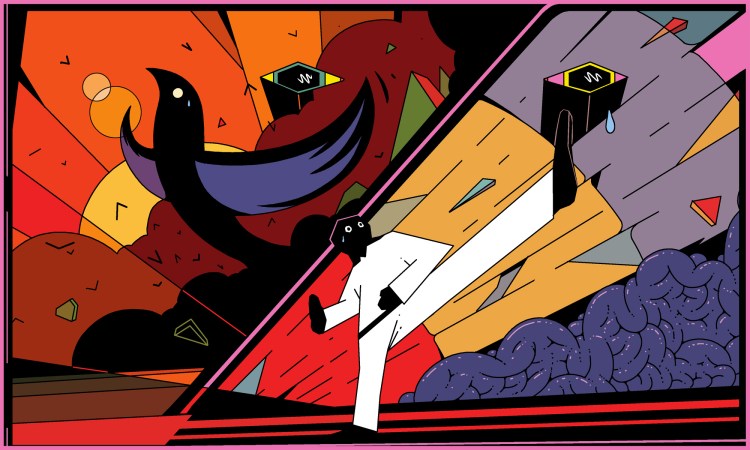
Have you ever woken up in the morning — or even in the middle of the night — only to find that your body is already in full-blown, heart-racing fight-or-flight mode?
Panic attacks are surprisingly common; at least one-third of us will experience one at some point in our lives, according to Cindy Aaronson PhD, a clinical psychiatrist at Mount Sinai Health System in New York City.While symptoms vary from person to person, they can include a pounding heart, shortness of breath, light-headedness, sweating, trembling, nausea, tingling or numbness in the fingers and toes, and an overwhelming sense of impending doom.
Despite how terrifying and memorable panic attacks can be, they are not inherently dangerous,
For many people, these alarming sensations — which can mimic those of a heart attack or other serious medical condition — are accompanied by a conviction that they are about to die. For others, says Aaronson, there’s a sensation of “unreality,” where time and perception become scrambled. “Sounds sound different — you feel like you’re in a tunnel and things are far away; colors seem different. People sometimes describe it as an out-of-body experience,” she says. “They feel like they’re going to lose control and go crazy.”
It’s no surprise, then, that many people in the grips of a panic attack show up at the emergency room believing that they are having a heart attack or suffocating. But despite how terrifying and memorable these episodes can be, they are not inherently dangerous, says Justin Feinstein PhD, a clinical neuropsychologist and director of the Float Clinic and Research Center at the Laureate Institute for Brain Research in Tulsa, Oklahoma.
Instead, panic attacks are a manifestation of the brain and body being out of sync, he explains.“It’s a normal physiological fear response happening at a totally inappropriate time.”
Here’s what happens in your body during a panic attack
Even though psychiatrists have been investigating just what panic is since the mid-to-late 1800s, the term “panic disorder” didn’t appear in the Diagnostic and Statistical Manual of Mental Disorders until 1980.Experts still aren’t sure precisely what underlies this disordered brain-body connection.
“Sometimes panic might start in your body itself, and then create processes within your brain. Other times, your brain could initiate the entire onset of a panic attack, which then manifests itself in your body,” says Feinstein. In some cases, genetics or changes in brain function may be at play. In others, stress is a factor.
Panic attacks begin with something that causes your heart to race — it could even be caused by something as innocuous as a jolt of caffeine.
But once an attack is triggered, the cascade of physiological responses in the body is fairly universal. Typically, it begins with something that causes your heart to race. This might be a stimulus in the environment — perhaps a sound or a scent that you associate with a traumatic event — or even something as innocuous as a jolt of caffeine. In a panic attack, the racing heart sets off a danger alarm in your brain and sends your body’s fear response into overdrive.
Your amygdala — a pair of almond-sized nerve bundles buried in the deep brain that plays a key role in processing emotions — sends a distress signal to your hypothalamus — a tiny command center that sits atop the brainstem and coordinates involuntary bodily functions such as breathing, blood pressure and heartbeat. Your hypothalamus fires messages via the autonomic nervous system to the adrenal glands, prompting them to flood your bloodstream with hormones including adrenaline and cortisol. These chemical messengers engage your body’s survival reflexes and ready it to take defensive action.
Your pupils dilate, and your mind becomes laser focused. Your breathing rate increases, allowing your body to take in extra oxygen. Cellular metabolism shifts to maximize the amount of glucose available to the brain and muscles. Your blood is diverted away from non-essential regions like you fingers, toes and stomach and towards the major muscles of the arms and legs — steeling them to either fight off a threat or flee the scene.
Panic attacks typically peak and subside within 10 or 15 minutes, and there are a handful of solid techniques that can help you ride them out.
That, in a nutshell, captures the traditional scientific thinking about panic attack. “The amygdala has always sort of been viewed as the fear epicenter,” says Feinstein.
However, recent work from his lab suggests that other structures in the deep brain may also be involved. Specifically, the insular cortex and a part of the brain stem called the “nucleus of the solitary tract” — regions that together receive and map signals from the heart, lungs and bloodstream. Feinstein’s team found that these areas generate fear impulses even in people who have been missing an amygdala due to a rare brain injury, suggesting that panic may often begin here in other people, too.
So, how can we hit the brakes?
To be classed as a panic attack, symptoms must come on rapidly, or within a few minutes, says Aaronson. And there’s good news: Attacks typically peak and subside within 10 or 15 minutes, and there are a handful of solid techniques that can help you ride them out.
Chief among those is recognizing your experience as a panic attack and not a more serious medical crisis, and gently reminding yourself that there’s nothing physically unsafe about it. “Just knowing what it is helps people,” says Aaronson. Just to be sure, double-check that you’re not experiencing any heart-attack specific symptoms such as pressure in the chest or pain that builds or radiates into the arm or jaw.
Once you’ve ruled those out, remember: Panic always passes, and focusing on that belief can send it on its way.
Of course, this is easier said than done when you feel like you’re suffocating or losing control. “It takes practice,” says Aaronson. “But the more you do it, the better you get at doing it.”
You might tell yourself: “Everything my body is doing right now is designed to keep me safe and protect me.”
If you can, find a quiet spot where you can talk yourself through why you’re feeling what you’re feeling.
For example, you might tell yourself: “I’m feeling light-headed because my blood is being redirected to my limbs. I’m breathing hard because my body is responding in an evolutionarily honed way to adrenaline. Everything my body is doing right now is designed to keep me safe and protect me.”
When you do this, you’re inviting another region of the brain into the conversation — the frontal cortex. This area is positioned just behind the forehead, which is responsible for conscious thought, judgement and problem solving. Bringing a sense of curiosity and analysis to the way you observe these sensations can help you to underline that they are just transient physical processes moving through you.
The other major tool in your toolbox is your breath. “Most people breathe on average from 12 to 20 breaths a minute. And when you’re hyperventilating, you’re easily doubling that,” says Feinstein.
He recommends trying to gradually slow your breathing to between five and 10 breaths per minute, and aiming to make your exhales longer than your inhales. This simple technique engages a parasympathetic response — fight-or-flight’s calming cousin, also referred to as “rest-and-digest.” Try doing this simple exercise from Judson Brewer, psychiatrist, neuroscientist and director of research and innovation at Brown University’s Mindfulness Center in Providence, Rhode Island.
This kind of deep breathing stimulates the vagus nerve — the longest nerve in the body, which runs through regions including the digestive system and diaphragm, and feeds directly into the brainstem’s nucleus of the solitary tract. It carries signals and sensory information from and to the brain, and regulates functions including heart rate, breathing rate and digestion.
“Ultimately, panic attacks are just fear of fear,” says clinical psychiatrist Cindy Aaronson PhD.
Interestingly, your vagus nerve is a two-way street. By breathing in a slow, controlled manner, you send a powerful signal to your brain that you are relaxed and there is nothing to fear. In turn, this stimulates certain parts of the heart muscle and helps to steady the pulse.
When practiced regularly, longer-term practices such as mindfulness meditation, which are usually built around a core of breathing techniques, can help people quash attacks before they take hold, says Feinstein.“[Mindfulness] teaches people a new association with their visceral experiences,” he explains. Focusing intently on your breath and heartbeat in a relaxed setting can help you shake off any reflexive jump to panic when they speed up in everyday life.
Therapy can help too. Aaronson’s group found that cognitive behavioral therapy, which is designed to gradually help you modify your behavioral responses to life events, can strengthen the neural connections between the frontal cortex and the amygdala. This makes panic sufferers more adept at talking themselves down off the ledge.
“Ultimately, panic attacks are just fear of fear,” says Aaronson. In the US alone, at least 1 in 10 Americans experiences a panic attack in any given year — the same number as fall ill during a bad flu season — so if you find yourself having one, know that you have plenty of company.
And just as your body responds to the flu virus by igniting a fever, it can sometimes respond to fear by firing up a panic attack. But with a little help and a few key techniques in your arsenal, you can take the wind out of panic’s sails. “If [you’re] not afraid of it, then who cares if it happens?” says Aaronson. “It passes.”
Watch Dr. Aaronson’s TED-Ed lesson on panic attacks now:
————————————
Gail And Dawn Hosted A Wonderful Birthday BBQ For Eliot In PTown That Was Full Of Love. Thank You Girlfriends