THE GUARDIAN: Scientists seek to solve mystery of why some people do not catch COVID

But before we get to that……


Okay, back to the real news.

Experts hope research can lead to development of drugs that stop people catching Covid or passing it on
Phoebe Garrett has attended university lectures without catching Covid; she even hosted a party where everyone subsequently tested positive except her. “I think I’ve knowingly been exposed about four times,” the 22-year-old from High Wycombe said.

In March 2021, she participated in the world’s first Covid-19 challenge trial, which involved dripping live virus into her nose and pegging her nostrils shut for several hours, in a deliberate effort to infect her. Still her body resisted.

“We had multiple rounds of tests, and different methods of testing: throat swabs, nose swabs, other types of swabs that I’d never done before like nasal wicks – where you hold a swab in your nose for a minute – as well as blood tests, but I never developed symptoms, never tested positive,” Garrett said. “My mum has always said that our family never gets flu, and I’ve wondered if there’s maybe something behind that.”

Most people know someone who has stubbornly resisted catching Covid, despite everyone around them falling sick. Precisely how they do this remains a mystery, but scientists are beginning to find some clues.

The hope is that identifying these mechanisms could lead to the development of drugs that not only protect people from catching Covid, but also prevent them from passing it on.

Garrett is not the only challenge trial participant to have avoided becoming infected. Of the 34 who were exposed to the virus, 16 failed to develop an infection (defined as two consecutive positive PCR tests) – although around half of them transiently tested positive for low levels of the virus, often several days after exposure.

Possibly, this was a reflection of the immune system rapidly shutting down an embryonic infection. “In our previous studies with other viruses, we have seen early immune responses in the nose that are associated with resisting infection,” said Prof Christopher Chiu at Imperial College London, who led the study. “Together, these findings imply that there is a struggle between the virus and host, which in our ‘uninfected’ participants results in prevention of infection taking off.”

Some of them also reported some mild symptoms, such as a stuffy nose, sore throat, tiredness, or headache – although, since these commonly occur in everyday life, they may have been unrelated to virus exposure.

“Either way, levels of the virus didn’t climb high enough to trigger detectable levels of antibodies, T cells or inflammatory factors in the blood that are usually associated with symptoms,” Chiu said.

Other studies also suggest it is possible to shake off Covid during the earliest stages of infection, before it establishes a proper foothold. For instance, during the first wave of the pandemic, Dr Leo Swadling at University College London and colleagues intensively monitored a group of healthcare workers who were regularly exposed to infected patients, but who never tested positive or developed antibodies themselves. Blood tests revealed that around 15% of them had T cells reactive against Sars-CoV-2, plus other markers of viral infection.

Possibly, memory T-cells from previous coronavirus infections – ie those responsible for common colds – cross-reacted with the new coronavirus and protected them from Covid.

Understanding how frequently people abort nascent Covid infections in the era of Omicron is complicated because it requires intensive testing – for the virus, antibodies, T cells and other markers of infection – and because so many people have been vaccinated.

“It is likely vaccinated individuals are exposed to the virus, and block viral replication and detectable infection more commonly,” Swadling said.

There is also no commercially available test that can distinguish between immunity triggered by vaccination and the different variants – so unless a person has recently tested positive, it is almost impossible to know if they have been exposed to Omicron or not.

Seasonal coronaviruses may not be the only source of cross-protective immune responses. Prof Cecilia Söderberg-Nauclér, an immunologist at the Karolinska Institute in Stockholm, began investigating this possibility, after Sweden avoided being overwhelmed by cases during the pandemic’s first wave, despite its light-touch approach to restrictions. Mathematical modelling by her colleague, Marcus Carlsson at Lund University, suggested this pattern of infections could only be explained if a large proportion of people had some kind of protective immunity.

Her team scoured databases of protein sequences from existing viruses, hunting for small segments (peptides) resembling those from the new coronavirus, to which antibodies were likely to bind. When they identified a six-amino acid peptide in a protein from H1N1 influenza that matched a crucial part of the coronavirus spike protein, “I almost fell out of my chair,” Söderberg-Nauclér said.

They have since discovered antibodies to this peptide in up to 68% of blood donors from Stockholm. The research, which has not yet been peer-reviewed, could suggest that immune responses triggered by H1N1 influenza – which was responsible for the 2009-10 swine flu pandemic – and possibly related subsequent strains, may equip people with partial, though not complete, protection against Covid-19. “It provides a cushion, but it won’t protect you if an infected person coughs in your face,” Söderberg-Nauclér said.

A small proportion of people may even be genetically resistant to Covid-19. In October, an international consortium of researchers launched a global hunt to find some of them, in the hope of identifying protective genes.

“We are not looking for common gene variants that provide modest protection against infection, what we are looking for is potentially very rare gene variants that completely protect someone against infection,” said Prof András Spaan atthe Rockefeller University in New York, who is leading the research.

They are particularly interested in people who shared a home and bed with an infected person, and avoided infection themselves. “For instance, the other day I was talking to an elderly lady from the Netherlands, who took care of her husband during the first wave. The husband was eventually admitted to the ICU, but she spent the week before taking care of him, sharing the same room, and without access to face masks,” said Spaan. “We cannot explain why she did not get infected.”

Such resistance is known to exist for other diseases, including HIV, malaria, and norovirus. In these cases, a genetic defect means some people lack a receptor used by the pathogen to enter cells, so they cannot be infected. “It could well be that, in some individuals, there is such a defect in a receptor used by Sars-CoV-2,” Spaan said.

Identifying such genes could lead to the development of new treatments for Covid-19, in the same way that the identification of CCR5 receptor defects in HIV-resistant people has led to new ways of treating HIV.

Spaan thinks it is unlikely that the majority of those who have avoided Covid are genetically resistant, even if they have some partial immune protection. This means there is no guarantee they will not eventually become infected – as Garrett found out in late January. Having dodged the virus for almost two years, she was shocked when a routine lateral flow test produced an ominous second red line. Shortly afterwards, she developed mild Covid symptoms, but has since recovered.

The irony is that, having avoided catching Covid from close family, friends and in a specialist medical laboratory, it was probably a relative stranger who infected her. “I have no idea where I got it from; it could have been someone in my local choir, or maybe from the gym,” she said.
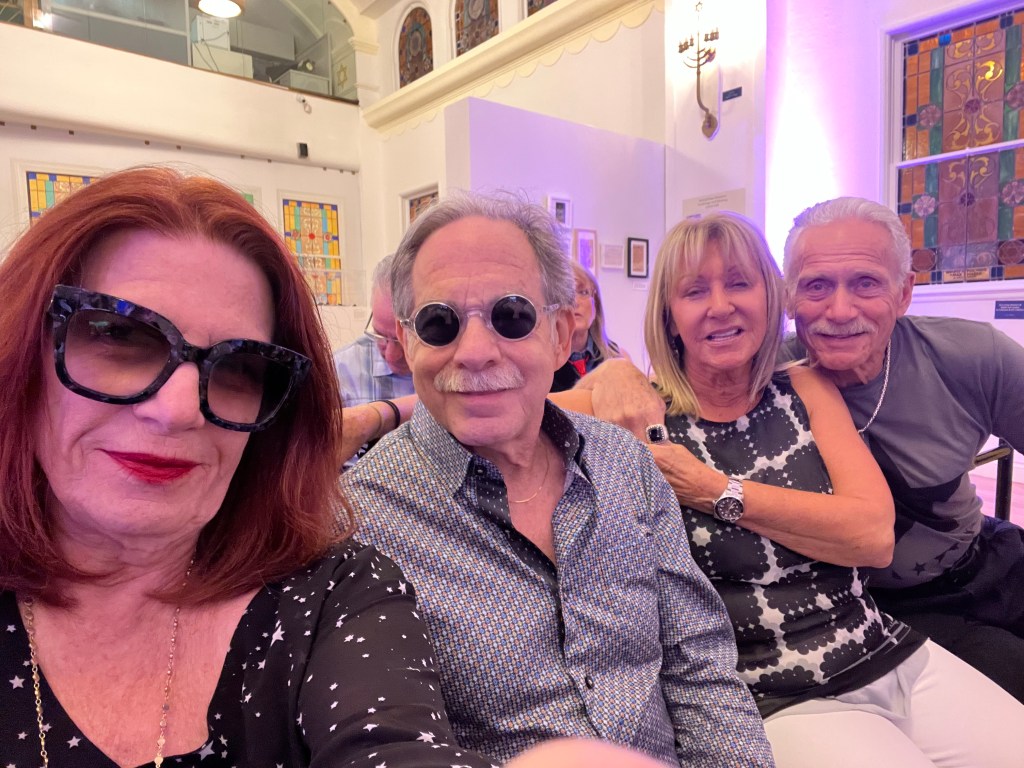
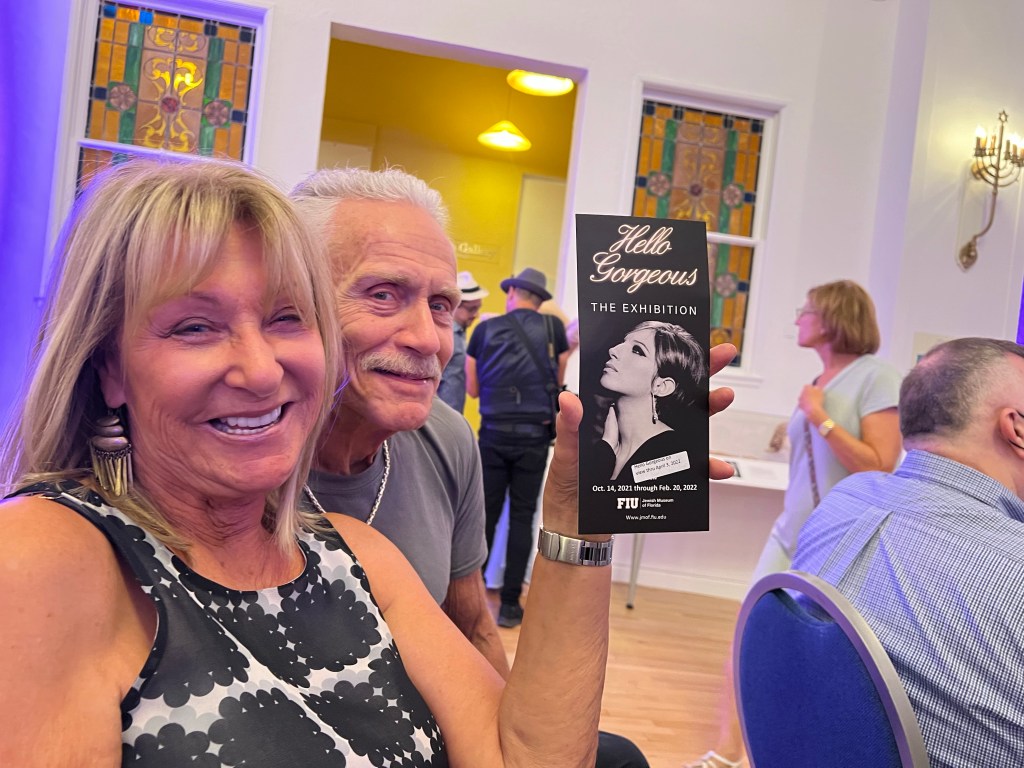
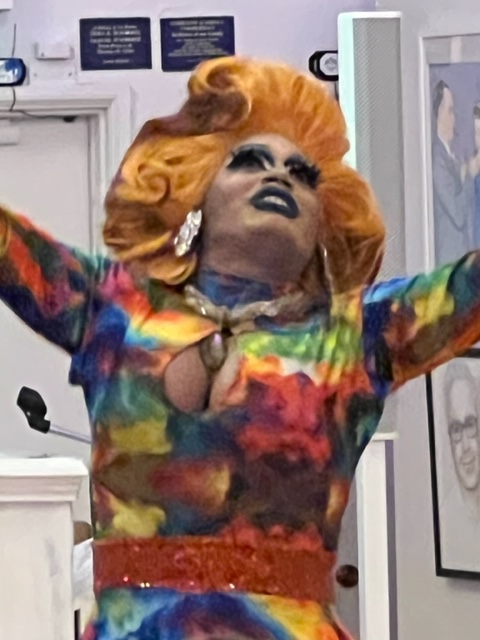
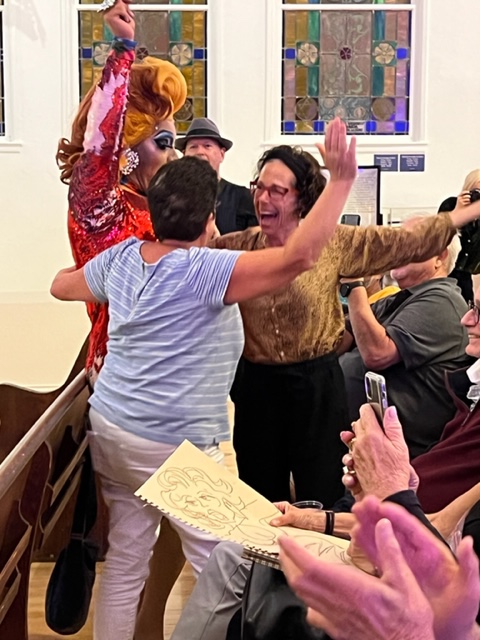
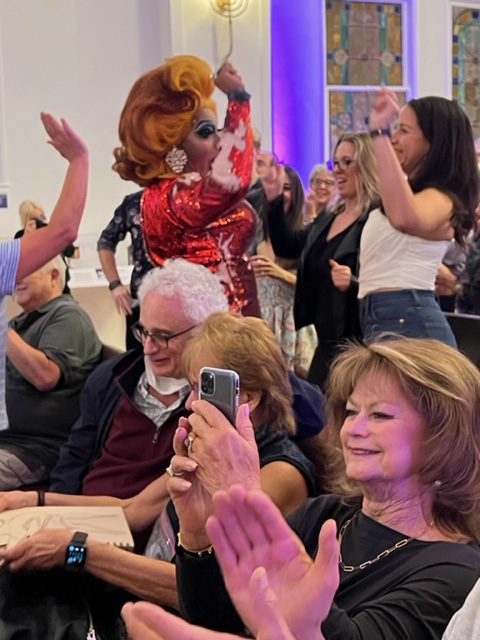
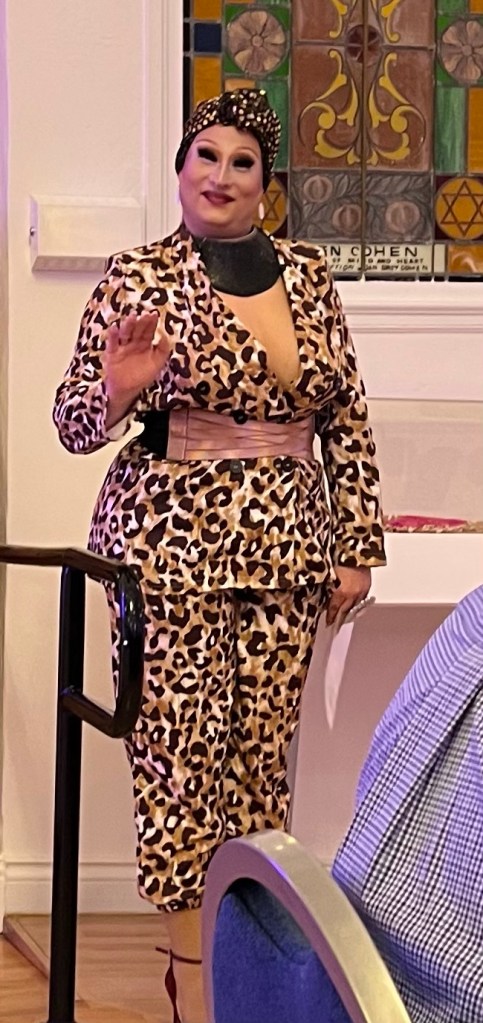
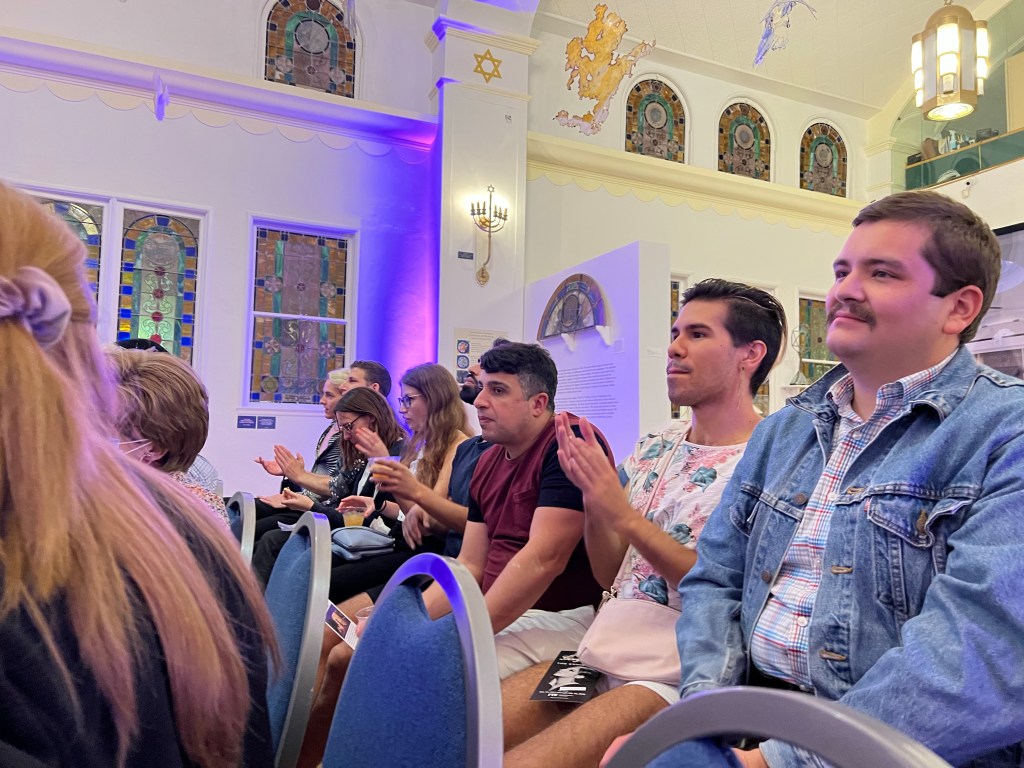
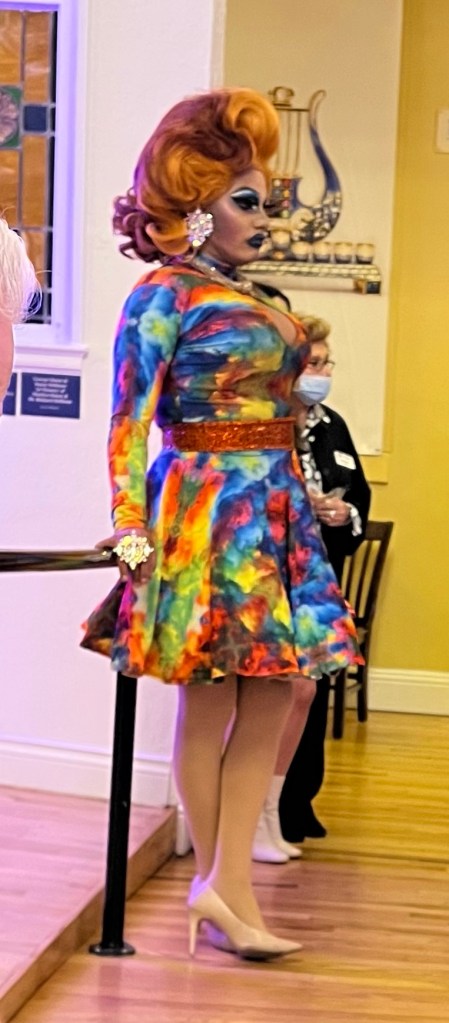
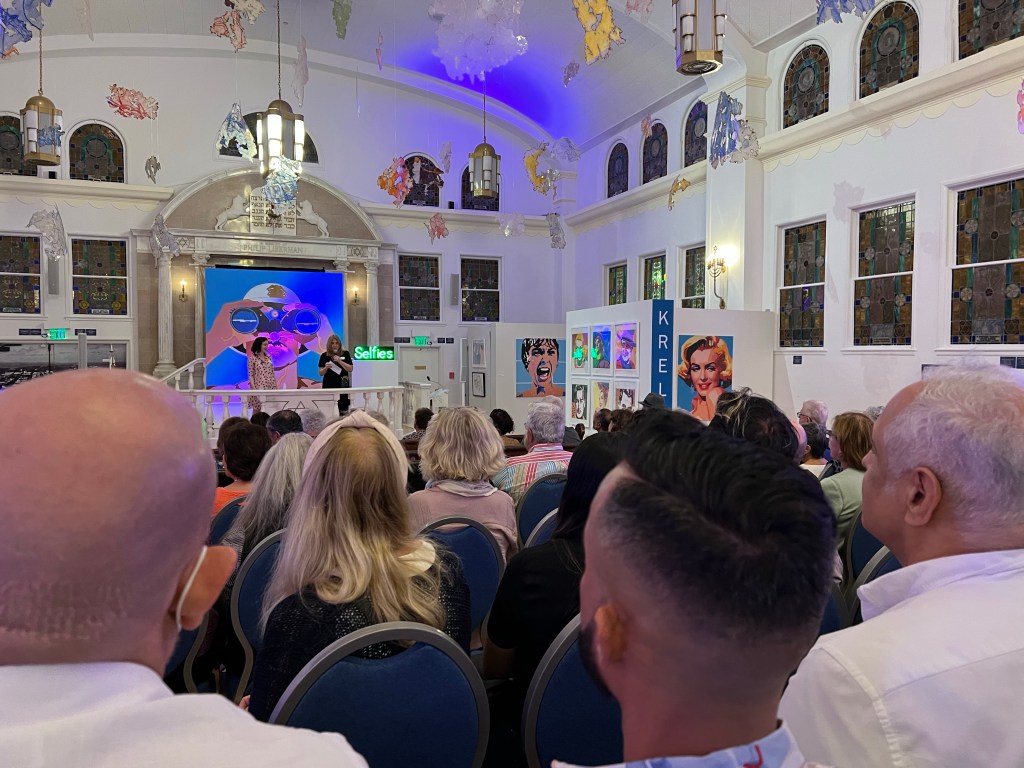
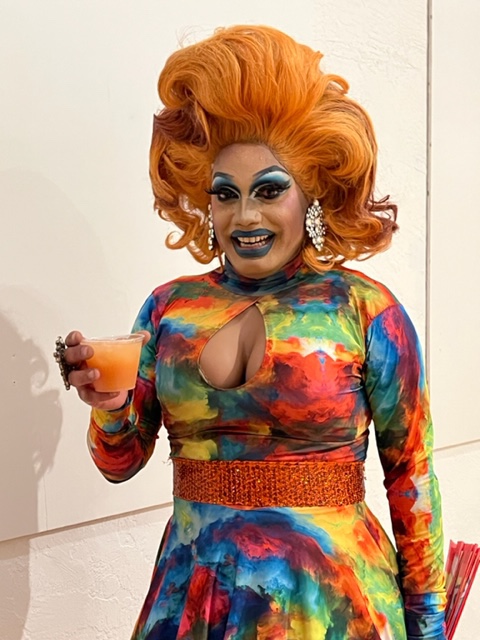
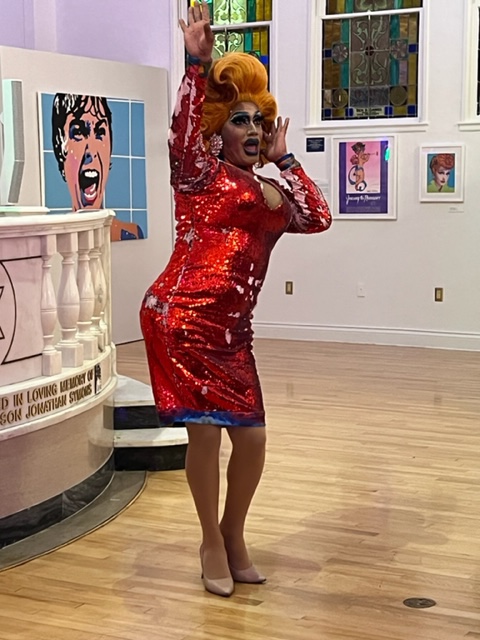
Tonight at The Jewish Museum For The Barbra Streisand Drag Show

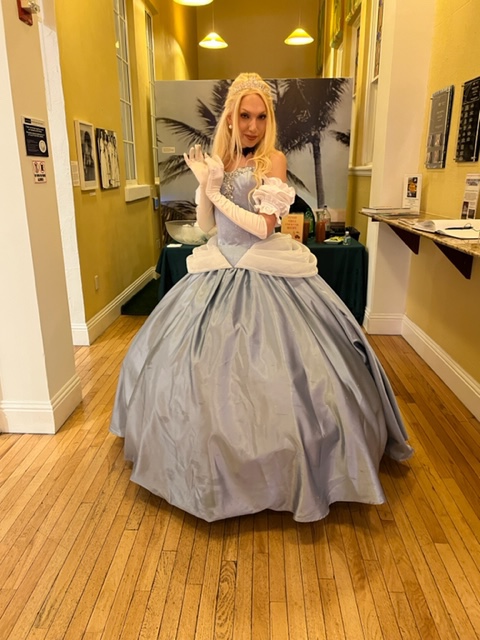
Partying with Marcia and Richie Grand. Photos By Eliot Hess

Q

Drag On

In a New Memoir, Harvey Fierstein Shares Gossip and Regrets

https://www.nytimes.com/2022/03/01/theater/harvey-fierstein-memoir.html?referringSource=articleShare

“As much as it hurts, tell the truth,” says the Tony-winning performer and playwright, tracing his path from Brooklyn to Broadway.

Harvey Fierstein, a Tony Award-winning actor and writer, at the theater district restaurant Joe Allen.

By Bob Morris

March 1, 2022, 5:00 a.m. ET

Harvey Fierstein contains multitudes. The playwright, screenwriter, actor and drag performer has inhabited at least as many personalities as Walt Whitman. With trademark wit and empathy, he has written about himself in “Torch Song Trilogy”; a father with a drag queen partner and a straight son in “La Cage Aux Folles”; the bootlegging song and dance man Legs Diamond; English factory workers and an unlikely firebrand in “Kinky Boots”; heterosexual cross dressers in “Casa Valentina”; striking newspaper boys in his Broadway adaptation of “Newsies”; and a sissy duckling for an HBO animated special.

And he has revised the script for the musical “Funny Girl,” a show about Fanny Brice, an unlikely star like himself, which opens on Broadway this spring.

Now, at 69, the multitalented Tony Award winner has added memoirist to his kaleidoscopic résumé. “I Was Better Last Night,” published by Knopf and described as “warm and enveloping” and full of “righteous rage” in a New York Times review, just released.

Harvey Fierstein Sings the Song of Himself in ‘I Was Better Last Night’Feb. 28, 2022

The title refers to what Fierstein would often say to friends after a performance. But it’s also about regret. “What’s the harm in looking back?” he writes. “If you’re willing to listen, I’m willing to dig.” This video interview has been edited and condensed.

Can we get this out of the way at the top? What’s with your voice?

My father had the same voice. It’s enlarged secondary vocal cords. It’s the most boring answer. You end up with a voice kind of like Harry Belafonte, except not so pretty because I abused it early in my acting career. I had no training and I listened to no one because children listen to no one.

Like all your writing, your memoir is full of humor. Do you think it’s a form of defense?

I think of humor as perspective. Perspective plus time. When I started writing, I realized that when you’re looking to talk to an audience, you have to find that line between the tragedy and the comedy and the humanity. The man slipping on the banana peel. What makes that funny is how human it is, how it could be you.

In the book, your adolescence sounds pretty great.

I arrived at the High School of Art and Design in Manhattan, this total innocent from Brooklyn into this world of kids that wanted to be artists. And all the teachers were professional artists and everyone was gay. I used to tease them that they bused in heterosexuals because it was the law. All of a sudden, I had a community.

Sign up for the Theater Update Newsletter Every week, stay on top of the top-grossing Broadway shows, recent reviews, Critics’ Picks and more.

It almost coincided with Stonewall.

I was too young to go to the bar. But I was already hanging out in the Village.

As a teen you also did community theater with the Gallery Players in Brooklyn, and there was this gay male couple involved there that made a big impression on you.

They had been together for 30 years, and they were the very first gay couple I knew. They had dinner parties. They had fights. And so, as a kid I was introduced into the world of gay couples as something I recognized. When I started reading and seeing gay theater, I was shocked by how negative it was. It wasn’t the gay people I knew.

You were in drag in a Warhol play at La MaMa and Ellen Stewart, the legendary producer there, had her eye on you. Why?

The closest I could tell was when she called me up to her office one day and said, “Mama’s baby don’t wear bloomers no more.”

Meaning drag?

Right. “These other people, Mr. Fierstein, I love them,” she said. “They’re all talented and wonderful and they run around in their bloomers, and I let them do it here because it’s a safe place, but that’s all they will do. Mr. Fierstein, you are made for something else. I don’t know what that is, but we’re going to find out.”

So, after some wild plays that imitated others, you wrote an honest and personal monologue after an anonymous sexual encounter.

It was already 5 o’clock in the morning and I had a meeting at La MaMa, so it made no sense to go home to Brooklyn. I sat down on a bench and I wrote this monologue. Then I read it to a friend on the steps of La MaMa and she laughed and thought it was absolutely fabulous. But here’s the thing — she saw the character I wrote as a woman, not a gay man. She felt exactly the same way about her sexual encounters. She saw the humanity, and it wasn’t gay or straight. It was about being used as a sexual object. It was an eye-opening moment that taught me that as much as it hurts, tell the truth. And in that truth, you will find an audience, you will find other people feeling exactly the way you feel. And you will even find humor.

Fierstein as Arnold Beckoff in his career-making 1982 Broadway play, “Torch Song Trilogy.”

When your mother came to see the first part of “Torch Song” at La MaMa in 1978, she noticed that you were wearing earrings she’d been missing.

When I was doing drag early on, I would snatch a lot of her jewelry. When I took my jewelry course at Pratt, where I went to college, I gave her everything I made.

You felt supported by your parents, didn’t you?

My father was raised in an orphanage. He instilled in me and my brother that all you have is your family, and he would always be behind us. I’m sure he and my mother had many sleepless nights talking about what I was up to, wearing dresses, whatever. My brother once told Lesley Stahl in an interview that never aired, “Harvey was just always Harvey, we always accepted him as Harvey.”

So how did your mom respond to those early plays that were tender, but also brutal?

First of all, she loved the theater and took me as a kid every chance she got. And she knew my boyfriends and stuff. She wasn’t an innocent.

It’s a different world now. When you wrote your trilogy, gay couples didn’t have kids so often.

But at that time, there were all of these gay kids thrown out of their homes and getting beaten up in group homes. And so there was this need for us to go beyond our own needs as individuals and start becoming this community and take care of our children. My mother was a New York City schoolteacher, and we had a fight over the Harvey Milk school for gay kids. She told me that if you don’t mainstream these kids now, they will never have lives. Then she had a gay student and all of a sudden, she changed her mind.
You refer to L.G.B.T.Q.L.M.N.O.P. in your book. Could you get canceled for being glib?

No, because everybody knows we’re an ever-growing group. When I was a kid, I thought there were gay people and straight people, and everybody else was in the closet. As I grew up, I started realizing there are many colors in our crayon box. The men in my play “Casa Valentina” were based on real-life straight cross-dressing men in the 1950s, and not one of them agreed on anything. The great lie is that we’re all the same. Not one of us is like the other. We are all so magnificently individual.

In 2003, the makeup artist Justen M. Brosnan doing Fierstein’s makeup for the role of Edna Turnblad in “Hairspray.”

Well said for a man who, in one year, went from playing Edna Turnblad in “Hairspray” to Tevye in “Fiddler on the Roof.”

I was so happy onstage as Edna in that wig and persona. And I was happy offstage when people called me Mama. Then I go into playing Tevye, and I am surrounded by five daughters and I’ve grown my own beard and I’m talking to God and I’ve never been happier. I was completely and utterly in ecstasy when anyone called me Papa.

You were playing Bella Abzug before the pandemic in a solo play you wrote and had a Gloria Steinem incident.

At the end of the play Bella is saying, if only women would vote the way they should and not the way their husbands tell them to. And Gloria stood up and said, “No, no! Whitewomen!” She was telling me that white women vote in the interest of the men who are supporting them. Gloria will always be about encouraging independent women who take care of themselves.

Do today’s changes around sexuality and gender surprise you? Nonbinary pronouns, kids considering hormone replacement therapy? And what about polyamory and open relationships?

I’m going to be 70 in June, so I still have to make adjustments. But this is where the world is, and the conversation now was not my conversation then. But I love it. I love young people telling us where to go. I love young people defining the world and saying, “This is the world I want to live in.” Although I don’t know how my friends who are raising teenagers do it.

You’ve lived in Connecticut for years. What’s the appeal?

I never breathe freely in the city. It’s always there, calling you or frightening you. Here I live on top of a hill. I come home from work, walk straight through the house pulling my clothes off, and I fall into the swimming pool.

You write about lovers and heartbreaks in the memoir. Now you’re happily single. Are you on dating apps?

Not right now, but I once met a really nice guy on one who I’m still close with.

“When you’re looking to talk to an audience,” Fierstein says, “you have to find that line between the tragedy and the comedy and the humanity.”

Wouldn’t people recognize you on a dating app?

That’s why I don’t go on them much, but when I did, I was totally open. I once put up a picture with my beard, and I think I labeled myself “Tevye is in town.” I was not trying to hide. And I did meet a few people interested in meeting Harvey Fierstein. That was fine.

Not Harvey Weinstein, as happens on occasion?

I was in a diner in Connecticut and this guy’s saying, “Oh my god, it’s Harvey Weinstein.” And I said, “No, I’m not Harvey Weinstein.” And he says, “Yes, you are,” and he wouldn’t stop accusing me of doing terrible things. I told him that that Harvey was in prison somewhere and that I was Harvey Fierstein.

Did that end it?

I paid for his dinner on my way out and that shut him up.

Your memoir has some dicey celebrity anecdotes. You got in a hot tub with James Taylor at Canyon Ranch?

I didn’t get all crazy and ask for his autograph or anything.

Did you ask for a selfie?

I didn’t do any of that. That’s fangirling.

But you managed to compliment him on his private parts.

Is that such a terrible thing

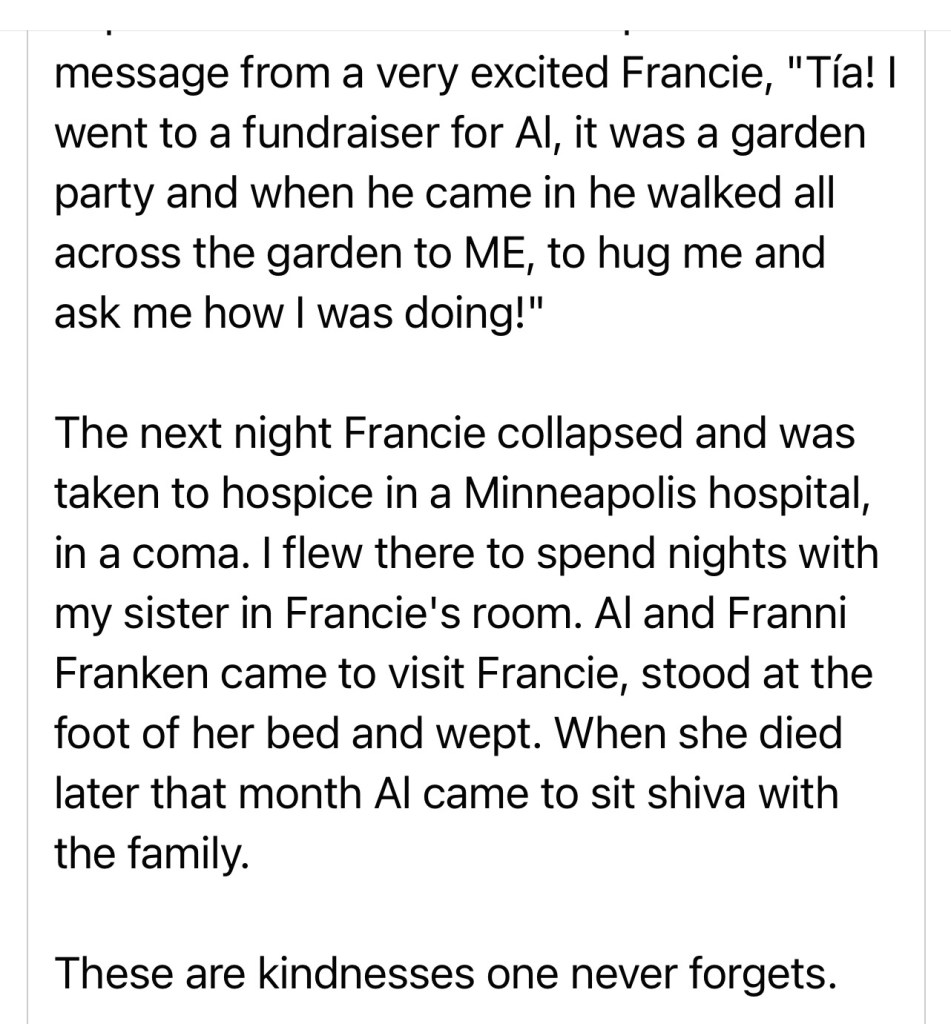
Should We Apologize To Al Franken? Did We Over React?

Francie and Al Franken

Today I start working with David and Norman Chesky, founders of Chesky Records and HDtracks, promoting “The Mice War,” an animated children’s movie which explains the absurdity of war and the futility of violence. The movie will teach children, at an early age, not to make the same mistakes as those who came before them.

———————————————————————-

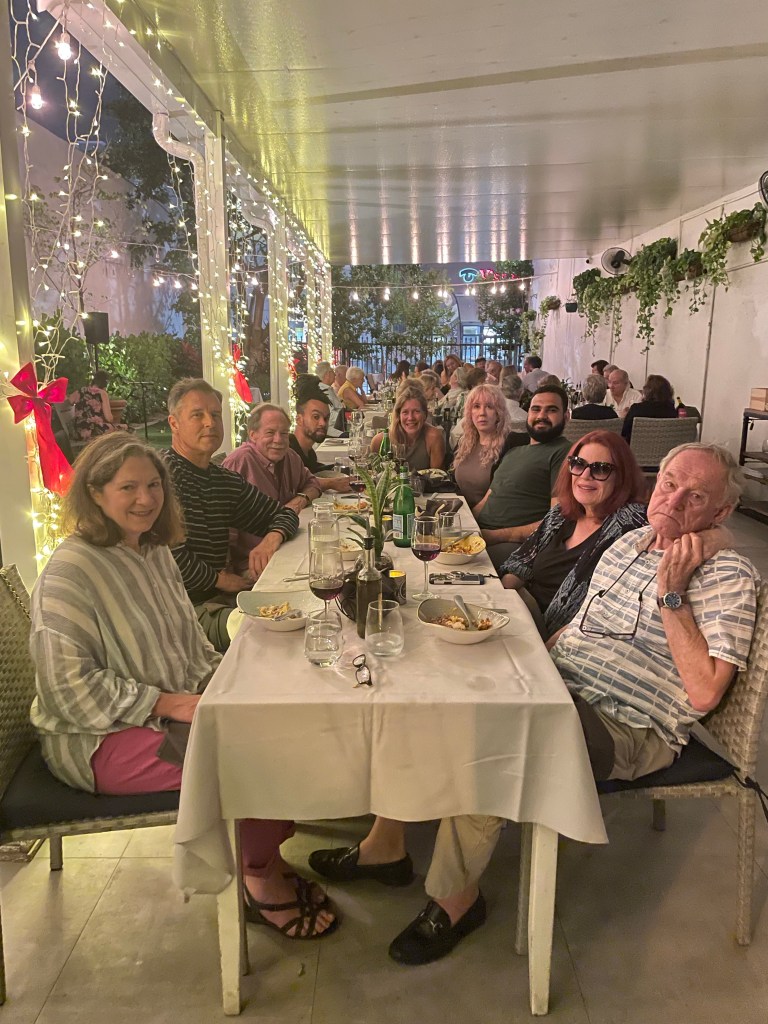
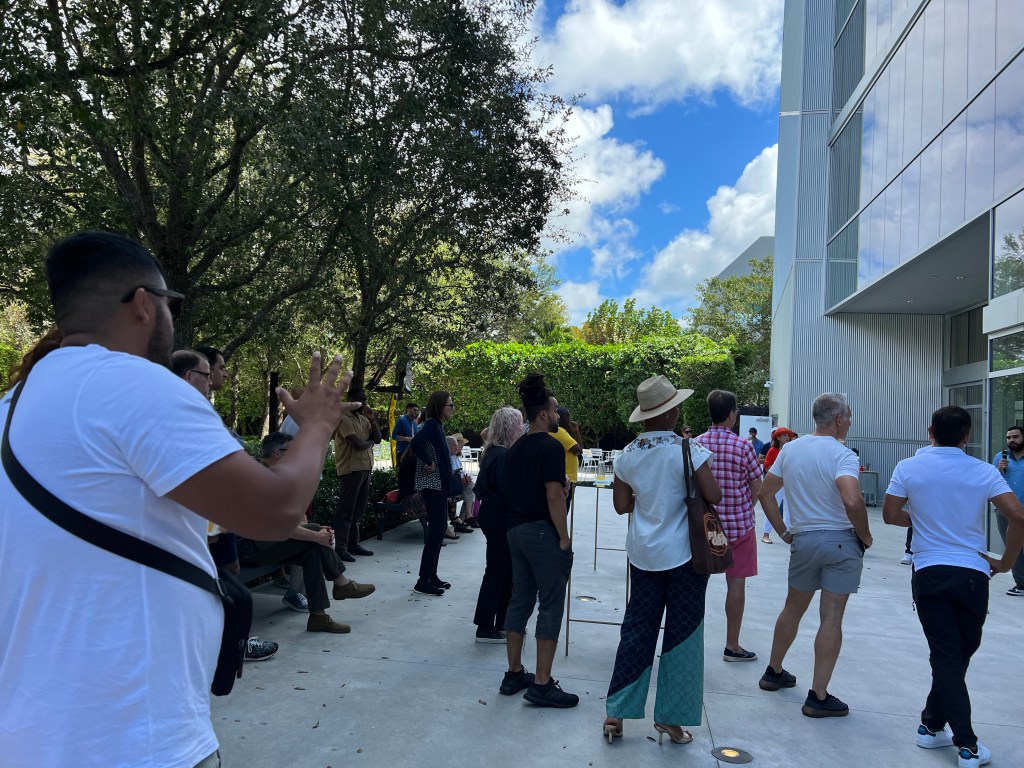
End of the month dinner for the February artists (Bony Ramirez, Nate Lewis and Patricia Ayres) in the residency program at Fountainhead Arts. Congratulations to all. We loved being included.

————————————————————————

This was our month to co-sponsor artists-in-residence Bony Ramirez, Nate Lewis and Patricia Ayres at Fountainhead Arts. We shared the month with Leslie and Michael Weissman. Our theme was “Becoming an Artist is Not a Linear Path.”

We were delighted that Bony sold his “Where Are The Avocados” piece to the Institute of Contemporary Art, Miami, also known as ICA Miami. Many of us gathered there today to celebrate Bony’s success.

Other local museums also bought art. Quite a successful month.


Bony Ramirez
Patricia Ayres
Nate Lewis

Lois Whitman-Hess Miami Life Editor The Three Tomatoes

Photo by Eliot Hess

Can you spot me in this photo by Eliot Hess? (View more ). What would Monica and Hillary say to each other if they met? There’s a play about that. I’m thrilled that the Miami Film Festival is back! There’s a new museumon Lincoln Road. Time Out Market is back too and it’s a unique dining experience. And I hope you’ll join me in NYC for the Three Tomatoes Renewal Summit on May 13.

Photo by Eliot Hess
Photo by Eliot Hess
Photo by Eliot Hess

March 3-27. When Monica Met Hillary

“When Monica Met Hillary,” a play about Monica Lewinsky meeting up with Hillary Clinton three decades later, has tongues wagging all over Miami. As far as we know, Monica and Hillary have never met. What if they did meet? What would they say to each other? I’m going to find out on March 12th when a group of us, are going to see the production at the Colony Theater on Lincoln Road.

March 4-13. Miami Film Festival

Miami really knows how to create a film festival. The 39th edition of the festival showcases the work of the world’s best emerging and established filmmakers. I just found out that the cash awards can total more than $100,000 in competition categories. I’m keeping my finger crossed that nothing stops the Miami Film Festival from happening this year.

Museum of Illusions

Lincoln Road, a walkable 10 block stretch of great shopping and dining in the heart of South Beach, is now home to a museum. Don’t worry. It’s not a stuffy historical one, but rather a fun entertainment center. It’s actuality a Museum of Illusions. My husband and I went there to check it out and I must say we found ourselves in the world of fantasy and imagination. 

Get Ready Again for a Unique Dining Experience

The famous Time Out Market is back after the Covid shutdown and offers folks every type of meal they could ever want under one roof. It’s like visiting a major food convention. What’s even more interesting is that the food establishment is going to feature a wide variety of special events. This is just perfect for people who want to go solo, or with a group. Everyone fits in.

Too Much Marijuana Can Make You Unpleasantly, Dangerously Sick

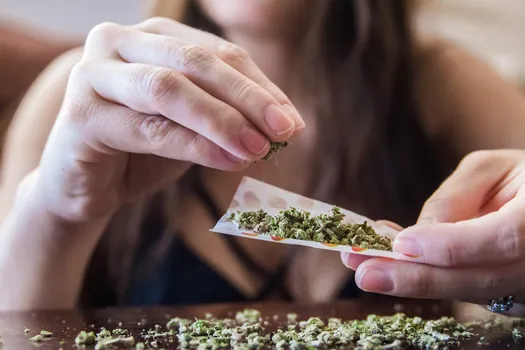
photo of lifestyle marijuana woman

My friend David Bloom posted this on Facebook. His husband, Damian McNamara, authored this piece in WebMD. David, thank you for sharing. Good to know.

Too Much Marijuana Can Make You Unpleasantly, Dangerously Sick

By Damian McNamara, MA

https://www.webmd.com/mental-health/addiction/news/20220211/marijuana-use-disorder-may-make-you-sick?fbclid=IwAR1dX9bfG3yqcplQZkxE7D2Y99omlVXCL_bk0jEgFGK6oic6AYZ4uuYC1PI

Feb. 11, 2022 — At the center of the emerging science on the unintended consequences of daily long-term use of marijuana lies a paradox.

For years, medical marijuana has been used to ease nausea from cancer chemotherapy and GI conditions. Now, with greater legalization comes growing awareness that chronic use of marijuana — also known as cannabis — can trigger a condition where, ironically, a person has hard-to-control vomiting and nausea.

Some people with the disorder, known as “cannabinoid hyperemesis syndrome,” also report crippling belly pain.

Linda can relate. The 33-year-old Oregon resident, who asked to remain anonymous to protect her privacy, refers to a medieval spiky metal ball on a chain when describing the pain.

“Picture a mace inside your stomach, pushing up inside your chest and, at the same time, exploding out,” she says.

To seek relief, she gets down on her knees, adopts a child’s yoga pose, and runs hot water in the bathroom for hours on end, a trick many with the disorder says has provided relief. She also occasionally goes outside and tries walking it off.

“I would just wander around my neighborhood, a lot of times at like 4 or 5 in the morning,” she says.

“The fresh air helps a little bit. I just keep walking down the street, take about 10 steps, stop, vomit — walk a little bit more, stop, vomit.”

Her first experience with the disorder began in the middle of one night in 2017 while she was at a conference in Las Vegas.

“We went out to eat the night before, and I woke up about 4 in the morning with just the most intense pain I’ve ever had,” she says.

“I found myself in a really hot shower in between throwing up everything and trying to say get some water down,” she says. “I was sharing an Airbnb with my colleagues, so it was less than ideal.”

Many people with cannabinoid hyperemesis syndrome find relief from hot baths or showers. Researchers believe that hot water helps because temperature sensors in the skin send signals to the brain that can help ease the symptoms, at least for a while.

The problem is that people with this syndrome “can’t live in the water,” says emergency doctor and medical cannabis expert Leigh Vinocur, MD.

Fast-forward 6 months to another event in Boulder, CO. Again, Linda woke up and could not stop vomiting.

“I was not feeling any better. Showering wasn’t helping. I ended up in the hospital,” she says.

She received opioids for her pain. But neither she nor the emergency room staff were quite sure what was happening. Her discharge paperwork read “cannabis allergy.”

Cannabinoid hyperemesis syndrome “shatters that image of cannabis only being a good thing. It’s a bold statement, but, you know, once you start to think about it, it’s like a little too much of anything isn’t good,” Linda says.

Experts suggest greater awareness is needed to identify this syndrome earlier, by both cannabinoid users and doctors. The bouts of vomiting, in particular, can get so severe that people can end up hospitalized with dehydration, electrolyte disorders, and weight loss.

The severe electrolyte imbalances “can really be life-threatening,” says David Johnson, MD, a professor of medicine and chief of gastroenterology at Eastern Virginia Medical School in Norfolk.

“By the time they come into emergency care, they’re in bad shape,” Vinocur agrees. “Many try to ignore it, but they continue to vomit.”

Genetic Risk Factors?

One mystery is why some regular marijuana users get this syndrome while others do not.

“I can say that not everybody gets this, thank goodness,” says Ethan Russo, MD. “But there has to be a reason that certain people are susceptible and others are not.”

Interestingly, a new study from Russo and colleagues suggests that genes play a role. They identified five genetic changes that could make a chronic marijuana user more likely to have cannabinoid hyperemesis syndrome in a study published July 2021 in the journal Cannabis and Cannabinoid Research.

They compared 28 people with the disorder to 12 other high-frequency marijuana users without these symptoms.

The results are not final but could help guide future research, Russo says.

“What we’ve discovered — and it was far more than we expected — is that there’s a lot more to this than a hypersensitivity to cannabis,” says Russo, a neurologist and founder/CEO of CReDO Science, a firm that promotes cannabis research and develops commercial products.

Also, he says, those affected by cannabinoid hyperemesis syndrome could be at higher risk for other conditions, such as addiction to alcohol or other substances, dementia, diabetes, and heart disease.

“Most people with CHS are going to be younger,” he says. “What we’ve demonstrated is there is a risk for more serious problems for decades to come. So someone who has these symptoms really deserves a look at this genetic screening.”

Battling Disbelief

Getting back to the paradox, many users don’t believe marijuana can trigger serious vomiting and nausea because of its reputation for doing the opposite.

“Folks that have this are just uniquely resistant to the concept that cannabis is actually the problem and not the solution,” Russo says.

“It’s kind of counterintuitive because people think, ‘Oh, cannabis helps with nausea,’ so they use more of it,” says Vinocur, who is also a spokesperson for the American College of Emergency Physicians and runs a medical cannabis practice.

Most kinds of marijuana act in this way — doing opposite things at different doses. Once a certain threshold is passed, people with cannabinoid hyperemesis syndrome are “just uniquely susceptible and really can’t tolerate any significant amount of THC,” Russo says, referring to tetrahydrocannabinol, the substance that gets marijuana users high.

This type of scenario happens quite frequently w/ abdominal pain & vomiting. But patients often haven’t disclosed marijuana use. We try to diagnose something else and treat pain/nausea, often do a CT and they don’t improve. Only then do I suggest cannabinoid hyperemesis syndrome.— Emily Porter, M.D.

Once diagnosed, quitting is the most effective strategy. But it can be tough to persuade someone to stop using marijuana.

“You do have to try and convince them … to try abstinence and to watch and see what happens,” Vinocur says.

People should “realize the root cause of this is its cannabinoid ingestion, and the treatment is really best directed at absolute avoidance,” Johnson says.

Unfortunately, evidence also shows that once a person stops using marijuana and gets relief, going back to marijuana or other forms of cannabinoids can cause the syndrome to start all over again.

“We’ve had people that quit for a month, a year, 2 years and upon resumption, almost invariably, they’re back into bouts of the hyperemesis along with all the other [symptoms],” Russo says.

Marijuana and cannabinoids can cause digestive problems, Johnson says, which may cause more problems.

What Recent Research Reveals

Cannabinoid hyperemesis syndrome is a relatively young disorder — first described in 2004 — and early reports and case studies are giving way now to studies looking into potential treatments.

So far, the strongest evidence suggests a role for an over-the-counter cream called capsaicin to help manage symptoms, but more studies are needed.

Similar to hot showers, this ingredient from chili pepperscan warm the skin and trigger the temperature-sensitive skin sensors to lessen the symptoms, Johnson says.

An October 2021 study in Spain looked at 54 emergency department visits among 29 people with cannabinoid hyperemesis syndrome. For the 75% treated with capsaicin, vomiting stopped after an average of 18 minutes.

Lead author Guillermo Burillo-Putze, MD, PhD, says he is most surprised by the growing number of new cases of the disorder.

“This should be of concern given the increase in cannabis use due to its legalization and permissiveness,” says Burillo-Putze, an emergency doctor at Hospital Universitario de Canarias in Spain.

Cannabinoid hyperemesis syndrome appears not to discriminate across racial and ethic groups. Although most studies to date include white participants, a July 2021 study of 29 people, 90% of whom were Black, found repeat visits to the emergency room were common.

The study found that 16 people returned 42 times to the emergency room and accounted for 10 hospital admissions, for example.

Cannabis Conspiracy Theories

“Unfortunately, this condition has become the subject of great speculation hinging on conspiracy theories as its true cause,” Russo notes in a September 2021 letter to the editor in TheAmerican Journal of Emergency Medicine.

Some “myth busting” is in order, he says.

For example, cannabinoid hyperemesis syndrome does not happen because of exposure to products from a tree called neem or from pesticides applied to marijuana plants during cultivation, Russo says. It can also occur with high-dose synthetic cannabinoids, he says.

The State of Recreational and Medical Marijuana

Recreational marijuana is legal in 18 states, Washington, DC, and Guam as of January 2022, according to a report in US News. More states permit medical marijuana use — 37 in total, plus Washington, DC, according to Britannica ProCon.

One of the states where only medicinal use is legal is Maryland, which is where Vinocur practices.

“We are seeing increasing numbers of cases” of cannabinoid hyperemesis syndrome, she says.

In addition to chronic use or higher doses, it’s likely that the higher potency levels of THC in the legal marijuana industry trigger the syndrome in some people as well.

Linda estimates she ended up in emergency rooms at least a half-dozen times in the last 5 years. In April 2021, she had a “pretty serious event.” She blames it on traveling a lot for work, not eating right, and not getting enough sleep. She broke her 2-year abstinence with alcohol.

“I basically didn’t listen to my body and paid a pretty significant price for it,” she says.

Linda did not stop altogether but says she “drastically changed the types and form of the cannabis I was using.”

“I can tell you on the record that I would be a hundred percent dead without this plant,” she says.

“The prospect of living without it was more detrimental to me than all of those things I just described to you, because addiction runs in my family and I had opiate problems myself that I overcame with cannabis.”

L

Thank you Dawn McCall and Gail Williams

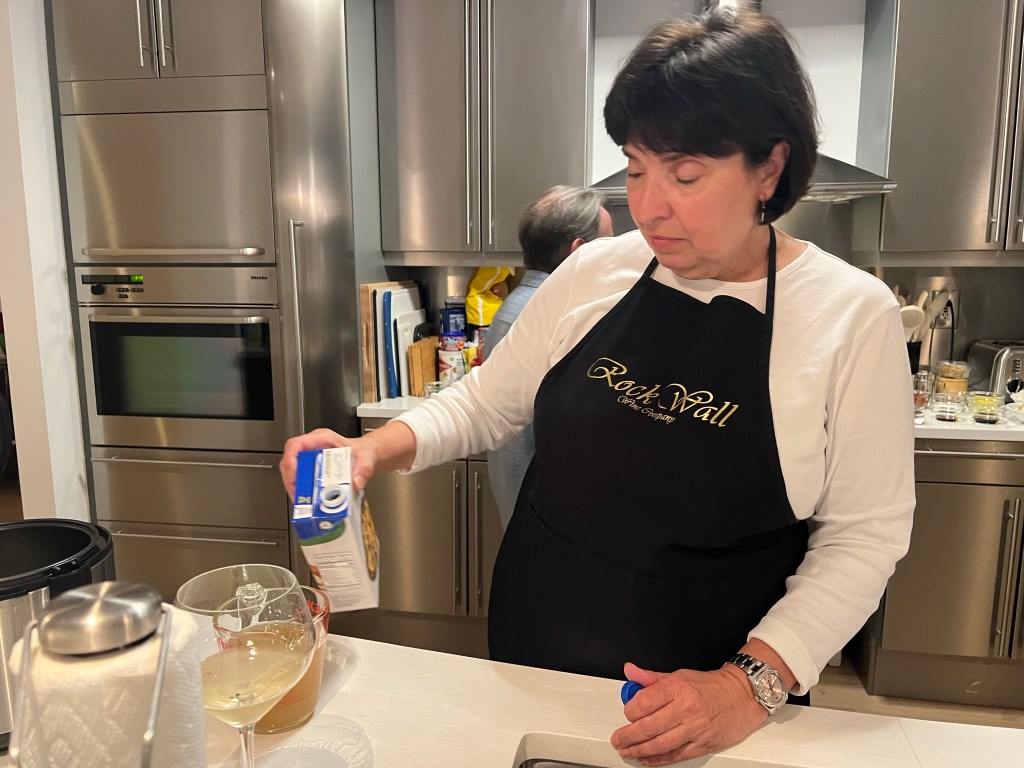
Thai dinner last night at the award winning Chef Dawn McCall’s kitchen. Beyond delicious and healthy. And we went home with enough food and home made desserts for days. (Gail’s ice cream and Dawn’s apple and pear Galette pie) Thank you Dawn and Gail for a very special evening. We are still mesmerized about how easy you make it look. Served with total grace and finesse. Thank you, thank you.

Seeing Broadway Joe In That Superbowl Commercial Reminded Me He Told Me Something He Never Told Anyone Else

You are a Seenager. I am a Seenager. We are all Seenagers. Get ready to roar. My friend Debbie Nigro, and her partner, Charlie Ponger, started a new hysterical podcast talking about you and me, and all of our contemporaries.

Radio veterans Debbie Nigro and Charlie Ponger are the ringleaders uniting the 50+ generation on the one thing they all have in common. The desire to have as much fun as possible, while they still can…without hurting themselves.


New York, NY — “Tell me you didn’t crack up seeing Joe Namath having fun rockin’ his signature fur coat during the Super Bowl Draft King commercials?” said Debbie Nigro, Co-creator and Co-host of the trending comedy improve podcast ‘The Official Seenagers’ Can’t Make This Up.


Joe Namath just showed everyone a great example of the kind of fun antics we at ‘The Official Seenagers’ podcast applaud! Having fun making fun of himself. Love him.


What is a “Seenager”? “Senior Teenager’. A person in midlife or beyond who experiences or exhibits a renaissance of freedom, creativity, and social engagement like those usually present in a person’s teenage years. Most ‘Seenagers’ typically appear to be mature adults, parents and grandparents.


Broadway Joe’ Namath is obviously one of us. He’s very fun and very real as you’ll hear in the most recent episode of ‘The Official Seenagers’. He thoughtfully shares why he thinks people are still drawn to him, tells the story of his famous white shoes, gives up his grandpa name, and shares who he watches football games at home with and more. He even tells Debbie something he never told anyone before.


“That Draft Kings Goddess of Fortune has nothing on me when it comes to Joe Namath,” said Debbie. “I’m The Goddess of Truth Serum. LOL“


“Joe Namath’s outlook, spirit, and humor are a perfect example of what we and our show are all about.” said, Charlie Ponger, Co-Creator and Co-Host of The Official Seenagers. We’re all about the upside and often the hilarious reality of the 50+ generation. The younger generations also find us funny and way cool.


“Humor is in critical demand right now, says Debbie. It’s good for your immune system. Luckily the only thing anyone listening to us could possibly catch is a belly laugh”

Click below for podcast.

TheOfficialSeenagers.com


Eco-Friendly Floating Condos

Looking For An Alternative Life? Want To Run Away From It All? Tired Of Being Shut-In After The Pandemic? Here’s A Solution!

These Eco-Friendly Floating Condos Will Let You Live in Luxury Wherever There’s Water

We Have Two Alternatives For You, The Anthénea Floating Condo, Or The Arkup.

Anthenea Floating Condo

The Anthénea, a French company, plans to debut its dome-shaped apartments early next year.

Arkup, located in Miami, introduced their luxury floating home a few years ago. In fact, it’s located next to Star Island right outside my window. $5.5 million.

The Anthénea, created by French naval architect Jean-Michel Duacancelle, was inspired by the 1977 James Bond flick The Spy Who Loved Me. The Anthénea has a diameter of 31 feet and accommodates two adults or a family of four. It features a lounge, bar and kitchenette. The rooftop features a bar-slash-solarium for 12 guests.

.

Anthenea Floating Condo

You and your friends can dock near each other and form your own floating condo colony.

The Anthénea does not disturb the underwater ecosystem. It is fitted with solar panels and powered by 100 percent clean energy. It’s also equipped with an innovative anchoring system and sand screw which does minimal damage to the ocean floor.

Other green tech features a saltwater filtration system and a US Coast Guard-approved waste treatment system. The pod is 100 percent recyclable.

Anthenea Floating Condo

.

Anthénea says the pods can be used as exclusive oceanic condos, though the company is also looking to partner with resorts around the world.

Anthenea Floating Condo

Anthénea starts at $365,000. The floating spa model is $730,000.

Our Visit To The Bal Harbour Luxury Shopping Mall Yesterday.

We had lunch at the Bal Harbour Mall yesterday with good friend Neil Plakcy who is an award -winning author of 50 books to date. They’re all on sale at Amazon. You can imagine what our conversations were like considering he writes mysteries. We learn so much. His husband Marc couldn’t make it to lunch, He was greatly missed.

Most women who shop at Bal Harbour are thin and fashionable. I never got the memo.