I’ve Finally Got the Power

20131209-001812.jpg

20131209-001831.jpg

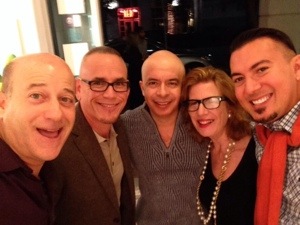
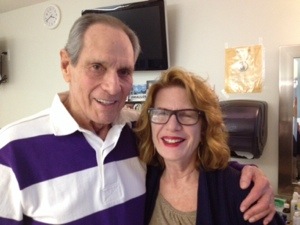
Steve, Carlos, Williams, me, and Nito

One of my biggest business concerns is losing power on my iPhone. I usually walk around with two chargers in my handbag. Anytime I am near an outlet, I automatically charge my cell even if I don’t really need it.

I’ve tried using the smartphone cases that promise extra battery life, but that has never lasted more than a half hour for me. I even tried batteries that plug into my cell for a few hours of extra boost. The trouble with those gizmos is that they fall out. I spend most of my time trying to keep the battery inserted into my iPhone. This problem kind of defeated the original purpose.

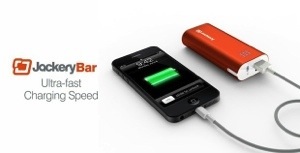
I have been bugging my friend Steve Greenberg, the Innovation Insider, about a battery solution. Yesterday, Steve and my other friend Williams presented me with a belated birthday gift that tickled my fancy, the Jackery Bar. It is the smallest portable external battery on the market, designed to provide 22 hours of extra power.

I am checking it out now. My iPhone was just about to go out, so instead of plugging it into the wall outlet, I decided to try Jackery. It’s been a few hours and my cell has a full bar. I will report how long the external battery lasted in a future post.

If everything works out, this little gizmo will become a staple in my handbag. If I need power on a long plane flight, on the road, or even when shopping, all I have to do is plug into the Jackery Bar. The battery remains in my handbag while the wire is the only thing connected to my iPhone. It is as easy as that. It weighs 5.4 ounces. Price: $40.00.

Thanks Steve and Williams for a very thoughtful gift.

Scenes from Art Basel

20131207-010602.jpg

I’m a digital freak. I have so many gadgets that I want to introduce you to but I can’t let all of the photos I have taken at Art Basel just sit in my camera roll. So here goes:

20131207-010728.jpg
My husband Eliot Hess at the opening of PAMM, the Perez Art Museum Miami

20131207-011005.jpg
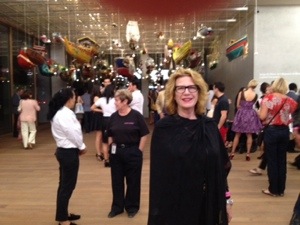
Lois Whitman (me) at the opening of PAMM

20131207-011936.jpg
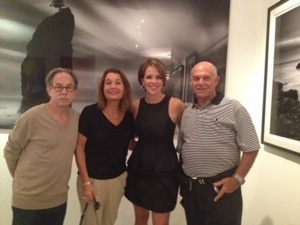
Jennifer Gowdy (black dress) with Eliot, Ruth and Howard Greenberg at the Jason Henthorne photo exhibit

20131207-012336.jpg
Thom Collins (left), Director of PAMM

20131207-013318.jpg
Fernando, John DeFaro, and Lois at Shokudo Restaurant in the Buena Vista area of Miami

20131207-013747.jpg
We got captured by some performing artists

20131207-013938.jpg
The crazies all show up for Art Basel

20131207-014118.jpg

20131207-014241.jpg

20131207-014305.jpg

20131207-014335.jpg
Can you find my pal Howard?

20131207-014538.jpg

20131207-014610.jpg

20131207-014729.jpg

20131207-014824.jpg

Yak-Yak

20131205-021523.jpg

Anne Wojcicki

In case you haven’t heard, there is some hot gossip in Silicon Valley. Anne Wojcicki, the newly estranged wife of Sergey Brin, founder of Google, has certainly had her fair share of challenges lately.

First she finds out that her husband of six years has been romantically involved with a Google product manager.

Then last week the U.S. Food and Drug Administration (FDA) ordered her genetic testing company, 23andMe, to immediately stop selling its main product, a $99 “Personal Genome Service.” The company has failed to show that the technology is supported by science.

Brin is currently worth $22.8 billion, according to Forbes. He holds nearly $21 billion worth of Google shares.

Facebook Friend Andrew Sager

20131203-214704.jpg

Andrew Sager is a survivor

I noticed that Andrew Sager was missing from the pages of Facebook about six weeks ago. I became concerned because he frequently posted pictures of his two handsome children, Mildred, 20, and Charles,18. Andrew now lives in Beverly Hills and is divorced from the mother of his kids. After clicking on Andrew’s page, I discovered that he was recovering from a near death experience and was recuperating in a rehab center in Santa Monica, CA. I posted a message to someone, who I identified as his sister, to find out what had happened to him. A few hours later she answered saying that Andrew was very sick but well enough to call me directly.

I’ve known Andrew for 37 years, because he became a business partner of Stanley Hochstadt, the original H in HWH PR. Stanley and Andrew were drumming up a lot of business designing album covers in the record business. Stanley was supposed to be focused on the advertising side of HWH. Most of the business we secured in the very early days was all public relations oriented.

Stanley, a really good guy, was trying to handle several businesses at once but they all didn’t work out. Stanley probably felt a sense of relief when we suggested the split. The three of us, along with Stanley’s wife Sandy, remained friends for years, but then we lost contact. Over the years, I bumped into Andrew a number of times in Manhattan (at one time he was a partner in the steak restaurant Manhattan Cafe).

Andrew was very distinguished looking, extremely popular with women. At one time, he was married to singer-song writer Carole Bayer Sager (she kept his name). He was the son of a very successful real estate mogul in New York and had five siblings. The Sagers were on top of the social scene.

Andrew and Stanley’s business finally petered out after a few years. Andrew eventually married a very pretty French woman. Together they had two children and moved to Los Angeles.

Twenty years passed without one Andrew Sager sighting. Six years ago, Eliot and I were walking uptown on Second Avenue to our local coffee shop, Silver Star, and there was Andrew. He was standing alone waiting for someone. He told us he broke up with his wife, was done buying and selling businesses, and now was a salesperson in the Apple Store in West Hollywood.

I was eager to know how someone in his sixties fared in a store that catered to and employed 20-year-olds. Andrew said he loved being a part of the Apple culture, and that the energy in the store kept him young. We exchanged contact information and became Facebook friends. I was happy that Andrew was part of a business community I strongly identified with.

For some reason, I didn’t notice Andrew’s five month absence from Facebook until I spotted pictures of him in what I thought was a hospital bed. When Andrew called, he told me that last May he got triple pneumonia. While he was in the hospital, he contracted MRSA. His entire body shut down, and Andrew was unconscious for several months. When he finally woke up, he had lost most muscle control in his body and had to learn to do everything all over again, including swallowing.

When we spoke, I knew we were going to LA for Thanksgiving, so I told him I definitely wanted to visit him. Eliot and I spent ninety minutes with Andrew this past Monday. He should be getting out of rehab in another month or two.

Like all people our age, we spent time reminiscing about the past and shared stories about folks we all knew. Andrew has a strong will to live. That is what got him through the horror of being near death. Frankly, family and friends who saw him during this period had their doubts.

This is a guy with a strong constitution. He managed to get through every occupational, speech, and mental therapy they offered him. He has a lot of living yet to do. His bed was covered with electronics: iPad, Kindle, iPhone, and a few other gizmos. He may have been out of it for a few months, but his technology is helping him to make up for lost time.

There is no doubt about it. We are going to be more than Facebook friends from now on. Andrew, we are very proud of you.

Stress “Bust”-ers

20131202-205747.jpg

In the future, a woman who goes out to buy a bra might have a choice to buy a smart one. That’s right, even bras are going digital.

A group of researchers at Microsoft have developed a prototype bra that uses sensors to follow a woman’s mood. The goal is to help prevent stress-related eating disorders.

I bet you like what you are reading so far. The Microsoft team want undergarments to multitask. Not only do they keep you in place but now they detect stress. The experimental project uses the woman’s own bra in the beta test, embedding it with electrocardiogram and electrodermal activity sensors (PDF), gyroscopes, and accelerometers.

Data from the sensors was sent to a smartphone app so the women could track moods. The researchers were able to see whether the women were stressed via the mobile mood-detection system. If the subjects see the signs of stress that usually lead to overeating, they can make better choices in the moment.

It would nice to have a wake-up call that stops you from overeating. Just never thought it would come from my bra.

Amazon’s Fact or Fiction

20131201-234136.jpg

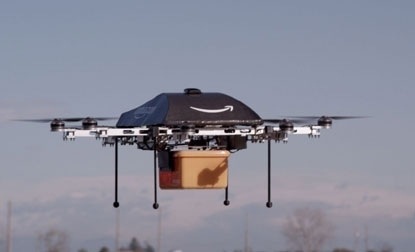
Jeff Bezos, founder and chairman of Amazon, conducted several interviews over the last few days that revealed a new delivery service that would feature unmanned aircrafts. The whole point of delivering packages by drone would be to speed up the process, sometimes guaranteeing delivery in just a few hours.

Amazon is currently working with the Federal Aviation Administration on new airspace rules so that its drone delivery service would be perfectly acceptable when the company is ready to launch, which wouldn’t be until 2015 at the very earliest.

Bezos talked about the experimental drone-based delivery service in a recent “60 Minutes” segment. You can see a video of the drone in action here. The working title is Amazon Prime Air. It is currently being tested on a very limited and controlled basis.

When I first heard the announcement, I thought this was one big joke. Then I asked a few of my friends who work at Amazon if this was for real. They confirmed that this was a very important initiative for Amazon because they want to figure out a way to provide deliveries almost instantaneously.

Bezos said the octo-copter drones could carry objects of up to five pounds within a ten-mile radius of an Amazon distribution center. The e-commerce company has been deliberately building distribution centers all over the country. The drone aircrafts would fly from each distribution center after receiving a recipient’s location.

This story does seem like fantasy, but you can count on it in our lifetime.

The Nose Knows

20131130-004809.jpg

In a few years from now, the medical profession will be able to tell what disease you may have, or what disease you may get, just by the smell of your body. Your breath, sweat, and other secretions may help doctors detect diseases, hopefully in the early stages. George Preti, an organic chemist at the Monell Chemical Senses Center, and an interdisciplinary team that includes physicists and veterinarians at the University of Pennsylvania, are exploring why we smell the way we do.

As he explained in a recent New York Times article,

Thousands of waste products are swept out in our breath, blood and urine, or simply released into the air above the skin. Metabolic disorders, like diabetes, interfere with the way the body breaks down nutrients and thus make that exhaust especially stinky. People with phenylketonuria (or PKU) tend to smell musty. A faulty or missing digestive enzyme makes people with trimethylaminuria (or TMAU) smell fishy.

Preti and his team have also been focused on the possibility of cancer detection ever since they learned about a woman who asked her doctors to look at a mole that her Collie-Doberman mix began to sniff at intently. The dog tried to bite it off when she wore shorts. The mole turned out to be an early-stage malignant melanoma, inspiring the researchers to test whether dogs, whose smell machinery is at least 10,000 times as sensitive as ours, can tell healthy samples from cancerous ones.

The sniff tests are a wave of the future. I hope this becomes a reality in our lifetime.

Modern Day Thanksgiving

20131128-101836.jpg

Need I say more? This is what the world has come to. The reality is that most people today are just not comfortable separating themselves from their smartphones. They want to stay in constant touch with everyone important to them. Can’t say I disagree.

This year Eliot and I spent Thanksgiving with my west coast family. Cousins Beth, Jeff, and Hanna Young hosted the most magnificent combo Chanukah and Thanksgiving lunch and dinner today including latkes and turkey. We can’t thank them enough. The entire family showed up. It was just a very happy and satisfying day.

Thanks to smartphones, our daughter and friends were in touch with us all day via text, email, cell, and Skype. So while it may not be polite to take calls at the dinner table, we were able to check our messages during breaks. It just made separation from love ones during the holidays a little easier.

Peace to all! Thank you Beth, Jeff, and Hanna.

20131128-234616.jpg

20131128-234657.jpg

20131128-234729.jpg

The First Bookless Library

20131126-224822.jpg

As of a few weeks ago, BiblioTech of San Antonio, Texas, in Bexar County is the first and only library in the United States providing digital copies of books rather than the printed ones we all grew up on. Hello to the digital revolution.

Imagine, a library that has 600 e-readers in stock so patrons can take one home to read the books they selected. BiblioTech is also the first library that requires users to browse the catalog of e-books on large touch screens. When patrons find a book they want, they simply download a copy onto their personal e-reader (like an Amazon Kindle) or one the library provides.

The all-digital library also features 48 iMac computer stations, 10 Macbook laptops, and 40 iPads. All the equipment must be used on the premises. No loaners.

Here’s another game changer. Bexar County residents can access the digital catalog on their mobile device after downloading the 3M Cloud Library app. That mobile app allows the resident to link his or her library card to the BiblioTech system. Library members will have a “My Books” section on their apps that will show the countdown of how many days the book is accessible. BiblioTech has 10,000 titles. The digital books can be checked out for two weeks at a time.

The library has special events like computer learning classes in order to educate the public on e-readers and other new technologies.

BiblioTech is also targeting children with 200 special e-readers formatted with special kid’s content as well as a regular story time hour and a Xbox 360 gaming system hooked up to a large HDTV.

BiblioTech is certainly not the library we remember. Then again, the digital world has changed so much of what we remember.

I Have a Whole Lot of Dreaming to Do

20131124-161927.jpg

20131124-161917.jpg

Duncan McCloud Frazier and Steve McGuigan of Bitbanger Labs.

Two weeks ago I had to write a PR proposal for a potential new client. It was rather detailed because there were many different angles to this product. My job was to figure out the best selling points and then connect all the dots. I attempted to write this proposal many times. It took a long time to make it work.

One night I stayed up late just to devote some quiet time to this assignment. I was happy with what I wrote but there was nothing catchy about it. I became exhausted and decide I had done enough. I immediately feel asleep. However, a very strange thing happened. I started writing the proposal in my sleep, waking up every few seconds in order to remember several good ideas that popped up. I tried to list the ideas in my head but I kept falling back to sleep. By morning I could only remember two things. They were good enough to use so I quickly jotted down some notes.

I didn’t think about this experience again until I heard about the ability to become lucid in a dream. Basically that means you know that you are dreaming while you are dreaming. There is a big community on the Internet who have been exchanging information about controlling your dreams. It is a highly sought after skill. And no wonder. Many experts believe those who learn lucid dreaming are capable of experiencing a date with Lady Gaga, taking a trip to outer space, and being a finalist on The Voice.

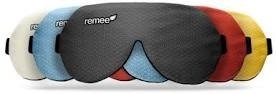
Don’t laugh. Many close friends to Paul McCartney swear he composed the song “Yesterday” in a dream. Melodies were reportedly fully formed in his mind when he woke up. Believers believe lucid dreaming is a viable method of accessing subconscious creative channels. In order to make that happen for themselves, two Brooklyn entrepreneurs, one a computer programmer and web designer, the other a photographer (Duncan Frazier and Steve McGuigan of Bitbanger Labs), created a sleep mask called Remee to help anyone who was interested in lucid dreaming. The sleep mask flashes a series of light patterns during REM sleep to alert the user that he or she is dreaming. The mask does not control the dream. It assists in lucid dream induction.

That seemed to be good enough for the 6,000 backers around the world who wanted to help fund this project on Kickstarter. The two co-founders of Bitbanger Labs were hoping to raise $35,000 on the crowdfunding platform for the first 300 masks. What a surprise. They raised almost $600,000.

Remee’s design is a personal version of the one made by Stanford University oneirologist Stephen LaBerge in the 1990s. The commercial unit cost around $600.00. The Remee is $95.00. Some people can become lucid dreamers with little effort; others need training. To find out more about the advantages of lucid dreaming click here. Also watch the video and do your Google search as well.

There’s a whole lot that you don’t know about yourself.